
And Their Photographs
I’ve spent much of my life in photography including an education in photography, photographic science and bio-medical photography. Even before that I was exposed to photography through visiting exhibits like the Museum of Modern Art’s photographic exhibit “The Family of Man”* and working with my father in his darkroom. In the Navy I studied photography and was approved to work as a Photographer when an opening became available**. In the Navy I also had the opportunity to meet some working war photographers which at the time inspired me to become a photojournalist. As with almost everything else today photography has changed with the advent of digital images and cellphones. Still, I think it might be of some value to get to know some of photography’s greats – enjoy.
*The Family of Man was probably one of the great photography exhibits of all time and it is still available as a book today HERE.
**In the US Navy, job ratings required you to first be qualified by taking courses and training,. But to get the job (be rated) there had to an opening. At the time there hadn’t been an opening for a Photographers Mate in almost five years. I went on to pursue another rating.
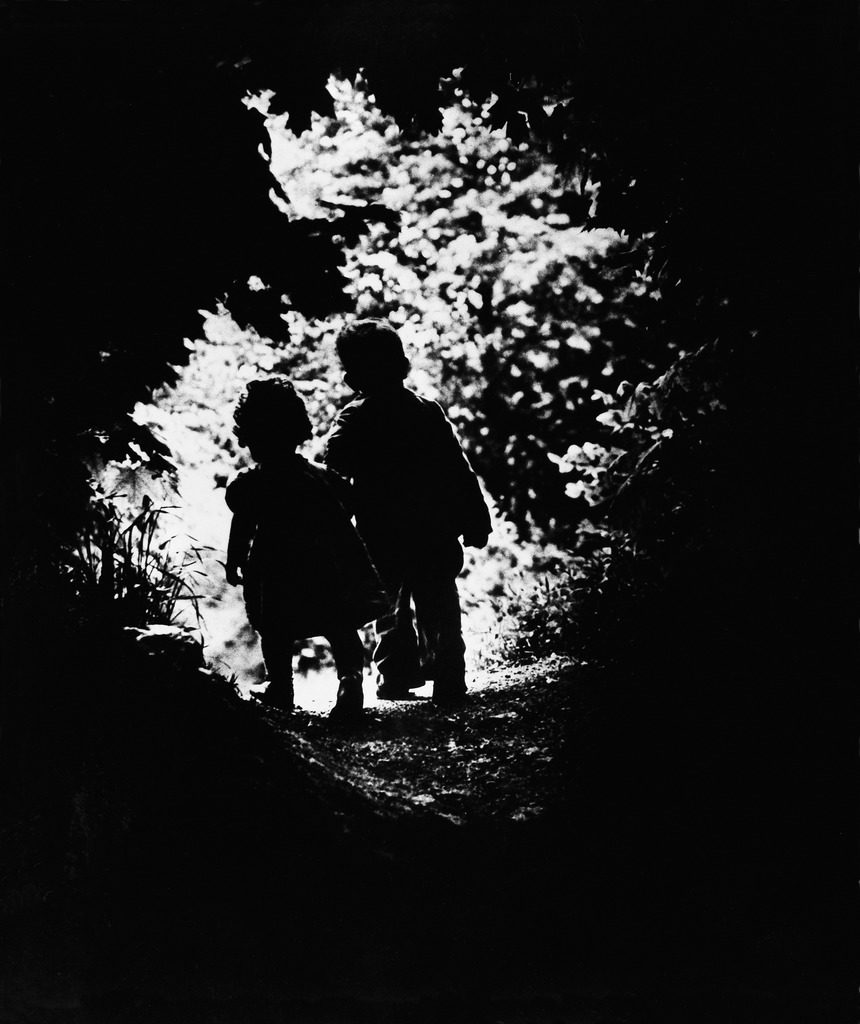
The walk to Paradise Garden, 1946 W. Eugene Smith

W. Eugene Smith – Perhaps the original creator of the photo essay and one of the worlds leading photojournalist. I met Eugene in 1971 when he was invited to a roundtable on photography at my college. After the session we spent a couple of hours drinking and just talking. One of his most famous photographs was “The walk to Paradise Garden” which was included in the Museum of Modern Art’s exhibit “The Family of Man”*. He described taking the picture as a grab shot with his Leica. He was out back of his house with some friends and neighbors when he saw his children walking towards the woods. It was over a week before he developed the film and made a quick print.
Perhaps his last and most famous published essay as a Magnum photographer was his article about industrial mercury poisoning in the Japanese city of Minamata, helping to bring justice and visibility to the victims of careless industrial pollution.
In a reflective mood that evening he commented that when he was in the battle of Okinawa in 1945, he was seriously injured by mortar fire that broke his arm. Wouldn’t it be a sad finale to my life and career if I now fell off the barstool and broke my arm again. He was 53 at that time.
I still keep that softcover copy of “The Family of Man” from the 1960’s in my photography book collection.
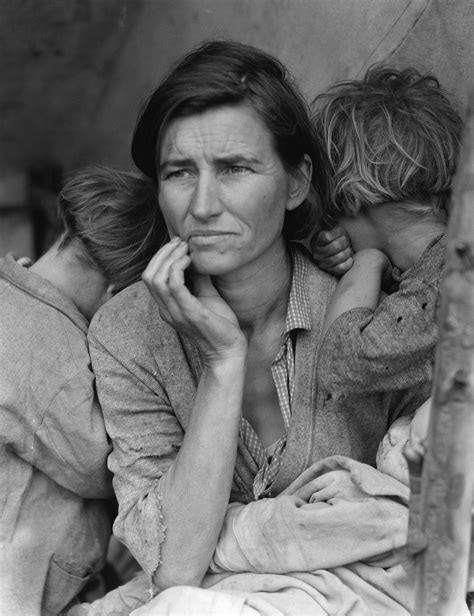

Migrant Mother 1937 Dorothea Lang
Dorothea Lang – This is one of photography’s most famous photographs. From 1935 to 1940, Dorothea traveled the country documenting the hardships of the great depression for the Farm Security Administration, of the U.S. Agriculture Department. Lange photographed the people she met and that included Lange’s most well-known portrait, “Migrant Mother”. It’s the iconic image from the period that captured the hardship and pain of what so many Americans were experiencing.
Because she was working for the government, much of her negatives are in the collection of the Library of Congress and National Archives and oddly enough you can order prints made from her original negatives for just a printing fee.
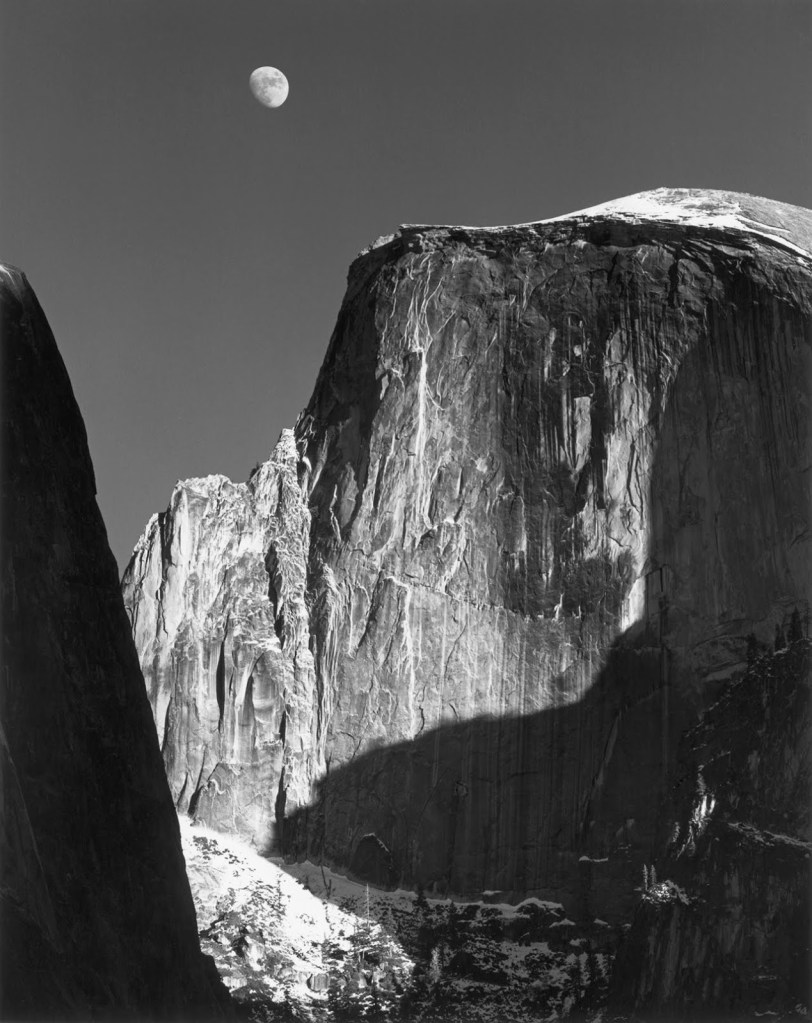

Ansel Adams – The dean of American landscape photographers, was famous for lugging his large view cameras up mountain sides. “Moon and Half Dome” above is my favorite photograph. A classmate of mine and a photographer, introduced his mother to Adam’s work. She was an executive with Continental Can Company and contacted him at his studio in Yosemite valley wanting to buy photographs to display at the company headquarters. His reply when he learned the name of the company was that there was no amount of money from Continental Can that could buy his prints.

My own collection has two original Adams prints.
The Two Photographers That Influenced Me The Most
I had an opportunity to encounter both of these photographers during the Vietnam war and they were responsible for me believing I could make a career in photography.

Larry Burrows – Anyone that spent time with Larry quickly understood that he was one of the greatest photojournalists of that era. Burrows later died when the helicopter he was in was shot down over the Ho Chi Minh Trail in Laos while covering Operation Lam Son 719.

About Reaching Out pictured above, “Larry Burrows made a photograph that, for generations, has served as the most indelible, searing illustration of the horrors inherent in that long, divisive war — and, by implication, in all wars.” — Ben Cosgrove, Life Magazine
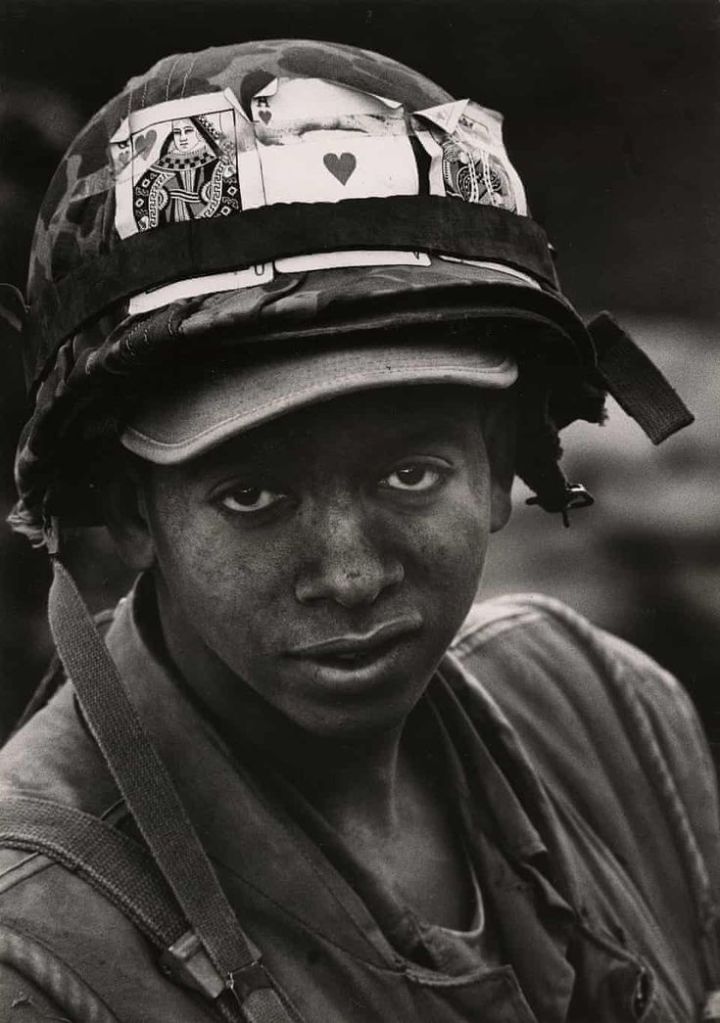

David Douglas Duncan – I met him briefly “in country”. He was a photojournalist who documented the Vietnam war over several years. He is perhaps most famous for spending several weeks with the Marines at The Seige of Khe Sanh. After that experience he published a book called “I Protest“*** about the American policy during the war. He is also remembered for his images of Picasso taken over the few years he spent with the artist.
One of my prized possessions is a copy of his “I Protest“.
***Copies of I Protest can be found from vintage booksellers, on Ebay and maybe at Amazon HERE.
While the two proceeding photographers inspired me to go to college and study photography, their lives also ended up convincing me that a life on the road following wars and disasters didn’t leave much room for anything resembling a normal life.
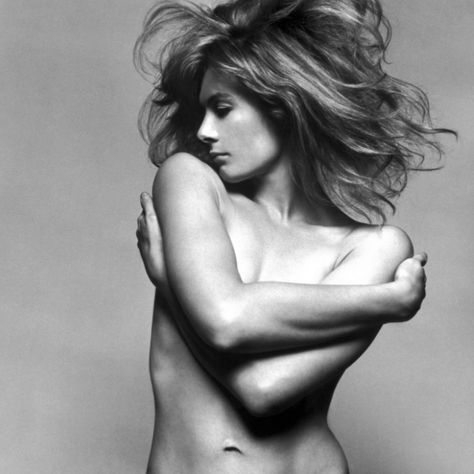
Victor Skrebneski – A fashion photographer based out of Chicago. I met Victor when he came to school to give a series of lectures and workshops. At the time he was the main commercial photographer for Estée Lauder. One evening out drinking, he told me that he was going to have to leave early to do a shoot he couldn’t pass up. His agent had contacted him about Gulf Oil’s ad agency wanting him to do a series of outdoor period shots for some magazine ads. He didn’t want to do it and to get out of it he quoted an outrageous five times his normal day rate. The agent called back that afternoon and told him he had the job with a bonus if he could get it done on a fast schedule. My collection includes several of Victor’s prints.

Bert Stern – I never met Bert but his work also inspired me. He was self taught and became famous for his celebrity portraits and his advertising images.

I met a photographer at a workshop who worked in Sterns studio. He had an interesting account. I believe it was Smirnoff’s ad agency that wanted a photograph of a martini glass with the Egyptian pyramids in the background. Most commercial photographers at the time would have kept the work in the studio by doing a back-screen projection of the pyramids. Bert’s approach to photography was pretty basic, so instead he took the crew to Egypt and shot the photographs outdoors with the actual pyramids as the background. It’s said that he spent hours on that one scene.

Pete Turner – I met Pete several times when he was starting out as a commercial photographer in New York and shortly after that he was picked up to do regular work for several major magazines. Pete was more an artist than a photographer, having this incredible vision and feel for the use of color. His images seemed to always be at the edge of becoming abstract art. He’s one of the few photographers where I see an image and immediately know it’s his.
Searching the internet for the best or most famous photographers in history you will probably come across the following names in addition to my picks. Each of them is a legend in the art and craft of photography and worthy of getting to know about:
Mathew Brady – An American photographer. Known as one of the earliest and most famous photographers in American history, he is best known for his scenes of the Civil War.
Henri Cartier-Bresson – Considered a pioneer of photojournalism, he is known for his candid street photography and the concept of “the decisive moment.”
Robert Capa – He was a Hungarian-American war photographer and photojournalist. He is considered by some to be the greatest combat and adventure photographer in history. His photographs of US forces’ assault on Omaha Beach on D-Day, June 6 1944, became an invaluable historic testament to the bravery of the soldiers in the Allied invasion of France.
Richard Avedon – A renowned fashion and portrait photographer, known for his minimalist style and striking black and white images.
Annie Leibovitz – One of the most influential portrait photographers of our time, famous for her bold and creative celebrity portraits.
Alfred Stieglitz – A key figure in establishing photography as a fine art form in the early 20th century. He was a pioneering gallerist and photographer.
Robert Frank – His book “The Americans” is considered one of the most influential photography books ever published, capturing the postwar American social and cultural landscape.
Diane Arbus – Known for her intimate and unconventional portraits of people on the margins of society.
Edward Weston – A master of 20th century photography, known for his innovative and formal studies of natural forms and the human body.
Helmut Newton – Renowned for his provocative fashion and portrait photographs featuring bold, empowered women.
 The Intentional Travelers