


Truth be told I’ve never given a lot of thought to camels. Up until recently I’ve rarely encountered one outside a zoo and what I know about them could maybe fill a business card. On a recent trip to Morocco at a Sahara camp I was introduced to this creature and the experience didn’t leave a lasting impression. It seems that most of what look like camels are actually dromedaries and that wild ones are actually only found in Australia. Later in the trip I did learn that camels are a source of meat in the Moroccan diet as we passed a butcher stand with a huge camel head hanging there front and center.
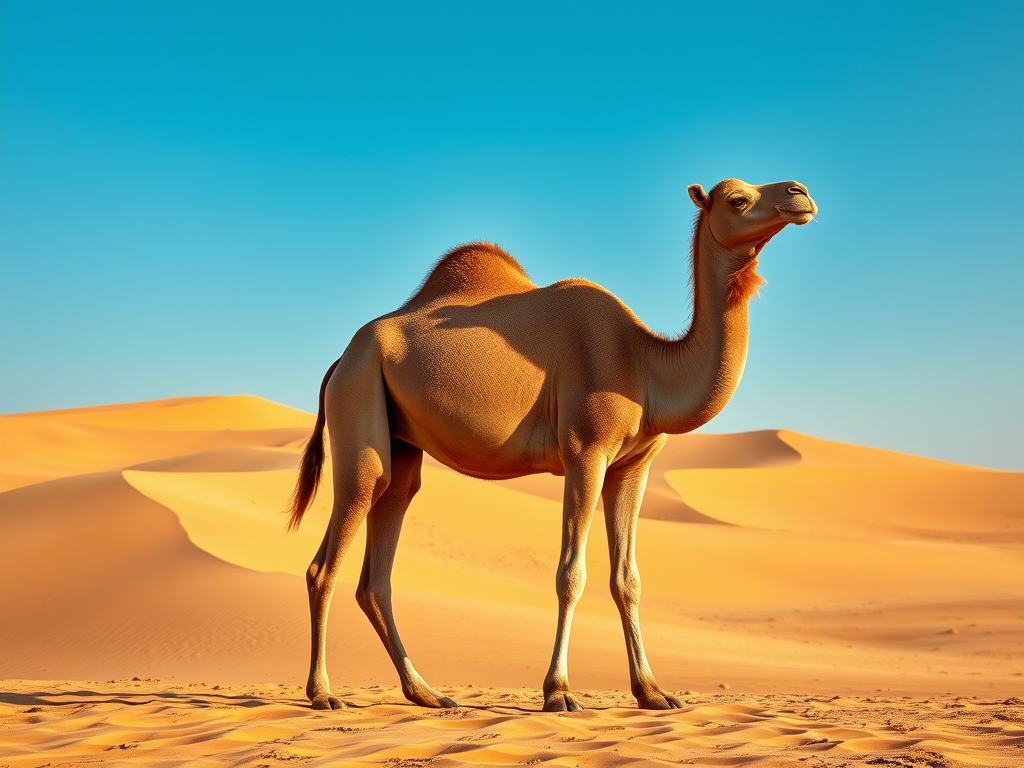
Often called a camel the dromedary (Camelus dromedarius), also known as the dromedary camel and one-humped camel, is a large species of the genus Camelus with one hump on its back. It is the tallest of the three camel species; adult males stand up to 7 ft 10 in at the shoulder, while females are up to 6 ft 3 in tall. Males typically weigh between 880 and 1,520 pounds, and females weigh between 660 and 1,190 pounds. The dromedary’s distinctive features include its long, curved neck, narrow chest, a single hump and long hairs on the throat, shoulders and hump.
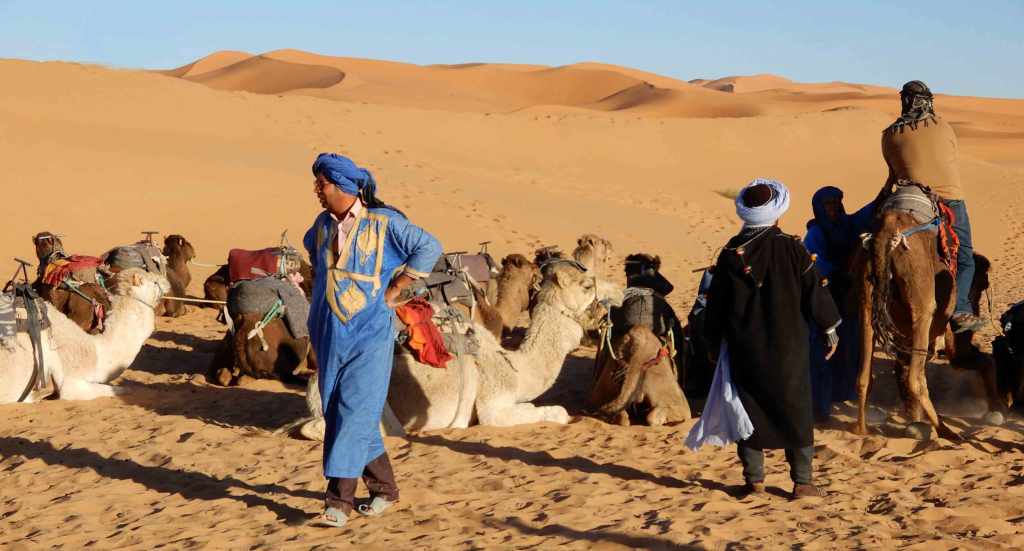
The dromedary feeds on desert vegetation; several adaptations, such as the ability to tolerate losing more than 30% of its total water content, allow it to thrive in the desert habitat. Mating occurs annually and peaks in the rainy season; females bear a single calf after a gestation of 15 months. It is mainly active during daylight hours and form herds of about 20 individuals, which are led by a dominant male.

The dromedary in Africa has not been a wild animal for something like 2,000 years. It was probably first domesticated in the Arabian Peninsula about 4,000 years ago The domesticated dromedary is generally found in the arid regions of Africa and the Arabian Peninsula, while a large wild population in Australia. The dromedary is used for its meat and milk, but mostly for riding and as a pack animal.
The average value of a healthy young camel can reach US$20,000, with high-quality camels potentially costing much more, even reaching several million dollars for racing camel.
The Intentional Travelers Guide to over 150 cruise ports of call







 The Intentional Travelers