

U.S. Returning Resident Duty Free Policy
Now that Caribbean cruising is back at full capacity a lot of passengers are planning on taking advantage of Caribbean duty free liquor policies. Unfortunately there is a lot of misinformation regarding what is allowed. Not only could making a mistake cost some extra duty charges it can also cost you more than a little time while agents try and calculate your duty charges while filling out forms. Following are the current policies on bringing back purchases from foreign countries duty free, especially liquor and tobacco in what quantities and from where.
Duty-Free Exemption
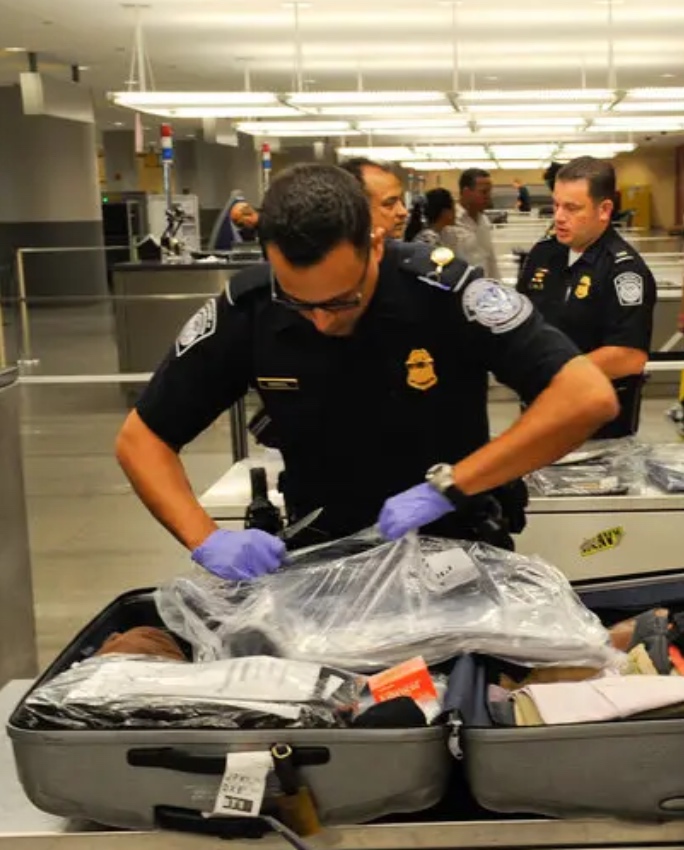
The duty-free exemption, also called the individual personal exemption, is the total value of merchandise you may bring back to the United States without having to pay duty. You may bring back more than your exemption, but you will have to pay duty on it. In most cases, the personal exemption is limited to $800 duty free ($1,600 on purchases from the U.S. Virgin Islands, American Samoa, or Guam) with additional limits on alcohol and tobacco products. The limits on the amount of alcoholic beverages, cigarettes, cigars, and other tobacco products you may include in your duty-free personal exemption are explained in the section below regarding alcohol.
The duty-free exemption (Generally $800) on your purchases:

- The items need to be for your personal or household use or intended to be given as gifts.
- They are in your possession, that is, they accompany you when you return to the United States. Items to be sent later may not be included in your $800 duty-free exemption. (Exceptions apply for goods sent from Guam or the U.S. Virgin Islands.)
- They are declared to Customs and Boarder Patrol CBP. If you do not declare something that should have been declared, you risk forfeiture. If in doubt always declare it.
- You are returning from an overseas stay of at least 48 hours. For example, if you leave the United States at 1:30 p.m. on June 1, you would complete the 48-hour period at 1:30 p.m. on June 3. You will be exempt from the time limit if you are returning from either from Mexico or from the U.S. Virgin Islands.
- You have not used all of your exemption allowance, or used any part of it, in the past 30 days. For example, if you go to England and bring back $150 worth of items, you must wait another 30 days before you can apply another $800 exemption.
Regarding Alcohol
How much alcohol or tobacco can you bring back?
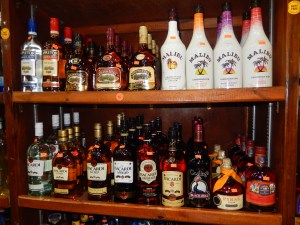
Generally returning from most countries the alcohol exemption is limited to one liter of distilled spirits.
The amount of alcohol you can bring back from a U.S. insular possession (U.S. Virgin Islands, American Samoa, or Guam) duty-free is greater. As long as the amount does not exceed what individual states consider a personal quantity*, U.S. Customs and Border Protection (CBP) will allow you to enter the U.S. with up to five liters of alcohol duty-free as part of your exemption – as long as at least four liters were purchased in the insular possessions (U.S. Virgin Islands, American Samoa or Guam – [be sure and have receipts]), and at least one of them is a product of that insular possession like Virgin Island rum from USVI. Additional bottles will be subject to a flat duty rate of 1.5% of the purchase price but can also be subject to Internal Revenue Service taxes which needs to be calculated based on the actual alcohol content and volume.

Please Note, only one liter of alcohol purchased in a cruise ship’s duty-free shop is eligible for a duty-free exemption unless at least one bottle purchased on board is the product of an eligible Caribbean Basin country**, then you will be allowed two liters duty free. If you buy five liters of alcohol in – say – the U.S. Virgin Islands (USVI), and one of them is the product of the USVI, then you would have reached your duty-free limit. Any additional purchases made on board in a duty-free shop would be subject to CBP duty and an IRS tax.
If you buy four bottles in the USVI, one of which is a product of the USVI, then you could purchase one additional bottle from the onboard duty-free shop, and it would be eligible for duty-free entry status.
If you have not exceeded your duty free exemption, you are no longer required to complete a customs declaration. As you pass through immigration you will be questioned about your purchases. If they include alcohol, be sure to have your purchase receipts readily available. The Officer may want to see them as proof of where the purchases were made. Place of purchase as well as quantity will determine whether duty and taxes need be charged** ‡.
* Most individual states also have restrictions on the amount of alcohol that can be brought into that State by residents of that State without additional taxes being due‡. Most people just transiting a state are not subject to those restrictions. For example, if you live in New York and return from a Caribbean cruise in Miami, Florida will consider you in transit. Sometimes regulations change, and if this is a matter of utmost importance to you, you can check with the individual state Alcohol Beverage Control Board where you will be arriving to find out what their policies are.
** Most Caribbean Basin countries are considered beneficiary countries for purposes of this exemption. (Anguilla, Cayman Islands, Guadeloupe, Martininque and Turks and Caicos are not eligible)
‡ Duty free exception laws are complicated and often Federal CBP agents aren’t completely aware of all the rules regarding what is allowed. Often you can get away with misrepresenting what you are bringing back and won’t be challenged, but if you are caught “smuggling” the fines can be serious.
‡ State laws regarding crossing state lines with too much tobacco or alcohol are also rarely checked or enforced but in this there is always some element of risk.
Tobacco products allowance
In accordance with 26 U.S.C. § 5702(c), “tobacco products” means cigars, cigarettes, smokeless tobacco (snuff or chewing tobacco), pipe tobacco, and roll-your-own tobacco.

Returning resident travelers may import tobacco products only in quantities not exceeding the amounts specified in the personal exemptions for which the traveler qualifies (not more than 200 cigarettes and 100 cigars if arriving from other than a beneficiary country and insular possession).
Once every 31 days, a resident returning from travel from American Samoa, Guam, the Commonwealth of the Northern Mariana Islands (CNMI), or the Virgin Islands of the United States may import 1,000 cigarettes (5 cartons), not more than 200 of which acquired elsewhere than in such locations, within the returning resident’s $1,600 exemption from duty and taxes.
 The Intentional Travelers