
Recently it seems that people in government along with media outlets have looked at cruising and have found it to be a modern frivolity that would be best eliminated or at the least discouraged. This isn’t a small thing and unfortunately it’s way too easy to find overwhelming evidence of a negative bias against cruising. Examples are everywhere if you take the time to look. Consider that there are regular outbreaks of the highly contagious stomach bug Norovirus occurring in schools, offices and factories, but the only time it seems to be widely reported is when an outbreak hits a cruise ship. The same exaggerated coverage was applied to Covid-19 and cruise ships along with reporting incidents of deaths at sea, cruise ship mishaps and financial issues regarding cruise corporations.
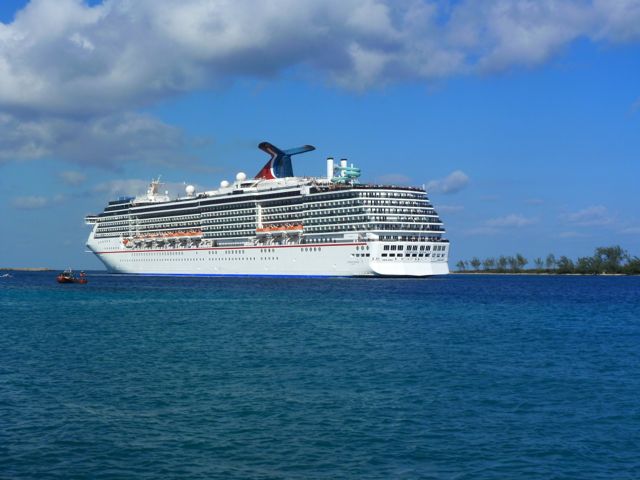
When we decided to explore the subject of cruise ship impact on the environment and by extension global warming, the first thing that became obvious was the overwhelming percentage of information was seriously negative. In almost every article the only data offered was isolated to cruise ships with very few attempts to do comparisons to other industries and experiences or to offer context. Even AI will demonstrate the same bias as AI is actually researching internet articles when it responds to an inquiry. When 17 out of 20 articles are negative why wouldn’t AI research reach the same negative conclusions?
The following is a quote from a typical article at the top of results from a search for “cruise ships and the environment”.
“While cruising is a very popular way to see the world, it also has a significant impact on the environment. In addition to burning vast amounts of fossil fuels, ships also produce a significant amounts of water pollution, including sewage, wastewater, and bilge water. These pollutants still contaminate the ocean and harm marine life. In addition, cruise ships can also disturb sensitive marine habitats, such as coral reefs. Cruise ships also produce a significant amount of solid waste, including food waste, paper waste, and plastic waste. This waste can end up in the ocean, where it can harm marine life and pollute the environment.“
Virtually none of the points in that article are accurate and with little research one can refute virtually every point made. Cruise ships have made remarkable progress in the past few decades reducing their environmental impact and a new generation of ships currently being planned will have near a net zero impact on the planet.

What follows is an attempt to put much of the internet available information into perspective by relating the data in a broader context.
The Cruise Industry And The Environment
Over the past few decades efforts are being made by cruise companies to make their ships more sustainable and eco-friendly. If you look at the total number of ships plying the seas and their reduction in emissions you’ll discover that 73% of the worlds cruise ships rate within the top 10% overall. While the cruise industry has historically faced criticism for its environmental impact, there are a majority of cruise companies that have made serious investments in green initiatives. These initiatives include reducing carbon emissions, exploring cleaner alternative fuels, and implementing greener infrastructure while in port. In 2023 six cruise lines have been recognized for deploying major eco-conscious initiatives. They are Regent Seven Seas Cruises, Virgin Voyages, Disney Cruise Line, Oceania Cruises and Norwegian Cruise Line with seven more being recognized as making serious improvements. Major advances include using hybrid battery electric-powered ships, incorporating zero-emissions docking, and eliminating single-use plastics onboard.

Another major consideration to use when evaluating ocean going ships with their environmental impact is to examine the gross numbers. The energy consumption of cruise ships and cargo ships varies significantly due to several factors such as size, speed, and weight carrying capacity. Today on average, a large cruise ship can consume around 150-200 tons of fuel per day, while the majority of cargo ships and tankers consume around 300-400 tons of fuel per day. Cruise ships also represent just over 10% of the total number of ocean going ships. In 2022 the internationally registered number of cargo ships was 36,299, tankers, LNG and Chemical ships 16,560 and Cruise ships including Ocean Ferries are only 5,369.
Looking at other forms of transportation you’ll discover that airplanes tend to consume more energy per person per mile traveled than cruise ships. This is because airplanes require a significant amount of energy to overcome air resistance and maintain altitude, while ocean going ships utilize water to move huge payloads more efficiently.
While the Cruise Lines International Association (CLIA), calculates the average cruise ship uses about 1,000 gallons of fuel per hour. In contrast, a family vacation in a car would typically use only a few hundred gallons of fuel. While that statement seems concerning consider a more direct comparison. A typical family driving vacation of 7 days uses an average of 35.7 gallons of fuel per person, a cruise ship holding 5,000 passengers sailing 7 days uses 33.6 gallons of fuel per person, while in the same 7 days will travel seven times further.
We Need To Be Objective
Every person has a specific set of interests and priorities and rarely are they universally accepted. It is what makes us individuals. For example huge numbers of people are sports fans and would it be reasonable to have another group of people, claiming that sports are a useless waste of resources and time, decide that for the good of the planet, sports should be eliminated? Unfortunately this is exactly what is happening today. Large numbers of people are being pushed around by vocal minorities based on only opinions.
When considering global warming and what to do about it, if anything, you need to consider that this is one of the hottest topics being discussed today. We need to understand that all arguments contain bias because everyone has a perspective that’s based on their life experiences, education and current issues of particular concern that catch their attention. Unfortunately media reporting tends to focus on the opinions of the most vocal individuals holding the strongest beliefs. Today too many arguments actually make the claim that human beings represent the biggest threat to life on Earth requiring immediate action. From their perspective every bit of energy consumed by people, every acre of land put into human use and every pound of waste we dispose of is a step towards destroying the planet.
In recent years major ports have been attacked by organized groups for allowing cruise ships to dock. They include Key West, Venice and now Barcelona and it isn’t difficult which position the main stream media is taking. Step back from the argument and go beyond the yelling and evaluate the topic with an open mind.
 The Intentional Travelers