
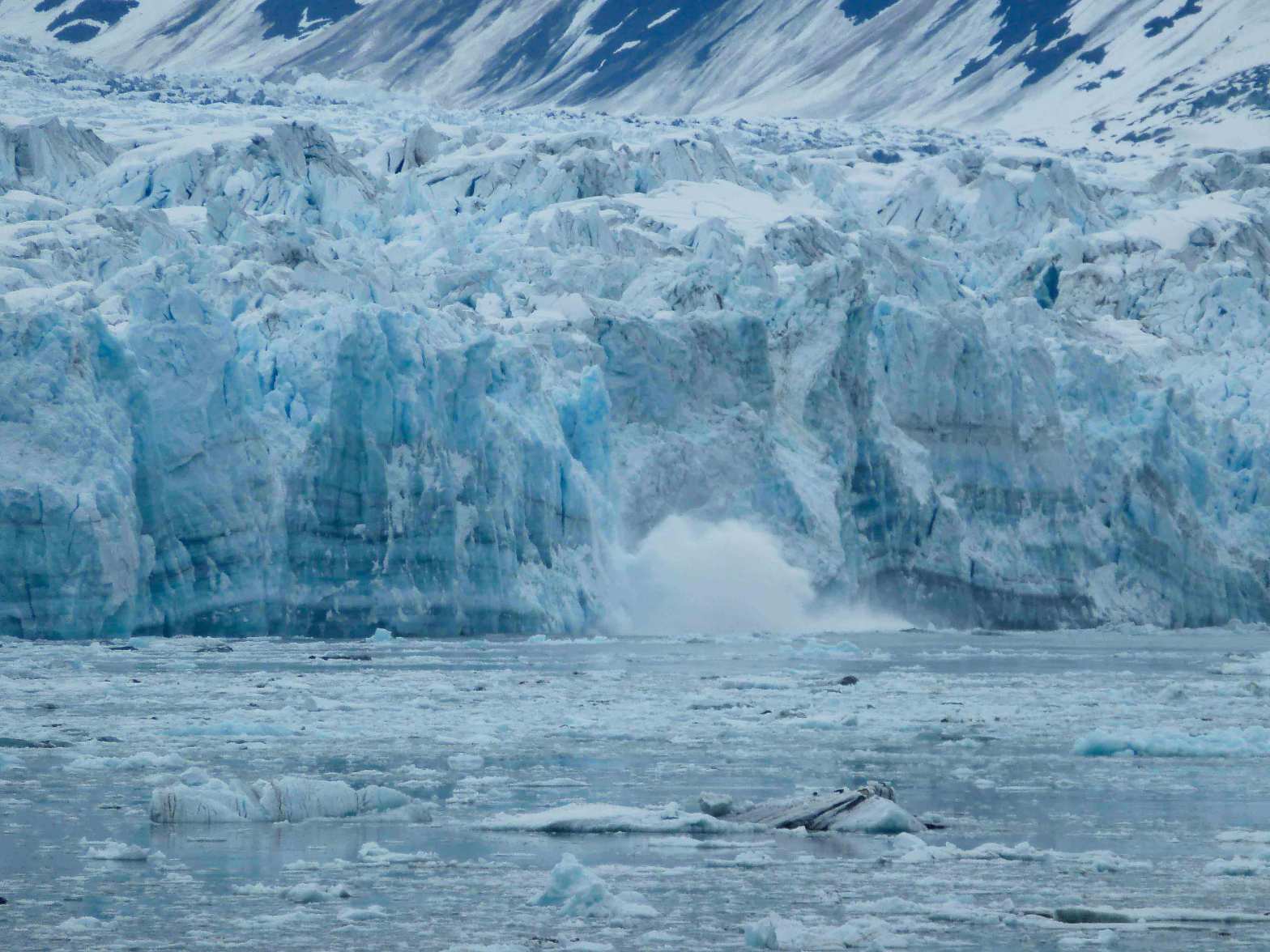

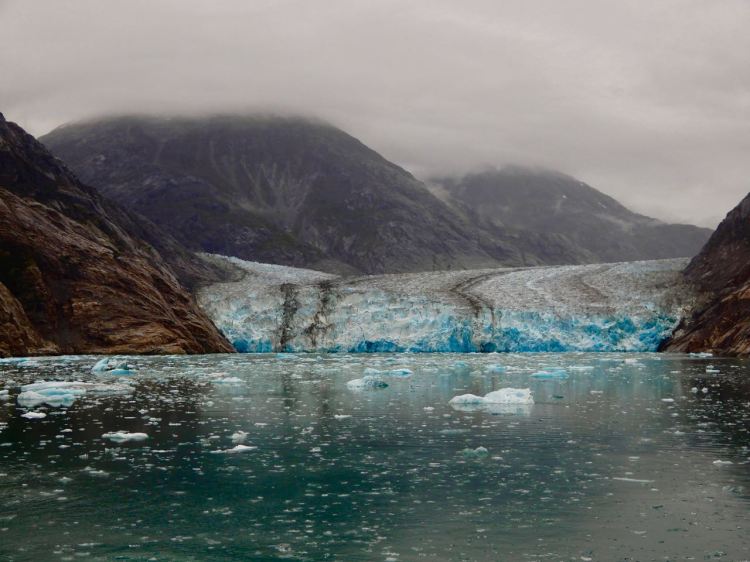
One of the most thrilling sights on an Alaska cruise is encountering a glacier terminating at the sea. The two most often visited by cruise ships are Dawes Glacier and the much larger Hubbard Glacier. Dawes is located some distance up Tracy Arm Fjord while Hubbard is on a bay open to the ocean. If you’re planning an Alaska cruise try to select one that visits Hubbard Glacier.
Cruising To Hubbard Glacier
Hubbard Glacier is the largest tidewater glacier in North America. In contrast to most glaciers in Alaska and northwestern Canada, Hubbard Glacier actually grew and advanced faster during the 20th century. Even today Hubbard is still advancing.
This behavior is an example of how the growth dynamics of glaciers work. While global warming is a measurable fact that has been happening for several hundred years and is a contributing factor to glacier recession it is not the only process at work on glaciers.

Glacial Dynamics

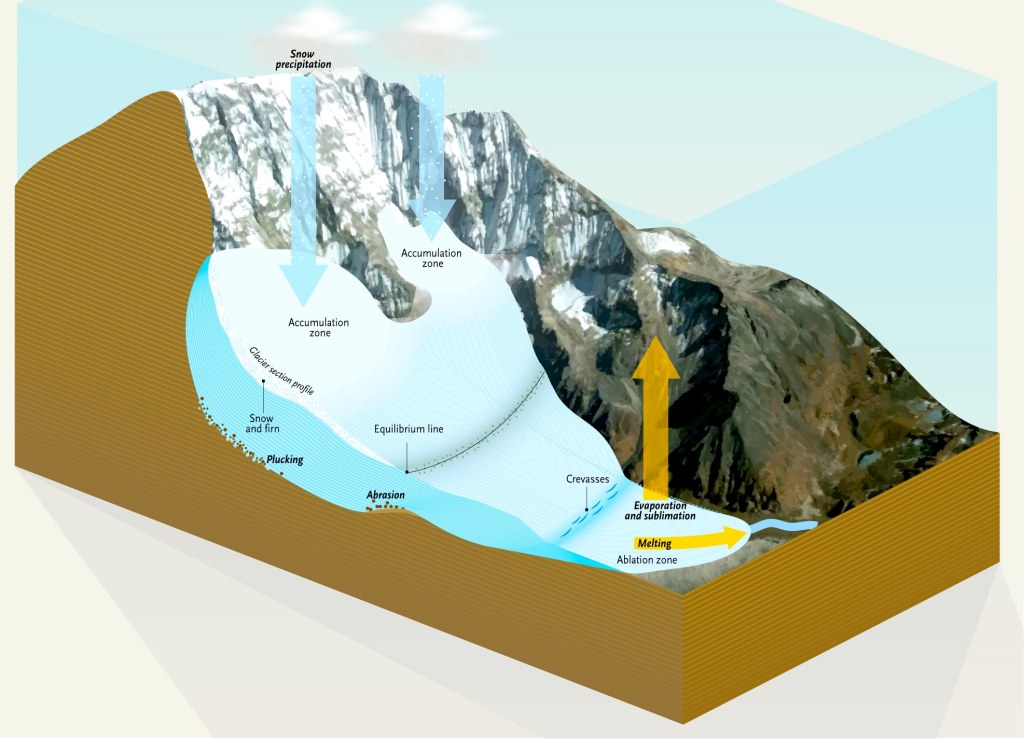
Most glaciers begin inland and at higher altitudes and are created mostly from winter snowfall. As the weight of heavy snows compact they turn into solid ice. As more snow falls the weight and pressure of the ice pushes the mass down and outward and the glacier’s front edge moves forward through the landscape. The more snow the faster the glacier moves. As the glacier moves into lower terrain it encounters warmer temperatures and most glaciers experience rapid summer front margin melting. What controls the glaciers advance or retreat is the amount of new snow at higher altitudes pushing the glacier forward working against the speed of melting at its front margin. While many glaciers are in retreat there are glaciers that are still growing and pushing forward.
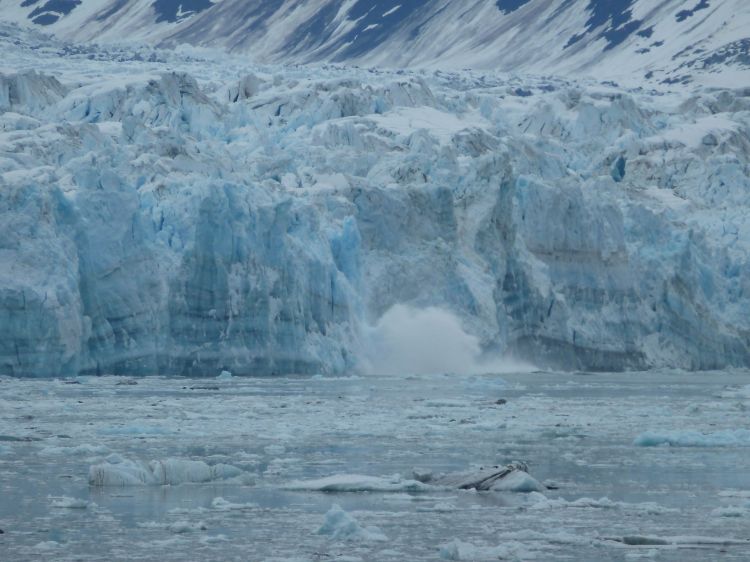
Hubbard is one of the growing glaciers but because its front margin touches the sea its front edge simple breaks off in huge chunks that float away. Those huge falling pieces stand 150 feet tall above the water and are referred to as calving.
The Hubbard Glacier Event
In May 1986, the advance of Hubbard Glacier surged forward calving huge sections, blocking the outlet to Russell Fjord and creating Russell Lake. All that summer, the new lake filled with runoff and its water level rose 82 feet.
Somewhere around midnight October 8th, the dam began to collapse. In only 24 hours, an estimated 1.3 cubic miles of water roared through the growing opening, and the fjord returned to its previous level. This was the largest glacial lake outburst flood in recorded history.
Photographing Hubbard Glacier
In cruising Alaska most people want to take home great photographs of Hubbard Glacier and catching a calving would be the perfect image. Unfortunately there’s a lot working against you. Hubbard Glacier is massive and the face is over six miles wide and stands 150 feet out of the water. Cruise ships are only allowed to come within a couple of miles of the face and while you will hear the roaring of a calving by the time you hear the sound and turn to face it the event is almost over. Videos are great but you’ll also need to focus on a point and start filming before an event begins. Even if you miss capturing a calving with a camera it is still an amazing experience.


please consider subscribing to The Intentional Travelers and receive notices of new postings, new newsletters and special offers.
Join Us • We understand that the last thing you want is more emails cluttering up your inbox, but we promise we’ll work hard to make this worth while. Give us a try and if we don’t live up to our promise all you need do is click the unsubscribe link in our emails.
Don’t Miss Out, Subscribe Now!
You’ll receive notices of new posts, special features and updates right in your inbox…
 The Intentional Travelers