

The Dakota Territory Its Historic Monuments, Museums and Sacred Land

The forces that created the confrontation were beyond anyones control and the outcome was inevitable even though the struggle was monumental. Beginning around 1850 new settlers were drawn to the Dakota territory by the prospect of gold and free land, while the tribes of the “People of the Seven Council Fires” pushed back trying to keep their land and what was their very way of life. Efforts by the government and the army to control the situation were swept aside by tidal waves of people filling the Oregon Trail* as it became known as a highway to the riches of this new promised land. Even making the Dakota’s Indian land and off limits didn’t work as stories of gold fanned the excitement of getting rich.
The people of the Sioux nation, also known as the Oceti Sakowin, historically inhabiting the area comprised of present-day Minnesota, Wisconsin, Iowa, and the Dakotas. The term “Sioux” is a shortened version of a French-Canadian term, and the people themselves identified themselves as the “People of the Seven Council Fires”. They were the Lakota, Dakota, and Nakota peoples each with distinct dialects and cultural practices.

As the conflict between these two cultures escalated a war chief named Crazy Horse emerged to lead the fight agains the settles and U.S Army. He was a prominent Oglala Lakota leader known for his fierce resistance against US expansion into the Great Plains. Crazy Horse led numerous raids on the wagon trains along the Oregon Trail along with mining camps and homesteads in the Dakotas.
One of the largest battles between the native tribes and the army occurred at the Little Bighorn**. Crazy Horse was the war chief at the battle against George Armstrong Custer and the 7th Cavalry. Crazy Horse wiped out the men of the 7th Cavalry and won the battle only to lose the war.
Crazy Horse was later killed by a soldier with a bayonet at Fort Robinson, Nebraska, on September 5, 1877. He was fatally wounded during a struggle while resisting imprisonment. The most common account describes a soldier, identified as William Gentles, stabbing Crazy Horse during a scuffle with Little Big Man, who was attempting to restrain Crazy Horse.
The Oglala Lakota Sioux are a band of the Lakota people, primarily located in South Dakota. They are known for their rich history and culture, including their resistance to westward expansion and the preservation of their traditions. The Crazy Horse Memorial was commissioned by Lakota leaders, including Chief Henry Standing Bear, to create the monument celebrating their people. Sculptor Korczak Ziolkowski began the project in 1948 and worked on it until his death in 1982. His widow, Ruth Ziolkowski, and their children and grandchildren continue to work the project.

The Crazy Horse Memorial has been under continuous construction since its beginning in 1948, funded entirely through private donations and visitor fees. While the project is vast, with an estimated completion date far in the future, significant progress has been made on the sculpture itself, particularly in recent years.
The entrance is along US Highway 16/385 (the Crazy Horse Memorial® Highway) 9 miles south of Hill City, SD and 4 miles north of Custer, SD. Crazy Horse Memorial® is 17 miles southwest of Mount Rushmore National Memorial.
The Battle of the Little Bighorn

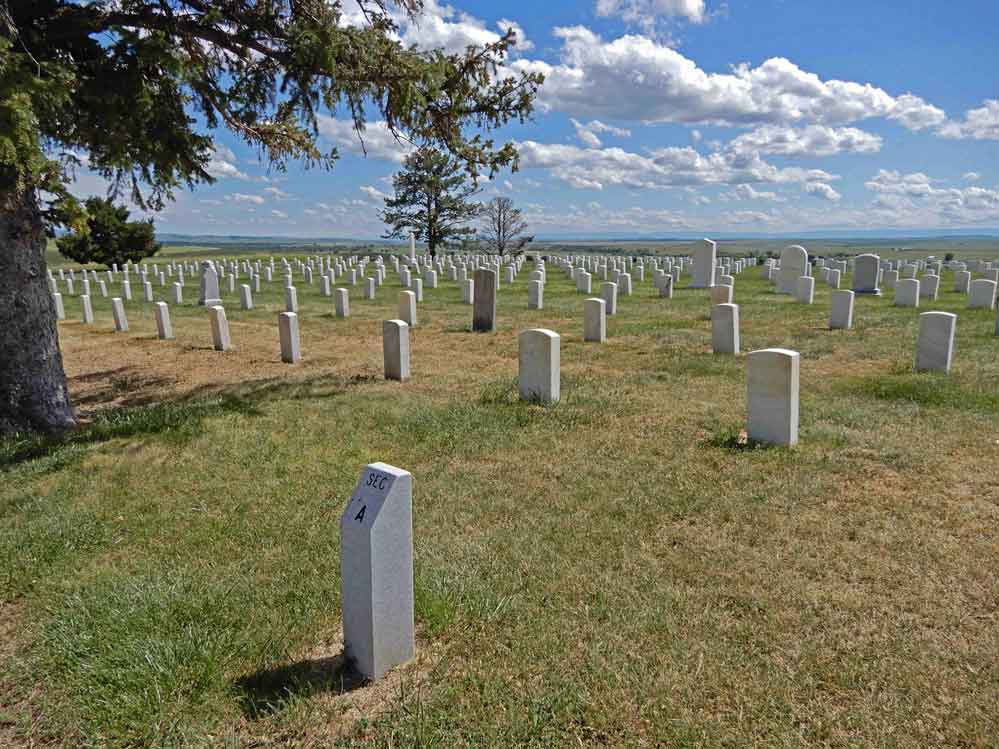
Little Bighorn Battlefield Memorial, A Place of Reflection. The land was set aside as a memorial and a place to honor and reflect on the sacrifices made here on June 25 and 26, 1876, when Lakota, Cheyenne, and Arapaho warriors fought against a deliberate attack by the U.S. Army’s 7th Cavalry, led by Lt. Col. Custer, who sought to enforce policies that threatened their traditional Indian way of life.
The Little Bighorn Battlefield National Monument is located in southeastern Montana, within the Crow Indian Reservation, near the town of Crow Agency. It is accessible from US Highway 87 (part of I-90) and US Highway 212.

Oregon Trail Museum in Casper, Wyoming
The National Historic Trails Interpretive Center is an 11,000-square-foot interpretive center about several of the National Historic Trails and is located northwest of Casper, Wyoming on Interstate 25.

Planning A Cruise? Start With The Intentional Travelers Port Guides



Recent Posts From The Intentional Travelers You Might Find Interesting:





 The Intentional Travelers