In Halifax, Nova Scotia there is a cemetery with a whole section in the back dedicated to the victims of one disaster – the sinking of the Titanic In the aftermath of the Titanic sinking in 1912, the city of Halifaz served as a recovery point for many of the victims bodies, with a number being brought ashore and subsequently buried in local cemeteries . The most notable burial site is the Fairview Lawn Cemetery, where 121 victims are interred, marked by distinctive gravestones that often include the names of the deceased as well as poignant inscriptions. The presence of these graves has made Halifax a site of historical remembrance, attracting visitors and researchers interested in the legacy of the Titanic tragedy.
The last time we visited Fairview Lawn Cemetery there was one grave pilled high with stuffed animals, toys, flowers and the name on the headstone was a Jack Dawson. Because Jack was a boiler-man on Titanic the tributes were odd until we learned that Jack Dawson was the name given to a character played by Leonardo DiCaprio in the movie Titanic.
Some More Recent Posts From The Intentional Travelers You Might Find Interesting:
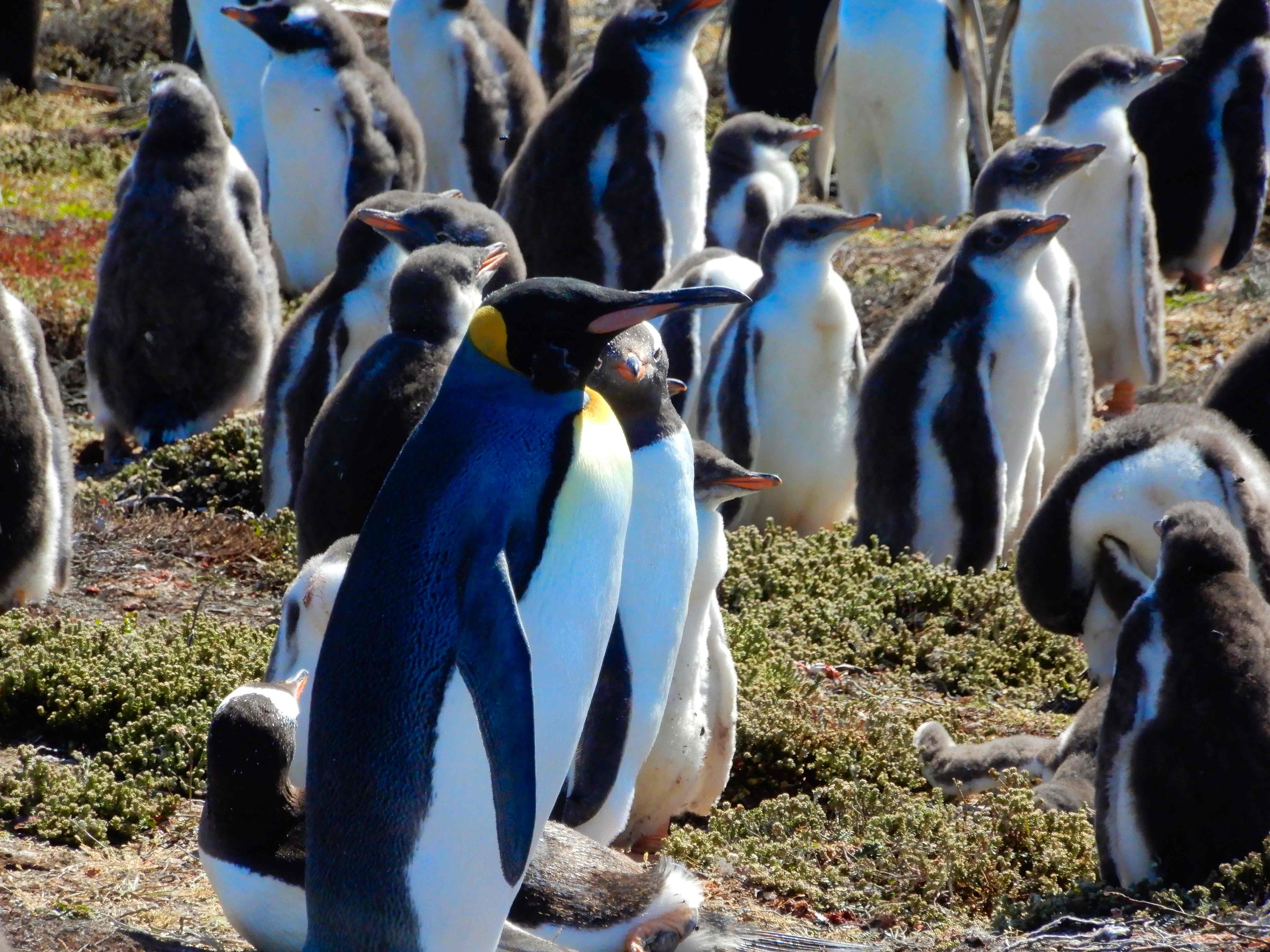
We’re told that it’s just instinct and animals mostly don’t have the capacity for emotional love, but that sure seems to be what this is. This mother (probably?) and young gentoo penguin were photographed in the Falkland Islands in February. The colony was actually located almost a half mile inland on a grassy slope – not where we’d expected to find them.
Some More Recent Posts From The Intentional Travelers You Might Find Interesting:
For centuries camel caravans were the main method of travel across the deserts of North Africa and the Middle East. While some remain as working caravans most are now relegated to tourist attractions. Still there is something unforgettable about setting off across the Sahara in a camel caravan even if only for an hour. Desert camels were often nicknamed “ships of the desert“. They are known for their ability to traverse the desert landscape, carrying people and cargo, similar to ships on the sea. The rocking or swaying motion of a camel’s walk that may also contributes to this nickname.
ima
Some More Recent Posts From The Intentional Travelers You Might Find Interesting:
There are two politically different Samoan island groups:The The Independent State of Samoa and American Samoa.
American Samoa‘s history is marked by early Polynesian settlement, European exploration, and eventual incorporation into the United States. Settled by Polynesians around 1000 BC, the islands were first sighted by Europeans in the 18th century. The United States gained control of the eastern islands in 1899 through the Tripartite Treaty which divided Samoa between the U.S., Germany, and Great Britain. The U.S. Navy later administered the territory, eventually transitioning to the Department of the Interior in 1951.
The Independent State of Samoa, formerly known as Western Samoa, gained independence from New Zealand in 1962, becoming the first independent Pacific island nation. Prior to that, the islands were administered by New Zealand and various European powers, including Germany and Great Britain. Samoa joined the Commonwealth of Nations in 1970.
It’s About Time
One interesting facet of the Samoan island groups is that the International Dateline divides the island group in two. That means that your ship can do a port call in Apia, Samoa on a Saturday and visit Pago Pago, American Samoa the next morning and repeat Saturday again.
Pronunciations
These islands were settled and are still home to Polynesians who have their own language where some European sounds aren’t found making our pronunciations of words very different. As an example Samoa in the west is pronounced suh-mow’uh while the Polynesians pronounce it suhm’ wuh.Pago Pago is pronounced like Pongo Pongo because, in Samoan, the letter g sounds like ng with an emphasis on the n. Ironically, in the independent country of Samoa, Pago Pago is normally referred to as Pago but pronounced as Pango like Tango with a P.
The Cruise Port for the Independent State of Samoa
The Independent State of Samoa, often referred to as simply Samoa and also known until 1997 as Western Samoa, is an island country in Polynesia, consisting of two main islands, two smaller, inhabited islands, and several smaller, uninhabited islands, including the Aleipata Islands. The capital city is Apia.
Where Your Ship Docks
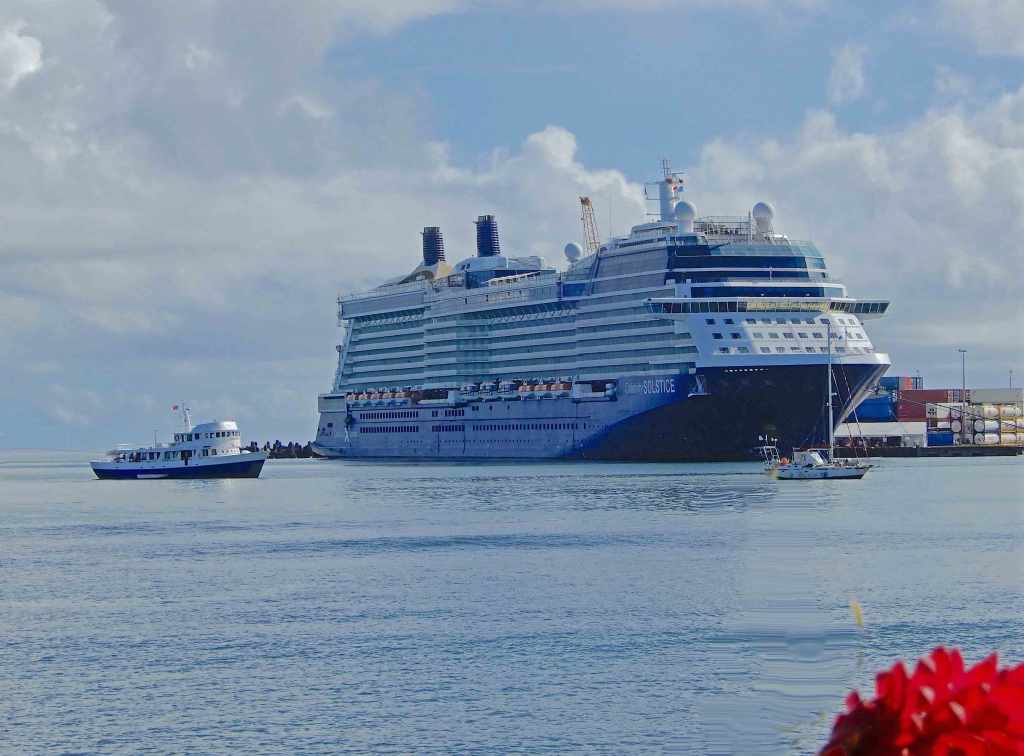
Cruise ships normally dock at the marine port with shuttle busses taking passengers into Apia. You can also walk out of the port and walk into Apia in less about a half hour. You may not find facilities available in the port and they are scarce in the city as well.
Wheelchair Accessibility
Disembarking – This port has a developed cruise ship pier but the ease of disembarking varies by the individual ship’s gangway designs. For passengers using wheelchairs there can be a moderate ramp incline to deal with.
Port City Characteristics – This port has an average wheelchair infrastructure typical of medium size Western cities. The port area has few inclines in sidewalks. Intersection crosswalks may have curbs or other minor wheelchair obstacles.
In Samoa and Apia, transportation options include buses, taxis, ferries, car rentals, and guided tours. Buses are the cheapest option, while taxis and rental cars offer more flexibility. Ferries connect the main islands, and tours can provide a stress-free way to explore.
Bus fares in Apia typically range from ST$0.50 to ST$3.00 (Equivalent to US$1.10) for rides around the city. For longer distances, like to Faleolo Airport or Mulifanua Wharf, fares can range from ST$5.00 to ST$5.50. A ride to Lalomanu can cost between ST$7.70 and ST$8.00, while a trip to Piula Cave Pool is generally around ST$4.00 to ST$5.00.
Currency
The local currency in Samoa is the Samoan Tala and Sene, and this is the only accepted currency in most places. Prices are displayed using the standard dollar symbol ($) or an ST$ and sometimes WST$. On average 1 USD = 2.8 WST. Most major credit cards are welcome but ATM useage can be expensive.
Attractions
Samoa offers a diverse range of attractions, from natural wonders to cultural experiences. Must-see spots include the:
Samoa Cultural Village ·
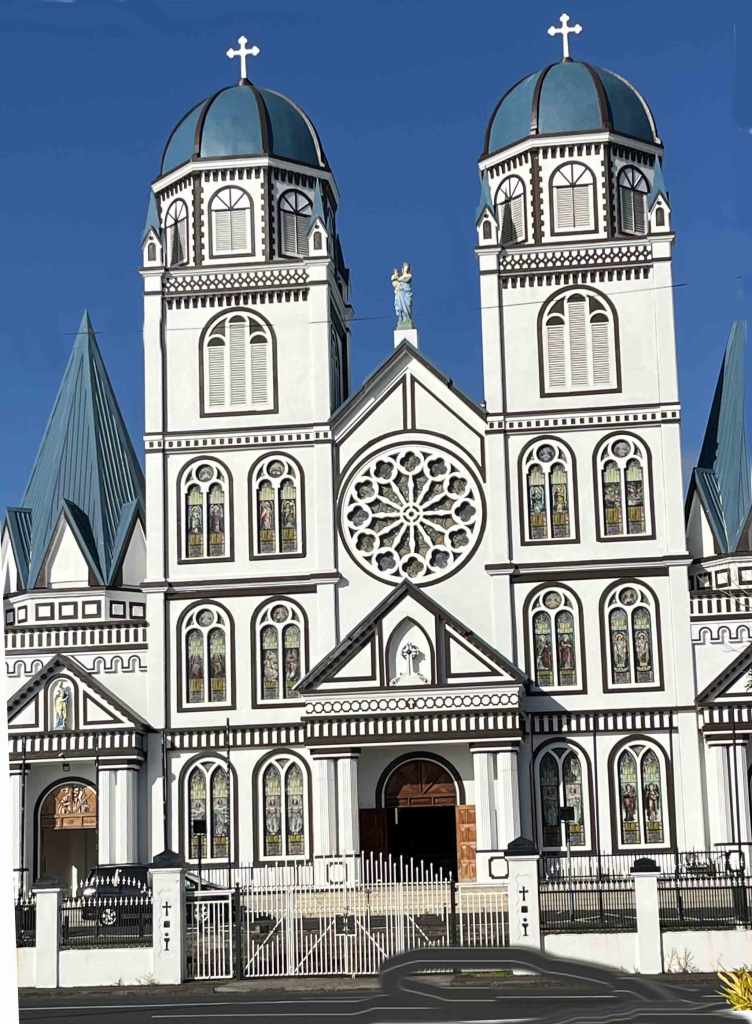
Immaculate Conception Cathedral ·
Old Apia Market
Papapapaitai , Togitogiga and Afu Aau Waterfalls
Coastal Lava Cliff Walk
Sua Ocean Trench
Snorkeling or diving
Lalomanu and Manase Beachs
Robert Louis Stevenson Museum
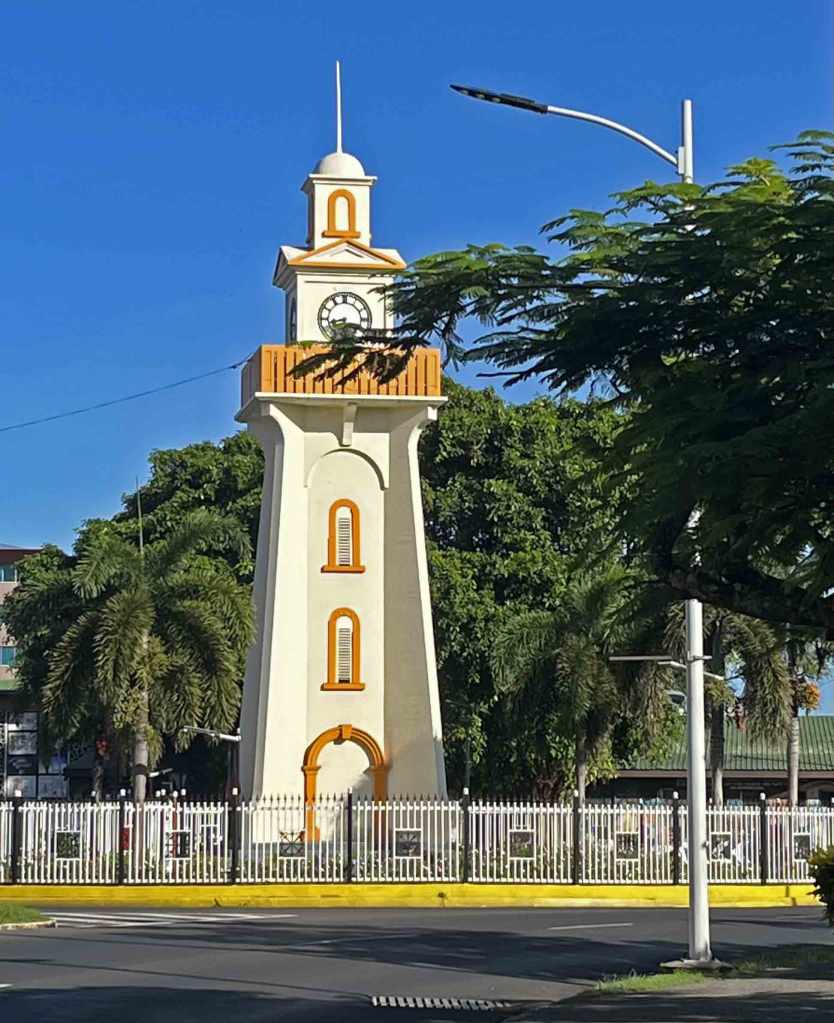
The Capital city of Apia
Cultural Experiences
Traditional Villages: Explore villages like Sa’anapu and Savai’i to experience local customs.
Cultural Performances: Attend a fiafia presentation to see traditional music and dance.
Local Reefs: Go snorkeling or diving and discover vibrant marine life at sites like Palolo Deep Marine Reserve.
Hiking: Trek through lush rainforests to Mount Silisili, the highest peak in Samoa.
The Robert Louis Stevenson Museum in Samoa, commemorates the life of the Scottish author. The museum displays a curated collection of his residence, as Stevenson lived in it. Its establishment was funded by overseas donations. It is located in the Vailima Botanical Garden. Address: 46MM+9Q2, Cross Island Rd, Apia, Samoa
The Cruise Port of Pago Pago, American Samoa
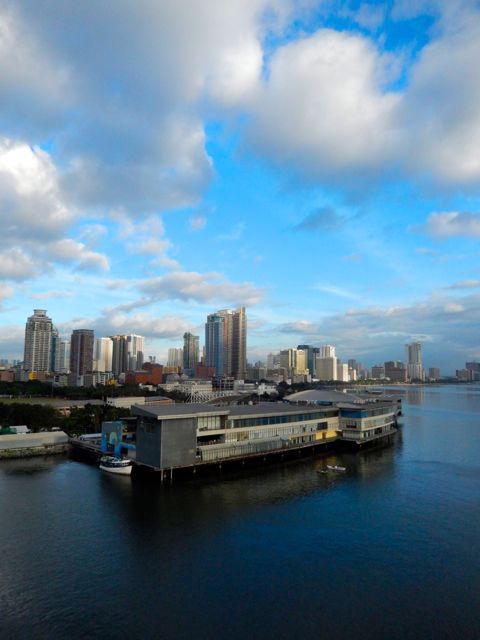
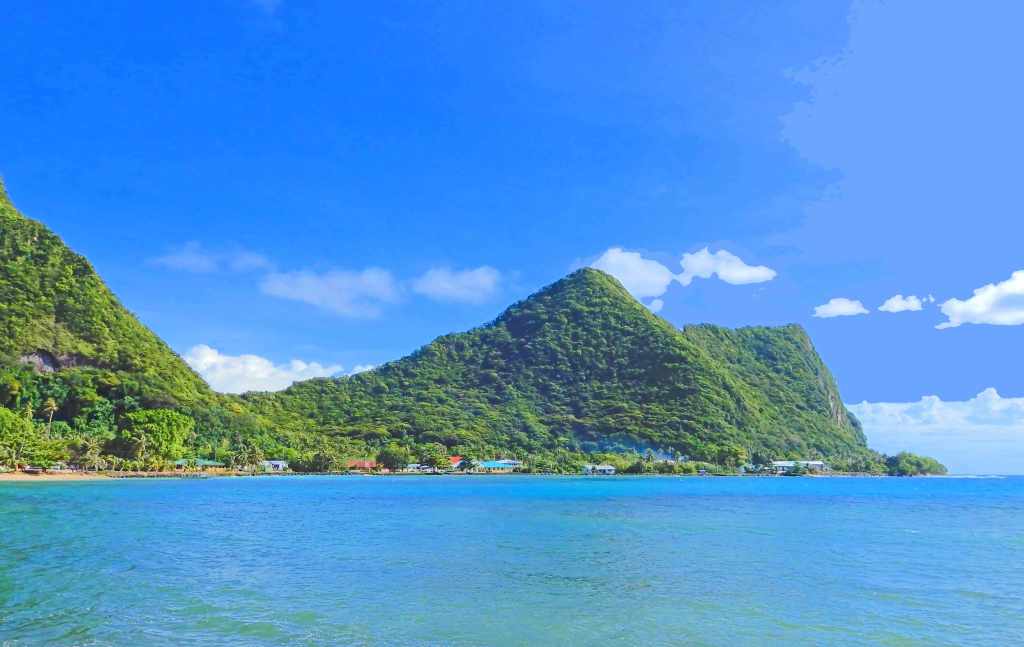
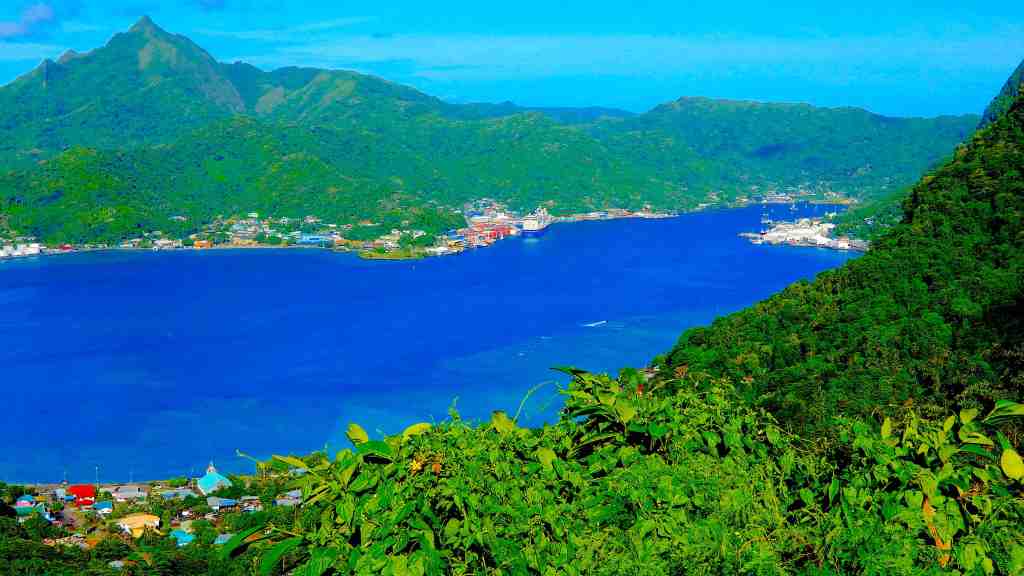
Pago Pago is the capital of American Samoa, located on the island of Tutuila. It serves as an important port and is known for its natural harbor, which is one of the largest in the South Pacific. The city and American Samoa have a rich cultural heritage, influenced by both Polynesian traditions and American governance.
Where Your Ship Docks
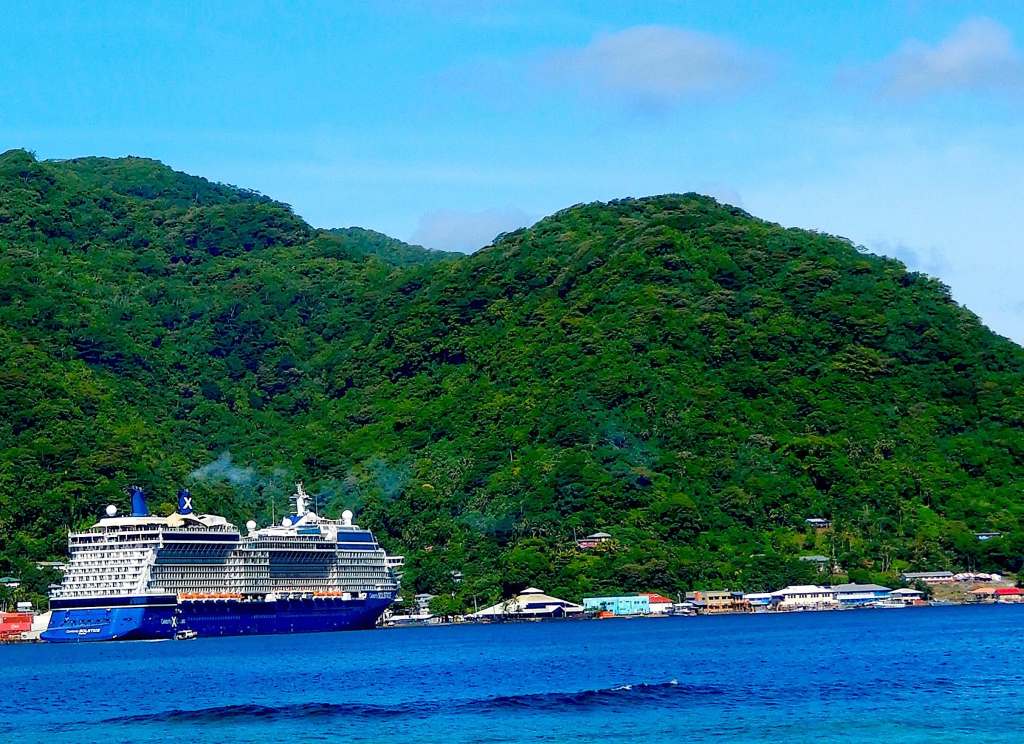
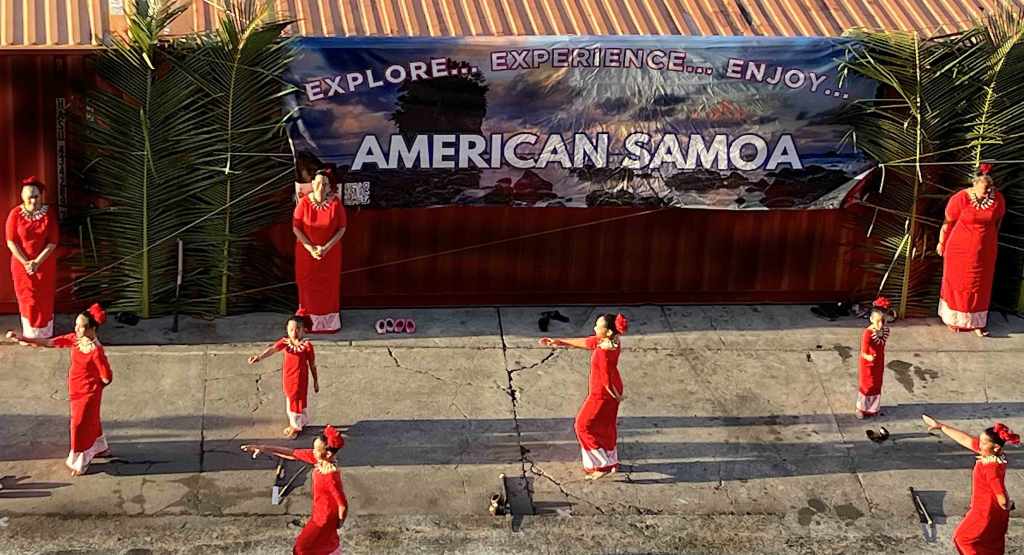
The port of Pago Pago has a large dock that can accommodate cruise ships and it’s located directly in the town. Public facilities are available a short walk from the pier. Expect to have your cruise ship greeted by Samoan Polynesian dancers that often include Miss American Samoa. Local crafters and merchants will usually be in a tent village right inside the port.
Wheelchair Accessibility
Disembarking – This port has a developed cruise ship pier but the ease of disembarking varies by the individual ship’s gangway designs. The Pago Pago pier disembarks right into downtown. For passengers using wheelchairs there can be a moderate ramp incline to deal with and uneven sidewalks in town.
Transportation
In Pago Pago and the surrounding area of American Samoa, transportation options include local “aiga” (family) buses, taxis, and car rentals. On Tutuila, the main island, aiga buses are a common and affordable way to travel, originating from the Fagatogo Market and serving various villages. Taxis are also available, and car rentals are recommended for exploring the island at your own pace.
Currency
American Samoa uses the U.S. Dollar and credit cards are accepted. There is some limited access to ATMs.
Communication Issues
Pago Pago, American Samoa has few cellular provider options and connecting with outside major international cellular companies may be difficult. That includes making phone calls, texting and using the internet. You should check with your cellular provider about service in American Samoa before you travel.
Attractions
Tutuila, the largest island in American Samoa, offers a wealth of attractions that highlight its natural beauty and cultural significance. Key sites include the National Park of American Samoa, with its visitor center right in town. It is the most distant park operated by the American Park Service and features lush landscapes and diverse wildlife, making it a must-visit for nature lovers. Visitors can explore scenic hiking trails such as the Lower Sauma Ridge Hike and ascend Mount Alava for breathtaking views of the island.
Screenshot
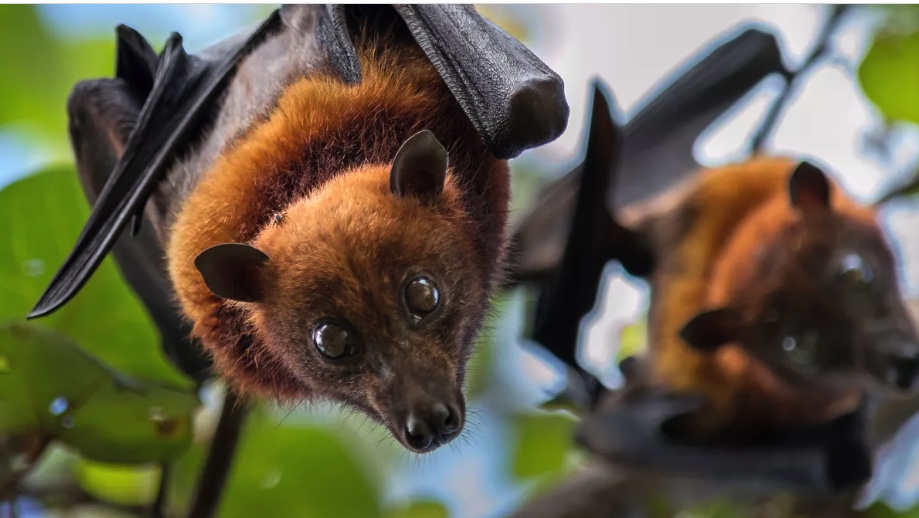
Fruit bats are one of the few wild animals in Samoa
Beaches like Two Dollar Beach provide opportunities for sun bathing and swimming, while cultural landmarks such as the Pago Pago American Samoa Temple and the Jean P. Haydon Museum offer insights into the local heritage. For those interested in exploring more remote areas, Cape Taputapu and Rainmaker Mountain are notable points of interest outside the national park.
Overall, Tutuila is a destination rich in both natural wonders and cultural experiences, appealing to a wide range of visitors looking to immerse themselves in the beauty of American Samoa.
Of Local Interest
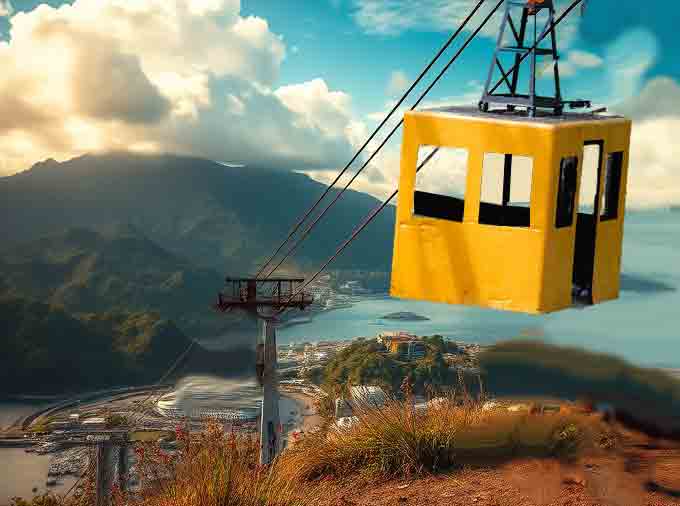
Cruise ships have been visiting Pago Pago for years and in the 50s and 60s cruise ships used to sail under the Pago Pago cable car that would stop in the middle of the harbor, and Samoans would throw hands full of flowers onto the ships as they sailed under. At the time, it was the longest spanning cable car in the world from point-to-point over water, because it spanned the harbor. On April 17, 1980, Samoa’s Flag Day, a U.S. Navy plane inbound to the Pago Pago airport hit the tramway cables and crashed outside the historic Intercontinental/Rainmaker Hotel killing all 6 onboard and 1 visitor on the ground. The tramway has never been repaired but there is a memorial site remembering the tragedy located above the harbor.
Some More Recent Posts From The Intentional Travelers You Might Find Interesting:
In Marrakesh, Morocco on a recent trip we were offered a dinner show promoted as being traditional belly dancing. Sure it’s part of the North African culture but considering how Muslim and conservative the northern part of Morocco is, belly dancing seems really out of place. During dinner there were a number of acts and the woman’s act featured in the photograph above made me nervous. Imagine a large room with lots of people, rugs and fabric everywhere and she dances around with lit candles balanced on her head? OSHA would not be pleased!
While there’s some disagreement over the origins and authenticity of Moroccan belly dancing, it is often referred to as Raqs Sharqi meaning “Belly Dance,”. It’s a vibrant and expressive dance form that is said to reflect the rich cultural heritage of Morocco. It combines various elements from different regions and cultures, into a unique style.
Marrakesh Grand Market
In Marrakech is the Jemaa el-Fna, a sprawling public square and marketplace in the Medina. It’s an exciting hub of activity, popular with both locals and tourists, and is considered the main commercial square of Marrakech.
Some More Recent Posts From The Intentional Travelers You Might Find Interesting:



















 The Intentional Travelers