

Touring Through The Heart Of France
Overlooked in favor of Paris, Rome, the Mediterranean beaches and the Alps, the Rhône region of France extends up the heart of France from Marseille on the Mediterranean, through historic Avignon, and includes Arles, the Roman city of Vienne, Lyon, France’s culinary heart and west of the Rhône in the Beaujolais wine region.

In this region the Rhône River winds its way west and south from Switzerland into France with it beginning at the Rhône Glacier in Valais, and flows to join the Saône River in the city of Lyon. From there it winds on past some of the region’s most significant landmarks dating back to the Roman era. Going on south past the Ardèche, the river moves past expanses of lavender and sunflower fields before it empties into the Mediterranean west of Marseille.
Most people, when they think of France, picture Paris, the French Riviera – Cote d’Azur, the beaches of Normandy, but not Roman ruins and Medieval castles. Travel up the Rhône through the heart of France and you will discover Avignon, the “City of Popes,” and the historic Papal palace, the massive Roman Colosseum of Arles, still hosting bull fights today, the ancient Roman city of Vienne, a number of castles and riverside villages dating back almost a thousand years.
If you’re considering a trip the best time to visit is in late June or early July. Usually the temperatures are moderate, the skies are clear and there are a remarkable number of seasonal festivals well worth investigating.
Avignon

Avignon, is the “City of Popes” and a good starting point going north. This walled city’s name dates back to the 6th century BC. The first citation of Avignon (Aouenion) was made by Artemidorus of Ephesus. The historic walled city, which includes the Palais des Papes, the cathedral, and the Pont d’Avignon, became a UNESCO World Heritage Site in 1995. The Papal Palace, the medieval monuments and the annual Festival d’Avignon have helped to make the town a major centre for tourism.


The Festival d’Avignon is an annual festival held every summer in July in the courtyard of the Palais des Papes along with other locations in the city. Founded in 1947 it is the oldest festival in France and one of the world’s largest. In addition to the official festival, often hundreds of theatrical shows are presented in Avignon at the same time of the year adding to the festivities.
The Avignon Papacy
The Avignon Papacy began when Pope Clement V, a Frenchman, was elected in 1305. Clement was under pressure from the French king, Philip IV, to move the papacy out of Rome. Philip was concerned about the growing power of the papacy and wanted to keep it under his control.
Clement agreed to move the papacy to Avignon, which was a small town in the south of France that was under the control of his Holy Roman Emperor. The move was met with protests from many Catholics, who believed that the pope should reside in Rome.
The Avignon Papacy was a time of great scandal and corruption. The popes lived in luxury and extravagance, and they were often more interested in French politics than in the spiritual needs of their flock and the church.
In 1377, Pope Gregory XI returned the papacy to Rome and stabilized the Papacy.
Arles

The Roman Colosseum of Arles

Near to Avignon is Arles. The Arles Colosseum and Amphitheater are one of the most popular tourist attraction in this city. They were built around the 1st century BC and the Colosseum was capable of seating over 20,000 spectators on three tiers. Today it has been mostly restored and is actually home to regular bullfights. After the Roman Empire fell the amphitheater became a shelter for the population of Arles and the Colosseum was transformed into a fortress with four defensive towers added.
Tournon Lamastre Steam Railroad

In the Rhone valley you’ll also discover the Tournon Lamastre Steam Railroad line. Enjoy full day or half day excursions on the Train of Ardèche as it travels through the mountainsides and the rugged gorges. It features open-air cars (in the warm months), beautifully restored old steam engines and incredible scenery. The train travels through rugged scenery in Doux Gorges, in Saint-Jean-de-Muzols. At the station of Colombier le Vieux – Saint-Barthélémy le Plain, the locomotive has to be turned round on a turntable and placed at the front of the train for the return trip.
The Wines of the Rhône
The Heart Of France’s Wine Country

Nobody should spend time visiting this region of France without sampling French wine. Some of the more widely recognized names include Côtes du Rhône, Châteauneuf-du-Pape and Beaujolais.
Côtes du Rhône are the basic AOC (Appellation d’Origine Contrôlée) wines of the Rhône region, and exist as red, white and rosé wines, generally dominated by Grenache for reds and rosés, or Grenache blanc for whites.
Châteauneuf-du-Pape Not far from Avignon is a region famous for the production of red wine classified as Châteauneuf-du-Pape Appellation d’origine contrôlée which is produced from grapes grown in the commune of Châteauneuf-du-Pape and in portions of four adjoining communes. The name comes from the designation of the wine of the Pope. A ruined medieval castle sits above the village and was built in the 14th century for Pope John XXII, the second of the Popes to reside in Avignon. None of the subsequent Avignon Popes stayed in Châteauneuf but after the schism in the church in 1378 the antipope Clement VII sought refuge in the castle.
Beaujolais Our trip included time visiting the Beaujolais wine region to the north of Lyon along with a number of quaint Provençal villages. Today the region is known world wide for the popular Beaujolais nouveau. It is the most popular vin de primeur, fermented for just a few weeks before being released for sale on the third Thursday of November. This ‘Beaujolais Nouveau Day’ is recognized everywhere, with races to get the first bottles to different markets around the globe.
The Village of Beaujeu

The village of Beaujeu is the heart of the region and where the famous Beaujolais gets its name. The French tradition is to name a region after a central town. This region is famous for its growing conditions with lots of sunshine and its granite-based soils lending a unique character to their wines. The Gamay grape is used to make all Beaujolais wines with the exception of white Beaujolais, or Beaujolais blanc, which is made of Chardonnay grapes. Most of the harvesting is made manually in the Beaujolais region. Handpicking means entire bunches are vatted to allow a specific sort of maceration. This winemaking is specific to the Beaujolais region.
Traveling through the hilly Beaujolais you’ll be struck by the shear number of acres devoted to vineyards. From whole hillsides down to small backyard vineyards, grapes are growing everywhere and most everything seems to involve wine. Visited the Chateau de Varennes for a wine tasting. It’s an estate that is listed as a “VMF Historic Heritage” site and has been in the same family since 1809 with buildings dating back to the 11th Century. The Château itself is a beautiful period castle from the 16th century located in the heart of vineyards and overlooking the Samson valley. It’s a beautiful location with panoramic terrace views and an impressive Renaissance entry court.
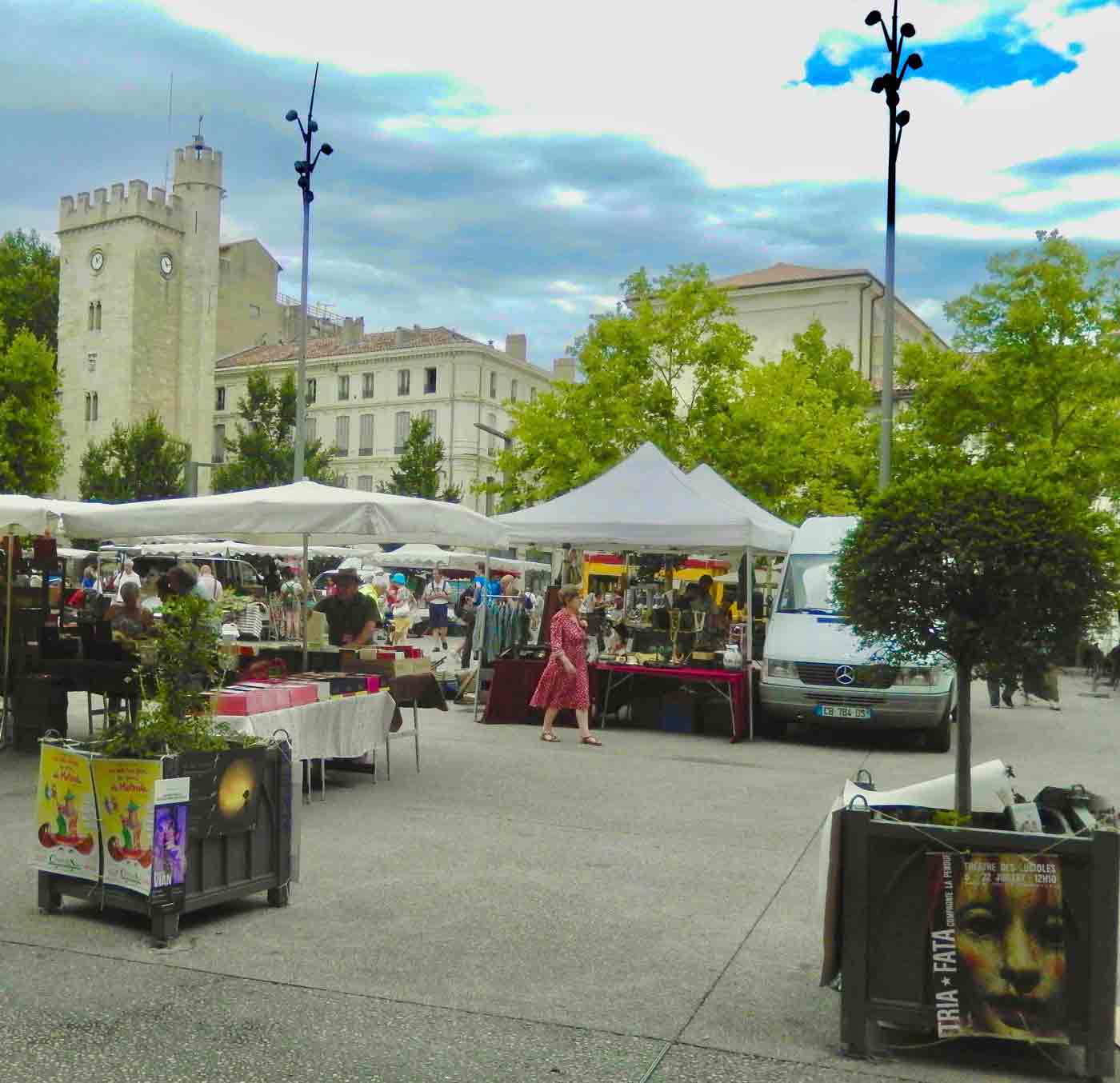


Roman Ruins in the Rhône Valley
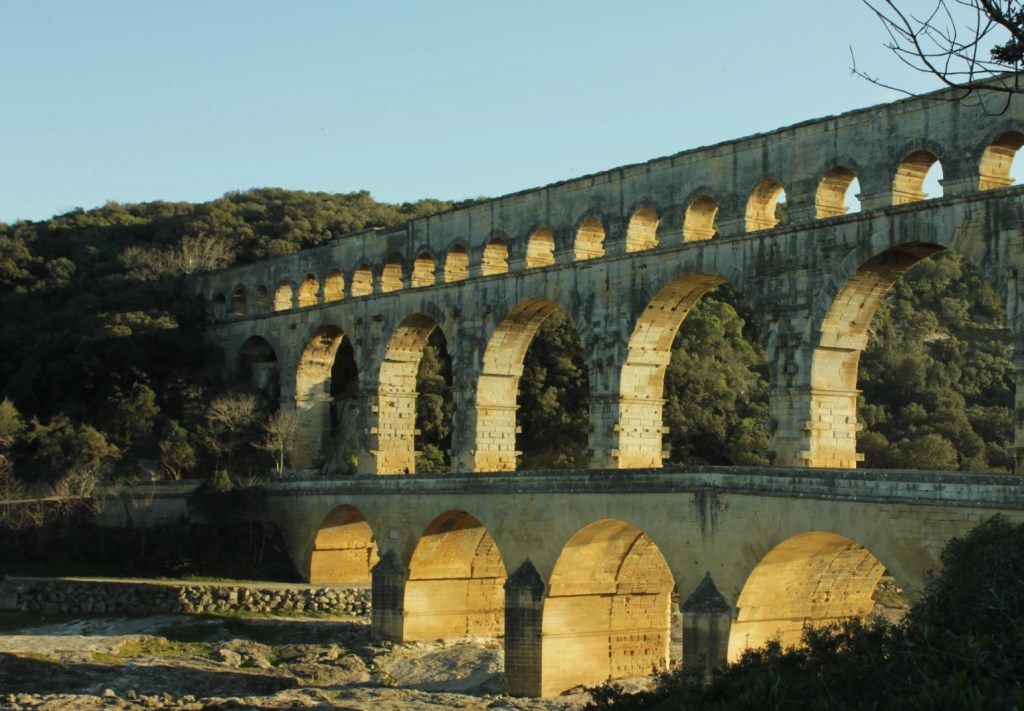
From the 1st century AD for several hundred years the Rhône region was the commercial heart of the Roman Empire and today you’ll see signs of its importance everywhere you travel.

- The Pont du Gard: This aqueduct, pictured above, is one of the most well-preserved Roman structures in the world. It was built in the 1st century AD to carry water from the Eure River to the city of Nîmes.
- The Colosseum and Amphitheatre of Arles: This amphitheater was built in the 1st century AD and could seat up to 20,000 spectators. It was used for gladiatorial contests, animal fights, and public executions. Today it still holds bull fights.
- The Theatre Antique of Orange: This theater was built in the 1st century AD and could seat up to 10,000 spectators. It is still used today for performances of opera, ballet, and classical music.
- The Maison Carrée in Nîmes: This temple, pictured below, was built in the 1st century BC and is one of the best-preserved Roman temples in the world. It is now a museum.

- The Alyscamps in Arles: This necropolis was used for burials from the 3rd century AD to the 19th century. It is now a public park.
Castles On The Rhône
In addition to the remains of a number of Roman cities the region is also famous for its castles. Dating from the 12th-century through the 16th-century many are open to the public.
- Château de Pierreclos: This 12th-century castle is located in the Beaujolais wine region. It is now a hotel and restaurant, but visitors can still explore the grounds and gardens.
- Château de Tournon-sur-Rhône: This 14th-century castle is located in the city of Tournon-sur-Rhône. It is now a museum, and visitors can see the restored state rooms and the castle’s gardens.
- Château de Grignan: This 16th-century castle is located in the town of Grignan. It is now a popular tourist destination, and visitors can see the castle’s state rooms, gardens, and the nearby lavender fields.Opens in a new windowTripAdvisorChâteau de Grignan castle on the Rhone

- Château de Suze-la-Rousse: This 12th-century castle is located in the town of Suze-la-Rousse. It is now a museum, and visitors can see the castle’s state rooms, dungeons, and the nearby vineyards.
- Château de Rochemaure: This 12th-century castle is located in the town of Rochemaure. It is now a museum, and visitors can see the castle’s state rooms, dungeons, and the nearby waterfalls.
If you’re considering a trip to the Rhône region of France a great way to experience it is to take a river cruise. Most take a week or more and will travel between Lyon and Marseille offering lots of opportunities for interesting exploration.
 The Intentional Travelers
One thought on “Visiting The Rhône River Valley”