

Visit a place full of old European charm but with a tropical vibe. the Azores have deep continental roots but enjoy sub-tropical climate as they’re bathed by the Atlantic Gulf Stream. Average temperature range from a low of 57°F in winter to an average high of 73°F in summer.
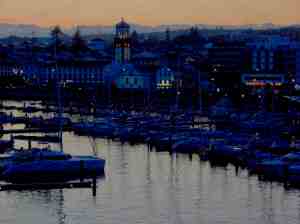

The Azores are 850 miles due west of Portugal on a volcanic archipelago consisting of nine major populated islands. The islands are a possession of Portugal but are characterized officially as the Autonomous Region of the Azores (in Portuguese they are the Açores). Considering the autonomy, we found it odd that there appears to be an independence movement declaring itself with stencils on a number of walls. One local described that as people with nothing better to do and few take it seriously.

Geologically the archipelago sits over an ancient hotspot on the Gibraltar Ridge near the eastern side of the Mid-Atlantic Rift. There is still geo-thermal activity on the islands in the form of warm springs and mud baths. A short drive outside the city of Ponta Delgada are the blue and green twin lakes in a dormant caldera which have become a major tour destination.
Because of their proximity to the Gulf Stream the archipelago has an amazing climate. Year round the average high temperature ranges from 65° to 78° and rarely make it to the low eighties. There has also never been a recorded temperature near freezing. Because of this the foundations of the economy are agriculture, fishing and dairy farming with tourism recently developing into a major new sector. One of the major cash crops is pineapple with grape vineyards also being important.
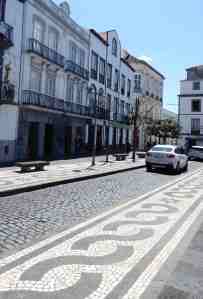

Ponta Delgada, São Miguel: The capital city of the Azores, known for its charming historic center, beautiful churches, and vibrant markets.
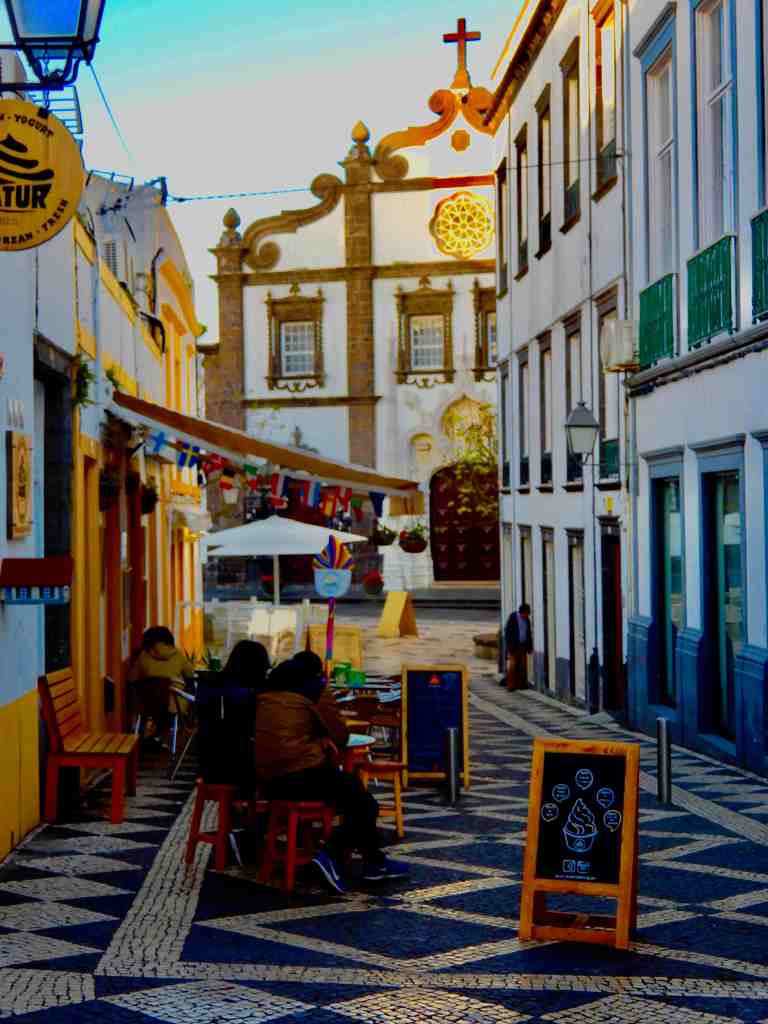
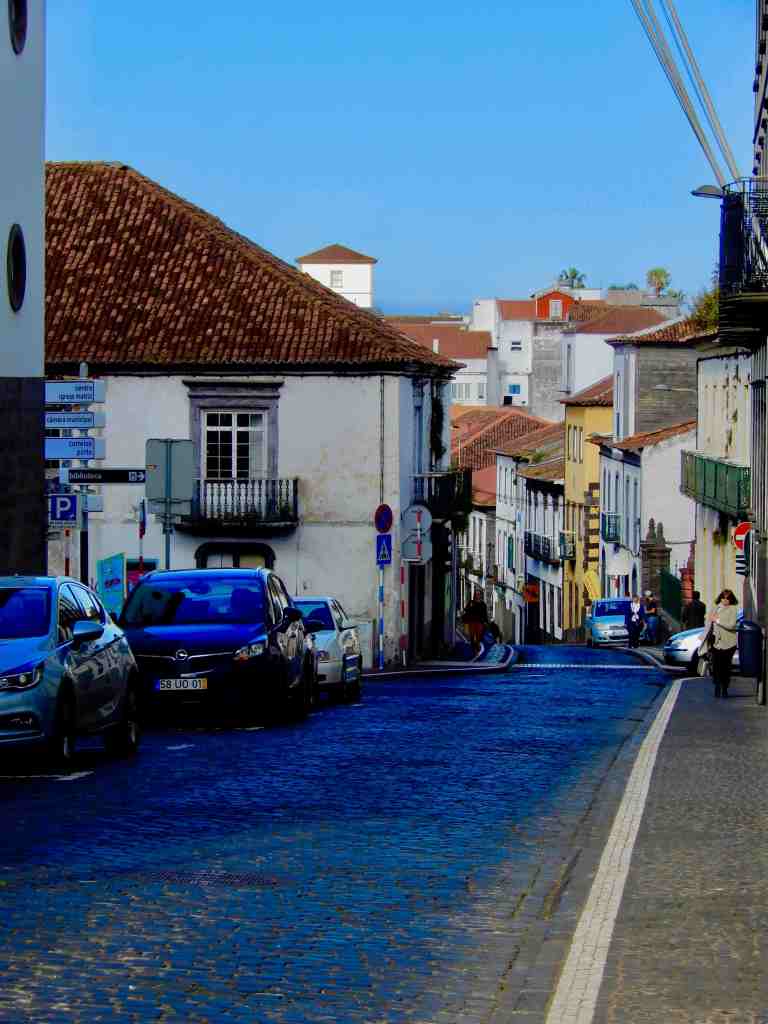
It is the largest city in the archipelago and you have to admire a city where all the streets and sidewalks consist of mosaics of black and white rock pavers. Maybe this has a practical explanation but the artistry involved left us stunned. I’m not sure we have seen anything like these before. The pace of life here seems relaxed with numerous outdoor cafes and restaurants. As is expected, seafood is the cornerstone of the diet with a decidedly Mediterranean flavor.
Gruta do Carvão: Explore the volcanic caves on São Miguel Island and witness unique geological formations.
Lagoa do Fogo: A stunning crater lake on São Miguel Island surrounded by lush greenery, perfect for hiking and enjoying nature.

Sete Cidades: This twin lakes located on São Miguel Island is a natural wonder with breathtaking views and hiking trails.
The other islands of the Azores archipelago offer many stunning sights including:
Furnas: Famous for its geothermal activity, you can visit hot springs, geysers, and enjoy a traditional Cozido meal cooked underground.
Pico Island: Home to Mount Pico, the highest peak in Portugal, where you can hike and enjoy panoramic views of the entire archipelago.
Faial Island: Visit Horta, a picturesque town known for its colorful marina, and explore the stunning volcanic landscapes.

Terceira Island: Discover the UNESCO World Heritage city of Angra do Heroísmo, with its historic streets, fortresses, and beautiful colonial architecture.
Not surprisingly the islands occupy a strategic position in the North Atlantic with a fifteenth century fortification protecting Ponta Delgada harbor. During the Second World War the Allies used the islands as a base to protect the sea lanes and and it was a base for airplanes hunting German submarines. Even today the United States Navy uses them as a refueling station for ships and aircraft heading back and forth across the Atlantic.
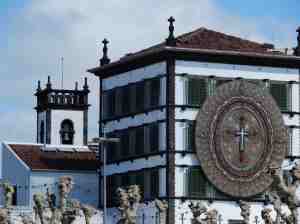
Because of the location of the archipelago it is on a major migration route for a number of whales and other sea mammals as well as a favorite wintering location for some. Blue whales, Sperm whales and Humpbacks are frequently sighted and whale watching is a growing attraction for tourists. The city has a number of impressive Catholic churches and a beautiful theatre which seems to favor ballet, symphonies and opera singers. Ponta Delgada is also a favorite stop for yachts and ocean racing sailboats and the waterfront and Yacht Club area is a good place in the evening to sit and enjoy a coffee or glass of local wine or port and admire the expensive boats tied up.
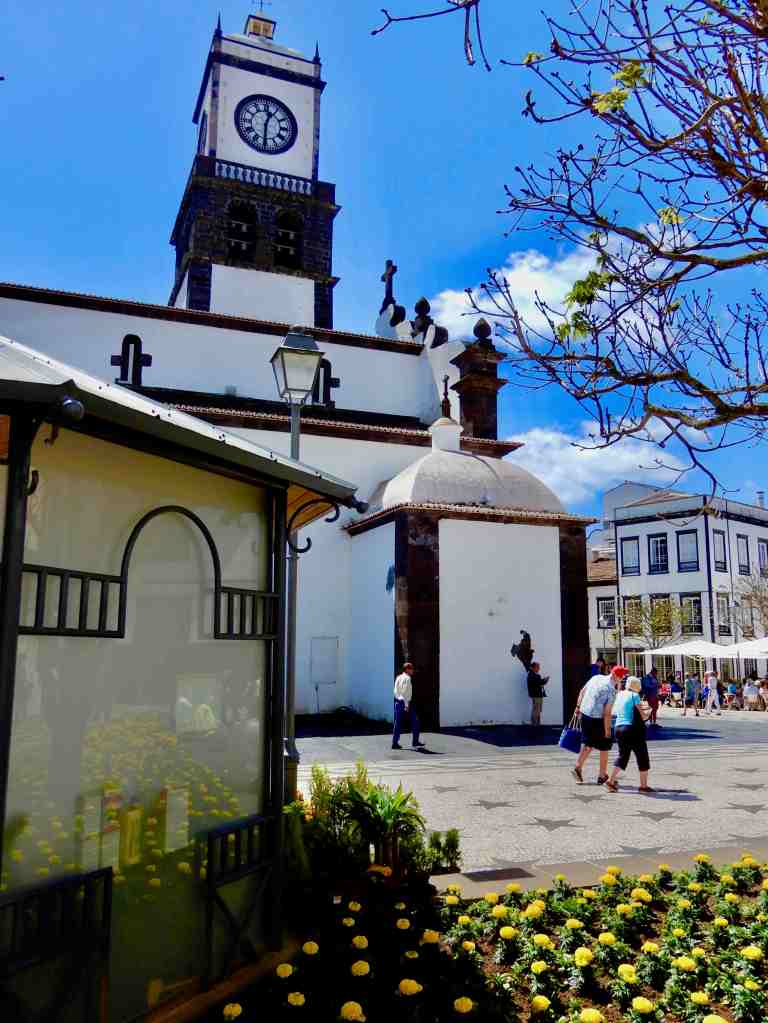

Sun worshipers also flock to this archipelago year round to enjoy the fabulous beaches:
Praia Formosa (Santa Maria Island): This long sandy beach is popular for its crystal-clear waters and tranquil atmosphere. It offers excellent conditions for swimming, sunbathing, and water sports.
Praia da Vitória (Terceira Island): Located near the city of Praia da Vitória, this beach is known for its golden sand and calm waters. It has good facilities, including a promenade, restaurants, and bars.
Praia do Almoxarife (Faial Island): Situated on the western coast of Faial Island, this beach offers beautiful views of Pico Island. It is a great spot for swimming, surfing, and enjoying the picturesque surroundings.
Praia de Água d’Alto (São Miguel Island): Located on the south coast of São Miguel Island, this beach is known for its volcanic black sand and clear waters. It is a popular spot for swimming, snorkeling, and sunbathing.
Praia dos Mosteiros (São Miguel Island): Situated on the north coast of São Miguel Island, this beach is famous for its unique rock formations and natural pools. It is a great place to relax and enjoy the scenic beauty of the Azores.
 The Intentional Travelers
One thought on “Visiting the Azores”