
Lakeland, Florida isn’t usually considered a Sunshine State tourist destination but it still has some real overlooked jewels worthy of a visit. One particular gem is a small Methodist college with an amazing history. In 1938 the college convinced America’s greatest architect to take on the project of redesigning its entire campus making the school a landmark..
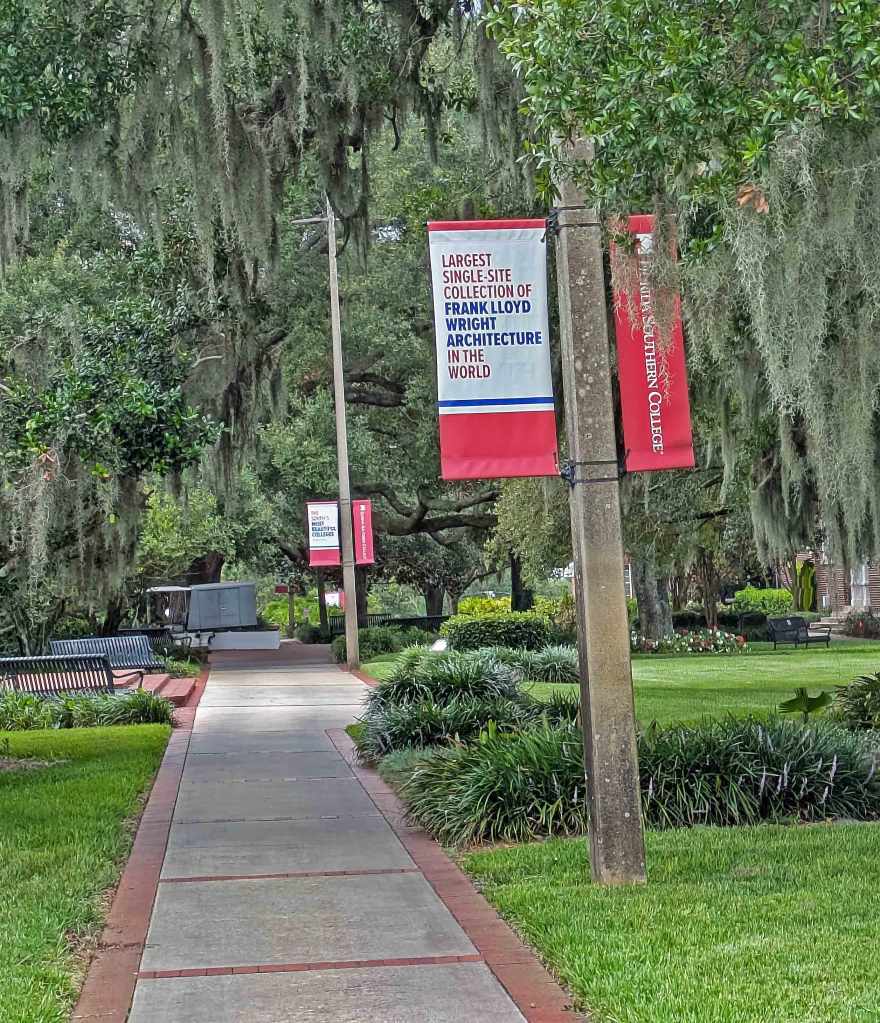
Florida Southern College hired Frank Lloyd Wright in 1938 after Wright’s son, John Lloyd Wright, had worked on a project with the college president, Ludd Spivey. Spivey was impressed by Wright’s work and invited him to submit a proposal for the campus design. Wright was one of several architects considered, but the board of trustees ultimately selected him due to his reputation in addition to his innovative and forward-thinking concepts.

Considered by many as America’s greatest twentieth century architect, Frank Lloyd Wright (1867-1959) was an architect, interior designer, writer, and educator and is known for his designs and contributions to the Prairie School architectural style. He designed over 1,000 structures, including Falling Water in Pennsylvania, the Guggenheim Museum in New York City, and the Robie House. He also was the creator of “organic architecture,” which emphasized harmony between buildings and their natural surroundings. Wright’s work has had a profound impact on architecture and design. He is credited with shaping the modern architectural landscape and inspiring generations of architects.


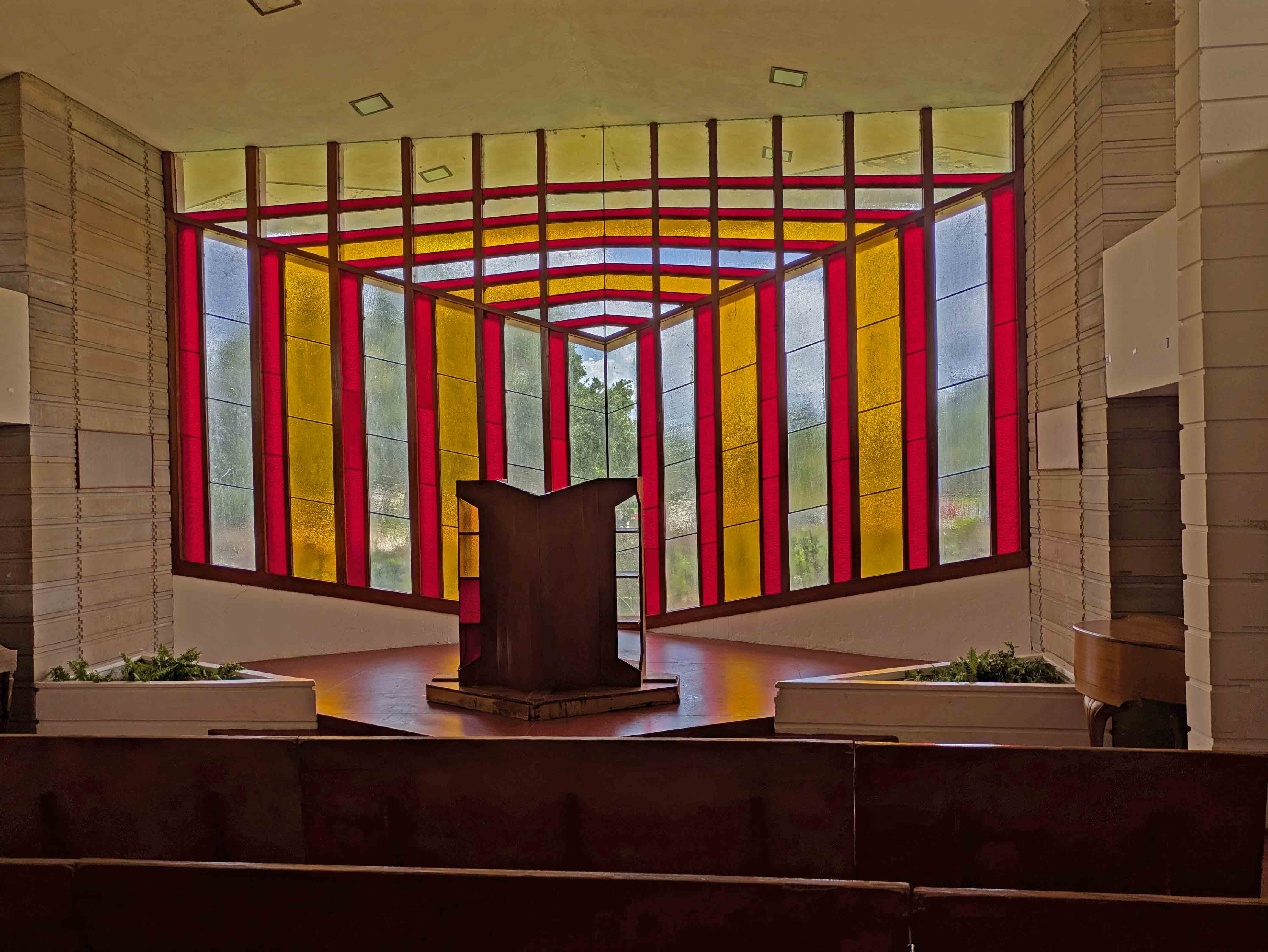
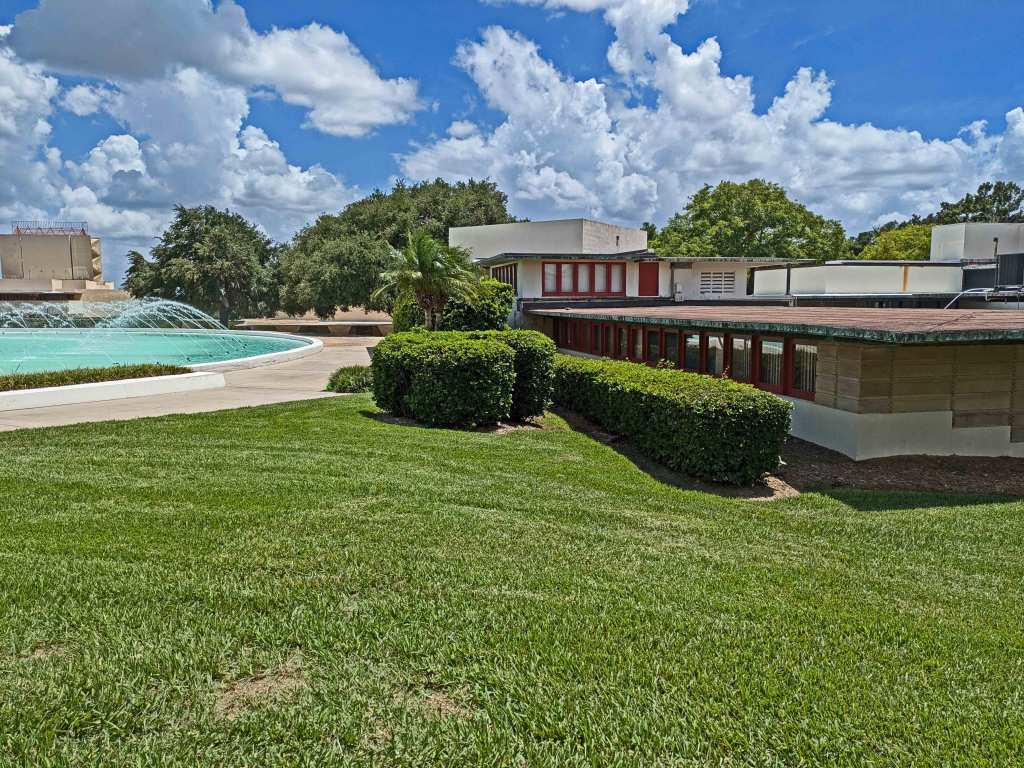
The college campus in the city of Lakeland, Florida became one of Wright’s largest projects that occupied years of his life. These buildings, collectively known as the “Child of the Sun” campus, are considered masterpieces of Wright’s organic architecture style, and reflect his belief in harmony between nature and architecture. He used natural materials like Florida beach sand mixed concrete, bricks, and cypress wood to create buildings that blend seamlessly with the surrounding landscape. His signature geometric shapes and open floor plans are also evident in the campus structures.

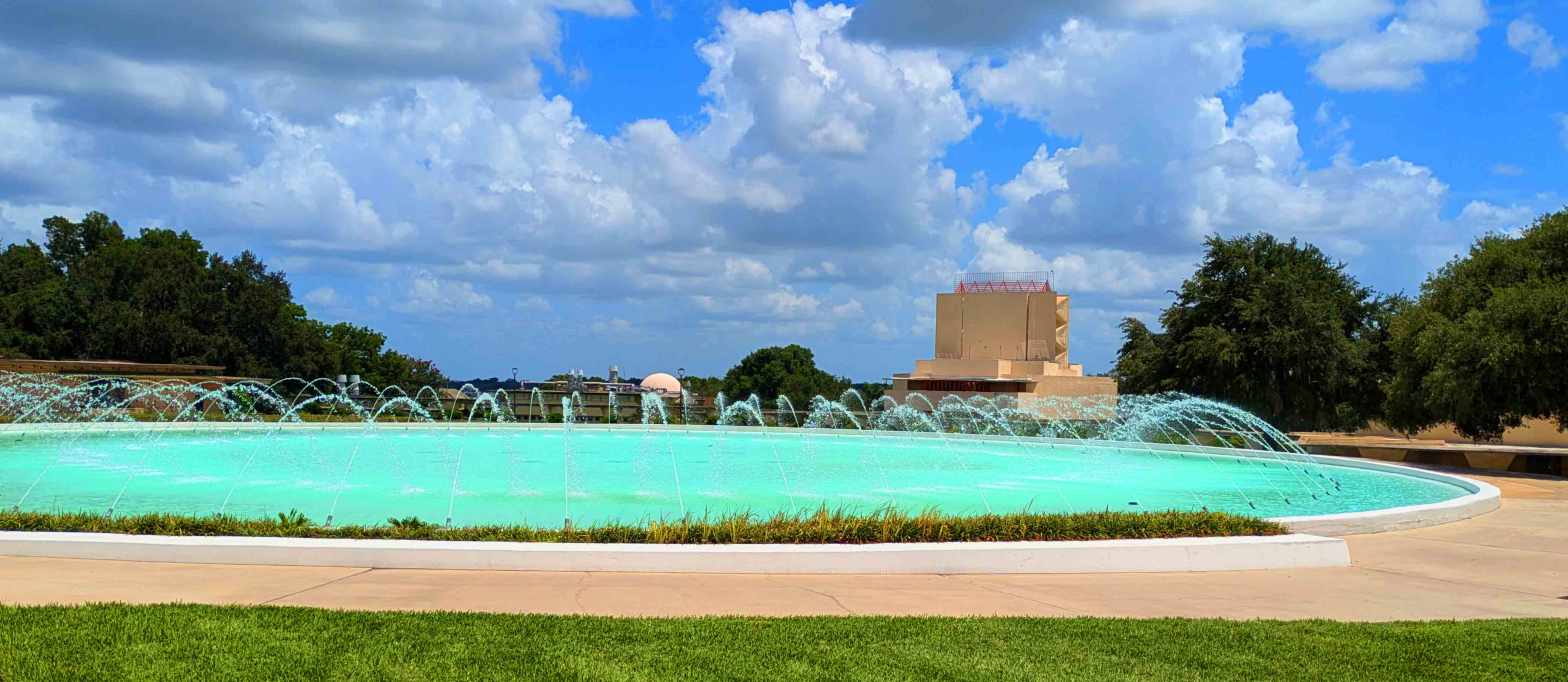
Some of the most iconic buildings designed by Wright at Florida Southern College include the Annie Pfeiffer Chapel, the Esplanade, and the Water Dome. The Annie Pfeiffer Chapel, with its spiraling roof and stained-glass windows, is considered one of Wright’s most significant religious structures. The Esplanade, a long, covered walkway, connects many of the buildings on campus and features a series of arches and columns. The Water Dome, a circular building with a reflecting pool, was originally intended as a library but now serves as an administrative building.
Arrange Guided Tours HERE

Tours begin at the Sharp Family Tourism and Education Center and GEICO Gift Shop. It was opened as part of an ongoing effort to better educate visitors to the Frank Lloyd Wright architecture at Florida Southern College.
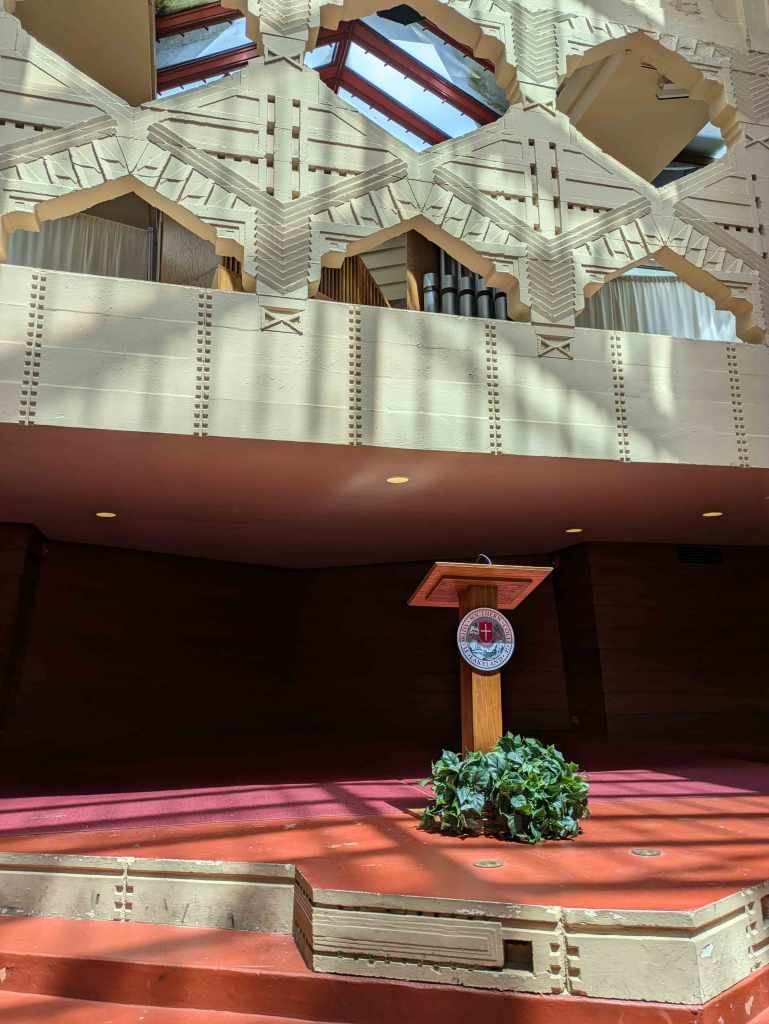
There are several Frank Lloyd Wright tour options for visiting the campus starting with the Basic Campus Tour. It’s a 90-minute guided tour led by one of our experienced docents. The tour begins with an overview of the campus project, detailing how Frank Lloyd Wright assembled his vision for the college as well as the unique method of construction he chose for the site. As you walk the campus grounds, your guide will inform you of the history and design of all 13 Wright-designed structures. Additionally, the interiors of the Annie Pfeiffer Chapel, the Danforth Chapel, and the new Usonian Faculty House are visited.
Reservations are recommended and cos from $35 per person (Ten percent off for members of AAA, AARP and Active/Retired Military). Duration: 90 minutes Schedule: 10:00 AM and 2:00 PM – 7 days a week
Driving Directions: From Interstate 4, take exit #32 (US 98 South) The name of the street changes to S. Florida Avenue. Stay on South Florida Avenue about a half mile past the downtown area. Turn left on Frank Lloyd Wright Way (formerly McDonald St.) and go six blocks. The Tourism and Education Center is on the corner of Frank Lloyd Wright Way and Johnson Avenue in the butterscotch colored bungalow.

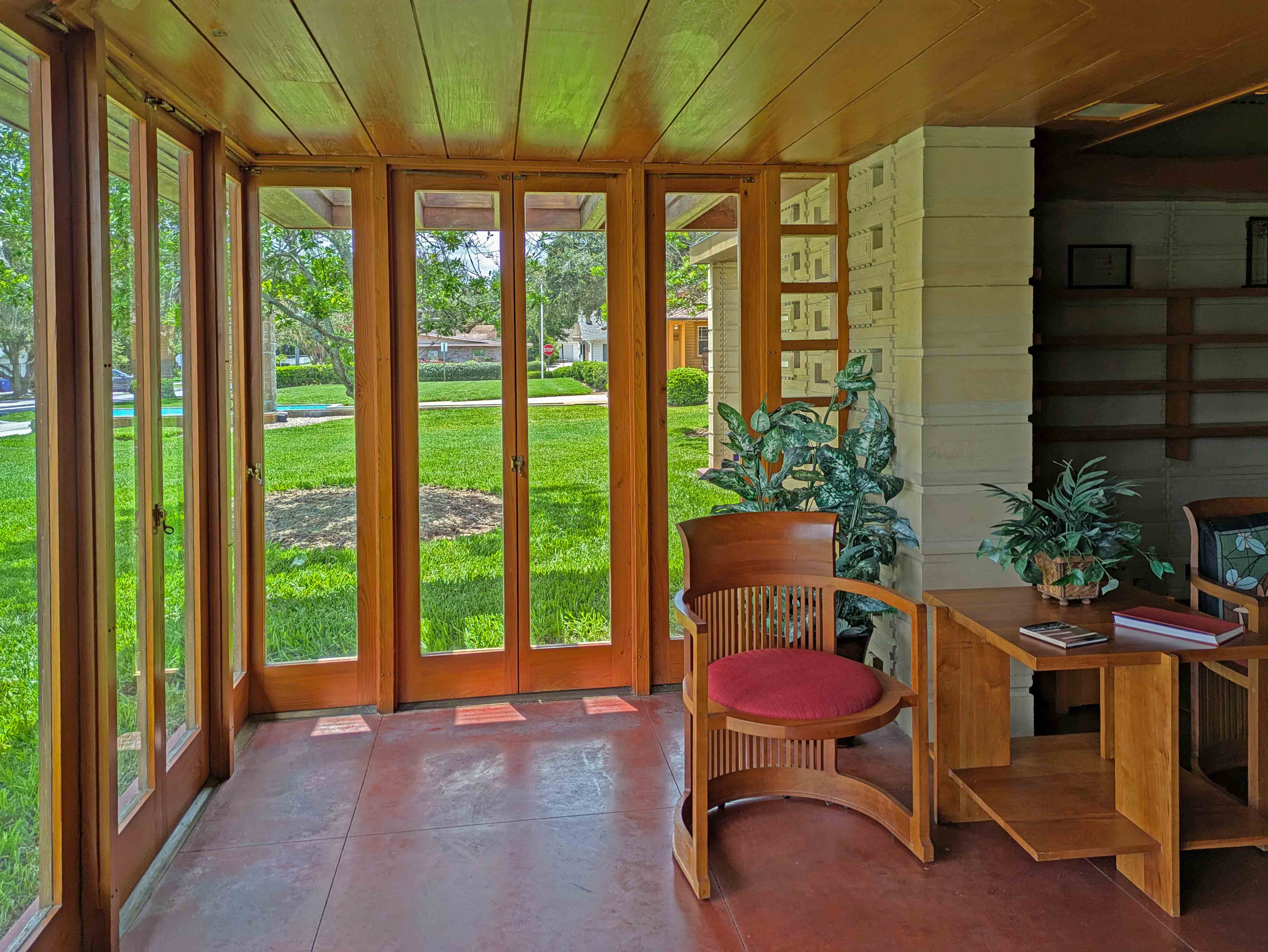
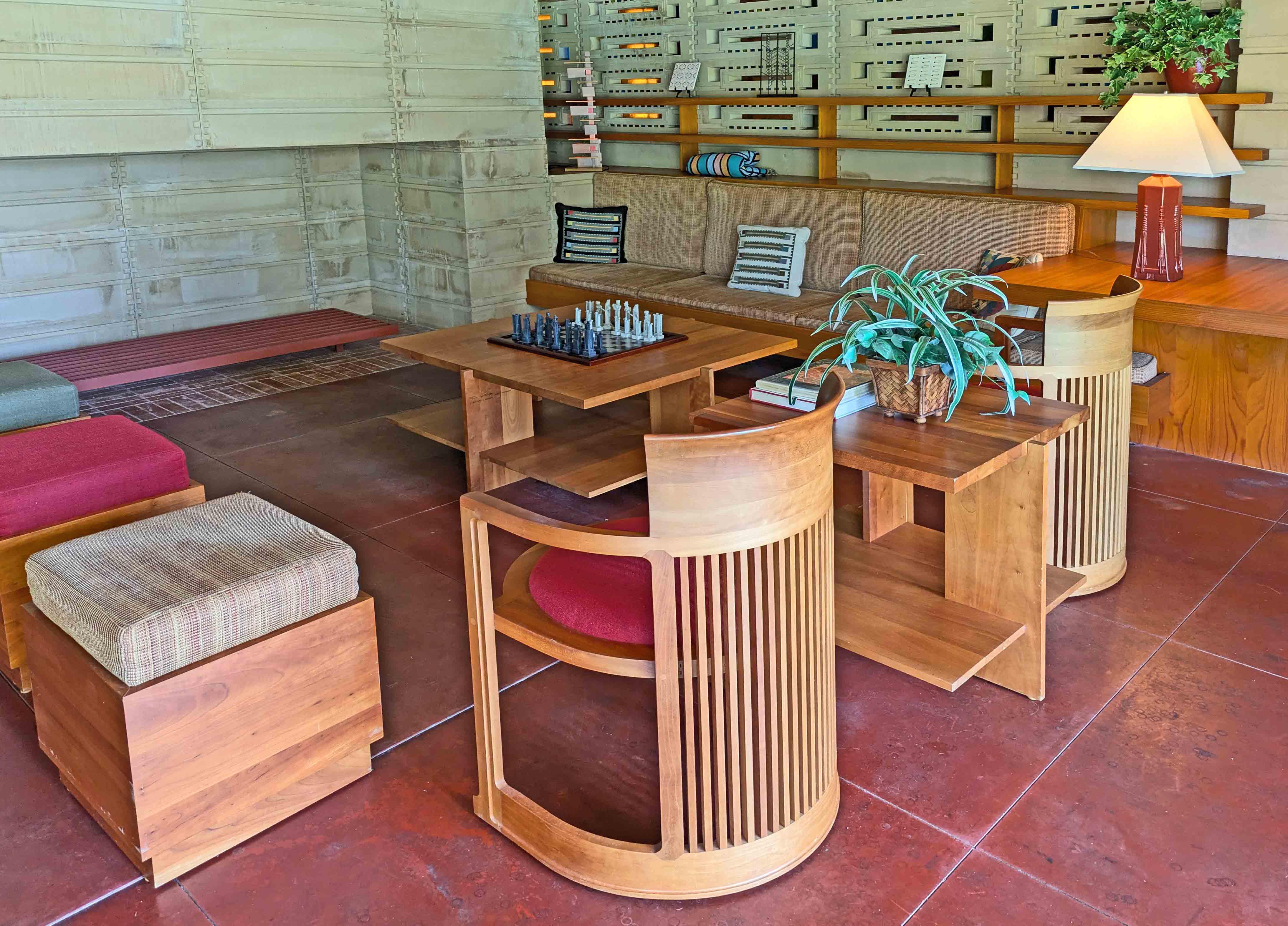
Above – Wright also intended there to be a cluster of single family home for the faculty located next to the campus. The community was never built but one house was eventually built from his plans and it’s located next to the The Tourism and Education Center and is included on the tours.




 The Intentional Travelers