
Three Real Legends Of The Yukon Gold Rush,
Jack London
One of the most enduring and widely known legends of the Klondike Gold Rush concerns Jack London, a young man who came to Alaska looking for gold. While he didn’t strike it rich, he turned his Klondike adventures into fame and fortune with legendary short stories and books like Call of the Wild.

The story begins when Jack turned 21 and dropped out of college to make a living as a writer. Soon after news of gold in the Klondike inspired him to head north in search of treasure. Booking passage on the steam ship Umatilla, he sailed for Alaska along with his 62-year-old brother-in-law. Disembarking in Juneau on August 2, 1897 and having hooked up with three other men, the group picked up about five tons of supplies and canoes and set off for Skagway.
Initially starting inland from Skagway, they reached the White Pass where Jack wrote of the incredible scene they found. “Horses died like mosquitoes in the first frost, and from Skaguay to Bennett they rotted in heaps,”
Because of the disaster in the White Pass and already being warned about Soapy Smith’s men*, the group went eight more miles to Dyea and struck out for the Chilkoot Trail. Reaching the Yukon a month later they set up camp. Jack’s original log cabin was built on the North Fork of Henderson Creek, 100 miles south of Dawson City.
Mollie Walsh 1872 – 1902
The Belle of Skagway
As the story is recounted Mollie was a resourceful and independent young woman with wanderlust and a love of wild places. In 1890, she left home at 18 for Butte, Montana where she lived for seven years. She traveled to Skagway in 1897 and became a popular waitress and a member of the humanitarian activities of the Skagway Union Church. When her civic activities crossed Jefferson “Soapy” Smith* she feared retaliation and quickly left Skagway moving up to the White Pass near the Canadian Mountie station where she established a cook tent.

Bust of Mollie in her park in Skagway, Alaska
Over the spring of 1898 thousands of gold rushers told stories of her charm and grace. Jack Newman and Mike Bartlett, both respected “packers” were serious suiters, but Mike finally won her heart. In 1900 they were married in Dawson and had a child and were blessed with prosperity until Mike took to drinking and got into trouble in Nome.
Molly fled to Seattle with their child but Mike came after her. He found her in 1902 and in an argument Mollie fled down an alley where he caught her and shot her dead.
In 1930 Jack Newman, who never stopped loving Mollie commissioned a statue of her that was unveiled in a Skagway park named for her. At its unveiling he was recorded as saying that “on her headstone should be inscribed: Here Lies Drama!” The bust still stands in that Skagway park.
* Jefferson “Soapy” Smith
“Soapy” Smith was a notorious American con man and gangster in frontier America. Smith operated confidence schemes across the Western United States, and had a large hand in organized criminal operations in both Colorado and later Alaska.

Born November 2, 1860, Coweta, GA. He died on July 8, 1898 in Skagway, Alaska. He’s buried in Gold Rush Cemetery, Skagway.
In Colorado “Soapy” Smith was tied up with a network of thieves and conmen, along with crooked cops and through them gets information on a big opportunity up in Alaska. He comes to Skagway in 1898 and builds a saloon (pictured above is Soapy in his saloon). Soapy had no intention of going to the Klondike to pan for gold but saw Skagway as the place to get rich by conning the people pouring through on the way to the Yukon gold fields.
He sets up the rackets he ran in Colorado in Skagway. He gets a crew together and sets up several schemes to fleece the people coming through town. One con was where he earned his nickname. It was to sell bars of soap wrapped up in paper with a claim that some of bars contained money inside. His gang would buy “special” bars and show off to the crowed how much money they made. Another operation involved a phony telegraph office. There wasn’t an actual working telegraph line in Skagway, but people would pay him to telegraph loved ones they had arrived, and the reply would come back saying ‘please send money’ which Soapy would collect and pretend to telegraph out.
Soon the more proper businessmen learned that the word was out that Skagway was full of crooks trying to swindle people out of their grub stakes or gold and people began to avoid Skagway. The good people of Skagway decided enough was enough, and in the summer of 1889 decided Soapy had to go. Hearing about it Soapy got drunk and tried to go to a town meeting to confront the town’s people. The story says he brought his shotgun along and one Frank Reed, an unofficial guard, confronted him. The story ends with them shooting each other simultaneously. Soapy was 38 and his body is laid to rest in the Skagway gold rush cemetery.
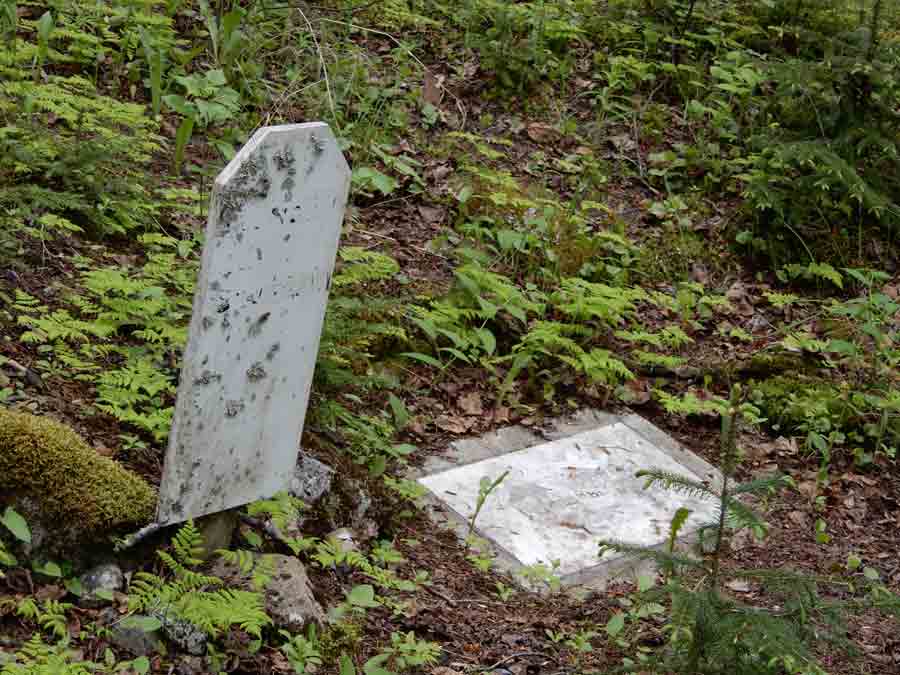
Gold Rush Cemetery, Skagway

 The Intentional Travelers