

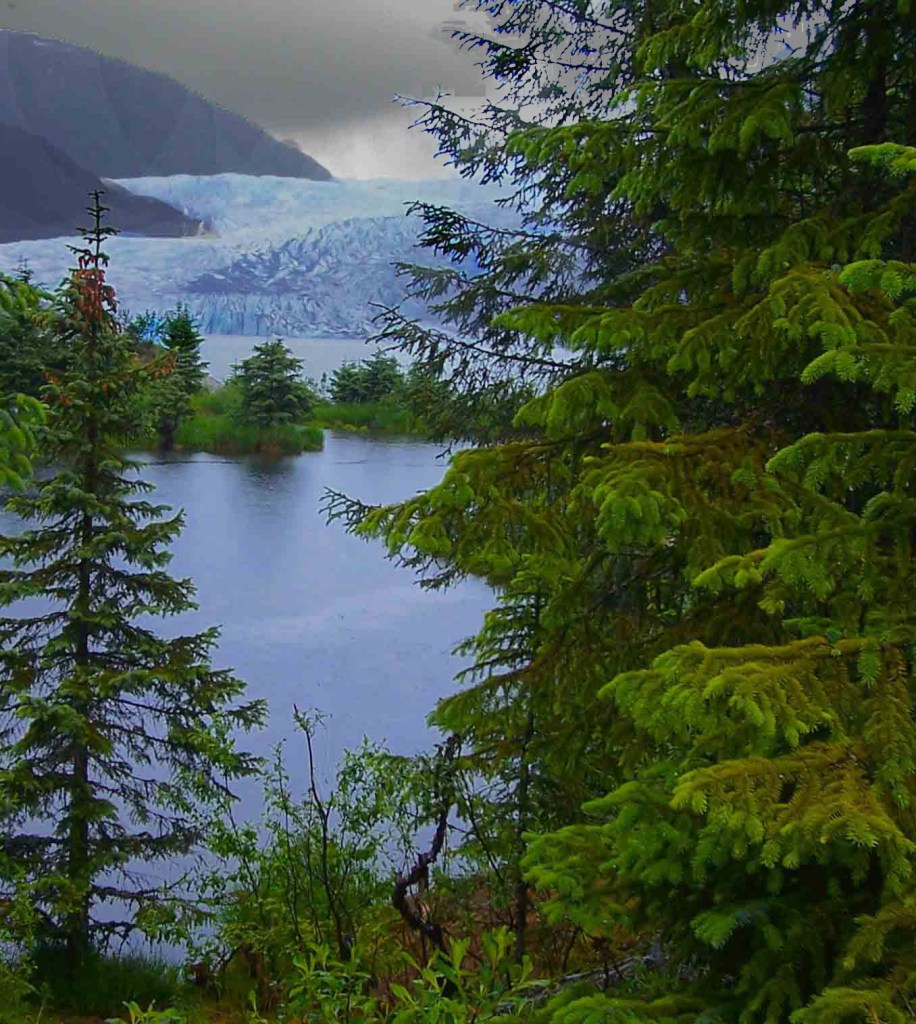
Pictured above is an image of Mendenhall Glacier and it’s only a bus ride out of Juneau Alaska. Managed by the National Park Service it features numerous hiking trails and a great Visitor’s Center.
Glacial lakes like Mendenhall Glacier’s lake above, are a special feature of many glaciers and most offer a unique ecosystem. Formed as a result of glacial melting, they are typically found in regions where glaciers have retreated, leaving behind an accumulation of rock, dirt an ice forming a dam, called a moraine, in front with a depression that fills with meltwater. Glacial lakes are known for their crystal-clear water from the lack of sediment runoff that gives the water an incredible blue color. This contributes to making the area landscape visually striking as the area around the lake creates an environment for rapid growth of trees and other vegetation.

Anatomy of a Glacier
The dynamics of a glacier has more to do with snow fall than warming temperatures. Glaciers begin their life at higher altitudes with accumulating heavy snowfall. Scientists call this a glacier’s accumulation area that’s always caused by a wealth of heavy snowfall. As the snow compresses from the weight of additional snowfall it turns to ice that slowly pushes down and forward into lower elevations. The mass of ice pushing forward is relentless sheering off earth and rocks and carrying them with it much like it’s a very slow motion river. The other end is a glacier’s terminus called the ablation area, located at lower elevations, it loses ice through melting (downwasting) or calving if it ends at the sea. As it melts and retreats it leaves behind the accumulated dirt and rock creating a moraines which act as dams for the melt runoff. A glacier’s terminus or face advances when more snow and ice amass than melts, and it retreats when melt exceeds accumulation. When melt equals accumulation, a glacier achieves equilibrium and its face remains stationary. Whether the glacier’s face is advancing or retreating, glacial ice persistently glides down-valley shaving off anything above the geological bedrock.
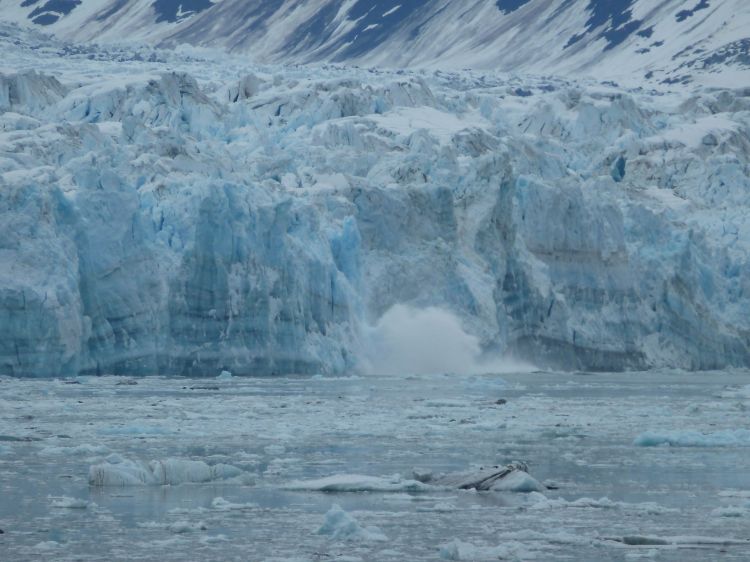
Mendenhall Glacier outside of Juneau (pictured below) is a classic of this glacial process. It shows evidence of advancing until the mid eighteenth century and has been retreating since. The retreat is mostly caused by reduced snowfall at its higher elevations. Alaska’s Hubbard Glacier (pictured above) is actually still growing (advancing) but mostly seems static because it is calving into the sea.

Here Are A Few Our More Recent Posts You Might Find Interesting…

AN IMPORTANT MESSAGE FROM
The Intentional Traveler Please take a minute to read. This is Dennis, the creator of THE INTENTIONAL TRAVELER and I have an important announcement and a favor to ask. I started this site almost fourteen years ago and have amazed myself at how big it has become, but all good things come to an end.…



Discovering Kruger National Park, South Africa
Visiting Kruger: The Ultimate Safari Experience For The Trip Of A Lifetime Rated as one of the world’s greatest wildlife experiences and reported to be the number one African safari destination, Kruger National Park is not to be overlooked when considering your travel plans. Larger than many countries and containing mostly undeveloped land, Kruger is…
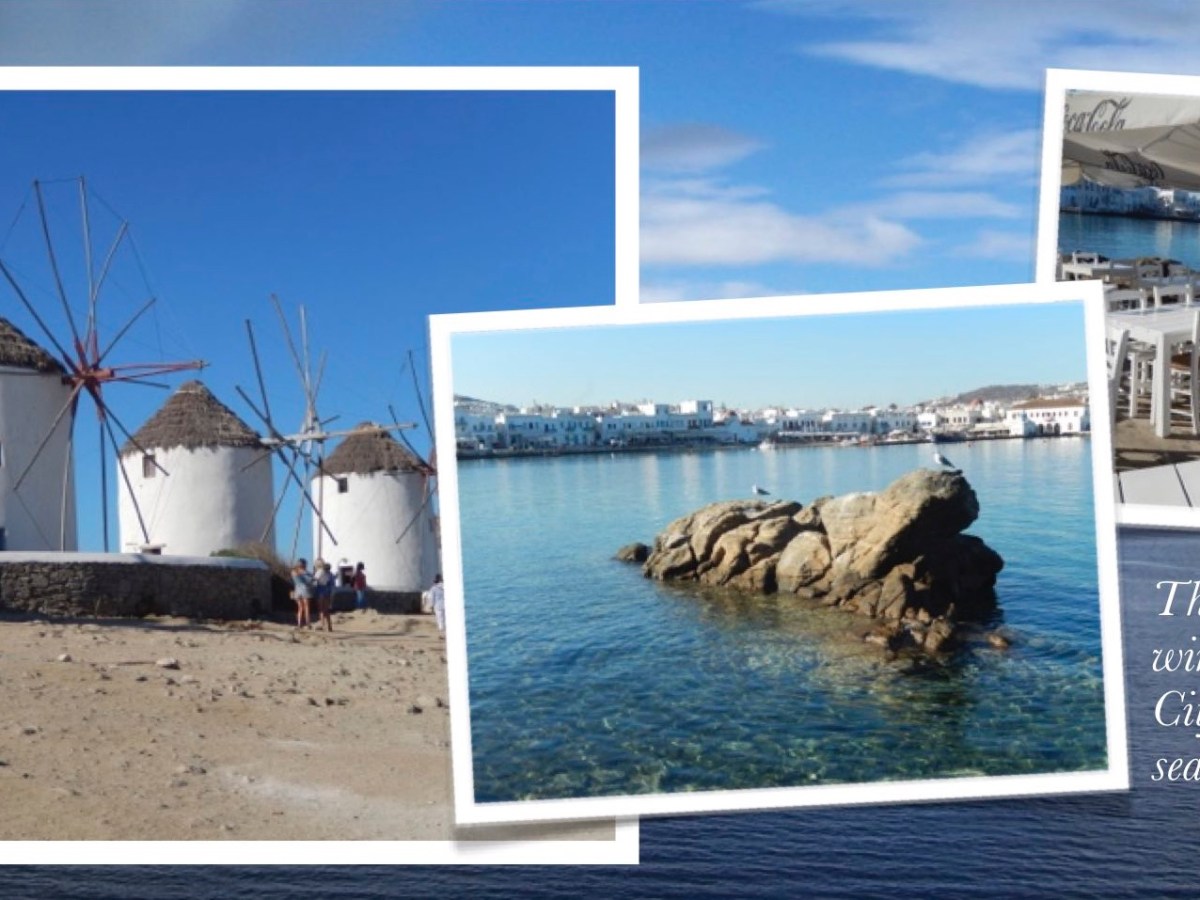
Todays Images • Mykonos
The Iconic Windmills Of Mykonos. Traditionally, these windmills are heavy, three-story buildings made of stone, are circular in shape, reflecting the simple yet functional design typical of the Cycladic islands. They were primarily built by Venetians in the 16th century and continued to be constructed into the early 20th century for milling wheat. Mykonos is…
 The Intentional Travelers