
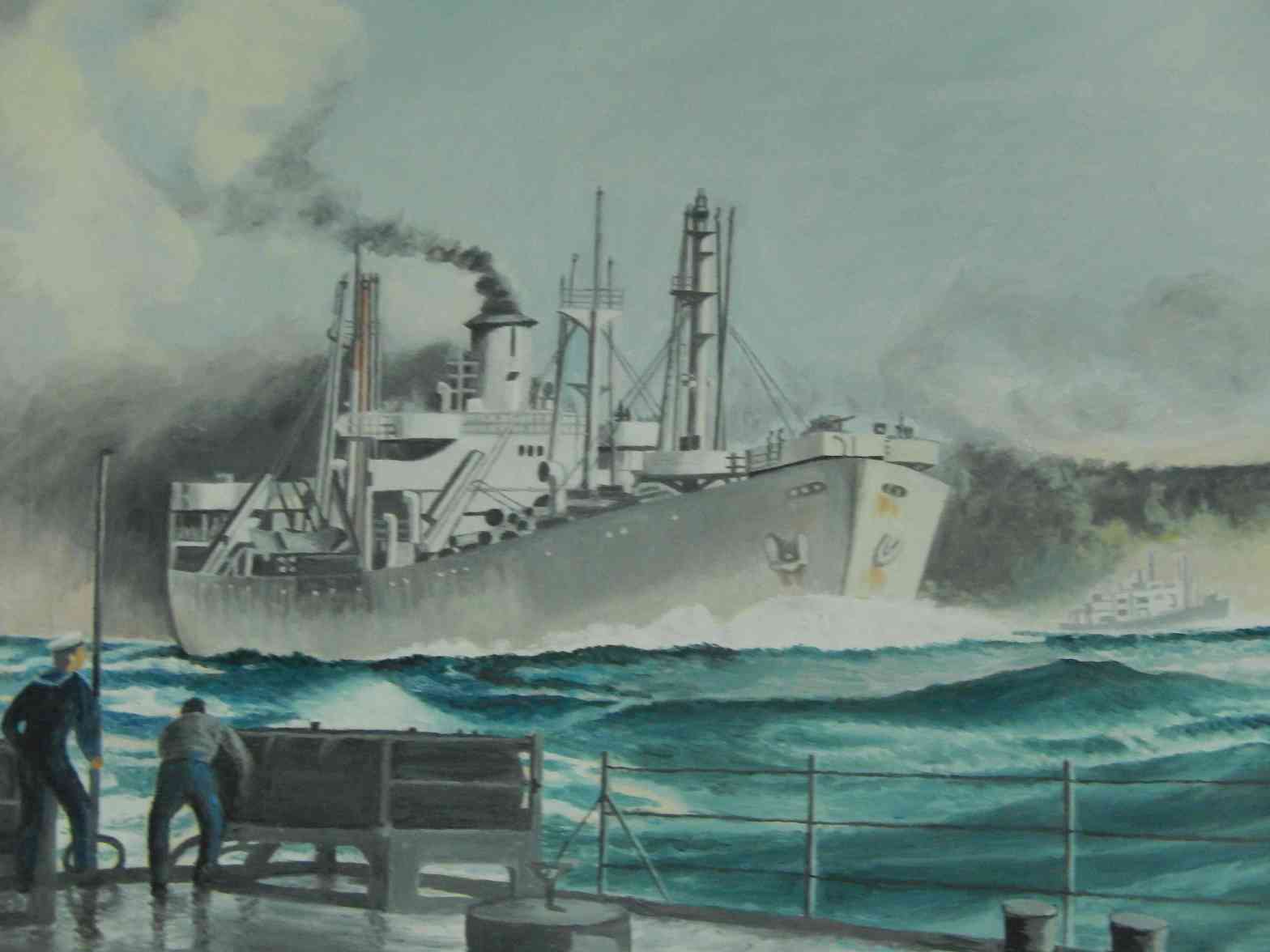
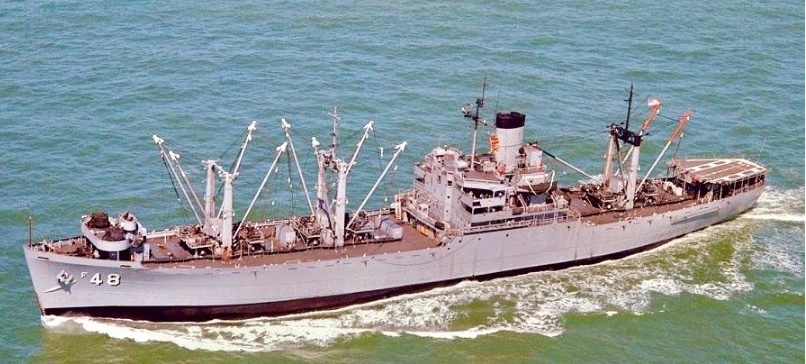
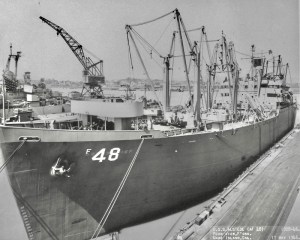
Above The USS Alstede AF48 in 1965
A Short History Lesson
In the early days of WWII the British realized that logistics would ultimately be the biggest obstetrical to fighting and winning the war. To overcome this problem they came to the United States with a unique ship design that would allow for fast production and deployment. They became the Liberty ships, a class of cargo ship built in the U.S. during WWII under the Emergency Shipbuilding Program, allowing for simple, fast and low-cost construction. Over about two years 2,710 Liberty ships were launched becoming the symbol of U.S. industrial output during the war. These seemingly ordinary cargo vessels played a crucial role in logistics and were vital in supporting Allied forces by transporting supplies and troops across the Atlantic. These ships exemplified unprecedented industrial production, significantly contributing to the war effort and enabled the Allies to conduct long military campaigns far distant from Americas supply chains.
While reviewing blueprints of the Liberty ships at the White House, President Franklin D. Roosevelt, who loved naval vessels and had an eye for design, mused aloud to Maritime Commission administrator Admiral Emory S. Land, “I think this ship will do us very well. She’ll carry a good load. She isn’t much to look at, though, is she? A real ugly duckling.”² Thus, the Liberty ships received their second nickname, “the ugly ducklings.”
As the American built Liberty Ships set to sea the lethal German U-Boat submarines began to prowl the shipping lanes hunting them. The ships proved to be slow and too small to carry the tons of supplies the United States needed to get to her Allies to win the war. In 1943, the United States authorized and began to shift to new ships that would be faster, larger, and would be more useful in carrying cargo long after the war was over. Designated Victory Ships these newer ships were very similar to the original Liberty Ship and other than size, even today it’s difficult to distinguish the differences.
Get to Know An Old War Hero • Visit One Of America’s Liberty Ships
The Liberty Ship SS John W. Brown is an operational maritime museum ship and a memorial to shipyard workers, merchant mariners,
The National Liberty Ship Memorial operates the SS Jeremiah O’Brien, one of the last remaining Liberty Ships from WWII, serving as a living museum dedicated to maritime history.
The American Victory is Located in Tampa, Florida, this fully operational WWII ship and museum showcases American maritime history and is recognized on the National Register of Historic Places.

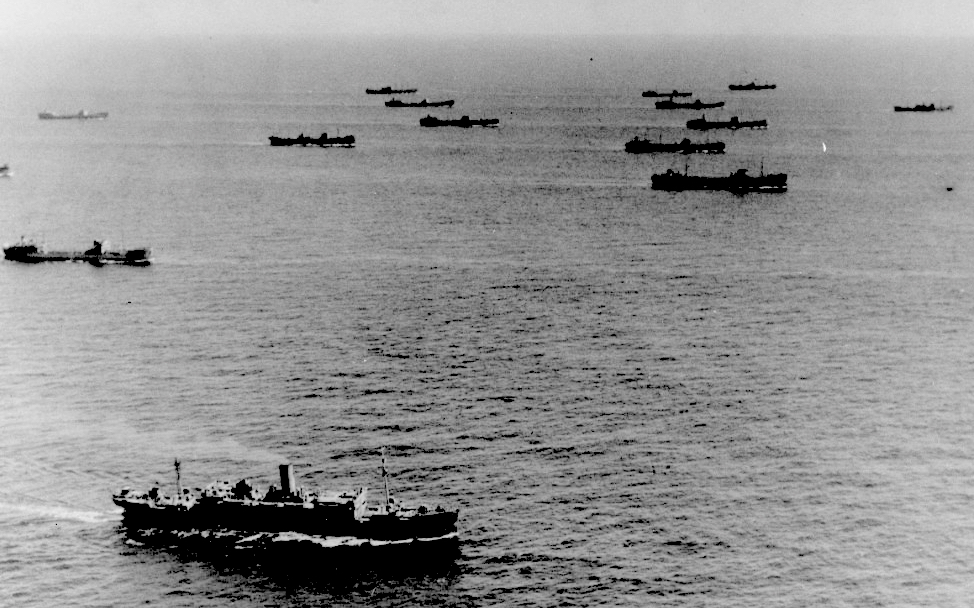
There are a number of World War II ships that having been retired (decommissioned) and now serve as living history museums. Ships like the aircraft carrier Intrepid a Sea, Air & Space Museum in New York City and a number of battleships like the North Carolina and Missouri. There are however a few less glamours ships that are now being restored and they represent the real ships that won WWII – The Liberty Ships. These ships carried millions of tons of supplies and troops across the Atlantic to England, organized into convoys for protection, they were still torpedoed and sunk by the hundreds by German submarines.
I admit I have a strong fondness for these ships that have almost vanished from the planet. Currently there are very few of these historic ships still in existence. My connection to this ship is from having spent a little over two and a half years on one of them in the 1960’s during my service in the U.S. Navy.


Even before the entry of the U.S. into the war England placed emergency orders for ships to be made at American shipyards using a British design. The class was developed to meet British needs for transports to quickly replace ships being torpedoed by German U-boats. These ships as a class became known as Liberty Ships.
The Liberty ship featured a simple design and low-cost construction and soon were being mass-produced on an unprecedented scale. They quickly becoming a symbol of U.S. wartime industrial might.
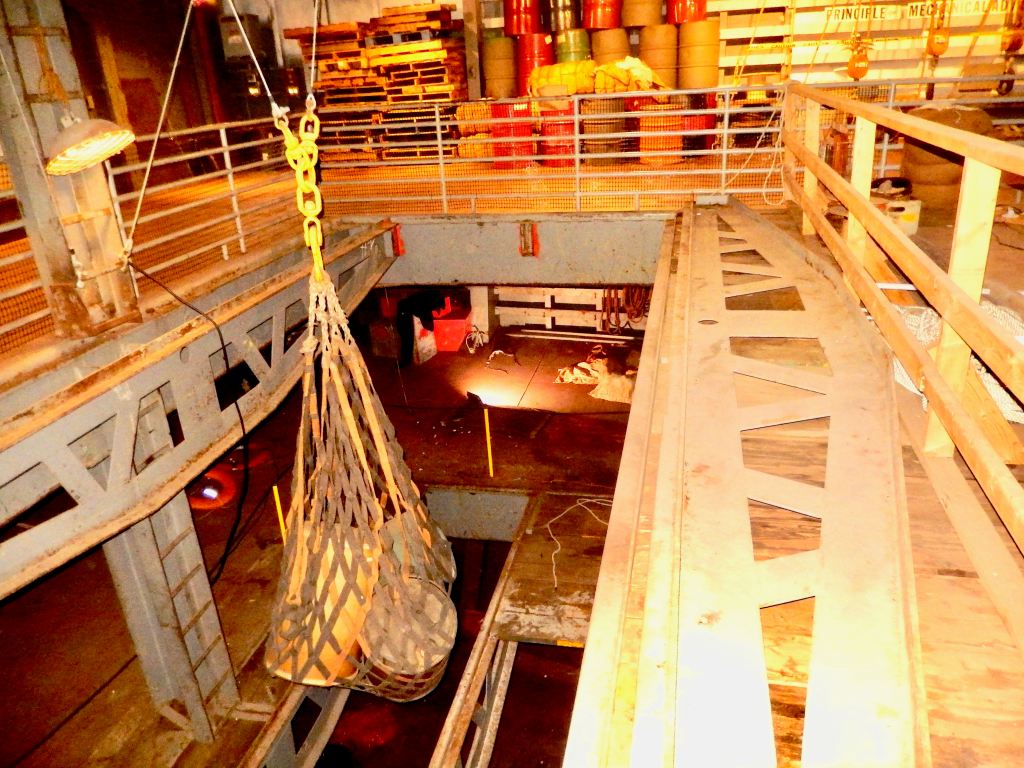
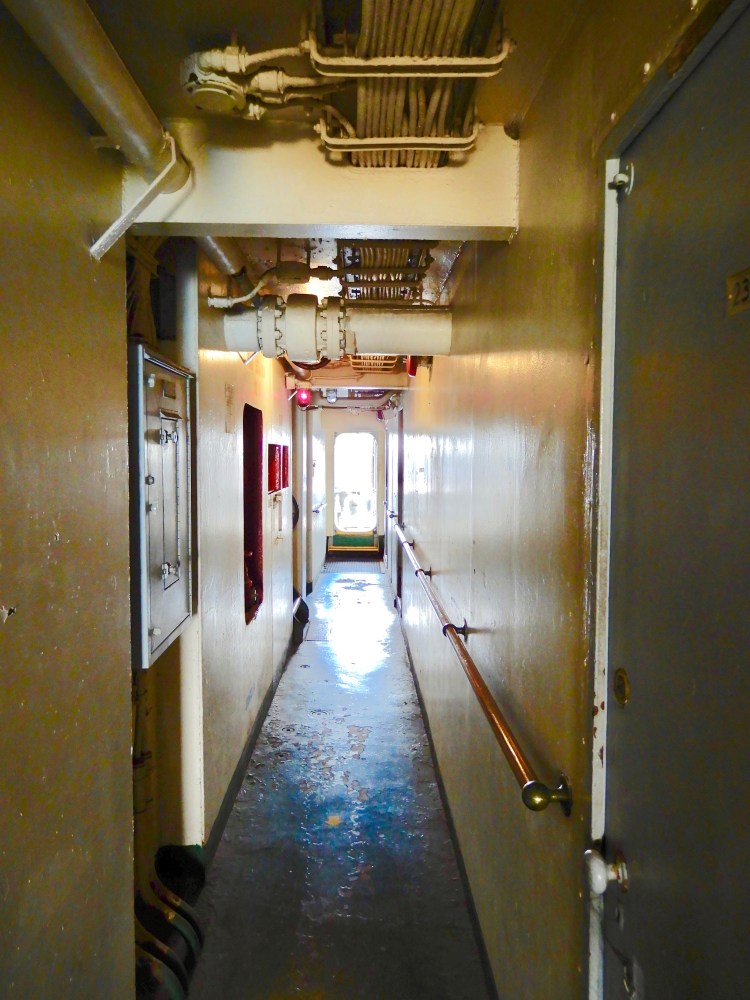
As the war ended there were literally hundreds and hundreds of these ships that were no longer needed. Being sold at auction there were a number of mostly Greek shipping companies that saw these ships as a big opportunity. Buying up these ships became the beginning of the modern Greek merchant marine. One such buyer was Aristotle Onassis, who founded an empire based on these ships. Today you can find one of these Greek Liberty Ships in Piraeus harbor open as a nautical museum.
By the 1950’s the U.S. Navy upgraded and converted a number of these Liberty Ships to serve as support ships in the active Navy fleets. Some were configured as ammunition supply ships designated AE, others as refrigerated supply ships designated AF and a few were used for special configurations as spy ships like the USS Pueblo of North Korea fame.
The USS Pueblo (AGER-2) designated an environmental research ship but actually an intelligence spy ship, which was attacked and captured by North Korea in January 1968 in international waters. Another, the USS Liberty (AGTR-5) was designated a technical research ship but actually was another intelligence spy ship. The USS Liberty was attacked by Israel during the 1967 Six-Day War while in international waters. The USS Liberty was built and served in World War II and was originally named the SS Simmons.
In the 1960’s the Navy fazed out these ships replacing them with modern, specially designed ships called “fast fleet support ships”. By early in the 1970’s all of these WWII work horses were retired (decommissioned) out of the U.S. Navy.
Only three operational Liberty or Victory ships still exist in The United States and they are museums. They include the SS John W. Brown docked at Pier 13, 4601 Newgate Ave. in Baltimore., the SS Jeremiah O’Brien docked across from Fishermans Wharf in San Francisco and SS American Victory tied up in Tampa. The SS John W. Brown is open as a museum in Baltimore with guided tours available on Wednesday and Saturday at 9 and 11 am. The American Victory docked in Tampa right next to the Florida Aquarium has a modest admission fee and is open Mondays from noon to 5 pm, and Tuesday through Sunday from 10 am to 5 pm with free parking. The parking alone is worth its weight in gold in that area of Tampa.
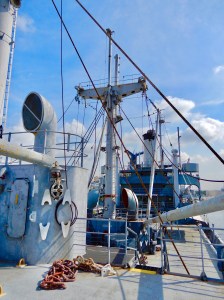
Interestingly the S.S. O’Brien was used for the engine room scenes in James Cameron’s movie The Titanic. These ships are a good opportunity to introduce yourself and your children to this now often overlooked piece of American history.

Note: The American Victory is now sea worthy and has a number of sailings scheduled around Tampa Bay each year.
A Liberty Ship Museum Near Athens Greece
I admit I have a special fondness for these WWII ships o I was really surprised and pleased to find one set up as a museum in Piraeus Harbor, Greece.
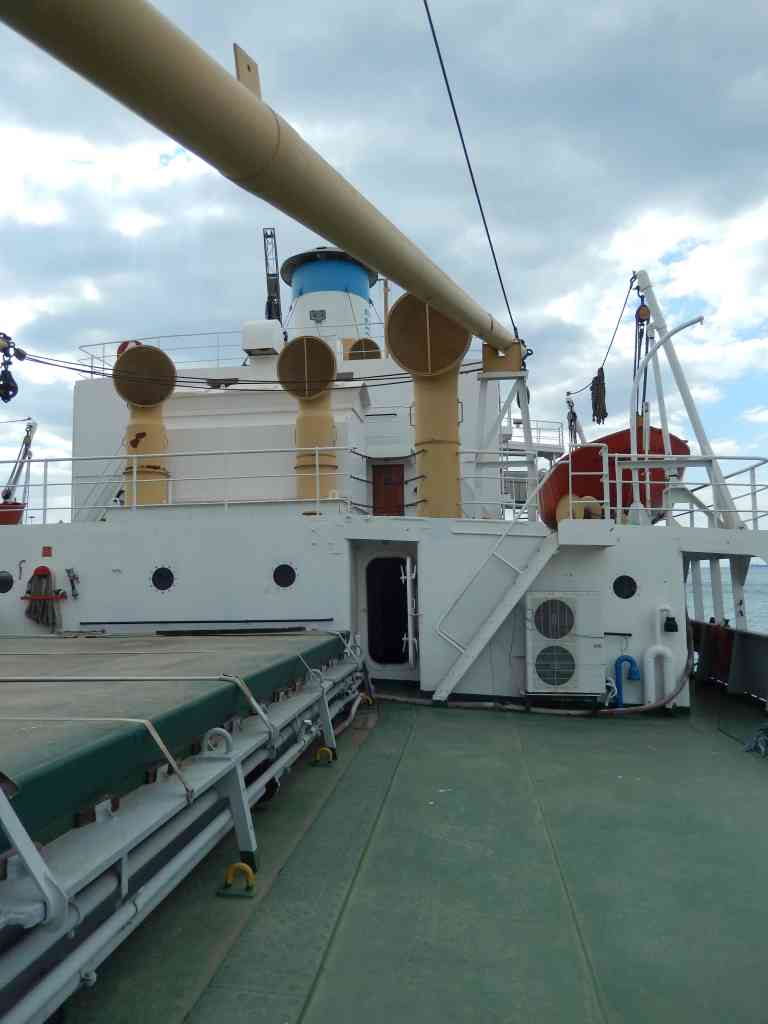
During World War II American shipyards launched almost five thousand Liberty Ships and Freedom Ships. These amazing cargo ships played a major role in winning the war by shipping ammunition, troops, food and military equipment across the Atlantic. This class of cargo ship was built in the United States from a British design for its simple, low-cost construction. Mass-produced on an unprecedented scale, these ships came to symbolize U.S. wartime industrial might.
When the job was done and the war ended all those cargo ships were seen by some as a huge business opportunity. Put up for auction nobody took better advantage of them than Greek shipping companies and a number of Greek families became very rich as a result.

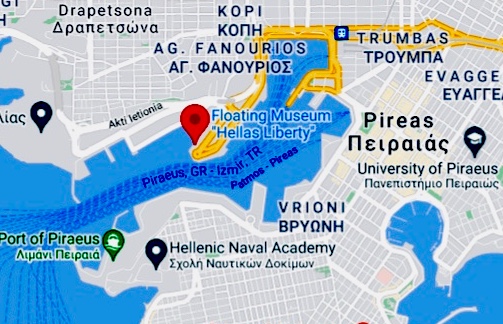
One Liberty Ship built by the California Shipbuilding Corporation in 1943 was bought at auction in January 1947 and registered in Piraeus, Greece. This ship, one of almost one hundred bought by Greek companies remained in service until 1967 when it was retired. Restored it now sits tied up to a pier in Piraeus harbor as a floating maritime museum.
If you find yourself in the Athen’s port city with some free time, pay a visit to the fourth, the Hellas Liberty. She’s well maintained, has a number of historic exhibits and admission is free. A great way to spend an hour going back in time.
You can read more about the Greek fleet of post WWII Liberty Ships HERE.




 The Intentional Travelers