Pictured is the harbor of Puerto Baquerizo Moreno, San Cristobal Galapagos. Sea lions are everywhere on San Cristobal. They take over beaches, walk along town streets and occupy park benches. Young pups approach children trying to play, “retired” bulls can be agressive and threatening but mostly sea lions just lay around and occasionally go for a swim. San Cristobal is the most visited island in the Galapagos, the fifth largest and the easternmost island in the chain.
Join us as we visit historic treasures, natural wonders and vibrant cities set against backdrops that are endlessly changing and visually magnificent. Celebrate a world of travel experiences with these decorating accessories that are perfect for framing.
Join Us – We understand that the last thing you may want is more emails cluttering up your inbox, but we promise we’ll work hard to make this worth your while. Give us a try and if we don’t live up to our promise all you need do is click the unsubscribe link in our emails.
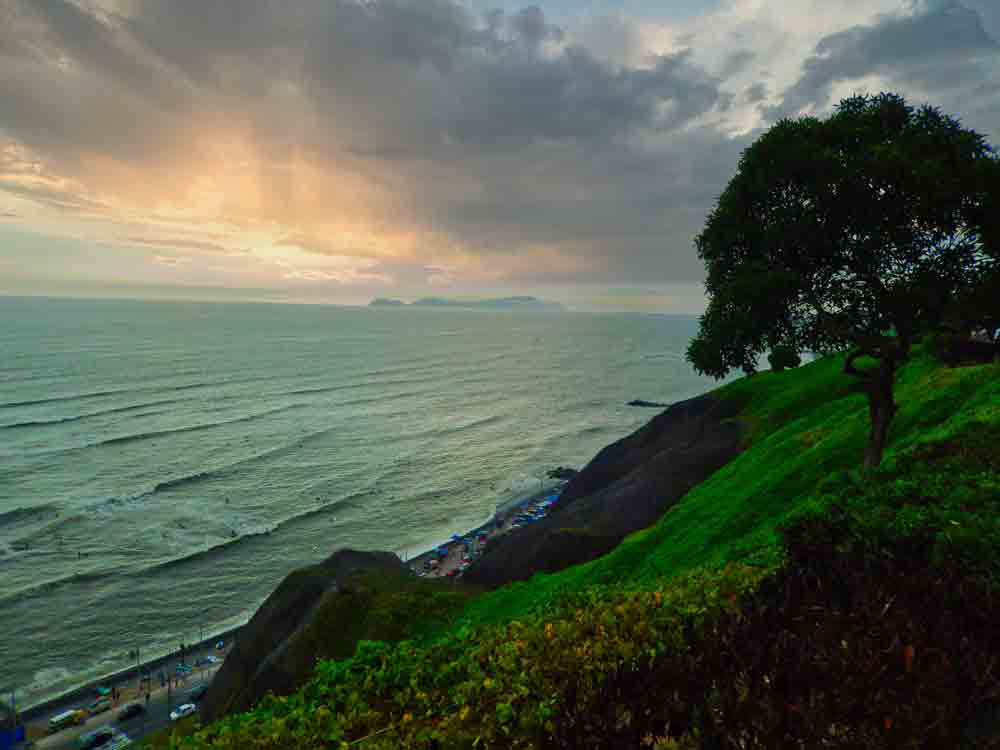
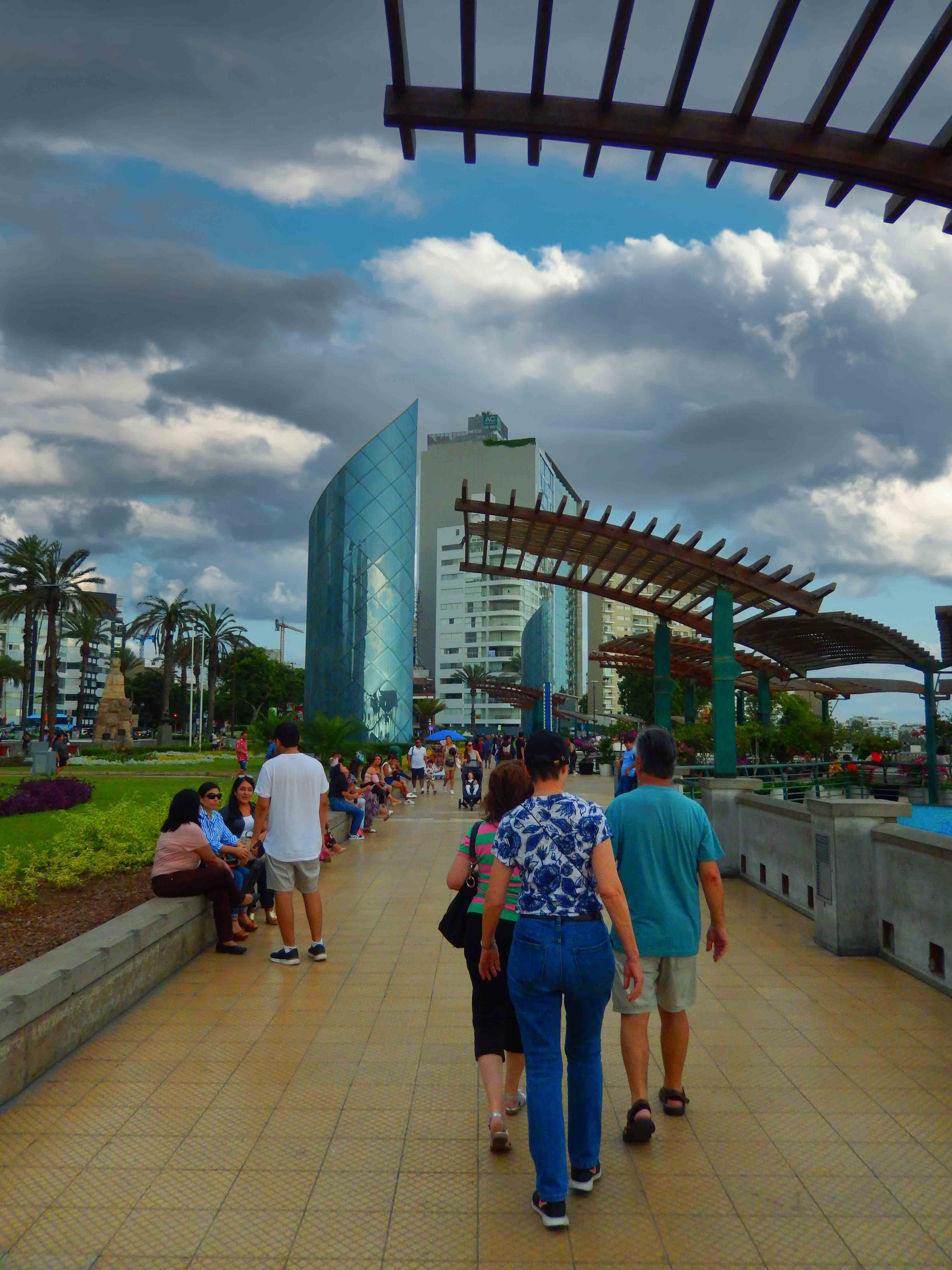
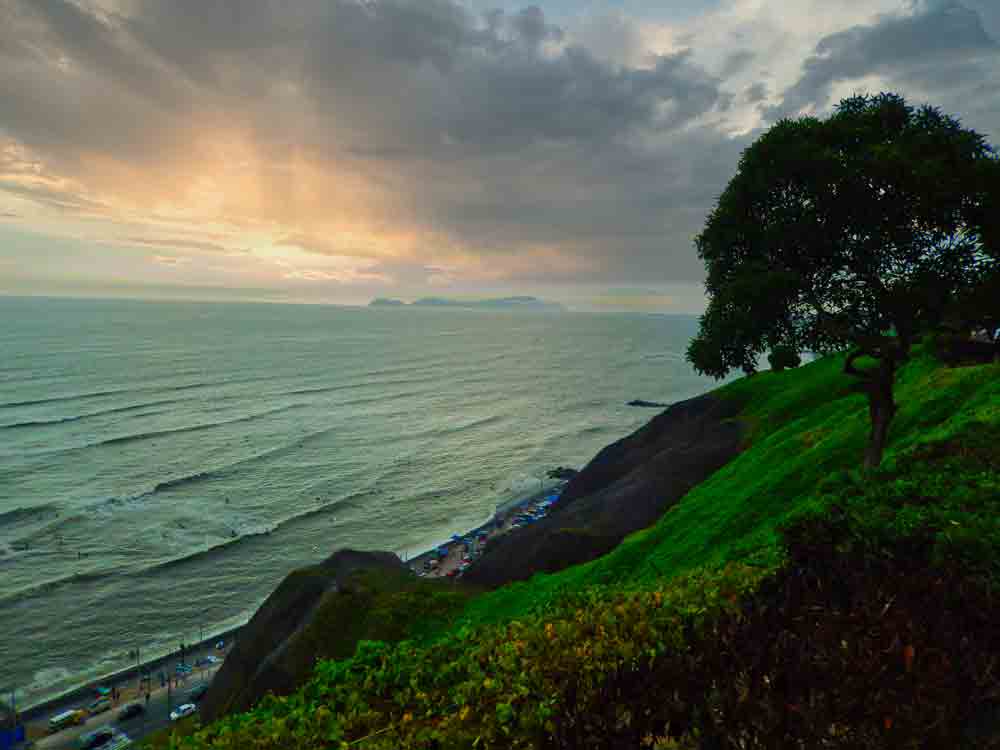
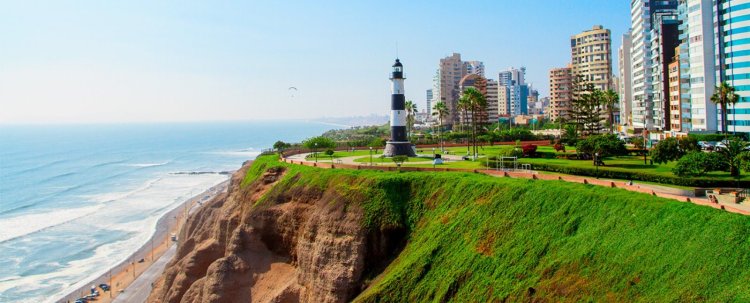
Without doubt the best walking trail in a major metropolitan area is the Malecón in Lima. It’s a six mile trail along the cliffs overlooking the Pacific Ocean.
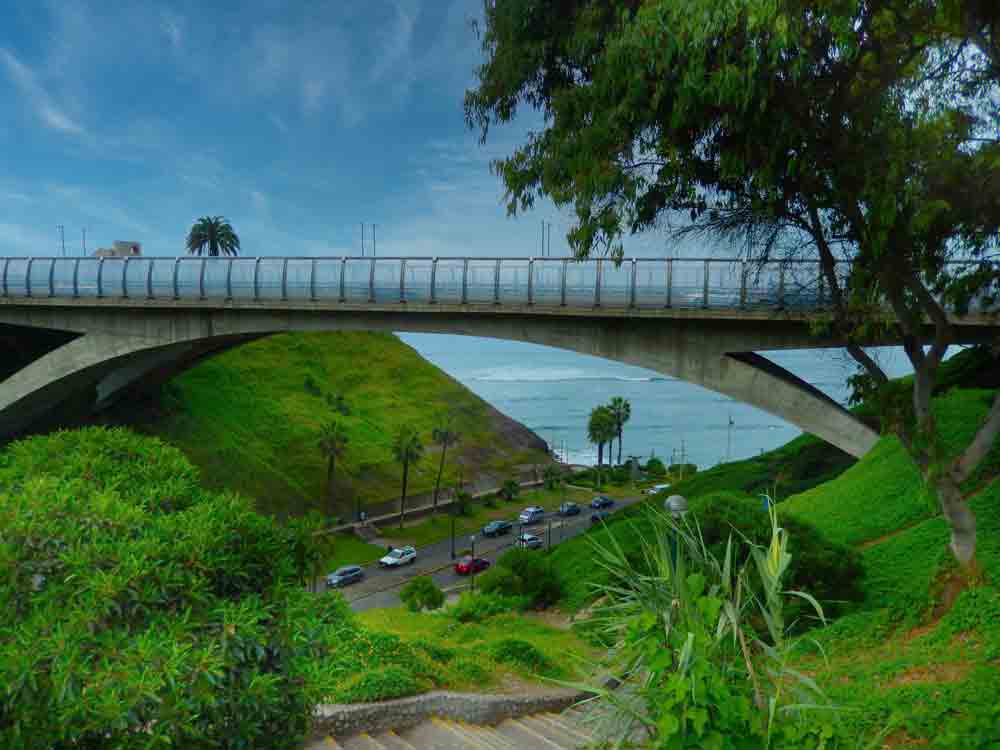
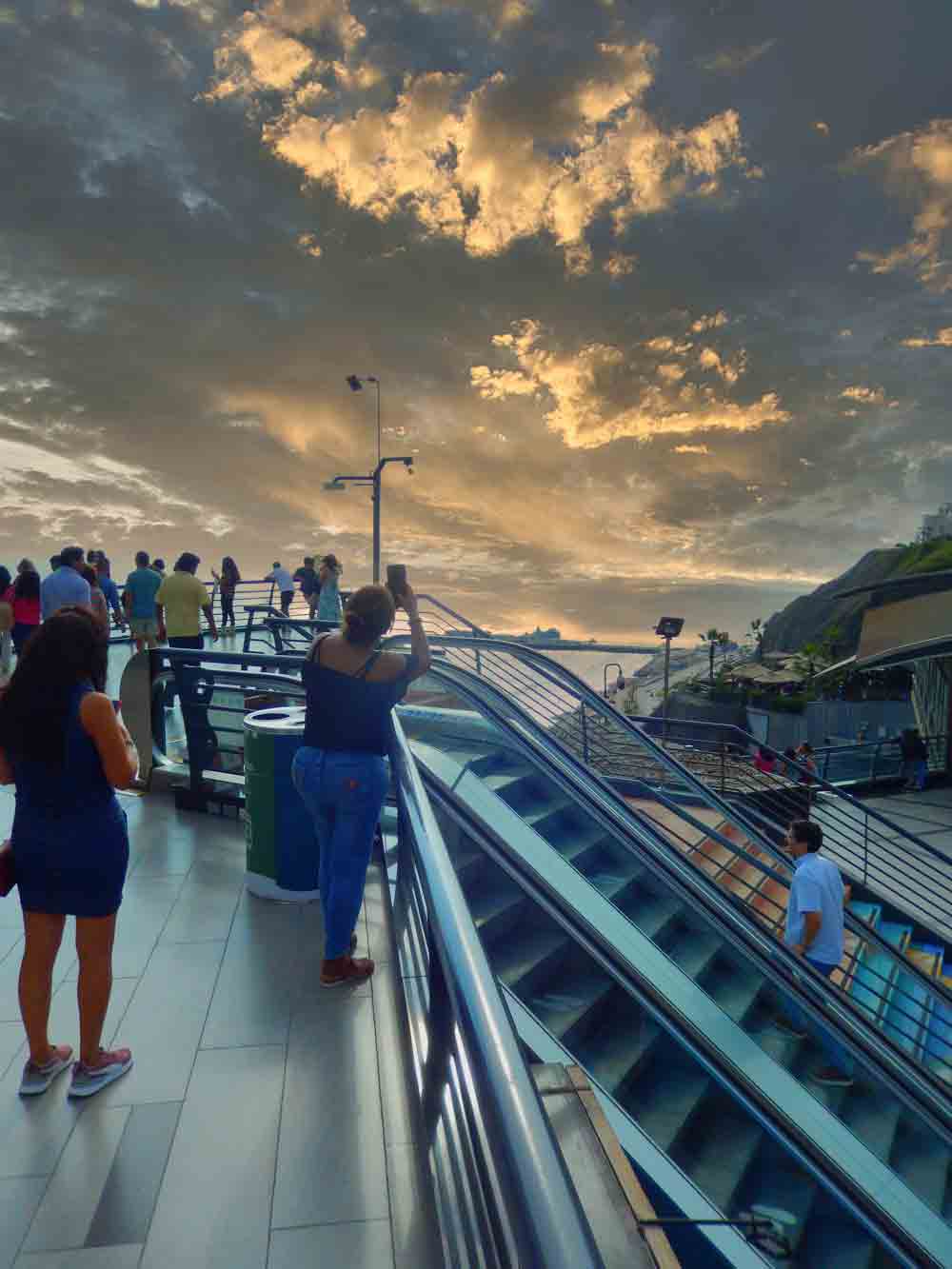
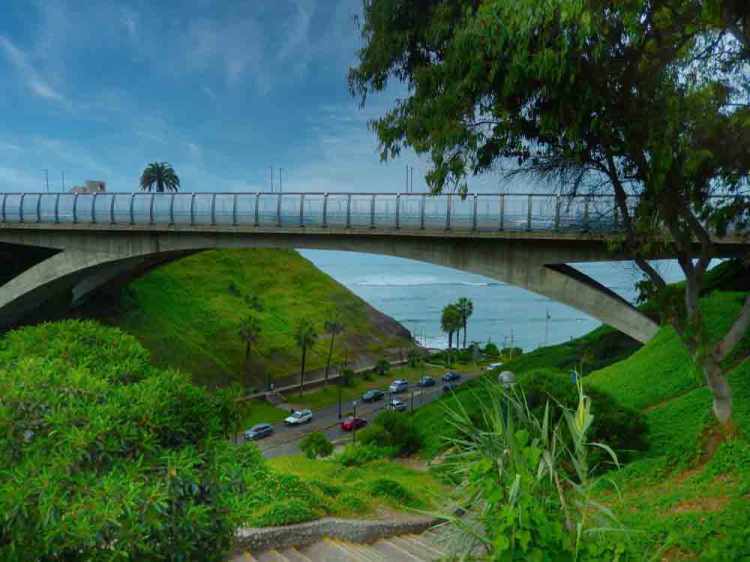
El Malecón—Lima’s scenic cliff top walkway is an amazing coastal path, which stretches for about six miles, in three sections. High above the Pacific Ocean, it’s centered on the Miraflores district and passes through several districts starting in the south as Malecon de la Reserva in Barranco. Heading north it crosses the Villena Rey Bridge near the Malecón Cisneros that’s home to the upscale and very popular Larcomar Shopping Center. The center offers a large number of shops, restaurants, a bowling alley and a cinema and is a major attraction in Miraflores. El Malecón ends at Malecon de Marina in the north. The whole length of El Malecón is a popular route for joggers, and cyclists and numerous Lima residents out for a stroll to enjoy the views and the ocean air.
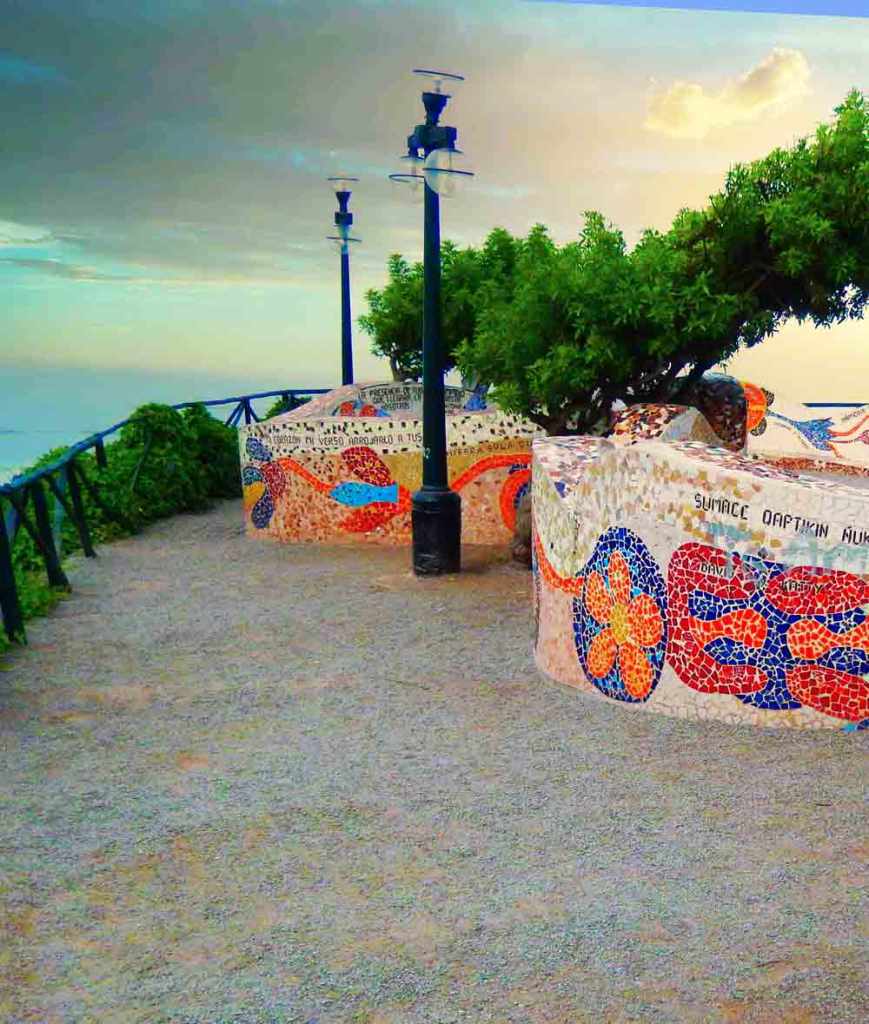
Eight impressive parks are spaced along the Malecón featuring flower gardens and sculptures. North of the bridge are two popular parks one being Parque del Amor with its large sculpture “El Beso” (“The Kiss”) by Peruvian artist Victor Delfín. It features a man and a woman locked in a passionate kiss. The actual park is said to be inspired by Parc Güell in Barcelona, which was designed by Antoni Gaudí in 1926. A bit farther is the larger Parque Antonio Raimondi. The largest park on the Malecón de la Marina, the northernmost section of the Malecón, is Parque Miguel Grau, dedicated to Peru’s greatest naval hero.
Love locks are popularhere too
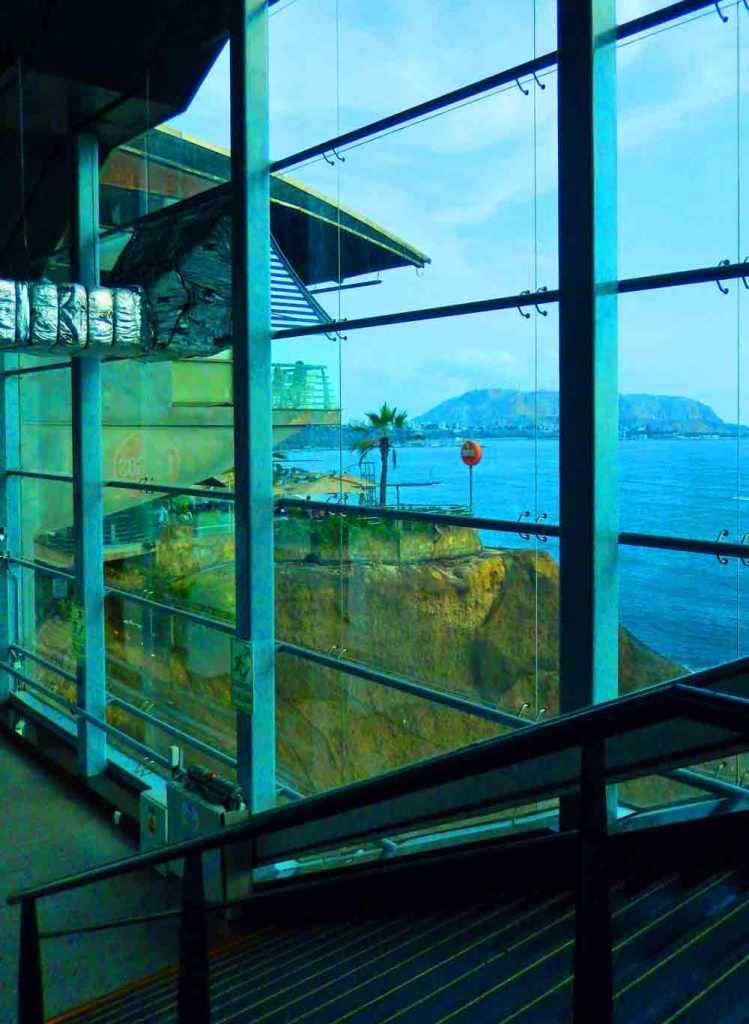
The view from inside the shopping center
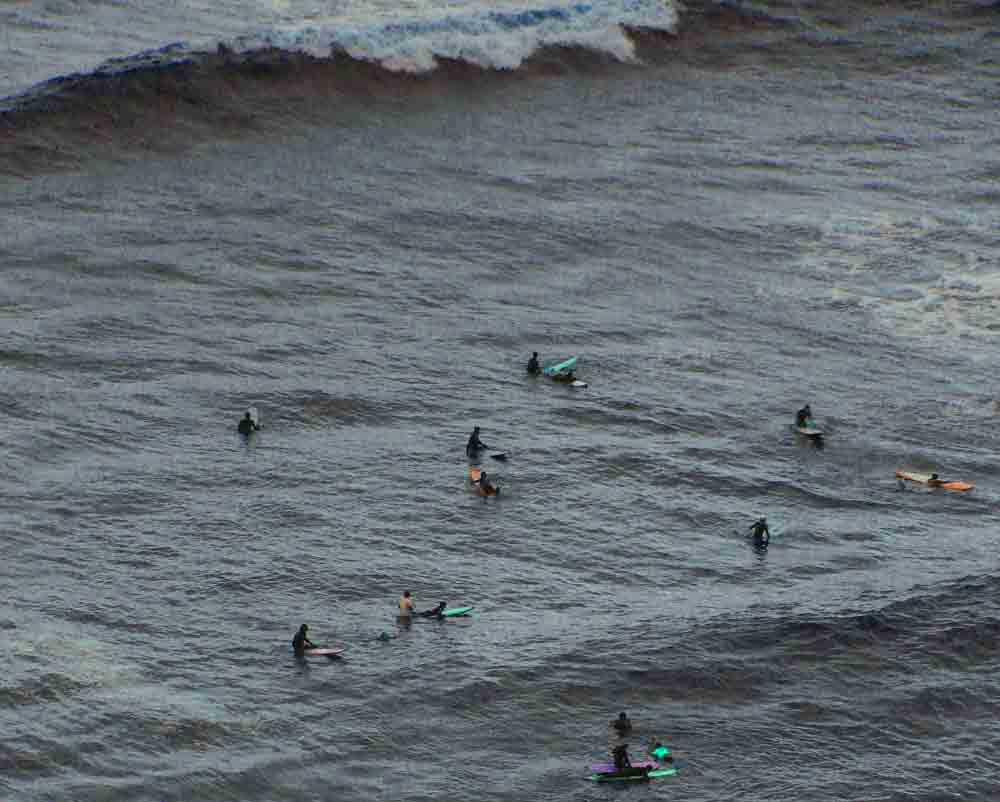
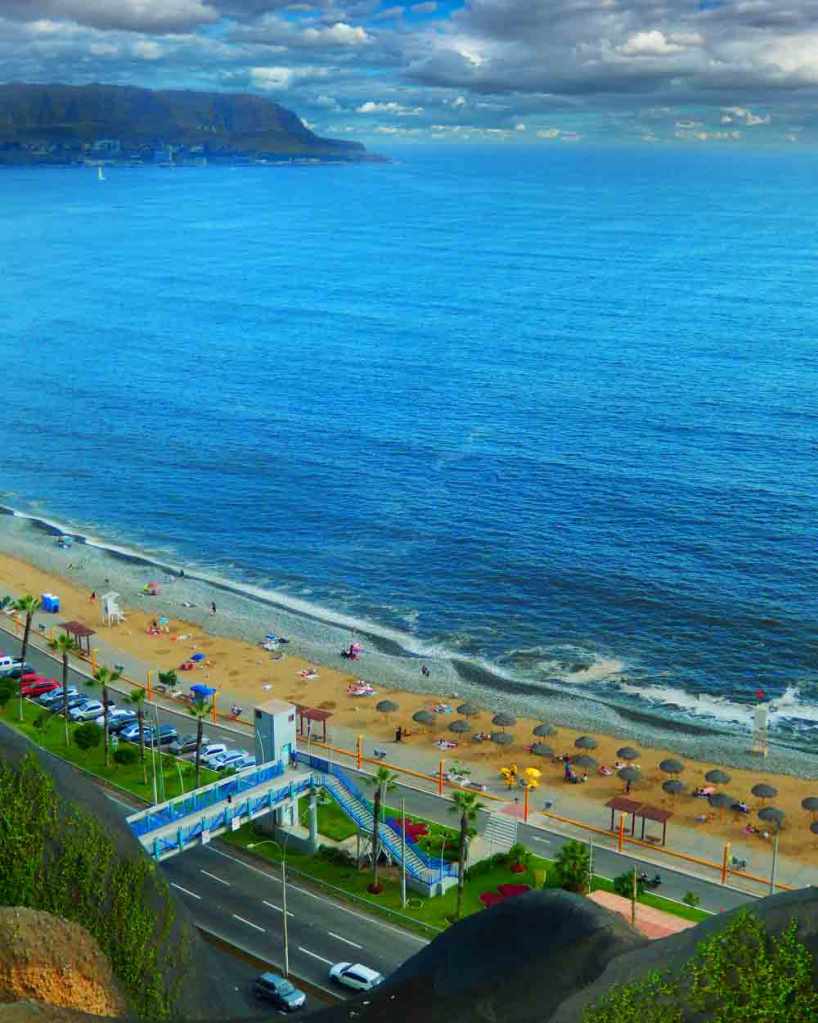
Below the cliffs stretching for over eleven miles is an expanse of Pacific beaches. Lima residents make full use of their beach with regular concerts and numerous sports events and the bay provides a perfect environment for world class surf that attracts surfers from around the world.
Rising up in the middle of Lima, Peru is a most unusual pyramid. It dominates an upscale section of the city called Miraflores and is estimated to be 1,600 years old. Named Huaca Pucllana or Huaca Juliana it is a massive structure built from adobe and clay bricks in seven massive, staggered platforms.
The site has been an ignored part of the city that was locally viewed as a hill obstructing development. For decades parts of it were removed for building projects and road creation. serious excavation of the hill wasn’t begun until 1981 when multiple pyramids were exposed and ceramics, textiles and tools were discovered. Most recently in 2010, four intact mummies were found undisturbed in a chamber near the top of the structure.
Evidence suggests it was an important ceremonial and administrative center for the “Lima Culture”, a society which developed in the Peruvian Central Coast between the years of 200 AD and 700 AD. The Lima culture occupied the central coast of Peru and constructed Huaca Pucllana around 500 AD. At that time the region was rich farmland with canals branching from the Surco River. Among the Lima people were farmers and fishermen.
The builders of the pyramids used a method called the “library technique” laying these uniform adobe bricks vertically with open spaces in between. These spaces allowed the structure to absorb tremors of earthquakes which are common in the region. They also employed a trapezoidal shape making their walls wider at the base than at the top for additional strength. The central structure is over 80 feet tall with ramps, patios, and a lower main plaza. It was built primarily of these uniform adobe bricks, millions of them and simply stacked row upon row. Most archeologists believe that Huaca Pucllana used to be significantly larger. Unfortunately, during the last century, modern residents have hauled away bricks or built over top of parts of these ancient Lima ruins.
Lima, a city filled with colonial history, is the only capital in South America that touches the sea, and is hailed by many as the gastronomic capital of Latin America. The city boasts world-renowned chefs like Gastón Acurio and Virgilio Martínez. Making Lima the only city with two restaurants ranking in the top 10 of the World’s 50 Best Restaurants, Central and Maido.
Peruvians love soup and Lima loves seafood. Claiming credit for originating Ceviche, a popular offering made of diced fish with lots of fresh lemon juice garnished with red onions, chopped cilantro, and other seafood. Popular local meats include deep fried pork, Cuy Chactado (fried guinea pig), Llama lean meat often grilled, added to stews or pan-fried. Traditional dishes make a lot of use of corn, potatoes and peppers with Rocoto Relleno (stuffed spicy pepper) being a common offering.
The city of Lima is one of South Americas largest metropolitan areas with a population of almost 13 million. Lima experienced most of its growth after 1960 going from less than 1 million to that 13 million from migration of people away from Peru’s rural areas. The city also spread out during that period increasing its area by seven fold.
Geographically it sits on a coastal plain on cliffs above the Pacific Ocean. Because the prevailing winds come from the east with the Andes capturing most of the moisture and rain the region has an arid climate.
The city’s historic original area is today contained completely within the Miraflores District, home to upscale shopping, many good restaurants and hotels. Most visitors arrive by plane with the International Airport being an almost half hour drive to Miraflores. The best options at last check included:
Lima Airport Express Bus to Miraflores for about $6 per person taking 40-45 minutes (Reserve HERE)
A Tourist Shuttle Bus for about $10 per person taking 50 – 60 minutes
Taxi $20 – $25 taking 25 minutes
Attractions
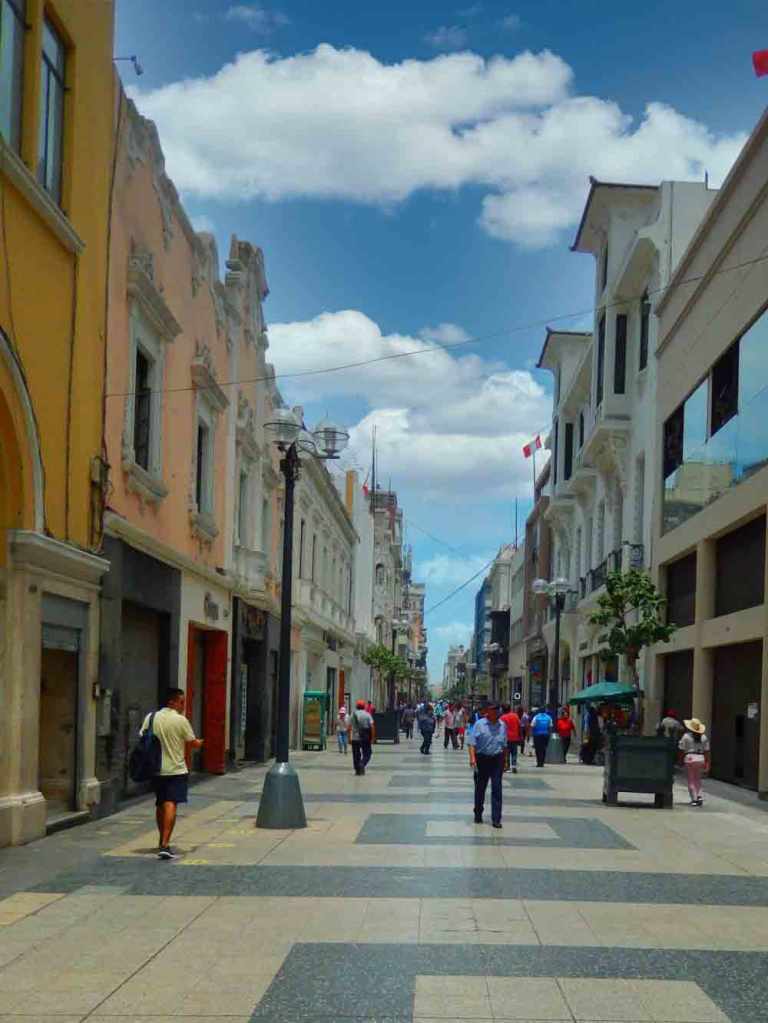
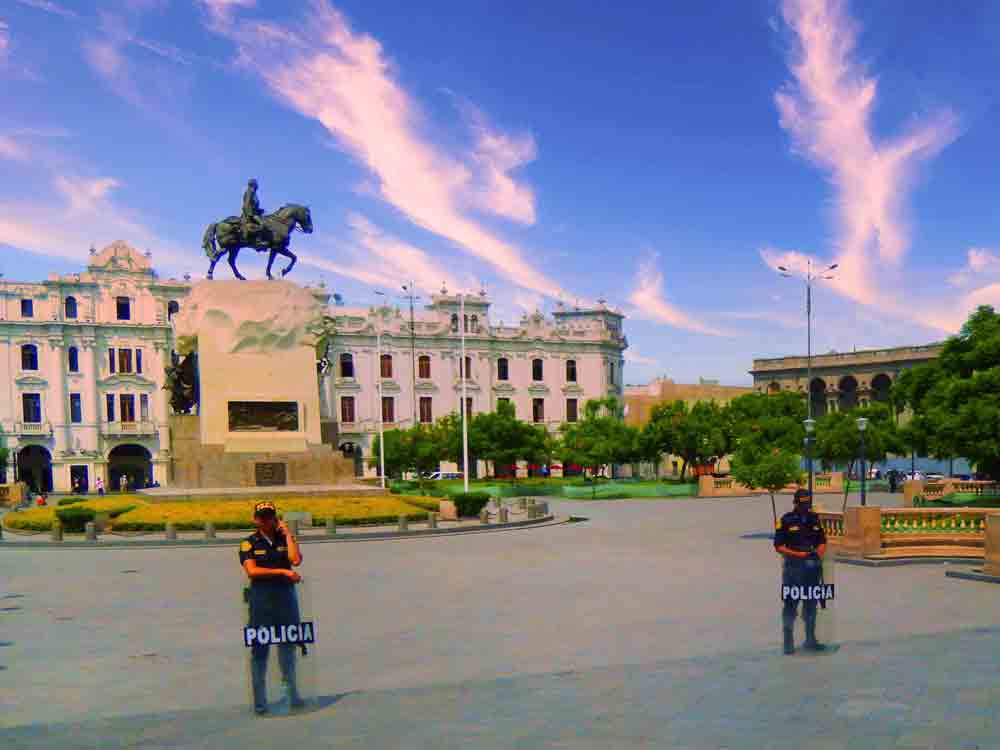
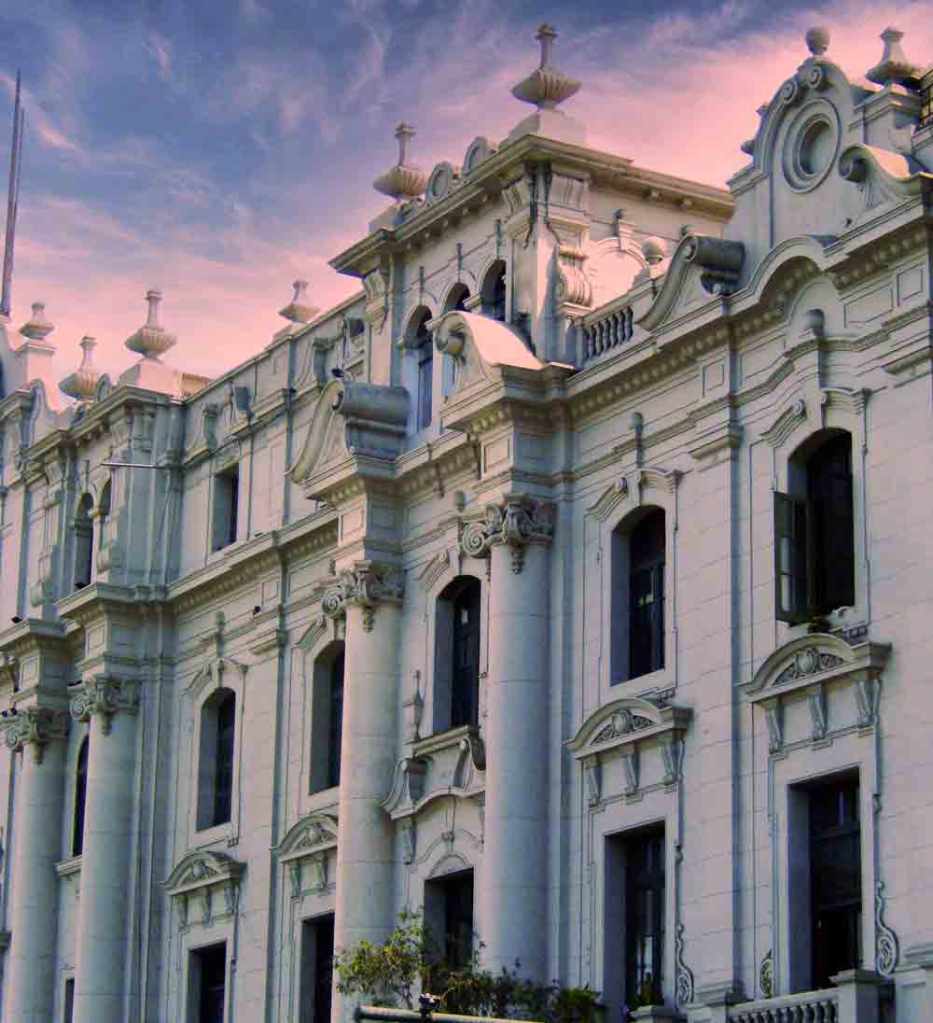
Recognized as the birthplace of Lima, the Plaza de Armas is still the heart of Lima and the location of the original Spanish colony dating to 1535. A must visit for every first-timer to Lima.
Located in the historic center of Lima, this main square is a must to visit with its bright yellow Municipal Palace, as well as the bronze fountain that dates back to the early 1650s.
Huaca Pucllana, an amazing archaeological site sits in the middle of the Miraflores neighborhood. The massive clay and adobe brick structure, which once functioned as a ceremonial site during the pre-Columbian era, dates back to 400 B.C. Since the excavation began in 1981, multiple pyramids, ceramics, textiles and tools have been discovered.
The church of Saint Francis of Assisi – Dating back to 1672, this baroque-style church named in honor of Saint Francis of Assisi is best known for the network of catacombs located underneath the chapel. The catacombs contain an estimated 70,000 remains dating back to the 17th century. The church and convent are also home to a library with approximately 25,000 antique texts dating back to the 15th century.
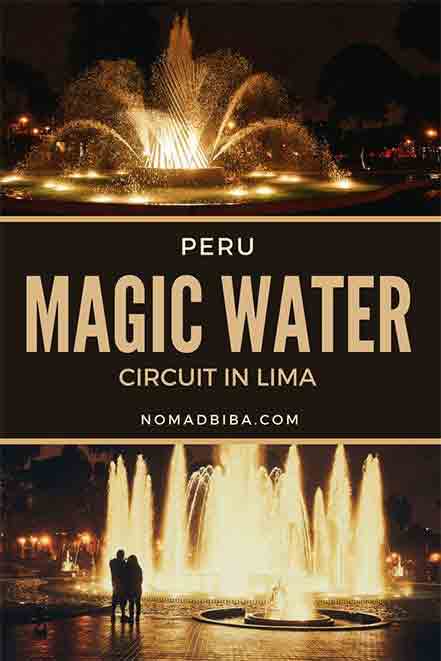
In the center of Lima is a park rivaling the fountains of the Bellagio in Las Vegas, it’s the Circuito Magico del Agua combining a landscape of fountains with 13 automated lasers it uses music to create a spectacular light show. The show tells the history of Peru with movies projected into the water fountains accented with the laser displays.
Lima is also famous for its cliffside pedestrian boardwalks provide amazing ocean views, and are always filled with locals and tourists. The Malecón is a 6-mile stretch of parks and boardwalks along the coast lined with upscale shops, restaurants, parks and a major shopping mall. Allow time for a long stroll or rent a bike from Lima Bike Rentals.
Another widely popular Lima attraction is the miles of beaches. Surfing is a major recreation here and surfing tournaments join a collection of ocean activities and sports.
Restaurants In Miraflores Worthy of Visiting
Miraflores is famous for its cuisine and there are literally hundreds of options from international names to small, local eateries. There are also numerous options for seeing reviews. including the Google map on this page. Bon Appetite!
CHÉ CHÁ Tea Bar & Food Station. ★★★★★ Peruvian, Bar $$ – $$$
Panchita. ★★★★ Peruvian, Grill $$$$
El Pan de la Chola. ★★★★ Bakeries, Pizza $$ – $$$
Astrid & Gastón. ★★★★★ Peruvian, Latin $$$$
La Mar Cevichería Peruana ★★★★★ Peruvian, Latin $$ – $$$
Alma Bar Restaurante. ★★★★★ Peruvian, Latin $$ – $$$
Lima, a city filled with colonial history, is the only capital in South America that touches the sea, and is hailed by many as the gastronomic capital of Latin America. The city boasts world-renowned chefs like Gastón Acurio and Virgilio Martínez. Making Lima the only city with two restaurants ranking in the top 10 of the World’s 50 Best Restaurants, Central and Maido.
Peruvians love soup and Lima loves seafood. Claiming credit for originating Ceviche, a popular offering made of diced fish with lots of fresh lemon juice garnished with red onions, chopped cilantro, and other seafood. Popular local meats include deep fried pork, Cuy Chactado (fried guinea pig), Llama lean meat often grilled, added to stews or pan-fried. Traditional dishes make a lot of use of corn, potatoes and peppers with Rocoto Relleno (stuffed spicy pepper) being a common offering.
The city of Lima is one of South Americas largest metropolitan areas with a population of almost 13 million. Lima experienced most of its growth after 1960 going from less than 1 million to that 13 million from migration of people away from Peru’s rural areas. The city also spread out during that period increasing its area by seven fold.
Geographically it sits on a coastal plain on cliffs above the Pacific Ocean. Because the prevailing winds come from the east with the Andes capturing most of the moisture and rain the region has an arid climate.
The city’s historic original area is today contained completely within the Miraflores District, home to upscale shopping, many good restaurants and hotels. Most visitors arrive by plane with the International Airport being an almost half hour drive to Miraflores. The best options at last check included:
Lima Airport Express Bus to Miraflores for about $6 per person taking 40-45 minutes (Reserve HERE)
A Tourist Shuttle Bus for about $10 per person taking 50 – 60 minutes
Taxi $20 – $25 taking 25 minutes
Attractions
Recognized as the birthplace of Lima, the Plaza de Armas is still the heart of Lima and the location of the original Spanish colony dating to 1535. A must visit for every first-timer to Lima.
Located in the historic center of Lima, this main square is a must to visit with its bright yellow Municipal Palace, as well as the bronze fountain that dates back to the early 1650s.
Huaca Pucllana, an amazing archaeological site sits in the middle of the Miraflores neighborhood. The massive clay and adobe brick structure, which once functioned as a ceremonial site during the pre-Columbian era, dates back to 400 B.C. Since the excavation began in 1981, multiple pyramids, ceramics, textiles and tools have been discovered.
The church of Saint Francis of Assisi – Dating back to 1672, this baroque-style church named in honor of Saint Francis of Assisi is best known for the network of catacombs located underneath the chapel. The catacombs contain an estimated 70,000 remains dating back to the 17th century. The church and convent are also home to a library with approximately 25,000 antique texts dating back to the 15th century.
In the center of Lima is a park rivaling the fountains of the Bellagio in Las Vegas, it’s the Circuito Magico del Agua combining a landscape of fountains with 13 automated lasers it uses music to create a spectacular light show. The show tells the history of Peru with movies projected into the water fountains accented with the laser displays.
Lima is also famous for its cliffside pedestrian boardwalks provide amazing ocean views, and are always filled with locals and tourists. The Malecón is a 6-mile stretch of parks and boardwalks along the coast lined with upscale shops, restaurants, parks and a major shopping mall. Allow time for a long stroll or rent a bike from Lima Bike Rentals.
Another widely popular Lima attraction is the miles of beaches. Surfing is a major recreation here and surfing tournaments join a collection of ocean activities and sports.
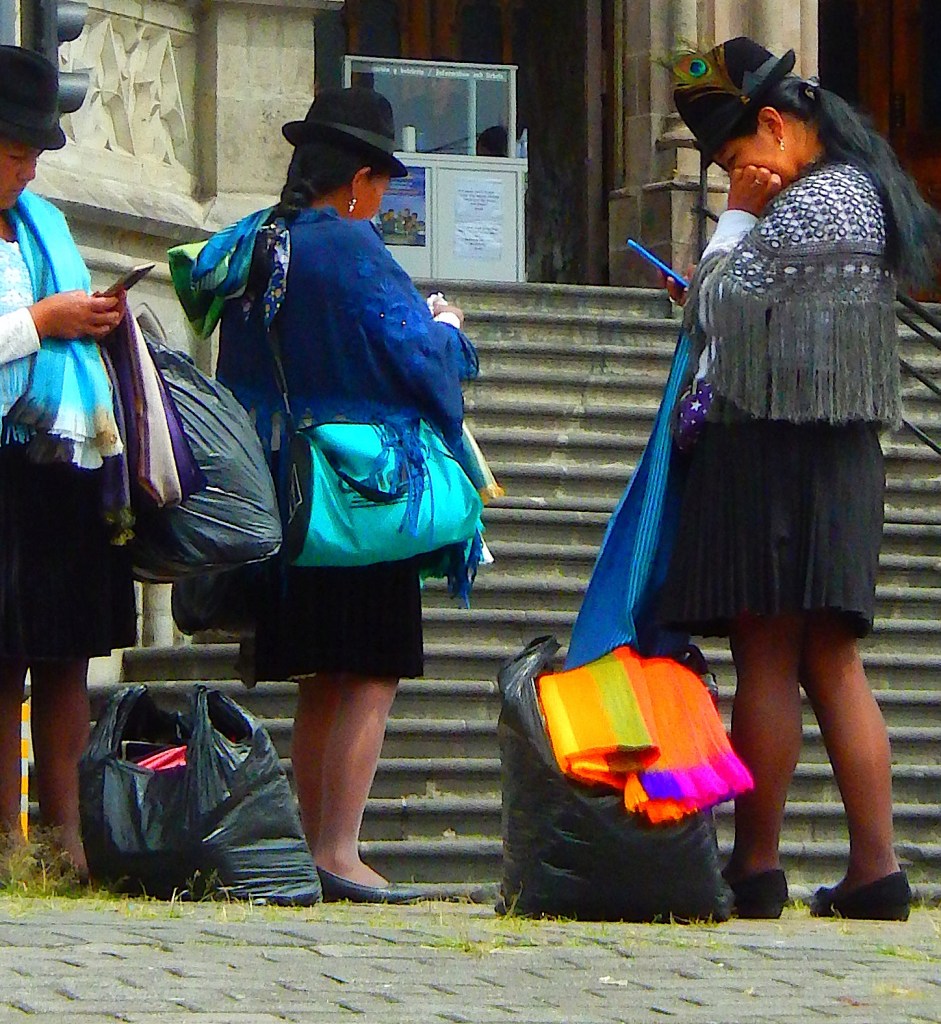
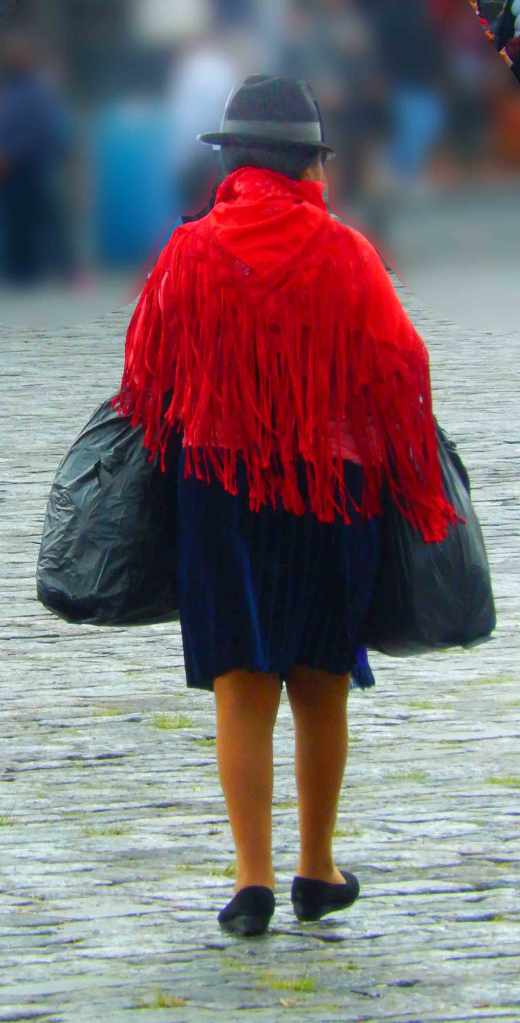
Every where you go in Peru people wear hats. Not just any hat though but specifically Peruvian hats. The people of Peru seem to see wearing hats as a major fashion statement. Three primary categories of hats are worn by Peruvians:
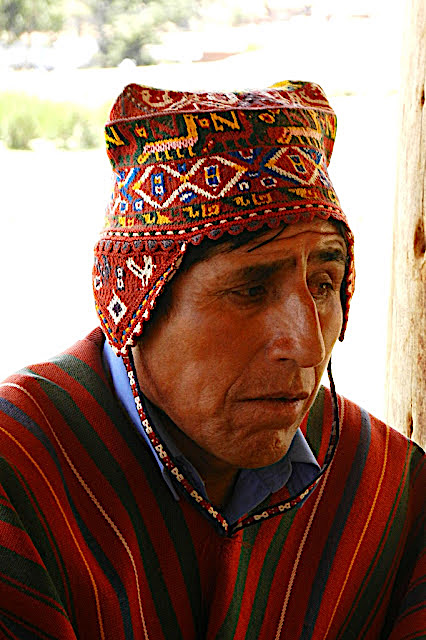
The Chullo – It’s an Andean style of hat with earflaps, made from alpaca, llama or sheep’s wool. Alpaca is preferred as its wool-like qualities help to insulate the wearer from the elements in the Andean Mountain region. Chullos often have ear-flaps that can be tied under the chin, to further warm the head.
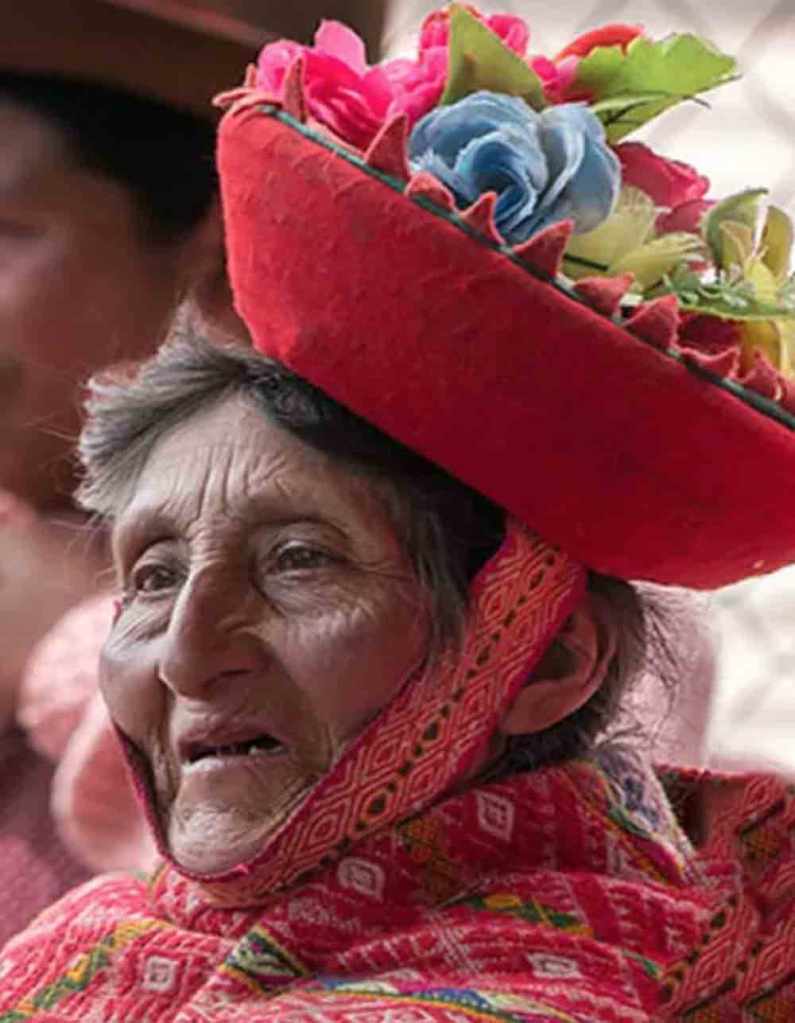
Traditional Felt and Straw Hats – These traditional hats have a regional character that often tell where the hat wearer is from along their family heritage. The red felt hat is called a montera and can be decorated with flowers, fruit and other accents. These are mostly worn by Quechua women throughout the Sacred Valley.
The Bowler – This is an English shaped felt hat with a rounded crown, originally created by the London hatmaker Thomas and William Bowler in 1849. Identified now by its shape you’ll find them in Peru made from felt along with tightly woven straw.
Chullos
According to Peruvian historian Arturo Jiménez Borja, the Chullo has its origins in the cultural exchange between Spaniards, who incorporated elements of their birretes and the original hat of the Andeans. The Chullo is an Andean style of hat with earflaps, made from vicuña, alpaca, llama or sheep’s wool. Alpaca has wool-like qualities that help to insulate its wearer from the harsh elements in the Andean Mountain region. Chullos often have ear-flaps that can be tied under the chin, to further warm the wearer’s head.
Bowler
Why are ‘bowler’ hats popular with Peruvian women? The popularity of bowlers starts with their origin in England about 1850. An English company wanted to supply the railroad workers of Bolivia and Peru with bowler hats. Unfortunately when they were delivered it was discovered the hats were much too small for the intended workers. To salvage the project the women were convinced the small bowler hats were a new fashion trend in Europe. The Peruvian bowlers popularity has remained with Peruvian even today.
Felt and Straw Hats
Some Peruvian hats appear to serve little function. However, they often tell other locals where the hat wearer is from and even their family affiliation. The red felt hat is called a montera and is often decorated with flowers, fruit and other adornments. These are worn by Quechua women throughout the Sacred Valley. In a number or regions when they’re worn at a certain angle, it tells others if the wearer is married, single or a widow.






















 The Intentional Travelers