In The United States today is a holiday set aside to remember those who served and died in the defense of our country. For those who paid so much shouldn’t we take a few moments of our time in remembering them?
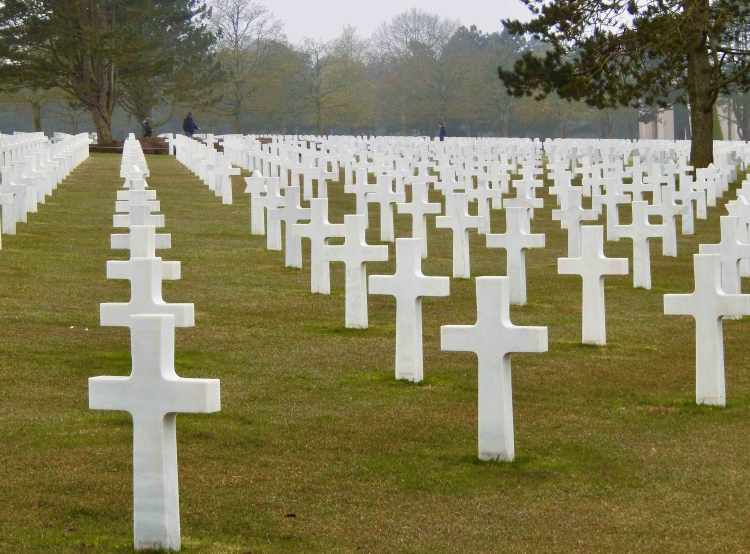
To fallen brothers and sisters…

In The United States today is a holiday set aside to remember those who served and died in the defense of our country. For those who paid so much shouldn’t we take a few moments of our time in remembering them?
To fallen brothers and sisters…

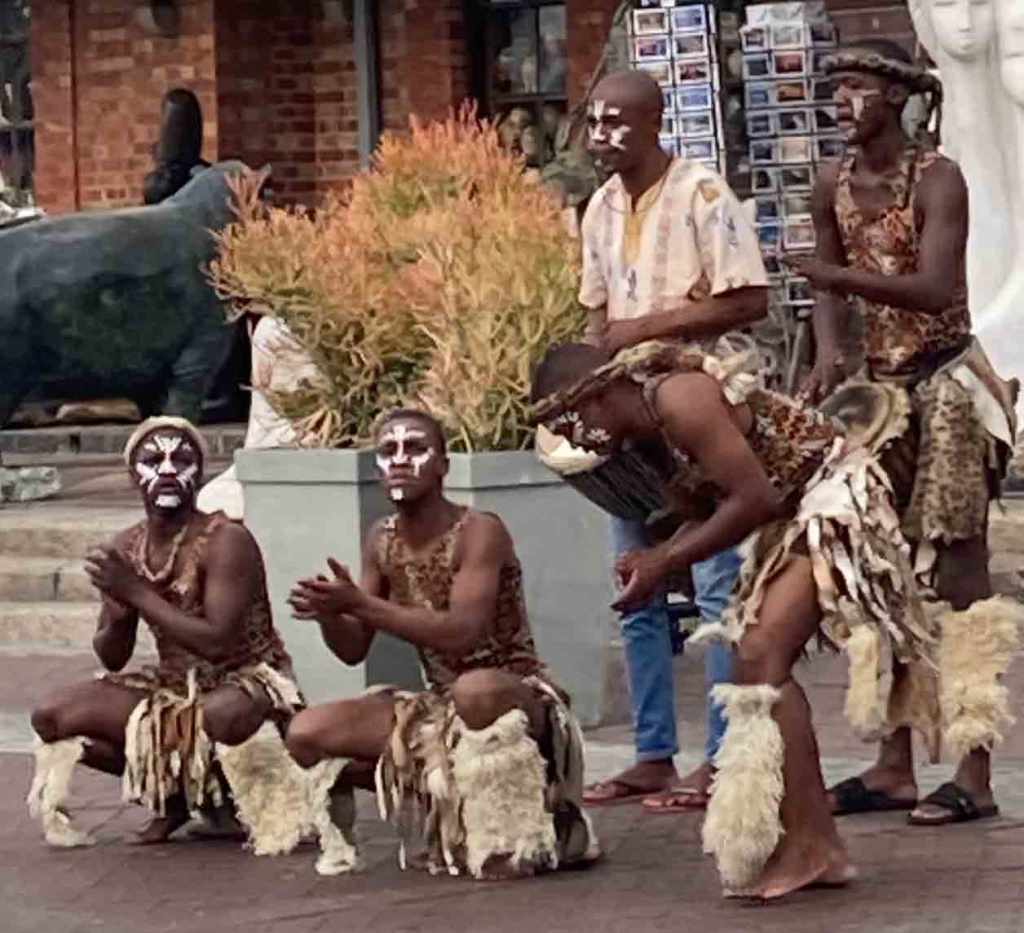
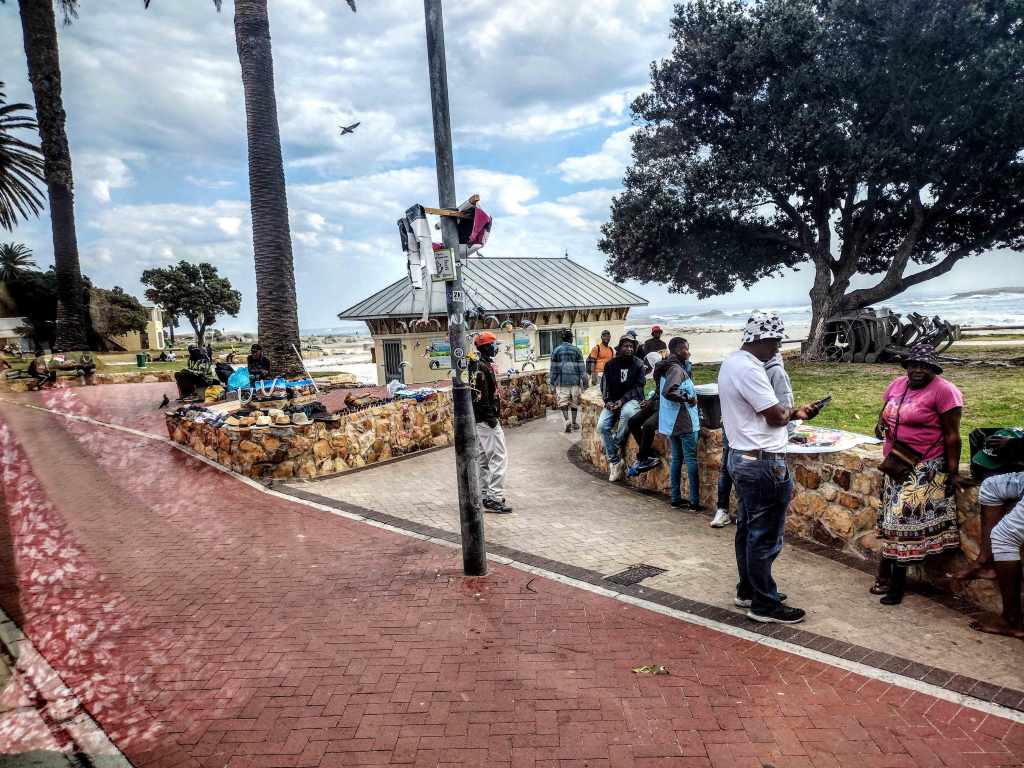
In lots of popular tourist destinations, you’ll find locals who dress up in costumes or perform traditional dances to attract tourists and earn money getting their pictures taken. We’ve found them everywhere like the girls in Inca costume with their llamas in Peru to aborigines in Sydney to street performers in New York. In Hout Bay, South Africa there’s a particularly aggressive bunch of men who’s act is actually breaking the law.


On the south side of Cape Town is a popular area called Republic of Hout Bay famous for its seafood restaurant and harbor where fishing boats tie up. The area has a large population of seals and a number of locals make money off the tourists by feeding the seals and getting their picture taken. It is against South African law to feed wildlife and it seems the authorities just turn their backs.
The Republic of Hout Bay is actually a publicity stunt. Around 1980 the residents declared their independence and actually started issuing a passport. Nobody actually takes it serious but the do a lot of promotion about the Republic.
Come along as we visit historic treasures, natural wonders and vibrant cities set against backdrops that are endlessly changing and visually magnificent.
Join Us • We understand that the last thing you want is more emails cluttering up your inbox, but we promise we’ll work hard to make this worth while. Give us a try and if we don’t live up to our promise all you need do is click the unsubscribe link in our emails.
Don’t Miss Out, Subscribe Now!
You’ll receive notices of new posts, special features and updates right in your inbox…


CLICK IMAGE TO EXPLORE CAPE TOWN
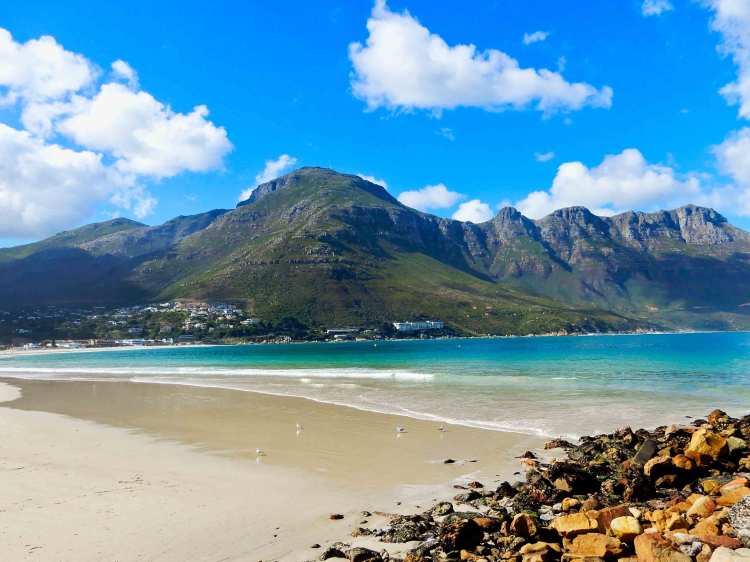
CLICK FOR SOUTH TO THE CAPE
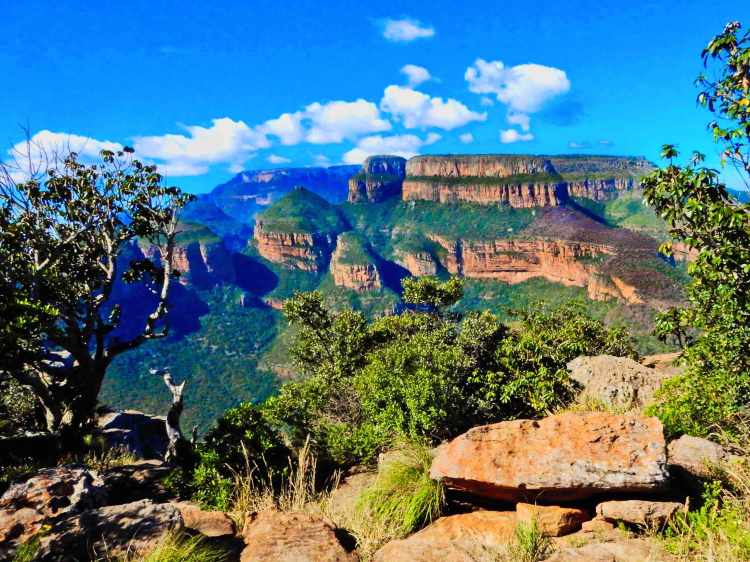
CLICK FOR SOUTH AFRICAS CANYON
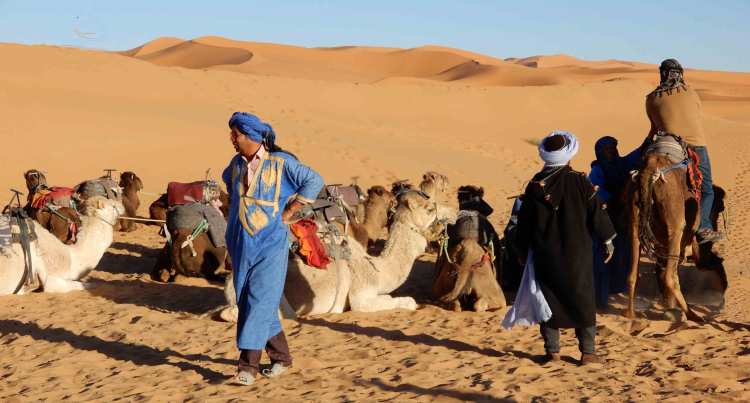
CLICK TO EXPLORE MOROCCO

Rated as one of the world’s greatest wildlife experiences and reported to be the number one African safari destination, Kruger National Park is not to be overlooked when considering your travel plans.

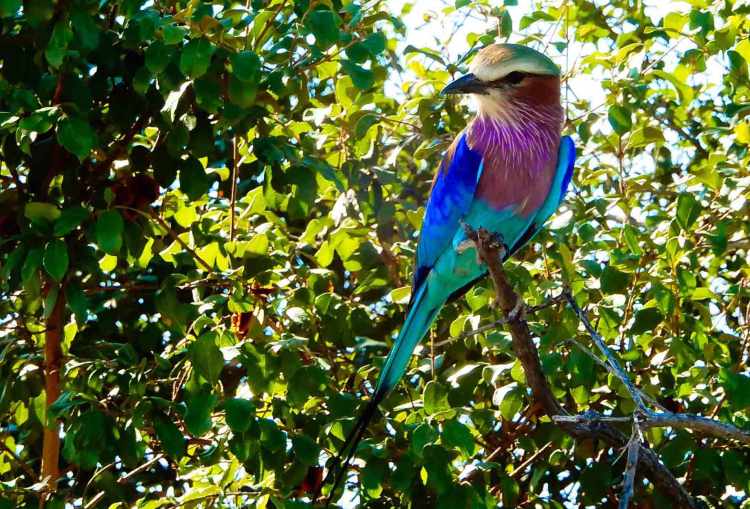
Larger than many countries and containing mostly undeveloped land, Kruger is one of the most popular destinations in Africa. Kruger National Park is home to an incredible diversity of plant and animal life. It is reported to contain over 1,470 species of plants, 336 species of birds, 147 species of mammals, and 114 species of reptiles.
Established in 1898 by President Paul Kruger of the South African Republic, its initial purpose was to protect the area’s wildlife from excessive hunting and poaching. Originally known as the Sabie Game Reserve, it was renamed the Kruger National Park in 1926. The park’s boundaries have been expanded over time, and it now covers an area of nearly 7,500 square miles.
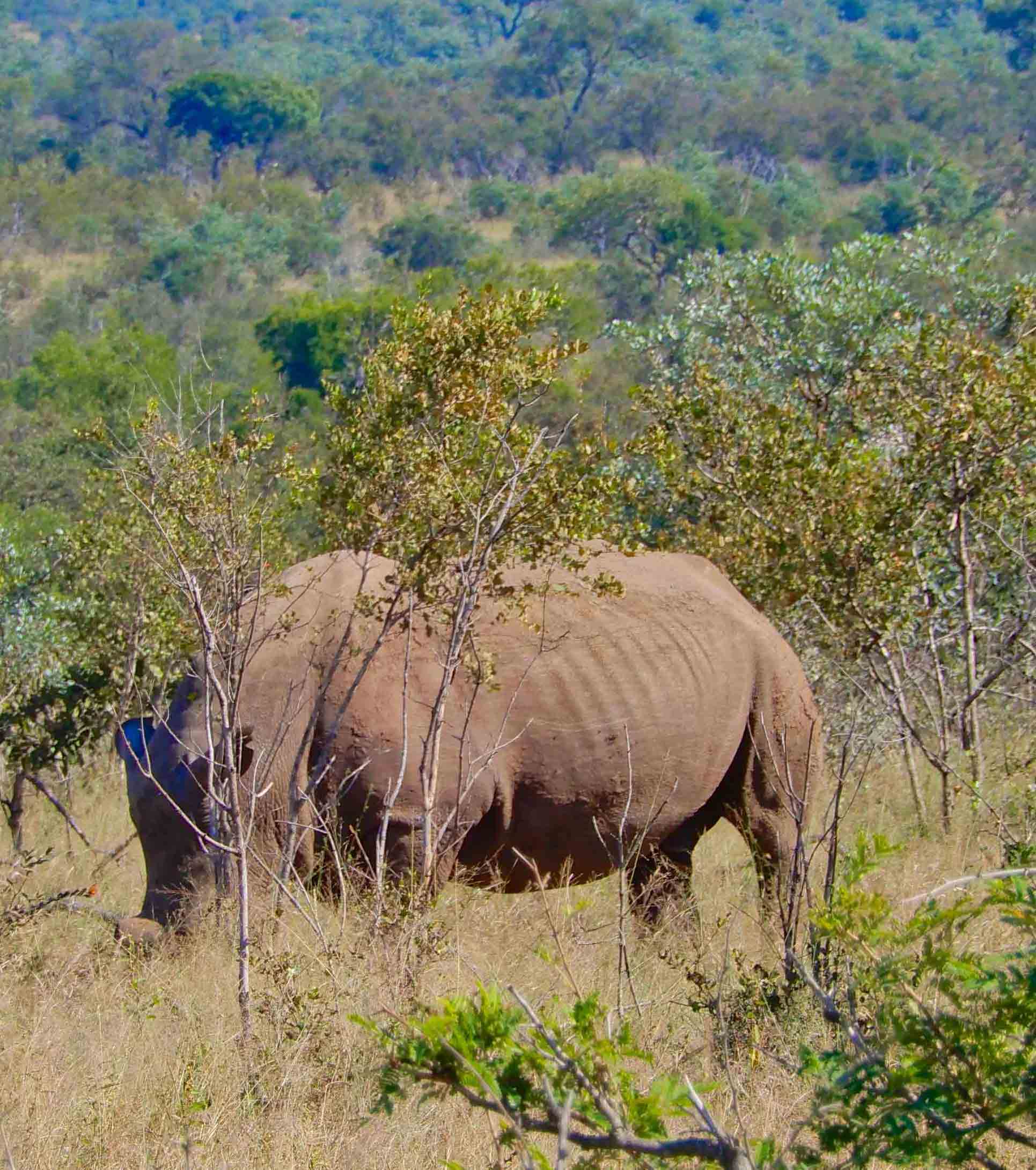
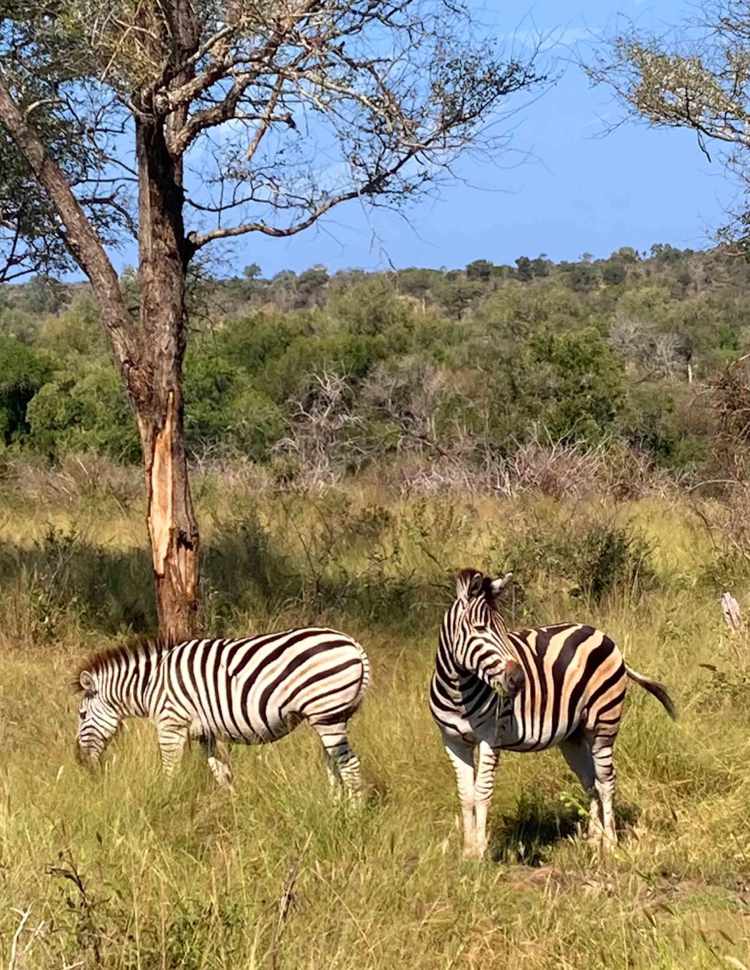
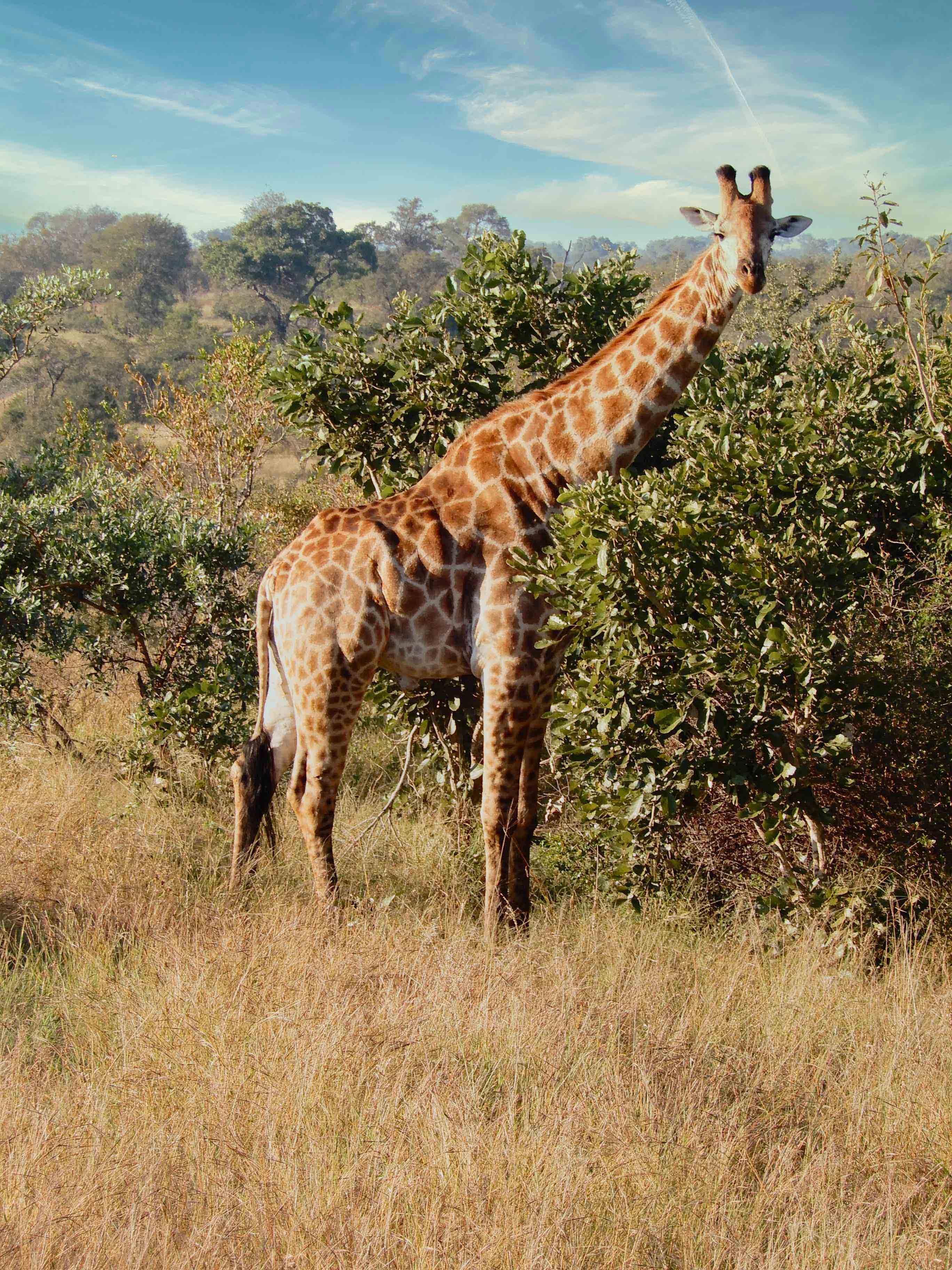
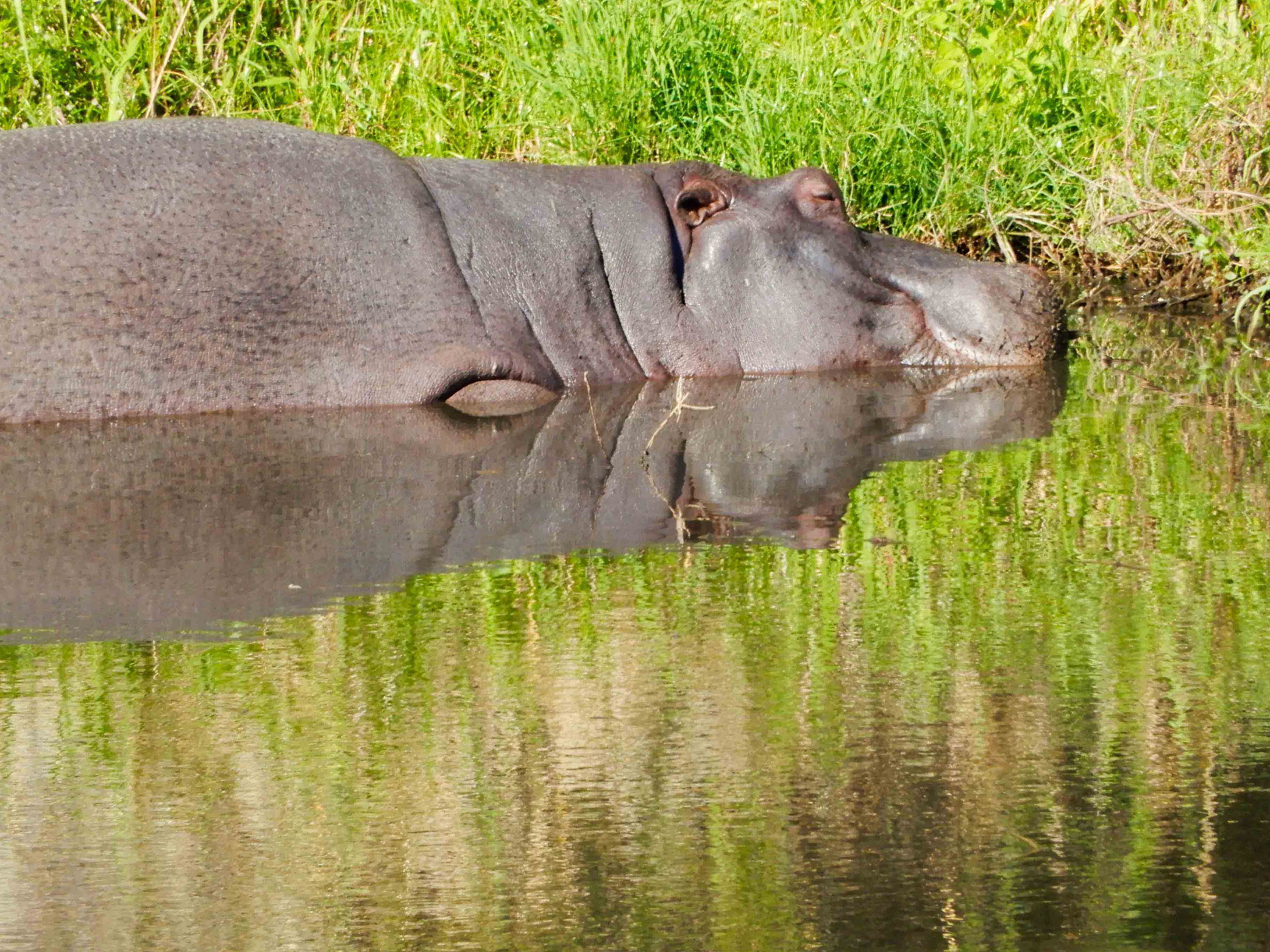
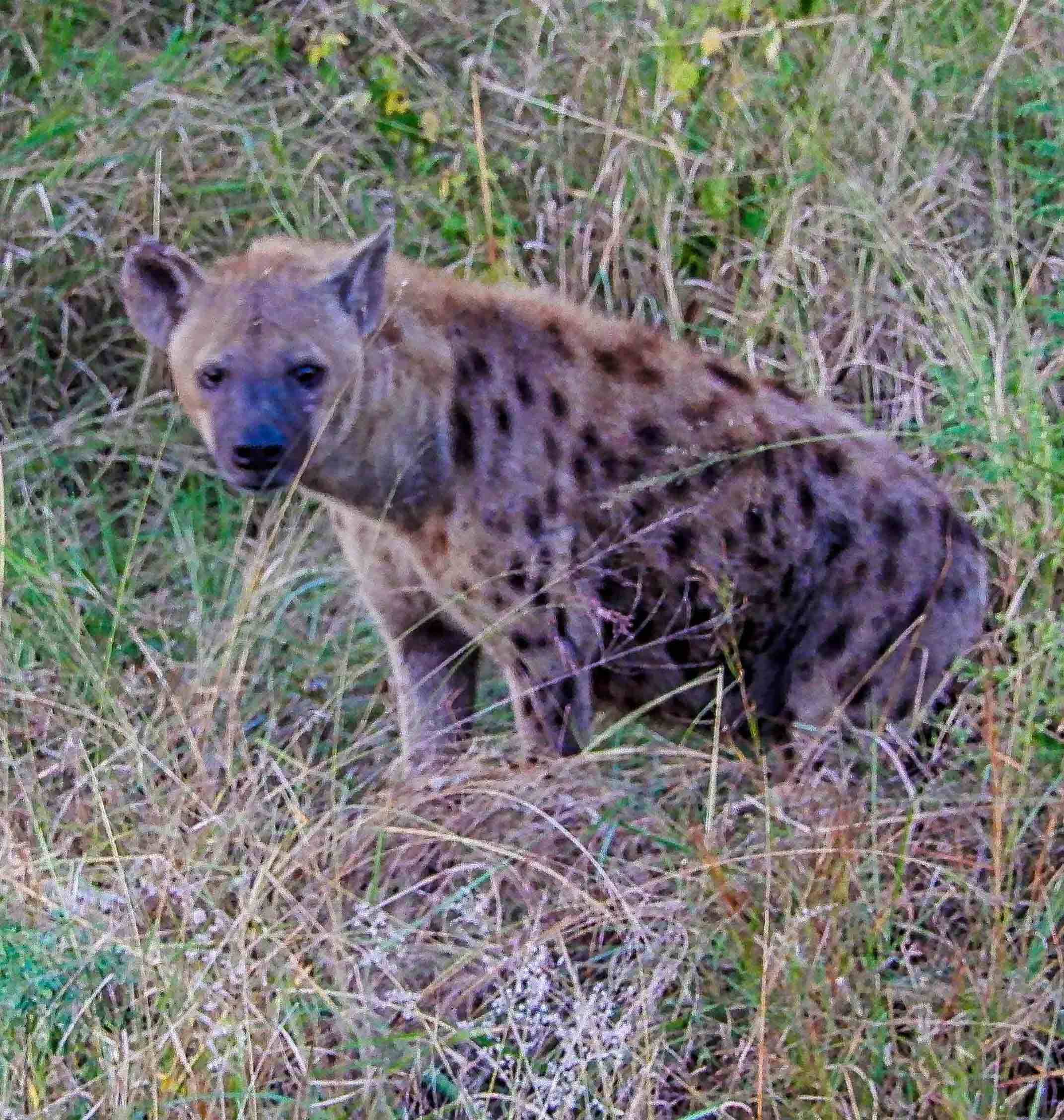
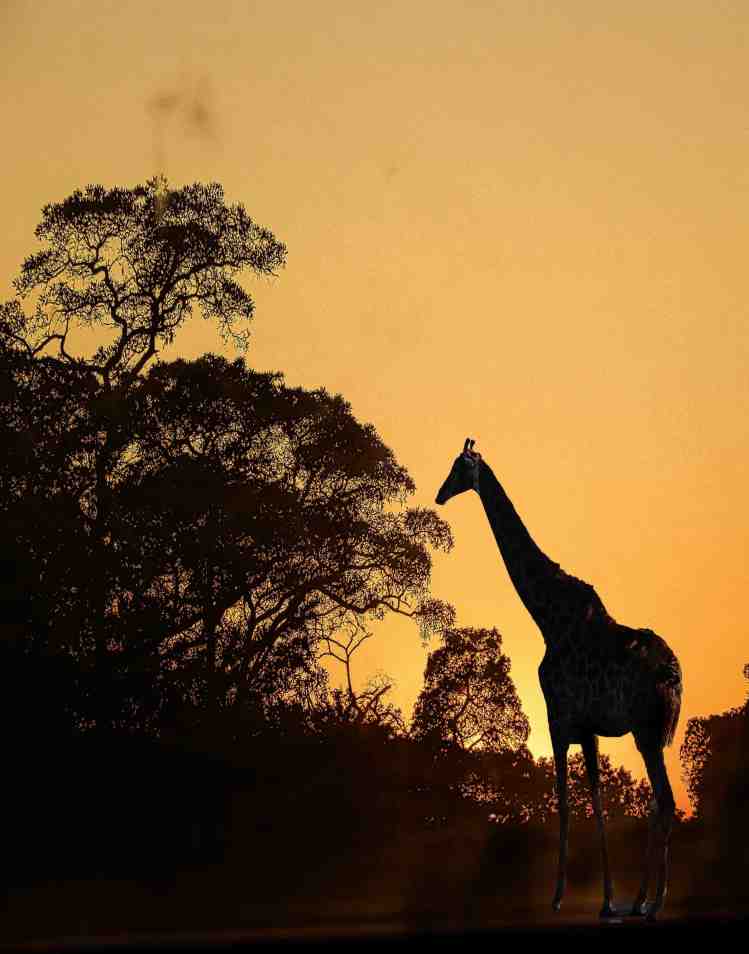
The main goal for visitors with their guides is to search for the “Big Five” animals consisting of elephants, rhinos, lions, leopards and Cape buffalo. In addition you’ll be told about the “Ugly Five” which normally includes warthog, hyena, wildebeest, vulture, and marabou stork but often people offer variations to that list. In addition you should easily see plenty of zebra, antelope, giraffes, hippos, monkeys and baboons. If you’re looking to see wildlife there’s no better opportunity than Kruger National Park.
The nearest large international airport is Johannesburg (JNB) with a number of domestic flights to Kruger at less than US$450 round trip – Johannesburg (JNB) -O.R. Tambo Intl.) to Nelspruit (MQP)-Kruger Mpumalanga Intl.
The least expensive way to get from Johannesburg to Kruger without a car is to bus and taxi which takes 5h 30m and costs $30 – $55. There is a daily bus (Eagle Liner) from Johannesburg, South Africa to Newcastle takings 4.5 hours and cost less than US$10. From Newcastle to Kruger a taxi averages US$40 (1 hour and 38.5 miles).
Another option is to arrange a booking with a Kruger tour company. Several tour operators offer excursions from Johannesburg, providing a convenient way to experience the park’s wonders. These tours typically include transportation, accommodation, game drives, and most meals.
A few reputable tour operators offering Kruger tours from Johannesburg include:
It’s highly recommended to book your tour in advance, especially during peak season (June to October).
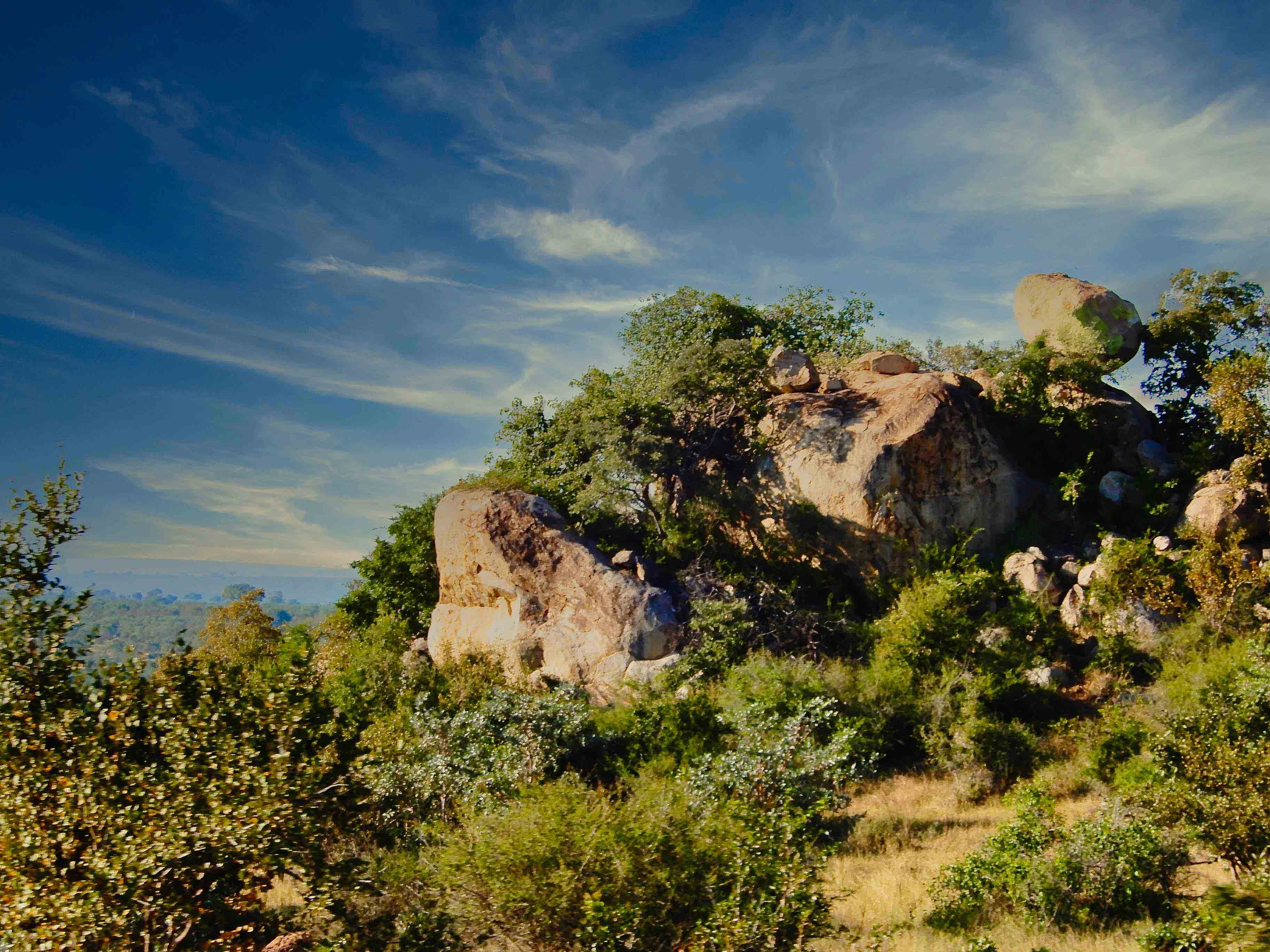

The two major things to consider when visiting Kruger, beyond price, are distance from the park and the level of the accommodation you expect Accommodations range from basic camp sites to high-end luxury and everything in between.
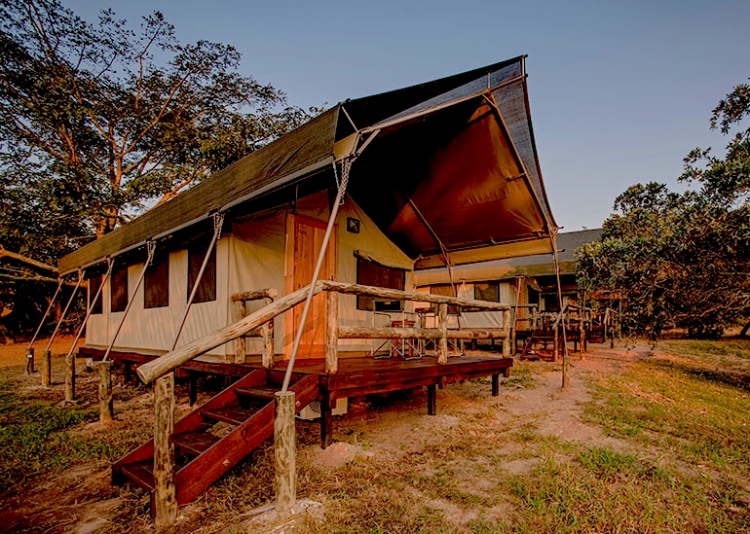
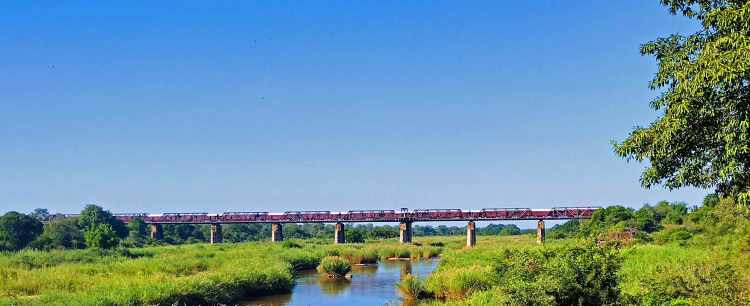
Expect in-season rates to average US$125 to US$200 per night like Grand Kruger Lodge and Spa about 25 miles from park entrance.Camping resorts average about US$100 per night like Nkambeni Safari Camp located inside the park with basic camping facilities averaging under US$50 like Sleepover Kruger Gate less than 2 miles from the park. Luxury resorts range as high as US$800 to US$1200 and higher a night like Kruger Shalati – Train on the Bridge located inside the park.
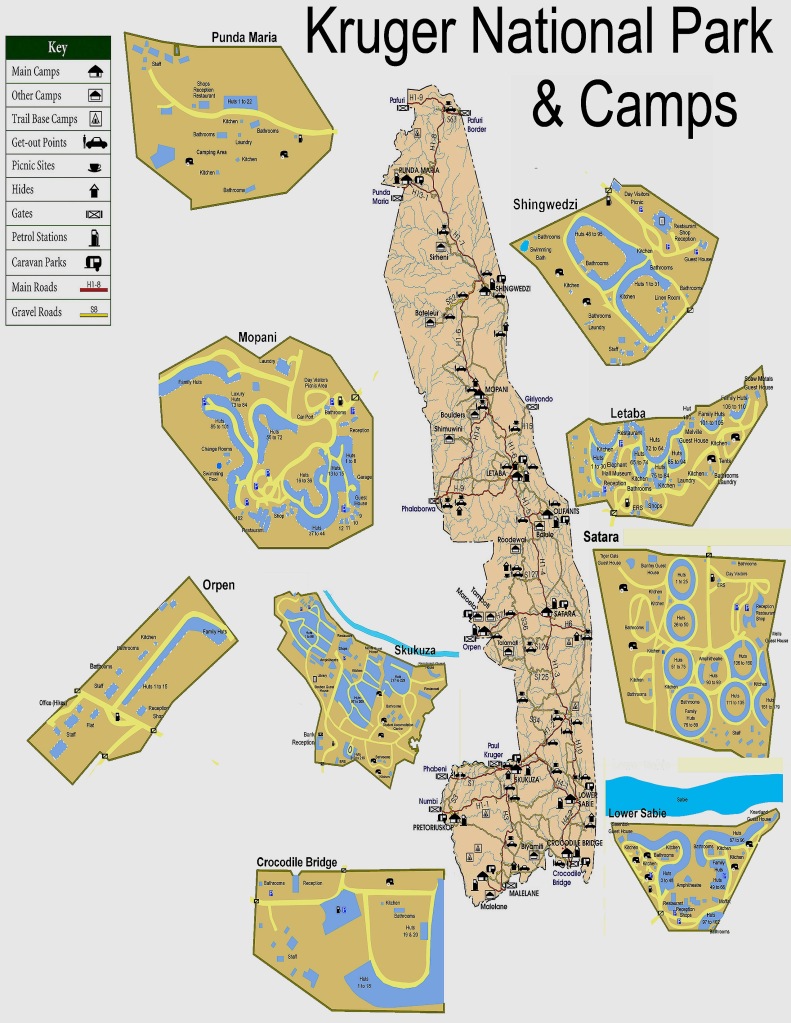
Click The Map To Download A pdf Printable Copy


Planning A Cruise? Start With The Intentional Traveler’s Port Guides


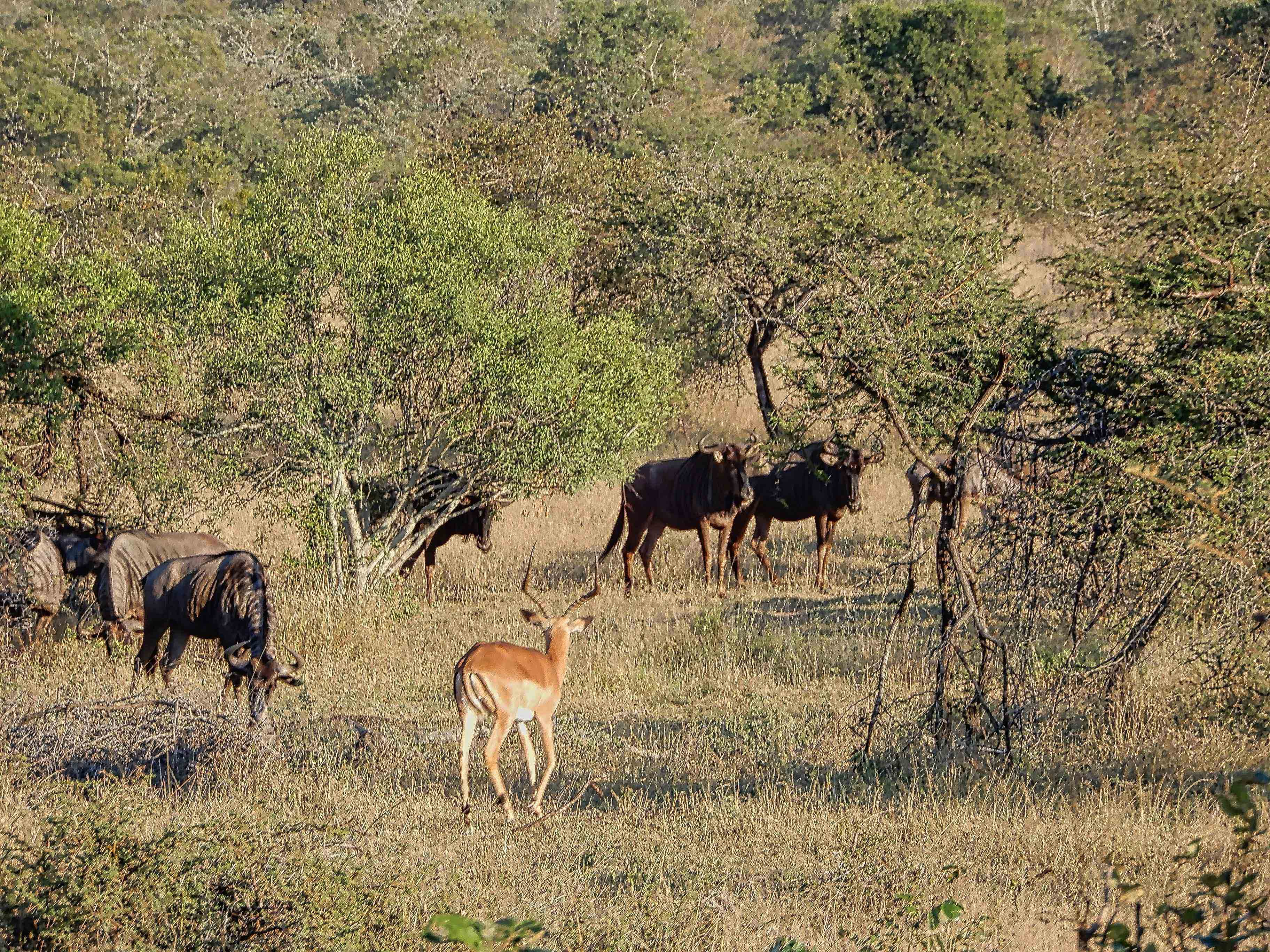
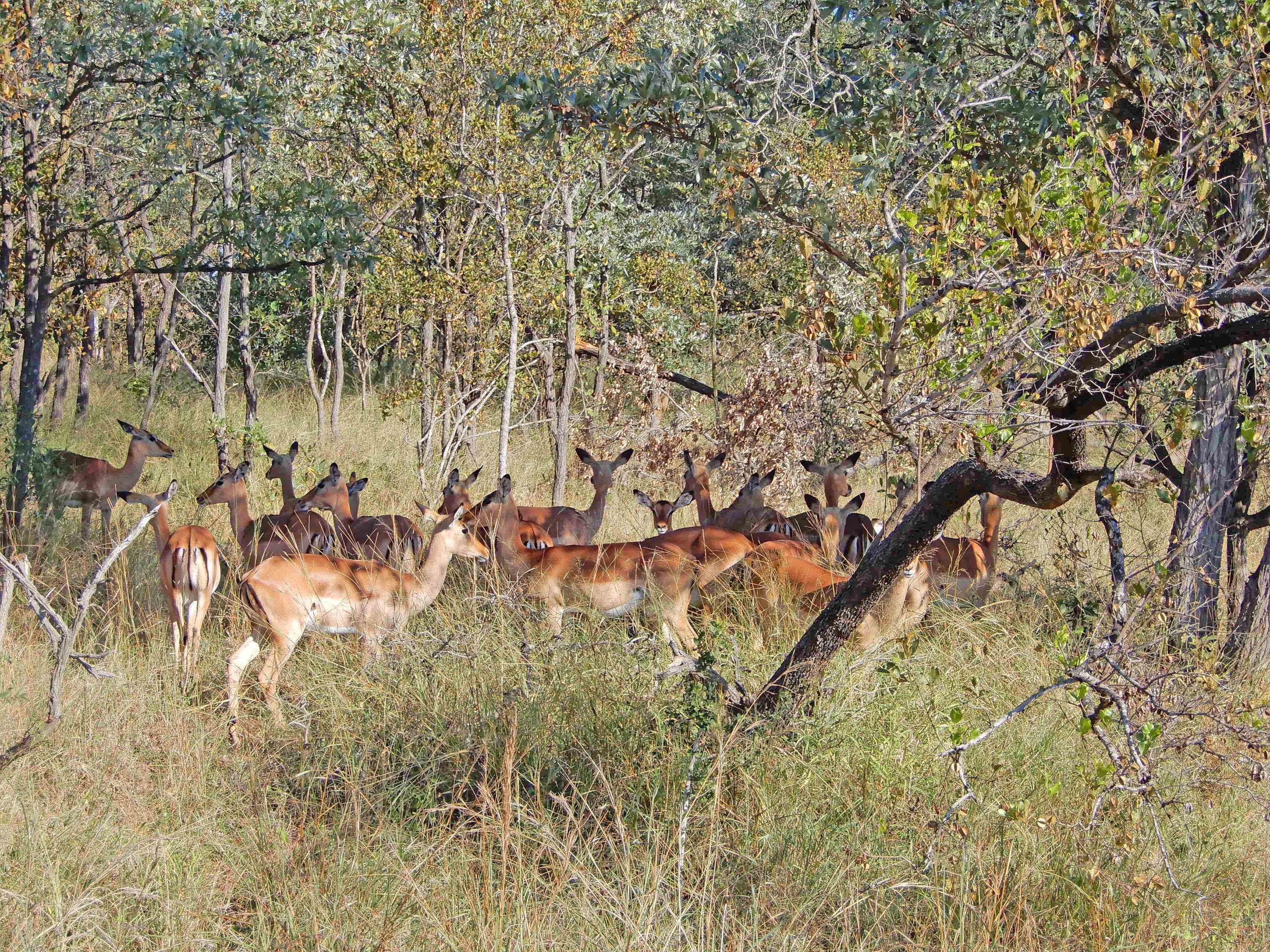
An impala with a herd of wildebeest in Kruger National Park, South Africa. Everybody talks about the “Big Five” (elephants, rhinos, lions, leopards and Cape buffalo) but there are plenty of antelope, kudu, impala, wart hogs, zebras, wildebeests and giraffes that also make the safari experience incredibly worthwhile.


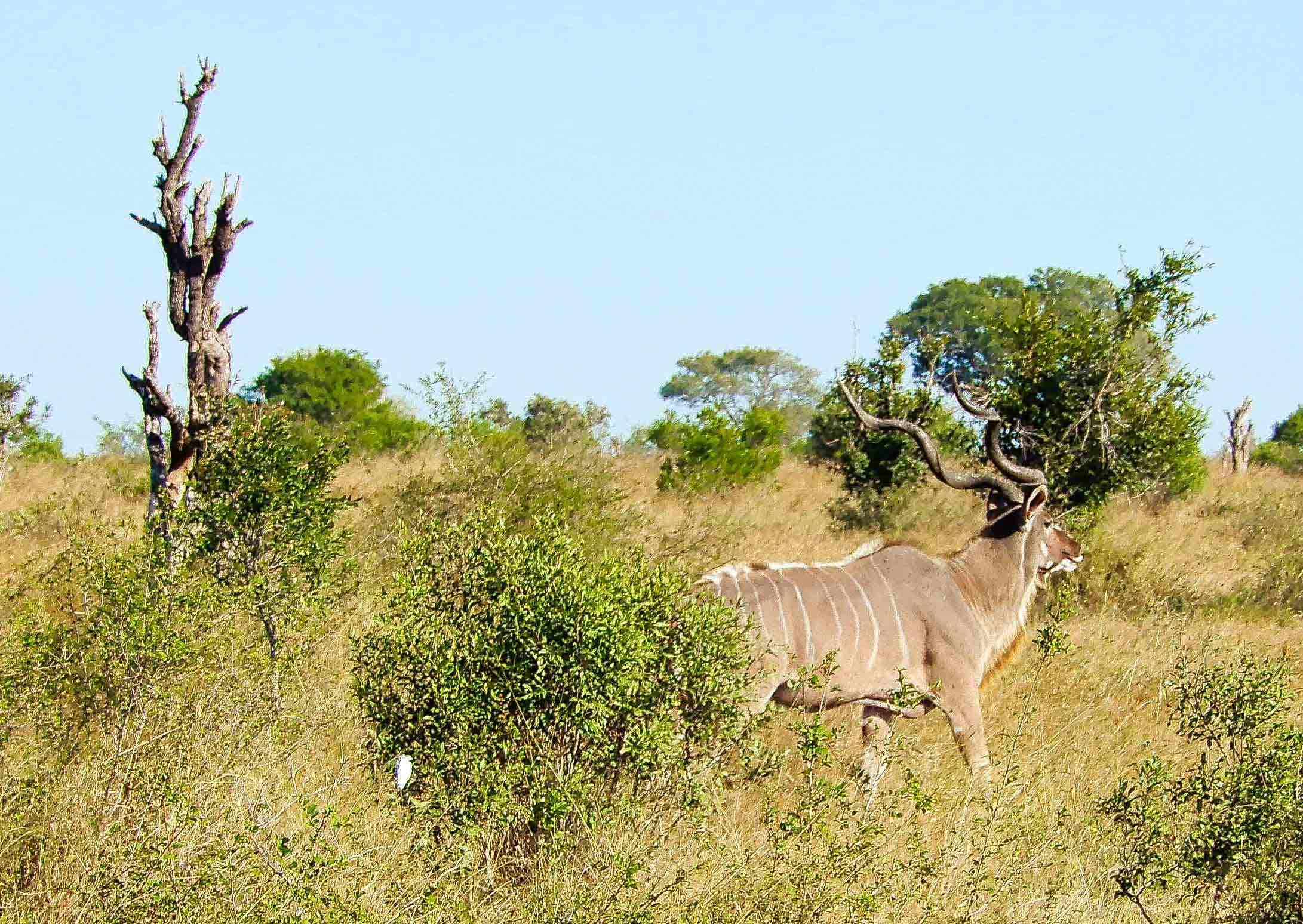
A sole kudu encountered only minutes after the impala sighting…
Don’t miss an opportunity to safari in Kruger given the chance. The landscapes are amazing and the animal life was incredible!
Come along as we visit historic treasures, natural wonders and vibrant cities set against backdrops that are endlessly changing and visually magnificent.
Join Us • We understand that the last thing you want is more emails cluttering up your inbox, but we promise we’ll work hard to make this worth while. Give us a try and if we don’t live up to our promise all you need do is click the unsubscribe link in our emails.
Don’t Miss Out, Subscribe Now!
You’ll receive notices of new posts, special features and updates right in your inbox…
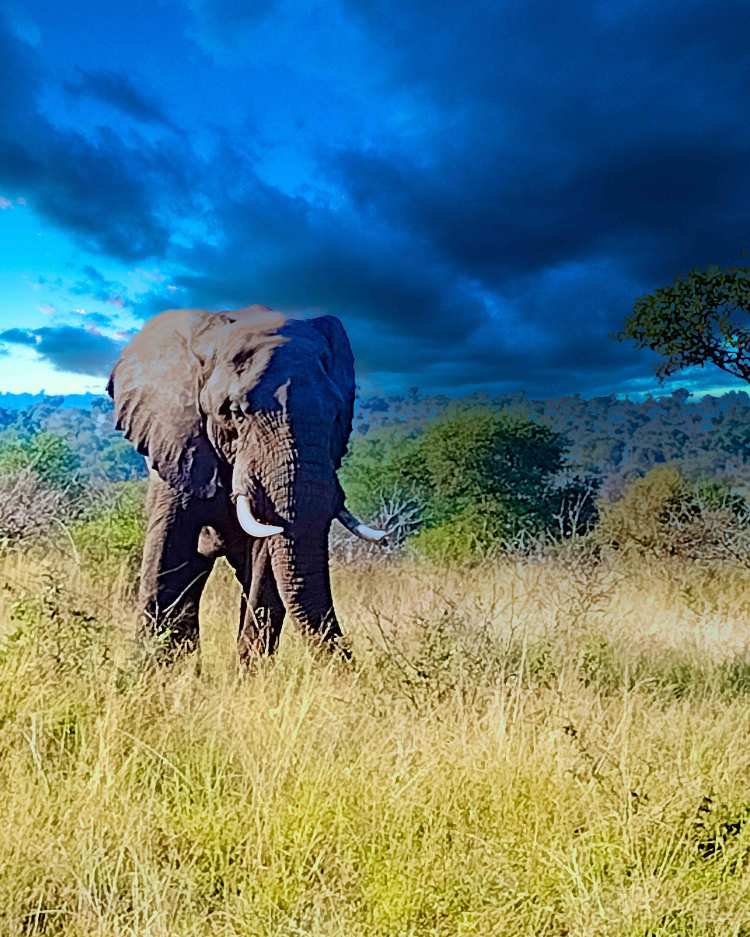
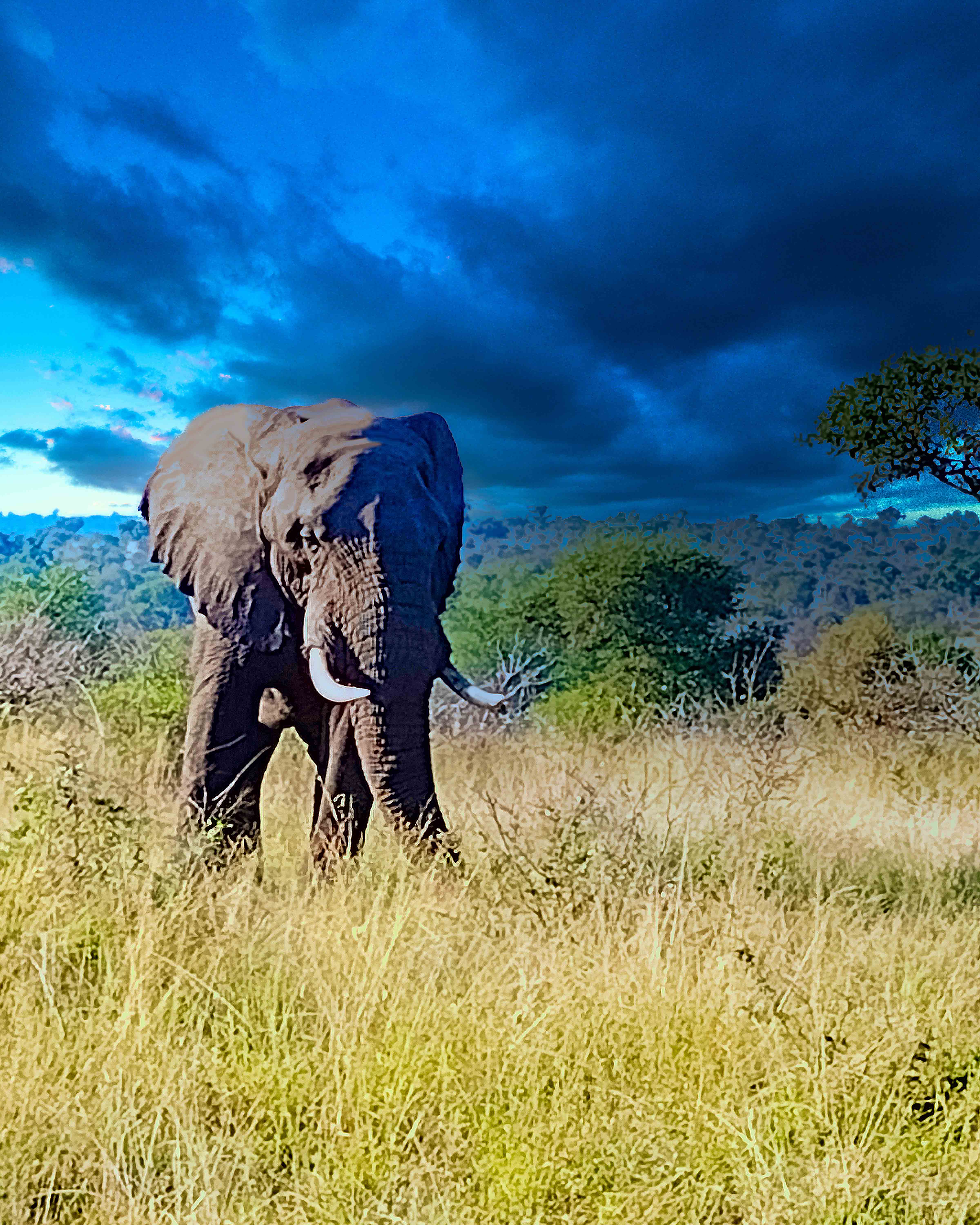
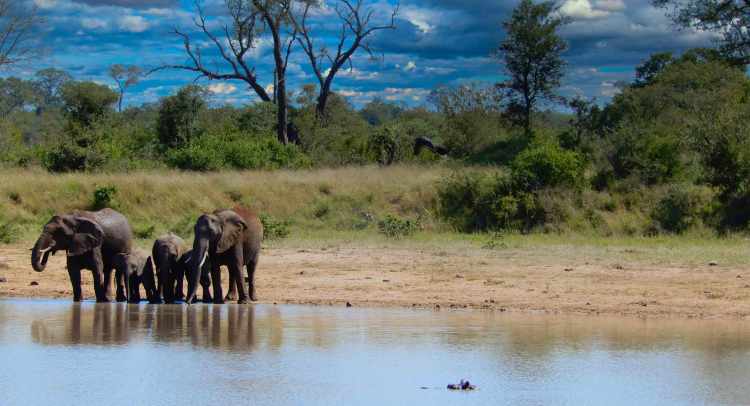
A lone bull elephant in Kruger National Park. Kruger is the largest game reserve in Africa, covering an area of over 7,500 square miles. Park guides push the search for the “big five” (elephants, rhinos, lions, leopards and Cape buffalo) and, as hard as it seems to believe, elephants are everywhere. From large herds to solitary bulls, it isn’t unusual to have a dozen sightings in a single day.
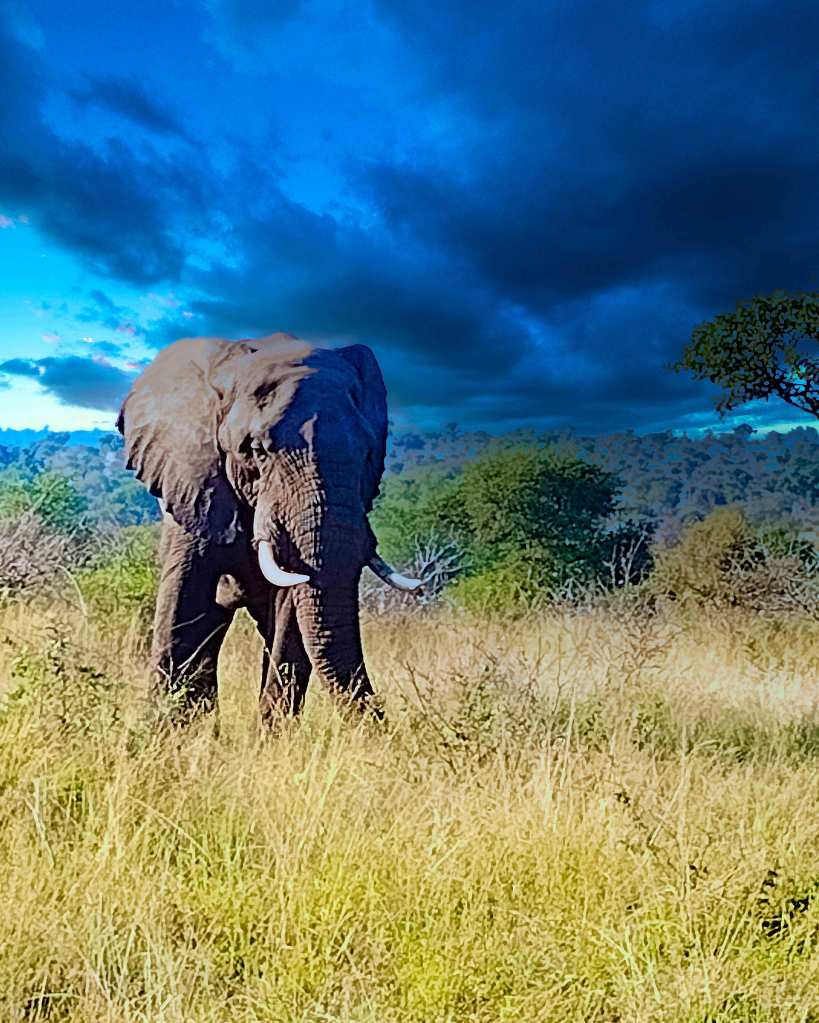
The most common herd of African elephants live in close-knit family groups led by a matriarch, the oldest and most experienced female along with a couple of generations of her daughters and grandchildren. These herds typically consist of 8-12 related females, their young, and often a adult male or two. While 12 elephants are common herds can go to two dozen elephants.
Solitary elephants are usually unattached males or bulls.
Come along as we visit historic treasures, natural wonders and vibrant cities set against backdrops that are endlessly changing and visually magnificent.
Join Us • We understand that the last thing you want is more emails cluttering up your inbox, but we promise we’ll work hard to make this worth while. Give us a try and if we don’t live up to our promise all you need do is click the unsubscribe link in our emails.
Don’t Miss Out, Subscribe Now!
You’ll receive notices of new posts, special features and updates right in your inbox…
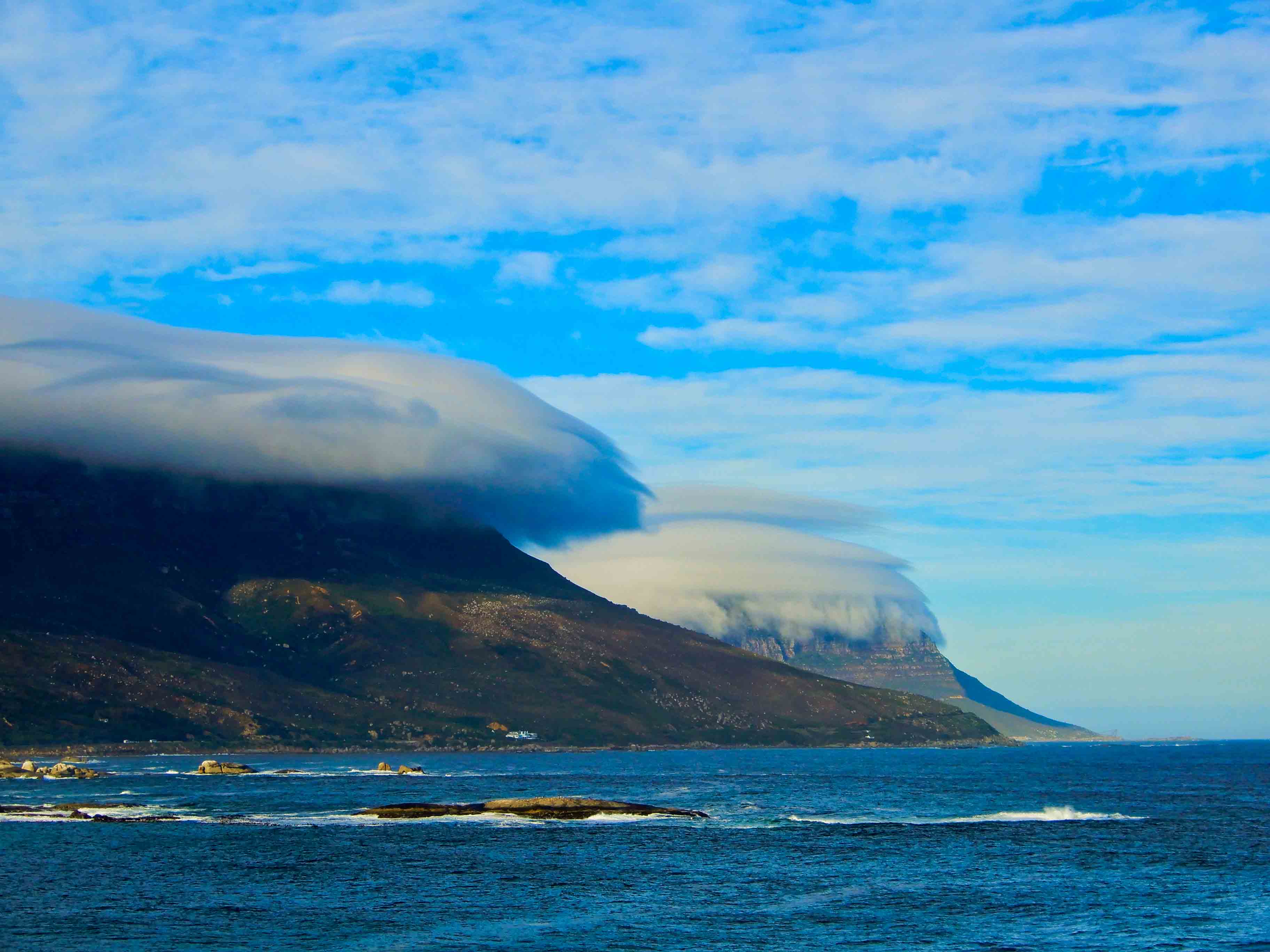
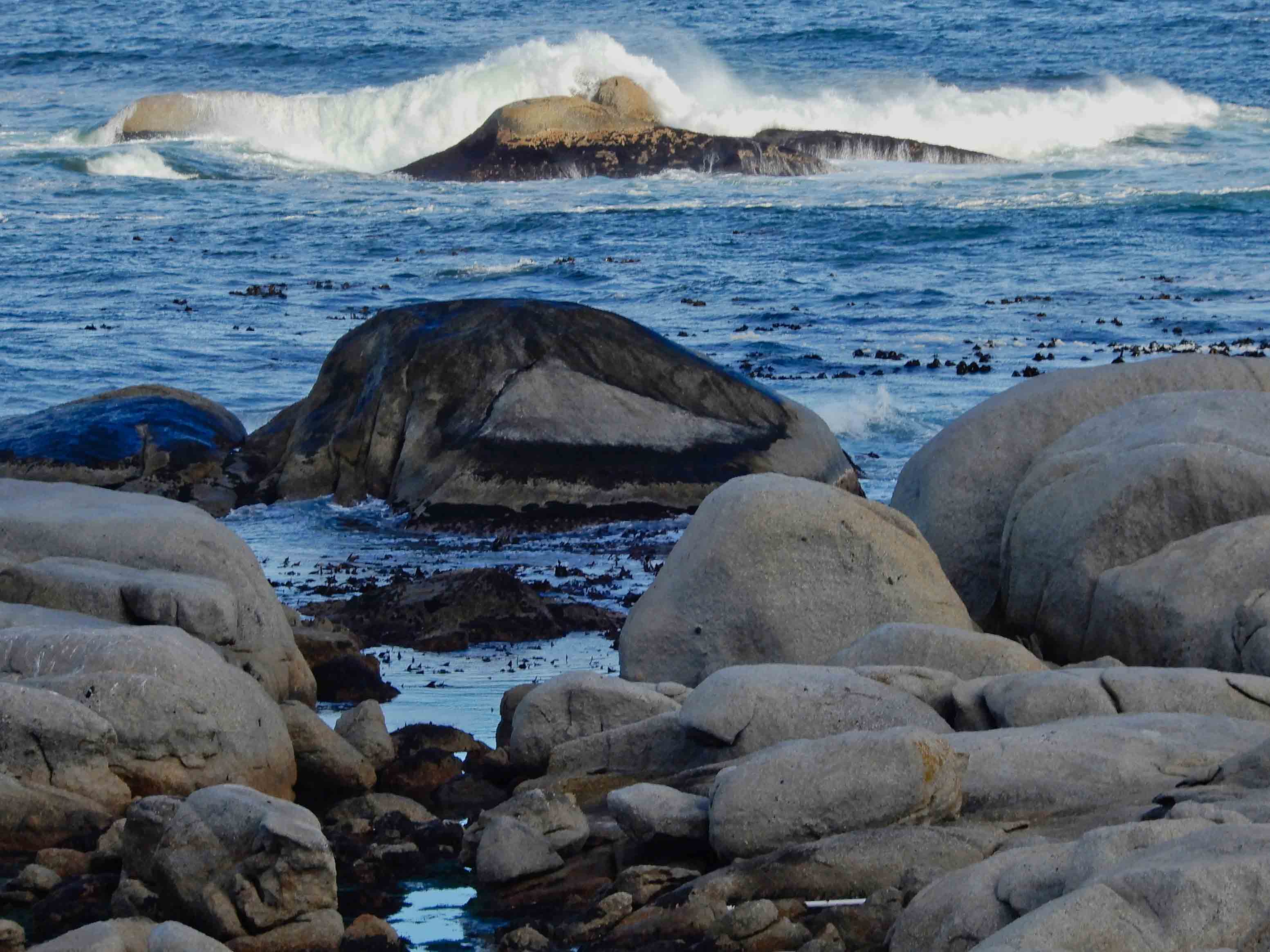
Whether Cape Town is a port of call or a departure port for your cruise, you’re in for an amazing experience. Cape Town, South Africa is a fantastic port of call featuring a rich culture, a modern look and feel, incredible landscapes (and seascapes), great restaurants and shopping. The city’s attractions include the Victoria and Alfred Waterfront, fantastic beaches with Table Mountain as a backdrop and a world class botanical garden.
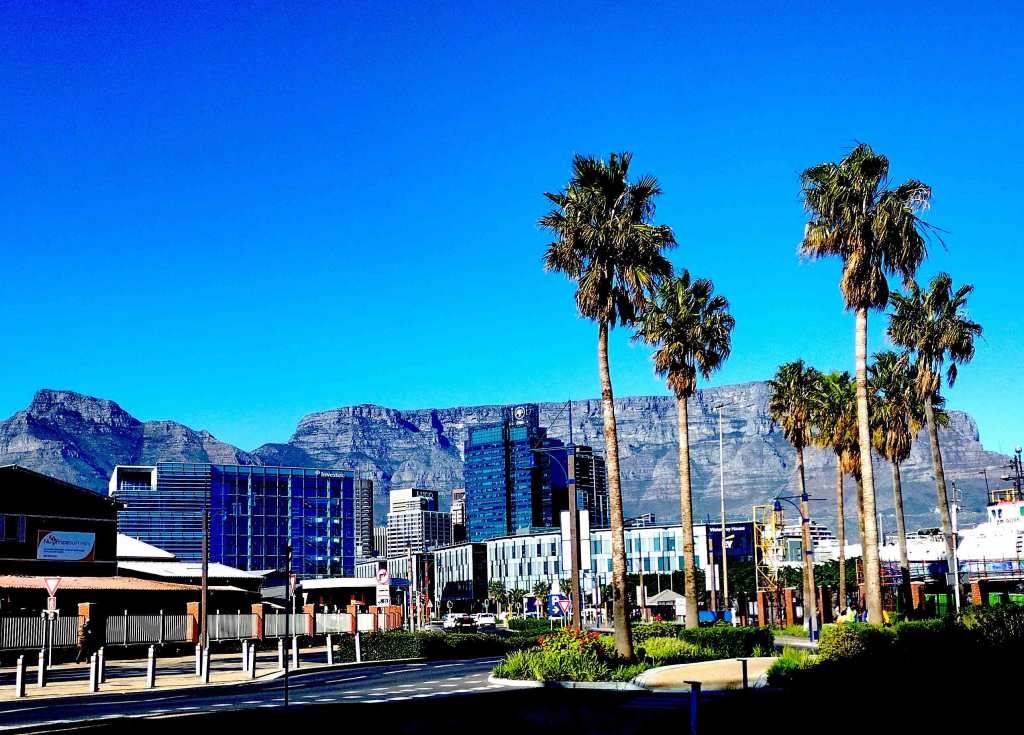
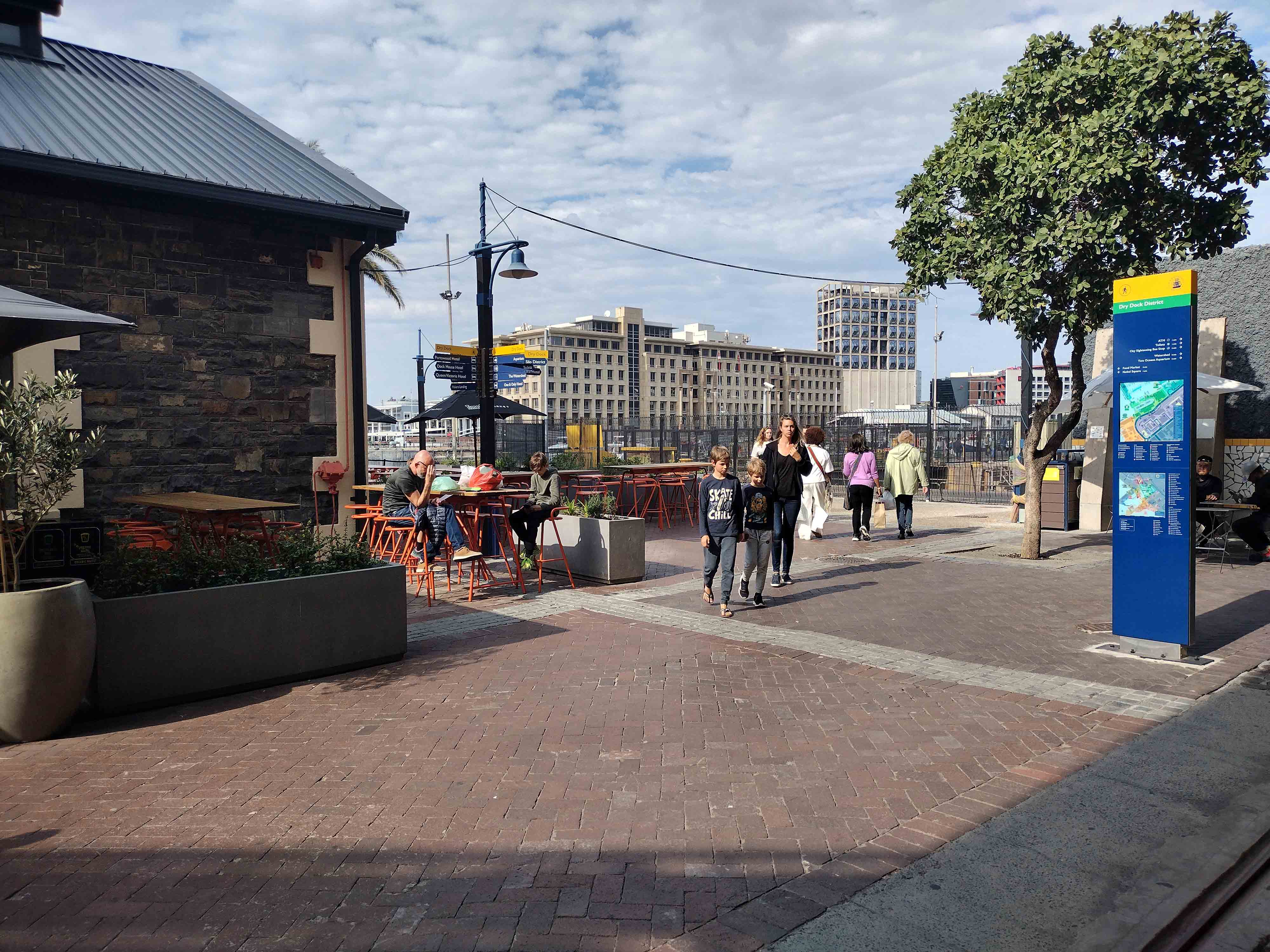
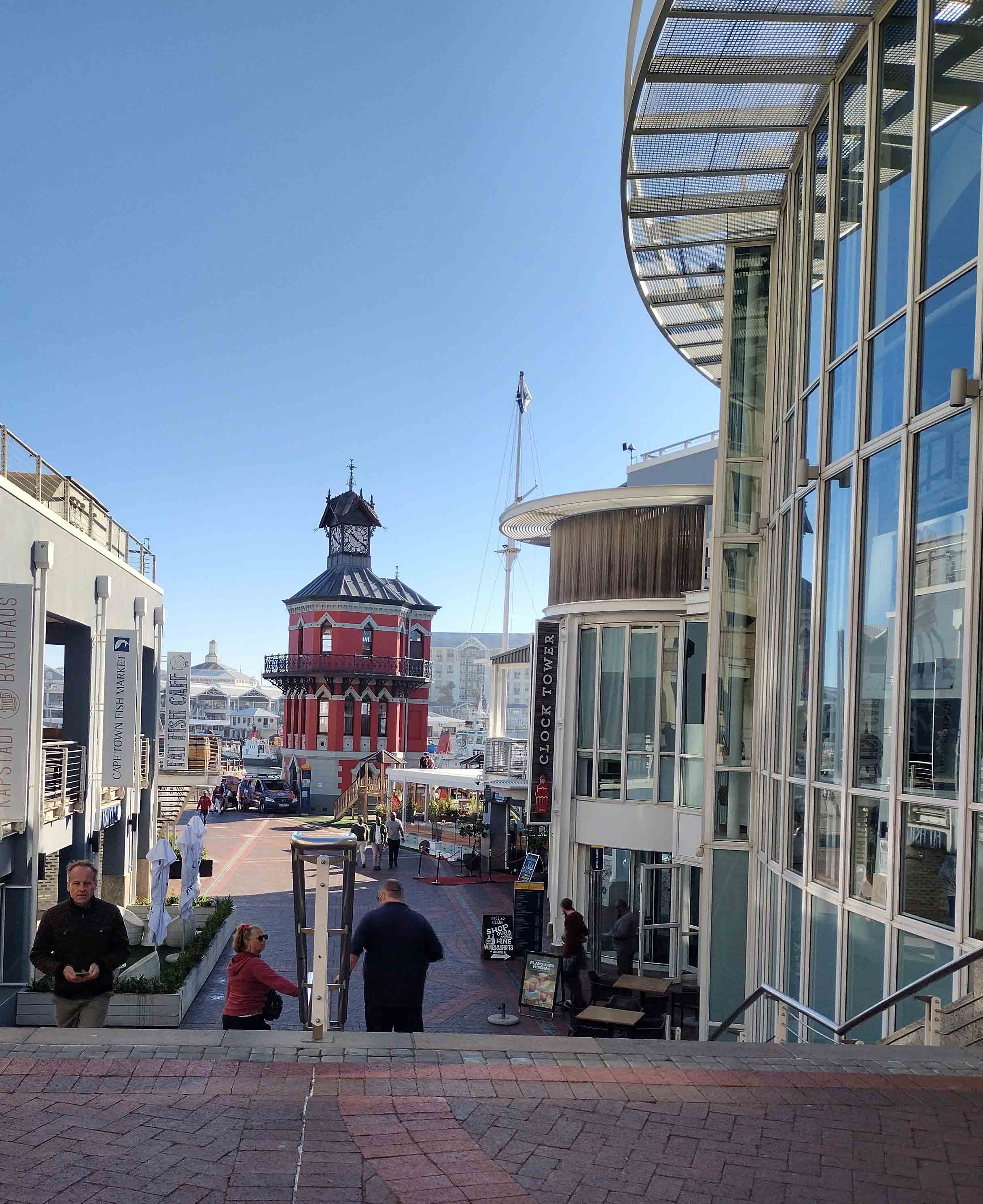
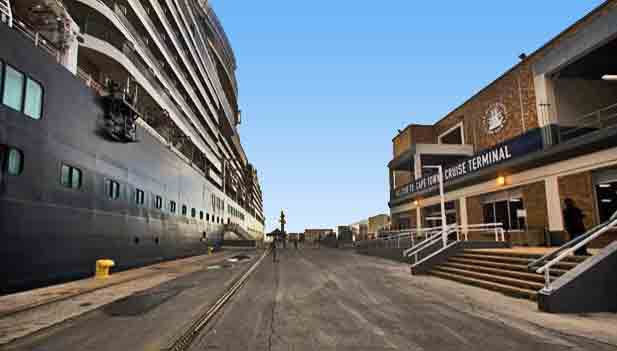
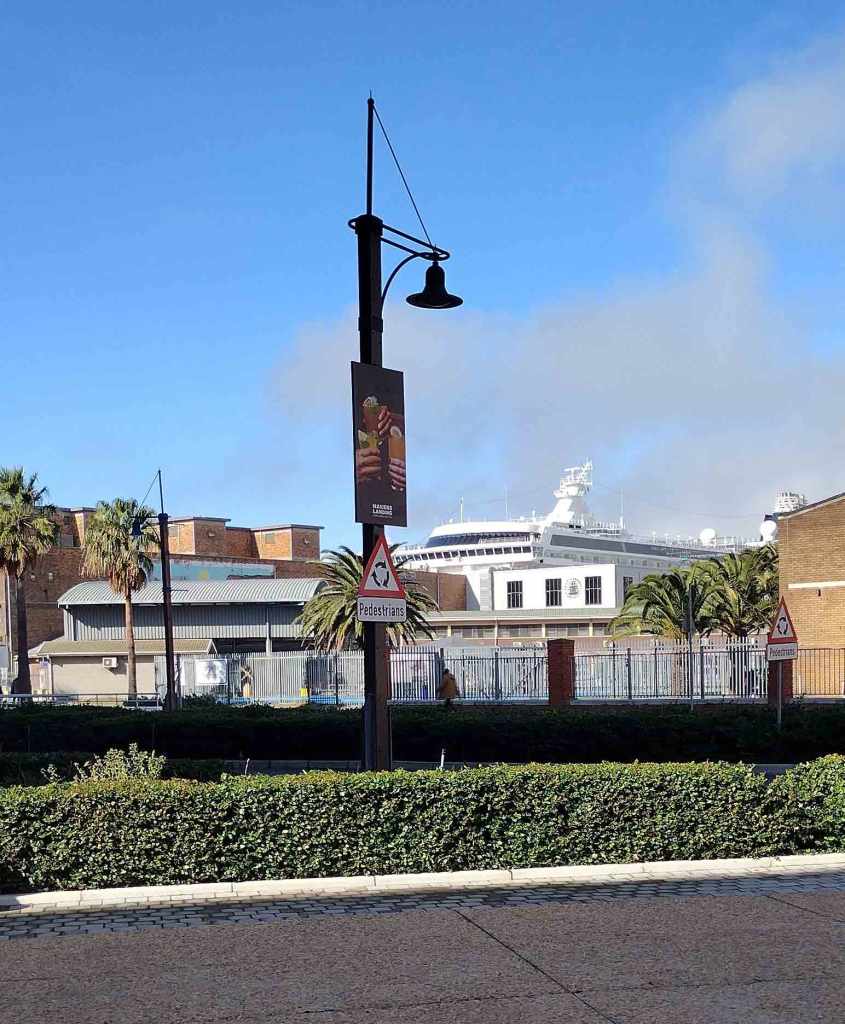
Cape Town has a modern cruise terminal offering public facilities. However disembarking varies by the individual ships gangway design and a ramp or even stairs can be encountered. For passengers using wheelchairs there can be difficulty disembarking. It is in a great location, just three or four blocks from the Victoria and Alfred Waterfront. Taxis and Ubers are readily available and walking in the area at most times is fairly safe*.
This port area has a well developed wheelchair friendly infrastructure which is flat or has few inclines. Intersection crosswalks have hardly any issues with curbs or other obstacles.
Using Taxis in Cape Town, South Africa
Metered Taxis are readily available in the city and offer a convenient way to get around. Fares are calculated based on distance and time, and you can expect to pay around US$3 to $4 per mile.
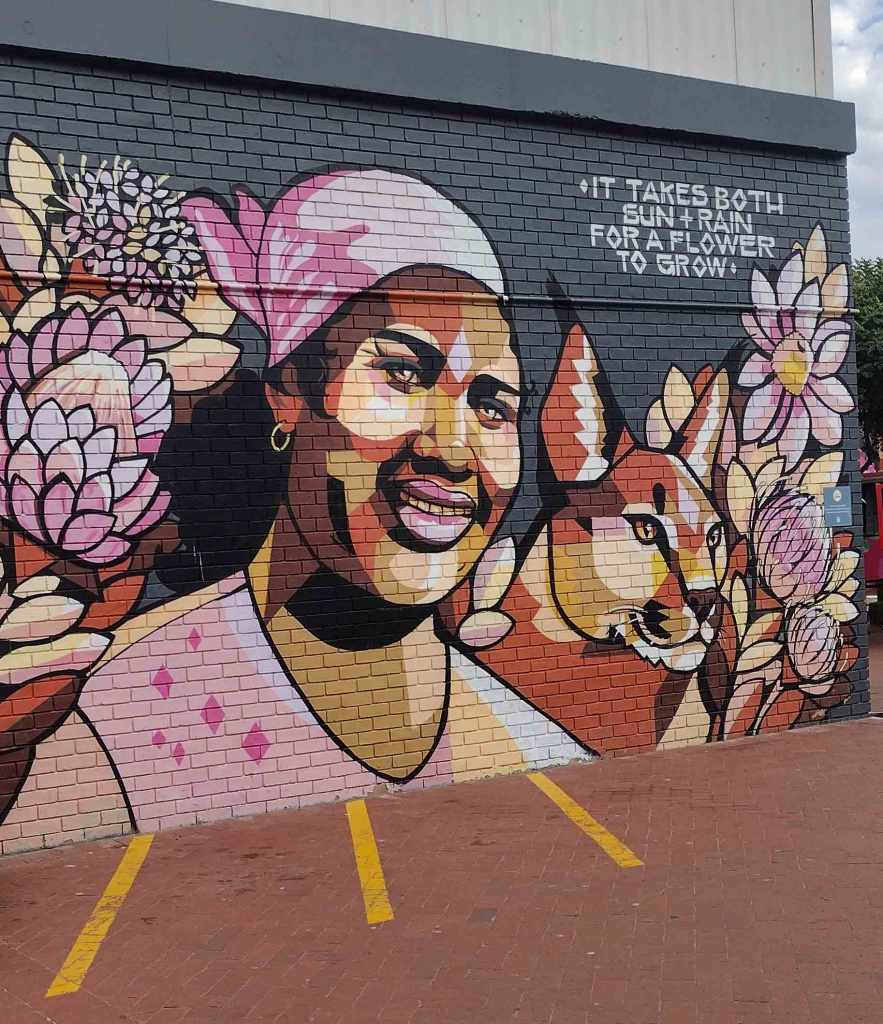
Prepaid Taxis are a good option for short trips or if you’re unsure of the distance. You can purchase a voucher from a taxi rank or kiosk, which will specify the fare in advance.
Uber is also a popular option in Cape Town and is usually a bit less expensive than taxis. It also has the advantage of paying in dollars right through the app.
Rental Cars are available but are recommended for drives outside the city like down the Cape Peninsula or into wine country.
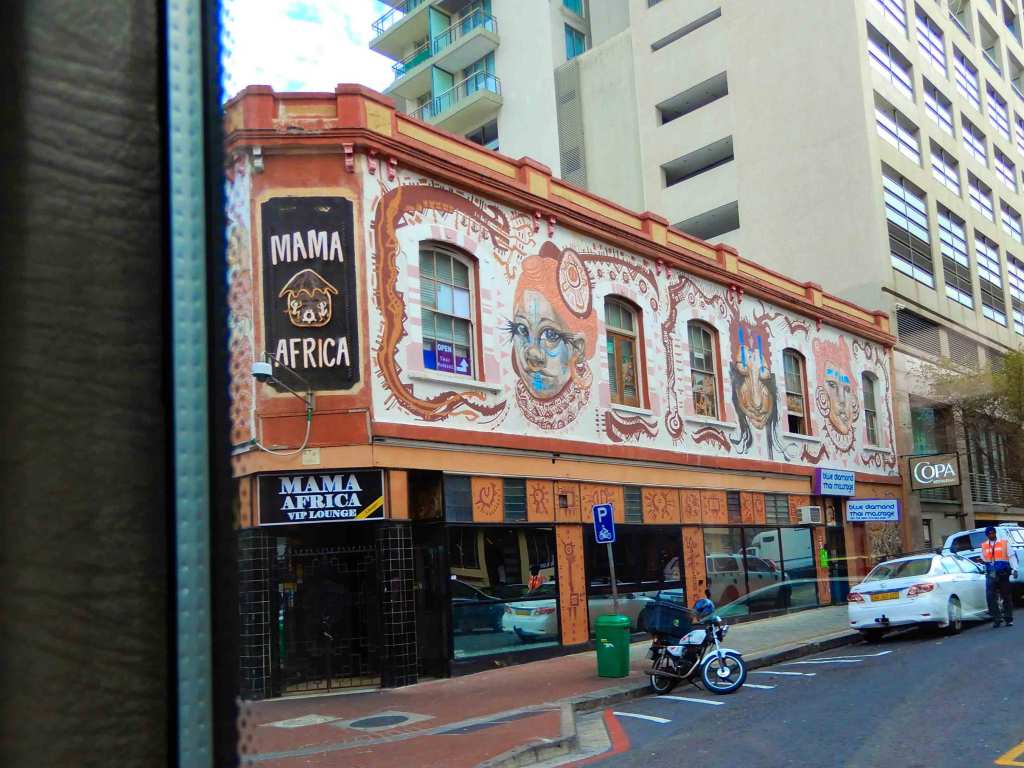
South Africa’s currency is the Rand (ZAR) and 1 USD = 18.2746 ZAR. Credit cards are also welcome and ATMs are readily available but should only be used in very public areas. You can also convert currency at banks but be sure and have your passport with you.
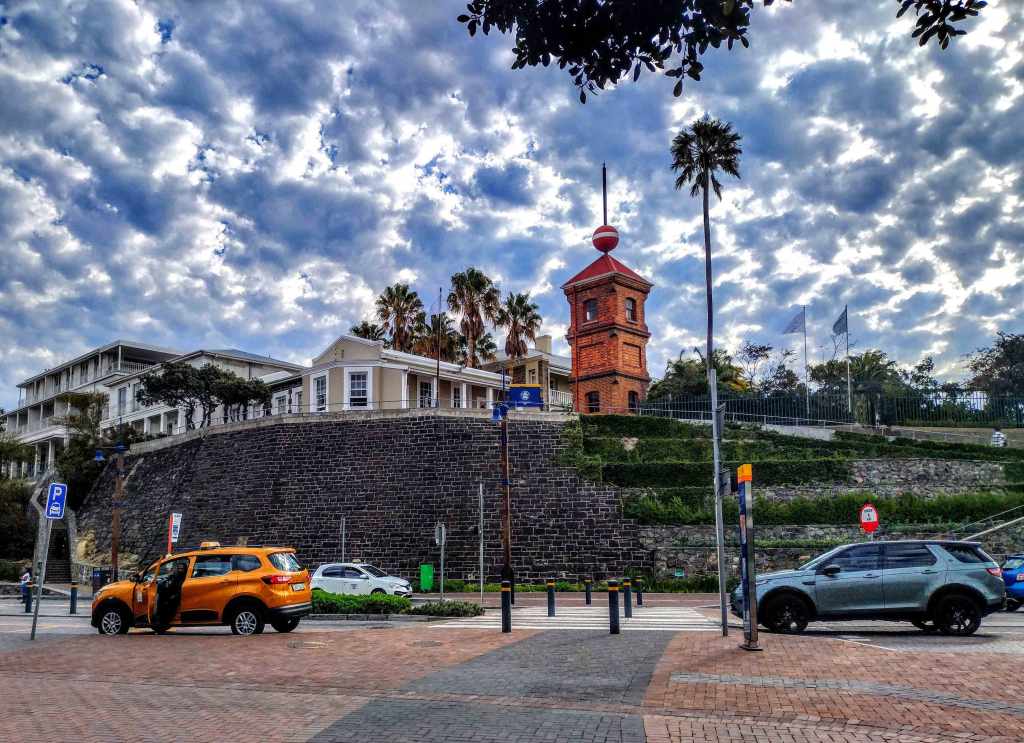
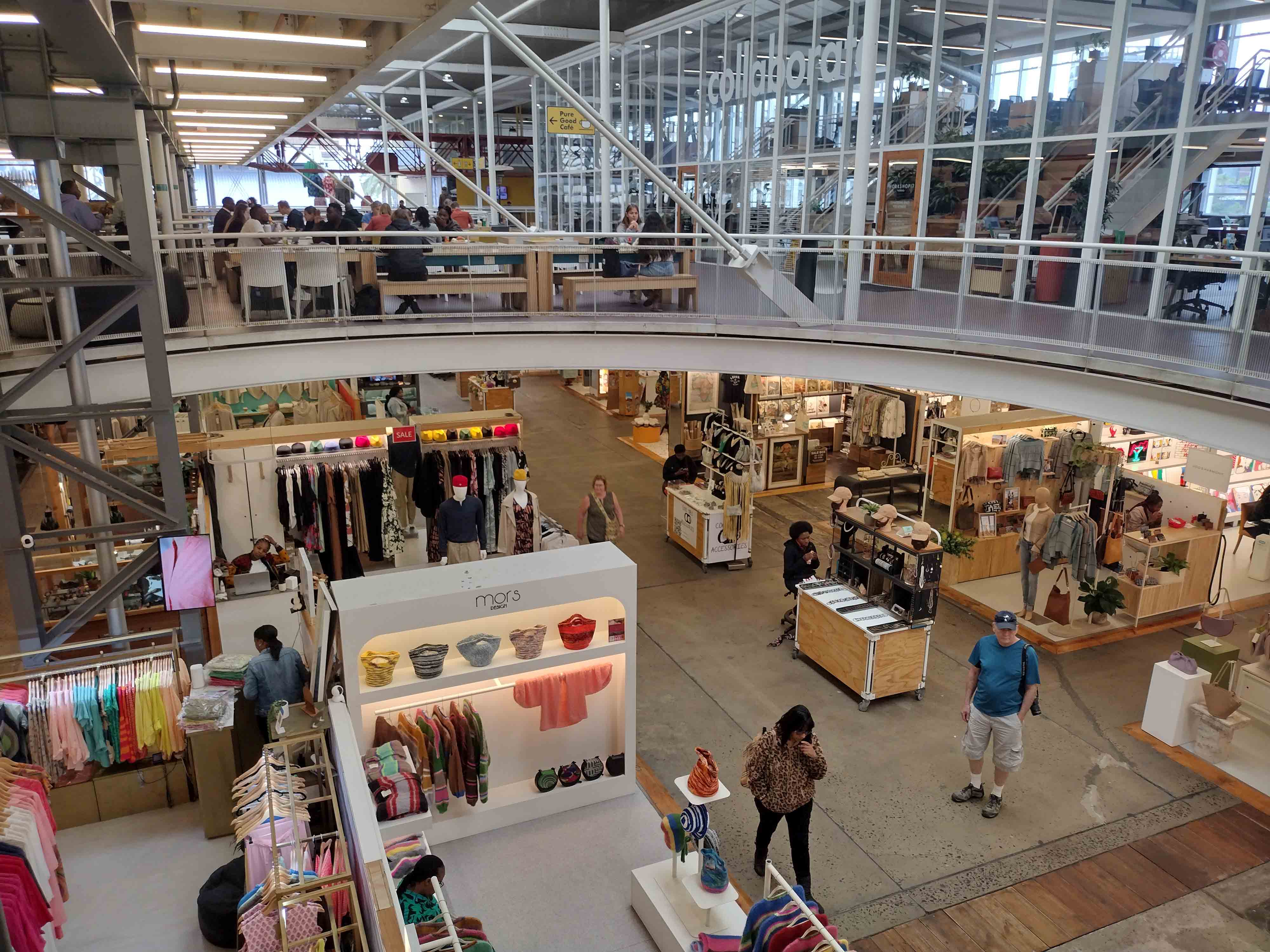
Victoria and Alfred Waterfront or just V&A is located a few blocks from the cruise terminal. V&A is the heart of the city and a major draw for visitors and locals alike. It features restaurants, numerous shops, a shopping mall, the Two Oceans Aquarium, a couple of interesting museums and the ticket office for the hop-on-hop-off buses (more soon on the bus).
Note: There are many locations around the world named after the English Queen Victoria & Albert her Prince Consort, but this is actually named after her son Alfred who actually visited Cape Town.
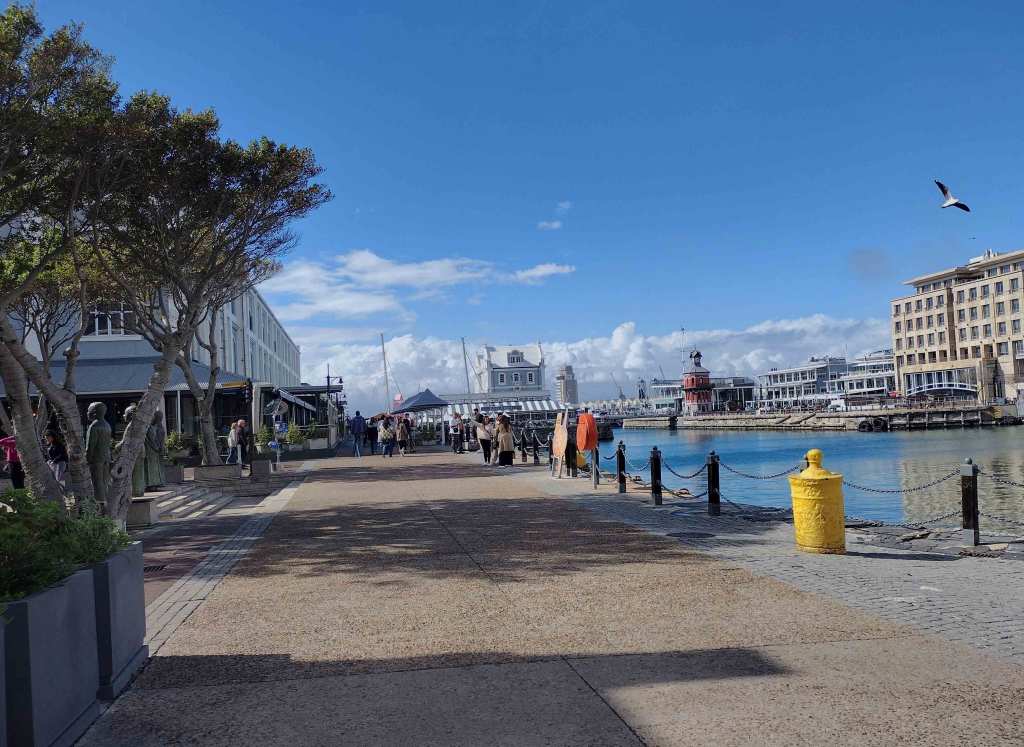
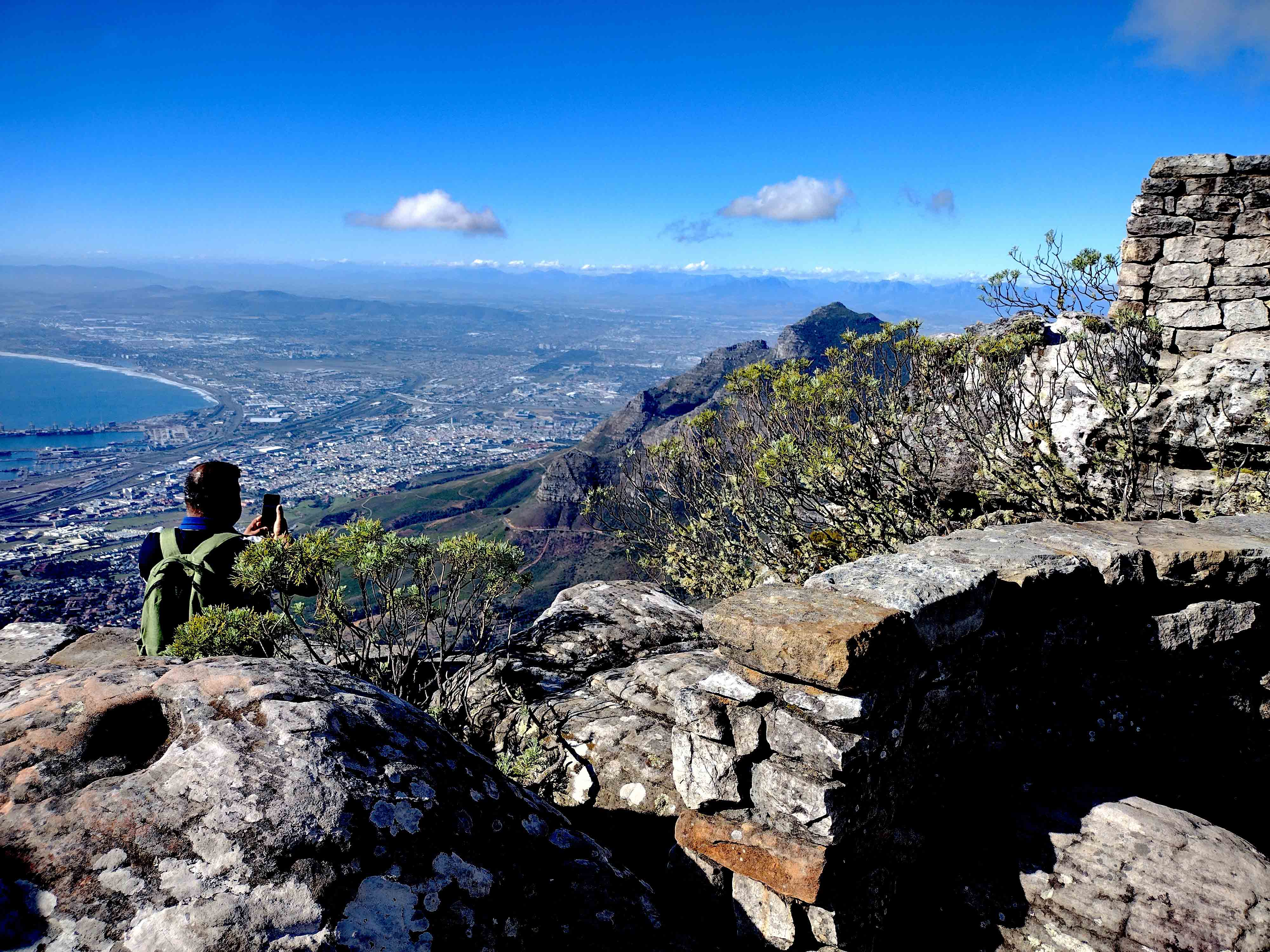
Table Mountain – The flat topped mountain dominates the skyline of the city built upon its lower slopes. In addition to the cable car there are a number of popular hiking trails up to the top. The mountain is composed of sandstone formed about 520 million years ago. It is part of the Table Mountain Group, which extends along the Western Cape and Eastern Cape provinces of South Africa.
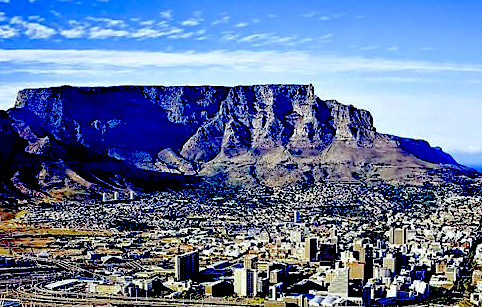
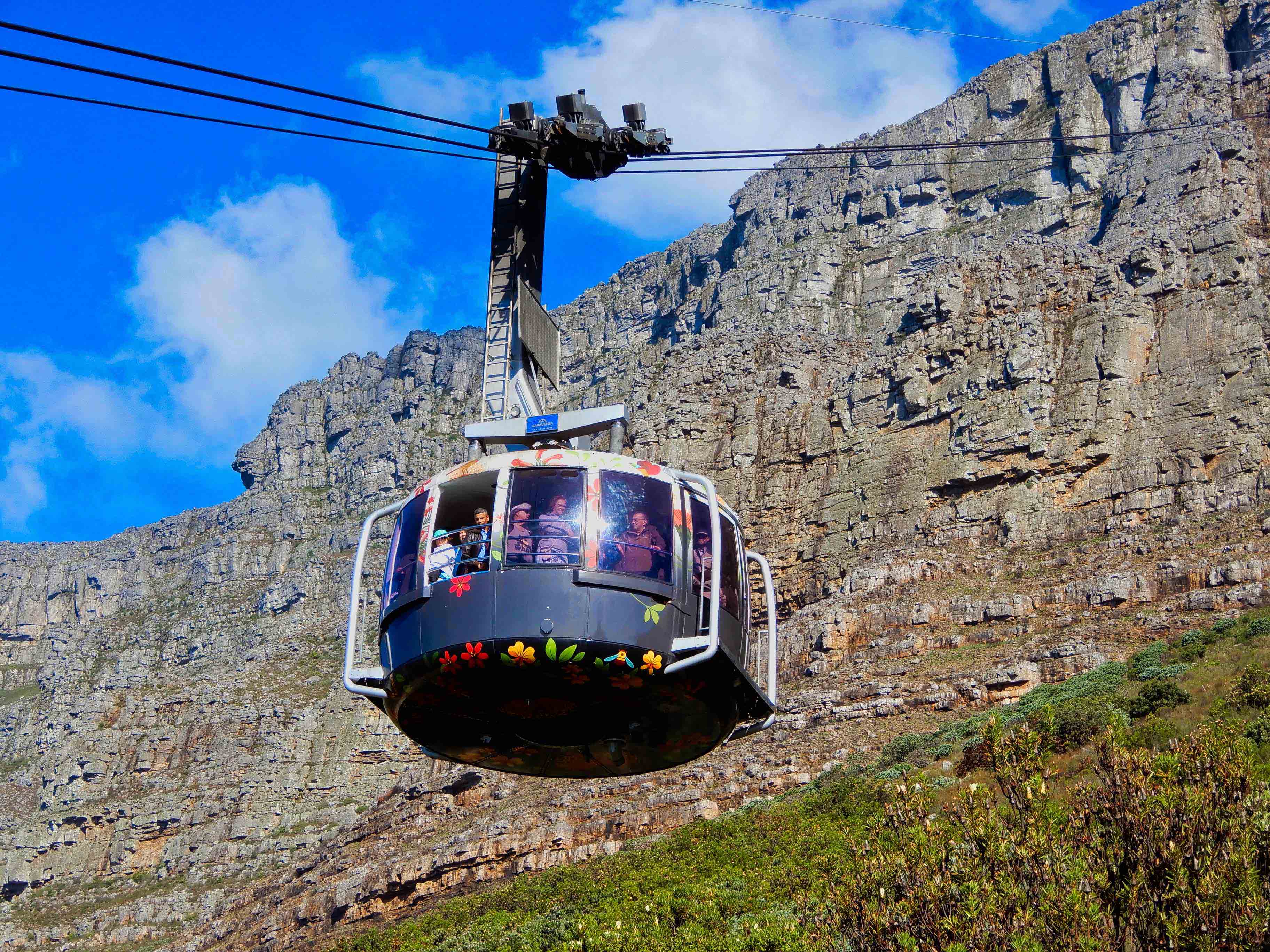
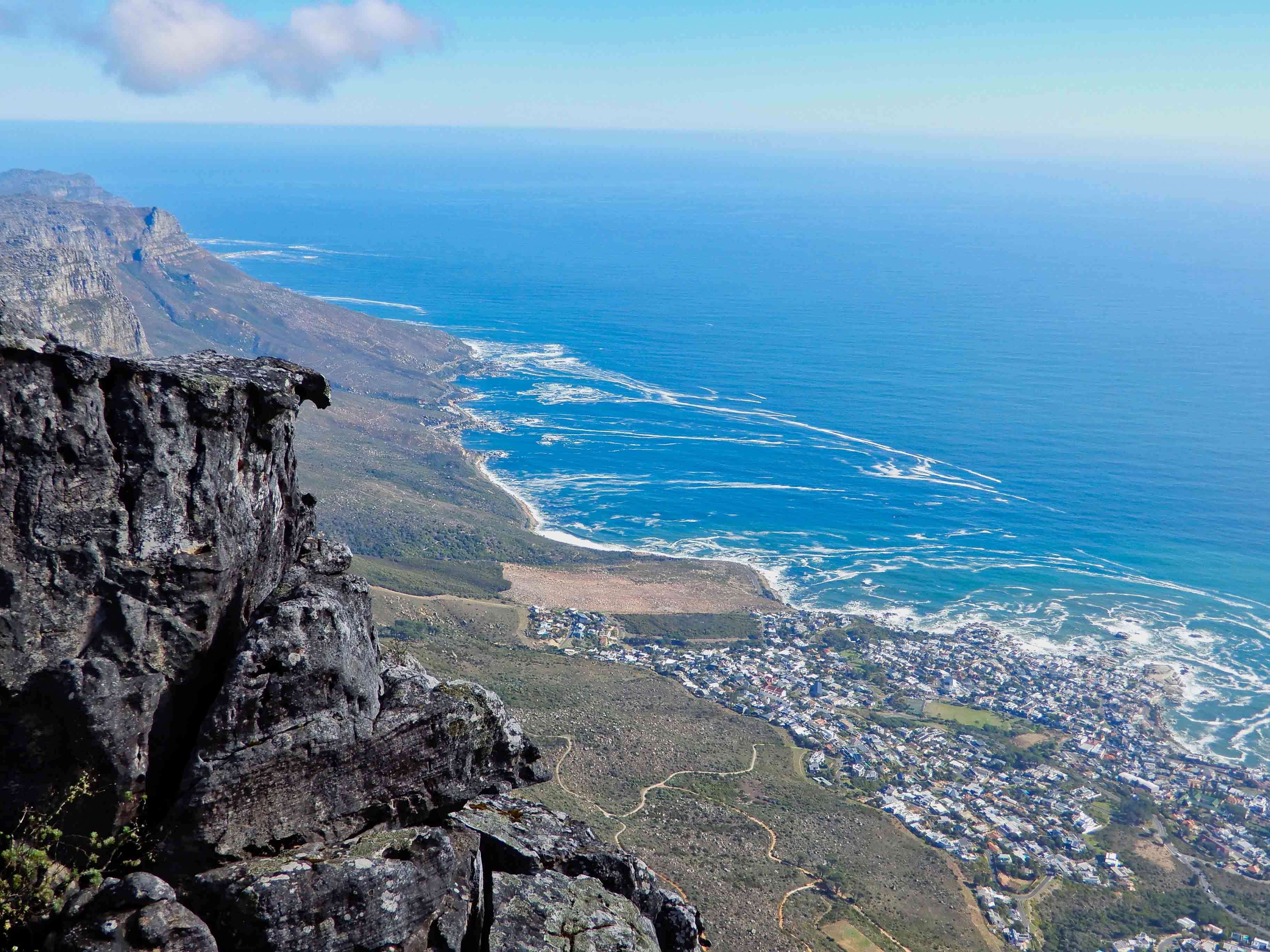
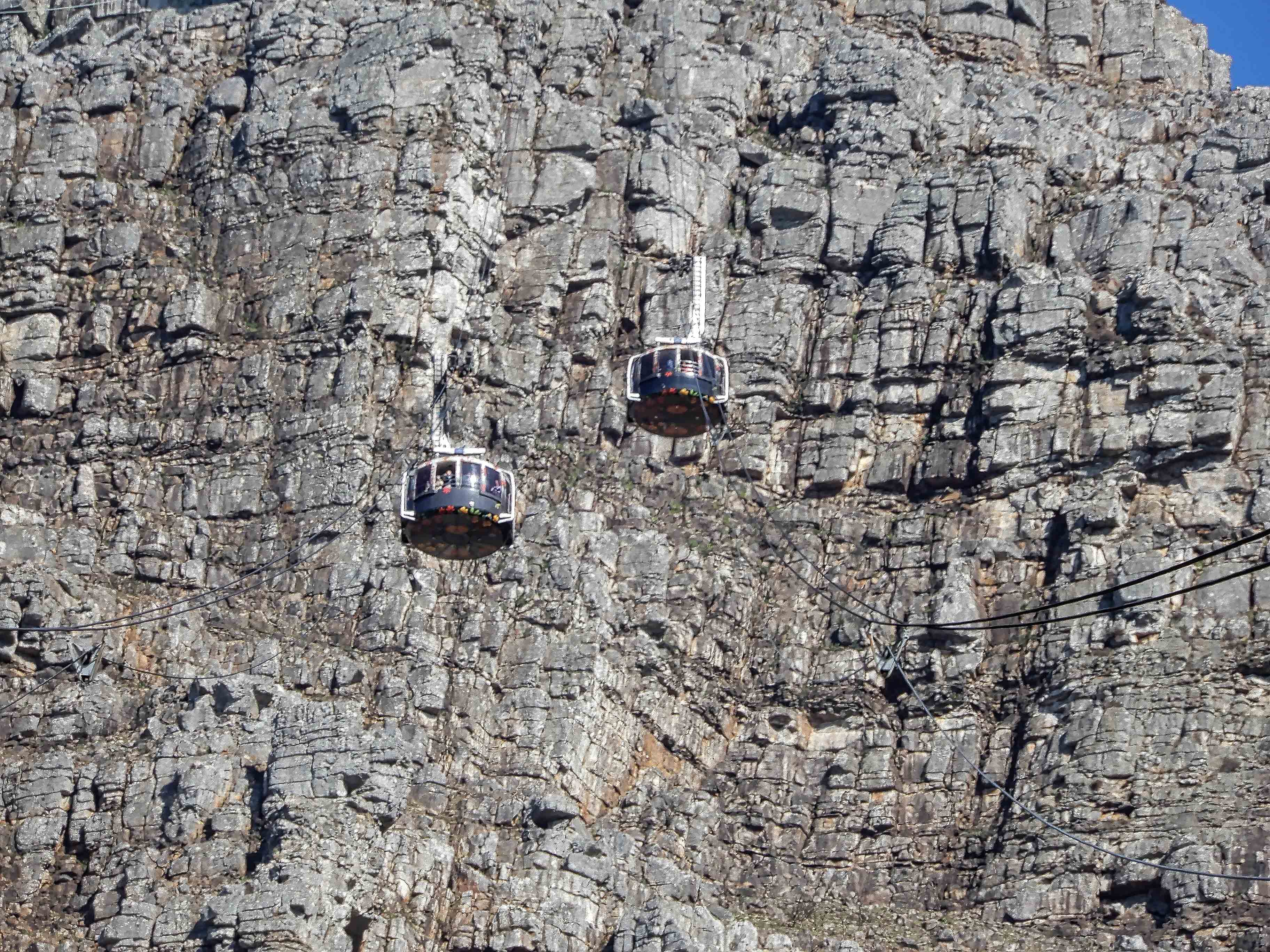
The Table Mountain Cable Car – A rotating cable car that takes visitors to the top of Table Mountain in Cape Town. It is South Africa’s most popular tourist attraction, offering stunning views of the city and surrounding area on sunny days. The cable car was first opened in 1929 and has undergone several upgrades over the years, including the installation of new cable cars in 2017. The ride takes about 5 minutes and offers 360-degree views of the city and surrounding area. Visitors can enjoy these views from the rotating cabin or from the viewing platform at the top of the mountain.
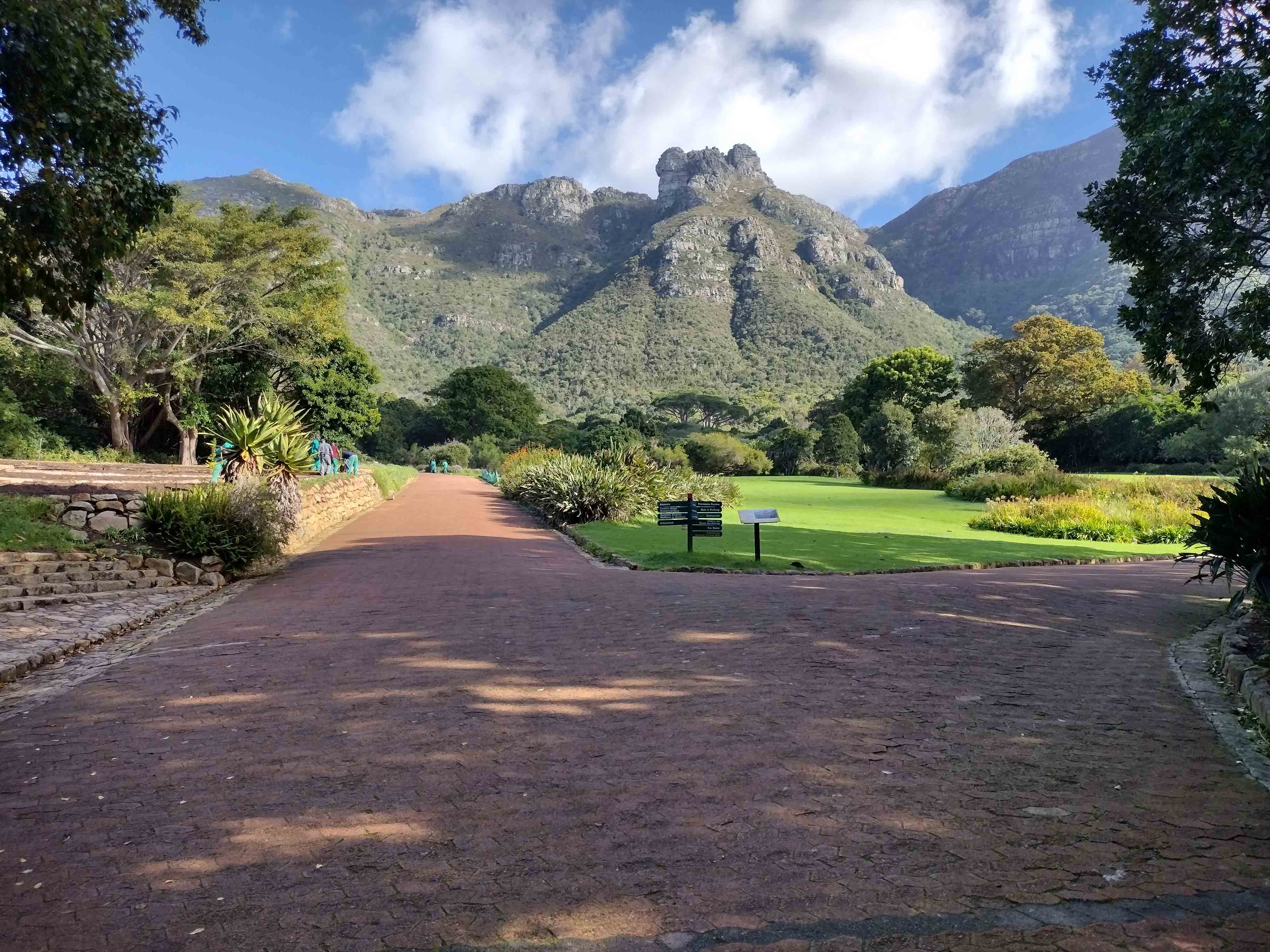
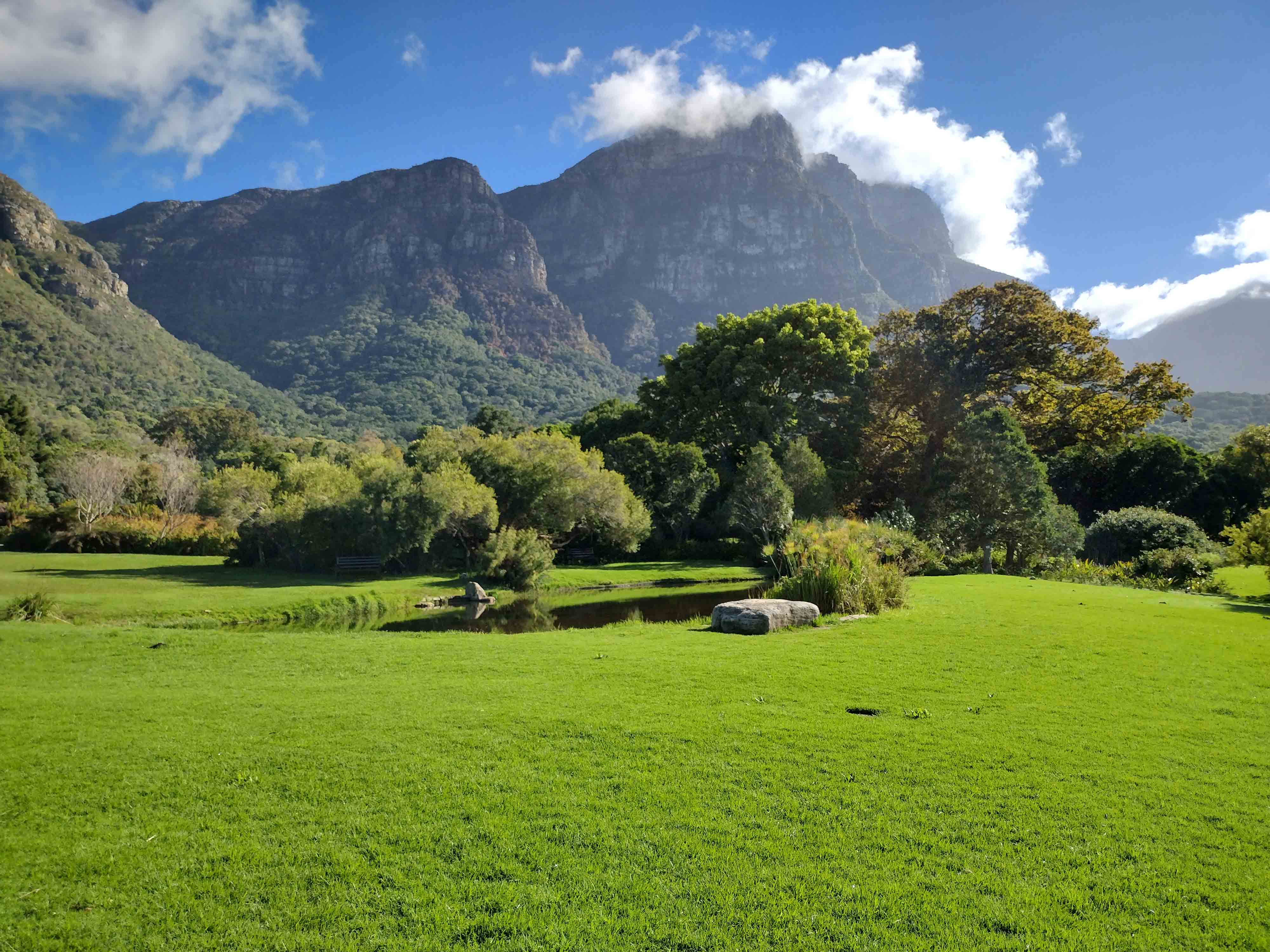
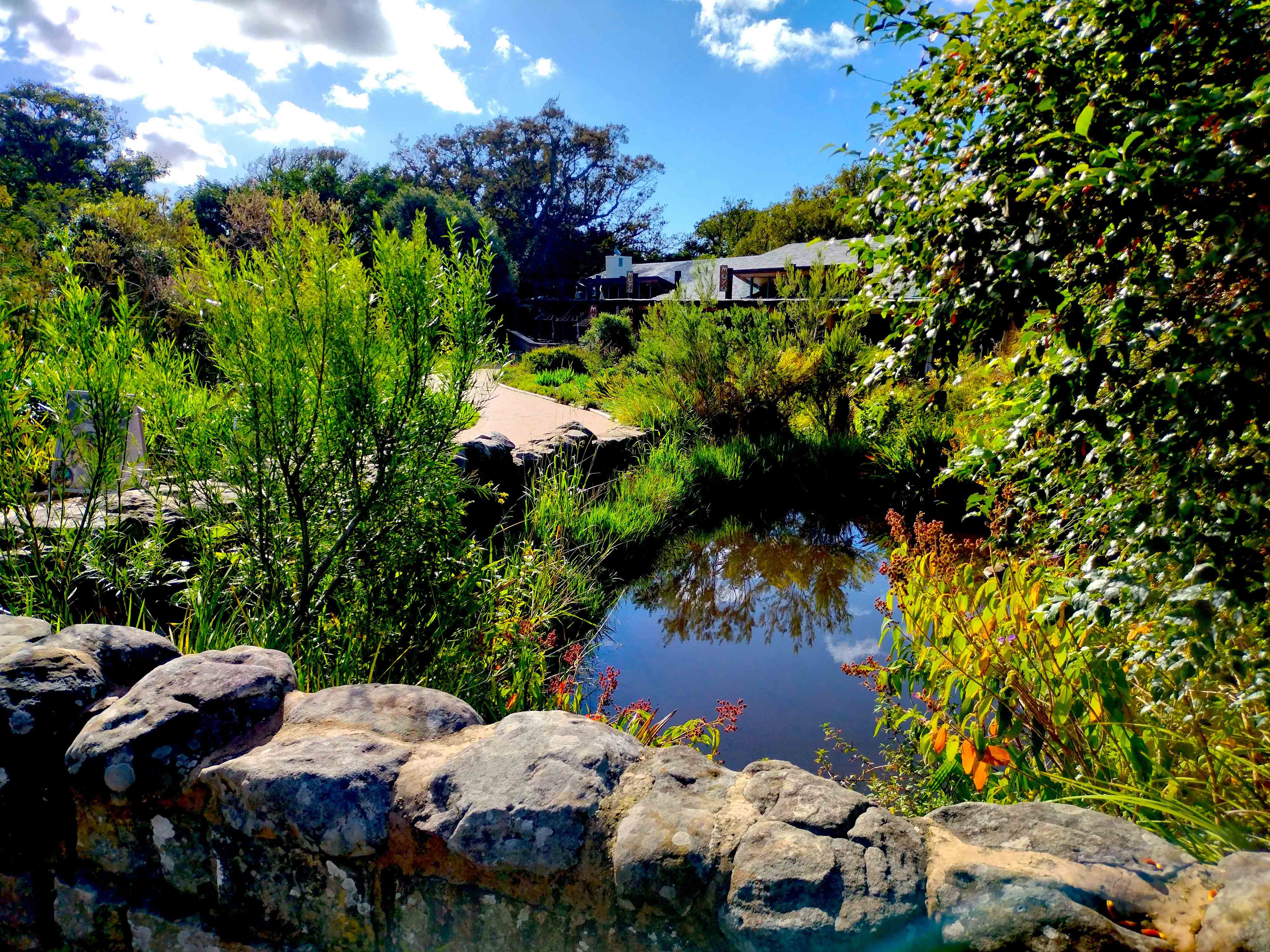
Kirstenbosch Gardens – Situated on the slopes of Table Mountain, just 10 miles from the city centre, the botanical garden offers something for everyone. There is a fragrance garden, a medicinal garden, 2,500 species of plants found on the Cape Peninsula, a Protea garden (best seen in spring!), a braille trail, and a cycad amphitheater. Admission for international visitors runs about US$12 for adults.
The Convention Center District – Called CPICC, the city has become a major convention destination as well as the focus of numerous concerts and festivals. The area is just about a mile from Victoria and Alfred Waterfront.
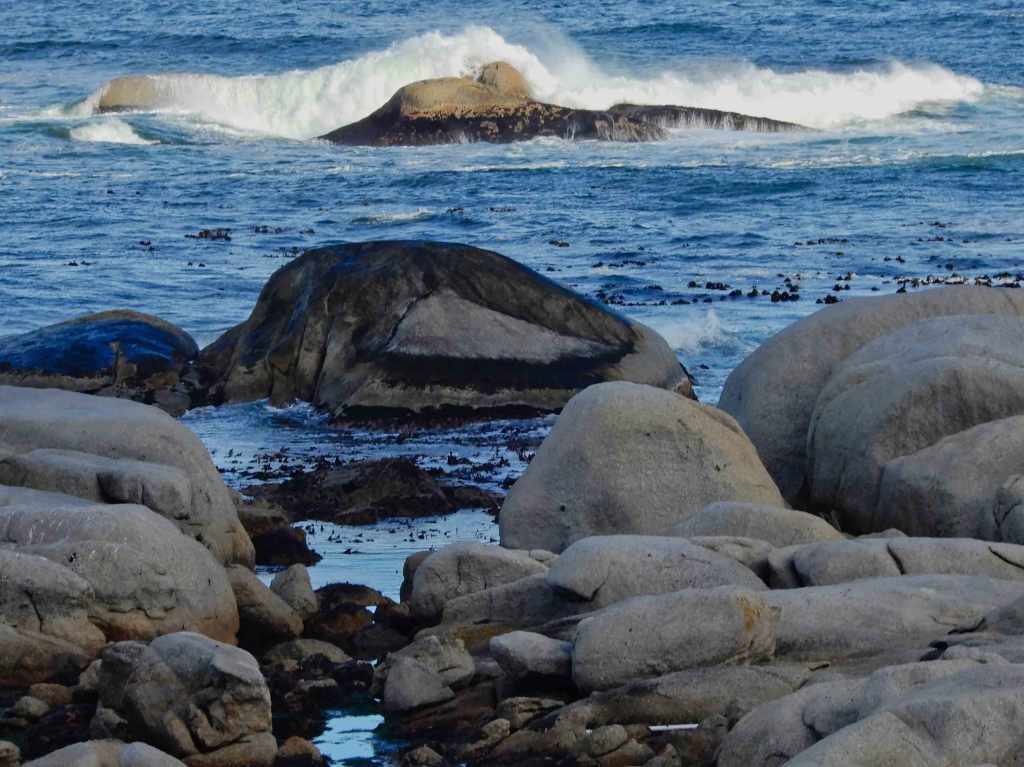
Hout Bay Harbour – On the southern edge of the city is the independent town of Hout Bay. A popular destination for boat excursions, great seafood, enjoying a long stretch of beautiful beach and seal watching.
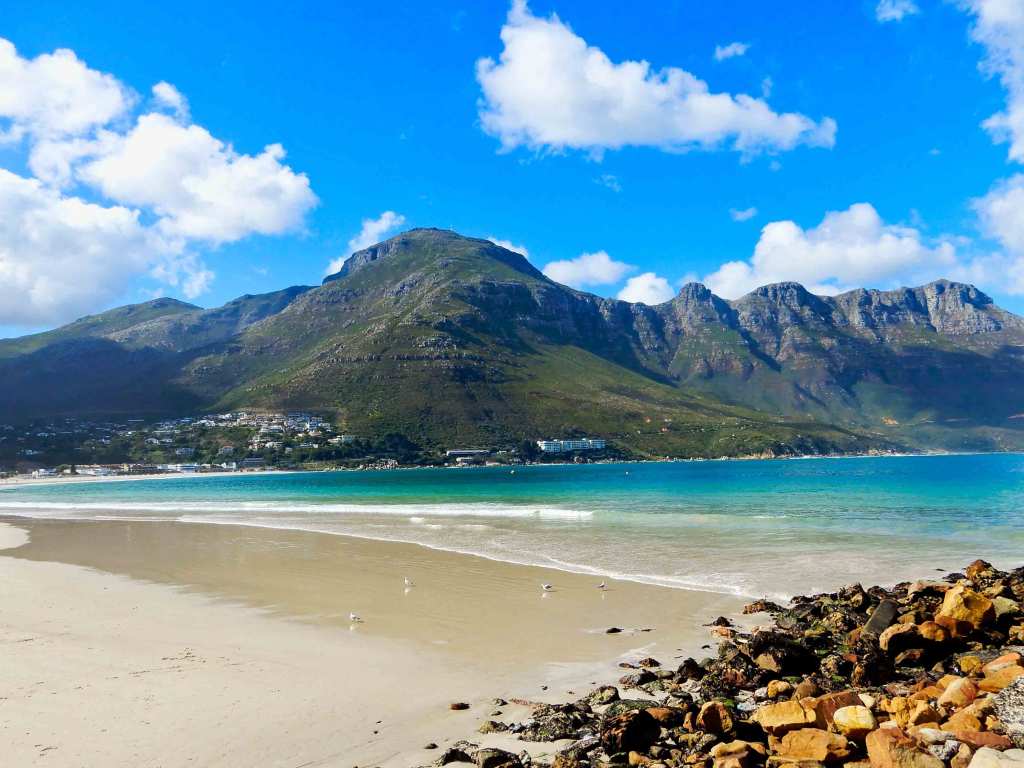
Beaches And More Beaches – In Cape Town and up and down the coast you’ll find dozens of great beaches. Some offer a beach resort vibe while others are famous for their boat harbors and great seafood.
Cape of Good Hope – A great excursion along the west coast of the Cape Peninsula goes past some of South Africa’s most spectacular scenery and ends at the southern most tip of Africa. The Cape of Good Hope is actually in a wildlife sanctuary where you will often see ostrich, antelopes and seals.
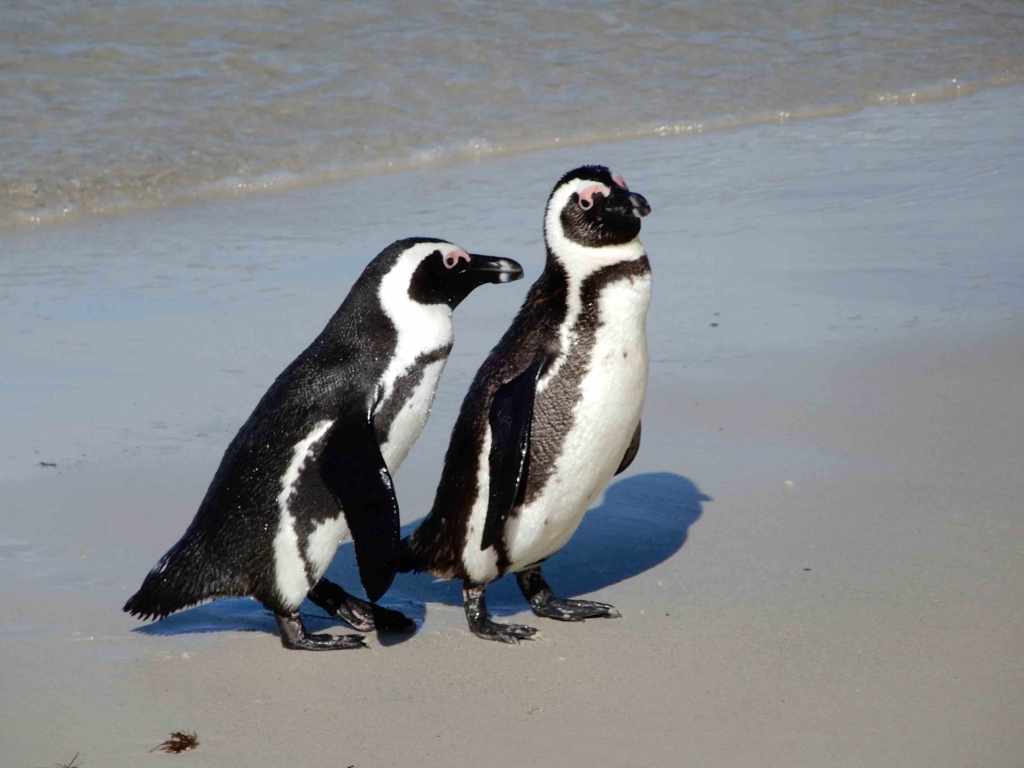
The African Penguin – A popular trip out of Cape Town is to visit Boulders Beach and its current penguin colony. Boulders Beach is a sheltered area made up of inlets between granite boulders, from which the name originated. It is located on the Cape Peninsula in Simon’s Town in the Western Cape province. It is also known as Boulders Bay. It is a popular excursion because of a colony of African penguins that settled there in 1982.
South Africa’s Wine Country – The country’s wines are developing a good reputation locally and internationally. Only an hour or so drive out of Cape Town will take you to some excellent wineries. Discover Pinotage, a red wine grape that is South Africa’s signature variety. It was cultivated there in 1925 as a cross between Pinot Noir and Cinsaut. It typically produces deep red varietal wines with smoky, bramble and earthy flavors. There are a number of winery tours available from Cape Town.
Hop On Hop Off Bus – A great option for an overview of the city and the main office is right at Victoria and Alfred Waterfront next to the aquarium or you can also buy tickets from the bus drivers. City Sightseeing is the official Hop-On Hop-Off Cape Town tour. It operates 3 hop-on-hop-off loops along with tours to the Cape and the wine country. A one day ticket on the bus includes all 3 loops and the Table Mountain Aerial Cableway. Adult basic ickets are about US$16 with a discount for an additional day.
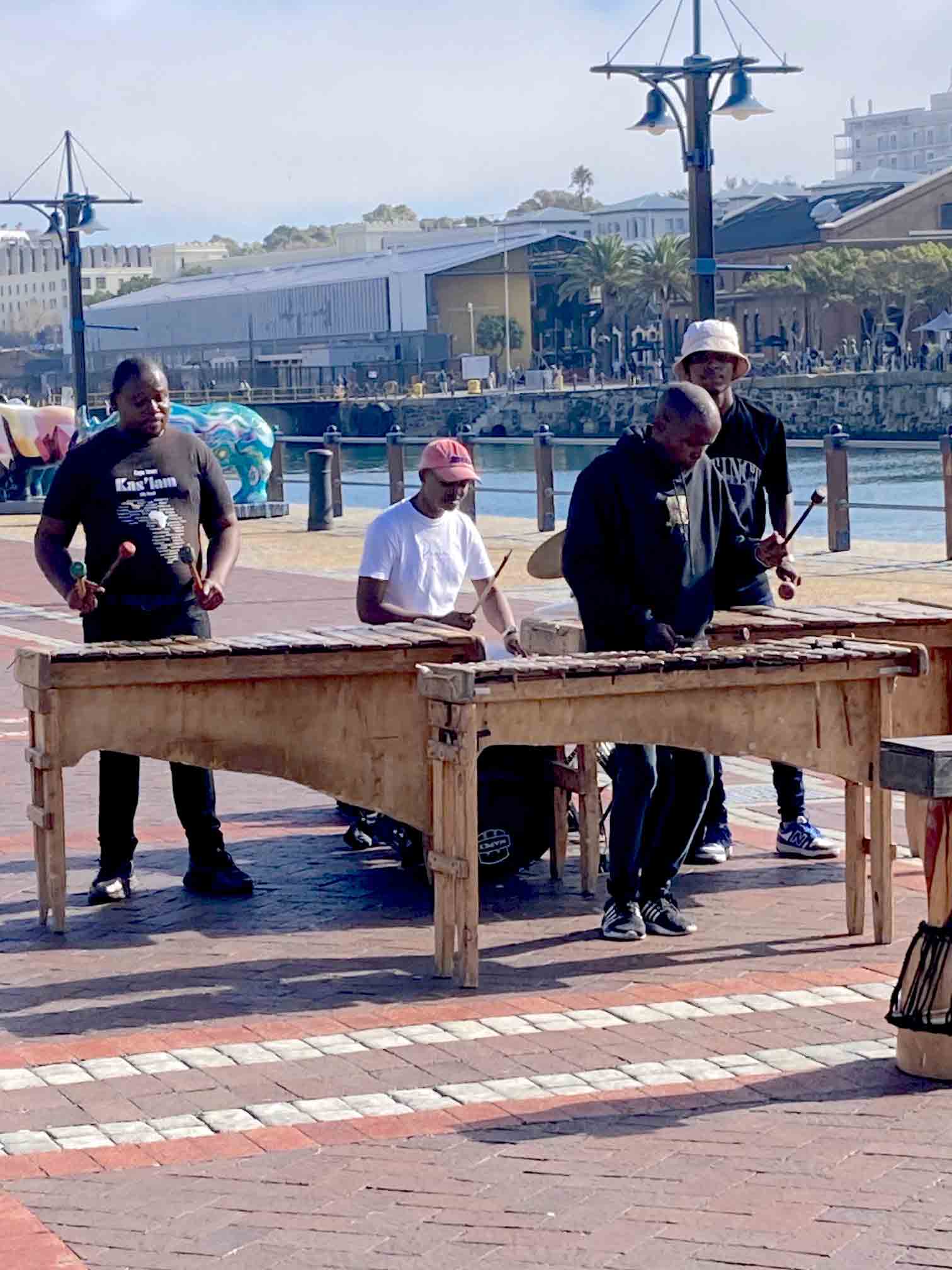
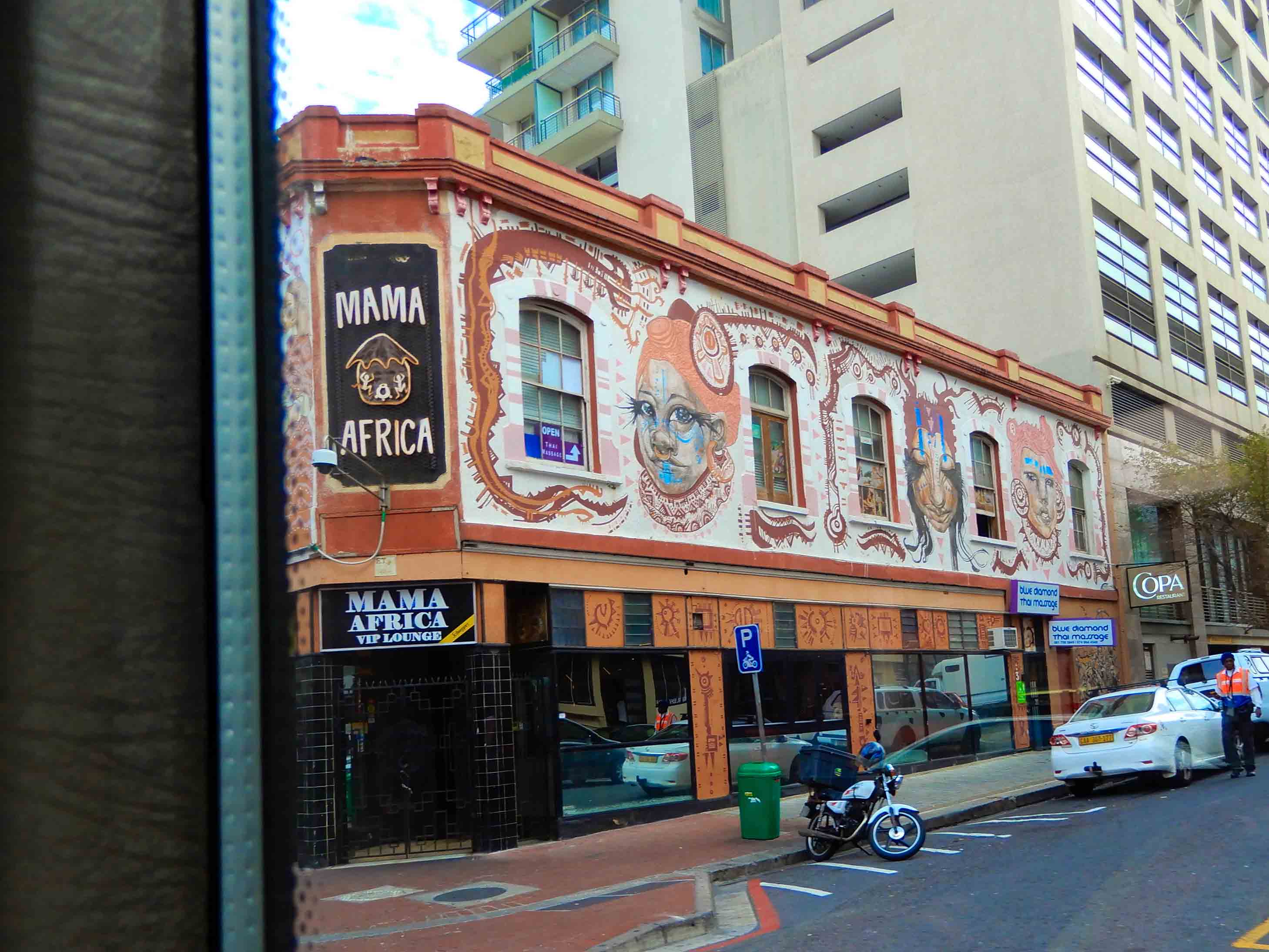
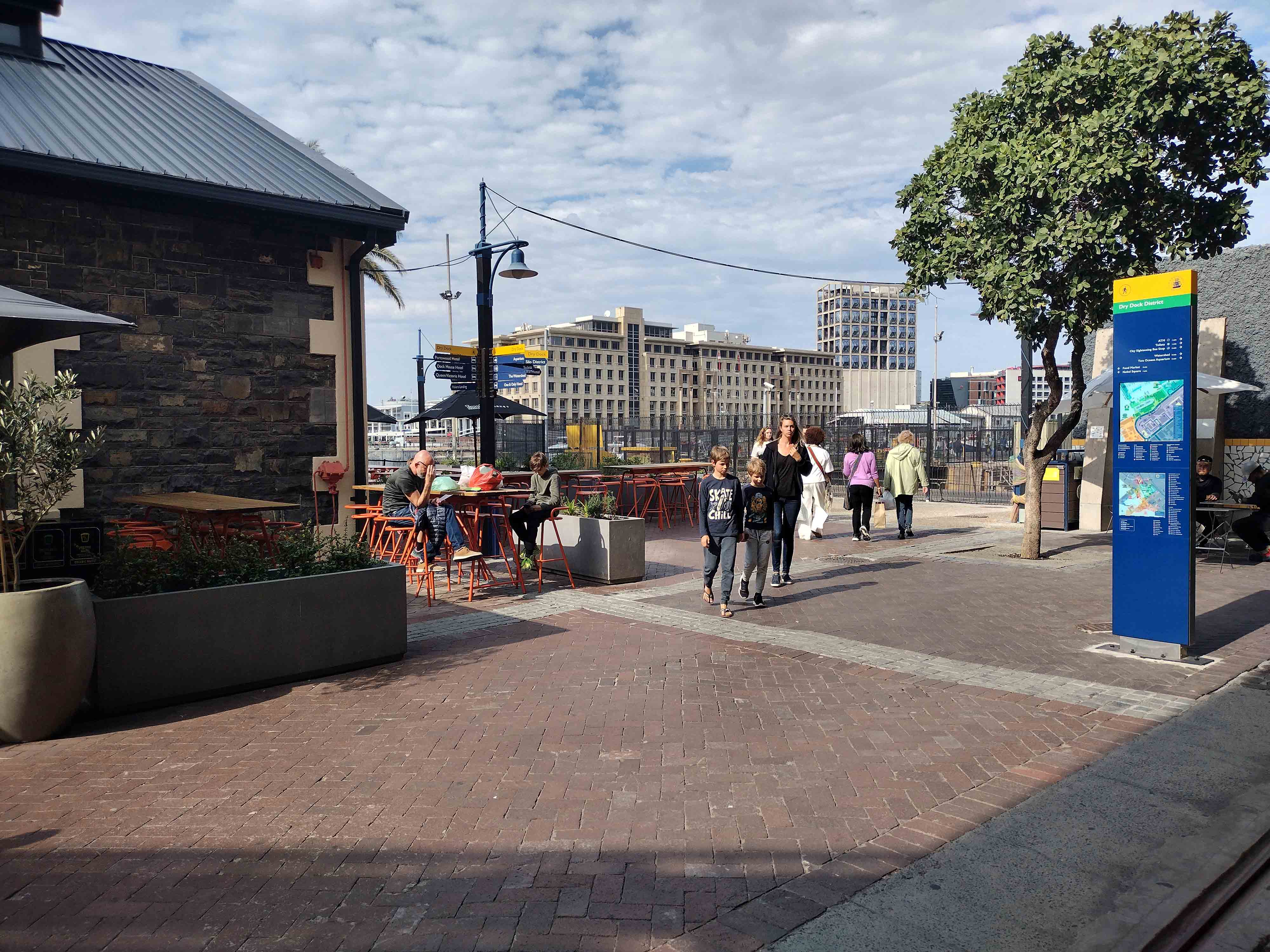
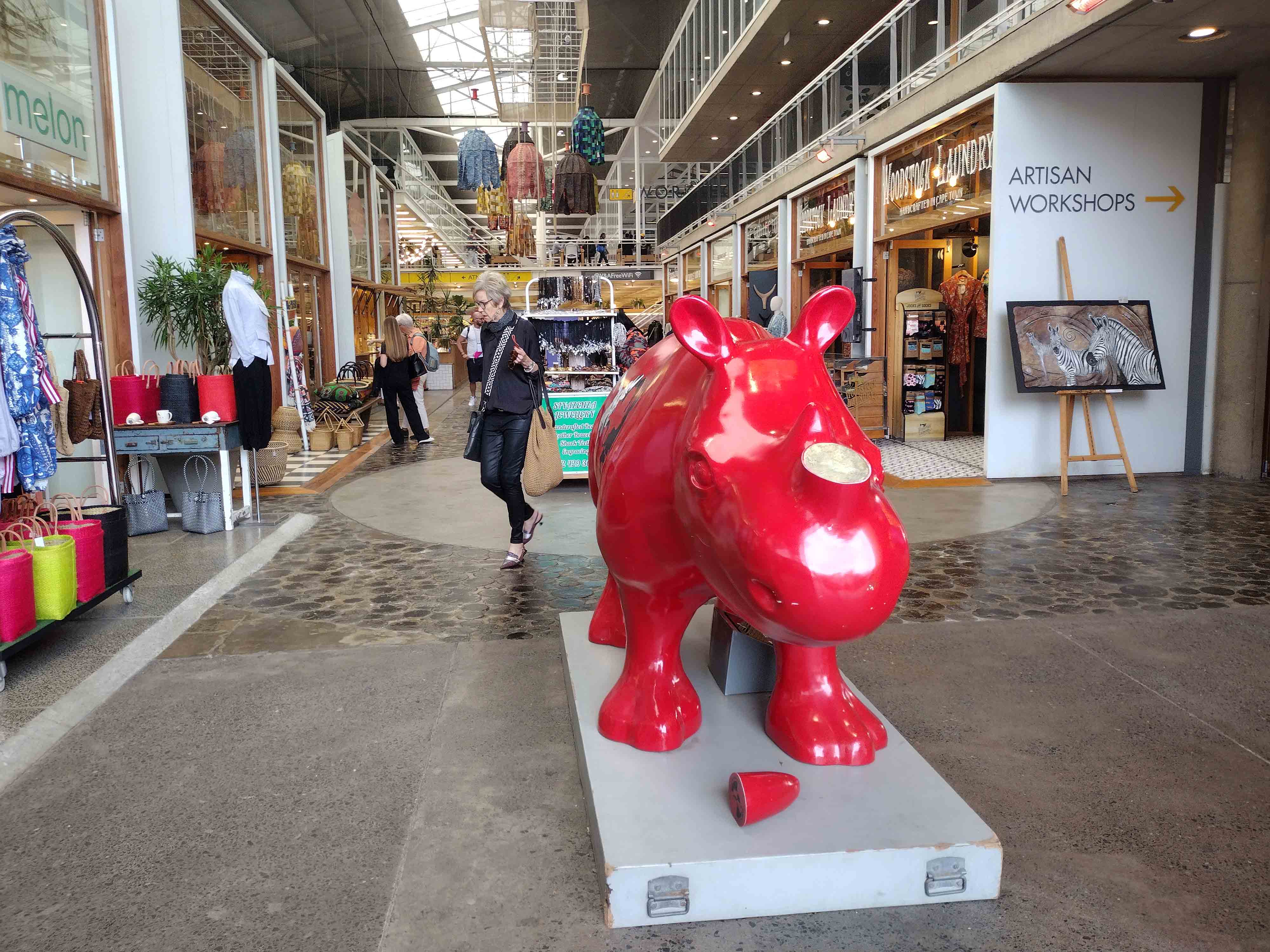
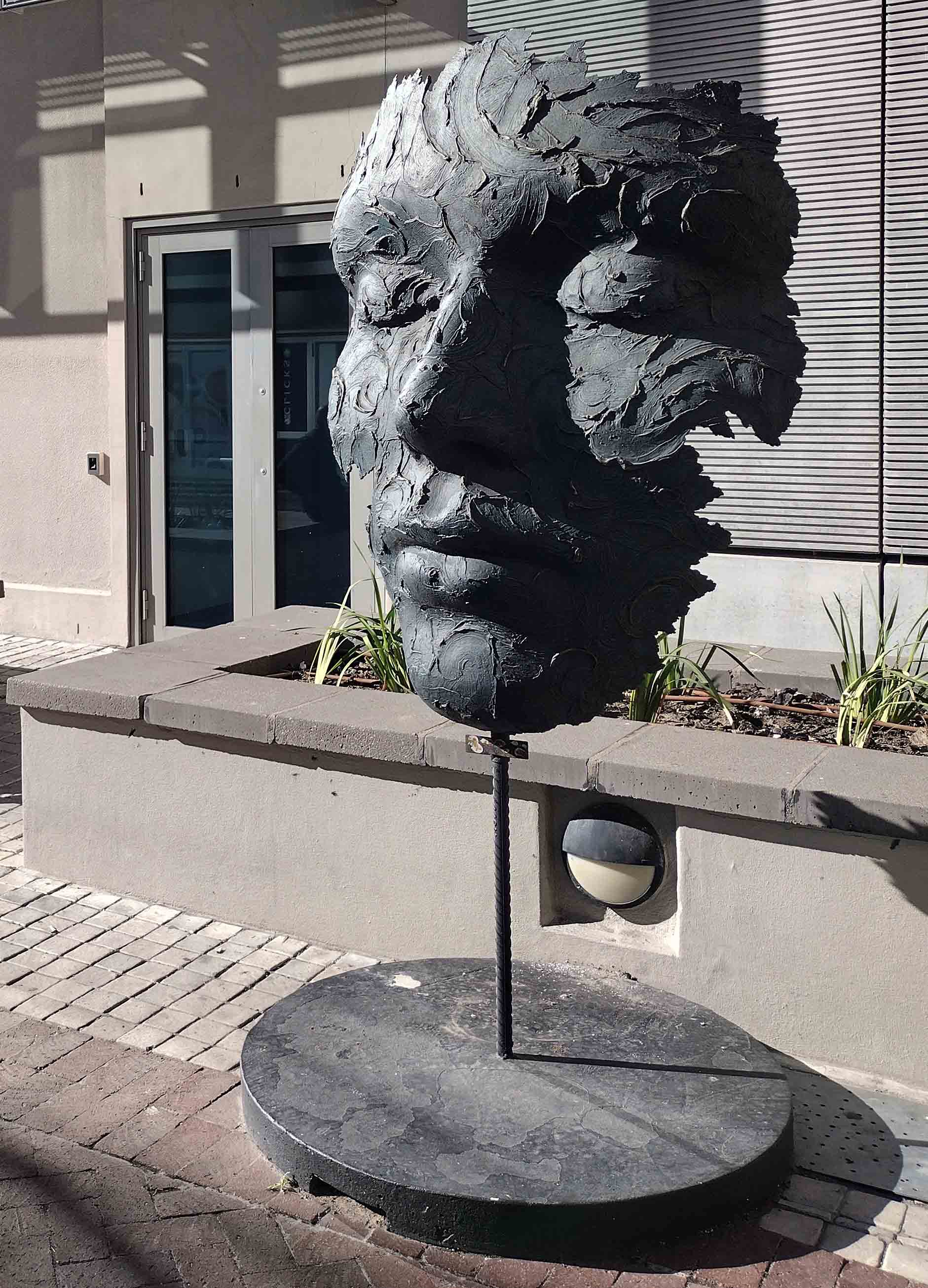
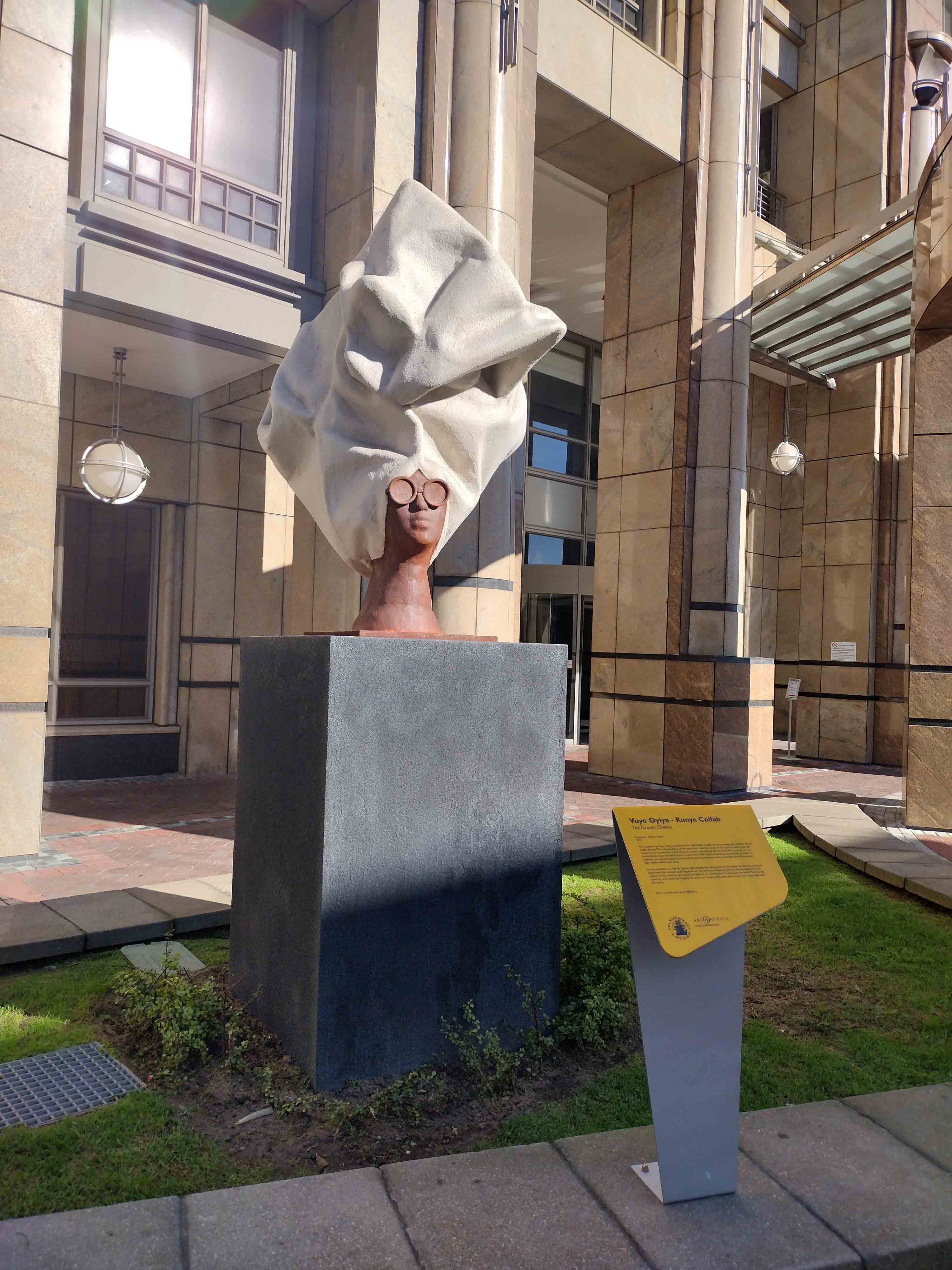
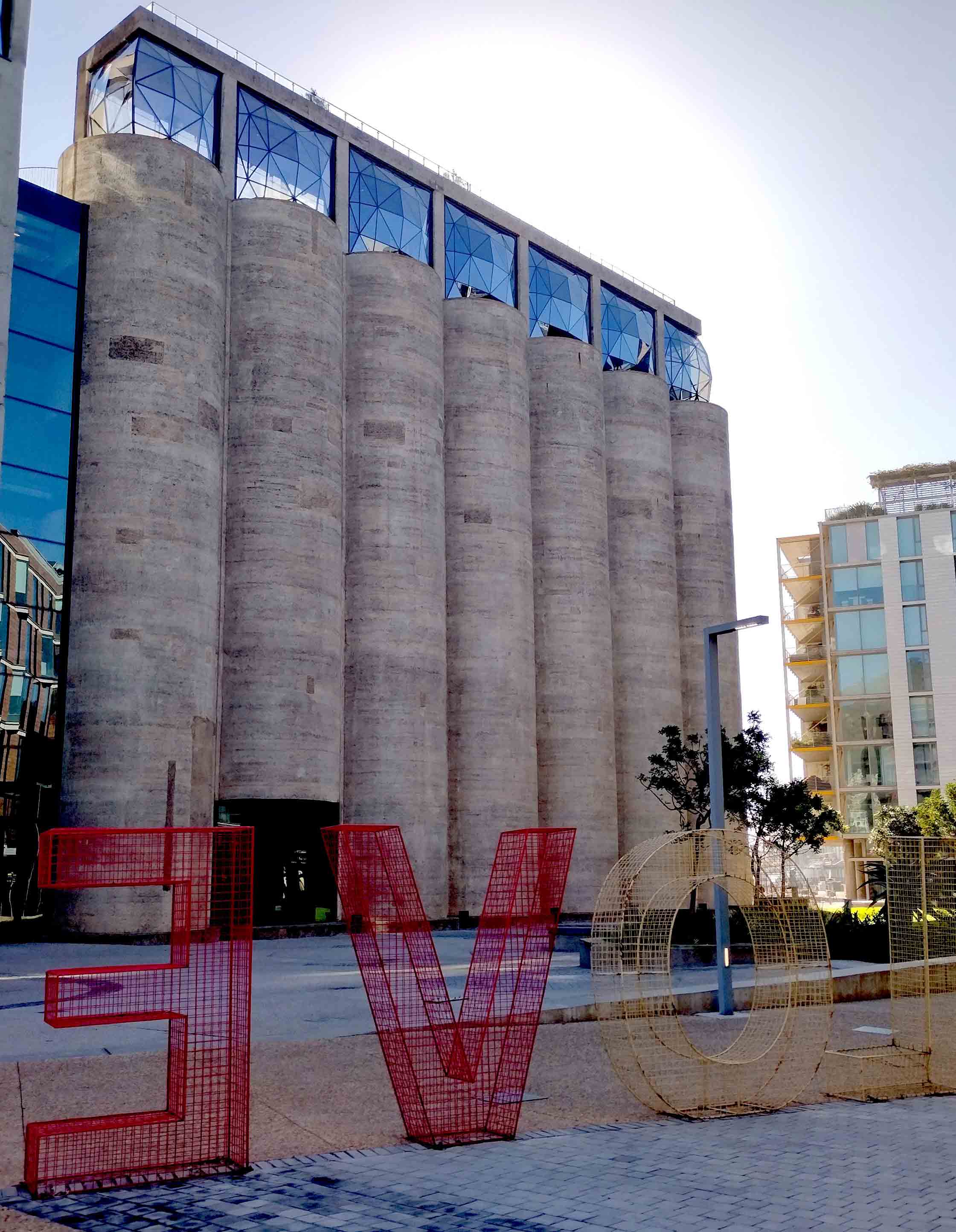
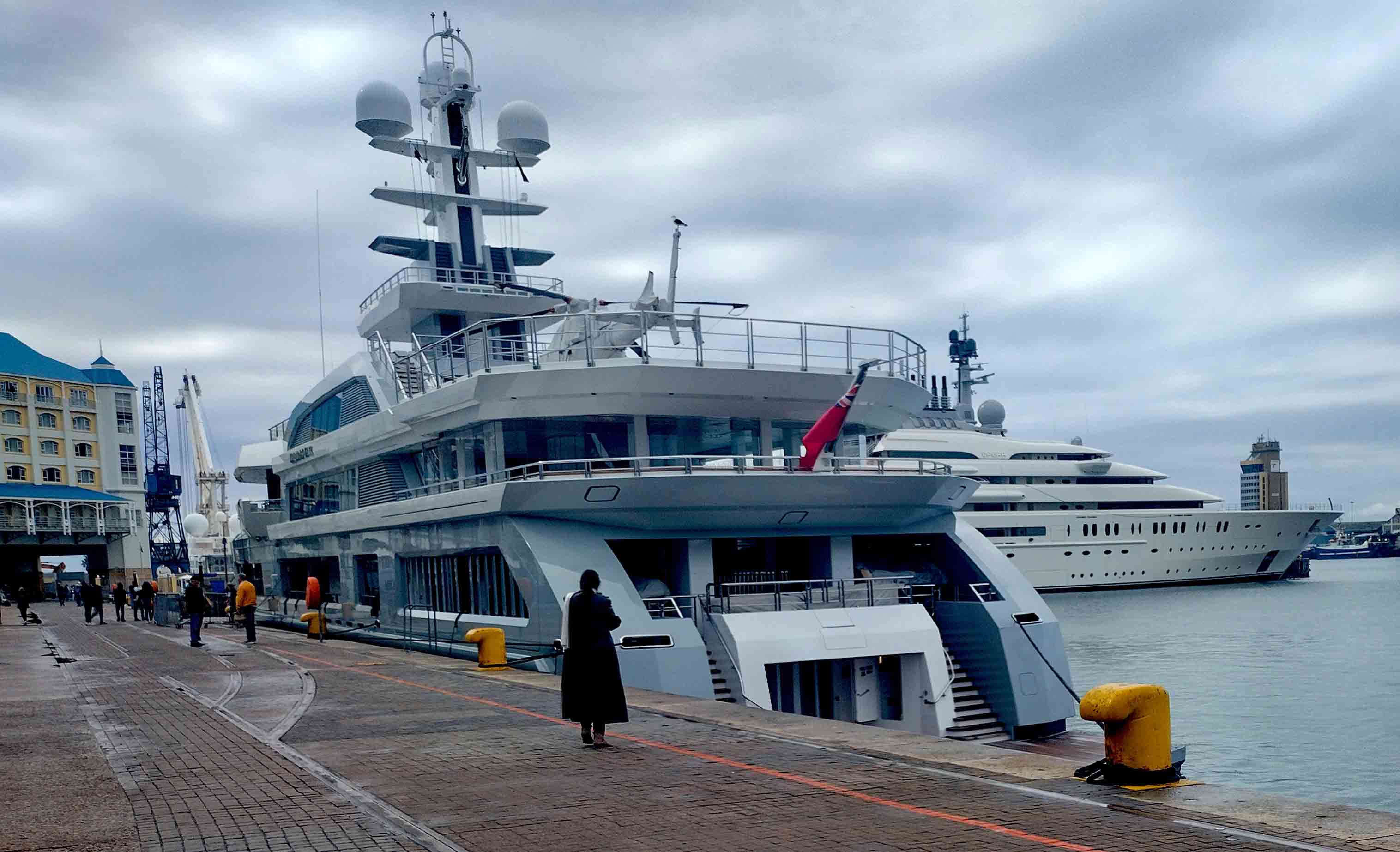
*Please Note- Before our visit in early 2024 our research caused us to be concerned about street crime in the city. It’s always advisable that you be cautious and avoid areas of concern , however, once there, we felt perfectly safe walking ALMOST everywhere. Cape Town, like most major cities around the world, is dealing with rising homelessness, but they have adopted a pro-active plan to make their streets safe. City police, National police, neighborhood groups and business organizations have all gotten involved in patrolling the streets. Everywhere you go there is either a strong police presence or private security people out and about on patrol. It is difficult to go a block or two without finding a patrol or a security watch booth. If anything, Cape Town is doing a better job than most cities, and that includes those in the United States, with making their streets safe.






 The Intentional Travelers