A Brief History Of South Africa

Afrikaans, The Zulu Kingdom, The Europeans And Nelson Mandela

The history of South Africa is markably different than most of Africa. From the early European settlers to the colonial wars to its transition to a real democracy this country took a different path.
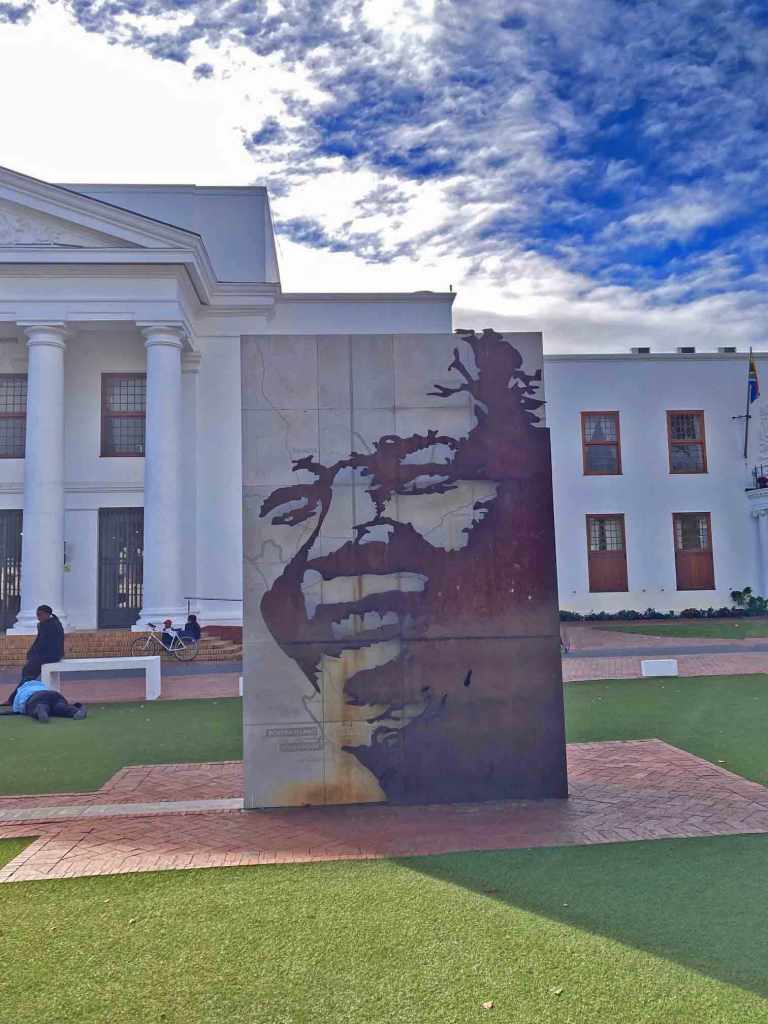
Nelson Mandela was exactly the right man at the right time to save this remarkable country and set it on a path toward reconciliation and prosperity. Nelson Mandela’s unwavering commitment to fighting racial segregation and apartheid in South Africa made a profound difference. He led the African National Congress (ANC) in its struggle against the oppressive white minority government, enduring imprisonment for 27 years. His unwavering belief in equality and justice inspired millions around the world and paved the way for the dismantling of apartheid in 1991. But equally important he preached peace and forgiveness.

Early History

When Europeans first arrived in South Africa, the land was inhabited by indigenous groups, collectively known as the Khoisan. They fell into two groups with the largest being the San, who were mostly hunter-gatherers, and the Khoi, who were herders. These Khoisan peoples lived in tribes, spoke a variety of languages, had distinct cultures and were skilled in hunting, gathering, and herding.

The first Europeans to set foot in South Africa were the Portuguese in 1488 but they did not have any intention to settle the region. The Portuguese were looking for new trading routes to India and the Far East. European settlements didn’t begin until 6 April.1652 with a Dutch expedition of 90 Calvinist settlers who founded the first permanent settlement in the bay of today’s Cape Town – later named Table Bay.

By 1654 the Dutch expansion into areas around Table Bay and beyond resulted in conflicts with the Khoisan and inand 1659 resulted in open conflict known as the first Khoi-Dutch war.
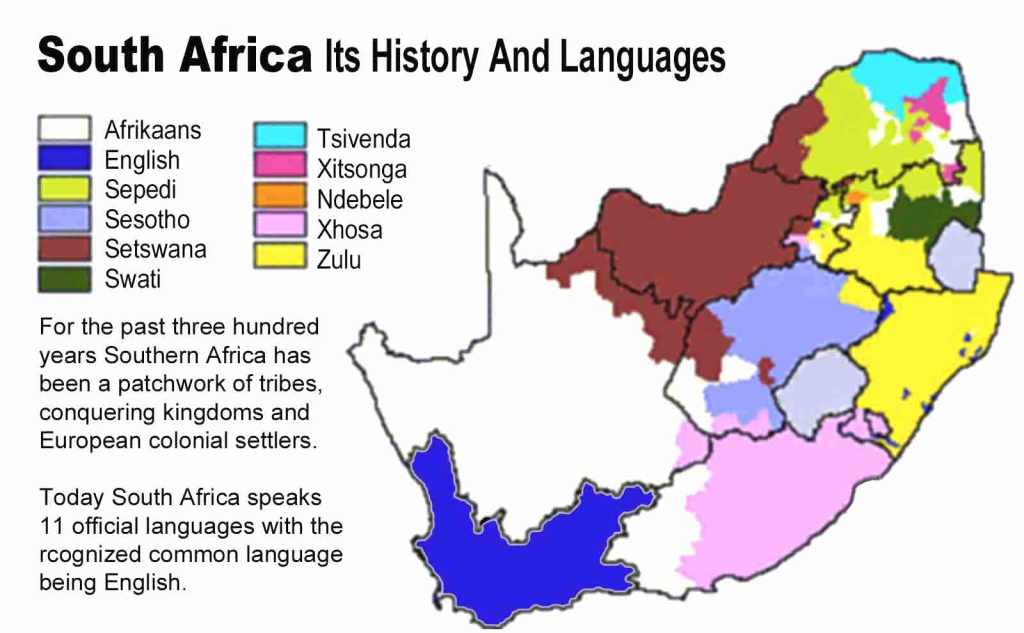
Main Languages Spoken In South Africa By Region

From early in the eighteenth century a new culture with its own language emerged in South Africa called Afrikaans. It became the first common language of South Africa, developed from 17th-century Dutch, sometimes called Netherlandic, by the descendants of European Dutch, German, and French colonists along with contributions from indigenous Khoisan peoples, African and Asian slaves.

This new group known as Afrikaans expanded out of the Cape area and started farms and ranches, established towns and organized into governments with militias.

The first British settlers arrived in the Cape Town area on 17 March 1820. From the Cape colony, additional settlers moved on to Algoa Bay, known today as Port Elizabeth.

While the British established their control of the area around Cape Town the Dutch settlers moved north and eventually established the Boer republics. They were independent, self-governing republics formed by Afrikaan and Dutch-speaking inhabitants from the Cape Colony and their descendants. The founders – variously named Trekboers, Boers, and Voortrekkers – settled mainly in the middle, northern, north-eastern and eastern parts of present-day South Africa.

In the early nineteenth century a tribal kingdom emerged known as the Zulu Kingdom. It was a Zulu monarchy in Southern Africa that conquered local tribes from 1816 to 1897. Dominating a large area of eastern South Africa the Zulu were feared by most local tribes and people. It was founded by King Shaka, who transformed the Zulu people into a powerful military nation.

Shaka established a highly centralized monarchy and administrative system, with the king holding absolute power. This allowed for efficient coordination and mobilization of the Zulu’s military and economic resources.
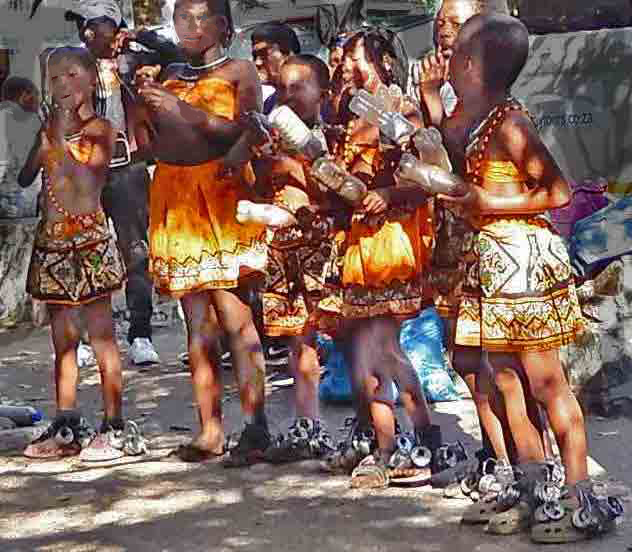
Under King Shaka’s leadership, the Zulu army was reorganized and expanded, using innovative military tactics and weapons. This allowed the Zulu Kingdom to become the dominant power in the region during the 19th century. Because of its rapid conquests a large number of area tribes feared the Zulu and some turned to the British for protection.

The Zulu Kingdom eventually came into conflict with the British Empire in Africa, leading to the Anglo-Zulu War in 1879. The Zulu army initially defeated the British at the Battle of Isandlwana, but the British ultimately prevailed and annexed the Zulu Kingdom into their territory..

Conflicts also broke out between the British and the Afrikaans over territorial rights that resulted in the First Boer War (Afrikaans: Eerste Vryheidsoorlog, literally “First Freedom War”). It was fought from 16 December 1880 until 23 March 1881 between the United Kingdom and Boers of the Transvaal as the South African Republic was known while under British control. The war resulted in a Boer victory and eventual independence of the South African Republic.
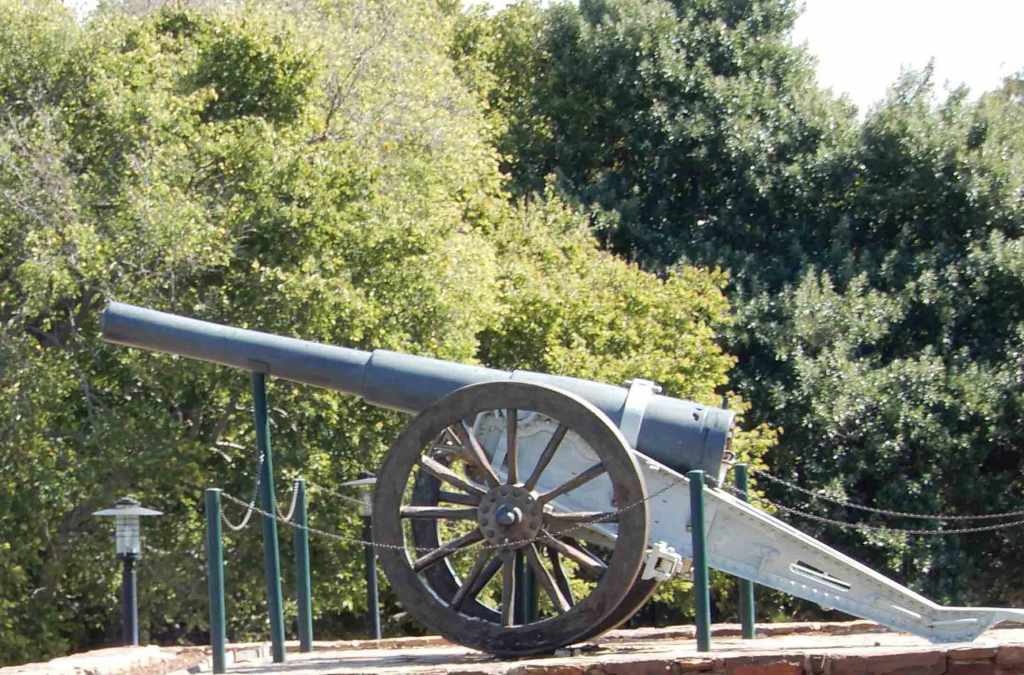
The Second Boer War, also known as the South African War, was fought between the British Empire and the two Boer republics, the South African Republic (Transvaal) and the Orange Free State, from 1899 to 1902. The Witwatersrand Gold Rush caused a large influx of “foreigners” to the South African Republic, mostly British from the Cape Colony and was considered illegal incursions by the Afrikaans. The war ended with a British victory, resulting in the annexation of the Boer republics into the British Empire. This led to the creation of the Union of South Africa founded in 1910.

The doctrine of apartheid (“separateness” in Afrikaans) was codified into law in South Africa in 1948, but the status of the majority Black population in the region was established during European colonization of the area. In the mid-17th century, White settlers from the Netherlands drove the Khoi and San people out of their historic lands and denied their rights as persons.

Mandela

The apartheid system in South Africa was ended through a series of bilateral and multi-party negotiations between 1990 and 1993. The negotiations culminated in the passage of a new interim Constitution in 1993, a precursor to the Constitution of 1996; and in South Africa’s first non-racial elections in 1994, won by the African National Congress (ANC) liberation movement.

Even though there had been gestures towards negotiations in the 1970s and 1980s, the process accelerated in 1990, when the government of F. W. de Klerk took a number of unilateral steps towards reform, including releasing Nelson Mandela from prison and unbanning the ANC and other political organizations. In 1994, Mandela was of key importance in negotiating the freedom and equality of all South Africans. In 1990–91, bilateral “talks about talks” between the ANC and the government established the pre-conditions for substantive negotiations, codified in the Groote Schuur Minute and Pretoria Minute.
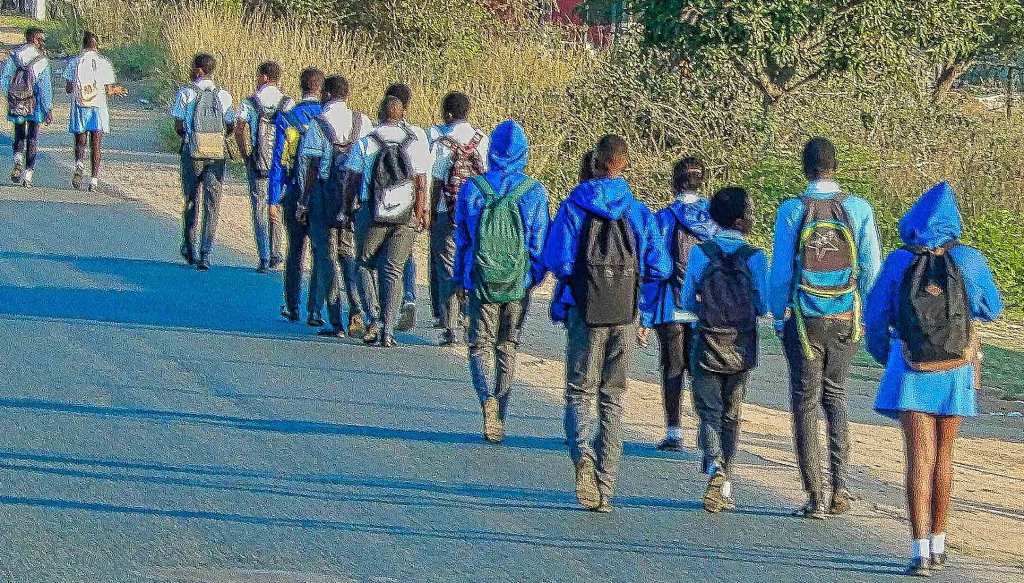
Today South Africa has a racially diverse population, with Black Africans comprising approximately 80% of the total population, Whites (8%), Coloureds* (9%), and Indians/Asians (2.5%).

*The coloured population of South Africa is an accepted racial group in the country being people with the highest levels of mixed ancestry on the globe. They are a blended race of African, European, East Asian and South Indian.

Todays Image • Elephant Crossing

An elephant in Kruger National Park crosses the road between several vehicles. While the park rules require people to be cautious and watch for animals on the roads, elephants are one animal you need to give a lot of room. We heard about and actually saw a video of a big bull elephant charging and ramming a car.

Kruger National Park, is the largest game reserve in Africa, covering an area of over 7,500 square miles. Park guides push the search for the “big five” (elephants, rhinos, lions, leopards and giraffes) along with dozens of other wildlife.

Sunrise in South Africa’s Kruger National Park

We’ve just returned from a couple of weeks in South Africa, so expect to see a lot of animal and landscape images in the near future. We’re still finding it hard to believe all that we saw in this remarkable country!


Come along as we visit historic treasures, natural wonders and vibrant cities set against backdrops that are endlessly changing and visually magnificent.


Join Us • We understand that the last thing you want is more emails cluttering up your inbox, but we promise we’ll work hard to make this worth while. Give us a try and if we don’t live up to our promise all you need do is click the unsubscribe link in our emails.

Don’t Miss Out, Subscribe Now!

You’ll receive notices of new posts, special features and updates right in your inbox…

Todays Image • South Africa’s Cape

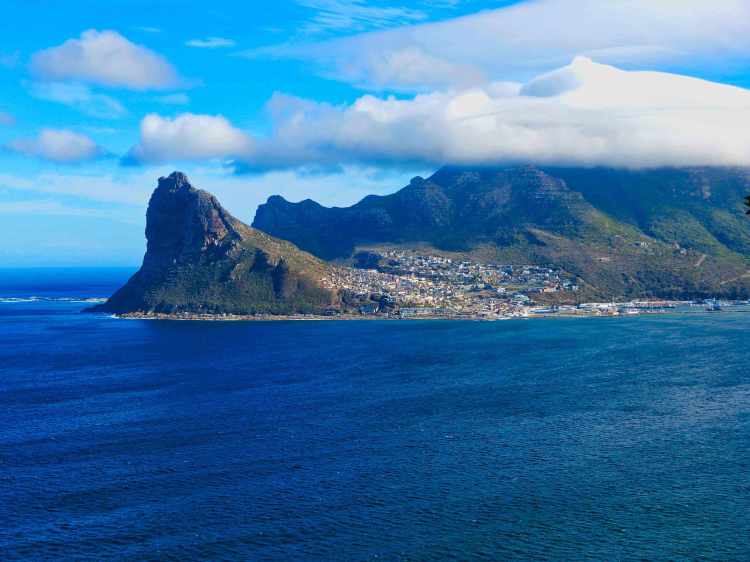
Cape Town, South Africa is located along the Atlantic coast between bays and the ocean and backed up by the northern end of the Sandstone Mountains. These mountains form the spine of the Cape Peninsula that terminates approximately 45 miles to the south at the Cape of Good Hope and Cape Point.

The Cape of Good Hope

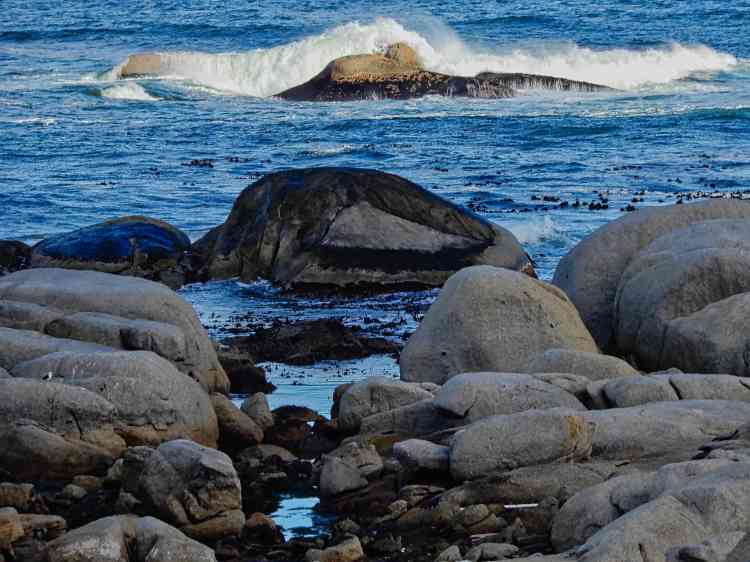
Just driving south along the coast we have never seen so many fantastic seascapes on such a grand scale.

We’ve just returned from a couple of weeks in South Africa and are still finding it hard to believe all that we saw in this remarkable country! The landscapes were amazing and the animal life was everywhere!


Come along as we visit historic treasures, natural wonders and vibrant cities set against backdrops that are endlessly changing and visually magnificent.


Join Us • We understand that the last thing you want is more emails cluttering up your inbox, but we promise we’ll work hard to make this worth while. Give us a try and if we don’t live up to our promise all you need do is click the unsubscribe link in our emails.

Don’t Miss Out, Subscribe Now!

You’ll receive notices of new posts, special features and updates right in your inbox…

Todays Image • African Watering Hole

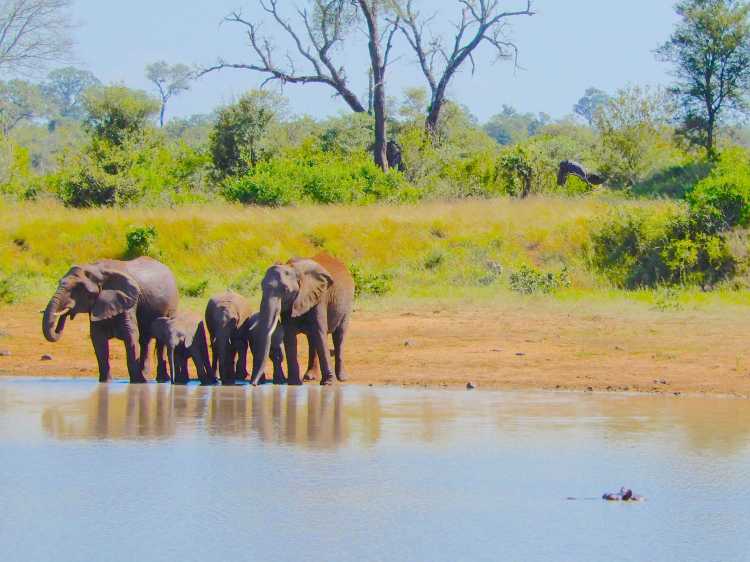
Elephants approach a watering hole in Kruger National Park to drink and bathe. As they enter the water a hippo, who’s making the watering hole his current home, is keeping an eye on them.

Sunrise in South Africa’s Kruger National Park

Taken while visiting Kruger National Park, one of the largest game reserves in Africa, covering an area of over 7,500 square miles in the provinces of Limpopo and Mpumalanga in northeastern South Africa. Areas of the park were first protected by the government of the South African Republic in 1898, and it became South Africa’s first national park in 1926.

To the north is Zimbabwe and to the east is Mozambique. It is now part of the Great Limpopo Transfrontier Park, a peace park that links Kruger National Park with the Gonarezhou National Park in Zimbabwe, and with the Limpopo National Park in Mozambique.

The park is part of the Kruger to Canyons Biosphere, an area designated by the United Nations Educational, Scientific and Cultural Organization (UNESCO) as an International Biosphere Reserve.

Join us as we visit historic treasures, natural wonders and vibrant cities set against backdrops that are endlessly changing and visually magnificent.


Join Us • We understand that the last thing you want is more emails cluttering up your inbox, but we promise we’ll work hard to make this worth while. Give us a try and if we don’t live up to our promise all you need do is click the unsubscribe link in our emails.

Don’t Miss Out, Subscribe Now!

You’ll receive notices of new posts, special features and updates right in your inbox…

Sengan-en Garden In Kagoshima

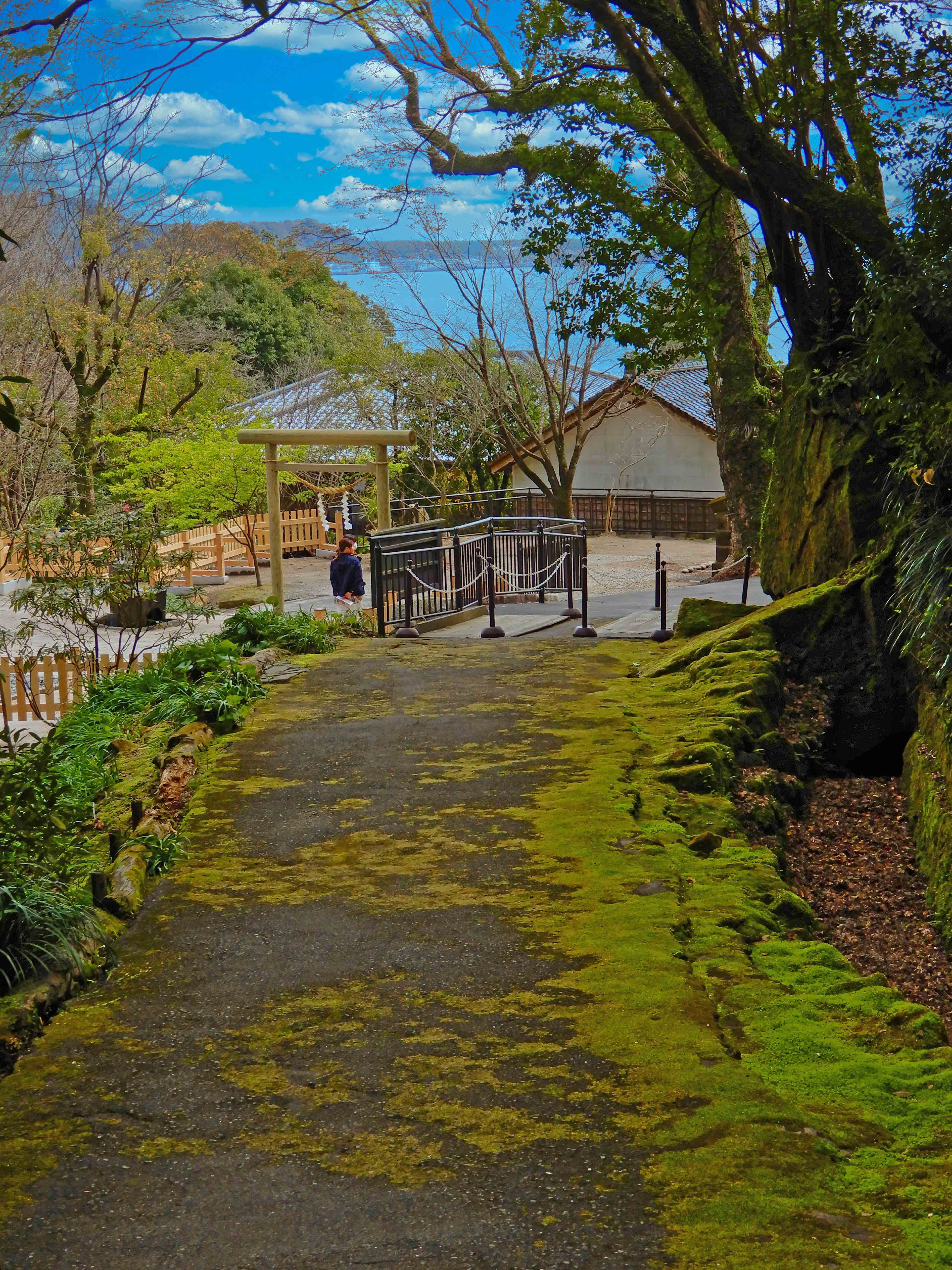
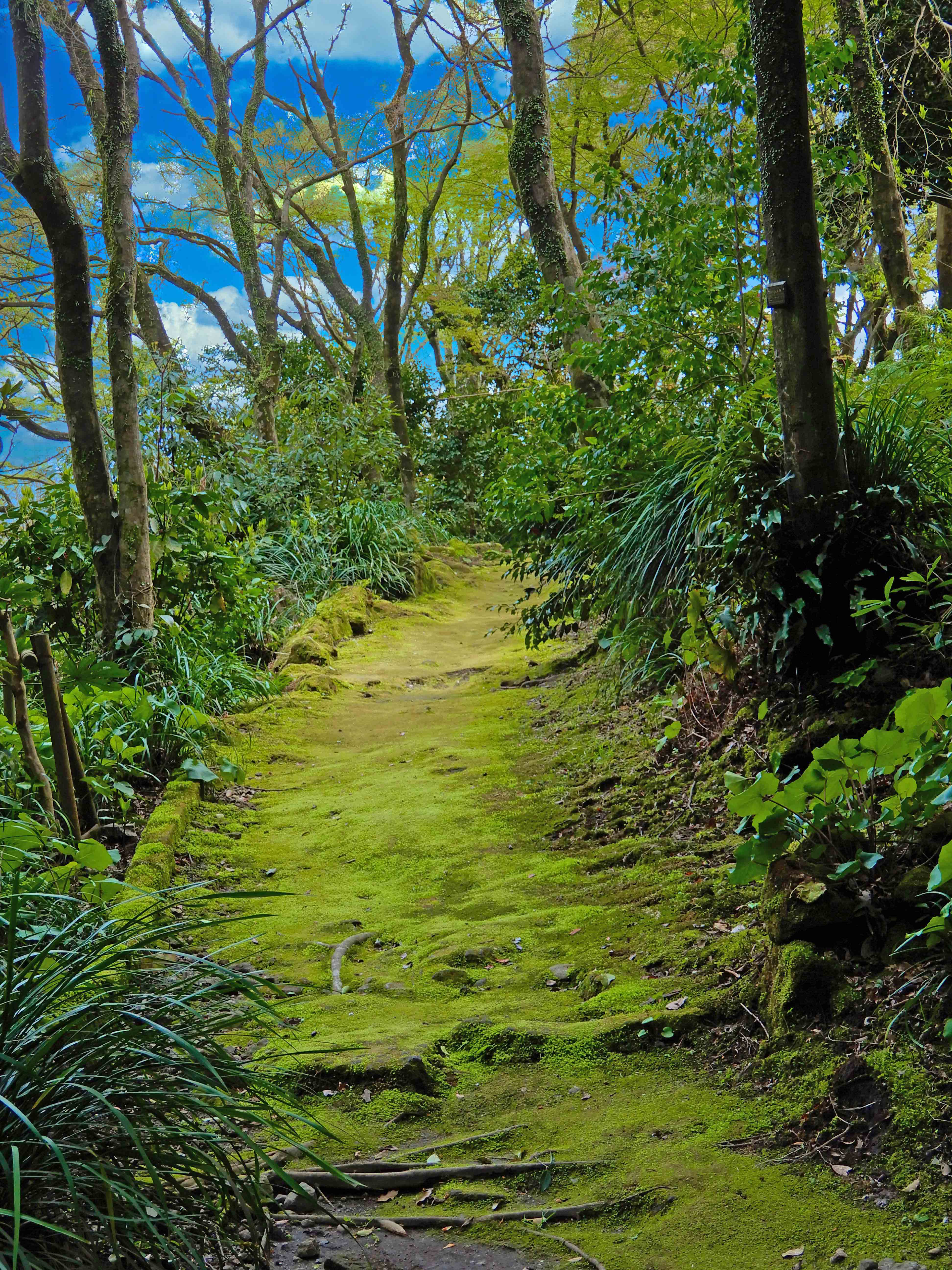
Sengan-en Garden is a traditional Japanese landscape garden boasting picturesque views of the Sakurajima Volcano, Kinko Bay and some interesting archeological sites. It was built in the 17th century by the Shimazu clan, who ruled the Satsuma domain for over 700 years. The garden boasts diverse features, including traditional Japanese structures, a pond, and a hilltop observation point offering panoramic views of the city and Sakurajima volcano.

Cultural Significance: Sengan-en Garden holds significant cultural value. It served as a stage for diplomatic negotiations between Japan and Western powers in the 19th century. The garden also houses the Sengan-en Museum, showcasing artifacts and exhibits related to the Shimazu clan and the history of Kagoshima.

Scenic Beauty: Sengan-en Garden is renowned for its picturesque landscape. Visitors can stroll through the serene pathways, admire the meticulously maintained gardens, and enjoy the breathtaking views of the surrounding natural beauty. The garden is especially popular during the spring cherry blossom season and the autumn foliage season.

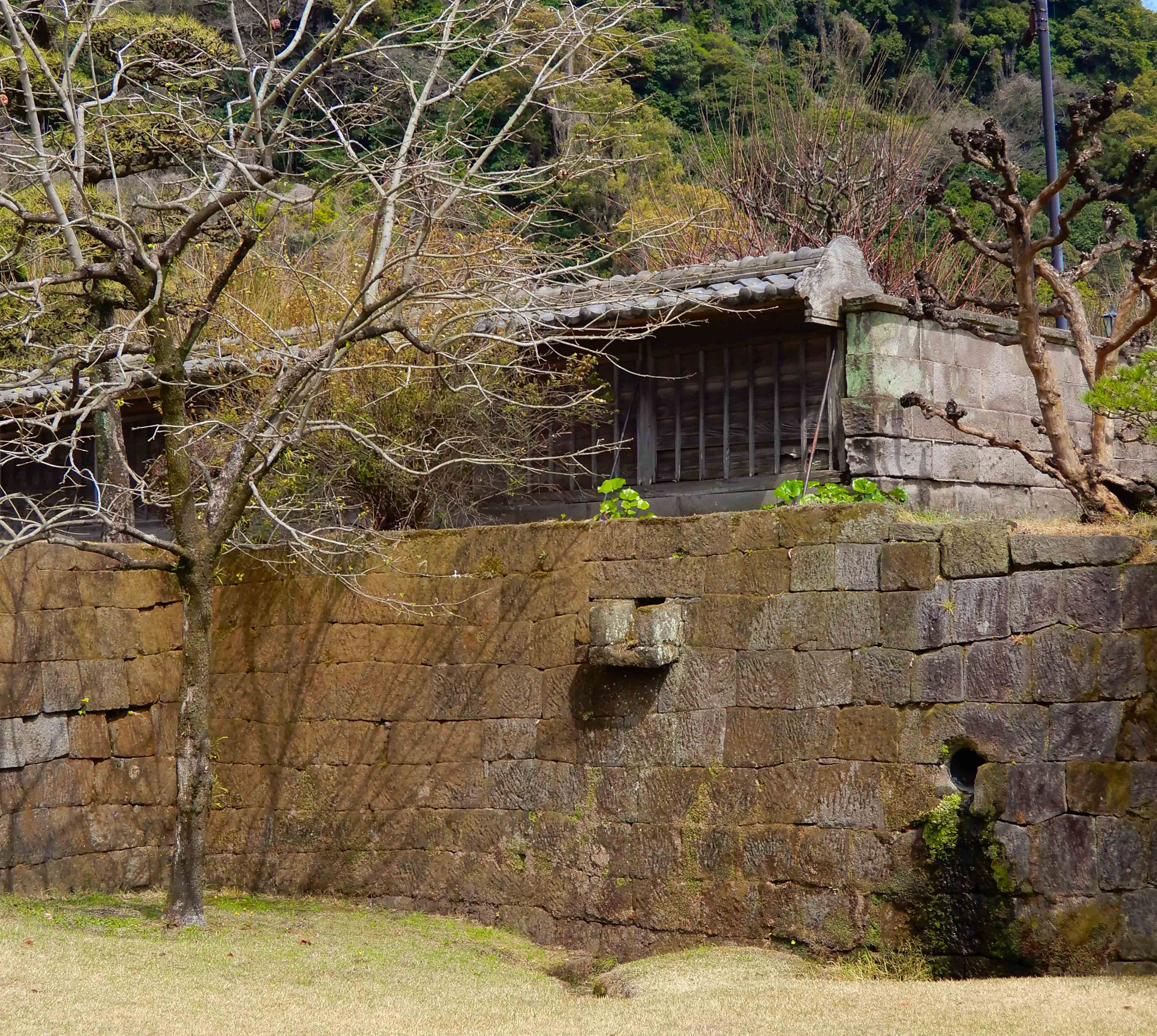
Located near the gardens is the remains of a reverberatory furnace

This cluster of western-style factories, Shuseikan, was built to strengthen Japan’s military. Satsuma Domain’s lord, Shimazu Nariakira, began directing the project in 1851 and iron manufacturing, ship construction, textile, and glass making were run here.

At the heart of all, there was a reverberatory furnace. Today, the foundation remains in Sengan-en. Reverberatory means a facility necessary for metal refining. It was used to melt iron needed to make cannons. The facility was designed based on a Dutch technical book. Back in those days, the main fuel was charcoal, and the water essential in the process of refining was brought from Sengan-en through a channel.

Besides iron manufacture, textile, glass making, printing and other innovations were promoted to accelerate Japan’s modernization.

Barcelona, the Heart of Catalonia

Plaça Reial

Based on recent events, we thought it might be a good time to promote one of our favorite cities. We have visited Barcelona several times as well as passing through on our way to join cruises along with day stops while cruising. This city has so much to offer it belongs on a short list of great cities of the West like Rome, Paris, New York and London.

First off, it is an ancient city founded by Phoenicians and Carthaginians. The original name of the city was Barcino, probably named after the Carthaginian ruler Hamilcar Barca. The Romans arrived in the 1st century B.C. choosing it as their capital of the region. Ruins of the Roman period can be found in the Plaza del Rei and in the old Gothic quarter.

Plaça d’Espanya in 1929

After the Romans came the Visigoths and during the 8th century the city was occupied by the Moors and remained under their control for over 100 years. The Franks conquered the city and drove out the Moors and the Spanish Catalonians eventually replaced the Frank rulers and Barcelona became the cultural heart of Catalonia.

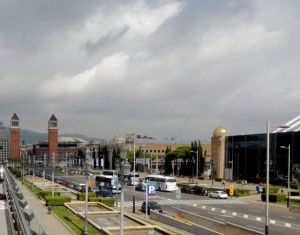
Plaça d’Espanya

Barcelona has always been a prosperous city and has used its’ assets to provide an international character to its’ culture. It hosted a world fair known as the Exposición Universal de Barcelona in 1888, which added to the cities’ significant architecture. An even more impressive set of structures were built around the Plaça d’Espanya at the foot of Montjuïc for the 1929 Barcelona International Exposition. Adding onto this tradition in 1992, Barcelona played host to the Summer Olympic Games.

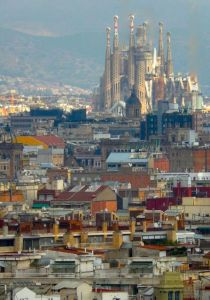
Gaudi’s Basilica of the Holy Family

In addition to Roman sites, the old medieval quarter, Gothic cathedrals, and the buildings of the international expositions and events, Barcelona is home to the creations of Catalan architect Gaudi. Antoni Gaudí was born in Reus in 1852 and received his Architectural degree in 1878. Gaudí is admired by architects around the World as the creator of unique and distinctive architectural styles. His work has greatly added to the architectural character of Barcelona and you will see incredible examples of his work all around the city centre.

Perhaps Gaudi’s most recognized work is the Basilica and Expiatory Church of the Holy Family. It is the large unfinished Roman Catholic Church in Barcelona and is part of a UNESCO World Heritage Site. In November 2010 Pope Benedict XVI consecrated and proclaimed it a minor basilica.

Other sites of special interest are:

La Rambla – A large street and pedestrian mall stretching thru central Barcelona. It is famous for its’ restaurants, bars, nightclubs and shopping. It is our favorite neighborhood and is home to a number of nice, reasonably priced local hotels. Two which should be considered are Hotel Curious and Hotel Arc De Ramblas. Both offer a great location and reasonably priced (but small) rooms.

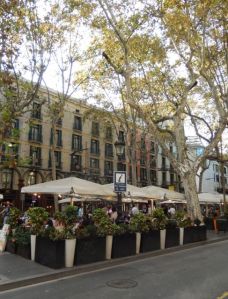
Plaça Reial

Plaça Reial – A square with a large fountain and ringed by good restaurants, many with outdoor seating. It is located just off La Rambla.

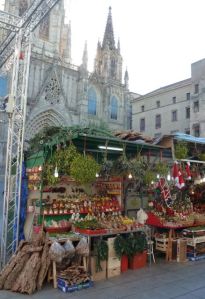
Cathedral of Barcelona – the Gothic cathedral and seat of the Archbishop of Barcelona, Spain. The cathedral was constructed from the 13th to 15th centuries, with the principal work being done in the 14th century. From the end of November until just before Christmas it is home to Fira de Santa Llucia, the largest Christmas market in the city.

Christmas market at Fira de Santa Llucia

Basílica de Santa Maria – The church was built between 1319 and 1391. The style of the church was Catalan Gothic with a single nave. It has a light and spacious interior but is devoid of the imagery commonly found in Gothic cathedrals.

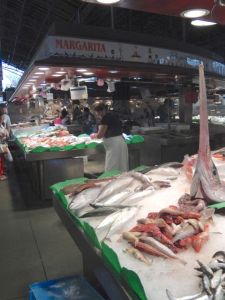
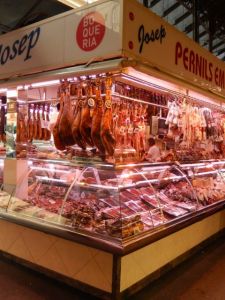
La Boquería

Mercat de Sant Josep de La Boqueria – often simply referred to as La Boquería, is a large public market in the Ciudad Vieja district. It is one of the city’s foremost tourist landmarks with an entrance from La Rambla. It is a favorite site of ours for strolling through the food booths and it is a good place to purchase Spanish smoked paprika to take home.

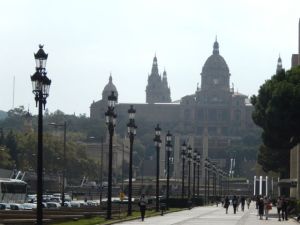
Palau Nacional – (Catalan for ‘National Palace’) was the main site of the 1929 International Exhibition on the hill of Montjuïc. Since 1934 it has been home to the National Art Museum of Catalonia.

Palau Nacional

Local Eats

No trip to Barcelona would be complete without paella! Maybe not invented here but surely perfected here.

Try “la bomba” (meaning the bomb). With its’ roots in violent resistance, it’s basically a tennis ball-sized potato croquette served with two different sauces and is a Barcelona original.

La Rambla Prominade

Pa amb Tomàquet which is literally “bread with tomato,” is a bread rubbed with garlic and the juice of a tomato and seasoned with olive oil, salt, and pepper. Locals will eat it with cheese and slices of meat any time of the day.

Crema Catalana! Made with a vanilla custard and fired to form a glassy crust, it’s the Barcelona version of “creme brûlée.”

In Barcelona, the one cheese you simply must have is mató, an unsalted goats cheese. Soft, sweet, and spreadable, the locals eat this with honey and walnuts – a perfect dessert!

Last but certainly not least is Tapas which is an institution in this city. Be sure and try a sampling along with some excellent Spanish ports, wines, sangrias and vermouths.

If you are in the La Rambla area and are looking for an inexpensive place to eat we would recommend Restaurant La Poma (Pizzeria Mediterránea La Poma). It is modern, reasonably priced with a good selection of pizza, pasta and wines.

We have also had tapas and drinks at Ocaña in the Plaça Reial. Good prices, attentive service and the perfect place to sit outdoors and people watch.

A Spanish chain that was trying to gain a foothold in America is 100 Montaditos (Cerveseria 100 montaditos). The Chain features many inexpensive Spanish mini-sandwiches plus beer & wine in a tavernlike setting. There are four or five locations around central Barcelona.

The best neighborhoods to shop

Barcelona has become one of Europe’s shopping capitals and, in contrast to London, Paris or Rome, it is not only noted for setting new fashion trends, but is also still relatively inexpensive.

La Rambla, as already mentioned, is a good location for shopping but trends toward discount stores and souvenir shops. Just up from La Rambla is Plaça Catalunya featuring shops with internationally recognized brands such as Chanel, Armani, Cartier, Miró, Mont Blanc and Zara. In the same area is the Hotel Actual which offers nice rooms at a reasonable price.

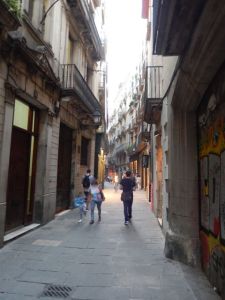
Alternatives to the big names and stores are found in the narrow streets and alleys of the Old Town. There are countless small shops featuring jewelry, beads, house wares and souvenirs.

In Barrí Gotic (the Gothic Quarter), you will find antique shops, small food markets and new fashion designers.

Visit Us On Facebook

The El Raval area has an international population featuring a mix of foreign supermarkets and shops which gives the district a multicultural atmosphere. You’ll find discount stores, music shops and small boutiques featuring ethnic clothes.