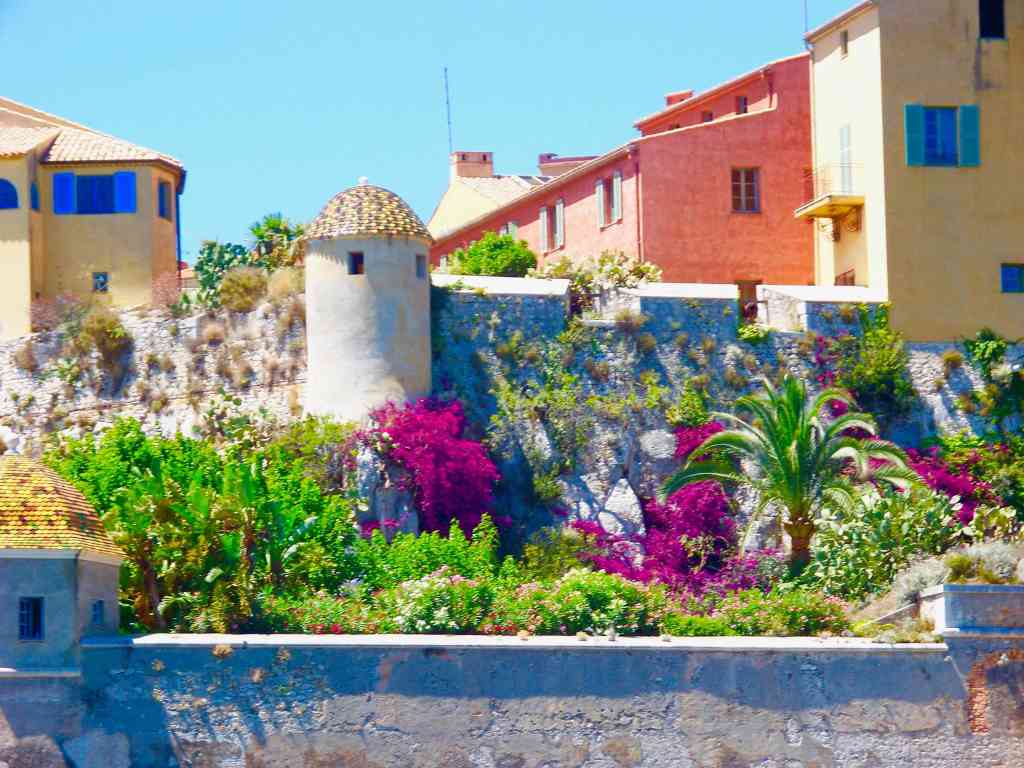
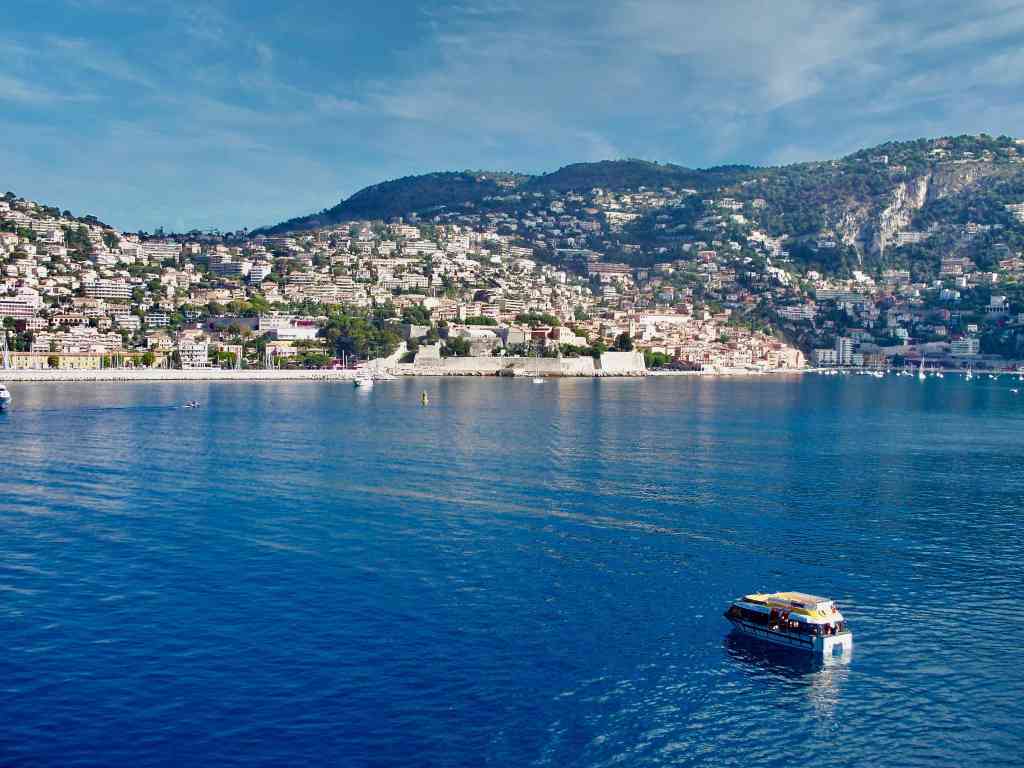
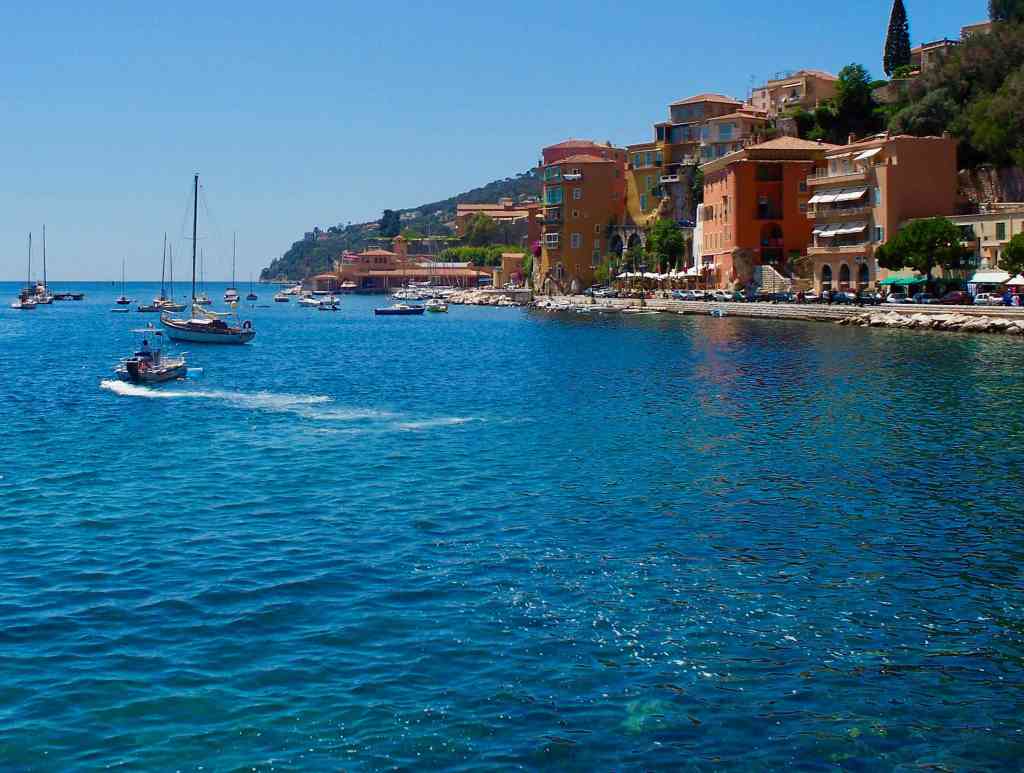
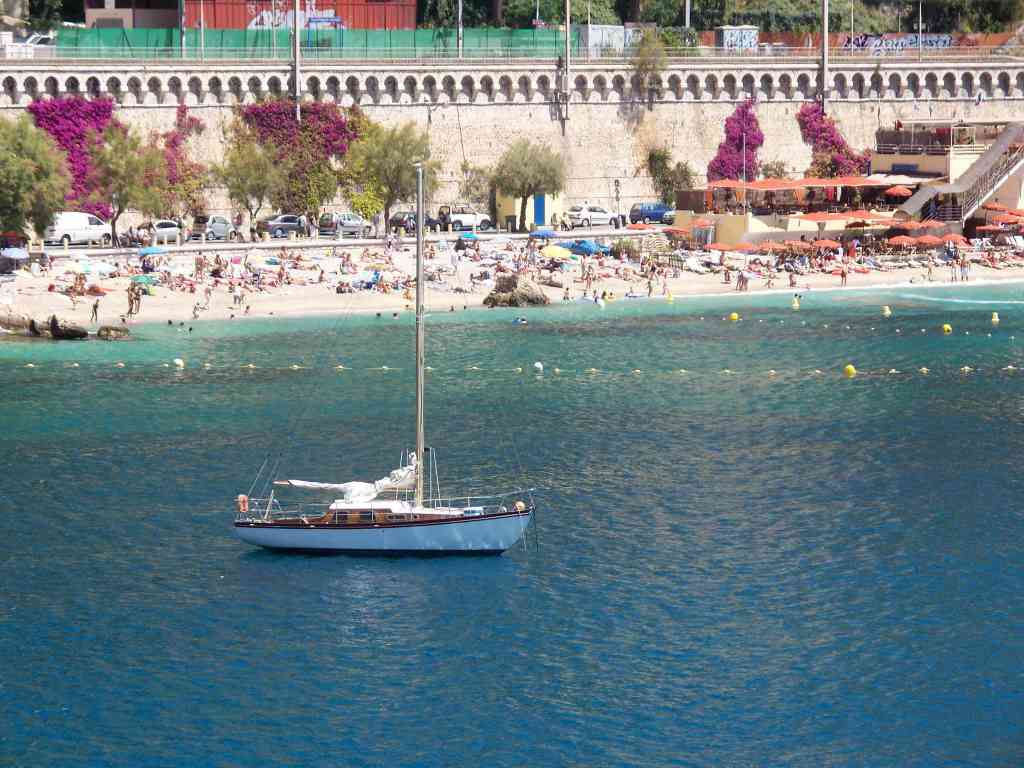
Villefranche-sur-Mer or just Villefranche is a picturesque town on the French Riviera featured on many cruise itineraries. The town itself sits between Monte Carlo and Nice with Cannes only a little farther to the west (19 miles). The quant waterfront is lined with cafes and restaurants and stretches from the marina, where the tenders tie up, around a natural bay past several beautiful beaches. Its nearness to Monte Carlo and Nice is probably one of its biggest attractions for the cruise lines as it affords them a number of tour opportunities. But even if you’re planning’ a tour don’t pass up spending some time at a cafe or restaurant on this beautiful waterfront.
Where Your Ship Docks
While Villefranche has one of the best protected bays on the Riviera but has no docking facilities that can accommodate cruise ships. This is a tender port where you land at the visitors center right in town. The visitor center offers maps, good advice on getting around and has good public facilities.
Wheelchair Accessibility
Disembarking – This is normally a tender port as large cruise ships cannot be accommodated at its piers. Wheelchair bound passengers will encounter challenges both in getting on tenders as well as disembarking at the pier.
Port City Characteristics – This port has a steep geography where there are typically elevations and inclines to deal with. Otherwise wheelchair infrastructure is typical of European cities but it does have cobbled streets. The waterfront and near port area has moderate inclines in sidewalks but the city itself can be more difficult. Intersection crosswalks have few curbs or other wheelchair obstacles at major intersections but you may encounter cobbled streets.
Transportation
Villefranche is an easy town to walk around in with plenty of shopping opportunities and good restaurants, but the streets do climb steeply up from the waterfront. Less than a half mile around the waterfront is the train station where you can catch one of the frequent trains to Monte Carlo, Nice or Cannes. They run about every twenty minutes and a trip to Monte Carlo takes only fifteen minutes and costs around €7.00. So before you sign up for that expensive tour consider some easy exploring on your own.
Currency
The French currency is the Euro and you should not expect them to accept Dollars or Pounds in Villefranche. Credit cards are widely accepted and there are ATM machines available as well.
Attractions
The biggest attraction is the Riviera itself. Famous beaches, casinos, yachts at anchor and of course French cuisine. With Cannes and Nice to the west and Monaco only seven miles to the east, a train trip is a fast and inexpensive way to see the glamour of the Riviera up close.
There are also a number of reasons to simply stay in Villefranche. The heart of Villefranche-sur-Mer is its picturesque Old Town, characterized by narrow cobbled streets, colorful buildings, and charming boutiques. Visitors can stroll through the town, admiring the traditional architecture and enjoying the vibrant ambiance.
Attractions
Just as you exit the visitor center next to the dock, to the left is Citadelle Saint-Elme a thirteenth century fortification which also now houses the Les Musees de La Citadelle – Located inside the citadel these free art museums include the Volti featuring some beautiful bronzes. The citadel also includes some amazing lookouts and a nice garden.
Villefranche Beach
Beaches of Villefranche – All the area beaches are public and free. The most famous and the most beautiful, is the Plage des Marinières right in the center of town. The beach is over a half mile long and be aware that topless sunbathing is common.
Rue Obscure – A historic walking and mostly covered alley. This underground street is an interesting place to stroll and includes several levels with lighted vaulted ceilings and shops.
Chapelle de Saint-Pierre des Pecheurs – Beautiful chapel right on the harbour with an interior decorated by Jean Cocteau.
Villa Ephrussi de Rothschild – A villa, museum and fantastic gardens located on the opposite side of the harbor from the visitors center. Admission is about €15 but well worth the cost.
Fort du Mont Alban – If you are into hiking, a climb up Mt. Alban overlooking the harbor with Nice to the west is worth the view as it stands over 600 feet above the harbor and the scenery is fantastic. The fort itself, built in the 16th century, is not open to the public but is still impressive from the outside.
Monte Carlo map showing train station, Casino Park and Palace.
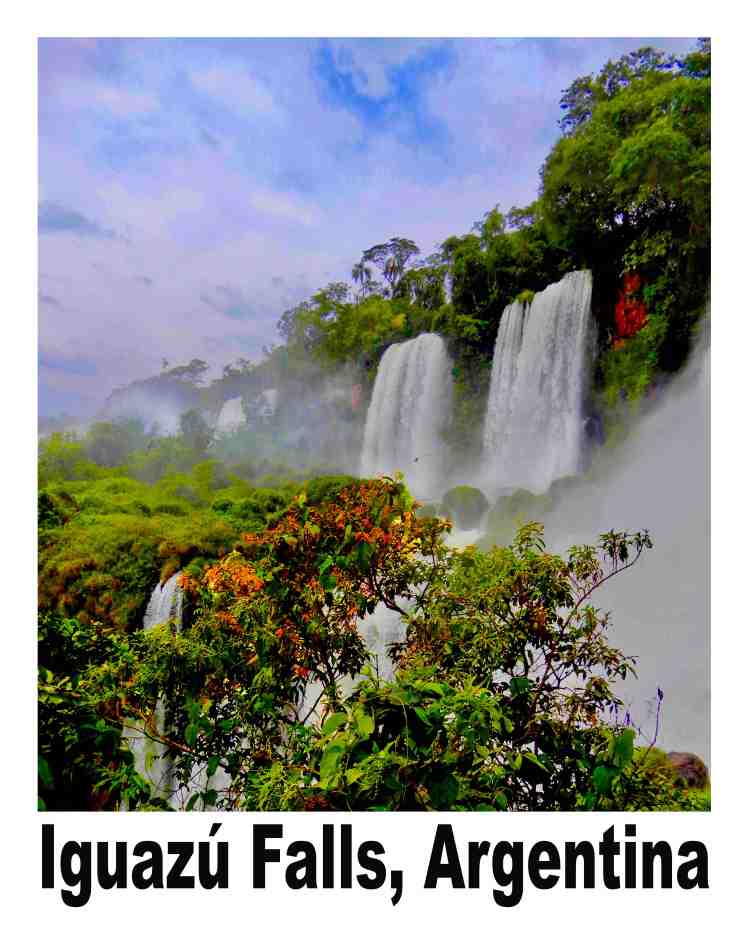
Iguazu Falls is on the Iguazu River on the border between Argentina and Brazil. It is the largest waterfall system in the world. The falls are are located in Iguazu National Park on the Argentine side and Iguaçu National Park on the Brazilian side.
The falls are made up of 275 individual waterfalls, with the largest being the Devil’s Throat. The Devil’s Throat is 267 feet high and 425 feet wide. The falls are surrounded by lush rainforest and are home to a variety of wildlife, including jaguars, ocelots, and monkeys.
Iguazu Falls is a UNESCO World Heritage Site and is one of the most popular tourist destinations in Argentina and Brazil. Visitors can take a boat ride to the base of the falls, or hike along miles of trails in the national parks.
I’ve always thought that black and white photographs simplify images and draw you deeper into the actual image depicted. This forces us to pay special attention to the underlying composition and significance of the subject being presented. I recently visited a gallery showing of historic images that mostly were sepias that seemed to add an additional weight to the images displayed.
Looking for good information on ports of call? Descriptions on using public transportation or visiting international cities? Sign up and follow us as we explore the world.
Sure, we understand that the last thing you want is more emails cluttering up your inbox, but your subscription means a lot to us. We promise we’ll work hard to make this worth your while. Give us a try and if we don’t live up to our promise all you need do is click the unsubscribe link in our emails.
Don’t Miss Out, SubscribeNow!
You’ll receive notices of new posts, special features and updates right in your inbox…
The location of a number of Game Of Thrones episodes, this ancient city invites strolling through and exploring. One of the most popular ports on The Adriatic.
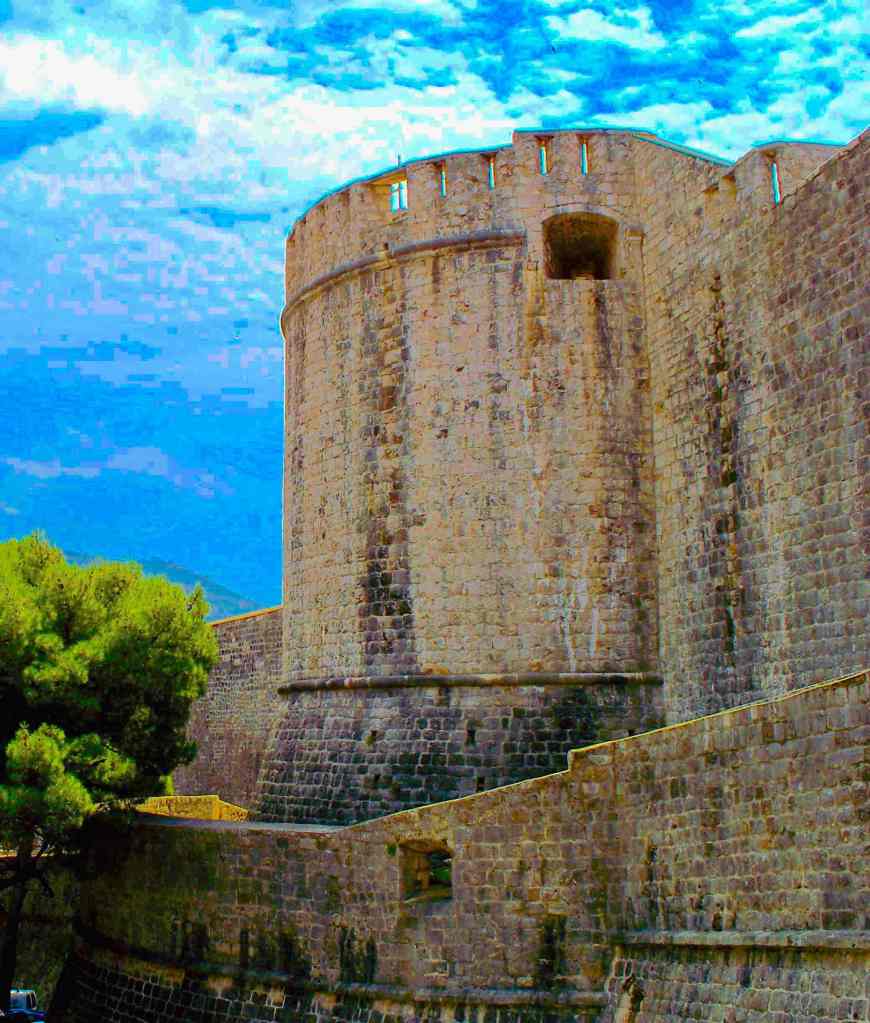
The Old City of Dubrovnik is where much of Game of Thrones was filmed and the town has used this to greatly add to the appeal of this already popular tourist destination. A short walk thru this town quickly shows why it was selected as a backdrop for this popular series. Scenes from the show take in the Pile and Ploče gates, St. Dominika street, the high city walls along with the Bokar fortress and the Minčeta tower.
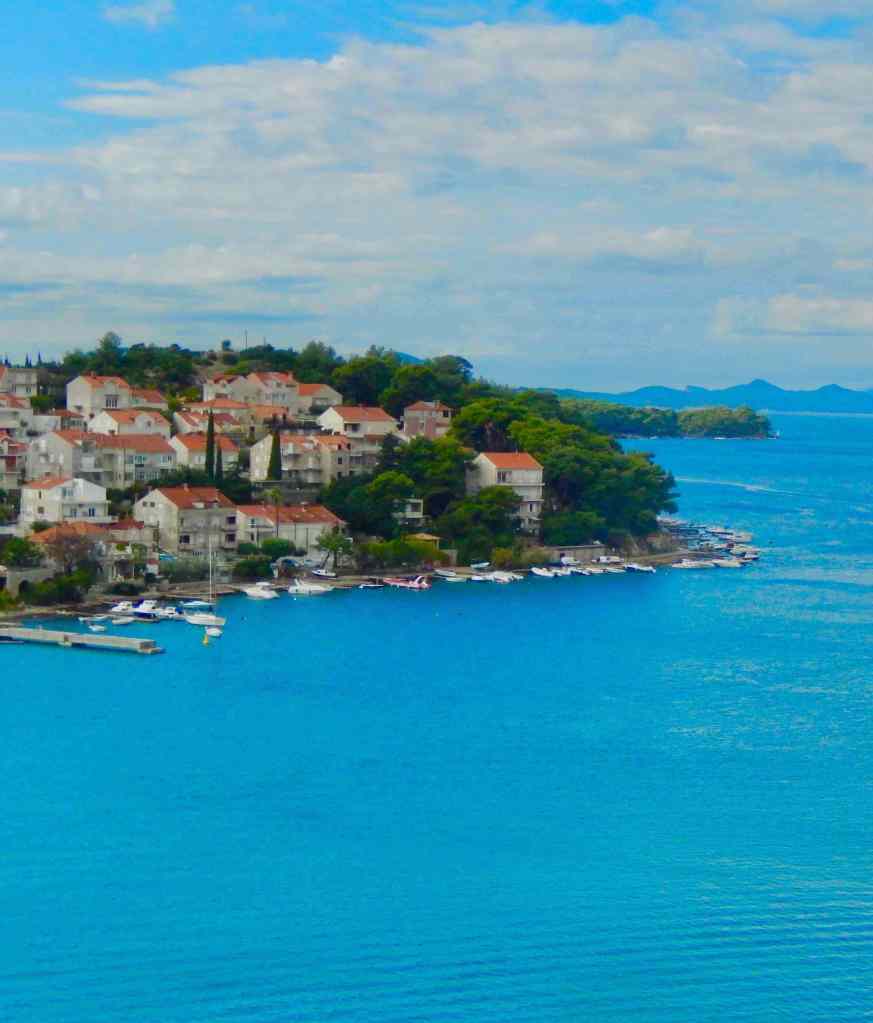
Dubrovnik is a beautiful city located on the Adriatic coast of Croatia, known for its stunning architecture, rich history, and breathtaking scenery.
The sea and surrounding hills are ruggedly beautiful and the Old Cities massive defensive walls and towers add a feeling of being transported back in time centuries.
Old Town: Dubrovnik’s Old Town is a UNESCO World Heritage Site and is known for its well-preserved Gothic, Renaissance, and Baroque architecture. You can explore the narrow streets, enjoy the stunning views from the city walls, and visit the museums and churches
Where Your Ship Docks
Dubrovnik’s main cruise port is located in Gruž/Kanatfig area (see map) about 2 miles from the historic Old town. Most of the cruise ships dock there although some cruise ships dock in front of the historic areas Old Port from where visitors go by tender to the dock.
The pier at Gruž/Kanatfig is right next to a large supermarket and a block from the city bus terminal.
Wheelchair Accessibility
Disembarking – This port has a developed cruise ship pier 2 miles out from the Old City and the ease of disembarking varies by the individual ships gangway designs. Some cruise ships will anchor nearer town and will use a tender dock that disembarks right in the historic Old Town. For passengers using wheelchairs there can be a moderate ramp incline to deal with in both locations.
Transportation
The main attraction for day visitors is the old city and there is enough to do and see to last a couple of days. Should you want to go exploring thru the area there is a good bus system in Dubrovnik and inexpensive fares can be purchased directly from the drivers. You will need to exchange some currency beforehand as they only accept cash. Taxis are available at Taxi Stands and are reasonably priced.
Currency – The official currency is the Croatian Kuna (HRK or K) with an exchange rate of about 1 HRK = US$0.15. Credit cards a readily accepted and there are also ATM machines which disburse HRK.
Recent History and Dubrovnik Attractions
In the early 1990’s, after the break-up of Yugoslavia, a civil war broke out in the region mostly along ethnic and religious divides and Dubrovnik was attacked and besieged by Serbian and Montenegrin soldiers of the Yugoslav People’s Army for seven months and suffered from repeated artillery shelling along with constant sniper fire. After the new peace and the restoration work in the early 2000s, Dubrovnik has become one of the top tourist destinations in the Adriatic Sea.
The Old Town of Dubrovnik was founded in the 7th Century by refugees from Epidaurus in Greece and is a UNESCO World Heritage site due to its historic importance. As soon as you cross over the drawbridge and enter the Pile Gate you will find yourself entering an ancient city that is brimming with amazing architecture and surrounded by the Adriatic on one side and the interior city walls on the other.
Visitors can take a walk along the city walls that surrounds the Old City. The old city is so large that the walk takes a couple of hours with breathtaking views of the Adriatic Coast as well as beautiful vantage points down on the old city. The walls stretch over 6365 feet and consist of the main wall, sixteen towers, three forts, six bastions, two corner forts (cantonatas), three pre-walls with several turrets, three moats, two barbicans, two drawbridges and one breakwater.
Dubrovnik city walls are opened all year-round. The busiest period of year is the peak summer months and busiest time of day is from 11 am till 3 pm. General admission tickets cost about US$10.00 and you can buy e-tickets ahead of time HERE.
Lovrijenac Fortress is one of the sights that can be seen from the wall, it is an impressive structure built on an outcropping rock next to the sea. It is located just outside the Western wall of the Old Town and was often featured in Game of Thrones. Fort Lovrijenac or St. Lawrence Fortress, often called “Dubrovnik’s Gibraltar”, is a fortress and theater outside the western wall of the city of Dubrovnik, 121 feet above sea level. Famous for its plays and concerts along with its importance in resisting Venetian rule. It overshadows the two entrances to the city, from the sea and land. There is an admission to Fort Lovrijenac and it can be crowded at times, so we recommend booking a tour or buying e-tickets ahead of time HERE.
While the Game Of Thrones is fiction there is a remarkable amount of real history within these old city walls.
Important Sights
Dubrovnik Cable Car: The cable car takes you to the top of Mount Srd, where you can enjoy panoramic views of Dubrovnik and the surrounding islands.
Lokrum Island: This beautiful island is just a short boat ride away from Dubrovnik’s Old Town. It’s a nature reserve with plenty of hiking trails, a botanical garden, and a beautiful beach.
Rector’s Palace: This Gothic-Renaissance palace was once the seat of power in Dubrovnik. Today, it houses a museum with exhibits on the city’s history and culture.
Stradun: This is Dubrovnik’s main street, lined with shops, cafes, and restaurants. It’s a great place to people-watch and soak up the city’s atmosphere.
Dubrovnik Cathedral: This Baroque cathedral was built in the 18th century and is dedicated to Saint Blaise, the patron saint of Dubrovnik.
History and the Republic of Ragusa
After the fall of the old Gothic Kingdom, the city was incorporated into the Byzantine Roman Empire. Because of that even in the medieval period, Dubrovnik still had a large Roman population. After the Crusades, Dubrovnik came under the control of Venice, with the other remaining Dalmatian cities. After the Peace Treaty of Zadar in 1358, Dubrovnik achieved relative independence as a protectorate of the Kingdom of Hungary.
Between the 14th century and 1808, Dubrovnik ruled itself as a free state, but it did pay an annual tribute to the Ottoman sultan who ruled most of the Balkins. The Republic reached its peak in the 15th and 16th centuries, when it rivaled the Republic of Venice and other independent maritime republics as military and trading city states.
Kusadasi is a beach resort town and a favorite cruise ship destination in Turkey. It is only 12 miles from the port to the ancient city of Ephesus, one of the areas major attractions. Kusadasi is considered one of the most important destination cities in the Aegean because of its important historical sites that include Ephesus and its House of the Virgin Mary, the Temple of Artemis, Seven Sleepers, Didyma, Priene, Miletos, Hierapolis – and the spa town of Pamukkale.
Kusadasi has a typical Mediterranean climate with hot summers and mild winters. Summer temperatures during the day are usually in the mid to high 90’s. The city is sunny for 300 days a year, making it a popular winter vacation destination.
Where Your Ship Docks
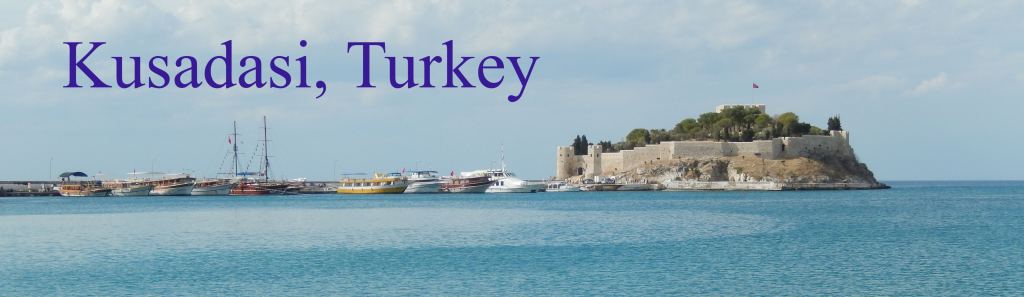
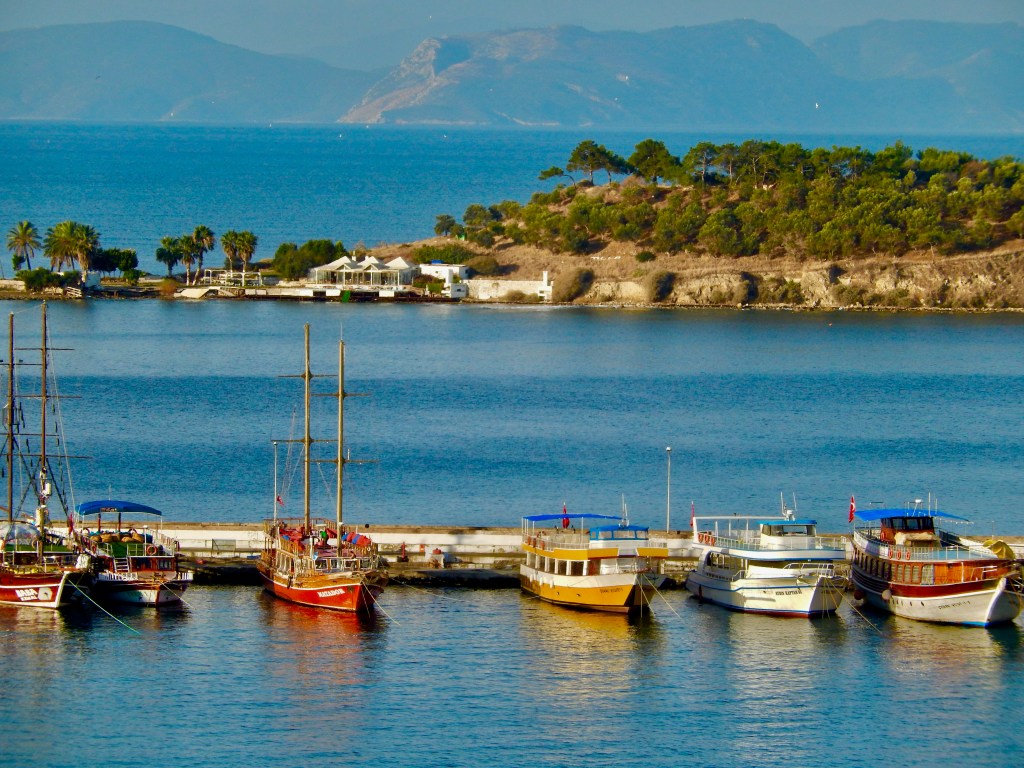
Cruise ships tie up at a pier near the central waterfront of the city and Pigeon Island. Kusadasi is a small resort town that offers extensive shopping, nice beaches and easy access to some of the most impressive ruins in the world.
Wheelchair Accessibility
Disembarking – This port has a cruise ship pier but disembarking varies by the individual ships gangway design and a steep ramp or even stairs can be encountered. For passengers using wheelchairs there can be a difficult time disembarking.
Port City Characteristics – This port has an average wheelchair infrastructure typical of large cities. The port area itself has moderate inclines in sidewalks. Intersection crosswalks may have curbs or other wheelchair obstacles.
Transportation
An easy walk from the pier is Scala Nuoava Village and its bazaar for shopping that takes only a couple of minutes. It’s only 5 minutes to the nearest grocier and pharmacy, 10 minutes to Hand of Peace Statue and 15 minutes to Pigeon Island with its Güvercinada Fortress and picturesque harbor views. For the most popular destinations near the port a tour is highly recommended. If you want to go off on your own there are a number of the major rental car companies near the port. Rates are usually under $25 a day.
Money
The currency is the Turkish Lira with an exchange rate of around 1 Lira to US$0.15. Credit cards are welcome at most businesses and there are ATM machines and exchange offices near the port.
Attractions
Kusadasi offers some excellent shopping bargains like Persian rugs but it is most famous for its location near some of the most significant archaeological sites in the world. It is also popular for its beautiful beaches, lively nightlife and the hospitality of its people.
The area was once the gateway to Asia from Europe and boasted one of the most prosperous cities in the region. The Greek/Roman city of Ephesus. It was visited by St. Paul and St. John and during those visits the apostles christianized the city. It is also where the Virgin Mary is believed to have spent the last years of her life.
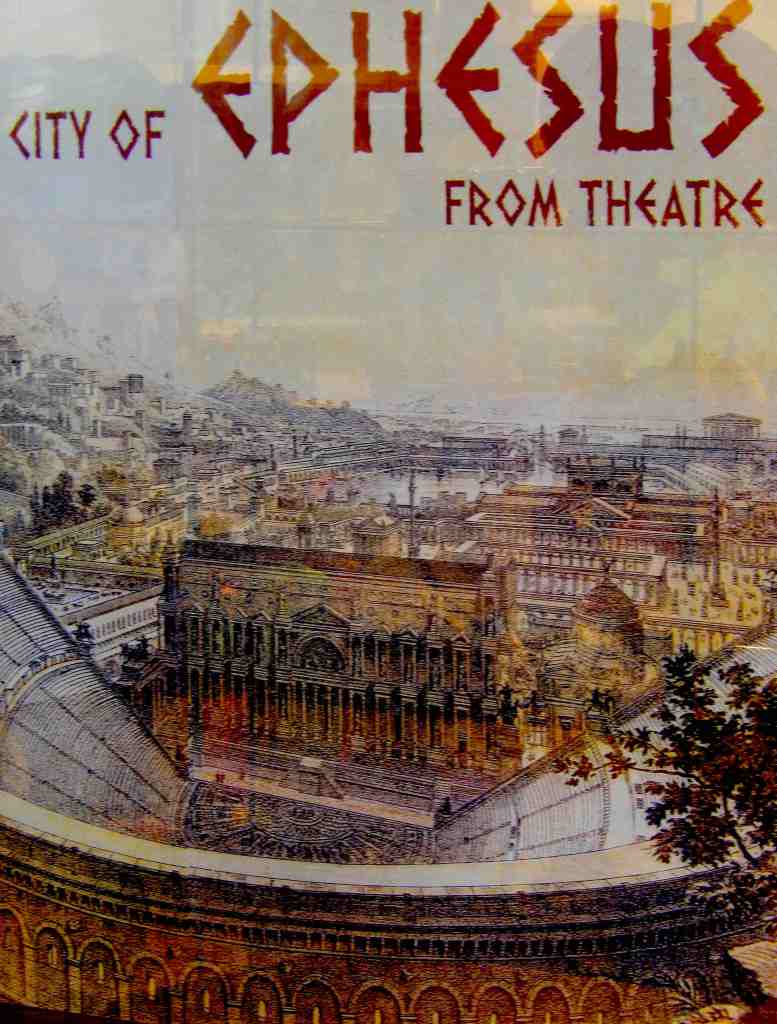
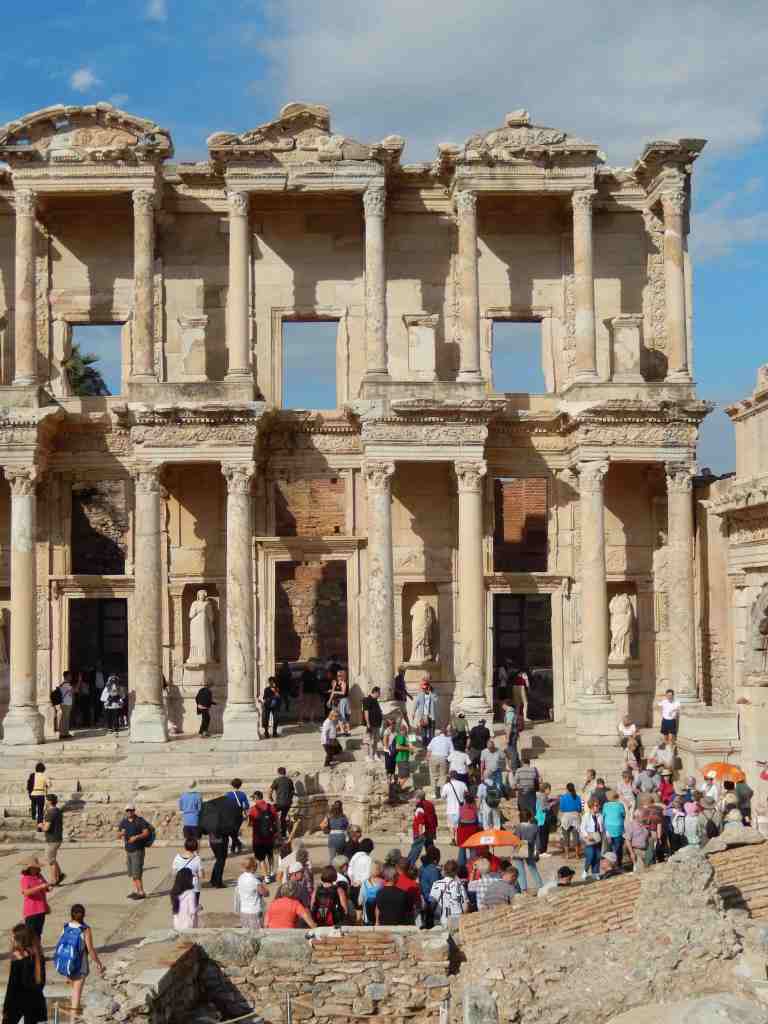
Ephesus – was an ancient Greek city on the coast. It was built in the 10th century BC by Ionian Greek colonists. The legend says that Androclos when he searched for a new Greek settlement site, he turned to the Delphi oracles for guidance. During the Classical Greek era it was one of the twelve cities of the Ionian League. The city came under the control of the Roman Republic in 129 BC.
House of the Virgin Mary – The house was discovered in the 19th century from the descriptions in the visions of Blessed Anne Catherine Emmerich, a Roman Catholic nun and visionary. The Catholic Church has never taken a position on the authenticity of the house, yet it still attracts a steady flow of pilgrims. Anne Catherine Emmerich was sainted by Pope John Paul II. The Temple of Artemis was also called Artemesium, temple at Ephesus and was one of the Seven Wonders of the Ancint World. The massive temple was built by Croesus, king of Lydia, about 550 BC. The Cave of the Seven Sleepers – In Christian and Islamic tradition, the Seven Sleepers is a story of a group of youths who hid inside the cave near the city of Ephesus around 250 AD to escape religious persecution and emerged some 300 years later looking just as they had when they entered.
Didyma Priene and Miletos – The major ruins of Didyma are located a short distance to the northwest. It sits on what in antiquity formed the Milesian Peninsula. Didyma is the most significant site in the territory of the great ancient city of Miletus. Historically the connection between Miletus and Didyma was by ship, but sediments from the Meander River silted up and closed the harbor of Miletus. Hierapolis – Pamukkale – “Holy City” is about 50 miles west of Kusadasi and was an ancient Greek city sited on hot springs in classical Phrygia. Its ruins are adjacent to modern Pamukkale in Turkey and currently comprise an archaeological museum designated as a UNESCO World Heritage Site.
Getting ready for a trip can be very stressful. There are endless things to remember to do before you leave home and lots of things to remember to pack. The latter can be particularly important because sometimes, when traveling, you cannot find the items you need or they are very expensive on the road. This is where lists become really helpful.
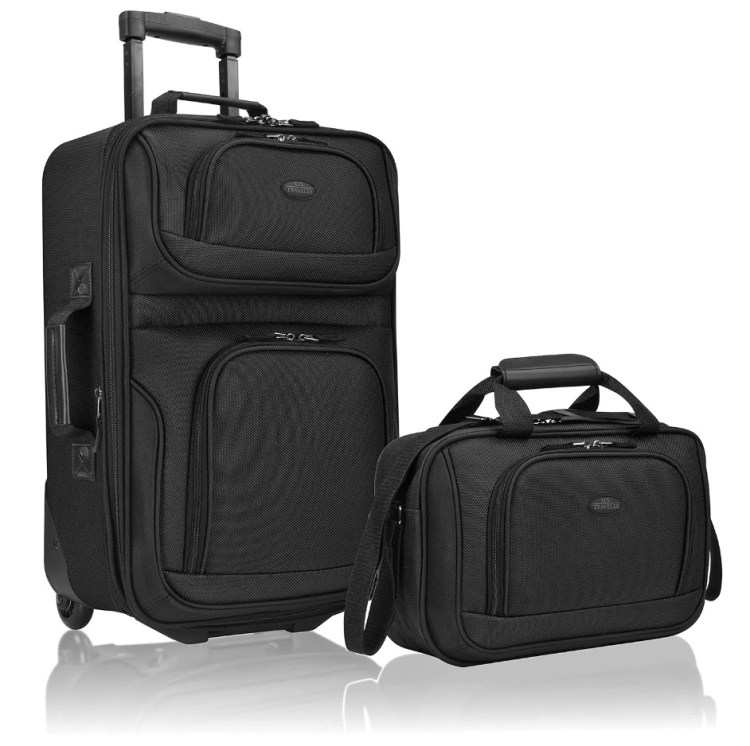
People who travel a lot may keep the items they normally take with them in a drawer or in a box but infrequent travelers probably don’t do this. The best solution is to keep a list of all the items you will need and then check them off as you put them in your suitcase. This can include simple items like shampoo, conditioner, etc. or packs of cold medications, band aides and the like. If you’re traveling with children, a separate list of their items will also make for a happier journey for all.
The other list that comes in handy is all of the things that need to be done before you head to the airport or get in the car for a road trip. This can include things like shutting off the ice maker and the hot water, backing up computers, charging electronic devices and even unplugging the coffee pot. Once these things are checked off your specific list, you will get on the road feeling a lot more relaxed, knowing that all your travel prep was taken care of.
Following are several check lists we use for getting ready to travel. At the end of this article is also a download link for an open source word processing document of these lists that can be customized for your use.
Get Your Home Ready Check List
🔲 Adjust or turn off air conditioner/heat: Adjusting your thermostat up (or down) while on an extended trip can actually save on energy usage. Provided you don’t live in an area of extreme temperatures there are times when you can actually turn heat/air off. Some experts however warn that allowing your house interior to get very hot or cold can cause a number of problems like cracking plaster or freezing pipes, so use good judgement here.
🔲 Shut off ice maker and empty the ice container: When an ice maker is on but sits idle for a long period, most will have a tendency for the ice to turn into a solid mass which is difficult to remove. There are some people who will suggest that if you’re gone for extended periods you could consider emptying the refrigerator and turning it off. Appliance people will warn against this as refrigerators can have major failures as a result. It’s better to use a small amount of electricity and avoid a major repair bill.
🔲 Dump trash: In the rush to leave it isn’t uncommon for garbage to be left inside by mistake. This is probably a mistake that won’t be repeated but add it to your list just to be safe.
🔲 Shut off hot water: This is a major money saver as keeping 20 or 30 gallons hot for weeks when nobody is home to use it is costly. However if you’re only going away for a few days reheating the water tank can actually cost more.
🔲 Shut off water: This recommendation is important to avoid damage to property from a pipe leak or a water heater failure.
🔲Set lights on timers: Keeping you home looking occupied can discourage home break-ins and vandals. If your home is a smart home there are a number of options to randomize light patterns and even control home lights while traveling. In addition we also use a few plug-in single, digital timers with battery back-up that avoid issues with extended power black-outs.
🔲 Secure Garage Door: As an added precaution and to prevent access to the house through the garage, we secure the door with its slide bolt and pull the power from the electric door opener.
🔲 Stop mail: The USPS offers a hold mail service. There are options for having the carrier deliver at the end or for you to pick-up and they’ll hold for 30 days. You can set it up online at https://www.usps.com/manage/hold-mail.htm. If you’ll be gone for longer than 30 days you can set it up foirst to have you to pick-up at the post office (the’ll hold it an additional 2 weeks) and go online again and set it up for the carrier to deliver the second hold.
🔲 Close Toilet Lids (to prevent evaporation): If you’re gone for an extended period it’s a good idea to prevent evaporation in the toilets. Stretching a plastic wrap over the bowl and under the tank lid will significantly help. It’s easier to clean up some old water than to scrub out mineral lines inside the bowl.
🔲 Leave A Key With A Friend: While traveling there are dozens of situations that could come up that my require access to your home. Everyone should have a trusted neighbor or friend with a spare key and instructions on alarm codes or ways to enter.
🔲 Suspend Scheduled Deliveries: From newspapers to monthly supply deliveries to regularly scheduled services these should to be dealt with well before you head out.
Securing Your Property Check List
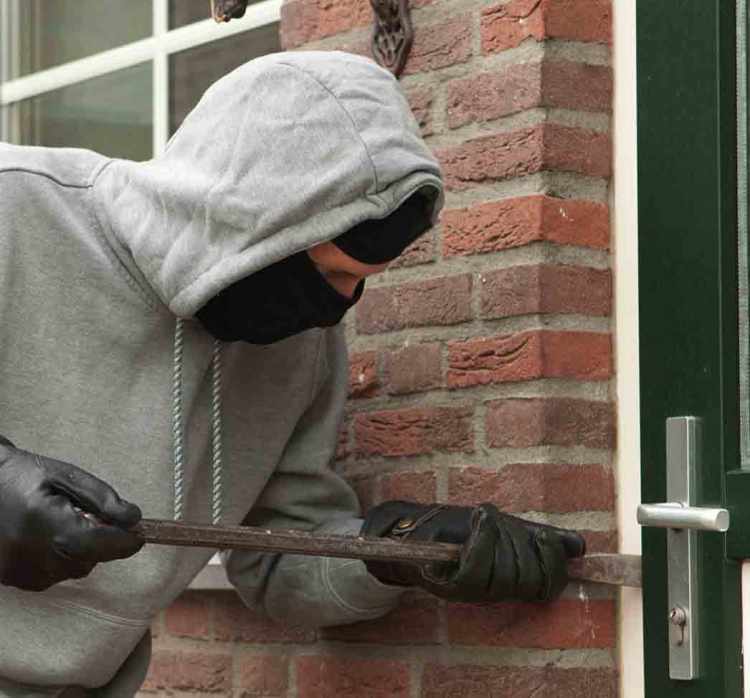
While there is no fool proof way to prevent someone from getting inside your house, making it significantly more difficult can often discourage them as it’s not worth their while. Today many homes are making use of alarm services but they can be expensive while other people don’t think their neighborhoods are safe and don’t warrant the expense. Still if you’re traveling for extended periods there are some simple steps you can take to make your home harder to get into.
Secure The Property:
While there is no fool proof way to prevent someone from getting inside your house, making it significantly more difficult can often discourage them as it’s not worth their while. Today many homes are making use of alarm services but they can be expensive while other people don’t think their neighborhoods are safe and don’t warrant the expense. Still if you’re traveling for extended periods there are some simple steps you can take to make your home harder to get into.
🔲 Lock Your Home: Install good quality dead bolts. Most hardware stores offer a wide selection of door locks and usually can offer advice on what best meets your needs. Most locks are reasonably easy to install yourself. Also pay particular attention to striker plates and the depth of dead bolts.
🔲 Secure windows: It’s always a good practice to double check all windows making sure they a closed completely and latched, especially those on the ground floor. In protecting your home some experts recommend applying break resistant film to the interior surface of the glass especially on ground floor windows. Using tinted films can also reduce heat gain from direct Sun.
🔲 Secure Sliding Glass Doors: The most vulnerable entry point on most houses are patio and deck sliders. There are a number of devices available that provide extra protection for sliding doors. The easiest and least expensive is a track lock that simply hand tightens on the track up against a door. Another good option is to drill a small hole through the door and track, afterwards push a pin, screw or nail through the hole. It also has the advantage of preventing lifting the door off its track. Another simple way to keep the door from sliding is to put a piece of wood on the track between the sliding door and jamb.
🔲 Secure Garage Door: As an added precaution and to prevent access to the house through the garage, secure the door with its track bolt and pull the power from the electric door opener.
🔲 Set Motion Controlled Lights To On: It has long been established that motion controlled outdoor lighting will often discourage break-ins. Motion lights draw attention and light up home entry points. If you haven’t considered these there are a number of economical options available including battery units.
🔲 Set An Alarm: For those that are particularly concerned about being away there are a number of home alarm systems available. Several are inexpensive and are easy to install by the homeowner. SimplySafe is a good system with the option of being remote monitored when needed.
🔲 Use A Vibration Door Alarm: A surprisingly inexpensive door alarm often known as a door handle alar can discourge break ins. Ranging from $10 to $40 they are designed to hang inside on the doorknob. They sound a loud alarm anytime the door handle is vibrated and most have a delay of 10 to 30 seconds that allow you to get inside and turn it off. If you are concerned about your safety in hotel rooms these are good travel safety devices.
Important Items To Pack Check List
This list may seem unnecessary but the whole point of lists is to provide a double check on including important items. Toiletries, medications, chargers, cables and much more can be costly to leave behind.
🔲 Toothbrush & Tooth Paste: Always include a a second toothbrush and an additional travel tube of tooth paste and pack on set in a separate suitcase.
🔲Medications: These are critical and if there are prescription meds you may not be able to get the easily refilled. It’s also a good idea to include an OTC collection of meds for stomach upset, cold and flu and pain relievers.
🔲 Shaving, Lotion, Hair Care, Etc: Everyone has a collection of individual products that are considered necessities like nail clippers, Q-Tips…
🔲 Chargers & Cables: From cell phones to tablets and laptops, we all have an assortment of digital devices that need constant charging and care.
🔲 Safety Items: Things like document pouches, small first aid items, emergency ID and medical information cards are important to carry. Take some time and create your own list.
🔲Convenience Items: Night lights, international electric outlet adaptors, plug-in multi outlet, suitcase scale, the list is different for each of us. The trick is to work out your own list. These lists were created in an open source word processor format that can be opened by most commercial software. Use them as a starting point for creating your own pre-travel check lists. They’re the best system we’ve found for organizing our packing and making sure our home is ready for us being gone for an extended period.
🔲 Lock Your Home: Install good quality dead bolts. Most hardware stores offer a wide selection of door locks and usually can offer advice on what best meets your needs. Most locks are reasonably easy to install yourself. Also pay particular attention to striker plates and the depth of dead bolts.
🔲 Secure windows: It’s always a good practice to double check all windows making sure they a closed completely and latched, especially those on the ground floor. In protecting your home some experts recommend applying break resistant film to the interior surface of the glass especially on ground floor windows. Using tinted films can also reduce heat gain from direct Sun.
🔲 Secure Sliding Glass Doors: The most vulnerable entry point on most houses are patio and deck sliders. There are a number of devices available that provide extra protection for sliding doors. The easiest and least expensive is a track lock that simply hand tightens on the track up against a door. Another good option is to drill a small hole through the door and track, afterwards push a pin, screw or nail through the hole. It also has the advantage of preventing lifting the door off its track. Another simple way to keep the door from sliding is to put a piece of wood on the track between the sliding door and jamb.
🔲 Secure Garage Door: As an added precaution and to prevent access to the house through the garage, secure the door with its track bolt and pull the power from the electric door opener.
🔲 Set Motion Controlled Lights To On: It has long been established that motion controlled outdoor lighting will often discourage break-ins. Motion lights draw attention and light up home entry points. If you haven’t considered these there are a number of economical options available including battery units.
🔲 Set An Alarm: For those that are particularly concerned about being away there are a number of home alarm systems available. Several are inexpensive and are easy to install by the homeowner. SimplySafe is a good system with the option of being remote monitored when needed.
🔲Use A Vibration Door Alarm: A surprisingly inexpensive door alarm often known as a door handle alar can discourge break ins. Ranging from $10 to $40 they are designed to hang inside on the doorknob. They sound a loud alarm anytime the door handle is vibrated and most have a delay of 10 to 30 seconds that allow you to get inside and turn it off. If you are concerned about your safety in hotel rooms these are good travel safety devices.
Important Items To Pack
This list may seem unnecessary but the whole point of lists is to provide a double check on including necessary items. Toiletries, medications, chargers, cables and much more can be costly to leave behind.
🔲 Toothbrush & Tooth Paste: Always include a a second toothbrush and an additional travel tube of tooth paste and pack on set in a separate suitcase.
🔲 Medications: These are critical and if there are prescription meds you may not be able to get the easily refilled. It’s also a good idea to include an OTC collection of meds for stomach upset, cold and flu and pain relievers.
🔲 Shaving, Lotion, Hair Care, Etc: Everyone has a collection of individual products that are considered necessities like nail clippers, Q-Tips…
🔲 Chargers & Cables: From cell phones to tablets and laptops, we all have an assortment of digital devices that need constant charging and care.
🔲 Safety Items: Things like document pouches, small first aid items, emergency ID and medical information cards are important to carry. Take some time and create your own list.
🔲 Convenience Items: Night lights, international electric outlet adaptors, plug-in multi outlet, suitcase scale, the list is different for each of us. The trick is to work out your own list.
Download A Copy Of Our Lists That can be easily edited in any word processor app to customize and print your own.
These lists were created in an open source word processor format that can be opened by most commercial software. Use them as a starting point for creating your own pre-travel check lists. They’re the best system we’ve found for organizing our packing and making sure our home is ready for us being gone for an extended period.
The Historic Island of Rhodes Greece • Crossroads of the Eastern Mediterranean
Rhodes (Greek: Ρόδος, romanized: Ródos [ˈroðos]) is the largest of the Dodecanese islands of Greece and is also the island group’s capital.
Crystal clear waters, Sunny blue skies, white sand beaches and over two thousand years of history – welcome to Rhodes…
The island was the site of the Colossus of Rhodes, a statue of the Greek sun-god Helios, erected by Chares of Lindos in 280 BC. It was listed as one of the Seven Wonders of the Ancient World, constructed to celebrate Rhodes’ victory over the ruler of Cyprus, Antigonus I Monophthalmus. According to most descriptions, the Colossus stood approximately 108 feet high, about the height of the modern Statue of Liberty. It collapsed and was destroyed during the earthquake of 226 BC.
When the knights of Saint-John arrived on the island in 1309, they built an impressive citadel city. The two and a half mile long fortified walls, with a number of strongholds and towers remain extremely well-preserved even today.
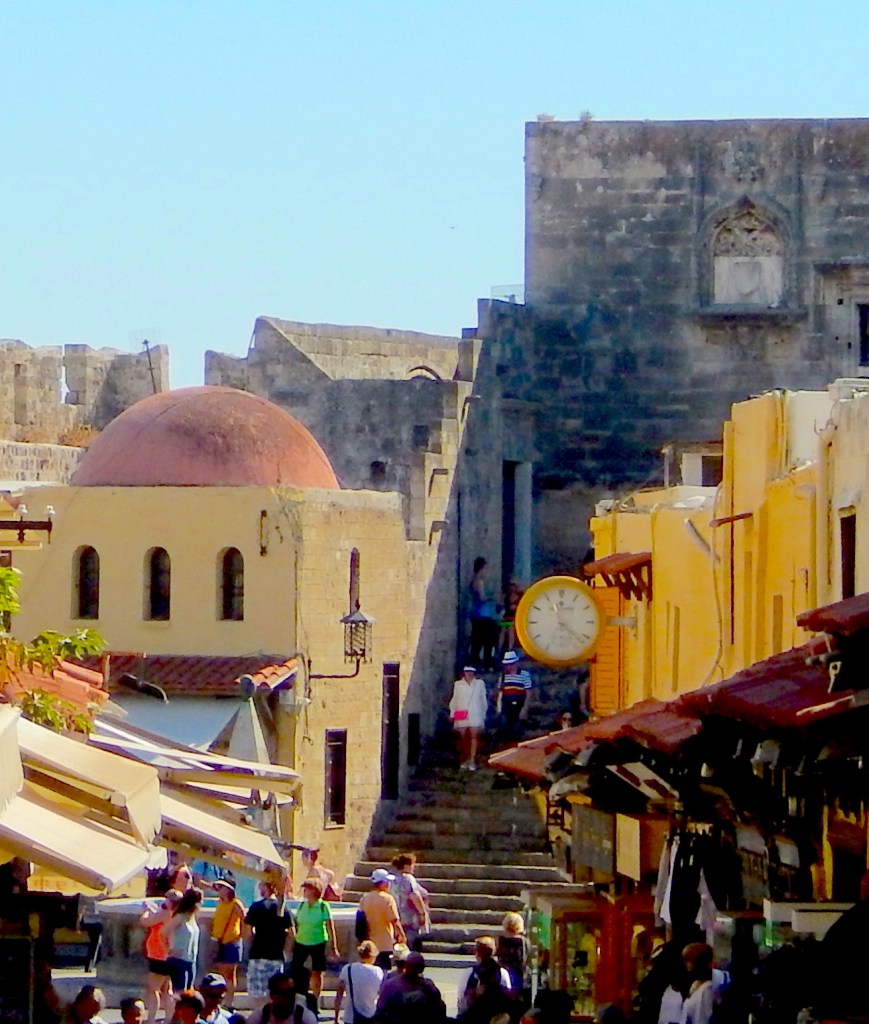
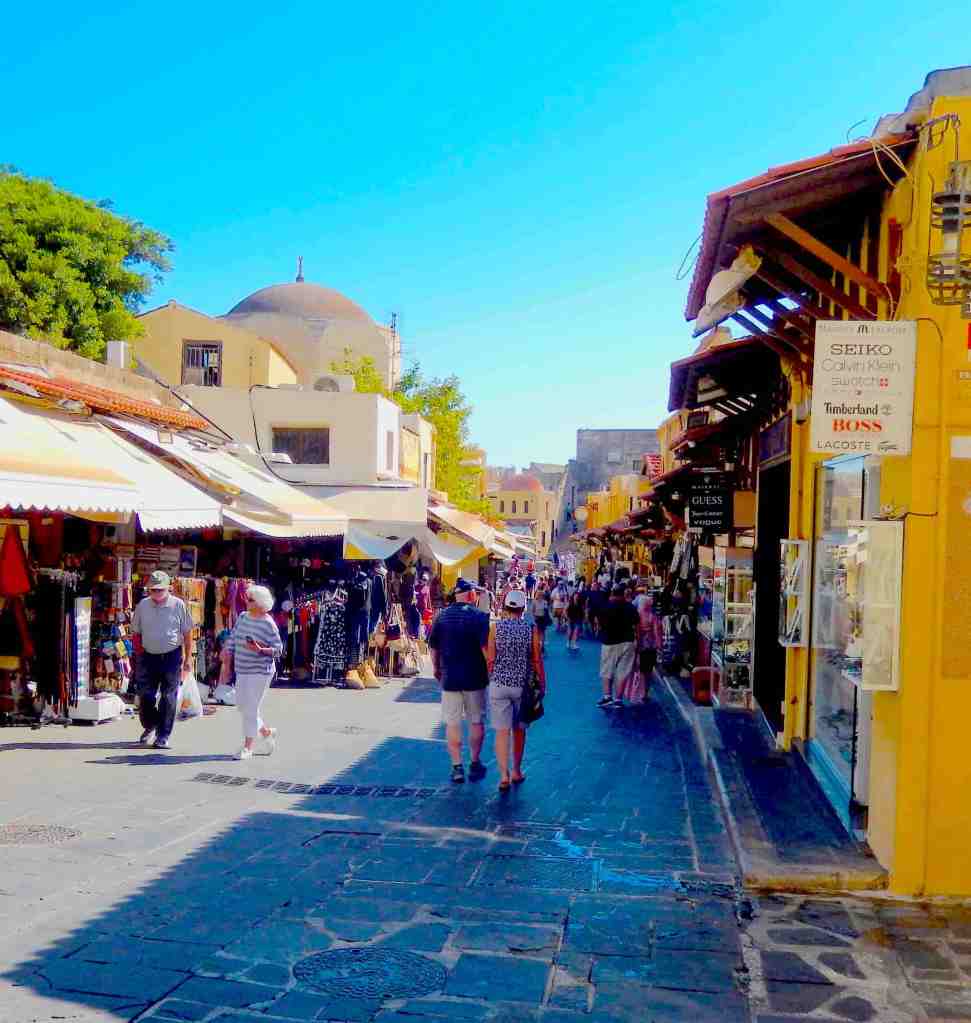
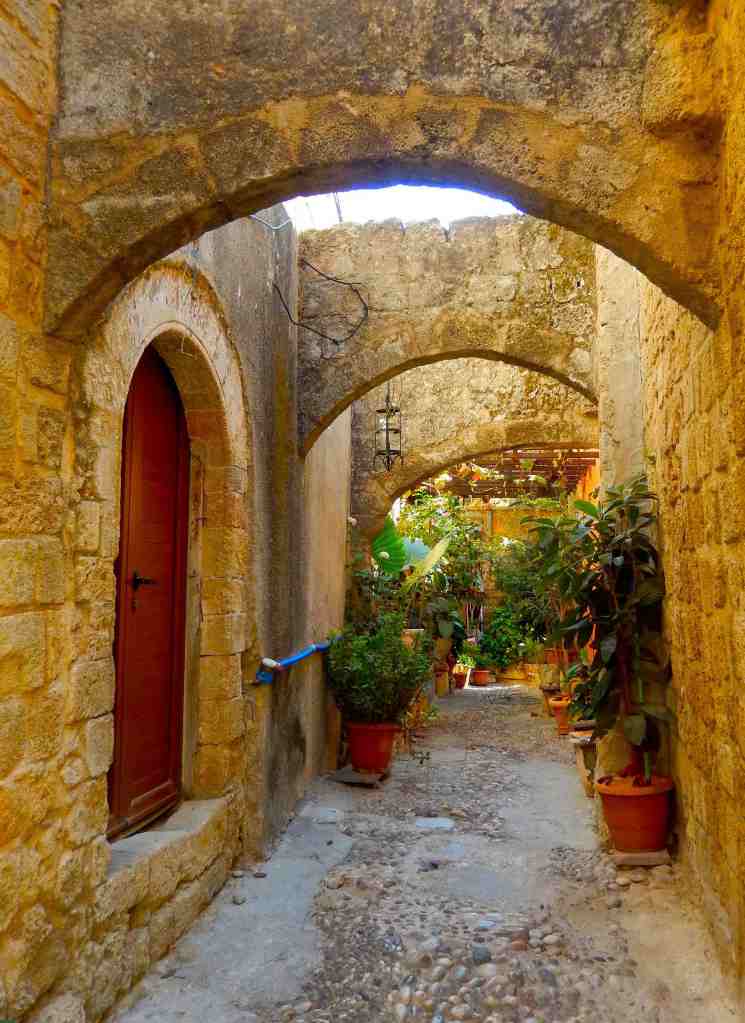
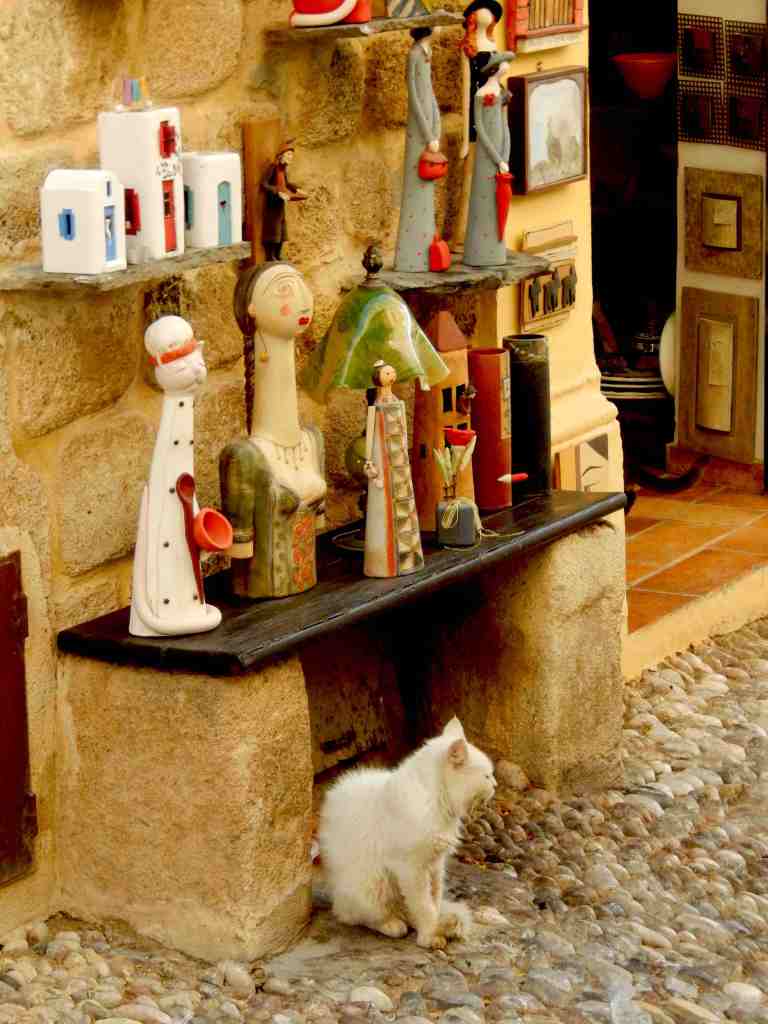
There are only walking streets inside the walls of the old city with an occasional motor bike or scooter permitted. Wander through paved medieval streets and alleys while visiting historical monuments. The winding streets are lined with many taverns, restaurants, galleries and shops.
Where Your Ship Docks
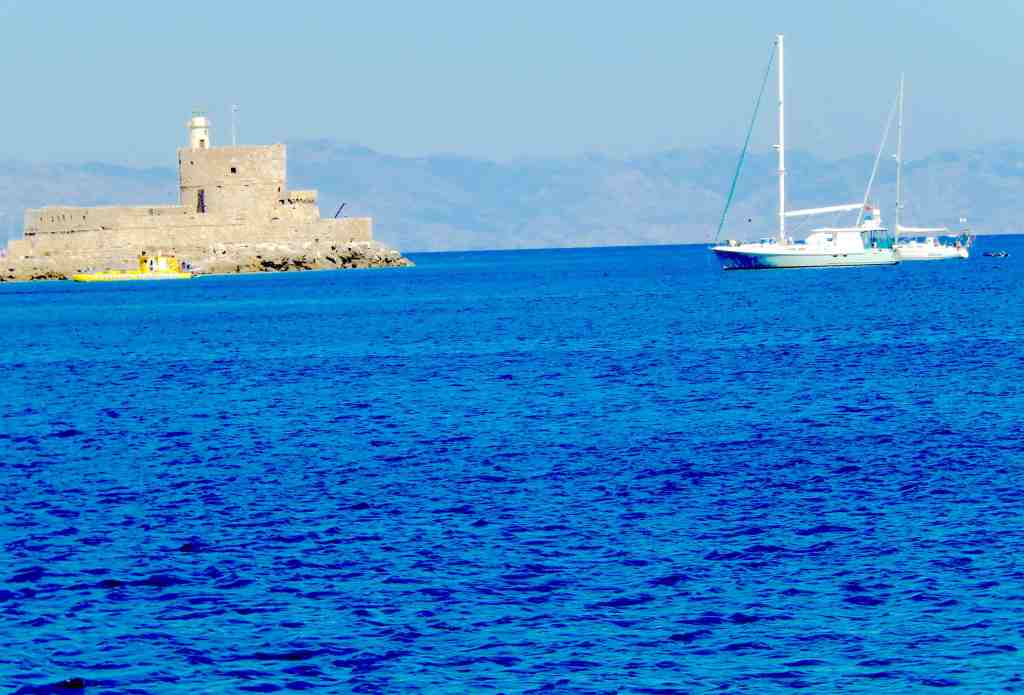
The island of Rhodes is about forty miles in length and cruise ships dock at the far north end only a short walk from the Medieval City of Rhodes. The medieval city is far and away the island’s major attraction and became a UNESCO World Heritage site as the largest and best preserved medieval fortified city in Europe! The pier is situated to be convenient to the medieval city with a nice seaside walkway public facilities just inside
Transportation
For a day visit to the Medieval City of Rhodes a leisurely walk is all that’s needed. If you would like to get out and see the island there are a number of rental car agencies right at the pier and there are taxis available also but be sure and negotiate fare before starting out.
Currency
Rhodes is part of Greece and the local currency is the Euro. Generally US and Canadian Dollars are not taken but credit cards are widely used and there are numerous ATM’s available.
Attractions
The Palace of the Grand Master of the Knights of Rhodes: one of the first castles built by the knights. Inside, you will discover a museum dedicated to Rhodes’ History and the Grand Master’s apartment, with its magnificent mosaic floors.
The Street of the Knights: there, each of the languages had its own inn (also called “auberge” or “palatial residence”). You will discover the Inn of the Tongue of France, or the Inn of the Tongue of England for example.
The Archaeological Museum of Rhodes is located in the medieval Hospital of the Knights. There, you will find many ancient objects found in Rhodes and the other Dodecanese Islands.
The Roloi Clock Tower, features beautiful views of the Old City from the top.
The Byzantine Art Museum displays many frescoes and icons from the Byzantine period.
Church of Agia Triada (Holy Trinity) Erected sometime between the late 15th and early 16th century this church is situated on Leonidou Rodiou square. Some of the original frescoes that once decorated its interior have been preserved
Agia Aikaterini, originally St. Catherine’s Cathedral it was built in the 14th century, and converted to a Moslem mosque when the Ottomans captured Rhodes in1522. It’s said to be the first Christian church to be converted to a mosque. Süleyman the Magnificent prayed at this mosque after he conquered Rhodes.
The Suleyman Mosque, built during the Turkish occupation of Rhodes.
In the modern city of Rhodes, you will find vestiges of the Rhodes’ Acropolis, located about a mile from the medieval city, on Monte Smith. There, you can see the remains of the Stadium, the Theatre and the Pythian Temple of Apollo. This archaeological site is small, but admission is free.


















 The Intentional Travelers