Hoi An, Vietnam was a major trading port in the 17th century. The Japanese Bridge, also locally referred to as the Cau Pagoda, was built with help from a Japanese businessman. Today it remains a symbol of the influence the Japanese had in Vietnam back then. The bridge was originally constructed as a symbolic gesture of peace to bring together the Japanese community with the Chinese quarter that were divided by a small stream. In addition there’s a legend about the bridge and a monster called Namazu, a Japanese mythological creature who can cause earthquakes and floods. Hoi An is today an interesting town not far from the beaches and modern city life of Da Nang. The town offers a great assortment of craft, clothing and fashion accessory shops.
Join us as we visit historic treasures, natural wonders and vibrant cities set against backdrops that are endlessly changing and visually magnificent. Celebrate a world of travel experiences with these decorating accessories that are perfect for framing.
Join Us – We understand that the last thing you may want is more emails cluttering up your inbox, but we promise we’ll work hard to make this worth your while. Give us a try and if we don’t live up to our promise all you need do is click the unsubscribe link in our emails.
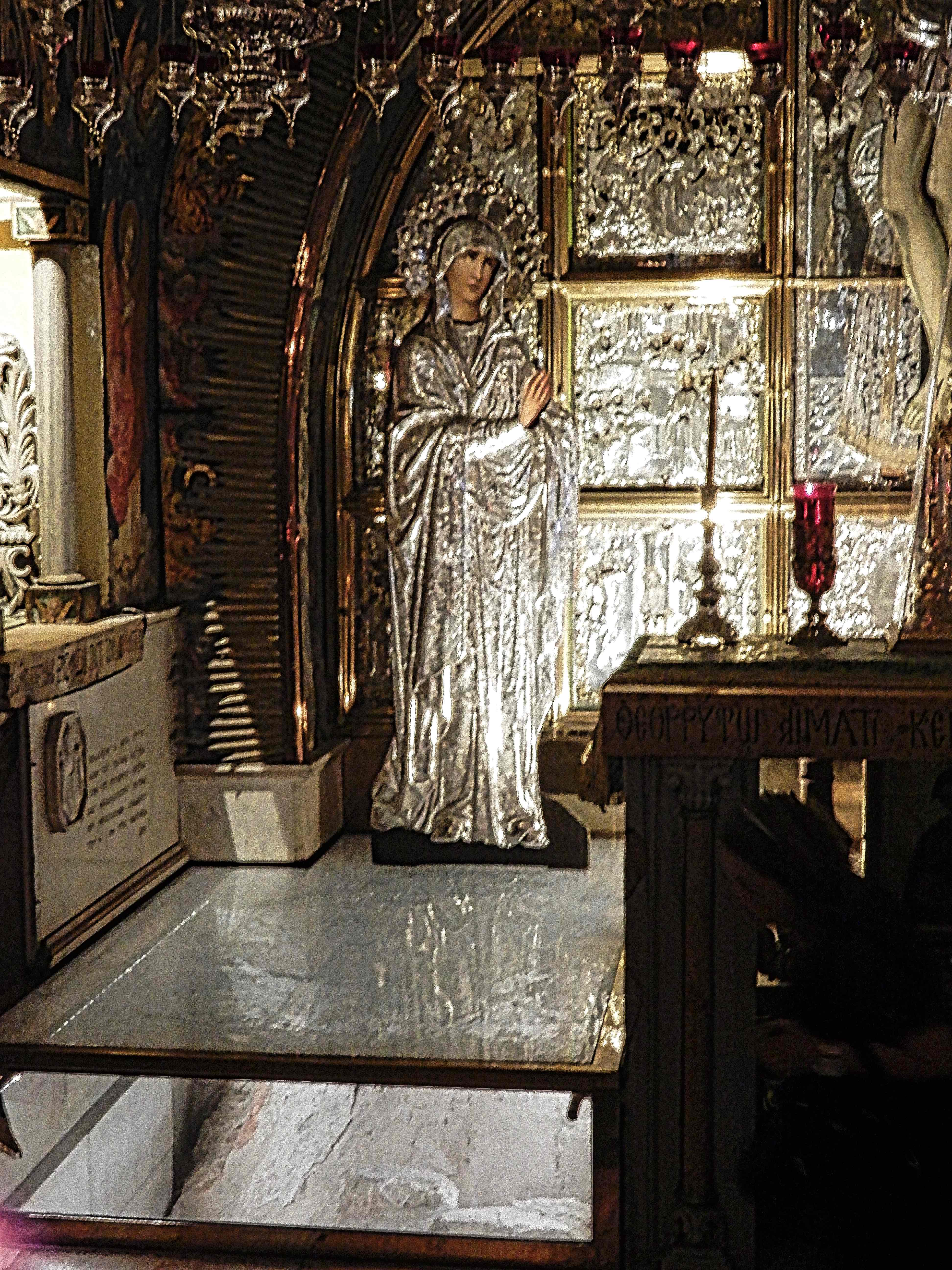
Without question the holiest site in all of Christendom is located in the Christian Quarter of Jerusalem. It represents the location where Jesus was crucified and where his body was laid to rest. Today there is a high level of certainty that the location has been actually identified.
The Church of the Holy Sepulchre
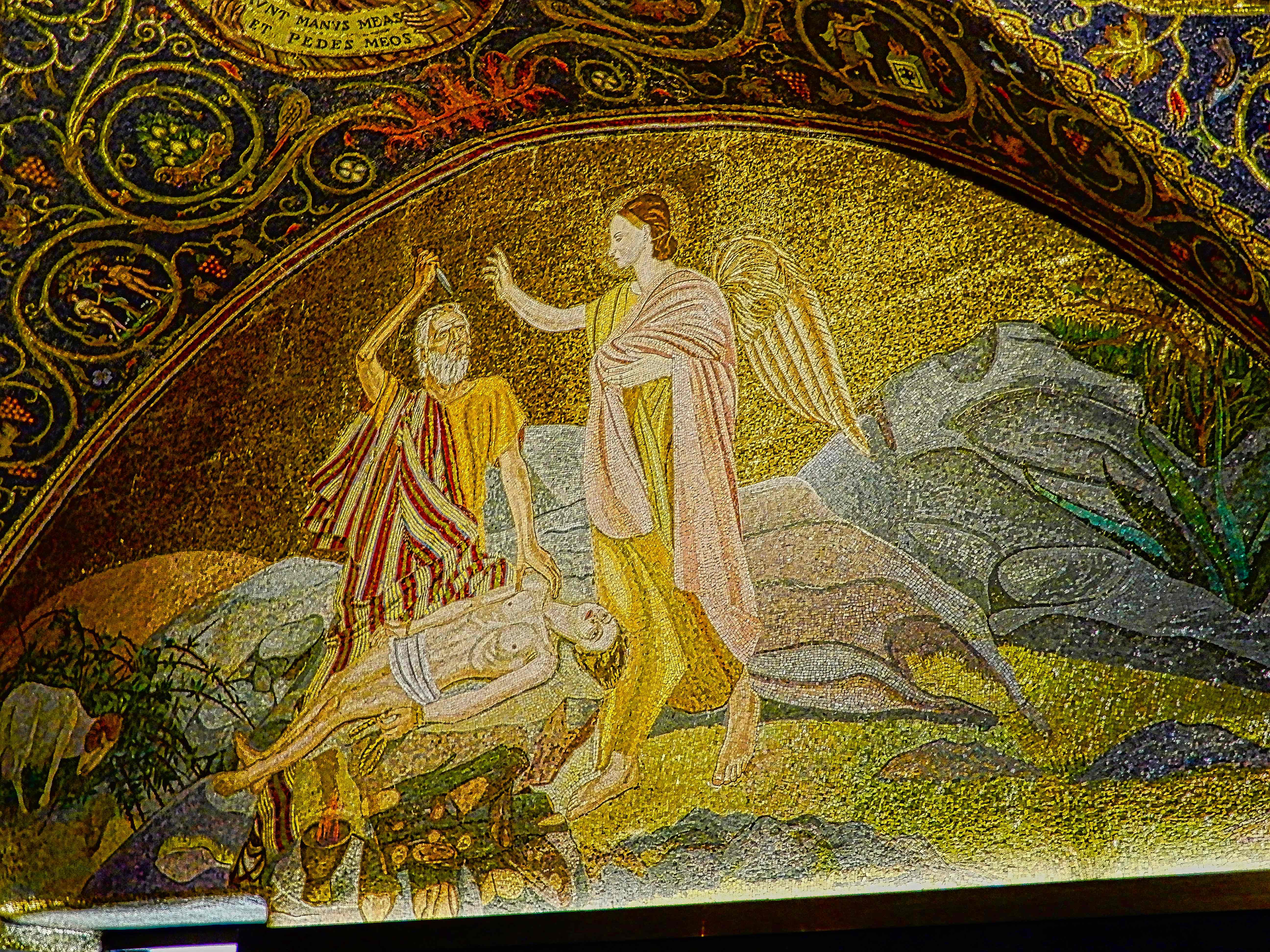
The Church of the Holy Sepulchre is a church in the Christian Quarter of the Old City of Jerusalem. In the fourth century A.D., the Church of the Holy Sepulchre was built at the site known as Golgotha as identified by the Roman Emperor Constantine’s mother, Helena. it contains two sites considered holy in Christianity; the site where Jesus was crucified, also known as Calvary or Golgotha, and Jesus’s tomb, which is where he was buried and resurrected.
Golgotha is Aramaic for “Skull” and was also called Calvary, from Latin calva meaning a “bald head” or “skull”. It is a skull-shaped hill in old Jerusalem and the historically established site of Jesus ‘ crucifixion. The hill is actually incorporated into the Church of the Holy Sepulchre. It is referred to in all four Gospels ( Matthew 27:33, Mark 15:22, Luke 23:33, and John 19:17).
The Tomb Shrine Inside The Church
The tomb were Jesus body was placed after his death is located just below Golgotha. The Bible says Jesus was laid in a tomb “hewn out of the rock” (Mark 15:46).
A recent major archaeological discovery adds credence to the belief that the tomb in The Church of the Holy Sepulchre was used around the time of the death of Jesus rather than claimed other dates from previous findings. Experiments were conducted on mortar material that was recently found between the limestone surface of the tomb and marble slab marking the tomb. It was dated to the time of Emperor Constantine who ordered the original The Church of the Holy Sepulchre to be built. The results of these experiments prove that this mortar dates back to 345 AD, which supports the claims made by the Roman Emperor’s mother.
The Church of the Holy Sepulchre underwent several major phases of construction, what began at the place of execution and burial in Jerusalem, has grown over time into a complex church. First, in the fourth century A.D., it was erected as the Constantinian Church of the Resurrection; next, in the 11th century, following fires and earthquakes it was reconstructed; and in the 12th century, as the Church of the Holy Sepulchre following new changes started during the era of the Crusader kings. That was the final renovation and is what you visit here today.
Diagram Of The Church of the Holy Sepulchre
The present-day church complex joins together numerous chapels, Stations of the Cross, and historical features.
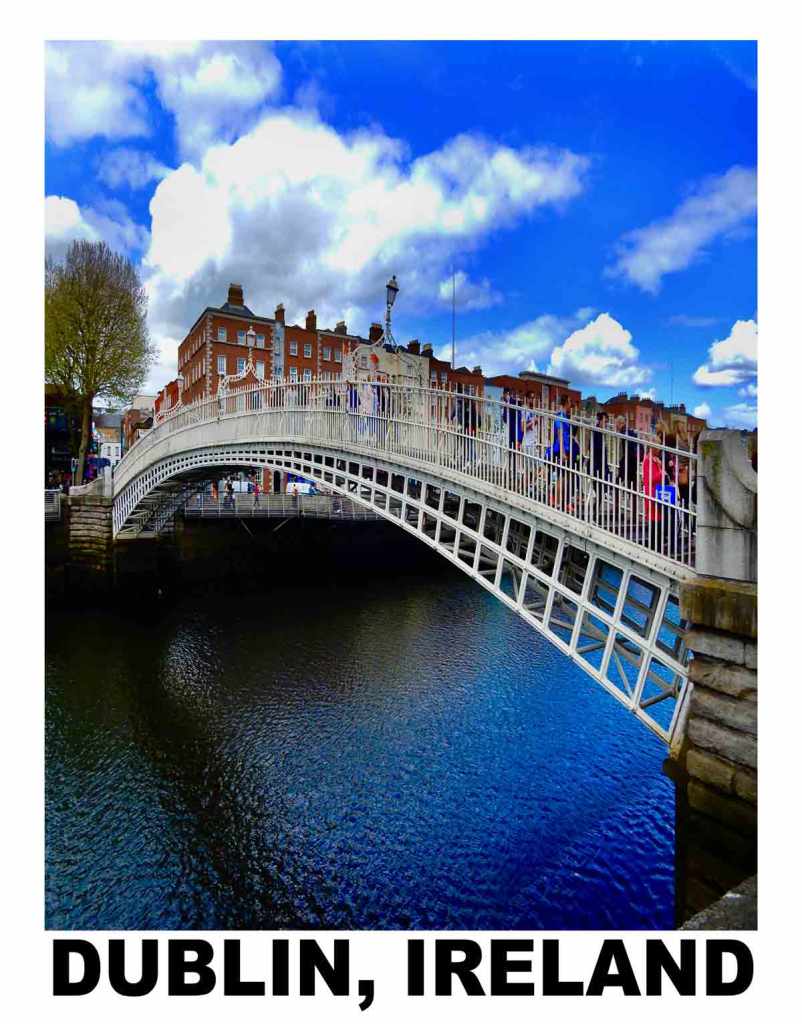
In Dublin, Ireland there is a famous pedestrian bridge called the Ha’penny Bridge. It is one of the more famous symbols of Dublin and is over 200 years old (1816). The sweeping arch of the iron bridge spans the Liffey River in downtown and is a protected historic landmark.
Come along as we explore historic treasures, natural wonders and vibrant cities around the world set against backdrops that are endlessly changing and visually magnificent. Celebrate a world of travel experiences with us.
Join Us – We understand that the last thing you may want is more emails cluttering up your inbox, but we promise we’ll work hard to make this worth your while. Give us a try and if we don’t live up to our promise all you need do is click the unsubscribe link in our emails.
A recent incident and a conversation with a travel friend highlighted the importance of international travel insurance.
Please note that this is written with a focus on American travelers but we are also aware of similar plans offered in Canada and other countries. You will need to explore options based on your home country.
There are a number of different categories and types of travel insurance that apply to a number of travel plans and that can complicate the insurance decision. Generally, insurance is available to cover problems in five specific areas:
Trip Cancellation and Interruption
Theft of Property
Health and Accident coverage
Medical Repatriation
Life insurance
In truth, most travelers we talk to are too casual in deciding on travel insurance. This articles will focus on three main areas. First is a concern about having to cancel an expensive trip at the last minute and losing deposits and prepaid money. The second is travel interruption caused by missing difficult air connections or a cruise sailing. Lastly are medical cost concerns while being out of the country.
One area that requires attention is exactly what are the conditions where the coverage takes affect and where it doesn’t apply. Insurance policies are very specific legal documents and all too often coverage we thought we had doesn’t apply in too many circumstances. Just recently in the news were a number of travelers faced with giving up their travel costs or putting their health in jeopardy because of the COVID pandemic.
As the Corona virus started spreading around the world and countries started closing their ports, cruise ships and their passengers were placed in an interesting position. Initially cruise ships started adjusting their itineraries instead of canceling cruises. Passengers that were worried about their health and wanted to cancel their cruise soon discovered that insurance companies concluded that those concerns were not covered by the cruise cancellation insurance and offered no refund.
The cost of insurance is not insignificant and everyone should evaluate the potential financial risk against the actual cost of the insurance policy. With a long cruise the cost could be very high and while the insurance could be costly the loss could be even more significant if you have to cancel or should miss a sailing.
One area where many people leave themselves seriously in jeopardy involves international medical emergency insurance. Far too many people think that their health insurance will cover them out of the country while that is rarely the case. Unless your health insurance specifically indicates that it covers international travel you are risking a catastrophic loss. In one example we know about a retired couple traveling in Europe believing that Medicare and their supplement insurance covered them. They learned the terrible truth after a serious stroke left them with a quarter of a million dollars in medical bills.
Cruise Insurance Versus A General Policy
Where you buy your insurance does have an impact on what it cost and what’s covered. If you are booking a cruise the easiest decision is to add the cruise companies insurance to your purchase. Our recommendation is to comparison shop before you book your travel. You will often find that independent travel insurance companies may be a better option. One of the largest insurance companies in this area is Allianz. Also check with you general insurance company – many also offer travel packages or have affiliations with travel insurers. Here are links to three major insurers:
Because many cruises involve international destinations most cruise policies provide medical cost reimbursement (up to specific amounts) and property theft and loss protection. Some also, but not all, cover the cost of medical repatriation.
Specific air travel insurance mainly is focused on the life insurance component and not on medical costs with trip interruption often being the airlines responsibility.
Because we frequently travel internationally our health insurance does have an international travel component that pays up to $50,000 for each of us with a lifetime cap of $50,000.
We also carry an annual medical evacuation and repatriation policy that over the past number of years has seemed reasonably priced to us. The cost for the two of us has been less than $200 for the annual plan and offers $500,000 in coverage. It should be noted that this is not medical insurance and will not pay for doctors and hospitals except for expenses in getting you and your companion home. One of the largest is EA+ Emergency Assistance Plus with their website HERE.
SpecificSituational Considerations
Cruise only – Say you are taking a Mediterranean cruise with flights into and out of the sailing port. A cruise insurance policy usually provides the appropriate amount of coverage in most areas. You can, in some instances, be charged for medical services while onboard and will have to submit documents to get reimbursed under these insurance policies. Most cruise policies also cover medical expenses if you need care in a local clinic or hospital while a passenger on the cruise with some covering medical evacuation and repatriation. The same policy usually extends coverage while on booked cruise/land packages and the flights to and from the cruise port.
Cruise with an extended land itinerary – If you are taking that Mediterranean cruise but then plan to go off on your own for a couple of weeks in Europe, chances are that cruise policy will terminate on disembarking the ship. For that reason you need to understand that you will not be covered for medical emergencies above the international coverage and limits of your American health insurance policy. For retirees Medicare does NOT cover international medical care.
Frequent international travel – If you are a frequent international traveler it is most important to analyze your risk and how much you are comfortable paying for insurance. You have options of buying a complete medical plan (Geoblue) , a medical evacuation plan (EA+) or a complete annual insurance policy (Allianz, Amex) that offer some coverage in virtually all areas. One caution is that most annual policies only provide coverage while on trips of less than 60 days each.
In our case we take a number of cruises and international trips a year and our biggest concerns are medical emergencies and evacuation, so we keep an annual MedEvac plan in place. We believe our Medicare supplement offers adequate (we hope) medical coverage for now and will buy cruise policies on individual trips as mentioned above.
There are also complete annual travel policies, which should be considered if you travel internationally often. Generally they have lower limits of coverage, especially in areas like trip cancellation and property loss. For example most annual policies limit cancellation protection to $2,000 per year. Here is an example from a recent annual generic quote provided by Alianz for a typical retired couple.
Special Note:26 European countries require health insurance to visit.
In early 1995 twenty-six European countries signed an agreement that abolished enforcing their borders between member states. As a result the area mostly functions as a single country for international travel purposes, with a common visa policy. Anyone from a country that requires them to apply for the Schengen visa to enter Europe must provide proof of international health insurance.
The 26 countries in the zone are Austria, Belgium, Czech Republic, Denmark, Estonia, Finland, France, Germany, Greece, Hungary, Iceland, Italy, Latvia, Liechtenstein, Lithuania, Luxembourg, Malta, Netherlands, Norway, Poland, Portugal, Slovakia, Slovenia, Spain, Sweden, and Switzerland.
A letter from your insurance company is required, and this needs to mention that you will be covered in Europe for any medical, evacuation and repatriation expenses during your whole stay. The medical expenses have to be covered for at least 30,000 Euros.
Americans and Canadians along with a number of other nationals do not need this visa to visit. Because of the immigration and pandemic crisis of the past year there have been a number of Schengen countries that are again enforcing their borders on an emergency basis and may have modified their health coverage requirements.
This post was prompted by a travel friend contacting me wanting to know what travel insurances we use. We compared notes and kicked around some scenarios and decided it was a good subject to explore in greater depth.
Also thanks to a visitor from Reviews.com who directed us to their extensive article on buying travel insurance and if you have questions about specific recommendations I would highly recommend reading this article from Reviews.comHERE.
INSURANCE AND LESSONS FROM COVID-19
A number of recent travel articles about travel and insurance are now recommending “Cancel for Any Reason” Insurance but this may be a bad choice especially since most major cruise companies, in an effort to get bookings back, have offered last minute cancellations as part of their policies. You need to check current terms.
Carry More Identification Than Your Passport And/Or Drivers License
Carrying emergency contact information, particularly when traveling internationally is very important. Even if you have your passport and drivers license with you it may be difficult, in an emergency, to know who your emergency contacts are and how to reach them. That information isn’t part of your passport or your divers license. We recommend that you use an easily recognizable ID card with important medical and contact information like pictured here.
In addition most travel insurance policies will only reimburse you for canceling your cruise under specifically identified conditions. Most of those involve medical issues with you or immediate family. Some policies also provide for work related emergencies. Based on our experience with COVID-19 we now see a number of issues we hadn’t considered when looking at travel insurance.
Our Experience Involving Early COVID issues
We were recently booked on a pair of cruises that went from Singapore to Rome with 14 ports of call and had paid in full (inside 90 days). As coronavirus issues began to appear our cruising companions cancelled early on and got full credit towards a future cruise. As things began to get worse we contacted the cruise line and they were no longer agreeing to issue credits. 48 hours later they cancelled the cruise, gave refunds along with future cruise credits at 125%. After that we contacted our independent insurance carrier and were informed that they weren’t accepting claims involving coronavirus but might consider our air portion because our cruise was cancelled. After that we just contacted the airlines and got future credits to use within 12 months.
Insurance And Travel Advisories
It seems that under standard cancellation coverage, you cannot cancel due to travel advisories from the CDC, State Department or other government agencies. You can’t cancel because the cruise line changed the itinerary, or for fear of terrorism, or concerns about epidemics or natural disasters. Before booking a policy you should now investigate these issues for coverage.
CFAR Insurance
Because of these issues recent travel articles are suggesting that CFAR (cancel for any reason) policies are the answer. If you want the freedom to cancel your trip for any reason at all — and still get reimbursed for travel costs there are CFAR policies available. Looking into this option we’ve discovered many aren’t covering as much as theses articles suggest.
We have another 30 day cruise scheduled in the fall across the Pacific and around Japan so we decided to investigate CFAR policy costs for that itinerary. Our current standard policy covering that cruise cost us about $350. We received a CFAR quote from the same carrier that would reimburse our “deposits” only should we cancel for any reason for a premium of $1,500 but would not offer reimbursement the two weeks before the trip. That exceeds our currently paid deposits by almost $800 with questions about the actual costs, in full, being covered making this a bad deal.
If anyone finds CFAR insurance that makes more sense we’d love to hear about it.
Insurance Is Still Important
We still believe travel insurance should be an important part of your travel plan. Its benefits usually include trip interruption, emergency medical and emergency transportation, travel delay, lost luggage and more but we need to understand there are major exclusions like pandemics, natural disasters, insurrections and government actions.
You also need to understand that in order to file a claim you need to submit documentation. That can include proof of your property loss and its value like purchase receipts along with a police/security report of the incident. Health claims need doctor and hospital reports and bills.
The burden is on all of us travelers to educate ourselves on things like terrorism, tropical storms and disease outbreaks affecting our vacation destination. Also if you choose to buy standard coverage after an event becomes “known” even if you didn’t know about the situation, your benefits could be severely limited, making that travel insurance policy almost useless.
Join Us – We understand that the last thing you may want is more emails cluttering up your inbox, but we promise we’ll work hard to make this worth your while. Give us a try and if we don’t live up to our promise all you need do is click the unsubscribe link in our emails.
Recently we spent a little over a week visiting the Rhône region of France which extends from Marseille, through historic Avignon, Arles, the Roman city of Vienne, Lyon, France’s culinary heart and west of the Rhône in the Beaujolais wine region including visits to some quaint Provençal villages.
The Rhône River winds its way from Switzerland into France beginning at the Rhône Glacier in Valais, and flows to join the Saône River in the city of Lyon. From there it winds on past some of the region’s most significant landmarks dating back to the Roman era. Going on south past the Ardèche, the river moves past expanses of lavender and sunflower fields before it empties into the Mediterranean west of Marseille.
Most people, when they think of France, picture Paris, the French Riviera – Cote d’Azur, the beaches of Normandy, not Roman ruins and Medieval castles. Travel up the Rhône through the heart of France and you will discover Avignon, the “City of Popes,” and the historic Papal palace, the massive Roman Colosseum of Arles, still hosting bull fights today, the ancient Roman city of Vienne, a number of castles and riverside villages dating back over eight hundred years.
If you are thinking of visiting the region we might recommend going in late June or early July. Usually the temperatures are moderate (the 115° weather in 2019 is not common), the skies are clear and there are a number of fantastic seasonal festivals well worth attending.
Avignon
Avignon, the “City of Popes” is usually the starting point for the river cruises going north. This walled city’s name dates dates back to the 6th century BC. The first citation of Avignon (Aouenion) was made by Artemidorus of Ephesus. The historic walled city, which includes the Palais des Papes, the cathedral, and the Pont d’Avignon, became a UNESCO World Heritage Site in 1995. The Papal Palace, the medieval monuments and the annual Festival d’Avignon have helped to make the town a major centre for tourism.
The Festival d’Avignon is an annual festival held every summer in July in the courtyard of the Palais des Papes and other locations in the city. Founded in 1947 it is the oldest festival in France and one of the world’s largest. In addition to the official festival, often hundreds of shows are presented in Avignon at the same time of the year adding to the festivities.
Arles
Near to Avignon is Arles. The Arles Colosseum and Amphitheater are one of the most popular tourist attraction in this city. They were built around the 1st century BC and the Colosseum was capable of seating over 20,000 spectators on three tiers. Today it has been mostly restored and is home to regular bullfights. After the Roman Empire fell the amphitheater became a shelter for the population of Arles and the Colosseum was transformed into a fortress with four towers added.
Tournon Lamastre Steam Railroad
In the Rhone valley you’ll also find the Tournon Lamastre Steam Railroad line. Enjoy full day or half day excursions on the Train of Ardèche as it travels through the mountainsides overlooking the gorges.It features open-air cars (in the warm months), beautifully restored old steam engines and incredible scenery. The train travels through rugged scenery in Doux Gorges, in Saint-Jean-de-Muzols. At the station of Colombier le Vieux – Saint-Barthélémy le Plain, the locomotive has to be turned round on a turntable and placed at the front of the train for the return trip.
Wines of the Rhône
Nobody should spend time visiting this region of France without sampling French wine. Some of the more widely recognized names include Côtes du Rhône, Châteauneuf-du-Pape and Beaujolais.
Côtes du Rhôneare the basic AOC (Appellation d’Origine Contrôlée) wines of the Rhône region, and exist as red, white and rosé wines, generally dominated by Grenache for reds and rosés, or Grenache blanc for whites.
Châteauneuf-du-Pape Not far from Avignon is a region famous for the production of red wine classified as Châteauneuf-du-Pape Appellation d’origine contrôlée which is produced from grapes grown in the commune of Châteauneuf-du-Pape and in portions of four adjoining communes. The name comes from the designation of the wine of the Pope. A ruined medieval castle sits above the village and was built in the 14th century for Pope John XXII, the second of the Popes to reside in Avignon. None of the subsequent Avignon Popes stayed in Châteauneuf but after the schism in the church in 1378 the antipope Clement VII sought refuge in the castle.
Beaujolais Our trip included time visiting the Beaujolais wine region to the north of Lyon along with a number of quaint Provençal villages. Today the region is known world wide for the popular Beaujolais nouveau. It is the most popular vin de primeur, fermented for just a few weeks before being released for sale on the third Thursday of November. This ‘Beaujolais Nouveau Day’ is recognized everywhere, with races to get the first bottles to different markets around the globe.
The Village of Beaujeu
The village of Beaujeu is the heart of the region and where Beaujolais gets its name. The French tradition is to name a region after a central town. This region is famous for its growing conditions with lots of sunshine and its granite-based soils lending a unique character to their wines. The Gamay grape is used to make all Beaujolais wines with the exception of white Beaujolais, or Beaujolais blanc, which is made of Chardonnay grapes. Most of the harvesting is made manually in the Beaujolais region. Handpicking means entire bunches are vatted to allow a specific sort of maceration. This winemaking is specific to the Beaujolais region.
Traveling through the hilly Beaujolais we were struck by the shear number of acres devoted to vineyards. From whole hillsides down to small backyard vineyards, grapes are growing everywhere and most everything seems to involve wine. We visited the Chateau de Varennes for a wine tasting. It’s an estate that is listed as a “VMF Historic Heritage” site and has been in the same family since 1809 with buildings dating back to the 11th Century. The Château itself is a beautiful period castle from the 16th century located in the heart of vineyards and overlooking the Samson valley. It’s a beautiful location with panoramic terrace views and an impressive Renaissance entry court.
We recommend putting the Rhône Region on you list of places to visit and the trip can be combined with a river cruise on a longboat. A great way to get an overview of the area.
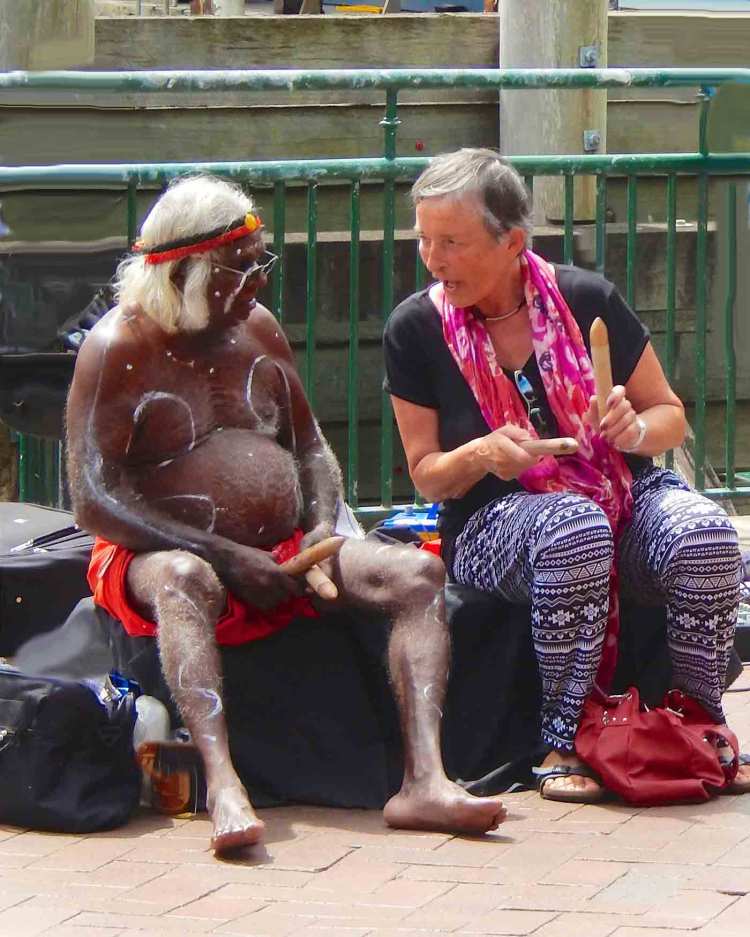
Photography is my obsession and when traveling the world often images just present themselves. Most are random impressions with little context but some seem to suggest at a self contained story. Still others leave me wanting to find out more about what I stumbled upon. Here’s a glimpse of just why we travel…
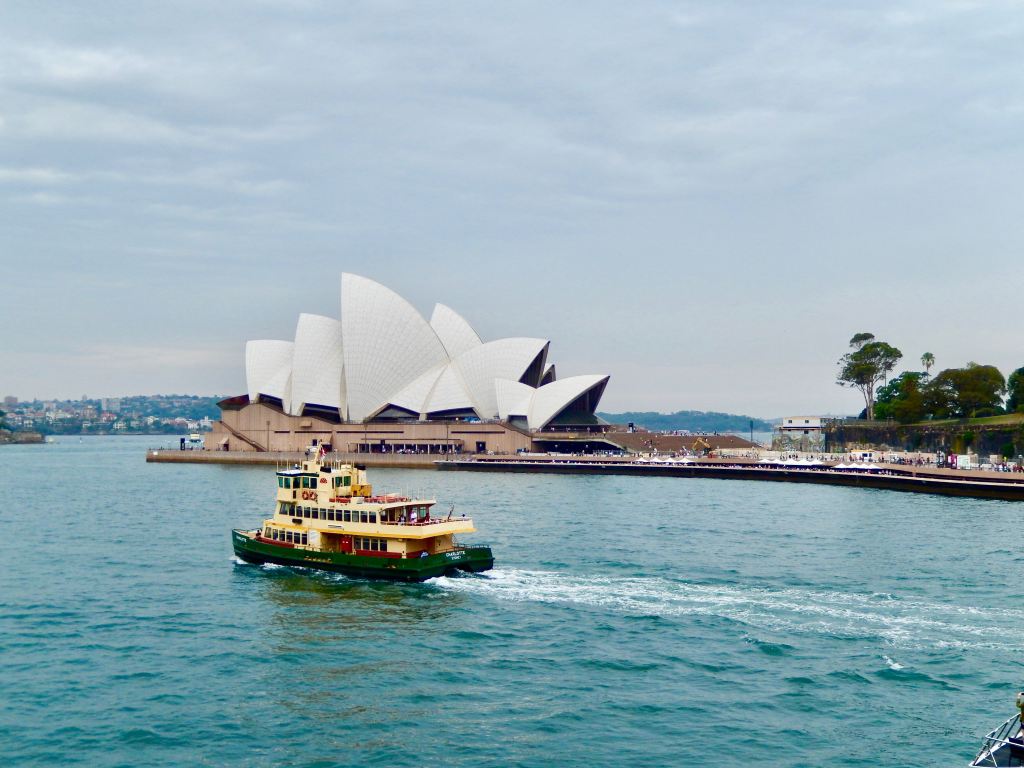
An Aborigine offers music instruction to a tourist near the Sydney Opera House. I know, but this is legit. These are actually Aboriginal clapsticks, bilma, clappers, or music sticks, and they are a traditional Australian Aboriginal instrument usually used in conjunction with the didgeridoo. They’re also used to maintain rhythm in chants, often as part of an Aboriginal ceremony and often are ornately carved or colorfully decorated.
Join us as we visit historic treasures, natural wonders and vibrant cities set against beautiful backdrops that are endlessly changing.
Join Us – We understand that the last thing you may want is more emails cluttering up your inbox, but we promise we’ll work hard to make this worth your while. Give us a try and if we don’t live up to our promise all you need do is click the unsubscribe link in our emails.
















 The Intentional Travelers