The Rhône River Valley

A Tour Through The Center Of France

Recently we spent a little over a week visiting the Rhône region of France which extends from Marseille, through historic Avignon, Arles, the Roman city of Vienne, Lyon, France’s culinary heart and west of the Rhône in the Beaujolais wine region including visits to some quaint Provençal villages.

The Rhône River winds its way from Switzerland into France beginning at the Rhône Glacier in Valais, and flows to join the Saône River in the city of Lyon. From there it winds on past some of the region’s most significant landmarks dating back to the Roman era. Going on south past the Ardèche, the river moves past expanses of lavender and sunflower fields before it empties into the Mediterranean west of Marseille.

Most people, when they think of France, picture Paris, the French Riviera – Cote d’Azur, the beaches of Normandy, not Roman ruins and Medieval castles. Travel up the Rhône through the heart of France and you will discover Avignon, the “City of Popes,” and the historic Papal palace, the massive Roman Colosseum of Arles, still hosting bull fights today, the ancient Roman city of Vienne, a number of castles and riverside villages dating back over eight hundred years.

If you are thinking of visiting the region we might recommend going in late June or early July. Usually the temperatures are moderate (the 115° weather in 2019 is not common), the skies are clear and there are a number of fantastic seasonal festivals well worth attending.

  Avignon

Avignon, the “City of Popes” is usually the starting point for the river cruises going north. This walled city’s name dates dates back to the 6th century BC. The first citation of Avignon (Aouenion) was made by Artemidorus of Ephesus. The historic walled city, which includes the Palais des Papes, the cathedral, and the Pont d’Avignon, became a UNESCO World Heritage Site in 1995. The Papal Palace, the medieval monuments and the annual Festival d’Avignon have helped to make the town a major centre for tourism.

The Festival d’Avignon is an annual festival held every summer in July in the courtyard of the Palais des Papes and other locations in the city. Founded in 1947 it is the oldest festival in France and one of the world’s largest. In addition to the official festival, often hundreds of shows are presented in Avignon at the same time of the year adding to the festivities.

Arles

Near to Avignon is Arles. The Arles Colosseum and Amphitheater are one of the most popular tourist attraction in this city. They were built around the 1st century BC and the Colosseum was capable of seating over 20,000 spectators on three tiers. Today it has been mostly restored and is home to regular bullfights. After the Roman Empire fell the amphitheater became a shelter for the population of Arles and the Colosseum was transformed into a fortress with four towers added.

Tournon Lamastre Steam Railroad

In the Rhone valley you’ll also find the Tournon Lamastre Steam Railroad line. Enjoy full day or half day excursions on the Train of Ardèche as it travels through the mountainsides overlooking the gorges.It features open-air cars (in the warm months), beautifully restored old steam engines and incredible scenery. The train travels through rugged scenery in Doux Gorges, in Saint-Jean-de-Muzols. At the station of Colombier le Vieux – Saint-Barthélémy le Plain, the locomotive has to be turned round on a turntable and placed at the front of the train for the return trip. 


Wines of the Rhône

Nobody should spend time visiting this region of France without sampling French wine. Some of the more widely recognized names include Côtes du Rhône, Châteauneuf-du-Pape and Beaujolais.

Côtes du Rhône  are the basic AOC (Appellation d’Origine Contrôlée) wines of the Rhône region, and exist as red, white and rosé wines, generally dominated by Grenache for reds and rosés, or Grenache blanc for whites.

Châteauneuf-du-Pape Not far from Avignon is a region famous for the production of red wine classified as Châteauneuf-du-Pape Appellation d’origine contrôlée which is produced from grapes grown in the commune of Châteauneuf-du-Pape and in portions of four adjoining communes. The name comes from the designation of the wine of the Pope. A ruined medieval castle sits above the village and was built in the 14th century for Pope John XXII, the second of the Popes to reside in Avignon. None of the subsequent Avignon Popes stayed in Châteauneuf but after the schism in the church in 1378 the antipope Clement VII sought refuge in the castle.

Beaujolais Our trip included time visiting the Beaujolais wine region to the north of Lyon along with a number of quaint Provençal villages. Today the region is known world wide for the popular Beaujolais nouveau. It is the most popular vin de primeur, fermented for just a few weeks before being released for sale on the third Thursday of November. This ‘Beaujolais Nouveau Day’ is recognized everywhere, with races to get the first bottles to different markets around the globe.

The Village of Beaujeu

The village of Beaujeu is the heart of the region and where Beaujolais gets its name. The French tradition is to name a region after a central town. This region is famous for its growing conditions with lots of sunshine and its granite-based soils lending a unique character to their wines. The Gamay grape is used to make all Beaujolais wines with the exception of white Beaujolais, or Beaujolais blanc, which is made of Chardonnay grapes. Most of the harvesting is made manually in the Beaujolais region. Handpicking means entire bunches are vatted to allow a specific sort of maceration. This winemaking is specific to the Beaujolais region.

Traveling through the hilly Beaujolais we were struck by the shear number of acres devoted to vineyards. From whole hillsides down to small backyard vineyards, grapes are growing everywhere and most everything seems to involve wine. We visited the Chateau de Varennes for a wine tasting. It’s an estate that is listed as a “VMF Historic Heritage” site and has been in the same family since 1809 with buildings dating back to the 11th Century. The Château itself is a beautiful period castle from the 16th century located in the heart of vineyards and overlooking the Samson valley. It’s a beautiful location with panoramic terrace views and an impressive Renaissance entry court.
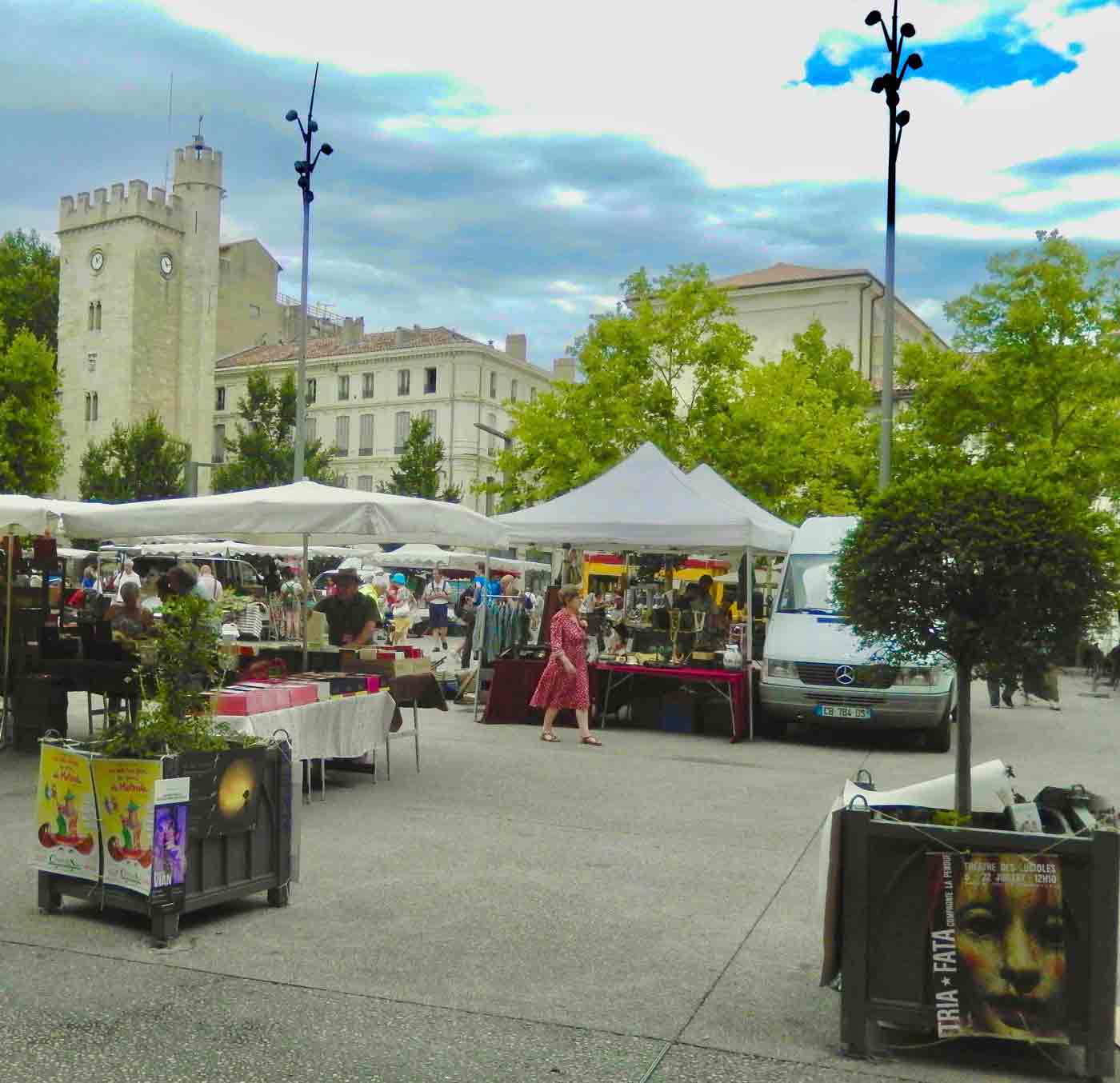
We recommend putting the Rhône Region on you list of places to visit and the trip can be combined with a river cruise on a longboat. A great way to get an overview of the area.

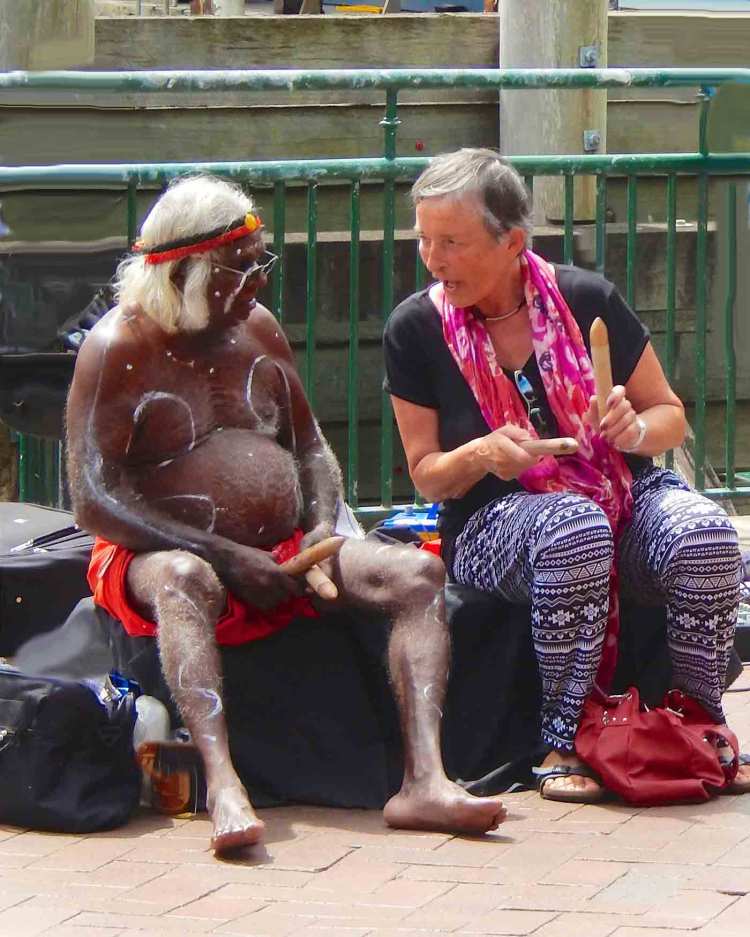
Random Images • Aboriginal Music Lesson In Sydney

Photography is my obsession and when traveling the world often images just present themselves. Most are random impressions with little context but some seem to suggest at a self contained story. Still others leave me wanting to find out more about what I stumbled upon. Here’s a glimpse of just why we travel…

An Aborigine offers music instruction to a tourist near the Sydney Opera House. I know, but this is legit. These are actually Aboriginal clapsticks, bilma, clappers, or music sticks, and they are a traditional Australian Aboriginal instrument usually used in conjunction with the didgeridoo. They’re also used to maintain rhythm in chants, often as part of an Aboriginal ceremony and often are ornately carved or colorfully decorated.

Join us as we visit historic treasures, natural wonders and vibrant cities set against beautiful backdrops that are endlessly changing.

Join Us – We understand that the last thing you may want is more emails cluttering up your inbox, but we promise we’ll work hard to make this worth your while. Give us a try and if we don’t live up to our promise all you need do is click the unsubscribe link in our emails.

International Hotel Reward Programs

Like everything else, the hotel/hospitality industry has evolved over time in size and approach to marketing. They’ve grown from a handful of major names like Hilton and Holiday Inn, each with a reputation based on the market segment they try to serve, into mega-corporations. These newer brands feature large collections of brands ranging from economical to deluxe accommodations. Many of these brands are now multi-national with many being truly global, and because they all offer a range of types and price points their marketing had to change to keep a competitive edge.

Today every major hotel chain has a loyalty reward program with the goal of turning you into a returning guest. Most every program is free to join, but they are all not the same as there can be different rules, earning point rates and comparative point values. In addition there are a variety of other benefits offered from free wifi, freebies on arrival and special discounts. How much you can save depends on your level of travel and how much you’re comfortable spending per night and especially how often you stay in hotels.

What follows are the top five international hotel reward programs that all offer the ability to earn and use the points when traveling internationally. Their scores are based on WalletHub.com scores, calculated for equivalent dollar values.

Wyndham Rewards

WalletHub Score 72.40 Equivalent Earned Per $100 Spent $13.46

For every qualified stay at a Wyndham Rewards hotel or vacation club resort, you’ll earn 10 points per dollar or 1,000 points—whichever is more. Choose how you want to redeem your points with three simple free night tiers—7,500, 15,000, or 30,000 points per night. Wyndham Hotels and Resorts, Wyndham Grand, Dolce Hotels and Resorts, TRYP by Wyndham, Dazzler Hotels in Latin America, La Quinta hotels, Wingate by Wyndham, AmericInn, Ramada, Baymont, Microtel Inn & Suites by Wyndham, Days Inn, Super 8, Howard Johnson, Travelodge and Hawthorn Suites by Wyndham.

Radisson Rewards

WalletHub Score 65.95 Equivalent Earned Per $100 Spent $12.50

Free Award Nights starting at 9,000 points with no blackout dates on Standard Rooms. Members Only Rate – save up to 10% on the best available rate when you book directly on our Radisson’s website. Earn 20 points per US dollar spent on eligible stays. Redeem points for Free Award Nights, airline miles, gift cards, prepaid cards, and more. Brands include Radisson RED, Park Plaza, art’otel, Park Inn and Country Inn and Suites.

Best Western Rewards

WalletHub Score 63.71 Equivalent Earned Per $100 Spent $9.75

The Best Western Rewards program is divided into five levels: Blue, Gold, Platinum, Diamond and Diamond Select. •Worldwide Free Night Redemption • Points Never Expire • BWR® Exclusive Member Rates • Rich Rewards & Incentives – Earn points for redemptions including gift cards, free nights and one-of-a-kind adventures. Incorporates the Best Western branded properties along with, Glō®, Vīb® and Aiden® by Best Western.

Best Western has gone international in a big way and traveling internationally this is becoming our favorite choice in the moderate price category.

Choice Privileges

WalletHub Score 61.99 Equivalent Earned Per $100 Spent $11.63

Enjoy rewards beginning with your very first stay. Stay weekdays for extra perks like coffee cards and online shopping credits. Use your points your way, with reward options like free nights and gift cards. Save with member-only rates and exclusive offers. Elite members also receive bonus points or welcome gifts with every stay. Sleep Inn, Quality Inn, Rodeway Inn, and Comfort, Ascend Hotel Collection and Clarion.

Marriott Bonvoy

WalletHub Score 61.01 Equivalent Earned Per $100 Spent $10.89

Participating properties include The Ritz-Carlton and St. Regis on the luxury side, JW Marriott and Westin in the middle of the range, and MOXY and Element toward the budget end of the spectrum. Cost – Elite Gold no fee, Silver Elite and base level members must pay a flat fee of $10. Marriott Bonvoy Points can be used for free nights, airfare, car rentals, gift cards, and even online shopping.

When traveling with enough accumulated points this is our choice in many large international cities.

Accor Hotels

These hotels are part of an international group with properties around the globe. Their brands represent hotels from economy to luxury and the group is famous for offering special packages at remarkable rates.

Approximate WalletHub Score range 60 to 45. Earn from 5 to 35 points for every $15 spent depending on the reward status and the hotel chain.

The Accor group’s brands welcome you to over 100 countries throughout the world, in over 5,100 hotels for the most unforgettable stays. The group includes Mercure Hotels, Swissotel, Ibis, Greet, Adagio, Jo & Joe, Tribe and Novotel.

In Asia we’ve stayed a number of times at their Mercure Hotels (Singapore Mercure pictured above) and have been very impressed with the accommodations and the value. Their emailed special offers are always worth considering.

Visit the Accor website HERE

Join Us – We understand that the last thing you may want is more emails cluttering up your inbox, but we promise we’ll work hard to make this worth your while. Give us a try and if we don’t live up to our promise all you need do is click the unsubscribe link in our emails.

Selected Images • The Story Of Annie Moore

Photography is my obsession and when traveling the world often images just present themselves. Most are random impressions with little context but some seem to suggest at a self contained story. Still others leave me wanting to find out more about what I stumbled upon. Here’s a glimpse of just why we travel…

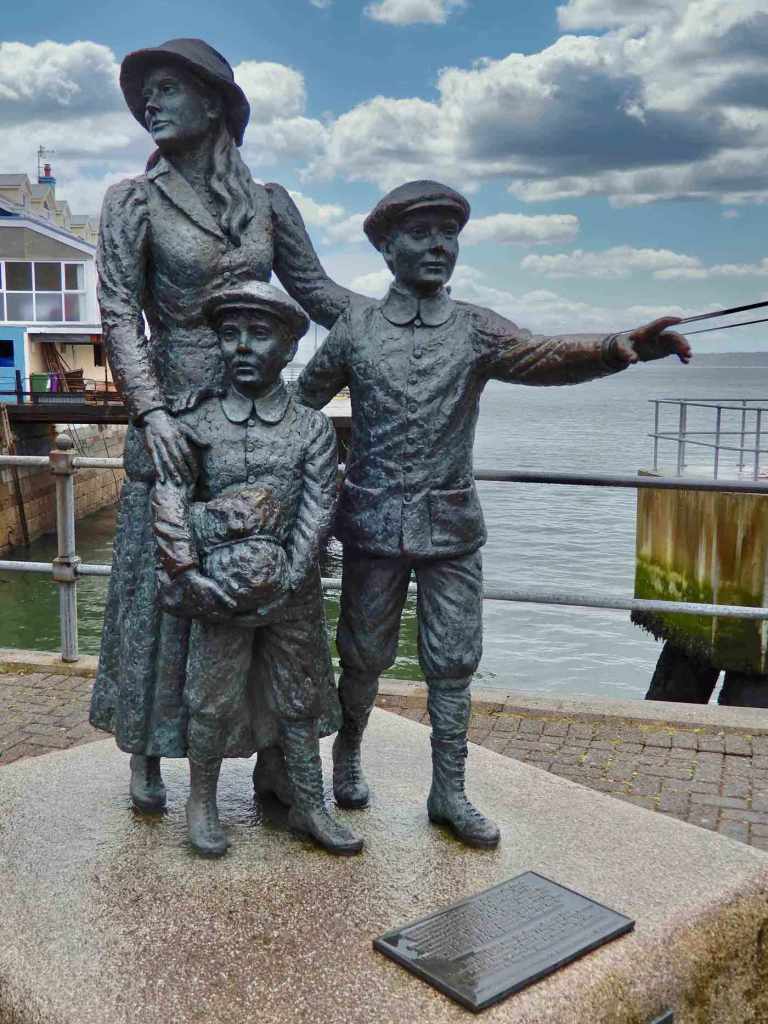
On the waterfront in Cobh, Ireland stands a statue of a young girl with her two younger brothers. Her name was Annie Moore and her brothers were Anthony and Phillip. They are remembered because they were the first immigrants to enter the United States of America through Ellis Island. The statue and a duplicate at Ellis Island in New York were erected by the Ellis Island Foundation “to forever represent the millions who passed through Ellis Island in pursuit of the American dream.”

On January 1, 1892, Ellis Island immigration station in New York Harbor officially opened its doors and welcomed its first immigrant, Annie Moore, 17, arriving from Queenstown, County Cork (now called Cobh). The 17-year-old Moore set sail from Queenstown with her two brothers on the ship S.S. Nevada. They were coming to America to meet their parents who had arrived in New York two years earlier. The three siblings spent 12 days at sea, including Christmas, and arrived in the harbor on Dec 31, 1891. She was greeted by officials who gave her a $10 gold coin and all three Moore children were reunited with their parents, according to the Statue of Liberty – Ellis Island Foundation. Moore remained in New York and in 1895 married Joseph Augustus Schayer, a German-American working at the Fulton Fish Market. They were married at St. James Church. She went on to have at least ten children and died at the age of 50, in 1924.

Join us as we visit historic treasures, natural wonders and vibrant cities set against beautiful backdrops that are endlessly changing.

Join Us – We understand that the last thing you may want is more emails cluttering up your inbox, but we promise we’ll work hard to make this worth your while. Give us a try and if we don’t live up to our promise all you need do is click the unsubscribe link in our emails.

Selected Images • The Story Of Temple Bar

Photography is my obsession and when traveling the world often images just present themselves. Most are random impressions with little context but some seem to suggest at a self contained story. Still others leave me wanting to find out more about what I stumbled upon. Here’s a glimpse of just why we travel…

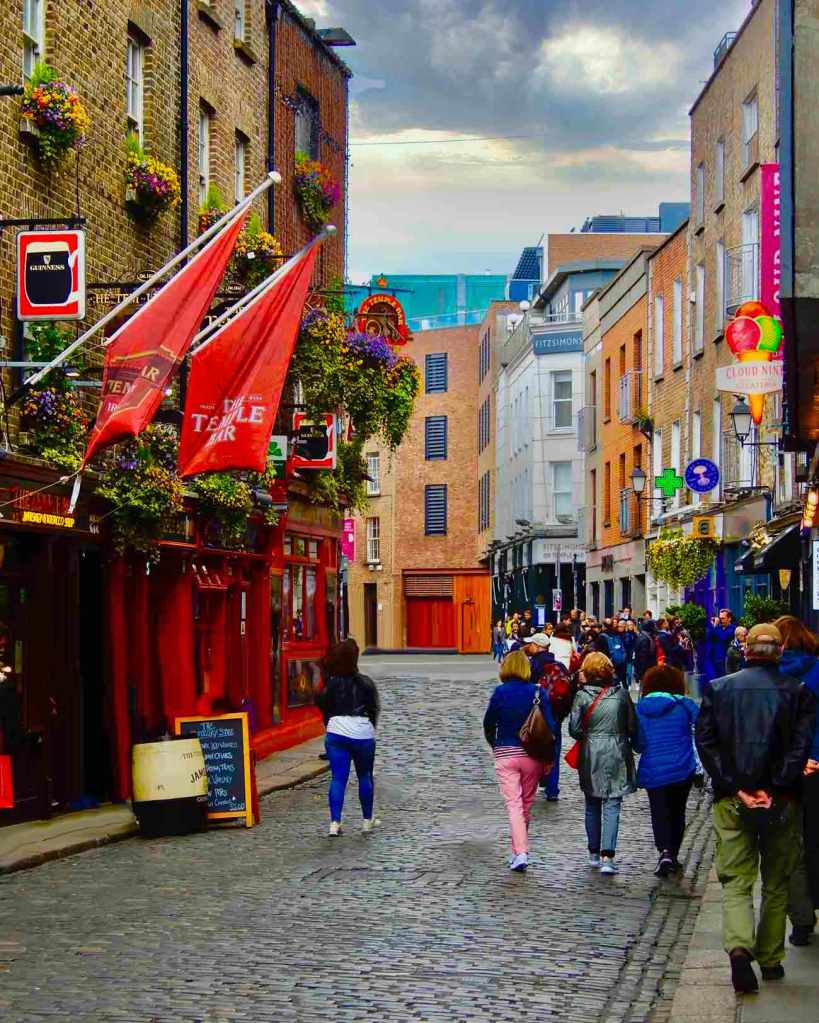
When most people hear Temple Bar they think of a famous pub in Dublin. It is actually a neighborhood on the south bank of the River Liffey in central Dublin, Ireland. The area is bounded by the Liffey to the north, Dame Street to the south, Westmoreland Street to the east and Fishamble Street to the west. So Temple Bar is a place where the Temple Bar Pub is located.

Though the area was originally settled by the Vikings, it was in the 17th-century that the Temple Bar area began to experience some growth. First Sir William Temple, whose house and gardens were located there in the early 1600s is where the area derived its first name. In the late 16th-century the area was mostly marshy land where sand bars built up along the River Liffey. Soon that area of new reclaimed land began to be claimed by various wealthy English families included Sir William Temple and was called simply the Bar. The first mention of the name ‘Temple Bar’ is in Bernard de Gomme’s Map of Dublin from 1673, which shows the reclaimed land and new buildings. So much of the area was owned by Temple and was originally a sand bar.

If you’re ever visiting Dublin, stop by the Temple Bar for a Guinness, a corned beef sandwich and some live music…,

Join us as we visit historic treasures, natural wonders and vibrant cities set against beautiful backdrops that are endlessly changing.

Join Us – We understand that the last thing you may want is more emails cluttering up your inbox, but we promise we’ll work hard to make this worth your while. Give us a try and if we don’t live up to our promise all you need do is click the unsubscribe link in our emails.

Random Images • Iceland – Waiting For Summer

Photography is my obsession and when traveling the world often images just present themselves. Most are random impressions with little context but some seem to suggest at a self contained story. Still others leave me wanting to find out more about what I stumbled upon. Here’s a glimpse of just why we travel…

On a windy day in April in Reykjavík it started out freezing but sunny. Later it got cloudy and snowed for a while, then the Sun came out and it seemed to warm up. By late afternoon the temperature again dropped and it snowed again. Such is weather in Iceland. Above is a poster for a clothing company that was displayed on a bus shelter. Seems to say it all…

It would seem to take a particular type of person to live in Iceland. We found this on 66°north’s website and it draws a great picture about living in Iceland. Ísafjörður nests under the steep, almost vertical, mountains of Skutuls fjord that rise directly from the sea. In the winter months – from the end of November to the end of January – when the sun is low in the sky, the inhabitants of Ísafjörður spend their days in the shade of the mountains, without seeing the sun. On the shortest day of the year, the sun makes it over the horizon for less than three hours a day – from noon until it sets just before three o’clock in the afternoon. But even then, surrounded by mountains, the Ísafjörður locals won’t see it until a month later.

Join us as we visit historic treasures, natural wonders and vibrant cities set against beautiful backdrops that are endlessly changing.

Join Us – We understand that the last thing you may want is more emails cluttering up your inbox, but we promise we’ll work hard to make this worth your while. Give us a try and if we don’t live up to our promise all you need do is click the unsubscribe link in our emails.