The Cruise Ports Of French Polynesia

Adventures in Paradise – Tahiti, Bora Bora and Moorea
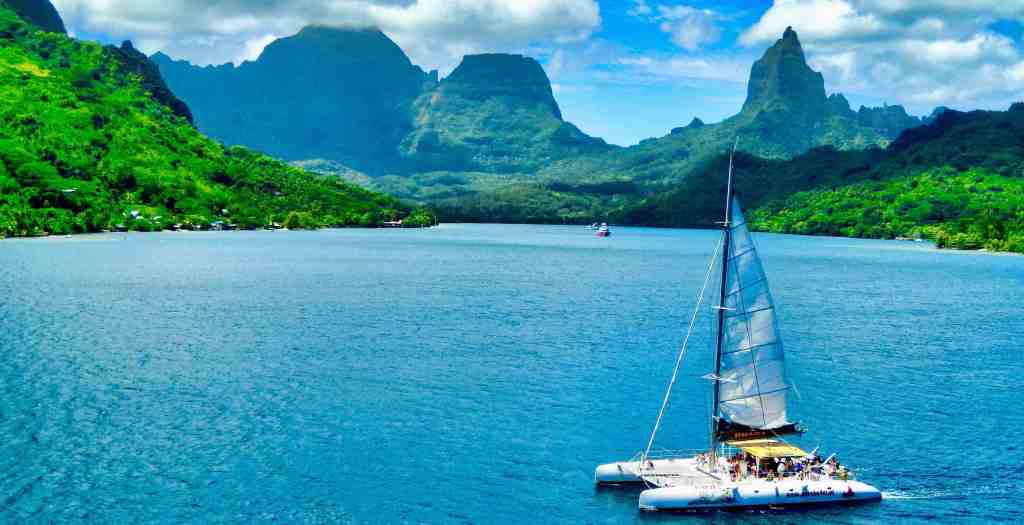
Called the French Society Islands they are better known by the individual island names of Tahiti, Bora Bora and Moorea with Tahiti being the largest. The islands are due south of Hawaii on the other side of the equator.

Tahiti is part of a volcanic chain formed by the northwestward movement of the Pacific Plate over a fixed hotspot similar to the process that formed the Hawaiian Islands. Tahiti consists of two old volcanoes—the larger Tahiti-Nui in the northwest and Tahiti-Iti in the southeast connected by an isthmus. Tahiti-Nui was the first eruption that formed Tahiti as a volcanic shield cone between 1.4 million and 900,000 years ago. Tahiti-Iti probably formed about 250,000 years later.

Where Your Ship Docks – In Papeete, Tahiti there are piers capable of docking large cruise ships right in the center of Papeete’s waterfront. Within a couple of blocks there are public facilities an outdoor market building and numerous shops.

Visiting Bora Bora and Moorea ships anchor out and use tenders to take passengers ashore. While both of these islands are famous for their resorts they are still significantly rural without much of a central town. Near the tender docks on both islands there are some shops and facilities and usually craft stalls are set up nearby when cruise ships are visiting

.
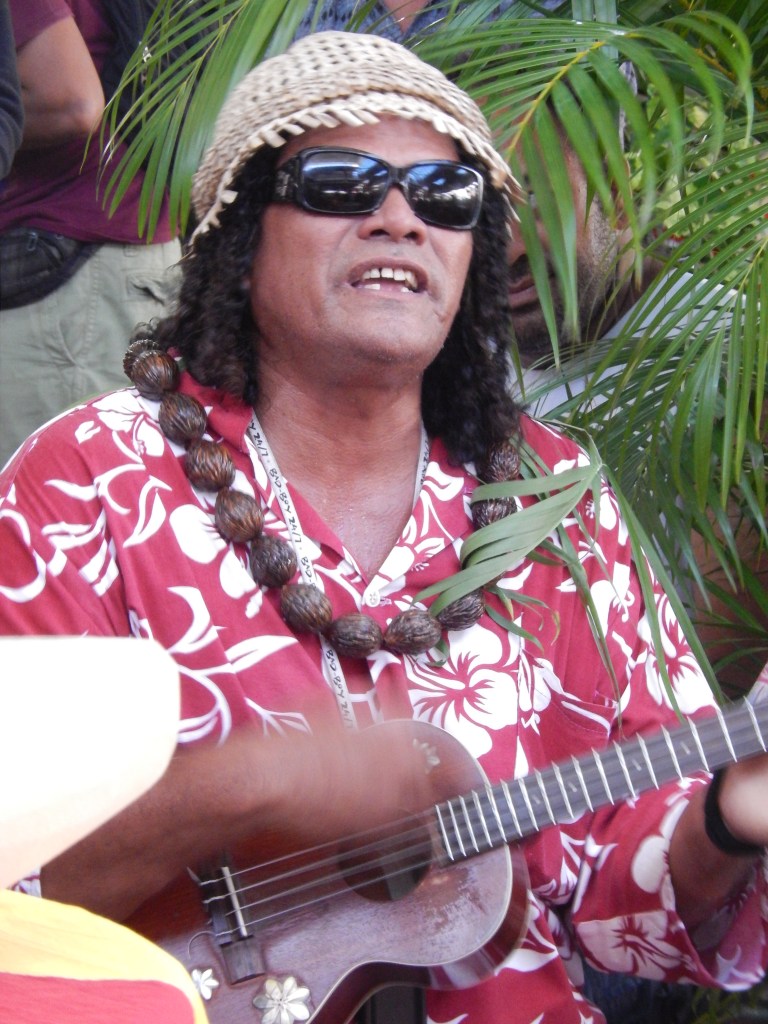
Tahiti has a long and rich history. The islands were first settled by migrating Polynesians as early as 500 BC. They were later discovered by European explorers during the 16th century but there is controversy over who was the first. The islands were eventually colonized by France and remain French today. In August 1768, Captain James Cook set sail from England to visit Tahiti to observe the Transit of Venus across the Sun and mapped several island groups in the southern Pacific that had been previously discovered.

Jardin de l’Assemblée de la Polynésie Francé

Getting Around – Except for taking a ships tour, the best way to see these islands is to rent a car. There are several major rental companies and day rates are moderately priced.

Language – The islands language is French and few locals speak English, so you may have issues being understood.

Money – The islands use the French Pacific Franc equal to about one US penny. Some places will accept Dollars but don’t count on it. Credit cards are welcome almost everywhere.

Underwater In French Polynesia

If you haven’t been diving or even snorkeling, this is the place to get your head underwater as the snorkeling in French Polynesia offers a number of snorkeling spots. The best French Polynesia snorkeling based on popularity is on Moorea, Bora Bora, Tahiti, and Rangiroa. On shore there are a number of Bora Bora resorts that rent masks with great snorkeling right off the beach. Some of the best Bora Bora snorkeling you can get to on your own including the best beach in the world, at Matira beach with a number great snorkeling spots.

Booked through your cruise ship or on your own, there are excellent Polynesia lagoon boat tours available on all the islands. One is a half-day tour on Bora-Bora focused on the exploration and interaction with abundant marine life. Another is a boat ride to manta ray feeding grounds, where you can swim with manta and eagle rays and float over a pristine coral reefs.

Attractions

Farerei Haga – Mid September, a cultural and tourist event takes place over a whole week with the contribution of the surrounding atolls. Fields days coconut husking, stone lifting, braiding. Evenings: traditional songs and dances. Tourists are encouraged, the event is free and located on the Papaputa land.

Pacific International Documentary Film Festival – Early February the FIFO is the audiovisual event that makes Tahiti the documentary film capital of Oceania. It brings a selection of documentary films before an international jury. A succession of film screenings, free workshops, conferences.

Moorea Marathon – In late October is the most important sports event on the island of Moorea. The Moorea Marathon since 1988 welcomes runners from all over the world and its course ranks it among the worlds most challenging.

The Tahiti Pearl Regatta – in mid May a sporting regatta that brings together between 40 and 50 sailing boats, or 250 to 300 crew members from around the world.

Papeete, Tahiti celebrates the Mutiny on the Bounty Festival each year in late October which usually offers an opportunity to hear lectures on history, buy T-Shirts, souvenirs and books.

Papeete is the governmental center of The Society Islands with Jardin de l’Assemblée de la Polynésie Francé being the house of the assembly.

Notre Dame Cathedral

While Tahiti is short on historic sites there is the Notre Dame Cathedral, a historic building with a mix of Colonial and Gothic styles. It is a Catholic church opened in 1875 and is noted for housing three bells in its tower.

The truth is that most people don’t visit these islands for history but for the beaches and clear azure waters and coral reefs. The islands are surrounded by coral reefs that act to protect these islands from storms and the diving is some of the best in the world. There are fewer resorts on Tahiti than the other islands with only three really highly rated hotels, the InterContinental Resort Tahiti being the top rated.

Bora Bora seems to offer the better selection of beaches with a dozen four star resort properties. The star of the beach resorts is the iconic Bora-Bora Pearl Beach Resort with its over water bungalows (in season rates start at US$600 a night).

Bora Bora

While Moorea is beautiful it’s Bora Bora that steals the show for scenery. It includes breathtaking towering peaks, natural lagoons and spectacular coral reefs circling the island. If you’re looking to spend time in these islands Bora-Bora is the island to come back to for a vacation.

The Jones Act And What’s Wrong With Government

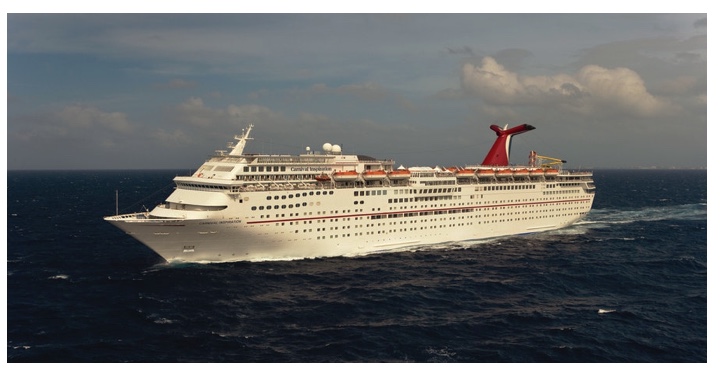
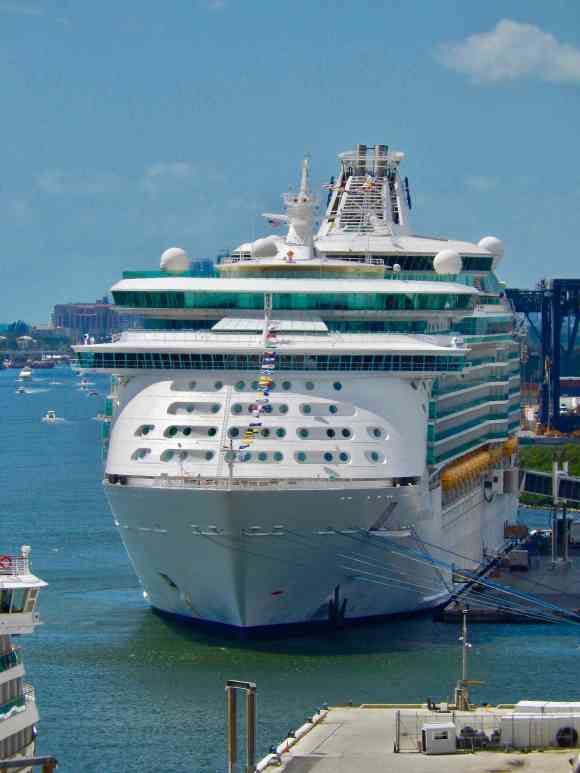
In The United States they’re called the Passenger Service Act and the Jones Act and they often prevent todays cruise companies from taking on and disembarking passengers in U.S. ports. The Passenger Service Act was created over 100 years ago to protect the American maritime business from foreign competition. It required that any ship carrying passengers from one American port to another American port had to have been built in an American shipyard, flagged in America and staffed with American citizens. The Jones Act does the same for carrying cargo.

Over the past few decades these acts have hurt America far more than they have helped. Here are just a few examples.

Exporting American Oil

It is a fact that companies are exporting American oil while at the same time importing foreign oil. Recently, even the White House has asked the oil companies to stop sending American oil overseas. The actual issue involves the Jones Act and it could be fixed by modifying or revoking that act.

The reason we export oil and import foreign oil is we don’t have enough “American” tankers. A recent survey found only 60 of them and that isn’t enough to mover oil from the fields to where it is refined. So because of the Jones Act the only option is to load foreign tankers at our ports and send them to foreign countries. While at the same time bringing foreign oil to American refineries.

The Deep Water Horizon

Remember the PB oil platform in the Gulf of Mexico that exploded? An environmental disaster of unimagined proportions. Norway, one of the worlds most successful offshore oil producers, quickly dispatched two of their ships designed to collect oil from the surface to the gulf to help. The problem was that the Jones Act prohibited those ships to “work” in American watersThe President (Obama) could have used an executive order for temporary suspension to allow them to work – he wouldn’t.

Hurricane Shuts Down Gulf Refineries

When hurricane Harvey shut down the oil refineries in the gulf in late August of 2017 the Trump administration suspended the Jones Act to allow oil from Texas and the gulf to be transported to the east coast refineries.

Alaska Ferry Service

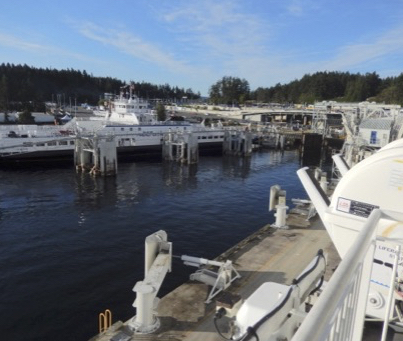
Alaska’s ferry service is a lifeline for the state and is in serious trouble at least partially because of protectionist U.S. maritime laws. Ferries transporting vehicles, which is most such vessels in Alaska and Washington , are subject to the 1920 Jones Act, while those transporting people fall under the Passenger Vessel Services Act of 1886. Both laws mandate that vessels engaged in domestic transport be U.S.-built and there are literally no U.S. shipyards building those types of ships.

LNG For Puerto Rico And Hawaii

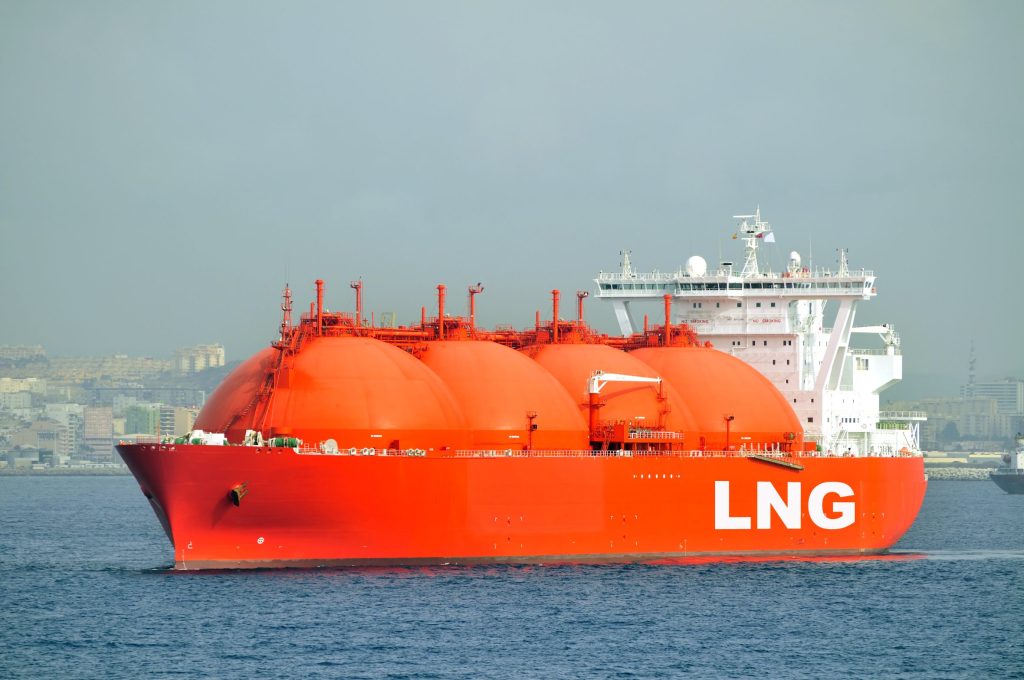
The Jones Act requires Puerto Rico to receive shipments of LNG as well as oil based fuels from the U.S. mainland rather than nearby Dominican Republic where prices are significantly cheaper. This causes residents of Puerto Rico to pay shipping costs far higher than they otherwise would. Hawaii has similar issues with energy products and both would save considerable on those costs should the Jones Art be revoked.

Who Still Benefits

The Merchant Marine -Since 1955 to today the number of U.S. flagged merchant marine ships shrank from over 1,000 to almost 200 today. With automation and the shrinking fleet the number of maritime workers has been reduced by over 85%. So these acts have not done anything to protect American jobs in over 50 years.

The problem today is that American shipyards no longer build this kind of ships. It’s is also too expensive to flag ships in America for a number of reasons and it is difficult to find American maritime workers.

Today the only real beneficiaries from the Passenger Service Act and the Jones Act are law firms and lawyers who specialize mostly in injuries at sea cases or maritime labor disputes. Another group involves companies that profit from the heavily trafficked and regulated sea routes between the mainland’s coast of the United States and the nation’s various island.

It is possible to fix this by offering incentives to change the dynamics of ship building and U.S. flag requirements but several attempts at legislation have failed over the years. Sen. Mike Lee (R-Utah) introduced the Open America’s Waters Act recently to end the Jones Act on the grounds that it hampers trade and leads to exorbitant prices of goods. While Rep. Darren Soto (D-Fla.), have called for only temporary waivers to transport natural gas and perhaps more oversight from the Department of Justice. Several Florida ports are home to large companies that receive significant benefits from these acts requirements.

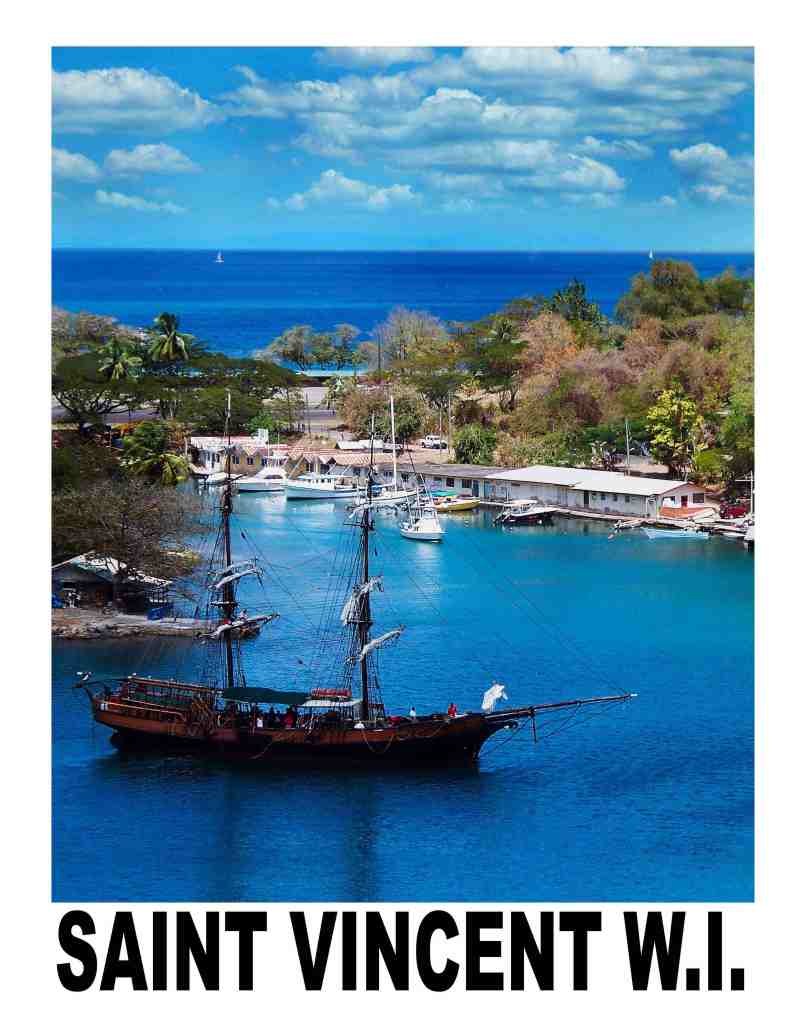
Todays Featured Poster • Saint Vincent & The Grenadines

St. Vincent has been gaining in popularity as a port of call on Caribbean cruises. The large island is Saint Vincent but the country itself includes a majority of the island group known as the Grenadines in the Caribbean. Located in the southeast Windward Islands of the Lesser Antilles, they include 230 square miles of territory that consists of the main island of Saint Vincent and 32 smaller islands including Bequia, Mustique, Union Island, Canouan, Petit Saint Vincent, Palm Island, Mayreau and Young Island.

These giclée prints will soon be available in several sizes and styles, custom printed for each individual order on archival, museum grade paper using fade resistant inks.

Join us as we visit historic treasures, natural wonders and vibrant cities set against backdrops that are endlessly changing and visually magnificent. Celebrate a world of travel experiences with these posters that are perfect for framing.

An Advertisement

What The Heck Is The Jones Act

Ever tried to book back-to-back cruises and the cruise company says you can’t book it because it invokes the Jones Act? The Jones Act is a 100-year-old regulatory relic instituted during the Wilson administration to protect our maritime industry.

Actually the Jones Act applies to the movement of cargo and goods but is often blamed by the cruise companies when actually it is the Passenger Vessel Services Act, (PVSA), 46 U.S.C. § 55103 (b), that places the restrictions on the movement of people. Maybe the Jones Act is easier to say? It is this Passenger Vessel Services Act that prohibits commercial vessels such as cruise ships from allowing passengers to board at one U.S. port and debark at another U.S. port.The short description for both says that you cannot transport cargo or passengers between two American ports unless you use ships built in American shipyards, flagged as an American ship and crewed by U.S. citizens. The problem for the cruise industry is America doesn’t build many cruise ships any more, it is expensive to flag ships in the U.S. and even more difficult to staff ships with U.S. citizens.

While it is a nuisance for the cruise industry it is a disaster for American business and our economy. As of 2016 there are less than one hundred tankers in the world that meet the Jones Act requirements. Because of this it is cheaper to ship U.S. oil to Europe from Texas than to refineries in New Jersey. What that means is our oil companies import more expensive oil while at the same time we export our oil. While complicated, the Jones Act is one of the things standing in the way of our energy distribution. One example is that several times more oil moves throughout the United States by train than using energy efficient ocean tankers.

One of the more insane things that happened as a result of the Jones Act occurred during the BP spill in the Gulf of Mexico. Norway dispatched three specialized oil clean-up ships to help with the disaster but the U.S. government wouldn’t allow them to help because of the Jones Act so they returned to Norway. The Trump administration actually temporarily suspended the Jones Act twice. Once to help move oil out of Texas after major hurricanes and to speed up aid to Puerto Rico after the devastating hurricane there.

There have been a number of locations where the cruise industry has wanted to serve the American traveler by embarking in one port and disembarking in another. Hawaii is one of those locations, providing inter-island cruises as well as cruises originating on the West Coast. New England cruises and Alaska are two other cruise destinations that would benefit by not having complications of these acts. In the case of Alaska there are a number of popular week-long itineraries that go one way, but because of the Jones Act they depart out of Vancouver instead of the U.S. port of Seattle. Recently we wanted to take the last Alaska cruise of the year from Seattle and stay on for a cruise from Vancouver to Hawaii, but because we would embark in Seattle and disembark in Honolulu the Jones Act prevented it.

If you are a cruiser maybe it’s time you suggest to your congressman that the Jones Act has outlived its usefulness. Even if cruising isn’t your thing you should still consider contacting your congressman. The acts cost you money at the gas pump by adding one or two billion dollars to fuel transportation costs each year and also prevents economical use of LNG in Hawaii, Puerto Rico, the Virgin Islands and Guam. Puerto Rico is the most negatively impacted by a number of elements in the acts. There are still a number lobbies that fight to keep these acts from being repealed and that includes labor unions, like the long shoremen and law firms that work injuries at sea cases. It has been suggested a number of times that the act could be eliminated for our island territories at least and new laws could be passed designed to cover American labor impacted by the health issues involved. Unfortunately even though there are almost no union jobs being protected by the acts it seems that special interest lobbies still take priority in Congress over the best interests of an uninformed public.

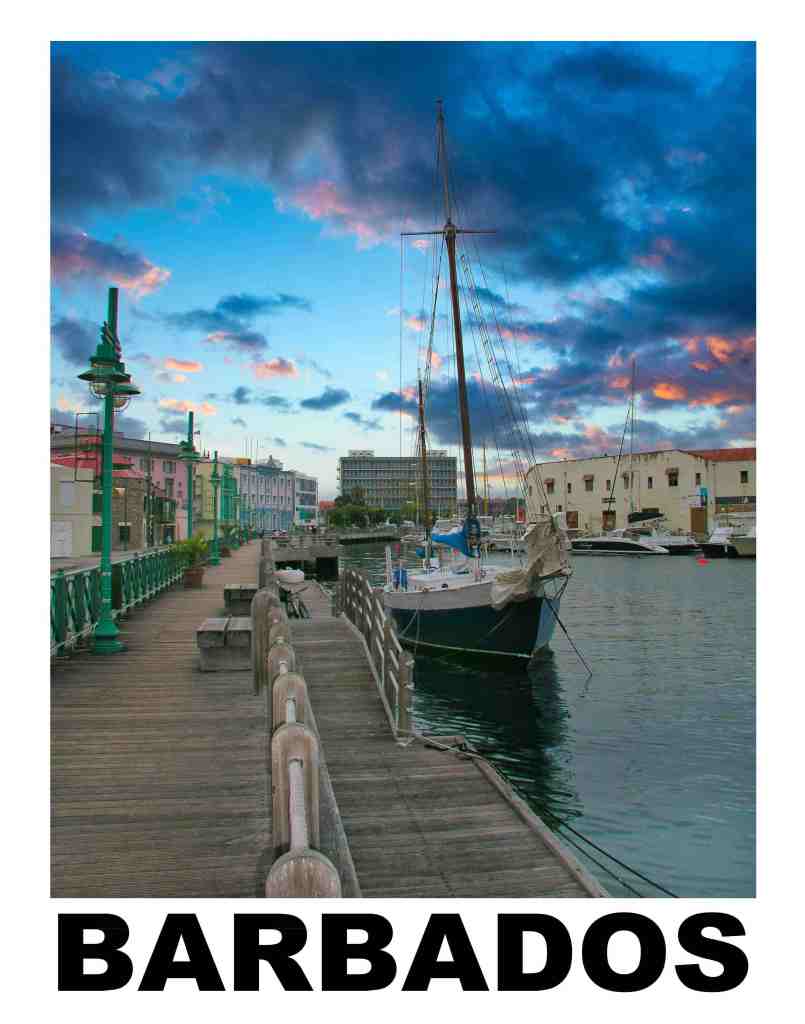
Todays Featured Poster • Barbados

The docks in Bridgetown, Barbados’ Capital and Largest City. Established in 1628 and boasting a population of nearly 300,000, Bridgetown is the true heart of Barbados. Both this island’s capital and largest city, it’s a remarkable place steeped in history, featuring a unique blend of African, American and British heritage.

These giclée prints will soon be available in several sizes and styles, custom printed for each individual order on archival, museum grade paper using fade resistant inks.

Join us as we visit historic treasures, natural wonders and vibrant cities set against backdrops that are endlessly changing and visually magnificent. Celebrate a world of travel experiences with these posters that are perfect for framing.

An Advertisement

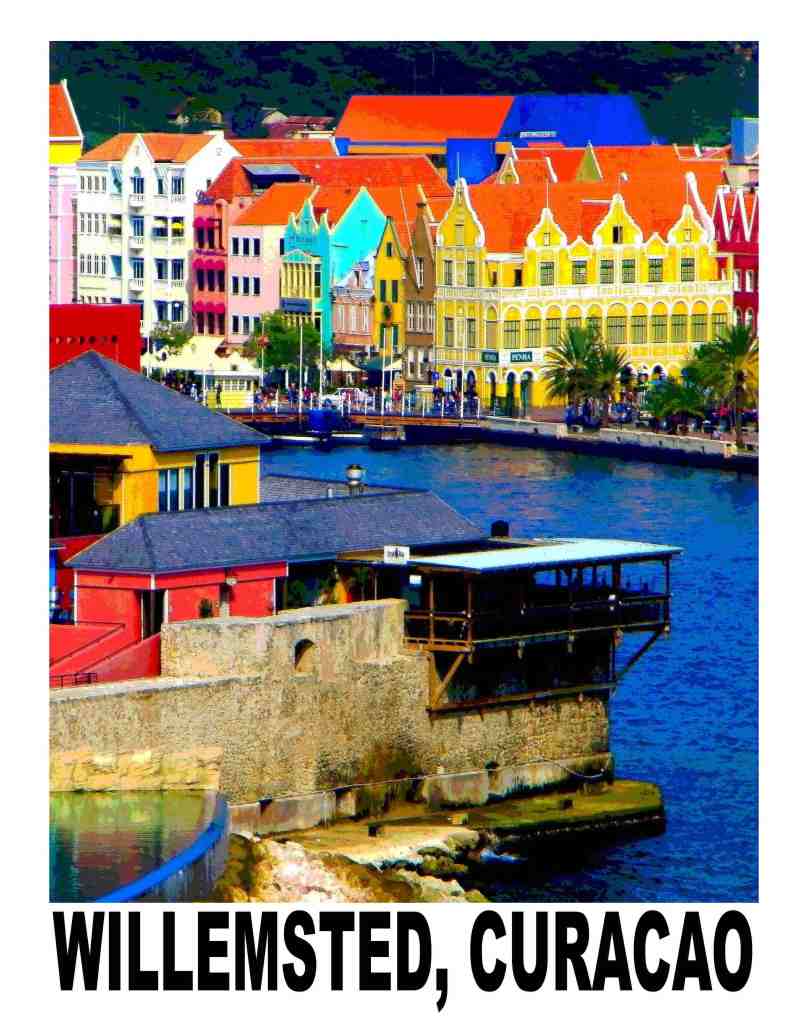
Todays Featured Poster • Willemsted Curacao

The jewel of the Dutch Antilles and the largest of the ABC islands, Curacao is a tropical paradise. The capital of Willemsted offers a sense that Holland had been moved to the Caribbean with its classic Dutch architecture painted up in tropical pastel colors. Great beaches, duty free shopping and restaurants and cafes.

These giclée prints will soon be available in several sizes and styles, custom printed for each individual order on archival, museum grade paper using fade resistant inks.

Join us as we visit historic treasures, natural wonders and vibrant cities set against backdrops that are endlessly changing and visually magnificent. Celebrate a world of travel experiences with these posters that are perfect for framing.

An Advertisement