Going up the Danube River from the Black Sea the river passes through some of its most remarkable scenery. The Iron Gates of the Danube River refers to narrow gorges with high granite walls that divide Romania and Serbia. The term “Iron Gate” was first coined by The Times of London in 1853.
The Roman Emperor Trajan had this marker erected to commemorate the construction of the road to Dacia through the gorge more than 2000 years ago. Archeological surveys of Trajan’s road indicate that large bore holes were drilled into the rock face of the cliffs and timbers were inserted to allow sections of the road to literally run across sheer walls.
This stretch of the Danube separates the southern Carpathian Mountains from the northwestern foothills of the Balkan Mountain range.
This section of the Danube was always a treacherous transit famous for sections of rapids and large whirlpools. In the 1960’s, governments built a massive lock and dam system to help control the river and make it safer transit. After the dam project, the river flowing through the Iron Gates was raised 130 feet that calmed the water and a hydro-electric power plant was built. The system includes two locks some 50 miles apart.
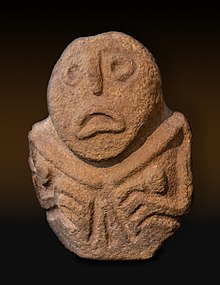
Iron Gates Mesolithic Art
Archaeologists working on a number of sites in the gorge have named what they have found the Iron Gates mesolithic culture. It indicates actual settlements from 15,000 to 7,800 years old. One of these sites is the most important archaeological site in Serbia and maybe all of Europe. It’s Lepenski Vir, the oldest planned settlement in Europe, located on the banks of the Danube in the Iron Gates gorge. The archaeologists’s discoveries have pushed back the dating of European organized culture by a few thousand years in Europe. A number of burial sites have been uncovered bearing woven clothes decorated with shells, bits of rock and pieces of antler. The site has also produced carved stone images, stone tools and pottery shards.
A recent incident and a conversation with a traveling friend highlighted the confusion and importance of international travel insurance. To begin most people consider travel insurance too expensive and on top of that they see it as very confusing and there’s truth in those beliefs.
Please note that this is written with a focus on American travelers but we are also aware of similar plans offered in Canada and other countries, but you will need to explore options based on your home country.
There are a number of different categories and types of travel insurance that apply to a number of travel plans and that can complicate the insurance decision. Generally, insurance is available to cover problems in five specific areas:
Trip Cancellation and Interruption
Theft of Property
Health and Accident coverage
Medical Repatriation
Life insurance
In truth, most travelers we talk to are too casual in deciding on travel insurance. This article will focus on three main areas:
First is a concern about having to cancel an expensive trip at the last minute and losing deposits and prepaid money.
The second is travel interruption caused by missing air connections or a cruise sailing.
Lastly are medical cost concerns while being out of the country.
One area that requires attention is exactly what are the conditions where the coverage takes affect and where it doesn’t apply. Insurance policies are very specific legal documents and all too often coverage we thought we had doesn’t apply in too many circumstances. Just recently in the news were a number of travelers faced with giving up their travel costs or putting their health in jeopardy because of the Covid pandemic.
As the Corona virus started spreading around the world and countries started closing their ports, cruise ships and their passengers were placed in a difficult position. Initially cruise ships started adjusting their itineraries instead of canceling cruises. Passengers that were worried about their health and wanted to cancel their cruise or were even acting on the advice of the government, soon discovered that insurance companies were concluding that those concerns were not covered by the cruise cancellation insurance and offered no refunds.
Even if the cost of insurance is significant, everyone should consider and evaluate what potential financial risk there are versus the actual cost of the insurance policy. With a long cruise the cost could be very high and while the insurance could be costly the loss could be even more significant if you have to cancel or should simply miss a sailing.
One area where many people leave themselves seriously in jeopardy involves international medical emergency insurance. Far too many people falsely think that their health insurance will cover them when they’re out of the country but the truth is that is rarely the case. Unless your health insurance specifically indicates that it covers international travel you are risking a catastrophic loss. In one example we know about a retired couple traveling in Europe believing that Medicare and their supplement insurance covered them. They learned the terrible truth after a serious stroke left them with a quarter of a million dollars in medical bills. Another couple we know just made a one day trip over the border into Canada to visit with friends. Several days later the medical expenses after a heart attack added up to almost $100,000 with no reimbursement from Medicare.
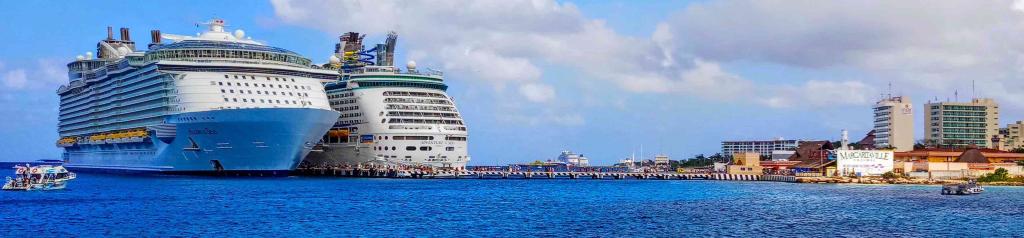
When booking a cruise one option is cruise insurance. Because many cruises involve international destinations these cruise policies provide medical cost reimbursement (up to specific amounts) and property theft and loss protection. Some also, but not all, cover the cost of medical repatriation. While cruise insurance is convenient you do have other options for insurance that could be less expensive and provides more coverage.
Airports often have outlets for inexpensive short term air travel insurance but it is mainly focused on the life insurance component and not on medical costs or trip interruption which is usually the airlines responsibility.
SpecificSituational Considerations
Cruise OnlyInsurance – Say you are taking a Mediterranean cruise with flights into and out of the sailing port. A cruise insurance policy usually provides an appropriate amount of coverage for your cruise trip. Most cruise policies also cover medical expenses if you need care in a local clinic or hospital while a passenger on the cruise with some covering medical evacuation and repatriation. The same policy usually extends coverage while on booked cruise/land packages and the flights to and from the cruise port.
Cruise with an extended land itinerary – If you are taking that Mediterranean cruise but then plan to go off on your own for a couple of weeks in Europe, chances are that cruise policy will terminate on disembarking the ship. For that reason you need to understand that you will not be covered for medical emergencies above the international coverage and limits of your American health insurance policy which can often be zero. For retirees Medicare does NOT cover international medical care. If you opted for one of those no cost Medicare regional groups you have no international coverage.
Frequent InternationalTtravel – If you are a frequent international traveler it is most important to analyze your risk and how much you are comfortable paying for insurance. You have options of buying a complete medical plan (Geoblue) , a medical evacuation plan (EA+) or a complete annual insurance policy (Allianz, Amex) that offer some coverage in virtually all areas. One caution is that most annual policies only provide coverage while on trips of less than 60 days each.
In our case we take a number of cruises and international trips a year and our biggest concerns are medical emergencies and evacuation, so we keep an annual MedEvac plan in place. Our Medicare supplement insurance offers adequate (we hope) medical coverage for now and we will buy cruise policies on individual trips if it is a long and costly cruise.
Annual Travel Insurance Policies – There are complete annual travel policies, which should be considered if you travel internationally often. Generally they have lower limits of coverage, especially in areas like trip cancellation and property loss. For example, most annual policies limit cancellation protection to $2,000 per year. To the right is a recent annual generic quote provided by Alianz for a typical retired couple.
Special Note:26 European countries require health insurance to visit.
In early 1995 twenty-six European countries signed an agreement that abolished enforcing their borders between member states. As a result the area mostly functions as a single country for international travel purposes, with a common visa policy. Anyone from a country that requires them to apply for the Schengen visa to enter Europe must provide proof of international health insurance. Americans and Canadians along with a number of other nationals do not need this visa to visit and therefore do not need to provide proof of insurance.
The 26 countries in the zone are Austria, Belgium, Czech Republic, Denmark, Estonia, Finland, France, Germany, Greece, Hungary, Iceland, Italy, Latvia, Liechtenstein, Lithuania, Luxembourg, Malta, Netherlands, Norway, Poland, Portugal, Slovakia, Slovenia, Spain, Sweden, and Switzerland.
Technically a letter from your insurance company is required, and this needs to mention that you will be covered in Europe for any medical, evacuation and repatriation expenses during your whole stay. The medical expenses have to be covered for at least 30,000 Euros.
This post was prompted by a travel friend contacting me wanting to know what travel insurances we use. We compared notes and kicked around some scenarios and decided it was a good subject to explore in greater depth.
Also thanks to a visitor from Reviews.com who directed us to their extensive article on buying travel insurance and if you have questions about specific recommendations I would highly recommend reading this article from Reviews.comHERE.
INSURANCE LESSONS FROM COVID-19
A number of recent travel articles about travel and insurance are now recommending “Cancel for Any Reason” Insurance but this may be a bad choice especially since most major cruise companies, in an effort to get bookings back, have offered last minute cancellations as part of their policy. In comparing “Cancel for Any Reason” insurance it seems that in many cases the premiums do not warrant the limited level of reimbursement so be sure and do the math before buying.
In addition most travel insurance policies will only reimburse you for canceling your cruise under specifically identified conditions. Most of those involve medical issues with you or immediate family. Some policies also provide for work related emergencies. Based on our experience with COVID-19 we now see a number of issues we hadn’t considered when looking at travel insurance.
Our Recent Experience Involving COVID
We were recently booked on a pair of cruises that went from Singapore to Rome with 14 ports of call and had paid in full (inside 90 days). As coronavirus issues began to appear our cruising companions cancelled early on and got full credit towards a future cruise. As things began to get worse we contacted the cruise line and they were no longer agreeing to issuing credits. 48 hours later they cancelled the cruise, gave refunds along with future cruise credits at 125%. After that we contacted our independent insurance carrier and were informed that they weren’t accepting claims involving coronavirus but might consider our air portion because our cruise was cancelled. After that we just contacted the airlines and got future credits to use within 12 months.
Insurance And Travel Advisories
It seems that under standard cancellation coverage, you cannot cancel due to travel advisories from the CDC, State Department or other government agencies. You can’t cancel because the cruise line changed the itinerary, or for fear of terrorism, or concerns about epidemics or natural disasters. Before booking a policy you should now investigate these issues for coverage.
CFAR Insurance
Because of these issues recent travel articles are suggesting that CFAR (cancel for any reason) policies are the answer. If you want the freedom to cancel your trip for any reason at all — and still get reimbursed for travel costs there are CFAR policies available. Looking into this option we’ve discovered many aren’t covering as much as theses articles suggest.
We have another 30 day cruise scheduled in the fall across the Pacific and around Japan so we decided to investigate CFAR policy costs for that itinerary. Our current standard policy covering that cruise cost us about $350. We received a CFAR quote from the same carrier that would reimburse our “deposits” only should we cancel for any reason for a premium of $1,500 but would not offer reimbursement the two weeks before the trip. That exceeds our currently paid deposits by almost $800 with questions about the actual costs, in full, being covered making this a bad deal.
If anyone finds CFAR insurance that makes more sense we’d love to hear about it.
Insurance Is Still Important
We still believe travel insurance should be an important part of your travel plan. Its benefits usually include trip interruption, emergency medical and emergency transportation, travel delay, lost luggage and more but we need to understand there are major exclusions like pandemics, natural disasters, insurrections and government actions.
You also need to understand that in order to file a claim you need to submit documentation. That can include proof of your property loss and its value like purchase receipts along with a police report of the incident. Health claims need doctor and hospital reports and bills.
The burden is on all of us travelers to educate ourselves on things like terrorism, tropical storms and disease outbreaks affecting our vacation destination. Also if you choose to buy standard coverage after an event becomes “known” even if you didn’t know about the situation, your benefits could be severely limited, making that travel insurance policy almost useless.
Because we frequently travel internationally our health insurance does have an international travel component that pays up to $50,000 for each of us with a lifetime cap of $50,000.
We carry an annual medical evacuation and repatriation policy that over the past number of years has seemed reasonably priced to us. The cost for the two of us has been less than $200 for the annual plan and offers $500,000 in coverage. It should be noted that this is not medical insurance and will not pay for doctors and hospitals except for expenses in getting you and your companion home. One of the largest is EA+ Emergency Assistance Plus
It is the most popular fish on American menus and one of the most farmed fish in the world next to tilapia. Everyone’s familiar with the scenes of salmon running up streams and jumping waterfalls to return to the place they hatched in order to spawn. Though it varies among the five species of Pacific salmon, its life cycle, in its simplest form, is hatch, migrate, return, spawn, die.
Every year throughout the Summer these five species of salmon fill the rivers and streams of Alaska, returning to spawn and die. To take advantage of this abundance, fishing fleets have set to sea and nets have been set in rivers all over the world to catch these returning salmon. The biggest problem with these is that many fish are caught before they can spawn. Congress originally funded salmon hatcheries in the 1950’s in an effort to overcome the added problem created by hydro-electric dams preventing the salmon from returning upstream.
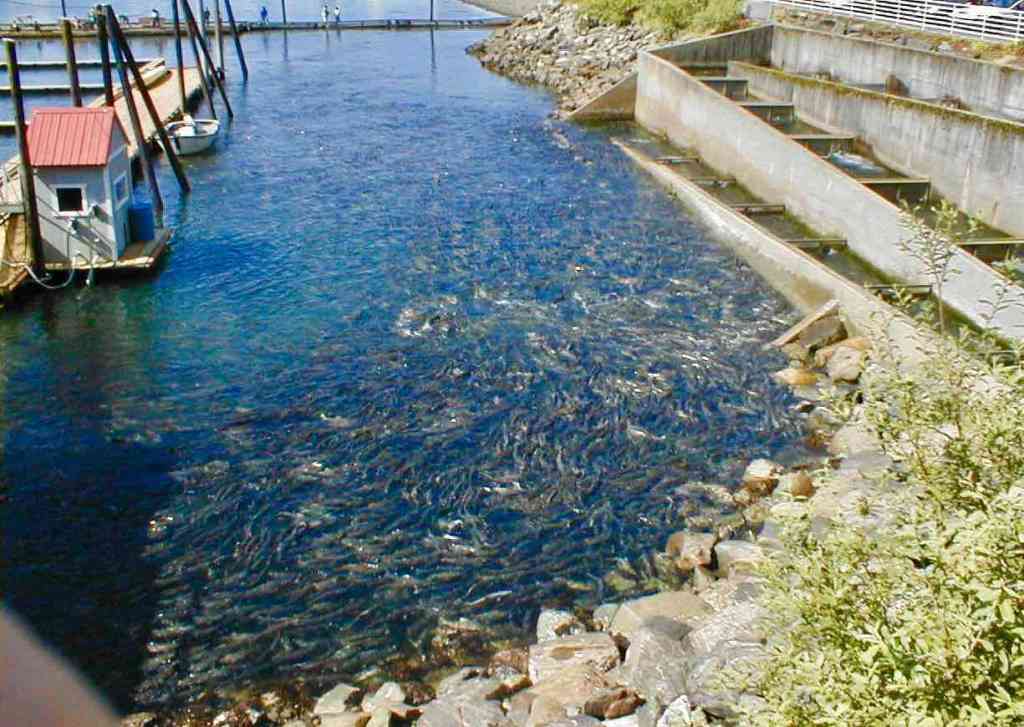
Macaulay Salmon Hatchery
These fish hatcheries were designed to capture and fertilize salmon eggs, raise the fry, release them from the hatchery to migrate where they will eventually return to start the cycle again. A system that is much more efficient than fish farming.
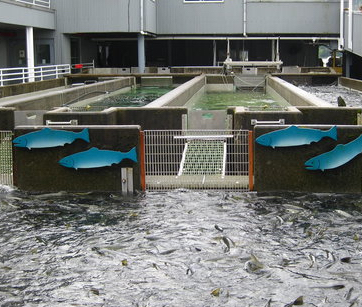
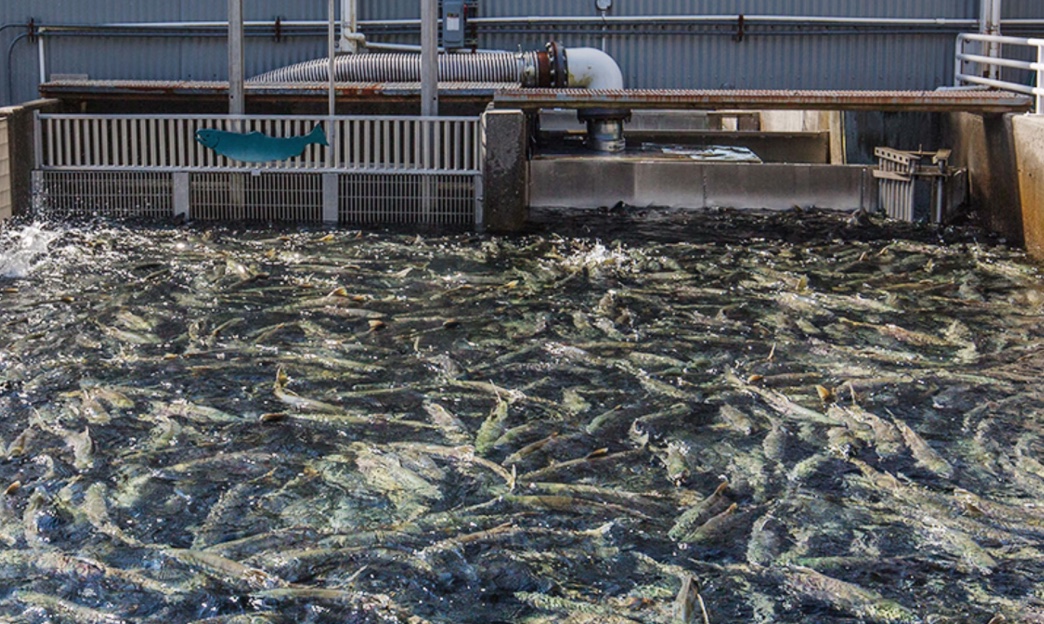
Today in Juneau, the Macaulay Salmon Hatchery collects, incubates, rears, and releases three species of Pacific salmon – chum, Chinook, and coho. At the Macaulay Hatchery, around one hundred thousand visitors a year watch an unforgettable and easily accessible miracle – the entire life cycle of salmon which includes five to ten million fish returning here to spawn.
In 2021 the Macaulay Salmon Hatchery reported that they released 135,000,000 Chum salmon, 1,250,000 Chinook salmon, 1,500,000 Coho salmon and 50,000 Rainbow trout into the wild.
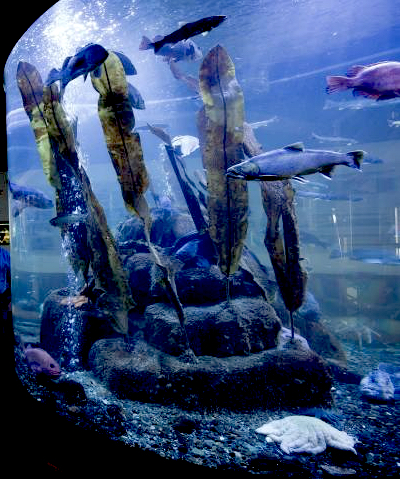
The Visitor Center offers a unique number of attractions. In May through September, they’re open every day a cruise ship is in port. Spend time in the outdoor hatchery while a local guide shares with you the life cycle of Pacific salmon and the workings of this amazing hatchery. Inside, view salt water aquariums displaying over 150 species of marine life, including touch-tank aquariums. A truly remarkable experience for the whole family!
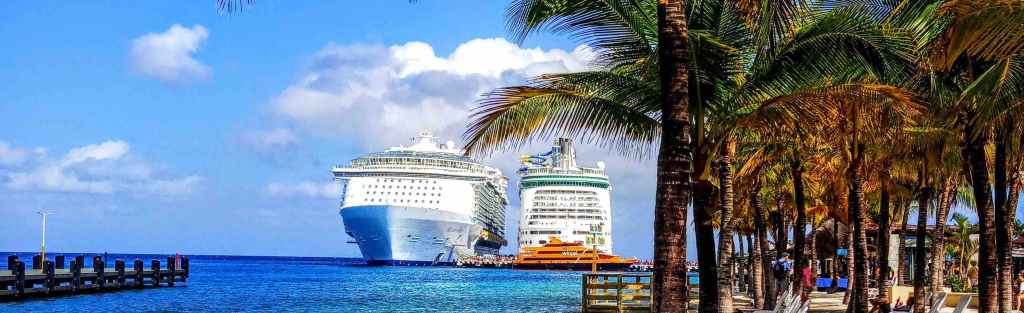
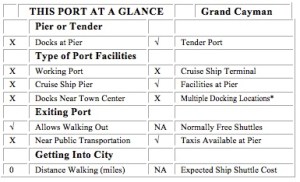
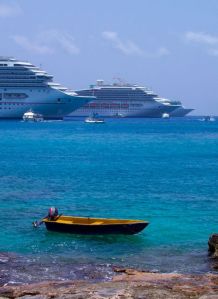
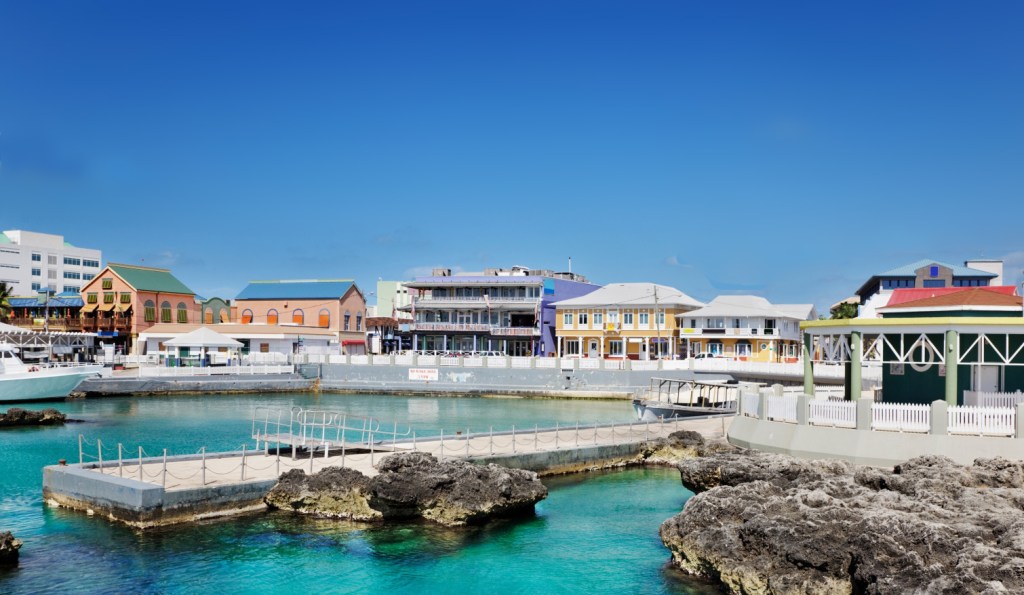
General – George Town, Grand Cayman is a major cruise destination for Western Caribbean cruises. It is a modern town famous for good duty free shopping and offering a number of good tour itineraries. The port requires tendering but the tender pier is right in the heart of town.
George Town with tender dock on the left
The biggest attractions in Grand Cayman are focused on the beaches and the clear turquoise water. The island is a major destination for sport divers and
Transportation – There are basically three ways to get around this island:
Bus System – Cayman actually has a pretty efficient bus system with fares starting at CI$2.50 (US$3.15). The central bus terminal is located in downtown George Town.
Taxis – Taxis are readily available but like most things in Cayman can be pricey.
Rental Cars – Cars are pretty easy to arrange but can be a bit expensive. Finding your way around is pretty easy, traffic is moderate but remember they drive on the left.
Money – The local currency is CI$ and is fixed at an exchange of US$1.25 to CI$1.00, so remember that everything is 20% more expensive than it seems. The US Dollar is usually welcome along with most credit cards with ATMs readily available.
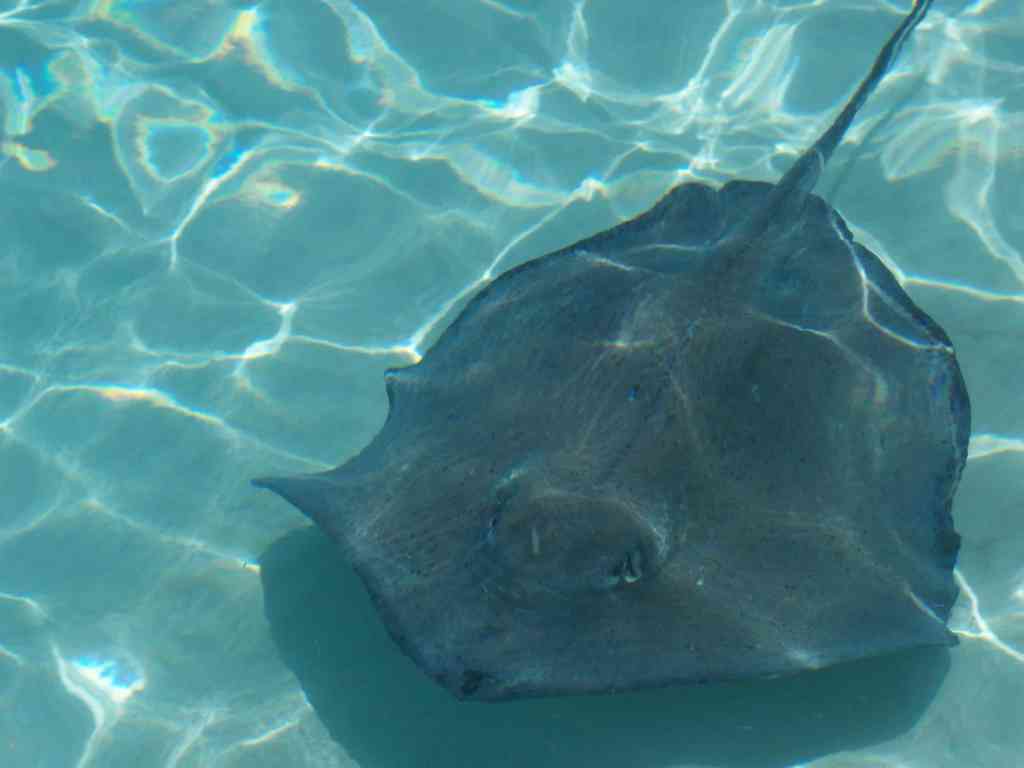
Sting Ray City
Local Attractions – Beaches, beaches, beaches with the centerpiece being Seven Mile Beach with its resort hotels and restaurants. The island is also a scuba and snorkeling paradise with lots of coral reefs in shallow water for great snorkeling along with a great drop-off wall for scuba diving. Grand Cayman was the originator of the stingray tour called Sting Ray City where you can actually walk on a shallow sandbar and hand feed the stingrays.
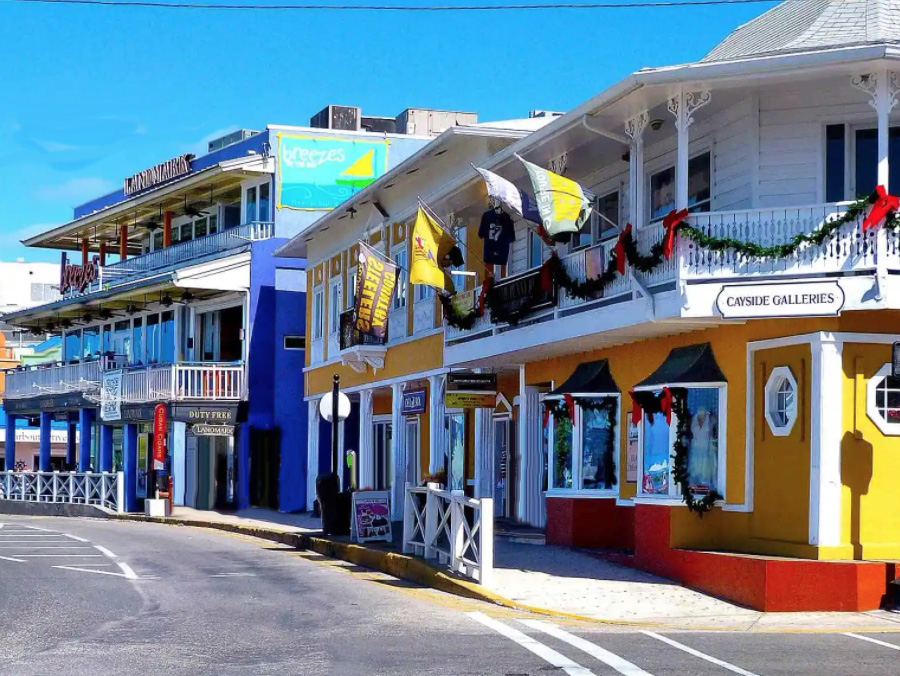
George Town
Other attractions include swim with the dolphins at Dolphin Discovery, The Cayman Turtle Center, Crystal Caves and visiting Hell a gift shop with famous post office where you can send home cards postmarked HELL.
The tender docking area
Grand Cayman is also famous for its duty free shopping with excellent buys from diamonds to watches to luxury housewares and fashion accessories. It is also home to one of the Caribbeans best rum cakes.
We arrived in Bucharest Tuesday morning and did a quick trip around the city with a local guide. The first thing we learned is that currently there are over two million refugees from the Ukraine now in Romania, mostly women and their young children. As we drove around the city we saw several city parks with groups of mostly young women with children. We learned that most of them are Ukrainians who gather in the parks to network and feel connected to their community.
Romania is a country with less than twenty million residents that have mostly welcomed over two million Ukrainian refugees into their country. Most of these have been taken in to live with Romanian families. During the day the Ukrainian women gather in parks to be with other Ukrainians.While there are a few government programs that offer assistance to local families who take in Ukrainians, it is very little. The average income per Romanian worker is about the equivalent of US$1,000 per month. Right now the cost of living in Romania is very low which helps a lot. Beef costs about US$3 per pound and chicken about US$1.75 but the major issue currently involves gasoline that today sells for between 6 and 8 US Dollars per gallon.
Today I’m not so sure that Americans would be as generous but the United States has no collective experience of having to live under totalitarian Communism as did much of Eastern Europe.
Tuesday we took a drive south of Bucharest and were shown a new consequence of the war in Ukraini. Forty minutes outside of Bucharest we came upon long lines of semi-trucks lined up along the roads heading east. At the same time we also hundreds, if not thousands of semi trucks heading west. We were told that the lines of trucks were spending days lined up to get through Moldova and Southeast Romania into the Ukraine, mostly to pick up wheat and move it west to markets.
Russia has blocked access to the Black Sea and even though they claim to be opening routes to allow the export of wheat there doesn’t appear to be any reality to their claims. We’ve been informed that even if that were so trucks can nowhere move as much grain as is required.
One of the most popular cruise destinations on Mediterranean cruises has been Venice, Italy. For years there have been groups and organizations protesting what many claim could be serious damage to the buildings and canals of the water city caused by the large cruise ships. This has been countered by other groups that believe that the city receives substantial revenues from the cruise lines for dockage fees. Even after the results of two major studies found that the damage caused by frequent storms is a much more serious threat than cruise ships the United Nations and its World Heritage arm still threw their weight against the cruise ships. Unfortunately the controversy surrounding the docking of large cruise ships in Venice has now been settled – Cruise ships above certain sizes (about 90% of them) are now banned from entering Venice.
In response the cruise lines are setting up alternate ports that will still allow their passengers access to spend time in Venice and also provide other ports to replace Venice as a departure port. The two nearest ports with adequate docking potential are Ravenna and Trieste and for the time being the cruise lines seem to be selecting between the two. For example Royal Caribbean and Celebrity are focusing on Ravenna while NCL will be using Trieste.
Saint Mark’s Basilica
As you explore itineraries you’ll find a number of ships are staying overnight to allow plenty of time to visit Venice. Using buses Trieste is about a little over two hours to Venice (135 miles) with the Ravenna trip coming in between one and half to under two hours (105 miles). Another option that is also gaining traction is taking advantage of overnight hotel accommodations in Venice during your port stay.
If you are inclined to visit Venice on your own there are a number of affordable options to explore with bus service still topping the list:
Trieste to Venice
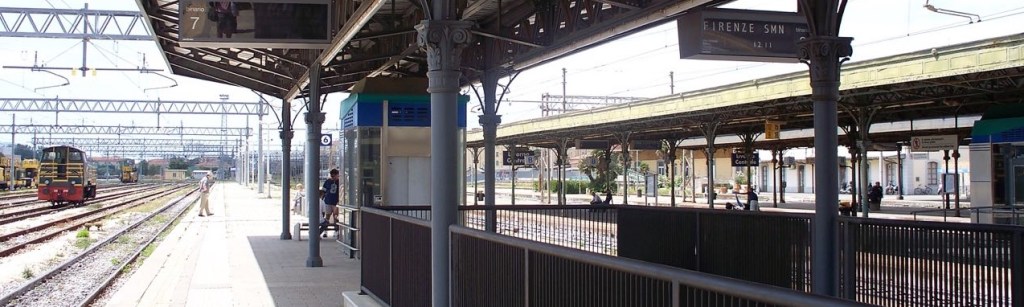
FlixBus operates a bus from Trieste to Venice that leaves every 4 hours. Tickets cost $12 to $15 (€10 – €13) and takes about 2 hours. Itabus also has service 5 times a day. By rail Trenitalia operates a train from Trieste Centrale to Venezia S. Lucia every hour. Tickets cost $12 to $24 (€10 – €21) depending on seat class and the trains take 2 hours and 5 minutes.
Ravenna to Venice
The best way to go to Venice from Ravenna is by bus, which costs about $10 (€9). The train to Venice, costs about $17 (€15) with trains about every hour. By bus or train the trip takes about 2 hours and 45 minutes to 3 hours with the bus being slightly faster but with less frequent service than the trains.
















 The Intentional Travelers