A Great Hike In St. Thomas USVI

A St. Thomas Walking Path Along The Water From Havensight Cruise Dock into Charlotte Amalie

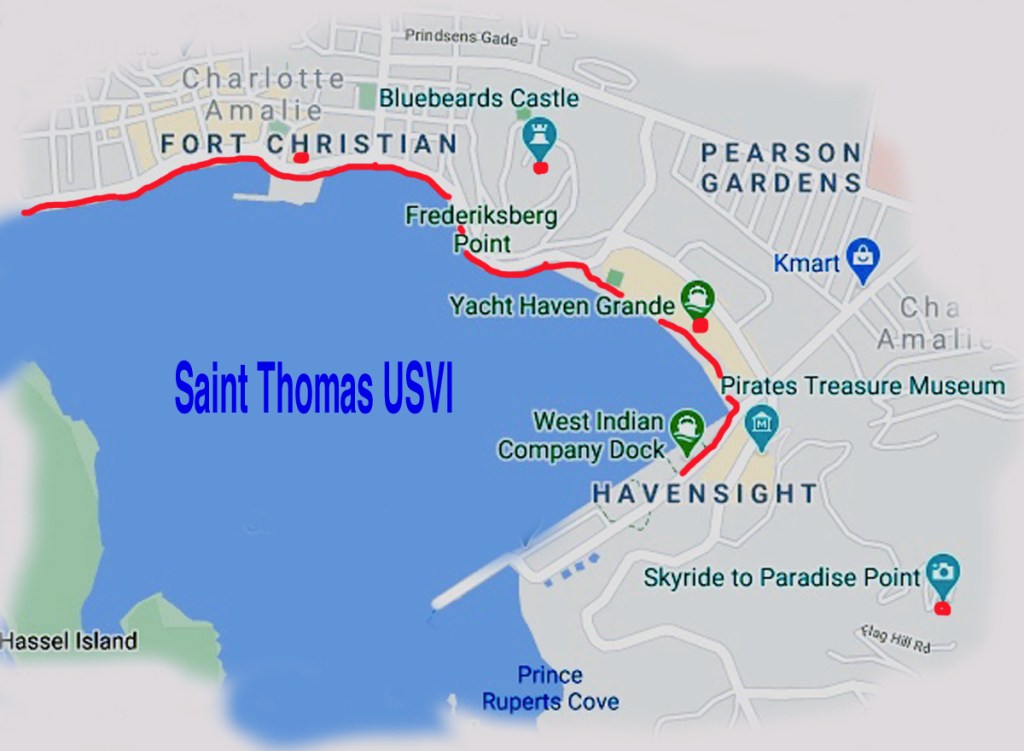
This is more an urban hike with a special interest to passengers on cruise ships tied up at the West Indian Company docks. Centered on an area known as Havensight it is only about a mile walk into the west end of downtown Charlotte Amalie from the docks. If you are into hiking this is a well paved walkway that runs along the sea and through a few interesting areas.

View from Paradise Overlook

From the West Indian Company dock walk away from the water toward the Havensight buildings and turn left on the first major passage and head toward Charlotte Amalie. You will be passing a number of duty free shops, food concessions and markets along this two block stretch. As you get near the water again the walkway into town is directly ahead on your left. For one of the best views of St. Thomas you can also take a right turn instead and cross Edward W. Blyden Road to the Paradise Point gondola base station and ride up to Paradise Point overlook.

On the water within a hundred feet or so of picking up the walkway you’ll find yourself in Yacht Haven Grande with luxury yachts tied up in the marina and shops along the walkway. At Yacht Haven you will find the shopping is much more upscale with a number of nice restaurants like a sushi bar, a Mexican cantina, Fat Turtle and Blue Eleven.

Yacht Haven Marina
Ft. Christian

After Yacht Haven the walkway runs along the water with Veterans Drive on your right for about a half mile until you get to Fort Christian. The historic Danish fort watching over the harbor is operated by the National Park Service and is open to the public. As you walk along this part of the trail you’ll also see Bluebeard’s Castle Resort standing above you on the hilltop. With the Fort Christian on your right on the other side of Veterans Drive the V.I. Legislature buildings will be on a point of land on your left. Just past the fort is Vendors Plaza, a street market filled with locals selling their crafts and souvenirs. Vendors Plaza is also where most of the shuttles into town from the West Indian Company dock let off their passengers.

Bluebeards Castle
Creque Alley

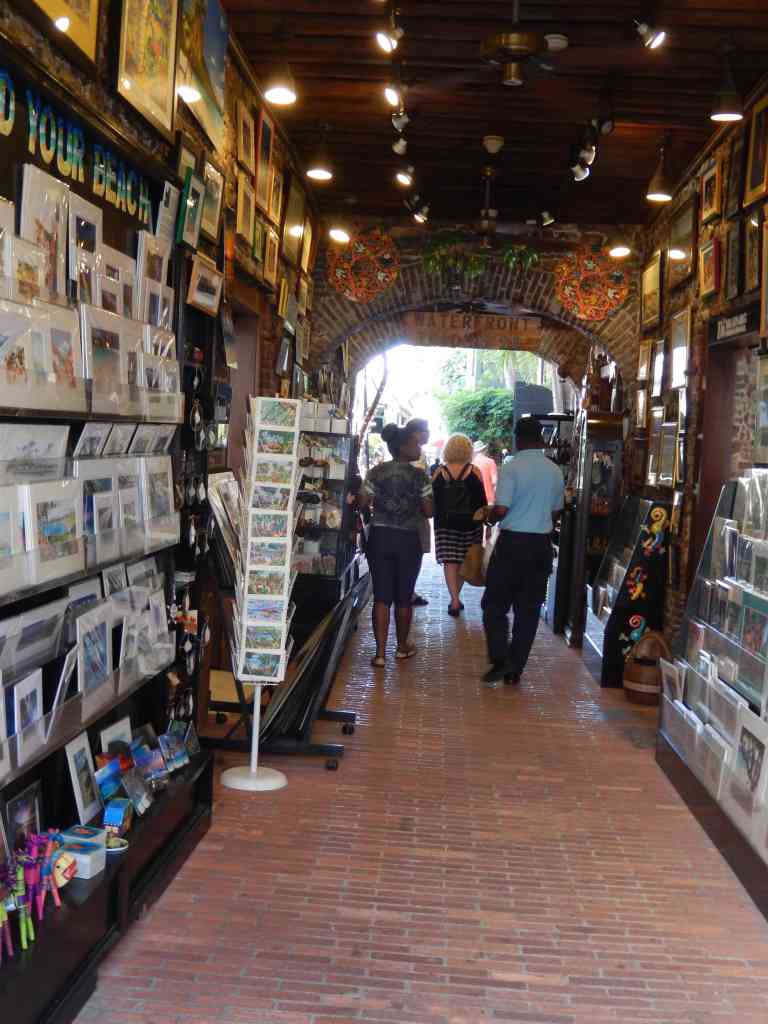
Going past the fort the walkway down Charlotte Amalie’s main waterfront continues on for an additional half mile. Along the waterfront crossing Veterans Drive takes you into the main shopping district that extends about three blocks inland up from the waterfront. Charlotte Amalie offers numerous streets and alleys leading up from the water. These alleys are an important part of the towns landscape with each one being a mini-mall lined with cafes, restaurants, galleries and shops. One block up, running parallel to Veterans Drive is Curacao Gade (Street) the main shopping thoroughfare in town.
Urban Walks In Florence, Italy

There are a number of great cities well suited to urban hiking but near the top of that list is Florence, Italy. With culture, gardens, history, incredible shopping and great restaurants at every turn you’ll need several days to do this city justice.

What makes this city so special? It’s because the Enlightenment or Renaissance actually began in the early years of the fifteenth century in Florence. At the time Italy was divided into many city-states each with its own government. Florence was a city state and a Republic with a constitution which limited the power of the nobility and ensured that no one person or group could have complete political control. In fact the power resided in the hands of middle-class merchants, a few wealthy families like the Medici, important art patrons who would later rule Florence and the powerful guilds.

This unique political environment attracted intellectuals, the wealthy and artists from all over Italy and much of Europe and added to the wealth and influence of this remarkable place. Some of these notable residents included Dante Alighieri, poet, Filippo Brunelleschi, famous architect, Giotto di Bondone, painter, Michelangelo, the famous sculptor and painter of the ceiling of the Sistine Chapel, the Medici Family, Girolamo Mei, historian and humanist, Lorenzo Ghiberti, sculptor, Donatello, sculptor, Leonardo da Vinci, painter, inventor, and scientist, Niccolò Machiavelli, famous poet and philosopher, Giorgio Vasari, painter, architect, and historian and Galileo Galilei, Italian physicist, astronomer, and philosopher.

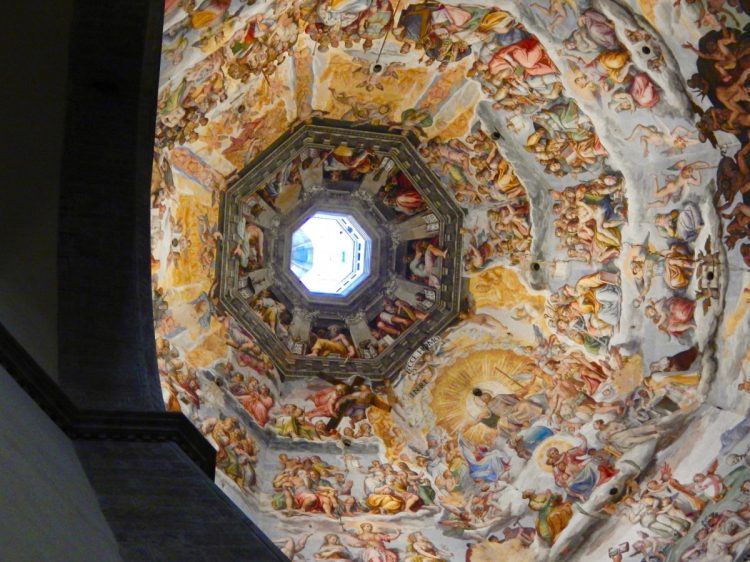
Cathedral Dome, Florence

From that environment came the worlds most stunning collection of art, architecture, gardens and trade skills that survives even today.

The city is divided into two halves by the Arno River each with its own incredible attractions. The north half is home to the cathedrals, high end shopping and the train station, while the southern half is home to more museums and galleries and the incredible Piazzale Michelangelo with its amazing views of the city.

This urban hike starts at the Ponte Santa Trinita, the arched bridge over the Arno River and covers the southern city half. To walk the entire circuit will take two and a half to three hours without visiting the palaces , museums and gardens.

Begin the walk by going south from the bridge along the Via Maggio. A half block on your left is the Palazzo Frescobaldi palace and gardens. The Frescobaldi gardens, accessible through a long entrance hall, is a large grassy space with beautiful azalea bushes and an imposing fountain, an original element that has survived from the 16th century in the old courtyard. Two bronze sculptures by contemporary artist Arnaldo Pomodoro are found amongst the gardens flower beds.

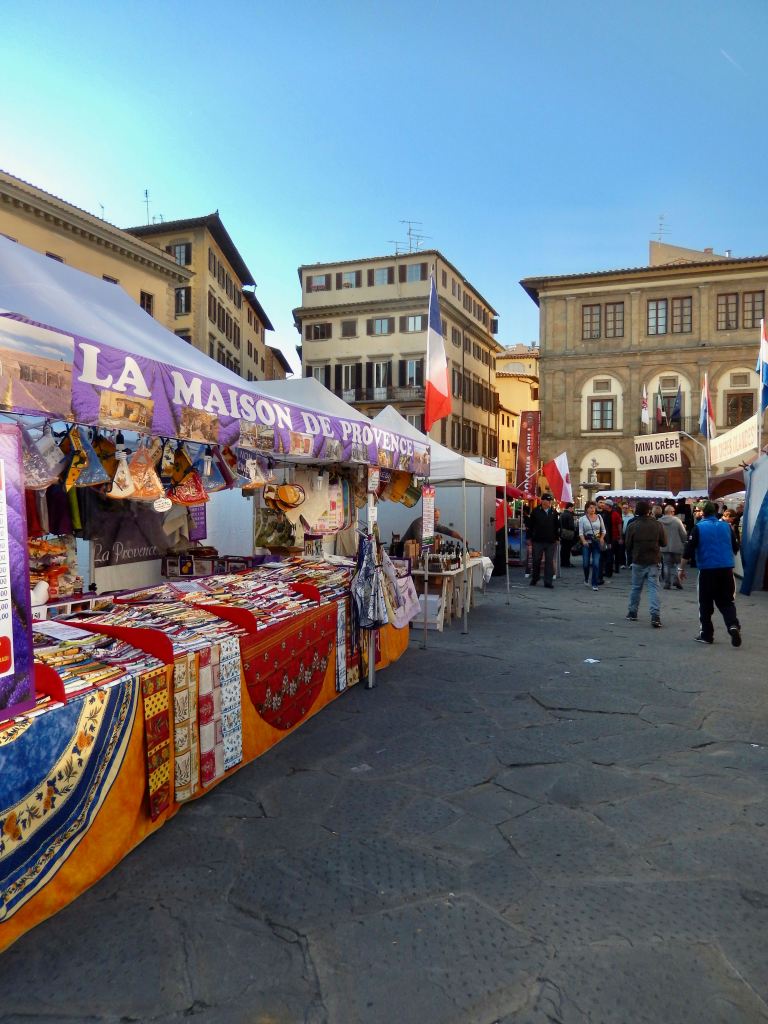
In another block turn right onto Via dei Michelozzi. After a block you’ll come to Piazza Santo Spirito turn left and walk a couple of blocks along the Piazza. Piazza Santo Spirito is the main square in the Oltrarno area of Florence which is known for its artisans and street markets and has a bohemian and arty character.

Turn left at Via Mazzetta and stroll past numerous neighborhood shops and take-away food shops until you come to Piazza de Pitti and turn left.

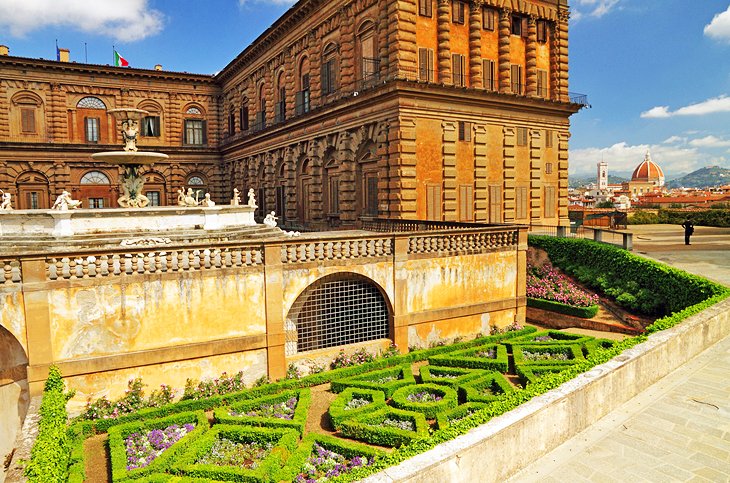
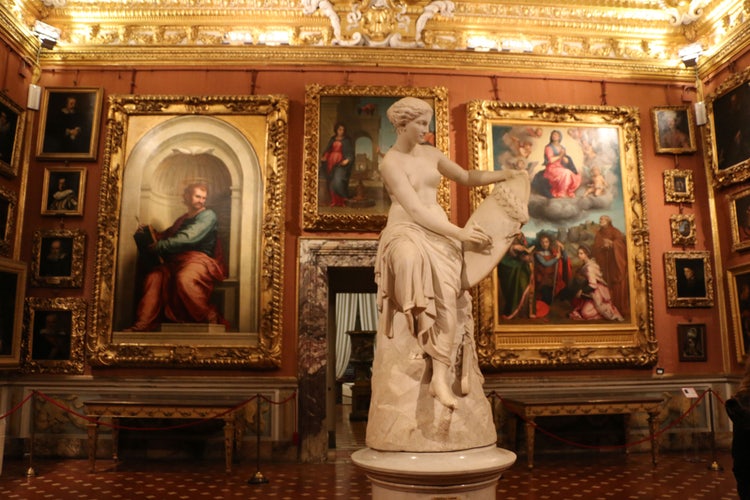
On your right for the next several blocks you will pass the Pitti Palace. In the Palazzo Pitti are a number of art galleries, a costume museum and a modern art gallery. Tickets are required for admission to many of these famous collections. Behind the palace are huge and beautiful gardens featuring the Grotta del Buontalenti del Giardino di Boboli or the Buontalenti Grotto in the Boboli Gardens. A fascinating place, where you feel like you walked into a fairy tale. The Grotta also known as Grotta Grande or the Big Grotto was built by Bernardo Buontalenti between 1583 and 1593, and was commissioned by Francesco I de’ Medici.

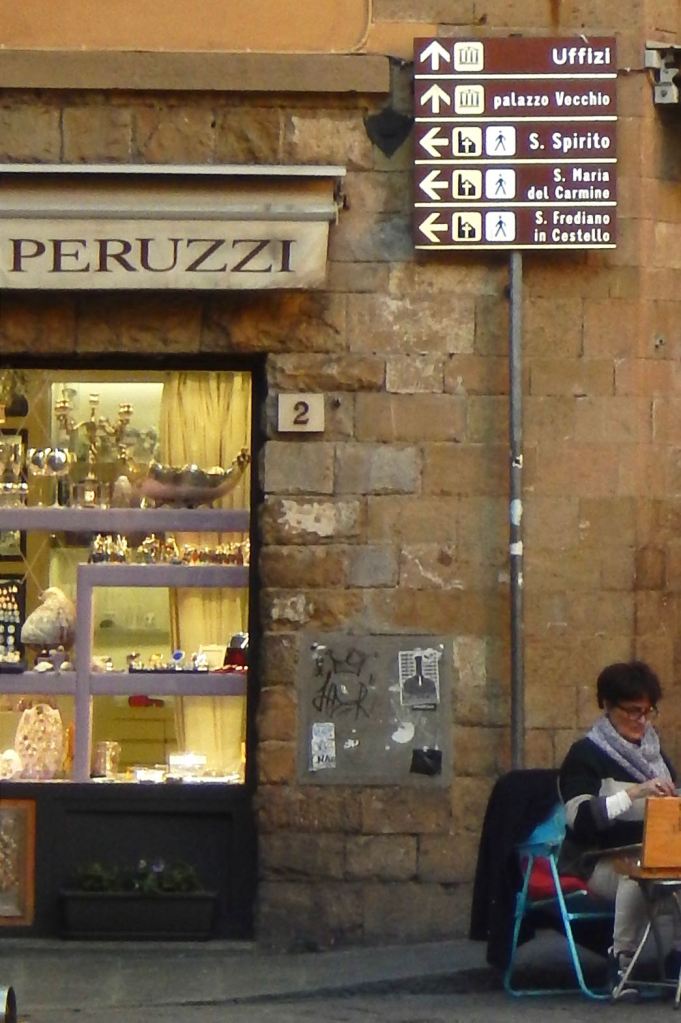
The city provides excellent signage for finding sights

As you approach the river you will find yourself at a square and the entrance to the Ponte Vecchio, a medieval bridge featuring a number of jewelry and craftsmen shops. Take some time to stroll the bridge.

From the Ponte Vecchio again go south at Oltrarno, head left down Via dei Bardi and continue about three quarters of a mile. You will pass the Bardini Museum on your right with access to the Bardini Gardens. The road changes into Via di San Niccolò and takes you to the door of San Niccolò in piazza Giuseppe Poggi, which was once one of the gates to the city during Medieval times.

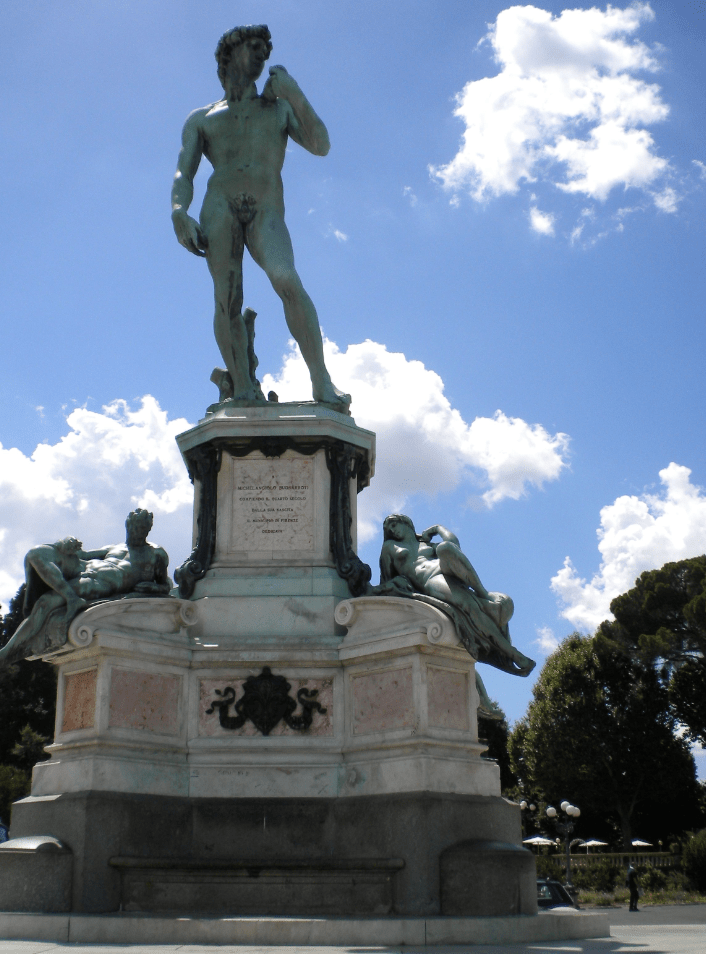
To your right are staircases and paths leading up from the “old door”, which now resembles more of a tower than a door. Take the steps up, cross the road past the fountain until you reach the top, where you will find a full size copy of Michelangelo’s David and an incredible view of all of Florence.

Descend through Giardino della Rose, a terraced rose garden, to the wall at Porto San Miniato and turn left on Via di Belvedero. Follow it to Porto San Giorgio where turning right you will see the Villa Bardini and its large gardens. You can walk the gardens paths back down to Costa S. Giorgio toward the Via de Guicciardini where a right turn will take you back to the Ponte Vecchio.

A 3 hour hike around some of the major attractions in Florence Italy. Visit the Pitti Palace and gardens, Piazzale Michelangelo overlooking Florence and the iconic Ponte Vecchio.


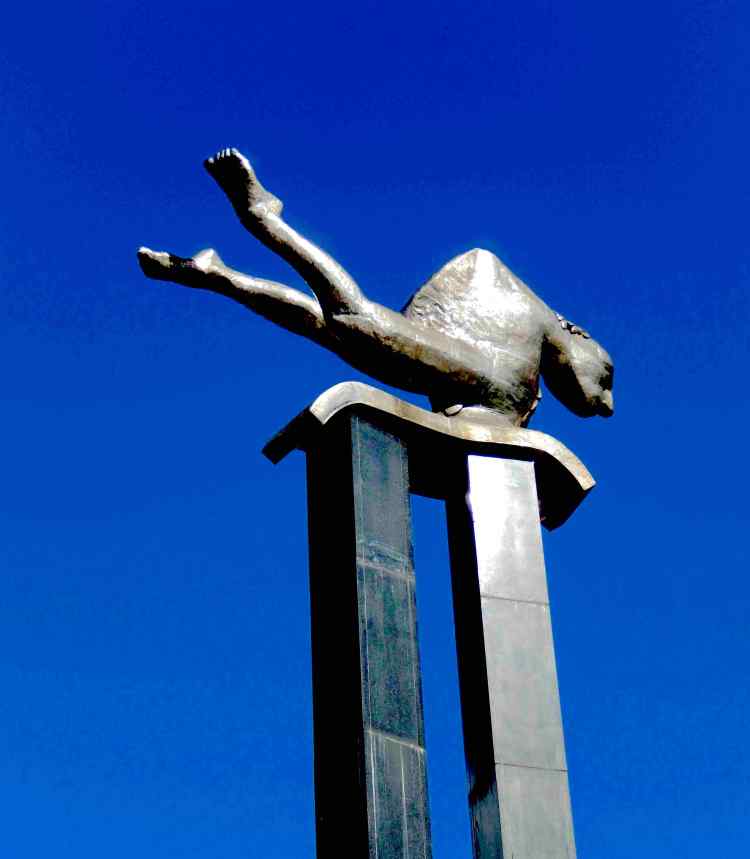
Image Of The Day • O Sereo?


Since its installation in 1991, the prominently placed statue has been the subject of heated controversy, despite the fact that it is the work of the renowned Galician sculptor Francisco Leiro Lois. Still, some consider it the new icon of Vigo.


O Sereo is a steel sculpture created by Francisco Leiro that is commonly referred to as the “Fish Man.” It is situated in the heart of Vigo and serves as a significant landmark for the city. Though some may find it unattractive, it still manages to draw attention from visitors due to its unique appearance.

Below Are A Few Of Our More Recent Posts You Might Find Interesting…

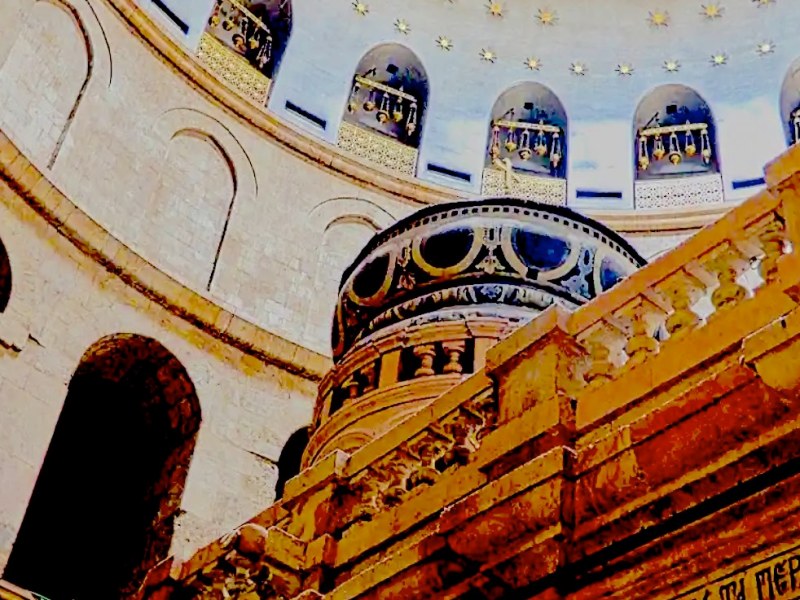
The Church of the Holy Sepulcher

The History Behind The Celebration Of Easter Without question the holiest site in all of Christendom is located in the Christian Quarter of Jerusalem. It represents the location where Jesus was crucified and where his body was laid to rest. Today there is a high level of certainty that the location has been actually identified.…

Exploring South America

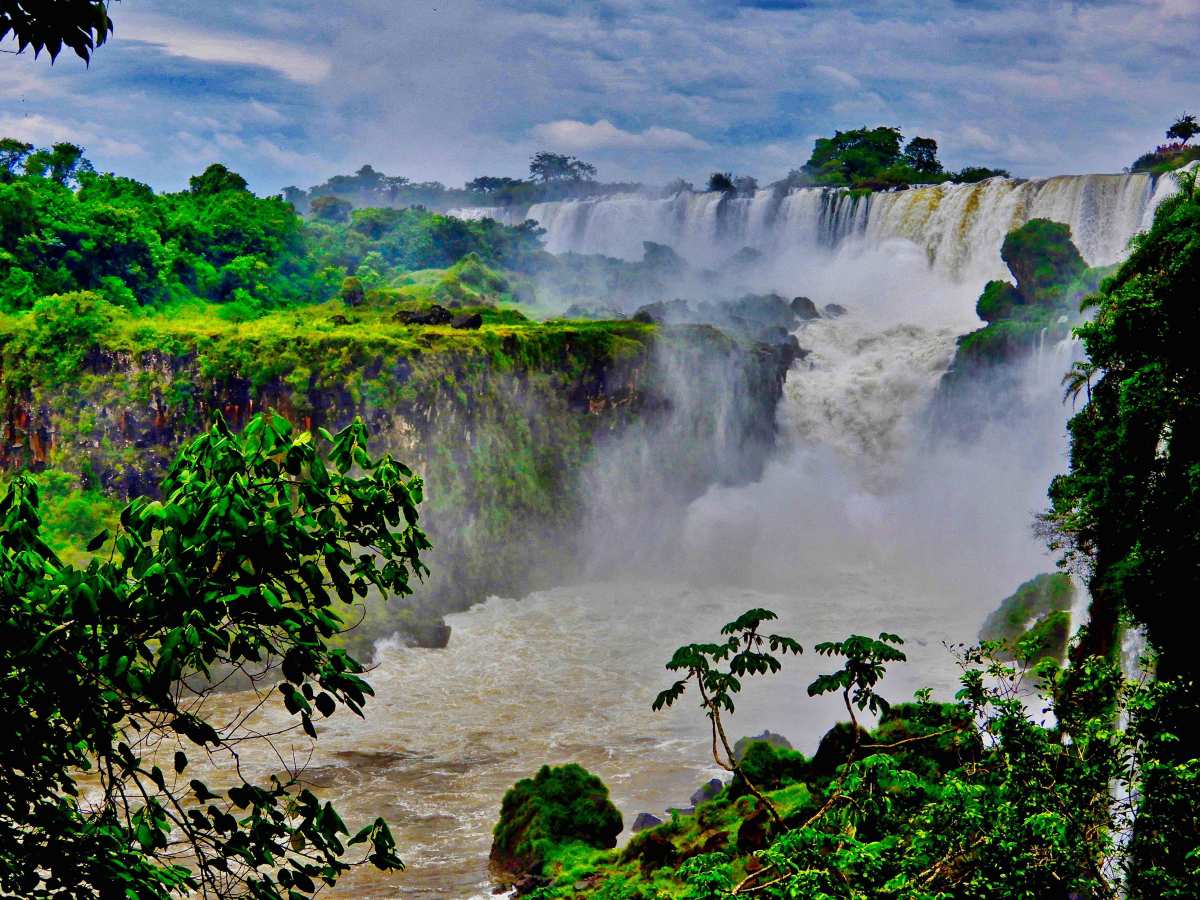
with From Cartagena, Columbia to Ushuaia, Argentina the South American continent is an amazing land of natural wonders and human accomplishments. Explore the islands of the Galapagos or hike around Iguazu Falls, climb up to Machu Picchu or cruise through the Panama Canal. You can even cast off for a trip to Antarctica or walk…

Where In The World #5?

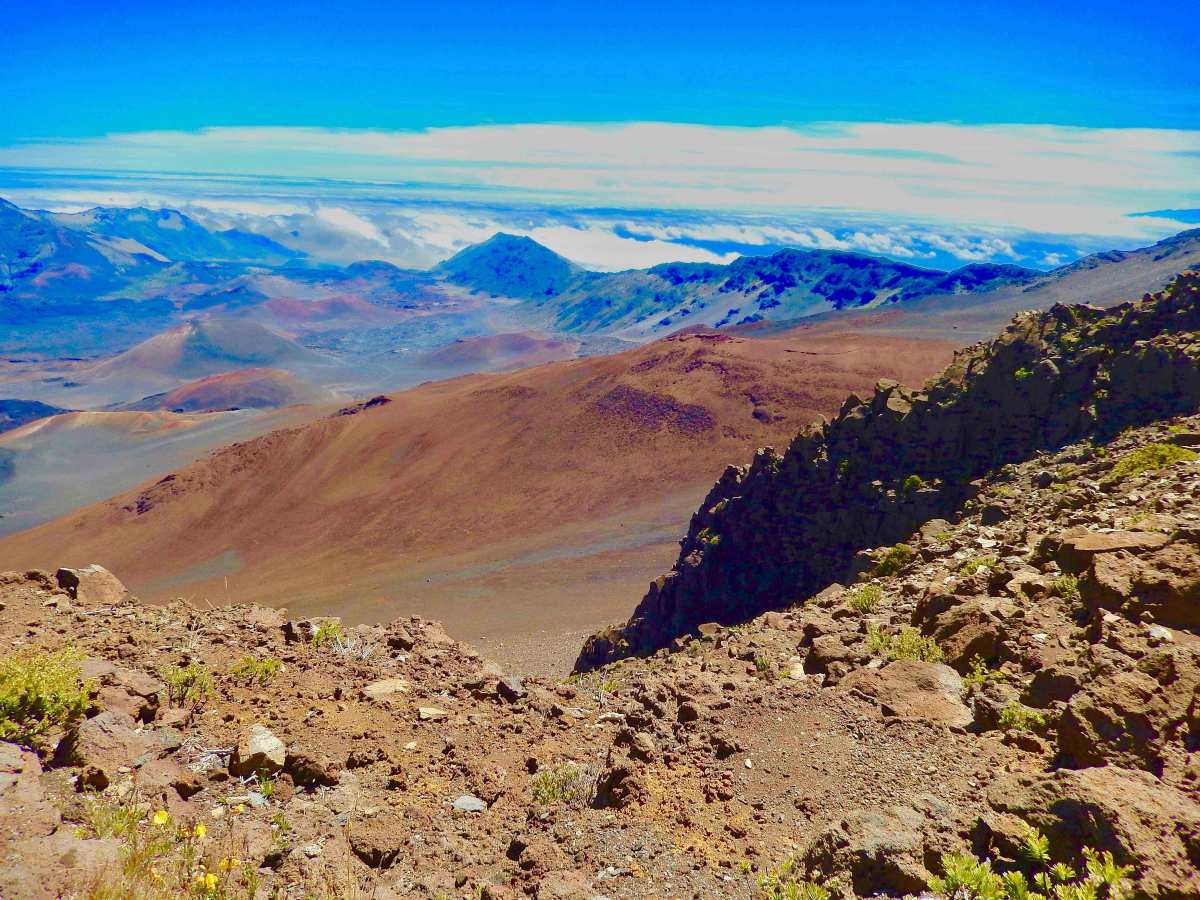
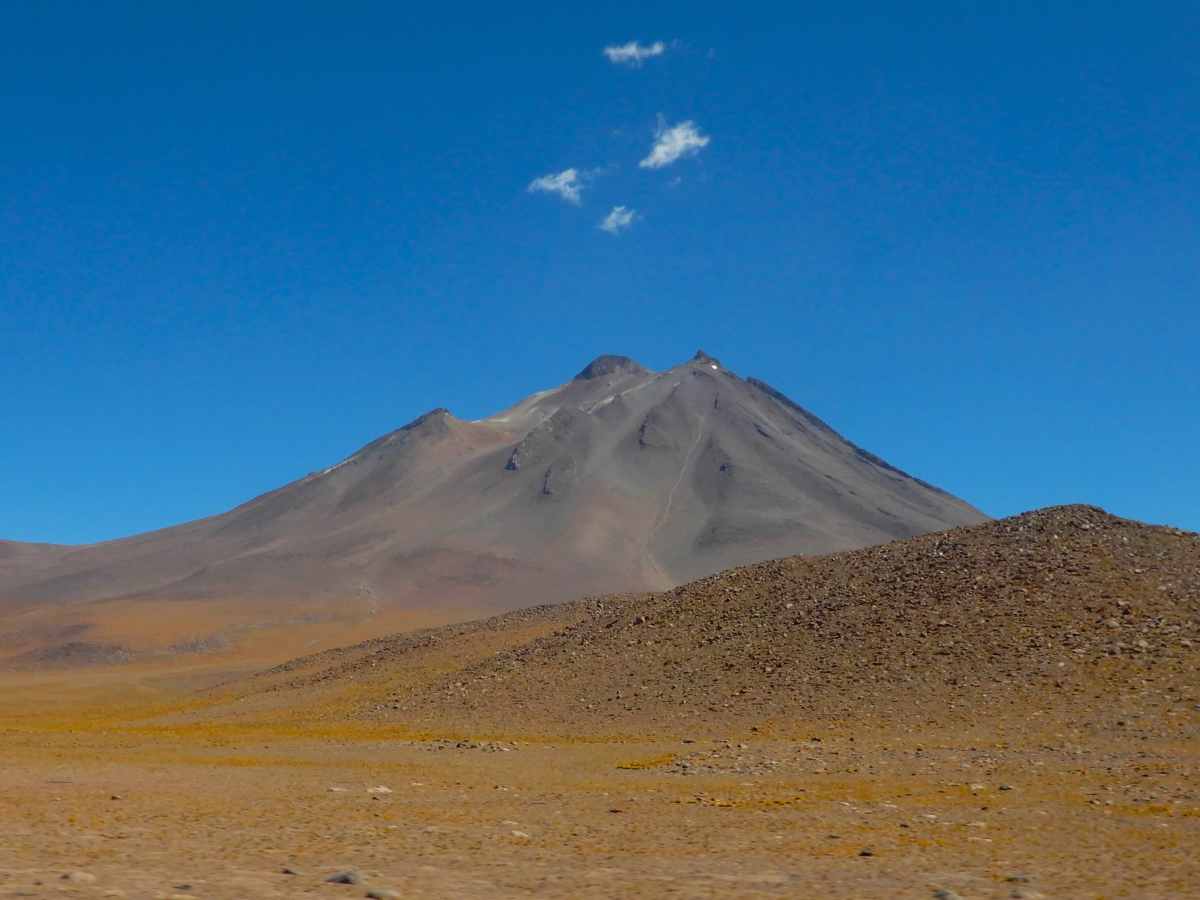
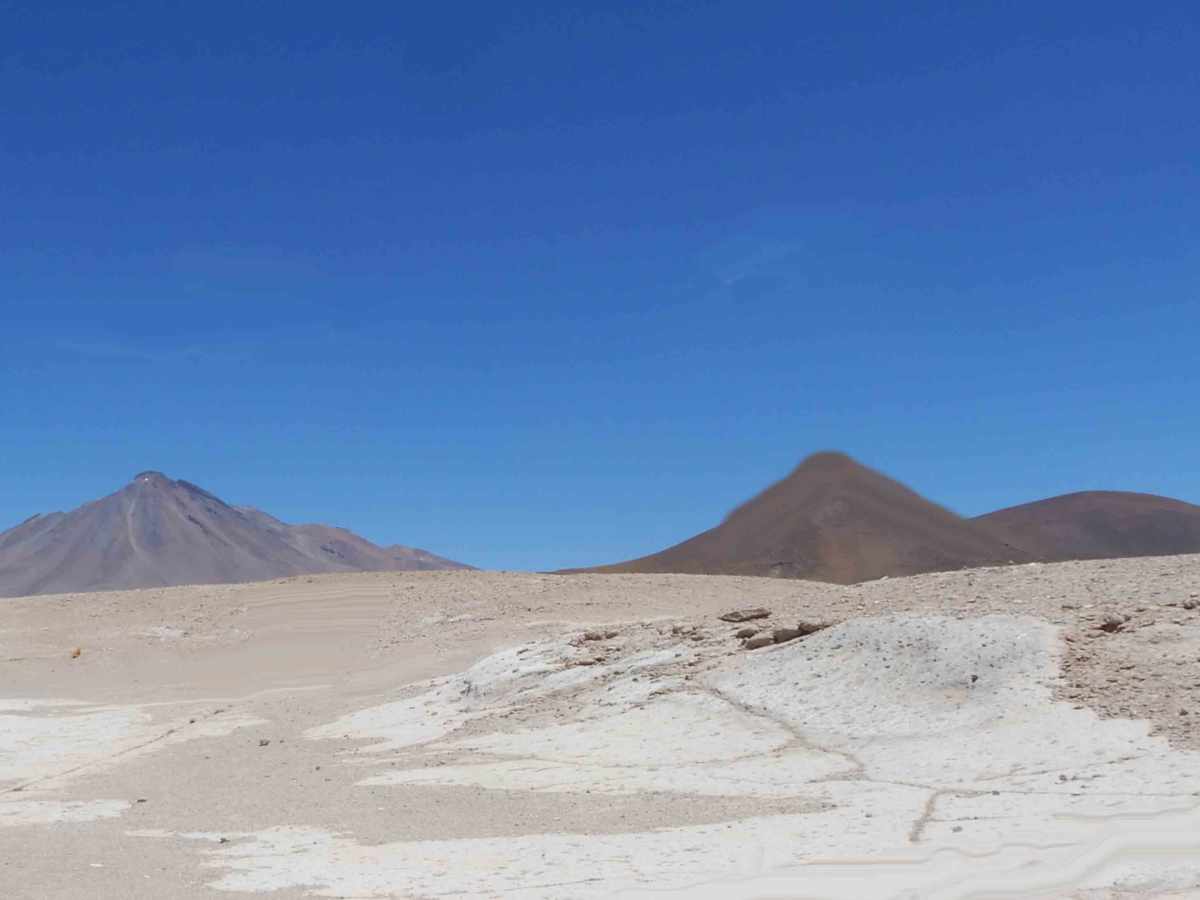
It seems so other worldly, like Mars or the Moon but it’s right here on Earth. It’s so alien that the NASA space program uses it to test rovers and other equipment. Find the answer HERE. Here Are A Few Of Our More Recent Postings You might Find Interesting…

Todays Image • A King’s Ransom

A Tale Of Richard The Lionheart

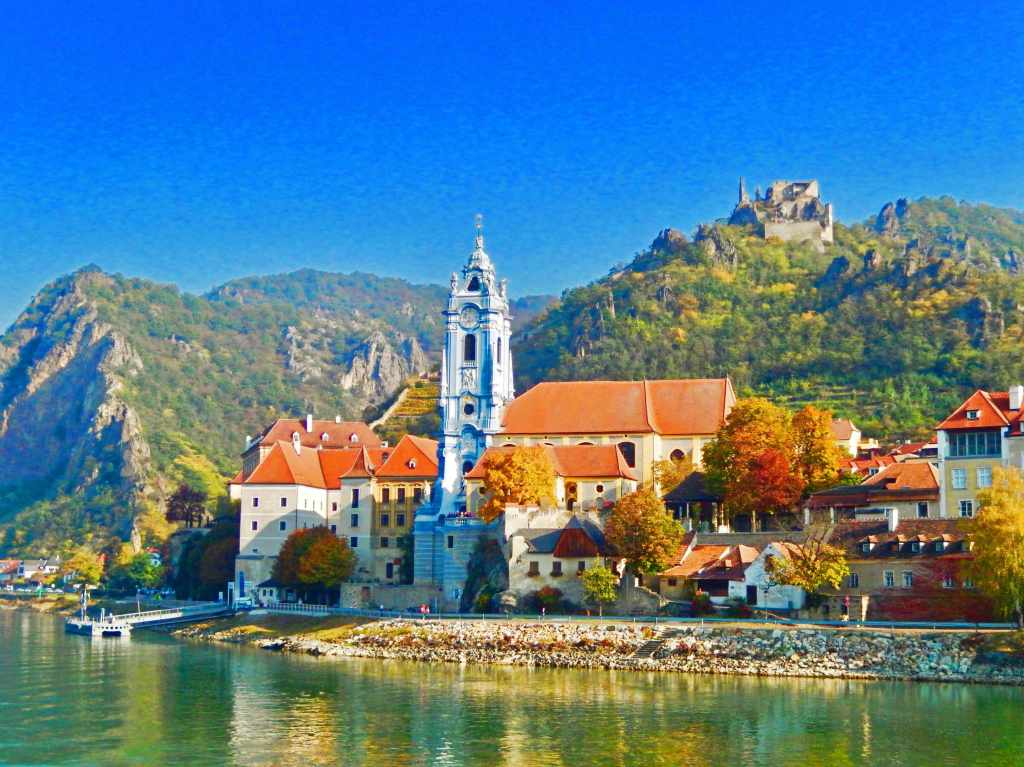
The town of Dürnstein on the Danube in Austria sits below the ruins of Trifels Castle where King Richard I was held prisoner.

King Richard I ‘The Lionheart’ was taken prisoner in 1192 in Austria after the Third Crusade. He and his knights were sailing home from the Crusades by way of the Adriatic and a storm drove his ship ashore near Venice. Because of a feud with Duke Leopold he traveled in disguise, but was discovered near Vienna in December 1192 and imprisoned. He was held by the Holy Roman Emperor, Henry VI, until a ransom was paid. After Richard I was captured, his younger brother, John, became King of England and may have played a role in slowing the collection of the Royal ransom.

The castle where Richard I was held was Trifels Castle on the Danube, which is located in modern day Austria. Its ruins sit today above the town of Dürnstein pictured here.

The Castle Prison On The Hill

Here Are A Few Our More Recent Posts You Might Find Interesting…

Discovering Kruger National Park, South Africa

Visiting Kruger: The Ultimate Safari Experience For The Trip Of A Lifetime Rated as one of the world’s greatest wildlife experiences and reported to be the number one African safari destination, Kruger National Park is not to be overlooked when considering your travel plans. Larger than many countries and containing mostly undeveloped land, Kruger is…

Todays Images • Mykonos

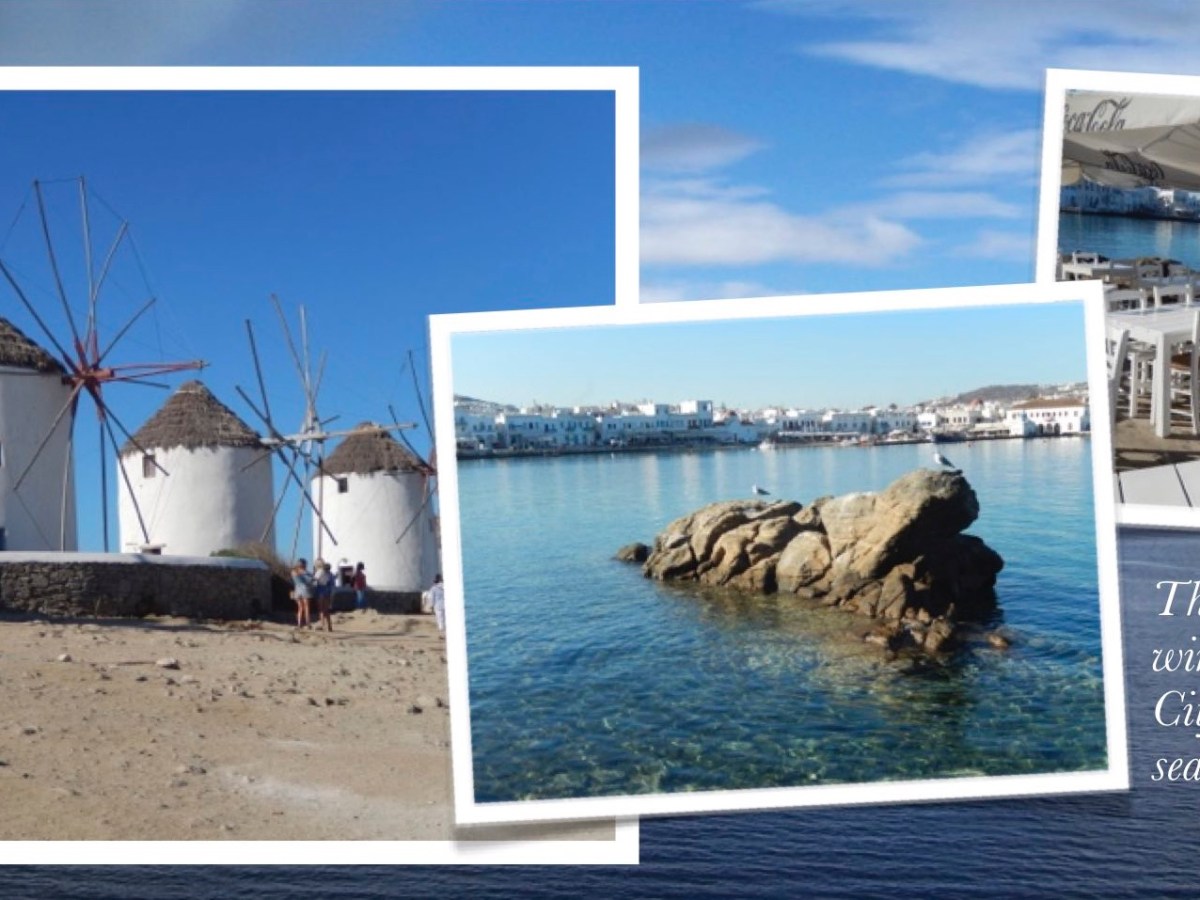
The Iconic Windmills Of Mykonos. Traditionally, these windmills are heavy, three-story buildings made of stone, are circular in shape, reflecting the simple yet functional design typical of the Cycladic islands. They were primarily built by Venetians in the 16th century and continued to be constructed into the early 20th century for milling wheat. Mykonos is…

Where In The World #4?

What country claims this baked treat as its own? This is a traditional European pastry made from sweet yeast dough. This unique treat is crafted by wrapping strips of the dough around a conical baking tube, which is then grilled usual over coals till it achieves a golden brown color and crispy exterior. Answer •…

Civil Unrest, War, Natural Disasters and International Travel

We’re asking for your opinion… I think Clint Eastwood said it best; “If you’re looking for a guarantee in life, buy a toaster.” We have, over the years, visited over one hundred countries and on a few occasions we’ve found ourselves in some touchy situations, but we have always been cautious in selecting when and…

Belgrade’s Amazing Temple of St. Sava

Visiting Belgrade, Serbia

Islam Christianity And The Balkans

Located in Belgrade, Serbia, the Temple of Saint Sava, is a Serbian Orthodox church dedicated to the Saint, the founder of the Serbian Orthodox Church. It is located on the site where his remains were believed to have been burned by the Ottoman Turks during the occupation. It is one of the largest Orthodox churches in the world and a major pilgrimage site for Serbs. Its construction began in 1935 and was completed in 2004. The church is one of the largest Orthodox churches in the world, with a capacity for 10,000 people. The Temple of Saint Sava is built in the Neo-Byzantine style, with a central dome and four smaller domes. The interior of the church is richly decorated with mosaics, frescoes, and icons. The church also houses a museum and a library.
During the Ottoman conquest of Serbia in the 16th century, the Ottomans, in an attempt to eliminate the practice of Christianity in the region, destroyed the remains of Saint Sava, the founder of the Serbian Orthodox Church. It’s recounted how the Ottomans took the remains of body of Saint Sava and burned the Holy relic on the Vračar plateau in Belgrade. Afterwords Serbians recovered soil and ashes from the pyre and hid them. During the construction of the Temple of Saint Sava those remains were placed in a vault and added to the temples foundation.

Today Saint Sava remains a highly revered figure in Serbian history and culture. His destruction by the Ottomans is seen as a symbol of the suffering of the Serbian people under the Ottoman’s Muslem rule. The Church of Saint Sava is a testament to the enduring legacy of Saint Sava and the importance of Serbian Orthodoxy and is a major pilgrimage site for Serbian Orthodox Christians. The church is now a symbol of Serbian national identity and culture.

Looking for Travel Inspiration?

This Intentional Traveler features thousands of pages of information on destinations, great maps, amazing images, detailed travel help and just a few stories for the fun of it. Chance are we’ve got what you’ve been looking for, so take a moment and explore this incredible world with The Intentional Travelers. CLICK FOR GREAT TRAVEL IDEAS!…

Discovering Frank Lloyd Wright In Florida

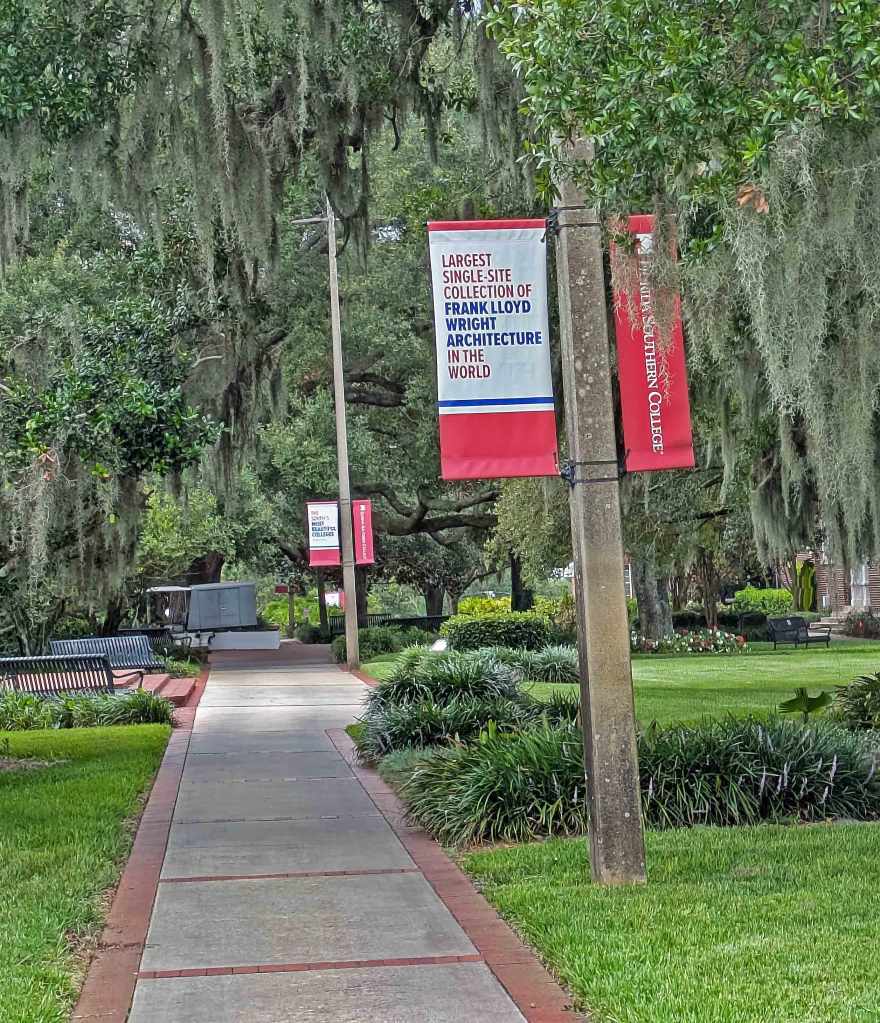
Lakeland, Florida isn’t usually considered a Sunshine State tourist destination but it still has some real overlooked jewels worthy of a visit. One particular gem is a small Methodist college with an amazing history. In 1938 the college convinced America’s greatest architect to take on the project of redesigning its entire campus making the school a landmark..

Florida Southern College hired Frank Lloyd Wright in 1938 after Wright’s son, John Lloyd Wright, had worked on a project with the college president, Ludd Spivey. Spivey was impressed by Wright’s work and invited him to submit a proposal for the campus design. Wright was one of several architects considered, but the board of trustees ultimately selected him due to his reputation in addition to his innovative and forward-thinking concepts.

Considered by many as America’s greatest twentieth century architect, Frank Lloyd Wright (1867-1959) was an architect, interior designer, writer, and educator and is known for his designs and contributions to the Prairie School architectural style. He designed over 1,000 structures, including Falling Water in Pennsylvania, the Guggenheim Museum in New York City, and the Robie House. He also was the creator of “organic architecture,” which emphasized harmony between buildings and their natural surroundings. Wright’s work has had a profound impact on architecture and design. He is credited with shaping the modern architectural landscape and inspiring generations of architects.

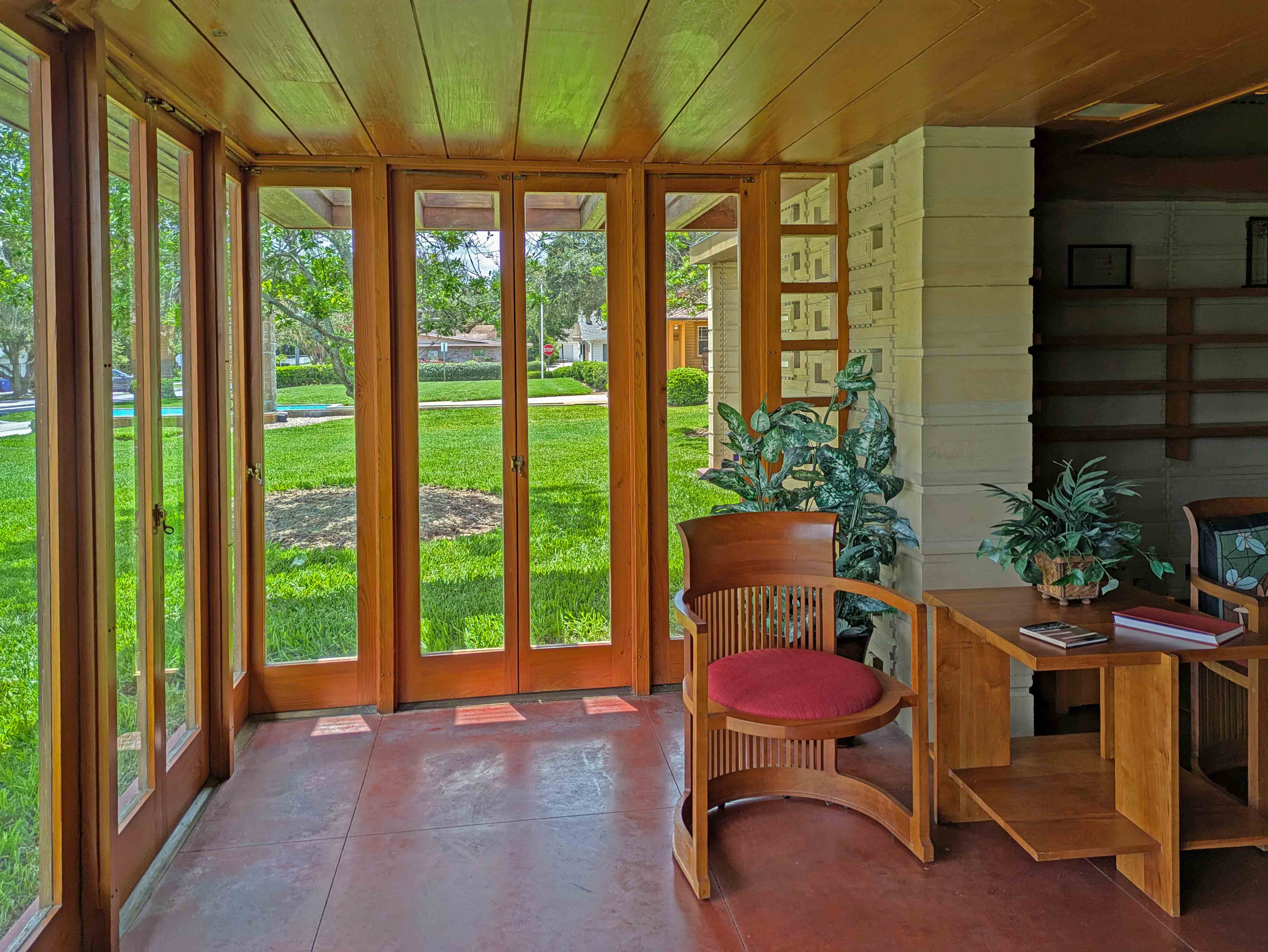
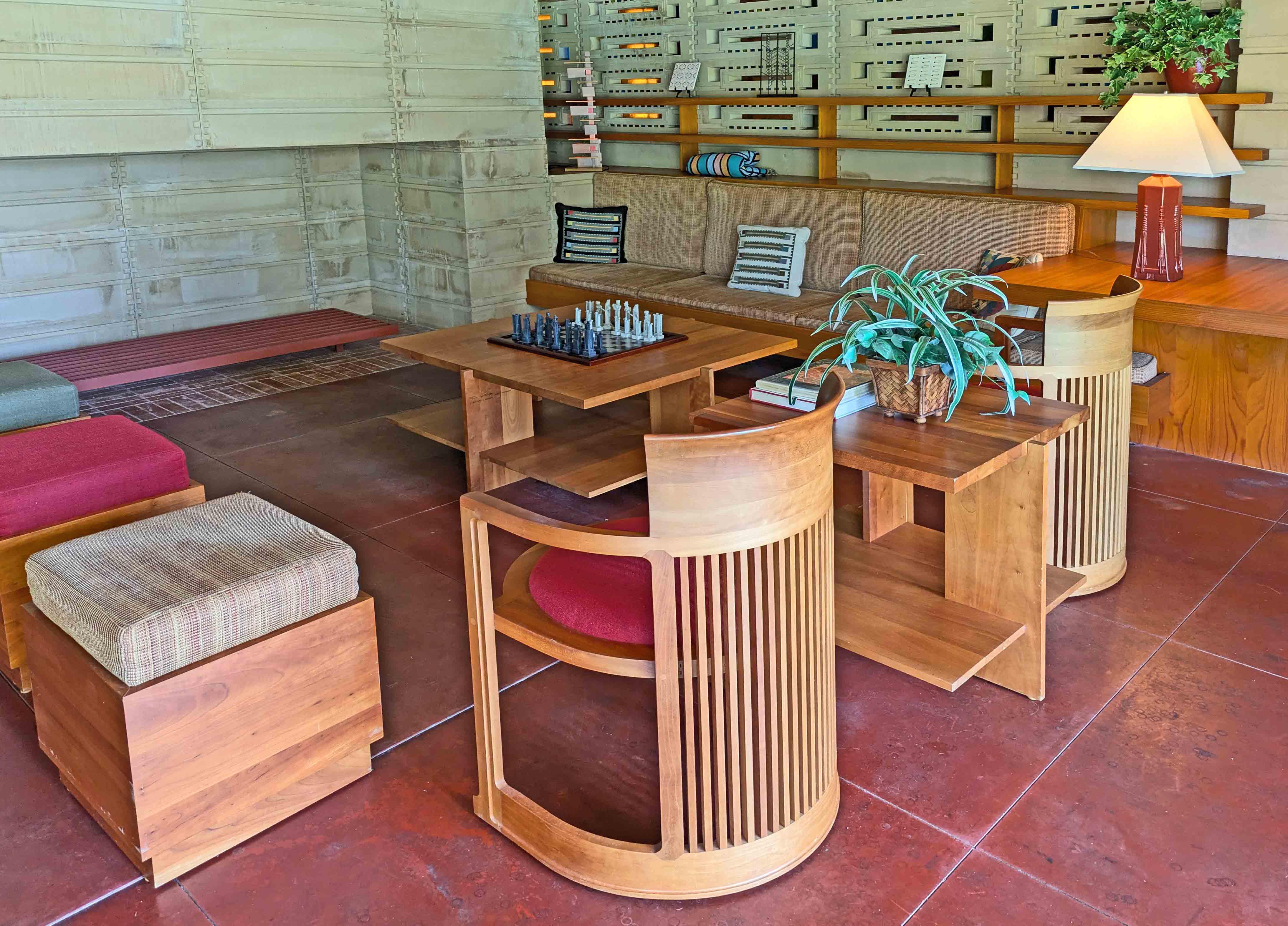
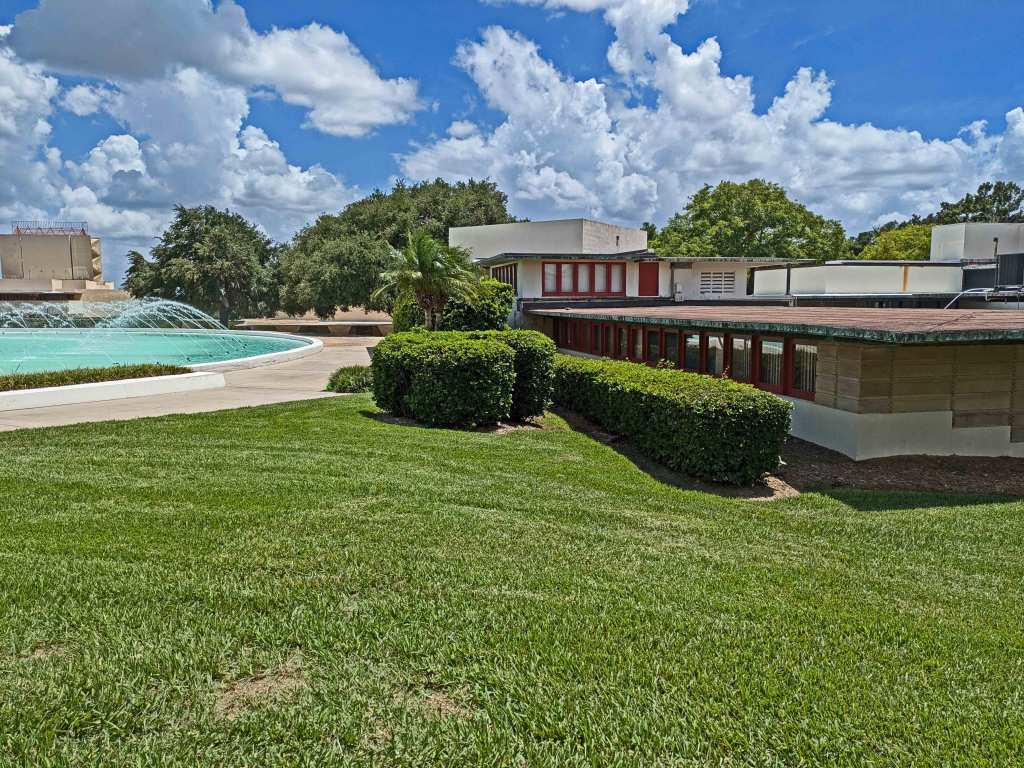
The college campus in the city of Lakeland, Florida became one of Wright’s largest projects that occupied years of his life. These buildings, collectively known as the “Child of the Sun” campus, are considered masterpieces of Wright’s organic architecture style, and reflect his belief in harmony between nature and architecture. He used natural materials like Florida beach sand mixed concrete, bricks, and cypress wood to create buildings that blend seamlessly with the surrounding landscape. His signature geometric shapes and open floor plans are also evident in the campus structures.

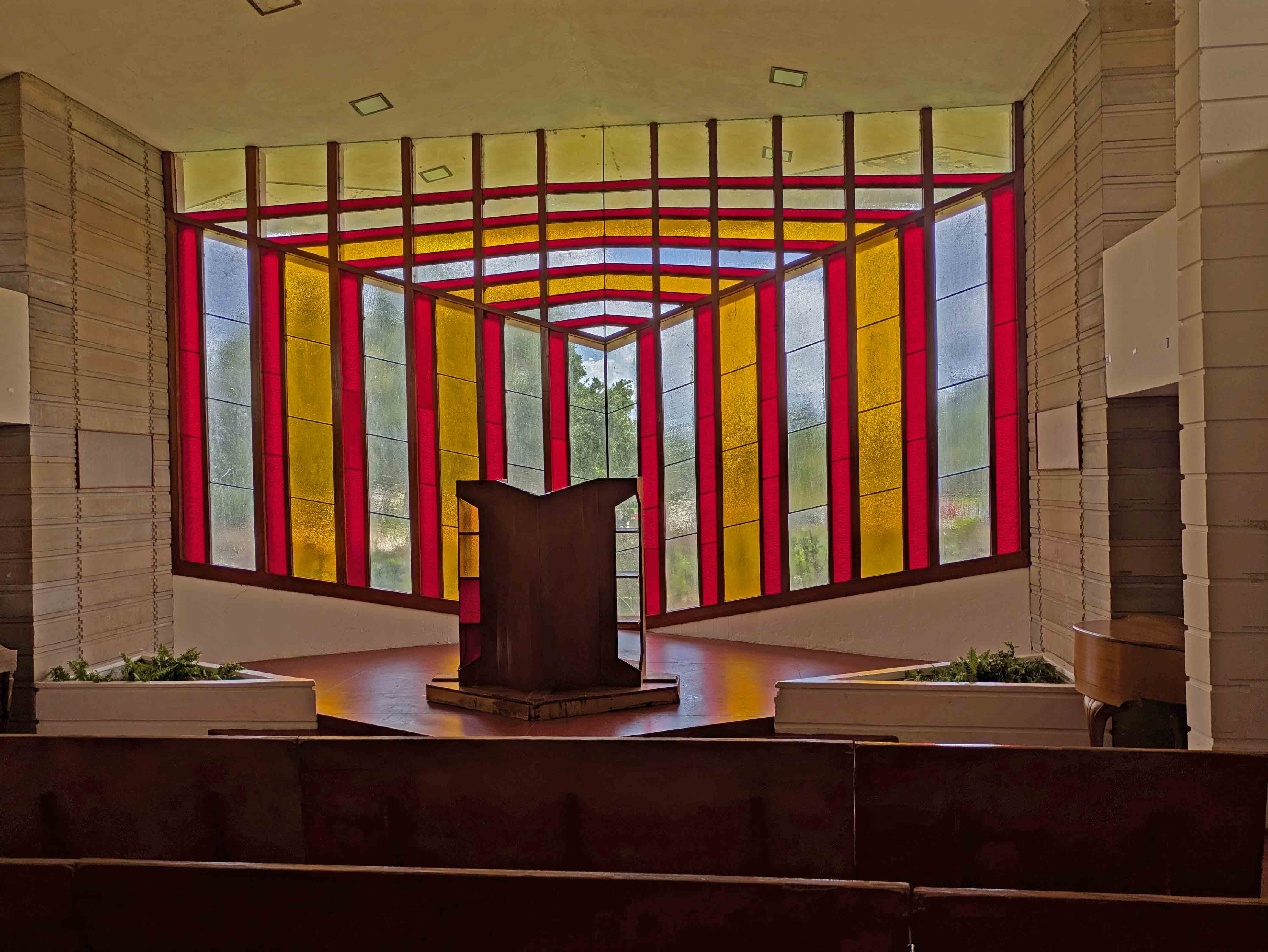
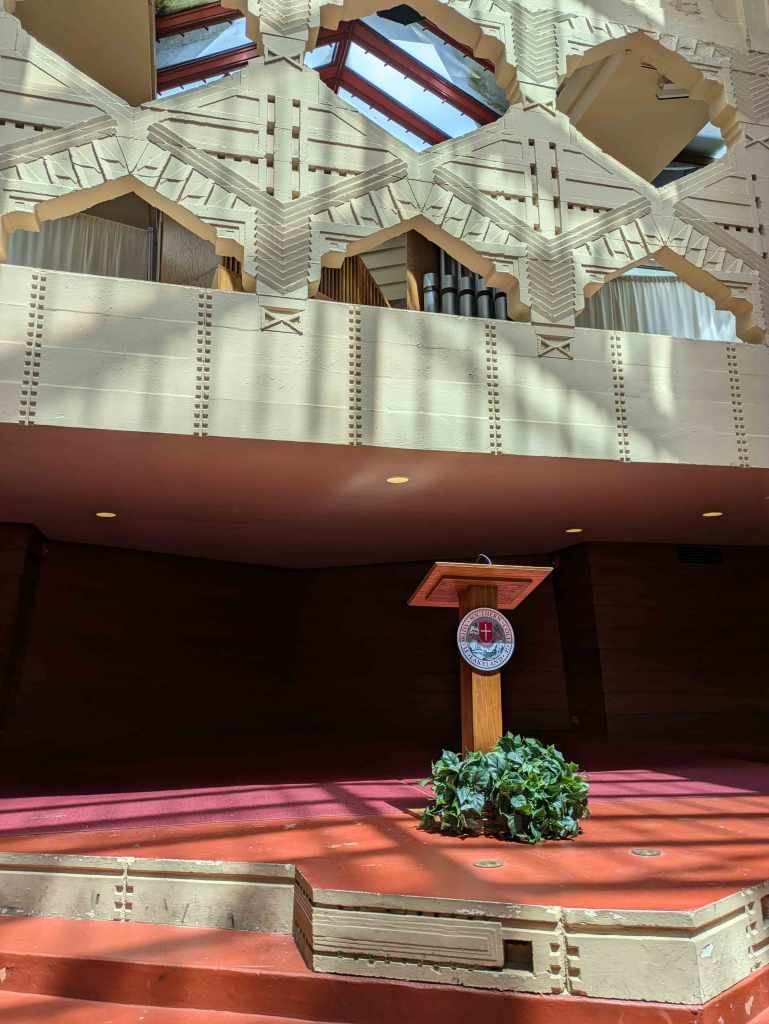
Some of the most iconic buildings designed by Wright at Florida Southern College include the Annie Pfeiffer Chapel, the Esplanade, and the Water Dome. The Annie Pfeiffer Chapel, with its spiraling roof and stained-glass windows, is considered one of Wright’s most significant religious structures. The Esplanade, a long, covered walkway, connects many of the buildings on campus and features a series of arches and columns. The Water Dome, a circular building with a reflecting pool, was originally intended as a library but now serves as an administrative building.

Arrange Guided Tours HERE

Tours begin at the Sharp Family Tourism and Education Center and GEICO Gift Shop. It was opened as part of an ongoing effort to better educate visitors to the Frank Lloyd Wright architecture at Florida Southern College.

There are several Frank Lloyd Wright tour options for visiting the campus starting with the Basic Campus Tour. It’s a 90-minute guided tour led by one of our experienced docents. The tour begins with an overview of the campus project, detailing how Frank Lloyd Wright assembled his vision for the college as well as the unique method of construction he chose for the site. As you walk the campus grounds, your guide will inform you of the history and design of all 13 Wright-designed structures. Additionally, the interiors of the Annie Pfeiffer Chapel, the Danforth Chapel, and the new Usonian Faculty House are visited.

Reservations are recommended and cos from $35 per person (Ten percent off for members of AAA, AARP and Active/Retired Military). Duration: 90 minutes Schedule: 10:00 AM and 2:00 PM – 7 days a week

Driving Directions: From Interstate 4, take exit #32 (US 98 South) The name of the street changes to S. Florida Avenue. Stay on South Florida Avenue about a half mile past the downtown area. Turn left on Frank Lloyd Wright Way (formerly McDonald St.) and go six blocks. The Tourism and Education Center is on the corner of Frank Lloyd Wright Way and Johnson Avenue in the butterscotch colored bungalow.

Above – Wright also intended there to be a cluster of single family home for the faculty located next to the campus. The community was never built but one house was eventually built from his plans and it’s located next to the The Tourism and Education Center and is included on the tours.