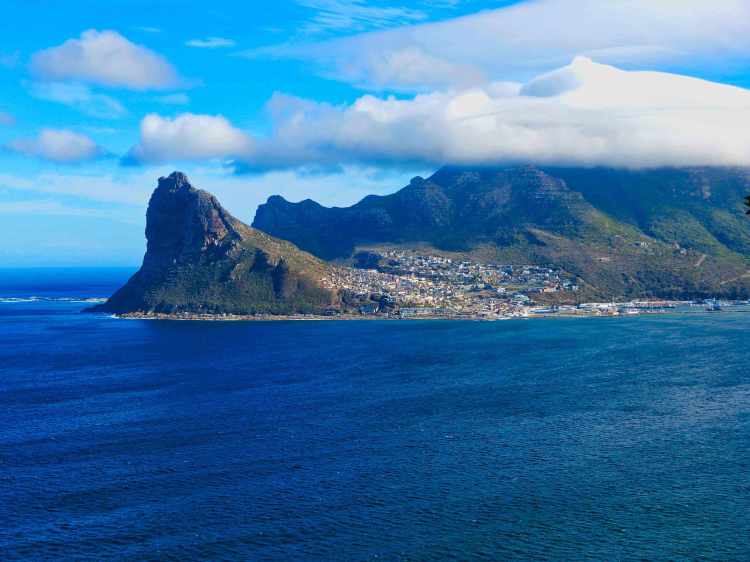
Cape Town, South Africa is located along the Atlantic coast between bays and the ocean and backed up by the northern end of the Sandstone Mountains. These mountains form the spine of the Cape Peninsula that terminates approximately 45 miles to the south at the Cape of Good Hope and Cape Point.
The Cape of Good Hope
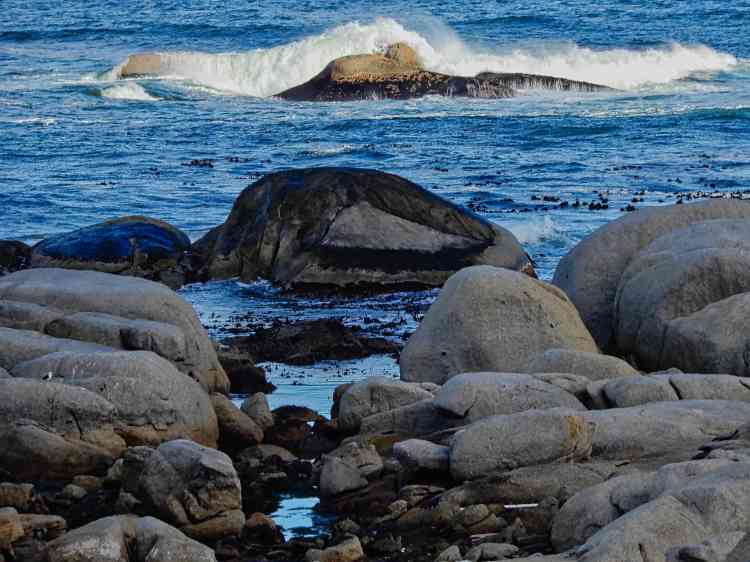
Just driving south along the coast we have never seen so many fantastic seascapes on such a grand scale.
We’ve just returned from a couple of weeks in South Africa and are still finding it hard to believe all that we saw in this remarkable country! The landscapes were amazing and the animal life was everywhere!
Come along as we visit historic treasures, natural wonders and vibrant cities set against backdrops that are endlessly changing and visually magnificent.
Join Us • We understand that the last thing you want is more emails cluttering up your inbox, but we promise we’ll work hard to make this worth while. Give us a try and if we don’t live up to our promise all you need do is click the unsubscribe link in our emails.
Don’t Miss Out, SubscribeNow!
You’ll receive notices of new posts, special features and updates right in your inbox…
Elephants approach a watering hole in Kruger National Park to drink and bathe. As they enter the water a hippo, who’s making the watering hole his current home, is keeping an eye on them.
Sunrise in South Africa’s Kruger National Park
Taken while visiting Kruger National Park, one of the largest game reserves in Africa, covering an area of over 7,500 square miles in the provinces of Limpopo and Mpumalanga in northeastern South Africa. Areas of the park were first protected by the government of the South African Republic in 1898, and it became South Africa’s first national park in 1926.
To the north is Zimbabwe and to the east is Mozambique. It is now part of the Great Limpopo Transfrontier Park, a peace park that links Kruger National Park with the Gonarezhou National Park in Zimbabwe, and with the Limpopo National Park in Mozambique.
The park is part of the Kruger to Canyons Biosphere, an area designated by the United Nations Educational, Scientific and Cultural Organization (UNESCO) as an International Biosphere Reserve.
Join us as we visit historic treasures, natural wonders and vibrant cities set against backdrops that are endlessly changing and visually magnificent.
Join Us • We understand that the last thing you want is more emails cluttering up your inbox, but we promise we’ll work hard to make this worth while. Give us a try and if we don’t live up to our promise all you need do is click the unsubscribe link in our emails.
Don’t Miss Out, SubscribeNow!
You’ll receive notices of new posts, special features and updates right in your inbox…
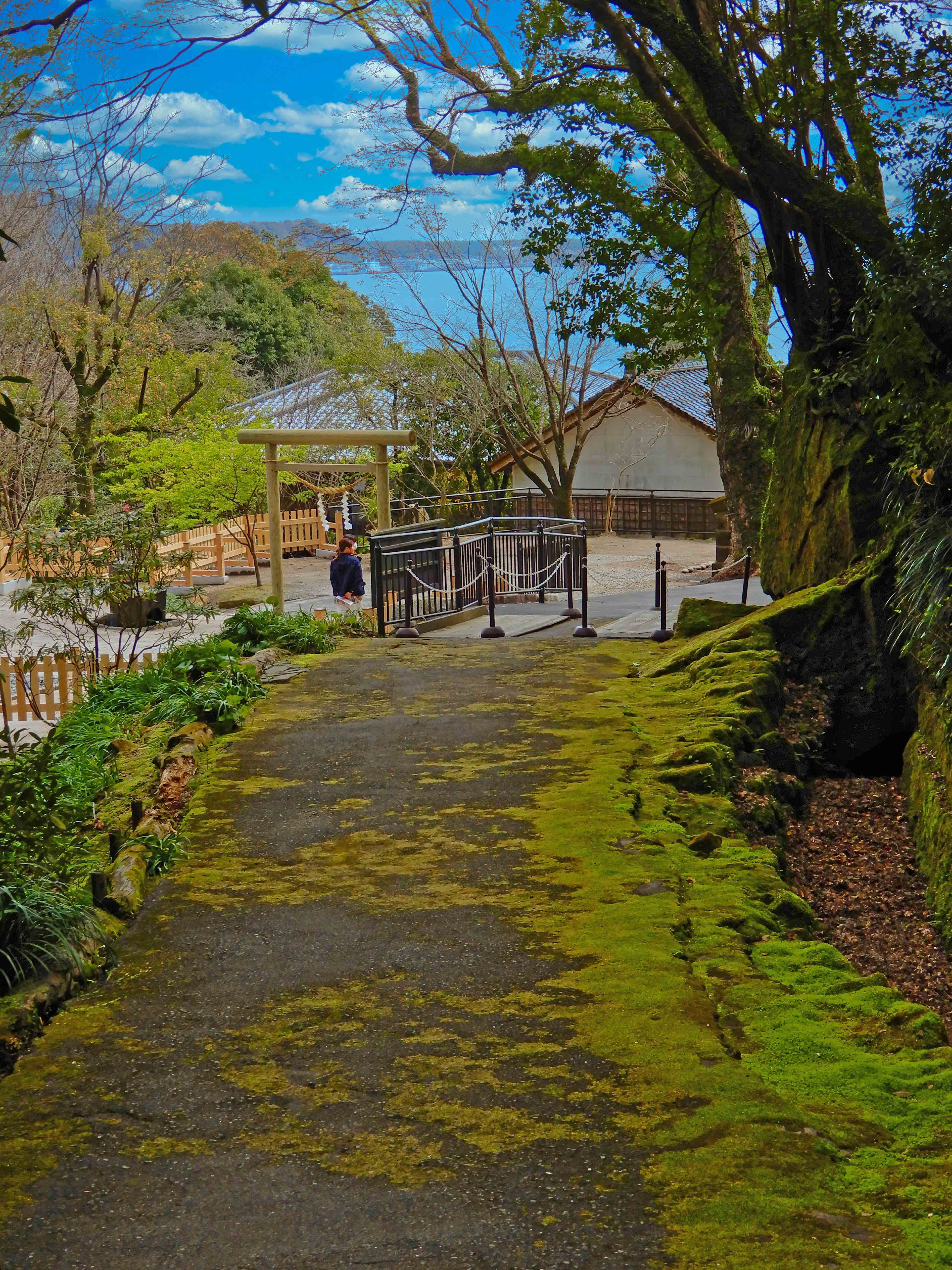
Sengan-en Garden is a traditional Japanese landscape garden boasting picturesque views of the Sakurajima Volcano, Kinko Bay and some interesting archeological sites. It was built in the 17th century by the Shimazu clan, who ruled the Satsuma domain for over 700 years. The garden boasts diverse features, including traditional Japanese structures, a pond, and a hilltop observation point offering panoramic views of the city and Sakurajima volcano.
Cultural Significance: Sengan-en Garden holds significant cultural value. It served as a stage for diplomatic negotiations between Japan and Western powers in the 19th century. The garden also houses the Sengan-en Museum, showcasing artifacts and exhibits related to the Shimazu clan and the history of Kagoshima.
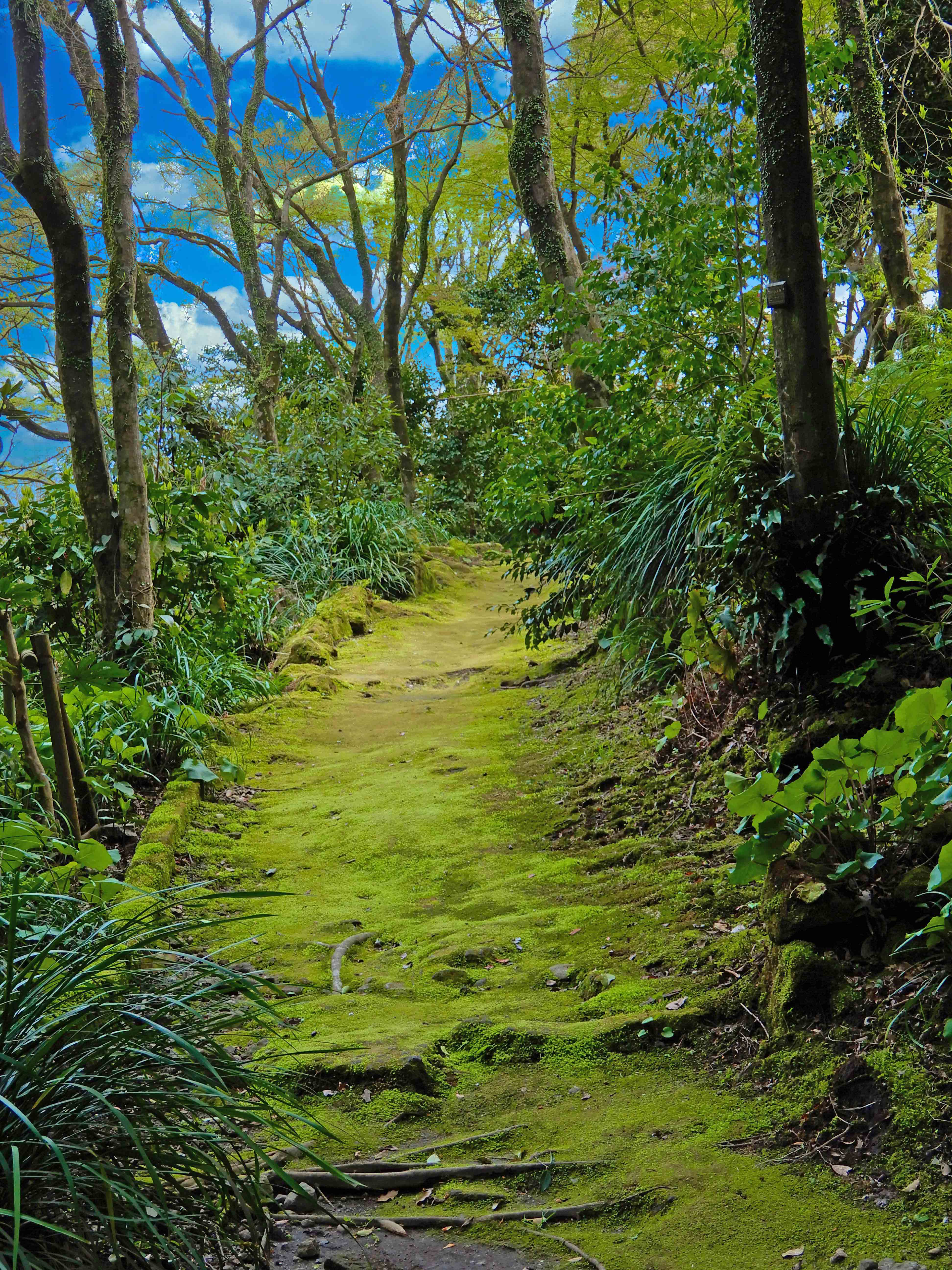
Scenic Beauty: Sengan-en Garden is renowned for its picturesque landscape. Visitors can stroll through the serene pathways, admire the meticulously maintained gardens, and enjoy the breathtaking views of the surrounding natural beauty. The garden is especially popular during the spring cherry blossom season and the autumn foliage season.
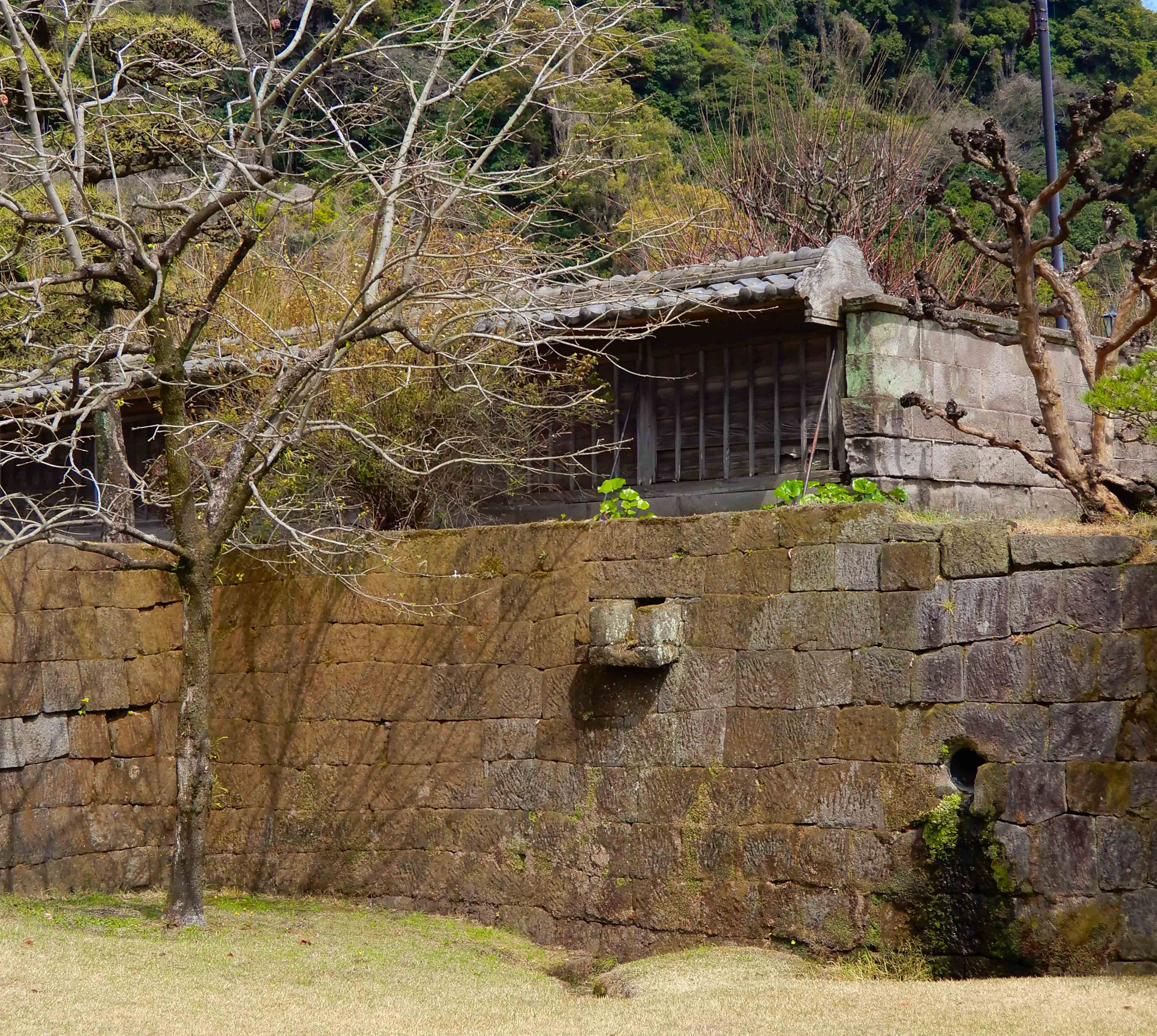
Located near the gardens is the remains of a reverberatory furnace
This cluster of western-style factories, Shuseikan, was built to strengthen Japan’s military. Satsuma Domain’s lord, Shimazu Nariakira, began directing the project in 1851 and iron manufacturing, ship construction, textile, and glass making were run here.
At the heart of all, there was a reverberatory furnace. Today, the foundation remains in Sengan-en. Reverberatory means a facility necessary for metal refining. It was used to melt iron needed to make cannons. The facility was designed based on a Dutch technical book. Back in those days, the main fuel was charcoal, and the water essential in the process of refining was brought from Sengan-en through a channel.
Besides iron manufacture, textile, glass making, printing and other innovations were promoted to accelerate Japan’s modernization.
Based on recent events, we thought it might be a good time to promote one of our favorite cities. We have visited Barcelona several times as well as passing through on our way to join cruises along with day stops while cruising. This city has so much to offer it belongs on a short list of great cities of the West like Rome, Paris, New York and London.
First off, it is an ancient city founded by Phoenicians and Carthaginians. The original name of the city was Barcino, probably named after the Carthaginian ruler Hamilcar Barca. The Romans arrived in the 1st century B.C. choosing it as their capital of the region. Ruins of the Roman period can be found in the Plaza del Rei and in the old Gothic quarter.
Plaça d’Espanya in 1929
After the Romans came the Visigoths and during the 8th century the city was occupied by the Moors and remained under their control for over 100 years. The Franks conquered the city and drove out the Moors and the Spanish Catalonians eventually replaced the Frank rulers and Barcelona became the cultural heart of Catalonia.
Plaça d’Espanya
Barcelona has always been a prosperous city and has used its’ assets to provide an international character to its’ culture. It hosted a world fair known as the Exposición Universal de Barcelona in 1888, which added to the cities’ significant architecture. An even more impressive set of structures were built around the Plaça d’Espanya at the foot of Montjuïc for the 1929 Barcelona International Exposition. Adding onto this tradition in 1992, Barcelona played host to the Summer Olympic Games.
Gaudi’s Basilica of the Holy Family
In addition to Roman sites, the old medieval quarter, Gothic cathedrals, and the buildings of the international expositions and events, Barcelona is home to the creations of Catalan architect Gaudi. Antoni Gaudí was born in Reus in 1852 and received his Architectural degree in 1878. Gaudí is admired by architects around the World as the creator of unique and distinctive architectural styles. His work has greatly added to the architectural character of Barcelona and you will see incredible examples of his work all around the city centre.
Perhaps Gaudi’s most recognized work is the Basilica and Expiatory Church of the Holy Family. It is the large unfinished Roman Catholic Church in Barcelona and is part of a UNESCO World Heritage Site. In November 2010 Pope Benedict XVI consecrated and proclaimed it a minor basilica.
Other sites of special interest are:
La Rambla – A large street and pedestrian mall stretching thru central Barcelona. It is famous for its’ restaurants, bars, nightclubs and shopping. It is our favorite neighborhood and is home to a number of nice, reasonably priced local hotels. Two which should be considered are Hotel Curious and Hotel Arc De Ramblas. Both offer a great location and reasonably priced (but small) rooms.
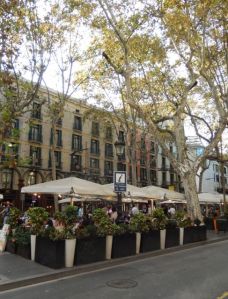
Plaça Reial
Plaça Reial – A square with a large fountain and ringed by good restaurants, many with outdoor seating. It is located just off La Rambla.
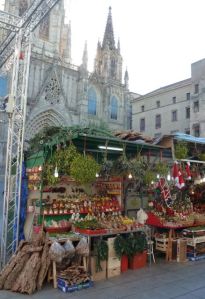
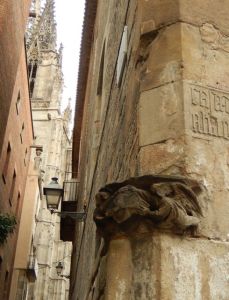
Cathedral of Barcelona – the Gothic cathedral and seat of the Archbishop of Barcelona, Spain. The cathedral was constructed from the 13th to 15th centuries, with the principal work being done in the 14th century. From the end of November until just before Christmas it is home to Fira de Santa Llucia, the largest Christmas market in the city.
Christmas market at Fira de Santa Llucia
Basílica de Santa Maria – The church was built between 1319 and 1391. The style of the church was Catalan Gothic with a single nave. It has a light and spacious interior but is devoid of the imagery commonly found in Gothic cathedrals.
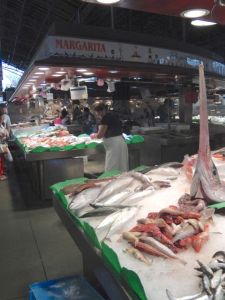
La Boquería
Mercat de Sant Josep de La Boqueria – often simply referred to as La Boquería, is a large public market in the Ciudad Vieja district. It is one of the city’s foremost tourist landmarks with an entrance from La Rambla. It is a favorite site of ours for strolling through the food booths and it is a good place to purchase Spanish smoked paprika to take home.
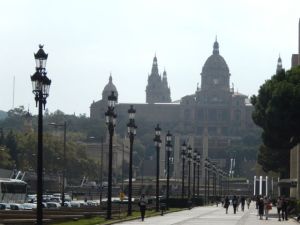
Palau Nacional – (Catalan for ‘National Palace’) was the main site of the 1929 International Exhibition on the hill of Montjuïc. Since 1934 it has been home to the National Art Museum of Catalonia.
Palau Nacional
Local Eats
No trip to Barcelona would be complete without paella! Maybe not invented here but surely perfected here.
Try “la bomba” (meaning the bomb). With its’ roots in violent resistance, it’s basically a tennis ball-sized potato croquette served with two different sauces and is a Barcelona original.
La Rambla Prominade
Pa amb Tomàquet which is literally “bread with tomato,” is a bread rubbed with garlic and the juice of a tomato and seasoned with olive oil, salt, and pepper. Locals will eat it with cheese and slices of meat any time of the day.
Crema Catalana! Made with a vanilla custard and fired to form a glassy crust, it’s the Barcelona version of “creme brûlée.”
In Barcelona, the one cheese you simply must have is mató, an unsalted goats cheese. Soft, sweet, and spreadable, the locals eat this with honey and walnuts – a perfect dessert!
Last but certainly not least is Tapas which is an institution in this city. Be sure and try a sampling along with some excellent Spanish ports, wines, sangrias and vermouths.
If you are in the La Rambla area and are looking for an inexpensive place to eat we would recommend Restaurant La Poma (Pizzeria Mediterránea La Poma). It is modern, reasonably priced with a good selection of pizza, pasta and wines.
We have also had tapas and drinks at Ocaña in the Plaça Reial. Good prices, attentive service and the perfect place to sit outdoors and people watch.
A Spanish chain that was trying to gain a foothold in America is 100 Montaditos (Cerveseria 100 montaditos). The Chain features many inexpensive Spanish mini-sandwiches plus beer & wine in a tavernlike setting. There are four or five locations around central Barcelona.
The best neighborhoods to shop
Barcelona has become one of Europe’s shopping capitals and, in contrast to London, Paris or Rome, it is not only noted for setting new fashion trends, but is also still relatively inexpensive.
La Rambla, as already mentioned, is a good location for shopping but trends toward discount stores and souvenir shops. Just up from La Rambla is Plaça Catalunya featuring shops with internationally recognized brands such as Chanel, Armani, Cartier, Miró, Mont Blanc and Zara. In the same area is the Hotel Actual which offers nice rooms at a reasonable price.
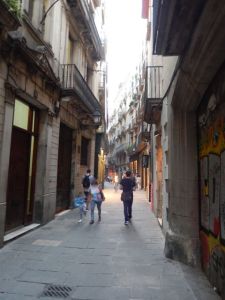
Alternatives to the big names and stores are found in the narrow streets and alleys of the Old Town. There are countless small shops featuring jewelry, beads, house wares and souvenirs.
In Barrí Gotic (the Gothic Quarter), you will find antique shops, small food markets and new fashion designers.
The El Raval area has an international population featuring a mix of foreign supermarkets and shops which gives the district a multicultural atmosphere. You’ll find discount stores, music shops and small boutiques featuring ethnic clothes.
Add your rating for this post to encouraging the author…
Both explorers and people who are interested in the natural world have a deep-seated desire to visit Alaska because of the state’s wild and untamed beauty as well as its harsh terrain. Even if the prospect of venturing out into this wide wilderness seems exciting, the way in which you choose to spend your time there is just as significant. In recent years, there has been a growing trend favoring smaller cruises in Alaska, and there is a logical rationale for this shift in consumer preference. Let’s go deeper into the one-of-a-kind allure and several benefits of setting sail on an Alaskan excursion onboard a more intimate cruise ship.
1.Explore Nature:
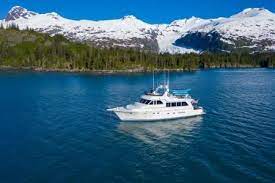
Connecting with the Wilderness: The unspoiled wilderness of Alaska is where you’ll find the actual heart of the state. An intimate encounter may be had on board a small boat, which gives visitors the opportunity to get up close and personal with the breathtaking scenery, glaciers, and wildlife that distinguish this northern wonder.
Access to Remote Locations: Smaller cruise ships, as opposed to larger vessels, are better able to handle congested waterways and access remote bays and inlets. This means that you have the opportunity to explore hidden treasures that larger ships simply cannot access, offering you with an experience that is more true to the spirit of Alaska.
2. Wildlife Experiences:
Closer to Nature’s Spectacle: The state of Alaska is well-known for its abundant wildlife, which includes both majestic whales and playful sea otters. The less obvious presence created by smaller excursions increases the possibility of spotting these animals in their native habitat without upsetting them.
Expert Naturalists on Board:Many of the smaller cruises available in Alaska boast having experienced naturalists on board. The presence of these well-informed guides elevates the quality of the experience by illuminating the activities of the local flora and wildlife, so transforming your excursion into an eye-opening learning experience.
3. Customize Itineraries:
Seizing Weather Opportunities: The weather in Alaska can be difficult to forecast, but smaller cruise ships are better equipped to respond quickly to shifting conditions. This indicates that your schedule is not rigorously carved in stone, giving you the opportunity to make impromptu detours in order to observe a glacier calving or follow a pod of whales.
Extended Time in Ports: Small cruise ships typically spend more time at each port of call, giving passengers the opportunity to become more fully involved in the communities they visit. The smaller scale of these cruises allows for a more in-depth cultural immersion, whether it is through the exploration of a picturesque seaside town or through the participation in cultural activities.
4. Customize Service:
Tailored Experiences: When there are fewer people on board, the crew can provide each passenger more individualized attention. Small cruise ships are able to provide a degree of service that is difficult to attain on larger cruise ships. This level of care might include catering to individual culinary preferences, excursion options, and unique demands.
Community Atmosphere: When there are fewer people on board, there is typically a greater sense of camaraderie. Travel companions are more likely to become friends in an environment that encourages shared experiences, communal meals, and a more laid-back ambiance. This kind of companionship is truly one of a kind.
5. Your Responsibility:
Lower Environmental Impact: In comparison to its larger counterparts, small alaska cruise typically leave less of an impact on the surrounding environment. Your exploration of Alaska will have a little impact on the state’s untouched ecosystems because of the many tour companies that are devoted to environmentally friendly practices.
Supporting Local Economies: When it comes to economic sustainability in the areas they visit, smaller cruises frequently place a higher priority on collaborating with the communities and companies in the areas they visit. This is consistent with the goal that many tourists have of making a good contribution to the communities they visit and discover.
In conclusion, touring Alaska aboard a cruise ship designed for a limited number of passengers is not just a holiday; rather, it is an immersive voyage into the heart of one of the world’s last frontiers. Small-cruise exploration in Alaska is an experience like no other because of the intimate encounters with nature, wildlife spectacles, flexible itineraries, personalized service, and commitment to environmental responsibility that are offered.
Therefore, set sail on a ship that celebrates the spirit of exploration, and allow the wonders of Alaska to unfurl in front of you in a way that can only be accomplished on a cruise that is on the smaller side.
Nobody wants to make mistakes when packing for a cruise. Some people over pack lugging along heavy and multiple suitcases, while others under pack and end up with nothing appropriate for that upscale dinner onboard. Especially for first-timers it’s difficult to know exactly what to bring on that cruise and there won’t be any do-overs once your cruise ship pulls away from the pier.
To start you need to understand that dress requirements are different for each cruise line and also, dress codes have changed over the years on most cruise ships. The first recommendation is to check your cruise lines web site for dress code recommendations. For example the following is a recommendation right from Royal Caribbean’s Website:
Current Royal Caribbean Dress Code Advice
While the days of dedicated “formal nights” in the main dining room have since sailed, one of the most pressing questions for first-time cruisers remains: “how formal is formal?” The answer: it’s up to you! Royal Caribbean encourages you to “Wear Your Best” whenever you want. This means that you can dress casual with jeans, polos, and blouses for our restaurants, but please do keep the swimwear, tank tops and bare feet to the pool deck.
Make A Packing List
The best approach is to start by creating a packing list.
Most cruise wardrobes can be divided into several major categories:
1. Casual clothing for daytime on the ship – Usually shorts, casual slacks, tee shirts.
2. Pool deck and beach attire depending on the weather – bathing suits, tees, cover-ups.
3. Evening clothes to match the ships dress code (one or two outfits) – dresses, tie and jacket.
4. Clothes that layer for changing temperatures or unexpected weather – matching shirts, sweaters, jackets and thermal vests.
5. Shore Excursion attire – comfortable clothes in layers and cover ups for churches, temples.
6. Travel clothes for thr trip home – comfortable being the theme.
Depending on the ship and cruise line, daytime casual attire is normal – think shorts and tees. While some ships prefer to see no tees and flip-flops in the Dining room, upscale cruise ship passengers lean toward more fashionable clothes in the evening like dressy slacks, collared shirts, dresses and sport coats.
Dress For Expected Weather
Where you’re cruise is going and the expected weather should always guide your thinking. Flannel and thermal vests are not for a cruise to the Caribbean, but warmer clothes worn in layers is perfect for Alaska’s cool, wet weather. Always include something for unseasonable weather.
Evening clothing
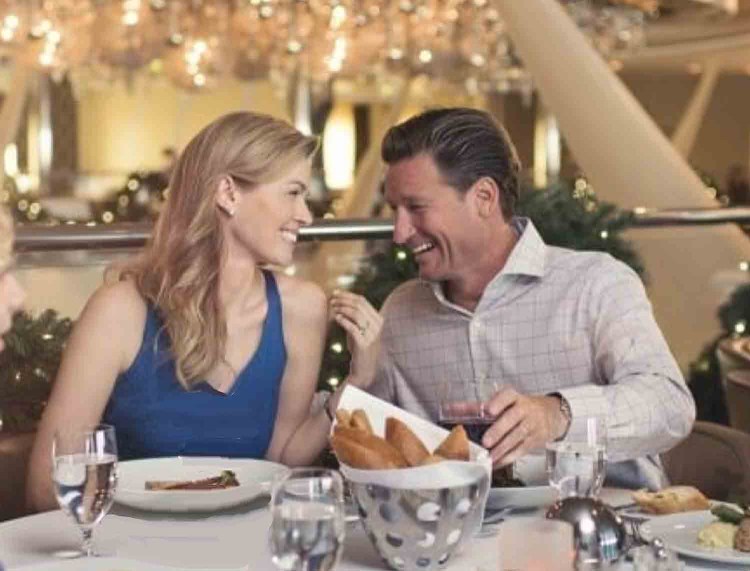
Even if your cruise line doesn’t require passengers to dress up for dinner, chances are you won’t be out of place in a coat and tie or a nice dress. Our rule of thumb is to dress with what you like best. Often jeans can be dressed up in the evening by match them with stylish tops and nice shoes. If cocktail dresses, suits, ties, and jackets are your style, rest assured you won’t be out of place. With some cruises still on formal nights don’t be surprised if guests who are not appropriately attired are prohibited from entering in dining rooms, specific restaurants and even attending some shows. And if you’d rather not dress up for dinner, you can still dine at the buffet.
Shoes can take up a lot of space in your suitcase so it’s important to give footwear a good amount of thought. When traveling wear comfortable shoes like tennis shoes, pack a pair for dressing up and a pair of flip flops for pool and beach. One tip is to stuff the shoes you’re packing with socks to conserve space. Coordinate your evening clothes to just one pair of shoes. Water shoes are also a good option to replace flip flops as they can be worn at other times.















 The Intentional Travelers
