Love Locks A Pledge Of Love

Is It A Statement of Love or Vandalism?
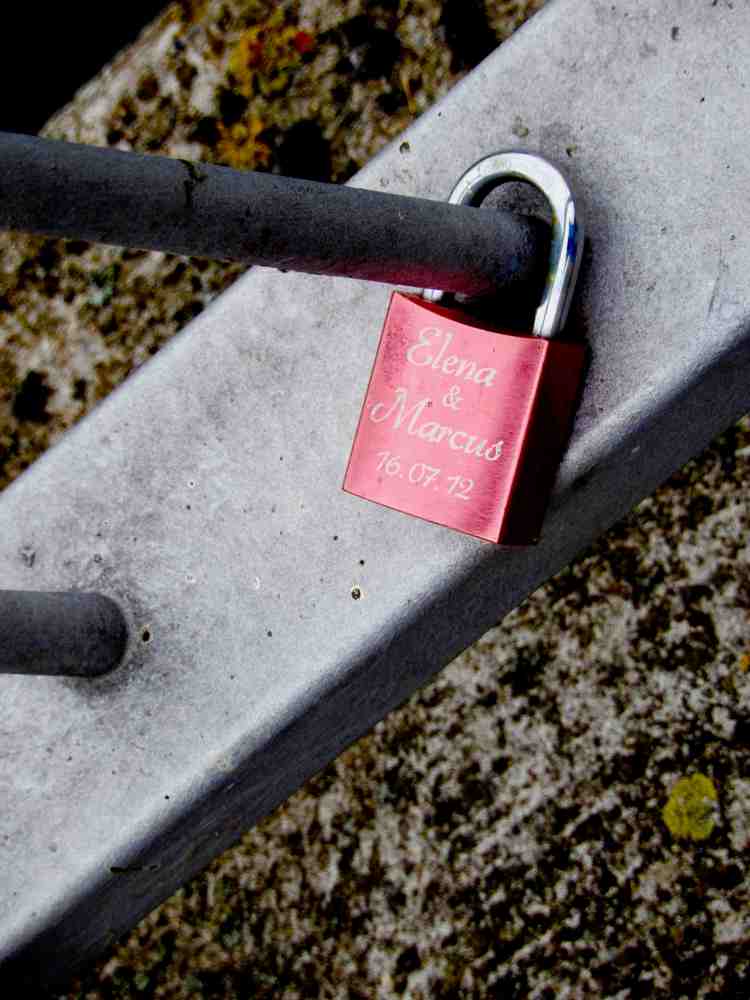
Wurzburg, Germany

A SHORT STORY

We weren’t aware of love locks before about a decade ago but recently as we travel we often come across collections of padlocks attached to bridges, fences and other public structures. It wasn’t difficult to figure out what was going on by all the couples names engraved on the locks. In the last five years or so it is becoming difficult to not notice these collections, they’re popping up everywhere.

The practice isn’t new but was virtually unheard of outside of a few cities, mostly in Eastern Europe until recent years. Early in the twenty-first century the practice has exploded worldwide. A love lock is a padlock which lovers lock to a bridge, fence, gate or monument to symbolize their undying love. In recent years the lovers’ names or initials, and the date, are engraved on the padlock, and its key is thrown away, usually into the river under the bridge, to symbolize the couples love for each other.

This simple and romantic practice seems innocent enough, but more and more it’s being treated by authorities as litter or vandalism, and there can be serious costs associated with damage caused and their removal. But we’ve also learned that there are places where authorities are embracing lovelock places as a tourist attraction.

Paris

A little research will find that love padlocks date back at least 100 years to a Serbian tale of World War I. It involves the bridge Most Ljubavi or the Bridge of Love in the town of Vrnjačka Banja. A local schoolmistress named Nada, who was from Vrnjačka Banja, fell in love with a Serbian officer named Relja. He went off to war in Greece, where he fell in love with a woman from Corfu. Heart broken Nada broke off their engagement and after some time died from heartbreak. As the tragic love story circulated, young women from Vrnjačka Banja wanted to protect their love and started writing down their names, with the names of their loves, on padlocks and attached them to the bridge where Nada and Relja used to meet.

Savannah, Georgia
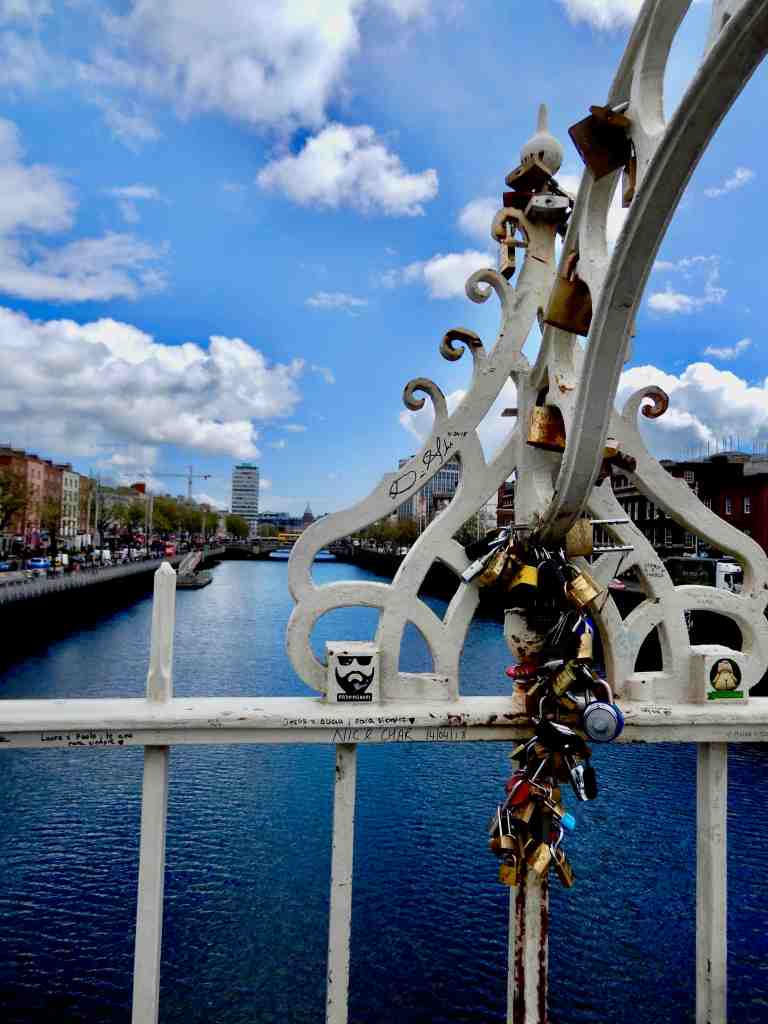
Ha’penny Bridge, Dublin

In Dublin there is a famous pedestrian bridge called the Ha’penny Bridge. It is one of the more famous symbols of Dublin. Nearly 200 years old (1816) it is a protected structure, but in recent years Dublin City Council have had to remove thousands of padlocks from the bridge on a regular basis. They are considered unsightly and are causing damage by chipping paint and adding considerable weight to the historic bridge. Engineers have estimated that at some point, if not removed, they could cause the bridge to collapse.

Today the key to many an Irish heart now sits at the bottom of the River Liffey where couples in love have thrown them after securing their love locks to Dublin’s historic Ha’penny Bridge. Today there is a group dedicated to breaking that bond. Almost as soon as the lovers have left, an expert lock-picking group arrives to tear these bonds of love apart and stop the locks from making the bridge structurally unsafe.
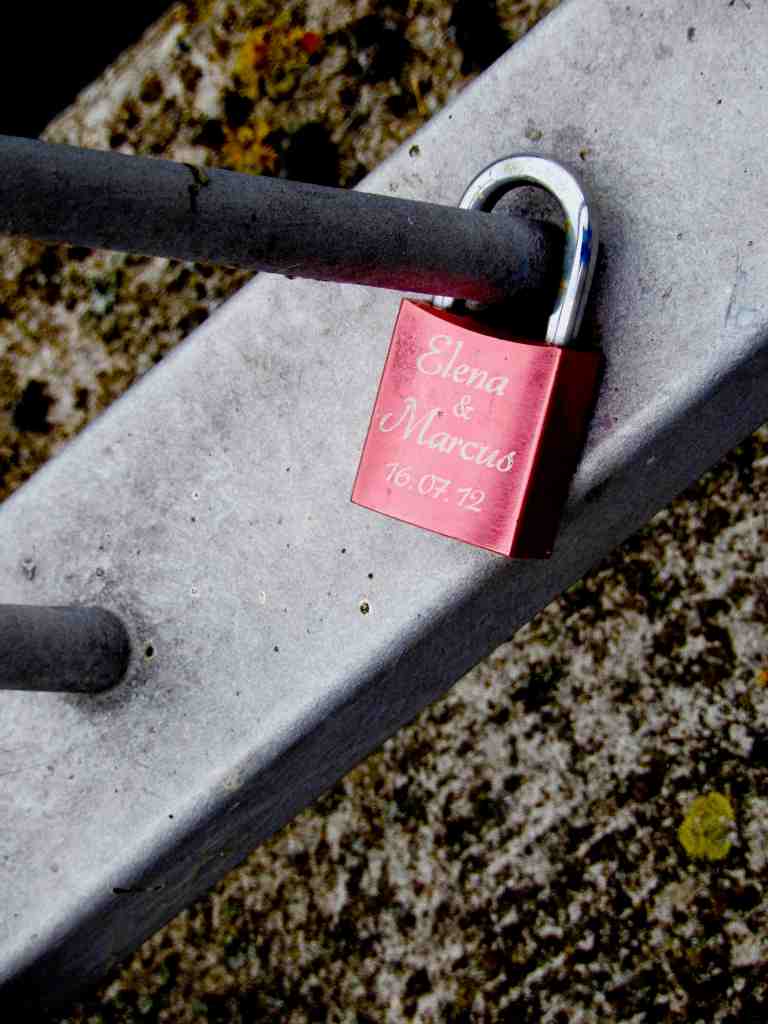
River walk Wurzburg, Germany

“It’s a fairly constant churn,” said Seán Nicholls, who set up the group when he was on his way to a professional lock-picking meeting. “I was heading to the meeting one day and I walked over the Ha’penny Bridge and noticed all the locks. In my mind it was defacing a city treasure. That’s kind of where the idea came from,” he said.

Dublin City Council embraced the group in the aftermath of a love-lock situation in Paris where the locks caused a section of the Pont des Arts bridge to collapse. The bridge in Paris had become famous for “love locks,” but the locks became too heavy and a two-meter segment of the bridge and railing buckled under the pressure of so many romantic symbols.

Just recently the practice has come to America and is growing in Savannah, Boston and a number of other cities. Not to walk away from a business opportunity many locksmiths are now offering professional engraving on their padlocks causing the practice to likely grow and spread even more.

Ha’penny Bridge, Dublin
Savannah

Are there any love locks near you? Let us know where and we’ll map the locations.

A Day In Marlborough, New Zealand

The Marlborough region in New Zealand is all about Sauvignon Blanc wine produced in its valleys on mile after mile of vines. One of the world’s largest wine growing regions. It’s home to 90% of New Zealand’s sauvignon blanc plantings because of its great soil and a perfect climate that creates truly incredible wine grapes.

If you’re visiting Marlborough on a cruise or arriving by ferry you’ll most likely dock at Port Marlborough near Picton. About twenty miles south on highway 1 is the town of Blenheim, and a great base for exploring the local wineries and the Waihopai Valley. Marlborough’s flat countryside is a great area to take a very popular bicycle trip and seven miles west of Blenheim is the small township of Renwick with over 30 wineries within a 15 mile circuit.

To really see this remarkable region of New Zealand you need to hire a car, take one of the many guided tours or better still rent a bike for a day or two. On your tour visit some of the amazing number of wine cellars tasting rooms featuring award winning wines. Stop at a vineyard restaurant for a lunch paired with a perfect Sauvignon Blanc, refreshing, crisp, not too sweet.

If your planning on spending a few days in Marlborough wine country there are literally dozens of highly rated B&B accommodations to choose from. The best listing can be found by clicking HERE.

To look into a wine tour one highly recommended company is Marlborough Wine Tours HERE. Explore Marlborough wine country with a half or full-day guided wine tour. Visit a select number of iconic and boutique wineries, meet the people who make and love the wines and taste a premium selection of Marlborough’s finest.

For an introduction take a Sip Marlborough Wine Tour. Sip has been created for those who want a small taste of Marlborough’s expansive wine region over a shorter period of time.

To best understand how many wineries there are to select from consider the following listing that only includes about half of Marlborough’s offerings;

Astrolabe Wines, Auntsfield Estate, Awatere River, Babich Wines, Ballochdale Estate, Barker’s Marque Wines, Brancott Estate Cellar Door and Restaurant, Cable Bay Vineyards, Clos Henri Vineyard, Coopers Creek Vineyard, Coudy Bay, Fairhall Downs Estate Wines, Fern Ridge Wine, Folium Vineyard, Framingham Wines, Georges Michel Wine Estate, Grove Mill Winery, Hawksdrift Wines, Hennessy Hall Wine Company, Jackson Estate, Kim Crawford, Konrad, Lake Chalice Wines, Lismore Wines, Little Black Stone, Marisco Vineyards, Matua Wines, McBride-Sillig Vineyard, Misty Cove Wine Group, Moana Park Estate Winery, Mohua Wines, Monkey Bay, Nautilus Estate, O’Dwyers Creek Vineyard, Odyssey Wines, Omaka Springs Estates, Pear Tree Wines, Pernod Ricard New Zealand, Red Deer Wine, Rimapere Vineyards, Sacred Hill Wines, Seresin Estate, Spring Creek Estate, Spy Valley Wines, Stanley Estates Ltd, Starborough Family Estate, Tarras Vineyards, Te Pa Wines, Te Whare Ra Wines, Ten Sisters, The Darling Wines, Tiki Wine & Vineyards, Tinpot Hut, Tom Eddy Winery, Totara Wines, Tupari Wines, Twin Islands Wine, Two Rivers, Vavasour, Vicarage Lane Wines, Villa Maria Estate, Vinultra, Waipara Hills, Wairau River Wines, Walnut Block Wines, Whitehaven Wines, Windrush Organic Vineyard, Wither Hills, Wyebrook Estate, Yealands Estate, Zephyr

Getting Around Sydney With The Opal Card

A Guide To Making The Best Of Public Transportation In Sydney Australia!

If you are planning a trip Down Under with some time in Sydney, you need to build your plans around this cities great public transportation. Like most large cities, buses are plentiful but Sydney also boasts a metro rail system and an express system called “Light Rail” that connects most major parts of the metropolitan area. In addition the system is integrated with a regional railroad network along with a fantastic harbor ferry system. The metro and light rail boasts frequent service using cars that are modern, clean and comfortable. Riding on the entire system is based on the Opal Card which is a  “tap on – tap off” system.

See Below For Complete Rates And Details On Using The Opal System

From the neighborhoods around the Central Station there are any number of metro stops that will get you to the Convention Center, Exhibit stops, Darling Harbour, Bondi Junction, Circular Quay and the Fish Market all in less than a half hour. In addition, the extensive Sydney harbor region is crisscrossed with dozens of ferries which all converge at Circular Quay located between The Rocks and the famous Sydney Opera House.

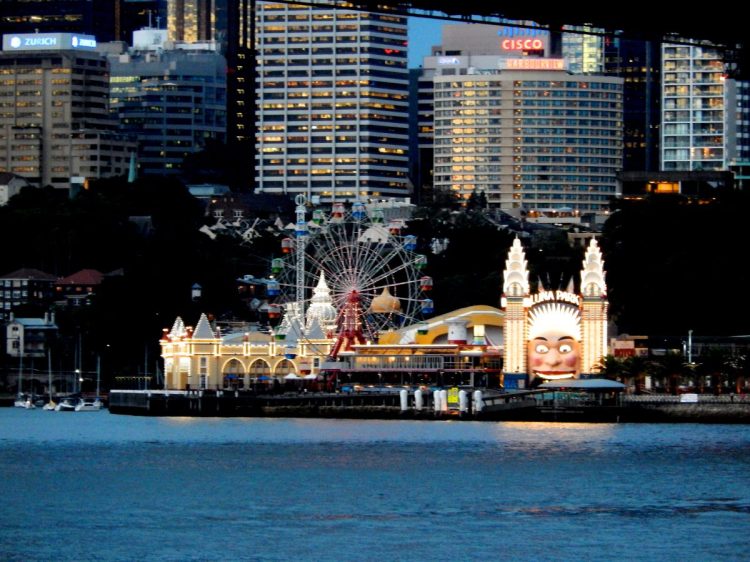
Luna Park Sydney

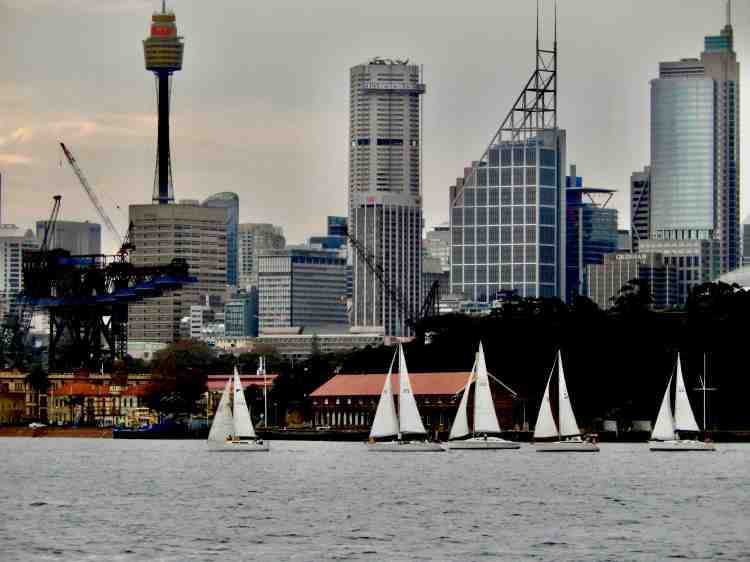
Even without a destination, taking a ferry is a great way to see the sights around the harbor and the city skyline. Ferries from the Quay take you out to Watson’s Bay (be sure and have fish ‘n chips at Doyle’s on the Beach), Manley Beach (a popular ocean front beach town noted for good surfing) and across to Luna Park, Sydney’s classic amusement park.

The Famous Bondi Beach
Sydney Harbour Bridge
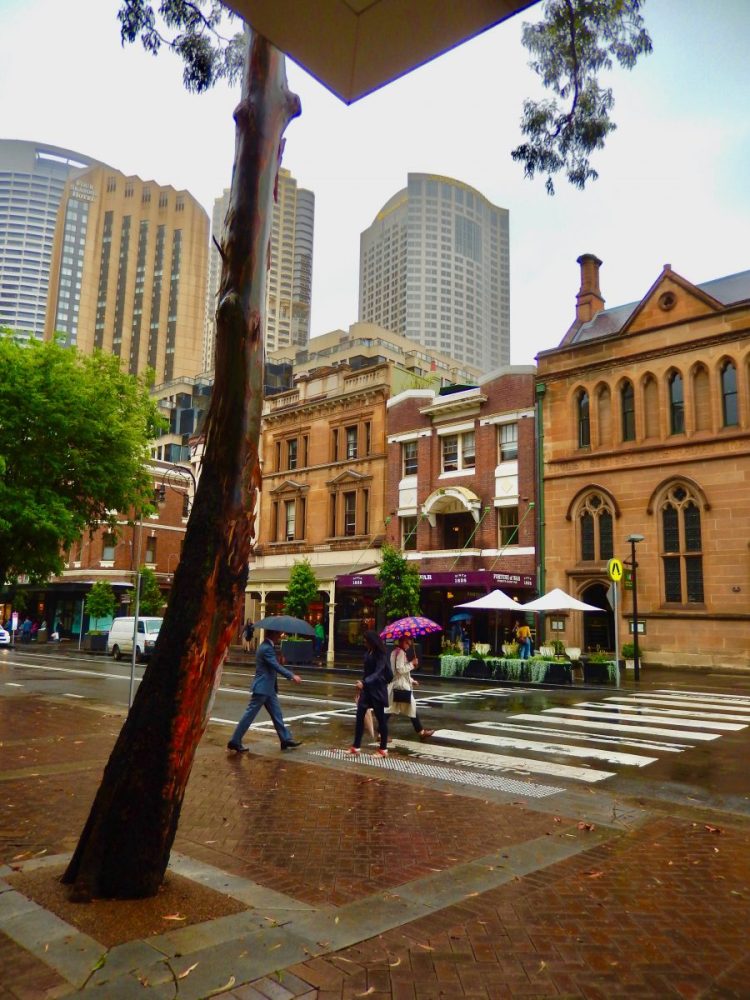
The Historic Rocks

In addition downtown Sydney is a very walkable city. The focus of the downtown area (CBD) is Circular Quay and The Rocks. Facing the water at Circular Quay, the Opera House is to your right with a number of restaurants and shops nearby and the ferries straight ahead. Off to the left is The Rocks, the location of the original English settlement at the harbor with a number of popular shops, restaurants, galleries and two great museums. Some of the museums offer free or reduced entry admissions so be sure to check this out if you are in the area.

A short walk From The Rocks is the approach to the Sydney Harbour Bridge, which is worth the climb up to its walkway just for the views. If you are really adventurous and aren’t afraid of heights you can even book a climbing tour up the suspension cables to the very top of Sydney Harbour Bridge. A dozen blocks west and south is the Kings Street Wharf and Darling Harbour area with a great waterside walk lined with restaurants and tourist attractions including a wildlife center, an extension of the Sydney zoo and the Sydney Aquarium.

Three Sisters in the Blue Mountai

A metro rail trip out to the town of Bondi with a bus connection at the station to the famous Bondi Beach takes about forty minutes from the Central station area. Light Rail will connect to Central Station and will also take you to the incredible Sydney Fish Market.

Before leaving Sydney make sure you take a ferry or two and if staying for a couple of days, consider an evening at Luna Park.

Often getting around a large city as a tourist can become costly but not in Sydney if you get an Opal Card. Opal cards are available at Central, Circular Quay, major stations or over the counter from Opal retailers that include most convenience stores and newsagents. There is no charge for an Opal card, but there is a minimum top up value of A$20. Be sure you click the map below to save or print a copy before you going to Sydney.

CLICK THIS MAP TO DOWNLOAD A PDF COPY

The above map is perfect to save on a device or to print a copy to take along.

Everything You Need To Know About The Opal Card

The most convenient way to pay for travel on Sydney’s Metro is to get an Opal Card. It is a reloadable card that can be used to tap on and off at any station, metro, trains, buses, ferries and light rail in Sydney, the Blue Mountains, Central Coast, the Hunter and the Illawarra. You can purchase an Opal card online, at any train station or convenience store.

The first big change is that you don’t really need the Opal card any more. While the Opal card is still convenient and can be really useful, you don’t really need to buy one. The card readers have been updated to use a number of contactless credit or debit cards that include Visa, Mastercard, and American Express along with Google and Apple Pay and you do not need to register your card or create an account. You will need to use the same card for daily travel in order to take advantage of the caps.

There is no charge for an Opal card, however a minimum top up value of $20 for an adult card, or $10 for a child or concession card, applies at retailers or when using top up machines. Top up amounts of $10 for adult and $5 for child or concession are available when topping up online.

Please Note: Charges are placed against your card once at the end of each day. If you’re visiting Australia and use your tap credit cards it may be more expensive than the Opal Card depending on your cards transaction fees and exchange rate policy.

The discounts built into the system don’t require you to do anything to take advantage of them. The system automatically calculates the charges as you use the system and applies the daily cap before making charges at the end of the day. All you have to do is ride, making sure to always use the same credit card or an Opal Card to take maximum advantage of the system.

Opal is a ‘pay-as-you-go’ system, so you only pay when you use a train or bus or ferry, including private ferry operators like Manly Fast Ferry. There are rewards for frequent travel and daily caps on fares that can save regular users and even visitors on short trips.

Tap On Tap Off Portal

UNDERSTANDING OPAL TRAVEL DISCOUNTS

The biggest benefit of Opal is the benefits you can gain by using the same opal card or credit card for every trip. The system has built-in maximum daily charges called caps.

Daily Travel Cap – A maximum A$17.80 per day for adults and A$8.90 a day for a child to travel anywhere in the network.

Weekend Travel Cap – A maximum of A$8.90 for adults and $A4.45 for kids for unlimited travel on Friday, Saturday, Sunday and some public holidays.

Weekly Travel Cap – A maximum of A$50.00 a week for adults and A$25 for kids when traveling on all modes of Opal enabled transport calculated from Monday through Sunday

Transfer discount – You receive a $2 discount for every transfer between metro/train, ferry, bus or light rail as part of one journey within 60 minutes from the last tap off.

For payment the system will also allow you to use a digital wallet from Apple Pay, Samsung Pay or Google Pay provided an American Express (AMEX), MasterCard, Visa or debit card is added to your Pay account.

Port Of Call Dublin, Ireland

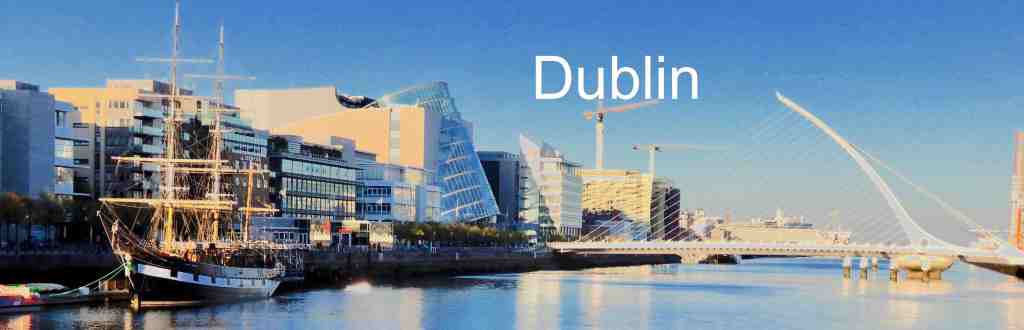
Dublin is the capital and largest city of the Republic of Ireland. Situated on a bay on the east coast, at the mouth of the River Liffey. It lies within the province of Leinster and is bordered on the south by the Dublin Mountains, a part of the Wicklow Mountain range. Dublin has an urban population of 1,173,000 and is a vibrant, modern and a true international city divided by the River Liffey.

It is a very walkable city that features a large number of historical sights along with popular attractions and an exciting night life with a reputation for good restaurants and pubs. The best way to start seeing Dublin on your own is to locate a Tourist Information Center (I) as soon as you get into the city to pick up maps and get suggestions from the staff that are always eager to offer customized tips to match your interests.

Where Your Ship Docks

Port Location & Facilities – Smaller ships can come up the River Liffey closer to the City Centre while most large cruise ships berth in Alexandra Quay. Alexandra Quay currently is in an industrial port. It is about a mile and a half walk to get out of the port and to the edge of the city proper near 3Arena. There is currently no cruise ship terminal, so ships will have to use boarding ramps. For people with walking issues and wheelchairs it can be difficult. Most cruise ships will have arranged for shuttle buses into the city center (About $15 round trip on average). Taxis are also available but can be spotty after the morning rush. City bus service is not convenient to the ships.

Note: On our recent stop the ship did an overnight. We walked from the ship into the Temple Bar neighborhood and measured the trip at just under 4 miles total.

Transportation

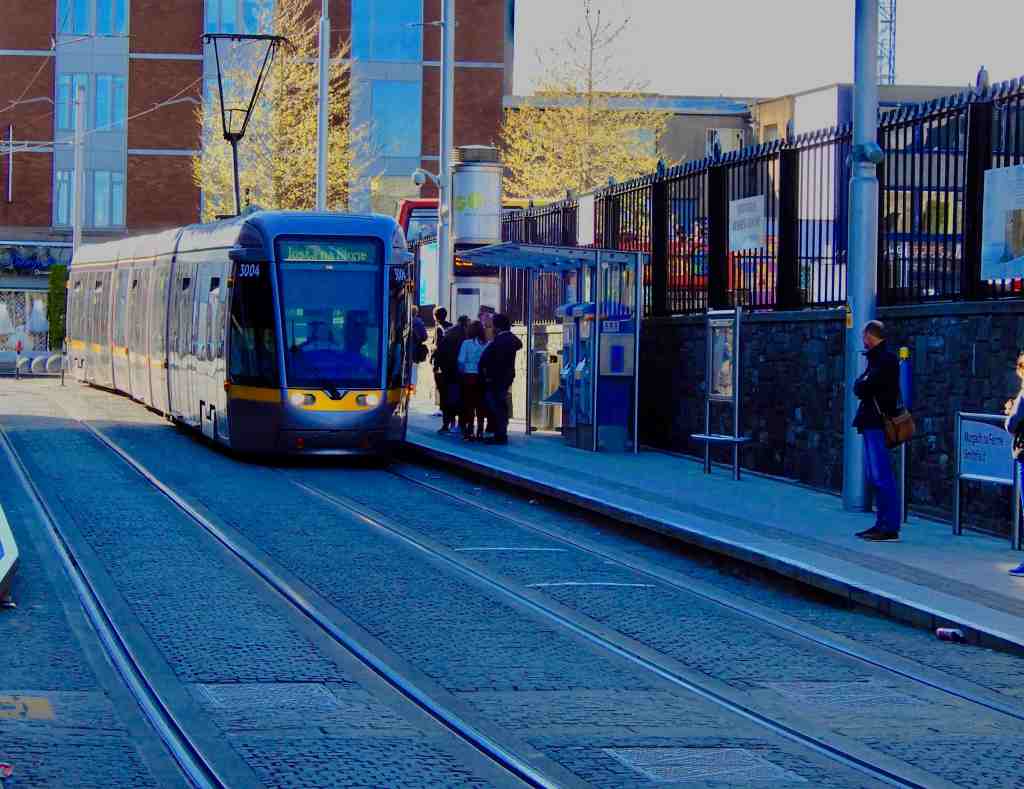
Public Transportation – There is a Visitor Leap Card that allows you to ride all busses and light rail (called LUAS) with 1 day (24 hours) – €10.00 and 3 days (72 hours) – €19.50 They can be purchased at a number of locations around the city and online. There is also automated bike rental system called Just Eat Dublinbikes that will also allow you to use the Leap Card.

Taxis – Taxi service is reasonably priced in Dublin. When cruise ships come in or are boarding/Disembarking there is likely to be a wait to get a cab. A recent ride from the port to a hotel in the CBD was €15 and from that hotel to the airport was €22.

Sightseeing Buses – The city has a number of sightseeing bus services that allow for hop-on, hop-off and currently average $20+ per person per day. There are also a number of good walking tours. For information check with a Tourist Information location (i).

Bikes & Scooters – There are very little in the way of hills in Dublin so bicycles and electric scooters are an easy way to get around Dublin. There are several options for renting with a large number of self-service locations around the city. Dublinbikes also has a 3 day ticket where you take a bike from one cycle stand, bike around town, and drop the bike off near your destination.

Currency

The Republic of Ireland is still a member of the European Union and the Euro is the local currency (€). Most major credit cards are welcome and ATM machines are everywhere.

Free Things to Do in Dublin

Chester Beatty Library and Gallery of Oriental Art – A world class collection with an impressive number of exhibits and galleries.

Millennium Bridge – A popular example of modernistic architecture over the Liffey River connecting two great very walkable river front trails.

Trinity College – Stroll through one of the worlds best eduction institutions featuring a number of historic sites.

College Green – An impressive open space that attracts locals and visitors alike.

Grand Canal – Spend a little casual time beside the water to rest and revive.

Irish Stock Exchange – Plan a visit and find out the importance of this place to the community.

St. Teresa’s Church – The center of Dublin’s religious life and a holy site.

Christ Church Cathedral, formally The Cathedral of the Holy Trinity, it is the cathedral of the United Dioceses of Dublin.

Ha’penny Bridge – Also known as the Penny Bridge, and officially the Liffey Bridge, is a pedestrian cast iron bridge built in 1816 over the River Liffey.

Dublins parks and gardens. In the center of Dublin is St. Stephens Green, a large and very popular park. The National Botanic Gardens is a couple of miles from central Dublin but not to be missed to view the country’s native plants in a gorgeous setting. The Hill of Tara has incredible views and can be found on any map of Dublin. Another is Phoenix Park known for its beautiful running paths. If traveling with kids, a great choice is to spend some time in The Dublin Zoo.

St. Stephens Green
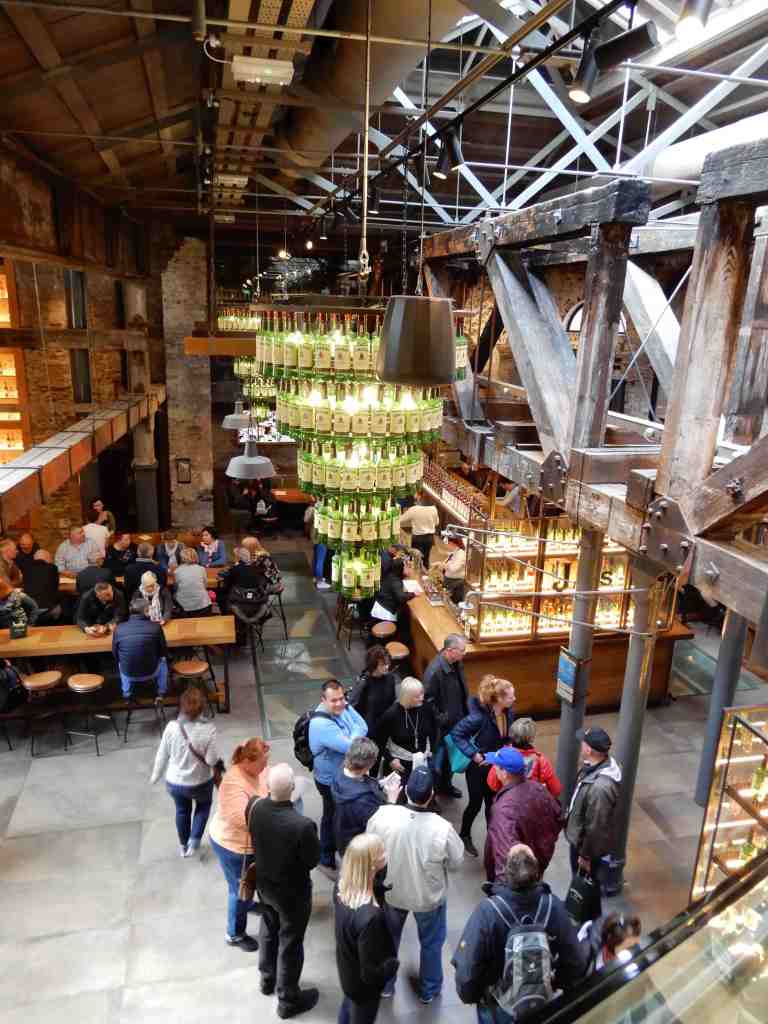
Jameson Distillery Bow St.

Stout and Whiskey Guinness Storehouse is a very popular tourist attraction at St. James’s Gate Brewery in Dublin, Ireland. Also Jameson Distillery Bow St. is the original site where Jameson Irish Whiskey was distilled until 1971. It is now another popular visitors centre.

The Famous Temple Bar Neighborhood

Dublin is famous for an incredible number of pubs with many featuring live music. Probably the most famous is the Temple Bar which has become the center of an entertainment district.

There are a number of other local attractions in Dublin that highlight the history of the city. Kilmainham Goal, once an infamous jail. Marsh Library has a vast collection of over 20,000 rare books. The Jeanie Johnston Tall Ship docked on the Liffey River, and th4 Famine Museum is one of the best places to learn about the history of Dublin. If you are interested in learning about the original inhabitants of Dublin, be sure to stop at Dublinia: Experience Viking and Medieval Dublin to see history presented in a fun and entertaining way.

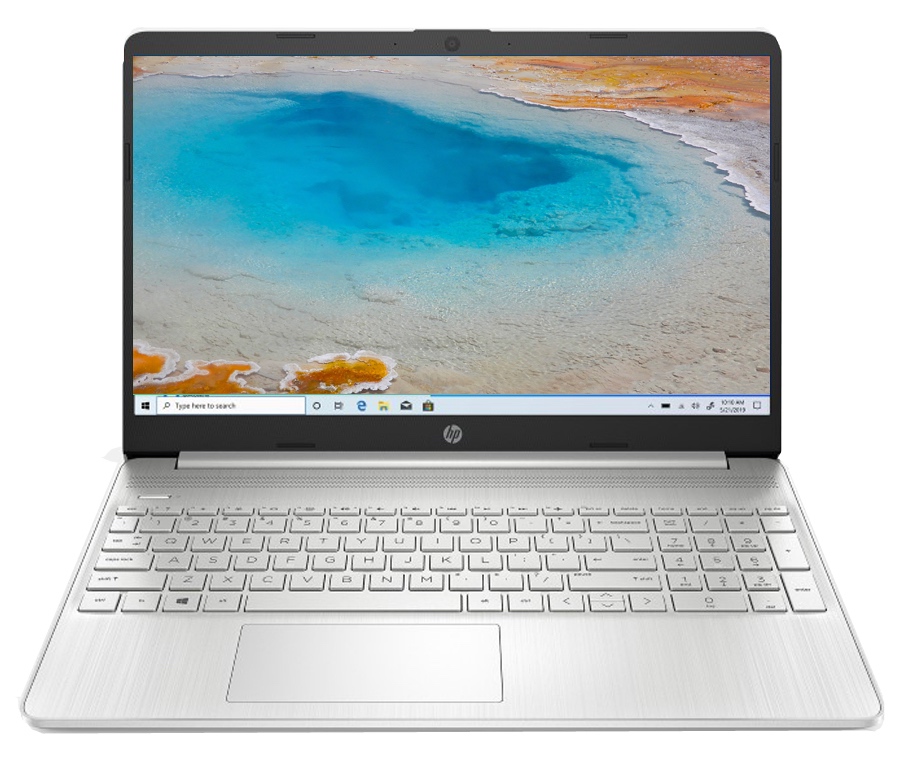
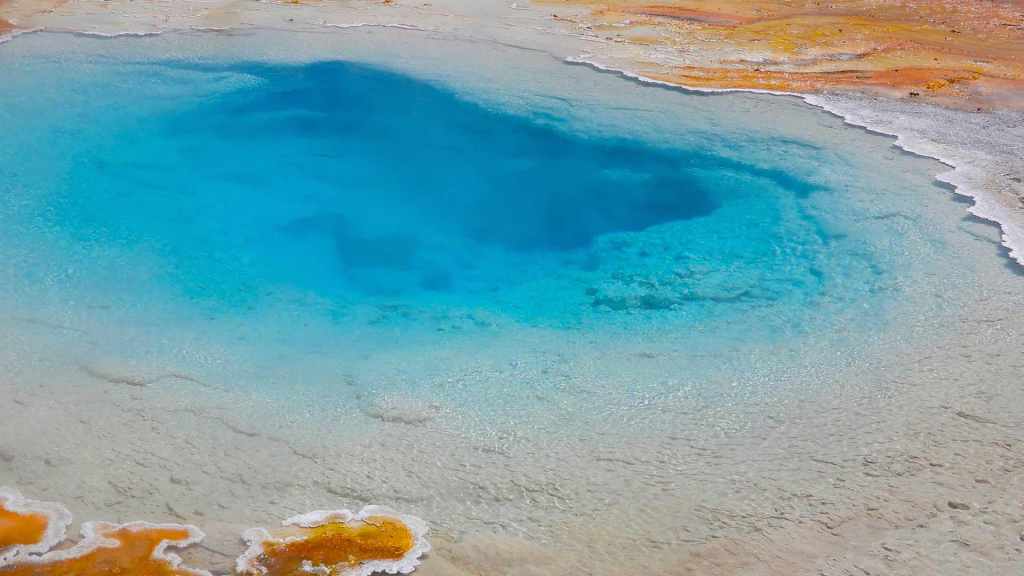
Wallpaper • Grand Prismatic Springs

Free Desktop Wallpaper

It’s Free!

Feed those travel daydreams using our computer wallpaper collection. This photograph of Yellowstone’s Grand Prismatic Springs is a beautiful and easy to navigate desktop image perfect for inspiring that wanderlust in each of us. Download this photograph in a jpg file and use as computer wallpaper or crop for your handheld device (instructions below).

← Back

Thank you for your response. ✨

TERMS OF USE

I understand these images are copyrighted and can only be used as digital wallpaper or printed for a private use. Printing for commercial purposes or published in any form without the express permission of The Intentional Traveler is not permitted.

I also understand that I may receive notices of new posts and special announcements from The Intentional Traveler and its associated entities. I can unsubscribe at any time simply by clicking the “Unsubscribe” link in any emails.

Grand Prismatic Springs 1.jpg

How To Use This File – On clicking the “Download” button above you will be redirected to a new page containing this image in an open jpeg format available to download.

  • To download drag and drop the image or option click to select download location.
  • Transfer the image to your desktop image folder.
  • Select the image from your desktop options.

Port of Call Guatemala

Puerto Quetzal, Guatemala’s Port Of Call

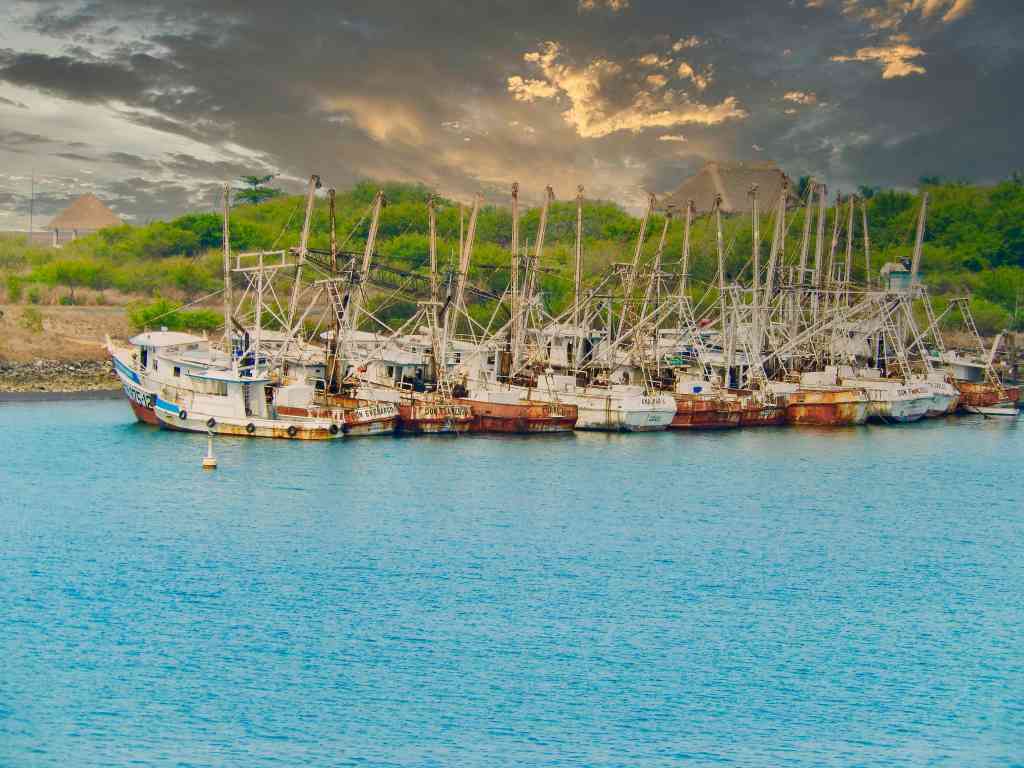
Puerto Quetzal, Guatemala is the largest port in the country. Many Eastern Pacific cruise itineraries now regularly have cruise ships calling on this interesting port. Puerto Quetzal is now Guatemala’s primary cargo entry port serving cities like La Antigua, and Guatemala City some sixty miles inland.

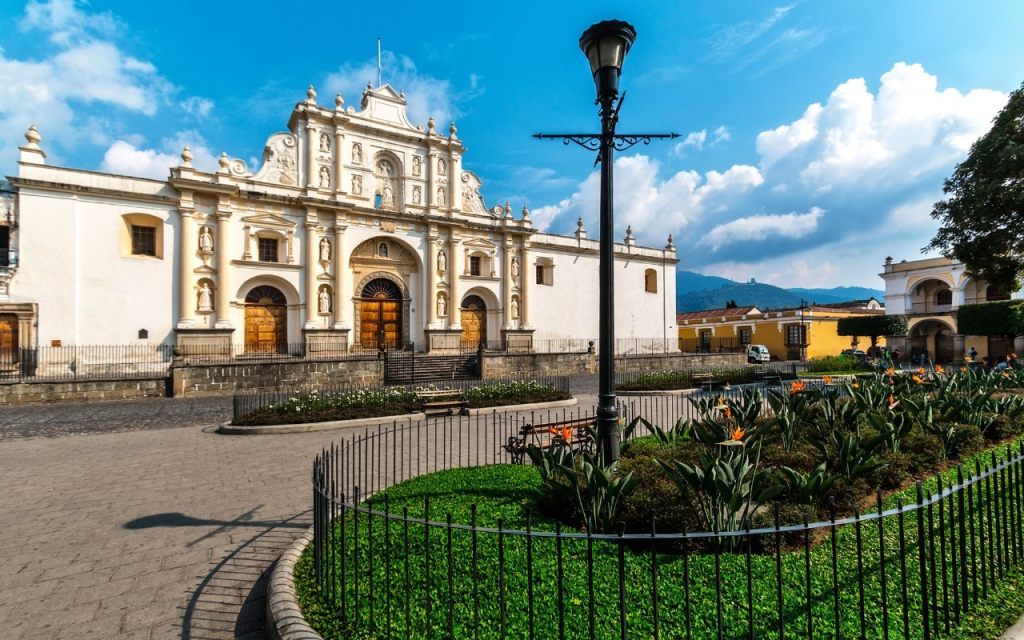
La Antigua

Where Your Ship Docks

Cruise ships dock inside the harbor area at a dedicated cruise pier that includes a visitors center and crafts village providing entertainment, food and public facilities.
Transportation

There are taxis usually available outside the port village but it is several miles to the nearest town of Puerto San Jose. The best way to see the areas attractions is with a tour.

Local Currency

The Quetzal is Guatemala’s currency with an exchange rate in the range of approximately 7 to 8 Quetzal per 1 U.S. Dollar. At the village US Dollars are often welcome and there is an ATM available. Most credit cards are gladly accepted.

Attractions

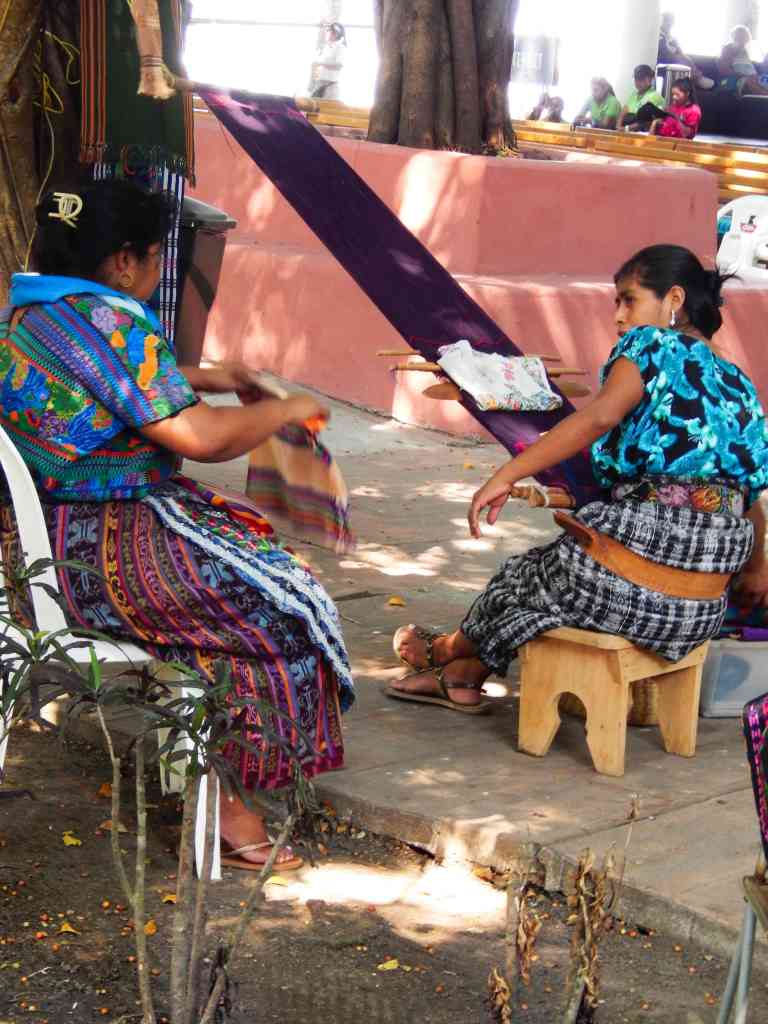
Many cruise lines offer shore excursions to Antigua City and other points of interest but if you’re not interested in traveling away from the port area the craft village offers some amazing handcrafted items at very good prices. There’s a cute crafts market that has a multitude of souvenir items along with an interesting Jade Museum with some quality jewelry for sale.

Some distance up the coast is the town of Monterrico with a volcanic black sand beach anlong with the Monterrico Nature Reserve intended to protect sea turtles and the areas mangrove estuary.

Puerto San Jose

Antigua some sixty miles east of the port is a cute town featuring museums and art galleries and is a UNESCO World Heritage Site.

La Antigua