Getting Across Saigon Streets

Navigating Across Ho Chi Minh City Streets

After seven years we finally returned to Saigon and the changes were shocking. The one that caused us the most concern was the huge increase in traffic. Driving, and crossing streets in Vietnam has always been chaotic but this has now escalated to a whole new level. Seven years ago traffic around the cities central square was heavy but still accommodated plenty of cars, motor bikes and pedicabs. Today it looks as though it’s now too dangerous for pedicabs – instead of dozens peddling around the square, now there are none.

Pedicabs, Siagon 2017

Today in the city pedestrians have to navigate through tidal waves of motorbikes, cars, and buses to get to the other side of a street. For most visitors like us it takes some courage and a realization that if you don’t just act you’re not going to get anywhere.
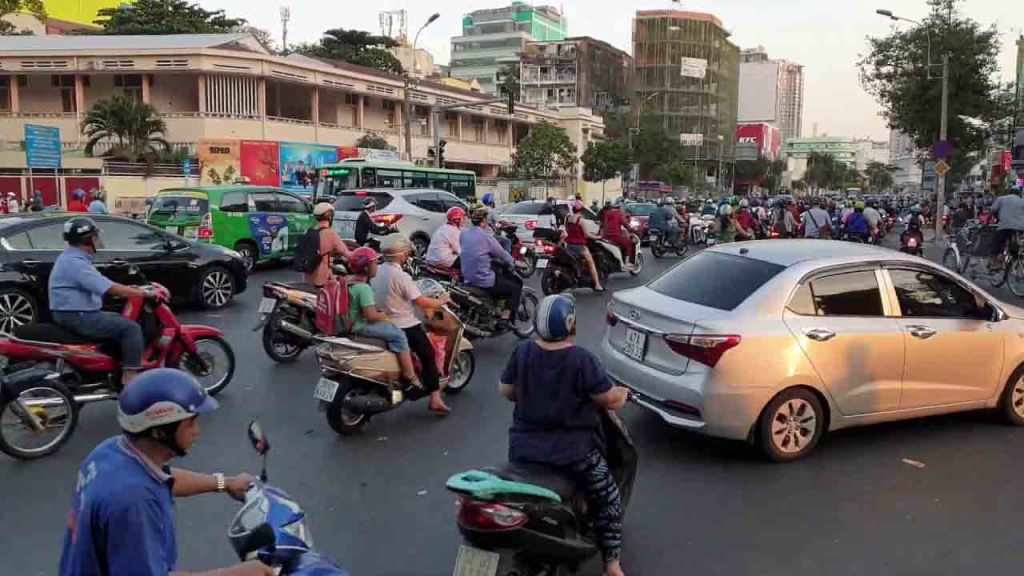
The main thing you need to understand is that a system has evolved that generally prevents motor bikes and cars from mowing down pedestrians. While traffic will not slow down drivers need to be able to predict what pedestrians will do as they approach and if you want to wait for traffic to stop or yield to crosswalks you’re probably not going across the street.

Pedicabs Saigon Street 2024

Here are some tips for crossing the streets in Saigon:
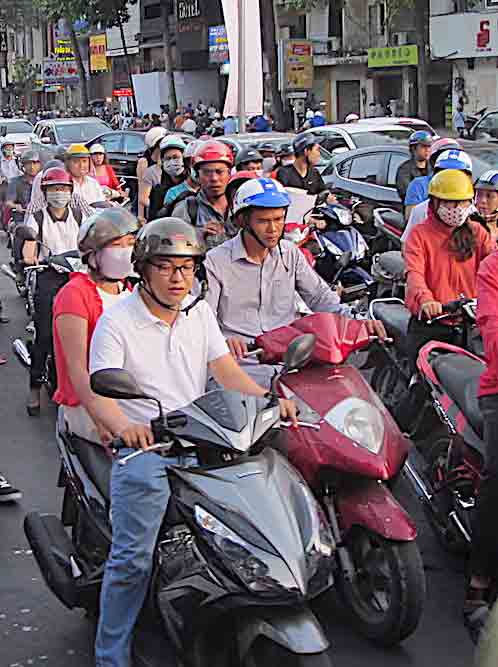
  • Pay attention to what the locals are doing and try and cross with them.
  • Watch the traffic flow and look for any gap, no matter how small to start.
  • Remember that you need to be predictable so look in the direction of oncoming traffic as you start to cross and maintain a steady pace.
  • When crossing the street, it’s essential to walk steadily and never stop. It’s important that drivers see you and understand what you’re doing so they can avoid hitting you. Don’t make sudden movements, do not stop or run across the street.

Over the time we were in Vietnam we did see a lot of tourists that just couldn’t get up the nerve to cross the street. We saw a number of close calls but they were all because people (mostly tourists) froze in the street and the more we crossed the easier it became…
An Afternoon In The Dharavi Slum

Mumbai India’s Famous Dharavi Slum

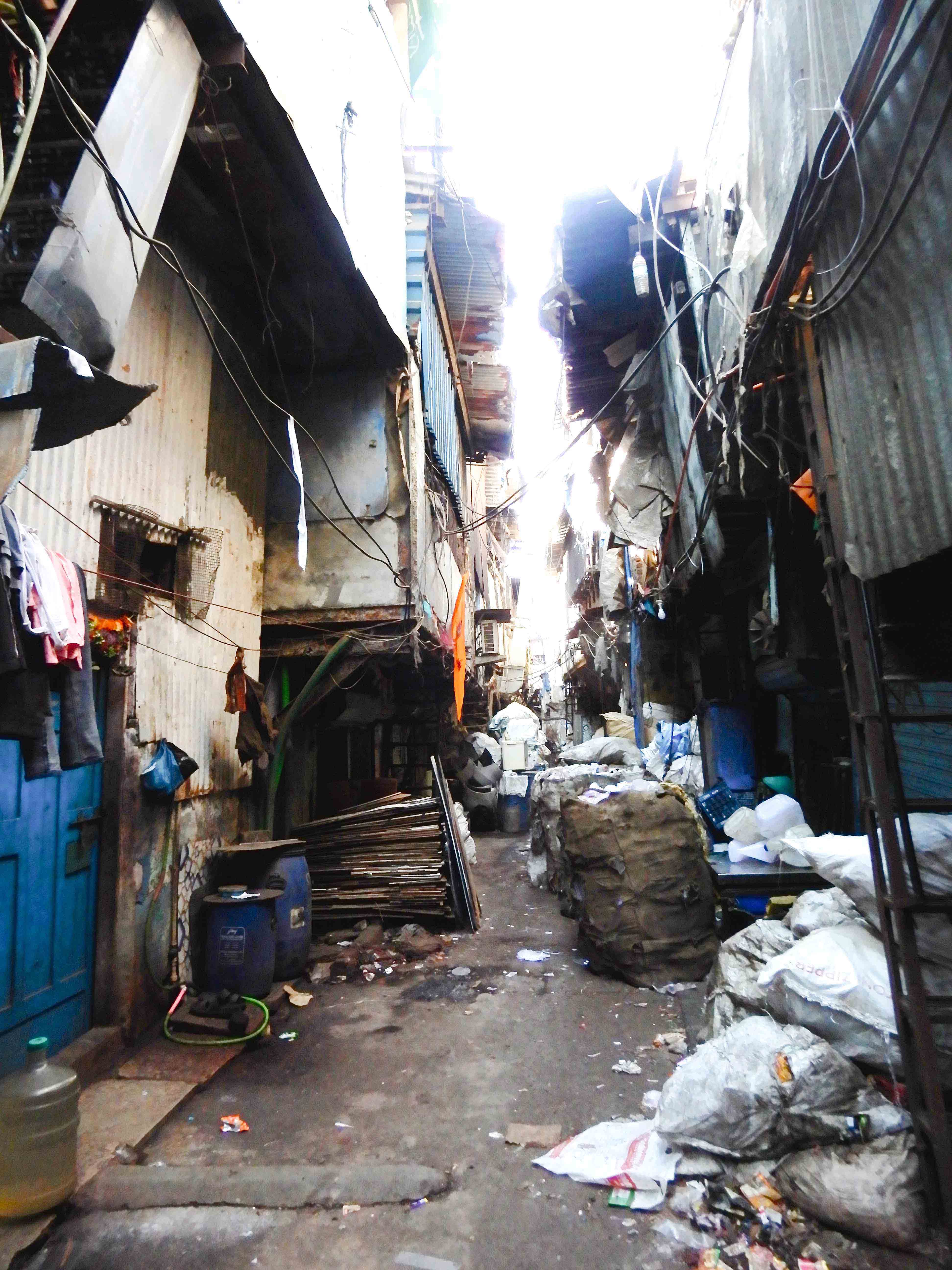
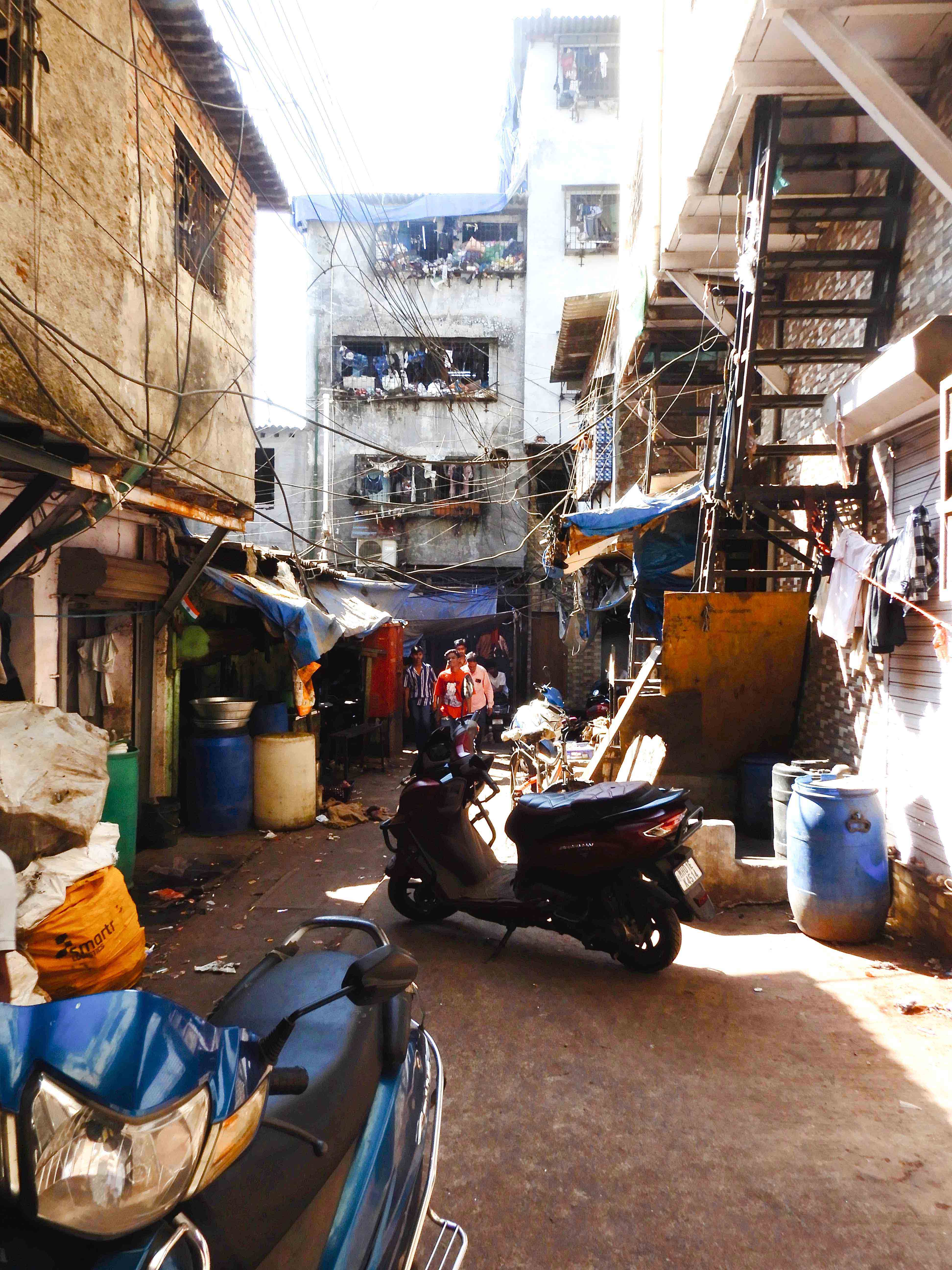
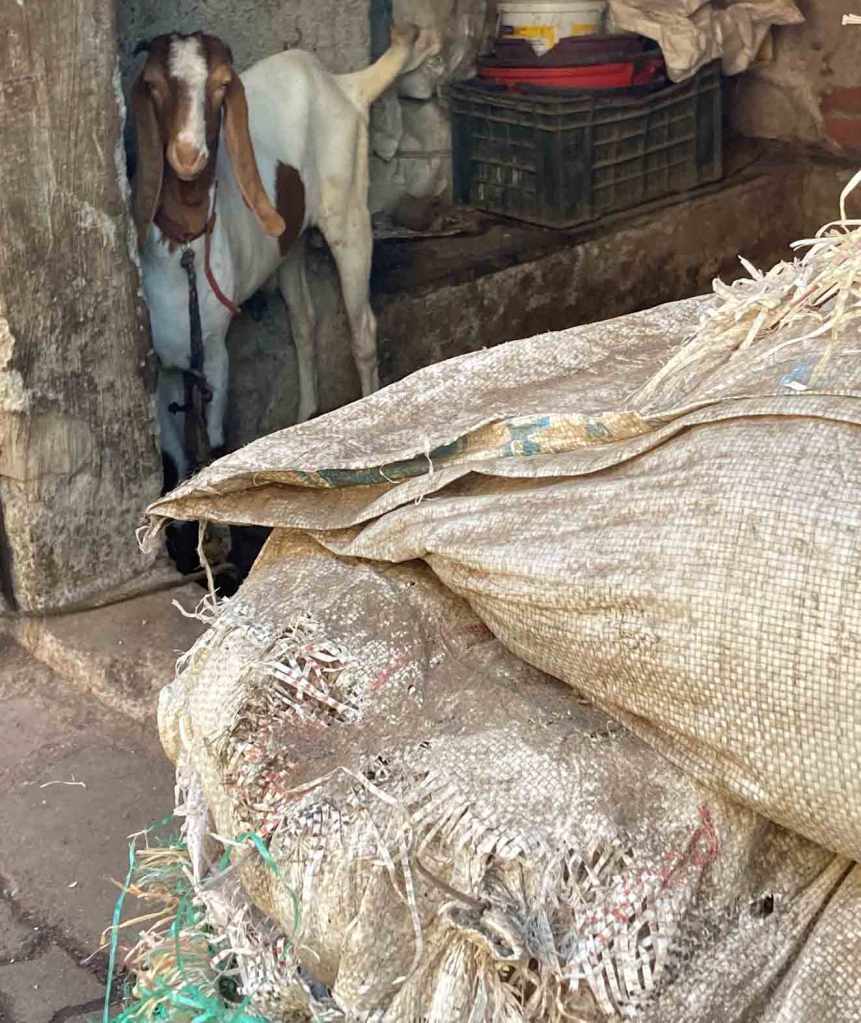
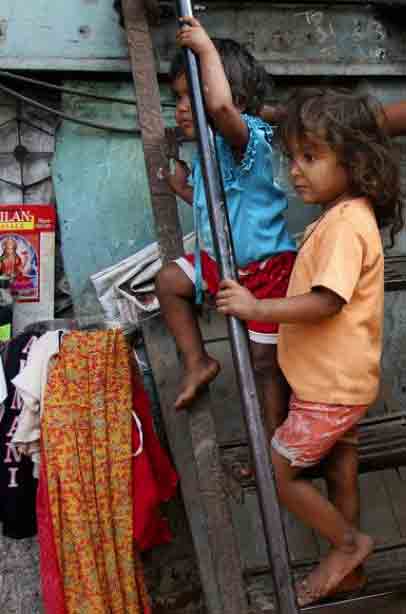
The Dharavi Slum is located in central Mumbai, India and is famous as one of the largest slums in the world. It is estimated to have a population of over 1 million people in an area just over 2 square kilometers. Whatever notions people may have about this place, they’re probably mostly wrong.

many reports, the people of Dharavi are not squatters or beggars but actually have title to the land and work in remarkably industrious shops. Surprisingly, the slum is home to a huge and thriving economy.

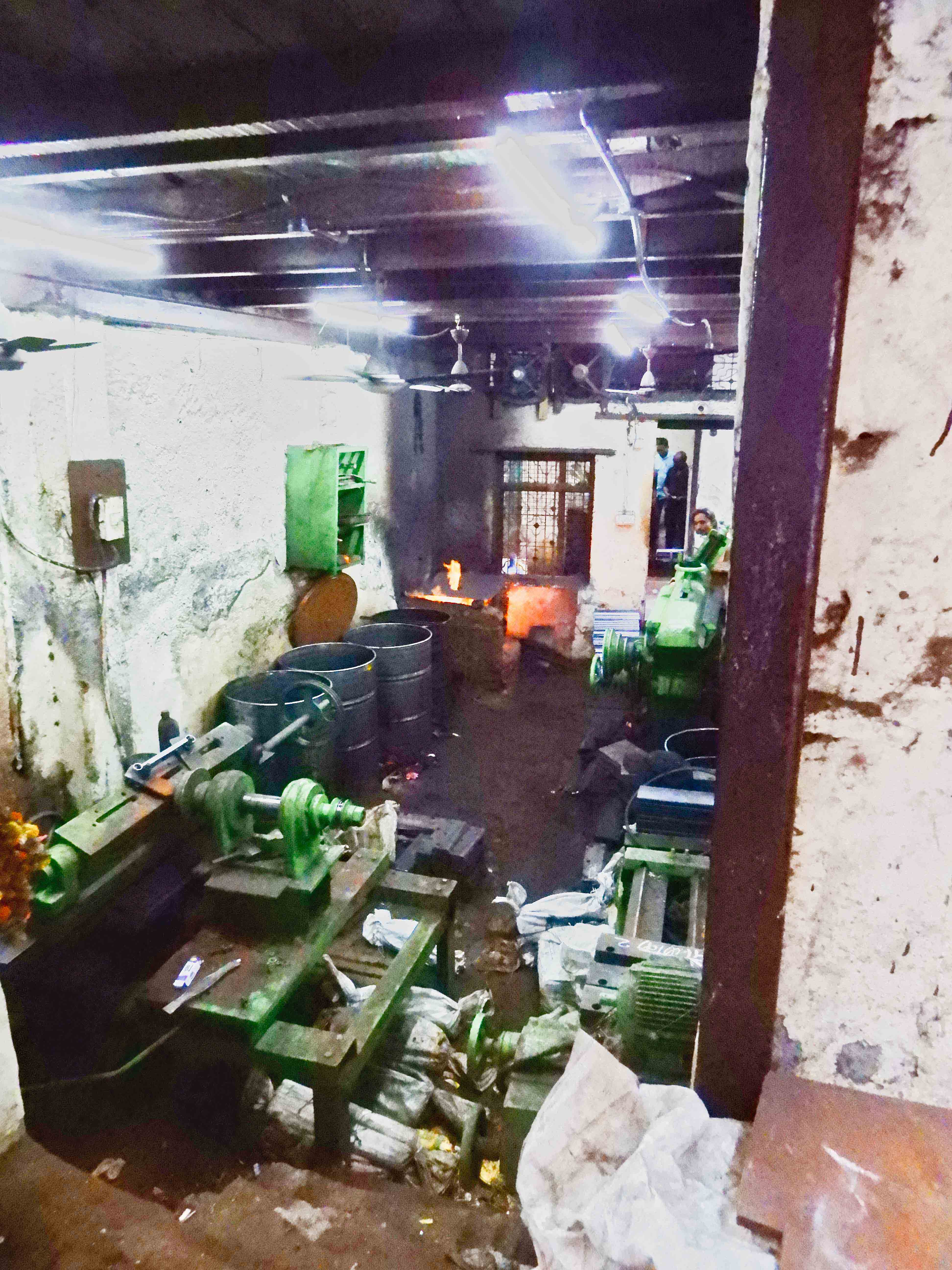
Recycling is the major business along with textile dyeing, sewing, leather working and small scale manufacturing. The largest recycling is in plastics. Operators sort plastics from city trash into categories based on the types of plastic and colors. Its washed, shredded or chipped and sealed in bags. A manufacturing company can come to shops in Dharavi and buy specific weights and colors of the plastic they need cheaper than formulating the resins from scratch.

Smaller shops tan hides and turn the leathers into copies of expensive skins like alligator and snake. Many shops produce high quality, handmade luggage and handbags while others are famous for pottery and ceramics. It is estimated that the economic turnover of the accumulated businesses in Dharavi is above one billion US Dollars a year.

Dharavi was originally a marshy area that was used as a dumping ground for the city of Mumbai. In the 19th century, it became home to a large number of migrants from rural areas who migrated to Bombay to work in the city’s thriving textile mills.

The residents are noted for working together to overcome the challenges of overcrowding, poor sanitation, and lack of access to basic services. It is a vibrant community with a strong sense of identity. The residents have organized and run upwards of 250 schools for the children, adopt rules for the use of resources and contribute to operate clinics and public safety organizations.

When visiting Mumbai there are a number of tours that can be organized to visit Dharavi and most will explain that there are certain rules you will need to observed. Do not point cameras or cell phones at the people, they are not an attraction and find that offensive. Also compared to the streets of Mumbai, Dharavi is surprisingly safe but do not wander off on your own. The two acres of Dharavi is a compact maze and it is very easy to get completely lost.

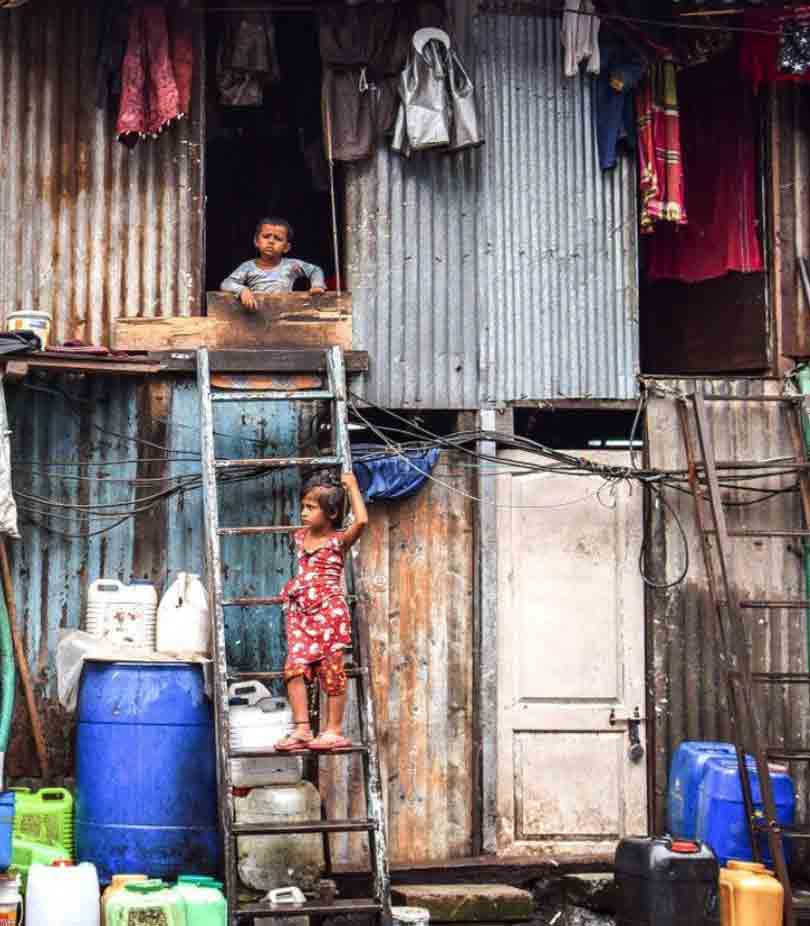
One of Dharavis many schools

During our visit the children were remarkable. Most between the ages of 4 and 6 would run up to us and want to fist bump. It became a game after which they would ask our names and country and then run away laughing and singing our names. It was good “old fashioned” fun. No cell phones or electronic devices anywhere!

 
Through a contact before we left for Mumbai we were given information on a guide to get in touch with. We contacted Ahad and used him and his associates for a number of tours and couldn’t have been more pleased. You can reach him at:

Ahad Sayed <sayedahad02@gmail.com> Phone: +919867722048

Please mention The Intentional Travelers if you contact him. We receive no commission or other consideration should you use Ahad. 

Yokohama – Lost In Translation

A Cautionary Tale About Using MyTransfers.com For Japan

Update: Please note that we contacted MyTransfers.com about our problem with their service in Yokohama and they were very responsible in responding and provided us with a reasonable resolution.

Often, when traveling internationally, you need to take a lot on faith. Will your flight arrive on time? Will the arranged driver actually be there? Will taxis accept credit cards? Do we have all the necessary documents? Is it safe to prepay for a service?

First, in our case we do everything we can to avoid paying in advance and that often means paying a higher price. Better to pay a slighter higher price than get in a conflict involving larger refunds.

Just recently we were traveling across Asia and that included a cruise ending up in Yokohama, Japan. The plan was to transfer to Tokyo to spend some additional time. In researching our plan we discovered that the trip would take between an hour or two and prices are really high. We were traveling with friends with a fair amount of luggage so we needed a van.

After some looking I selected MyTransfers.com and it turned out that I would need to prepay – no other options. The details were pretty specific:

  • Reservation – 4 passengers w 10 pieces luggage max
  • Pickup – At pier
  • Destination – Tokyo Hotel
  • Pickup time – 9:00 am
  • Max wait time – 15 minutes
  • Meet details – Driver will be inside terminal holding sign with your name
  • Total price – US$160

We had selected 9:00 as the meet time to allow extra time to clear the ship, get through immigration and collect our bags. We we inside the terminal at 8:30 waiting for our driver. There were lots of drivers walking around holding signs with names – just not mine. 9:00 and still can’t find my name. 9:15 and we have the terminal paging our driver. Nothing!

Prior to this moment I had received several emails from MyTransfers and an additional email from CleverTryp Transfers S.L. (I assume that this was the Yokohama company) but there was never any contact names or phone numbers provided. The terminal information booth tried to help us by looking up CleverTryp Transfers but could not find a listing. By 9:20 we called the international contact number for MyTransfers. Their first comment was that the driver was in the terminal and had been there since 8:30. After a lot of back and forth they discovered that we should be looking for a man holding a sign that said “BB Trip”. Standing in the front of the greet area was a young man holding that sign “BB Trip”– he had been standing right next to me for over a half hour!

As best I could tell this young man was acting as a dispatcher for a number of services including a taxi company. He had a sheet of paper with well over 30 reservation names that included mine. He spoke almost no English and a number of people were complaining that they had been dealing with him for 30 or 40 minutes without connecting with their rides. After 10 minutes he assigned us a driver that turned out only had a car not the needed van…

After another 15 minutes we got our van and were at our hotel 2 hours later.

Street Food Keelung, Taiwan

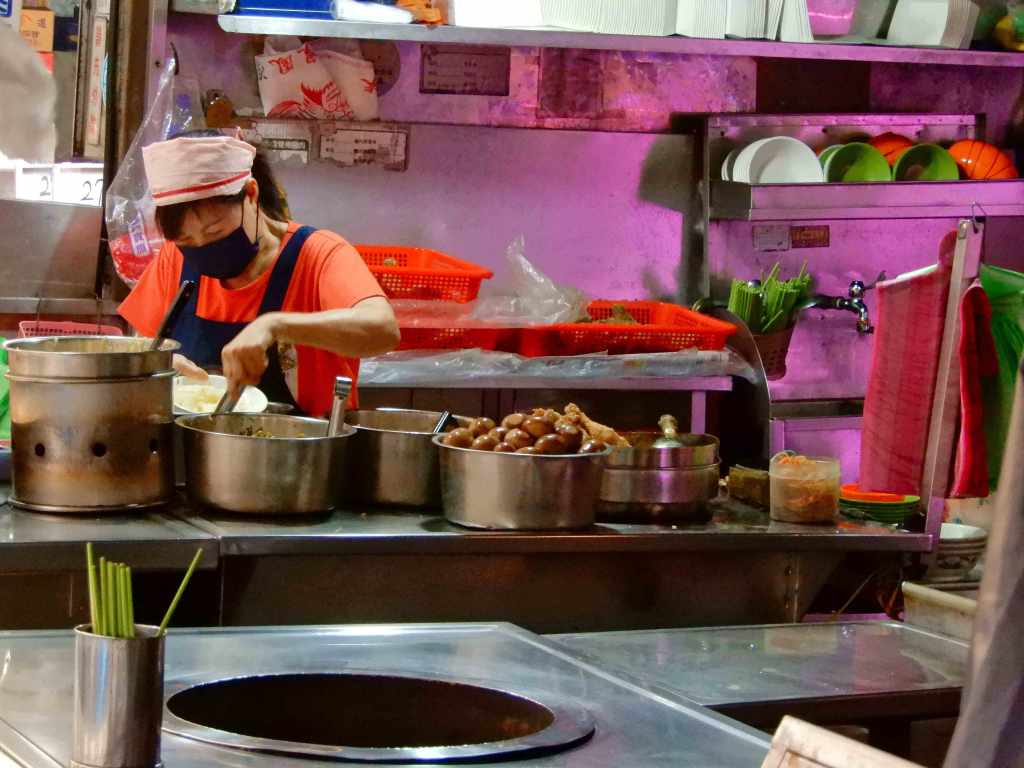
Before visiting Taiwan everything I had heard about this culture was focused on the food and the place to experience it was the street markets. On a day out exploring it wasn’t hard finding the market as it stretched on for three blocks. Taiwan is renowned for its diverse and flavorful and unique cuisine, offering a wide range of culinary delights. Some of the recommended dishes included:

Beef Noodle Soup (Niu Rou Mian): A hearty and comforting dish consisting of tender beef slices, noodles, and a rich broth.

Oyster Omelet (O-A-Zien): A savory pancake filled with plump oysters, eggs, and vegetables.

Stinky Tofu (Chou Dou Fu): A fermented tofu dish with a pungent aroma and crispy texture. The name is well deserved.

As we strolled the market it was obvious this is where Taiwanese go to eat.

We were also recommended to try Bubble Tea containing tapioca pearls, that originated in Taiwan in the early 1980s. Taiwanese immigrants brought it to the United States in the 1990s, initially in California, but the drink has also spread to other locations where there is a large East Asian population.

Our biggest issue with Bubble Tea was the tapioca pearls kept getting stuck in the straw.

Visiting Sri Lanka’s Yala National Park

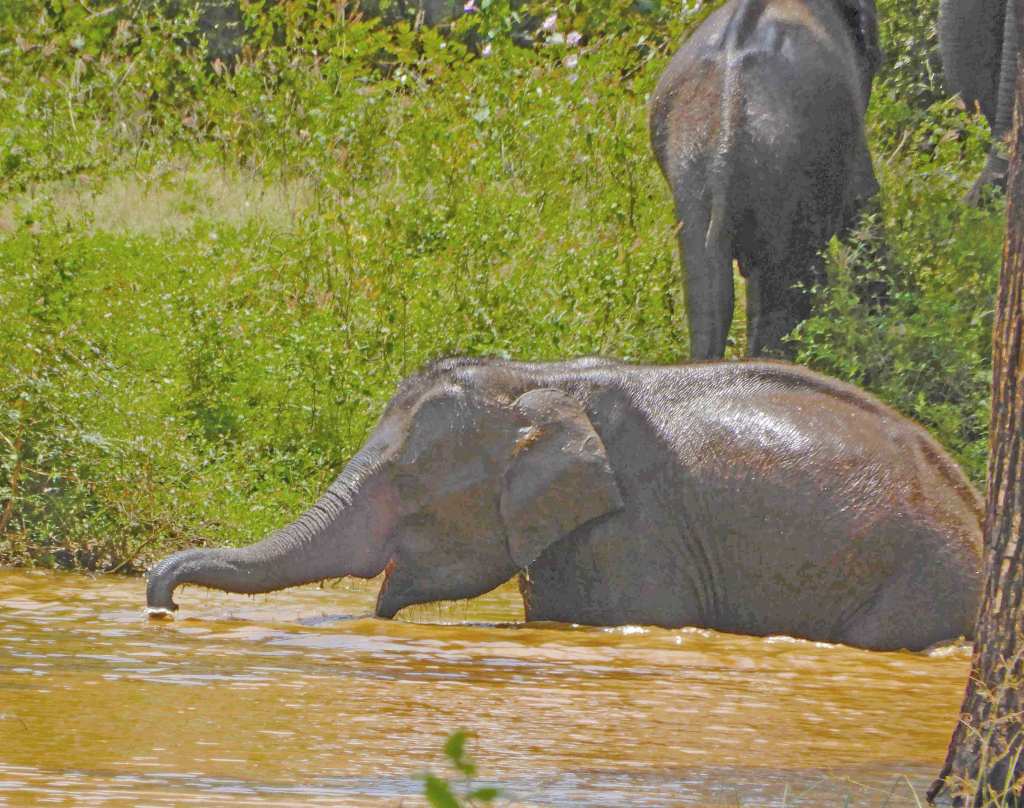
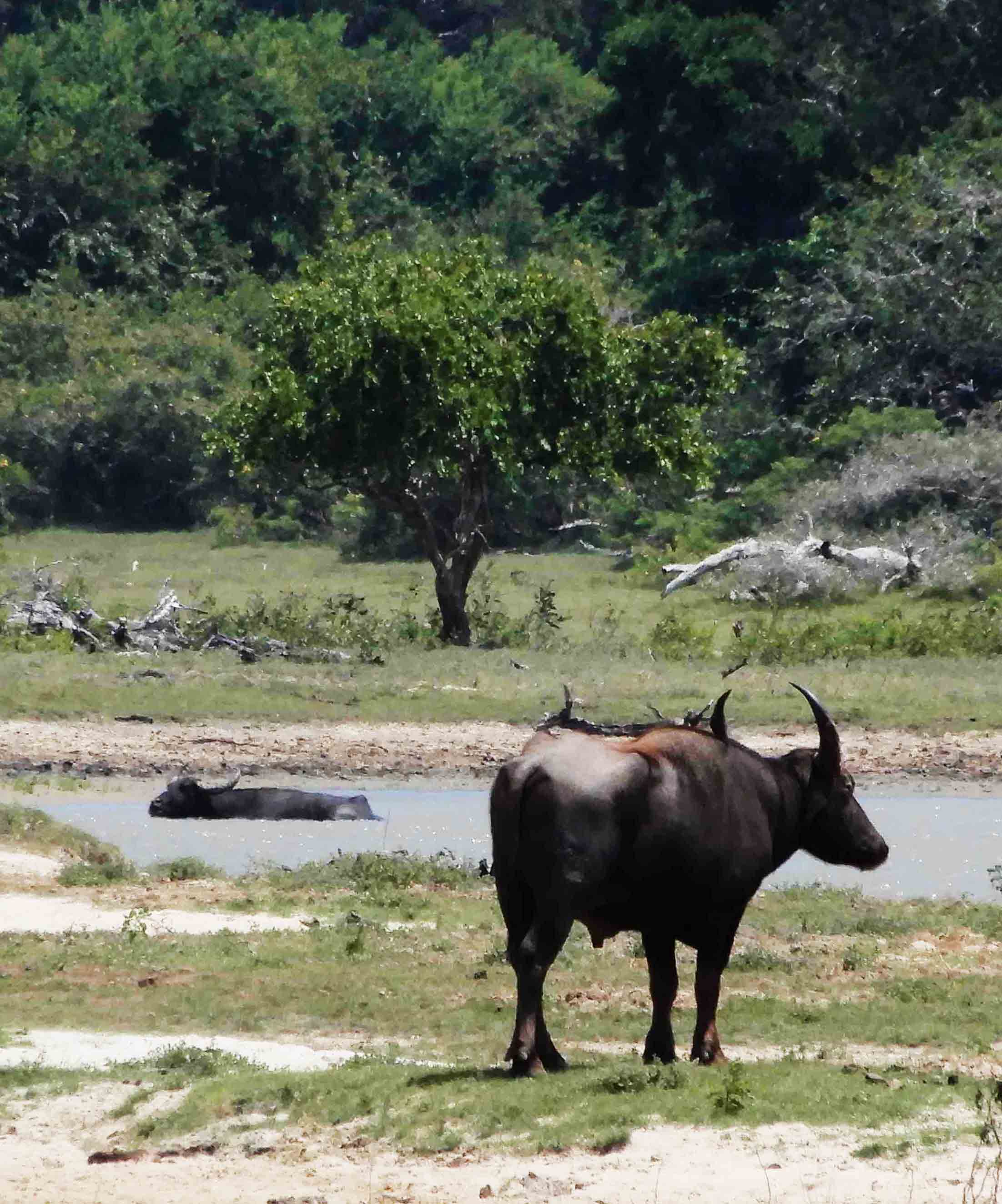
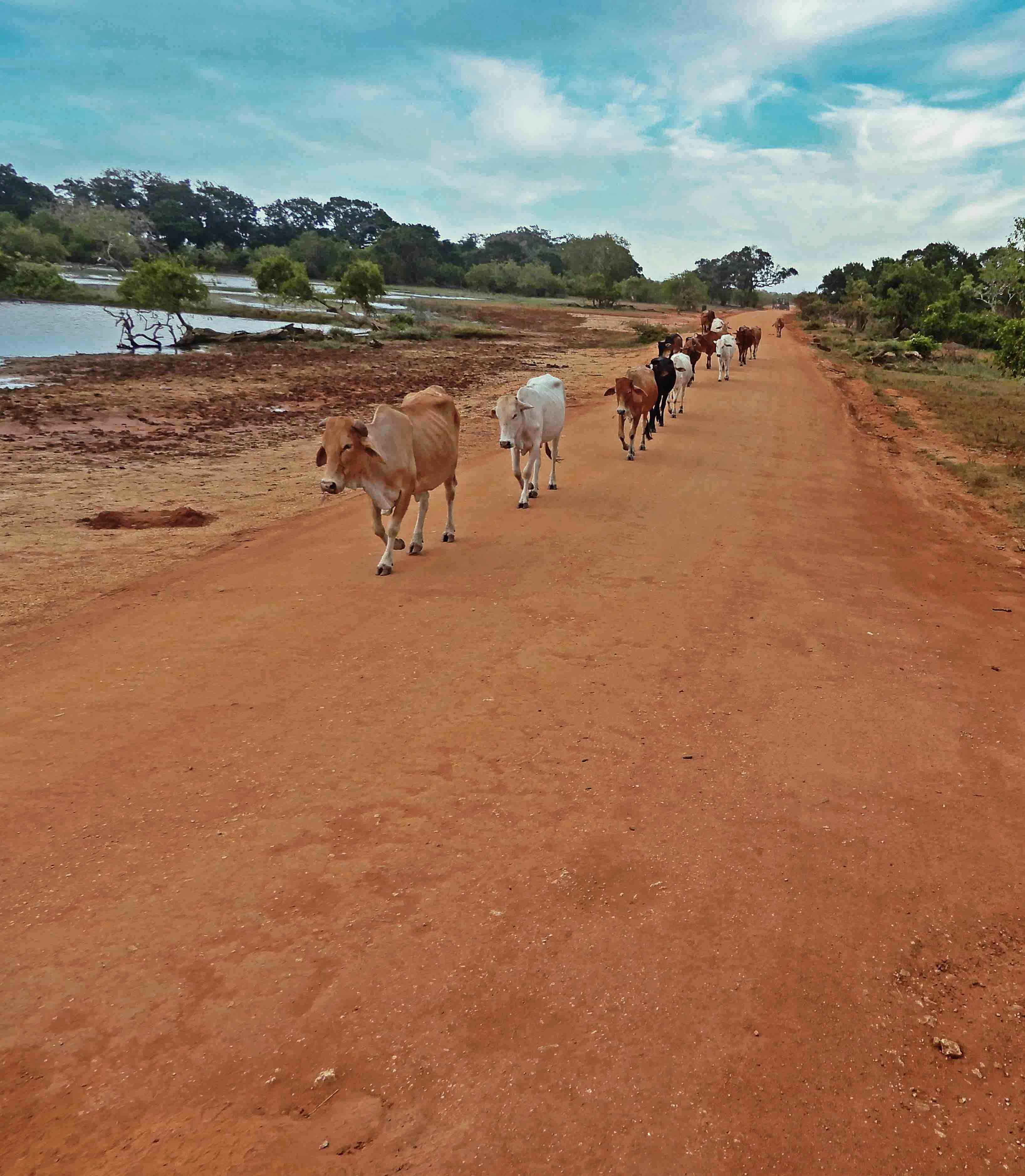
The Yala National Park is the most popular national park in Sri Lanka. It is home to a variety of wildlife, including elephants, leopards, and crocodiles. There are actually a limited number of ways to see the park with Jeep safaris the most common, and walking safaris with specially permitted guides the most expensive.

Jeep Safaris: This is the most convenient way to see the park. Jeep safaris are led by experienced guides who will take you to the best spots to see wildlife. The jeeps are modified to provide a higher viewing area for the passengers and for that reason they usually require some ladder climbing. There are also very few paved roads in the park and the dirt tracks can be very primitive, so expect a rough ride.

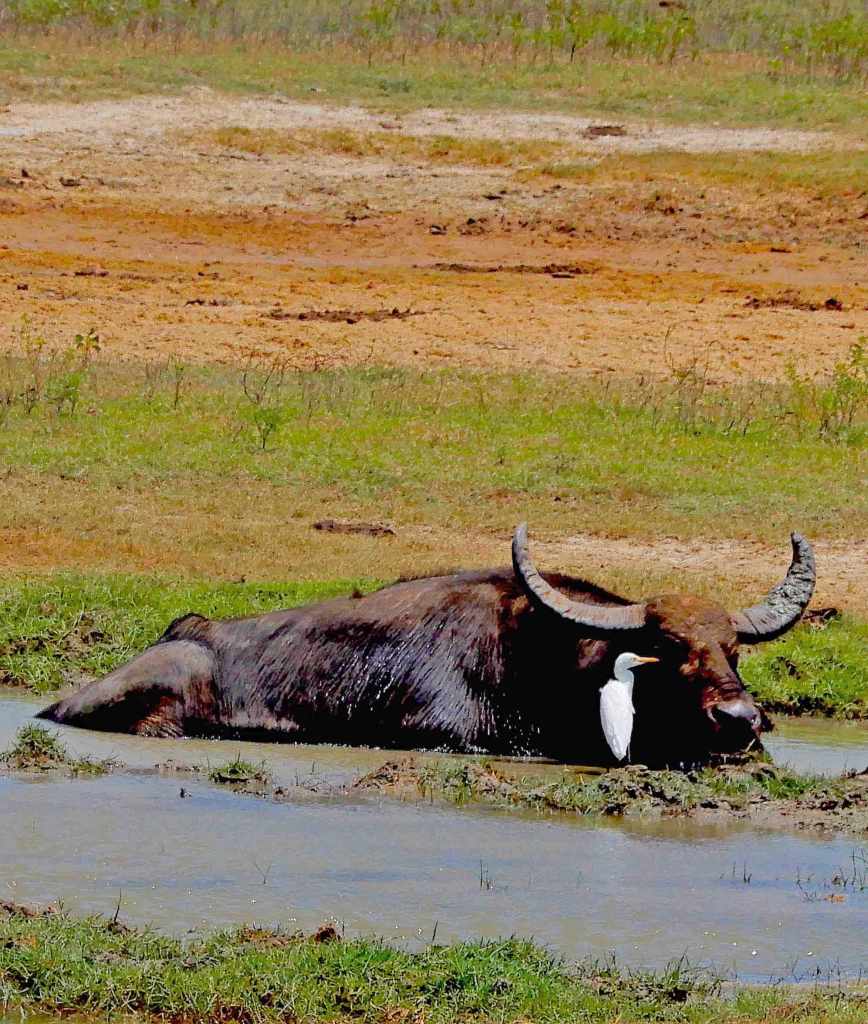
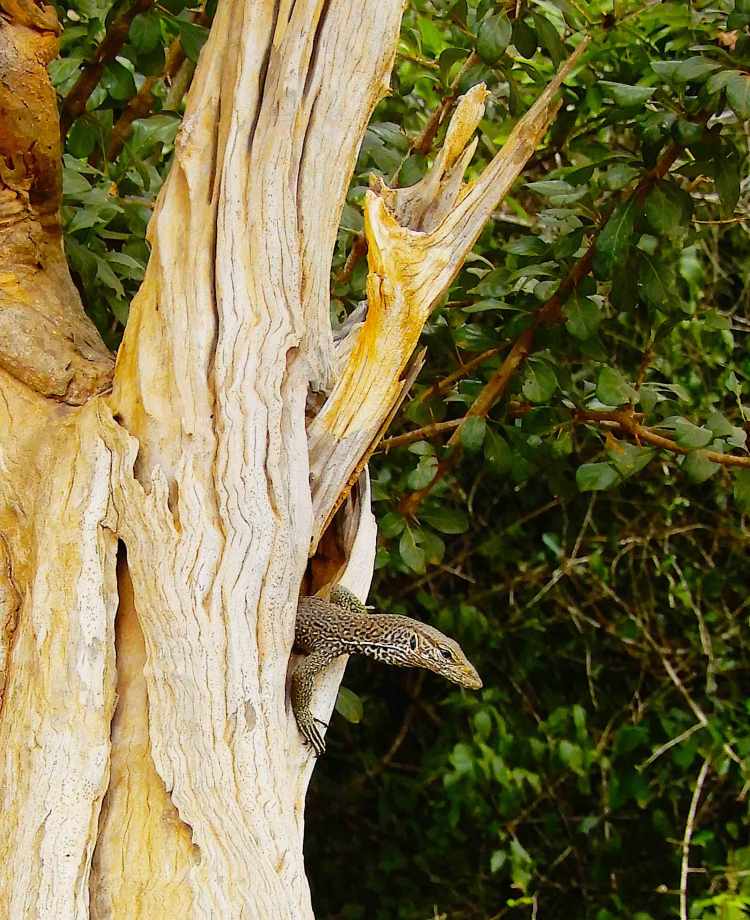
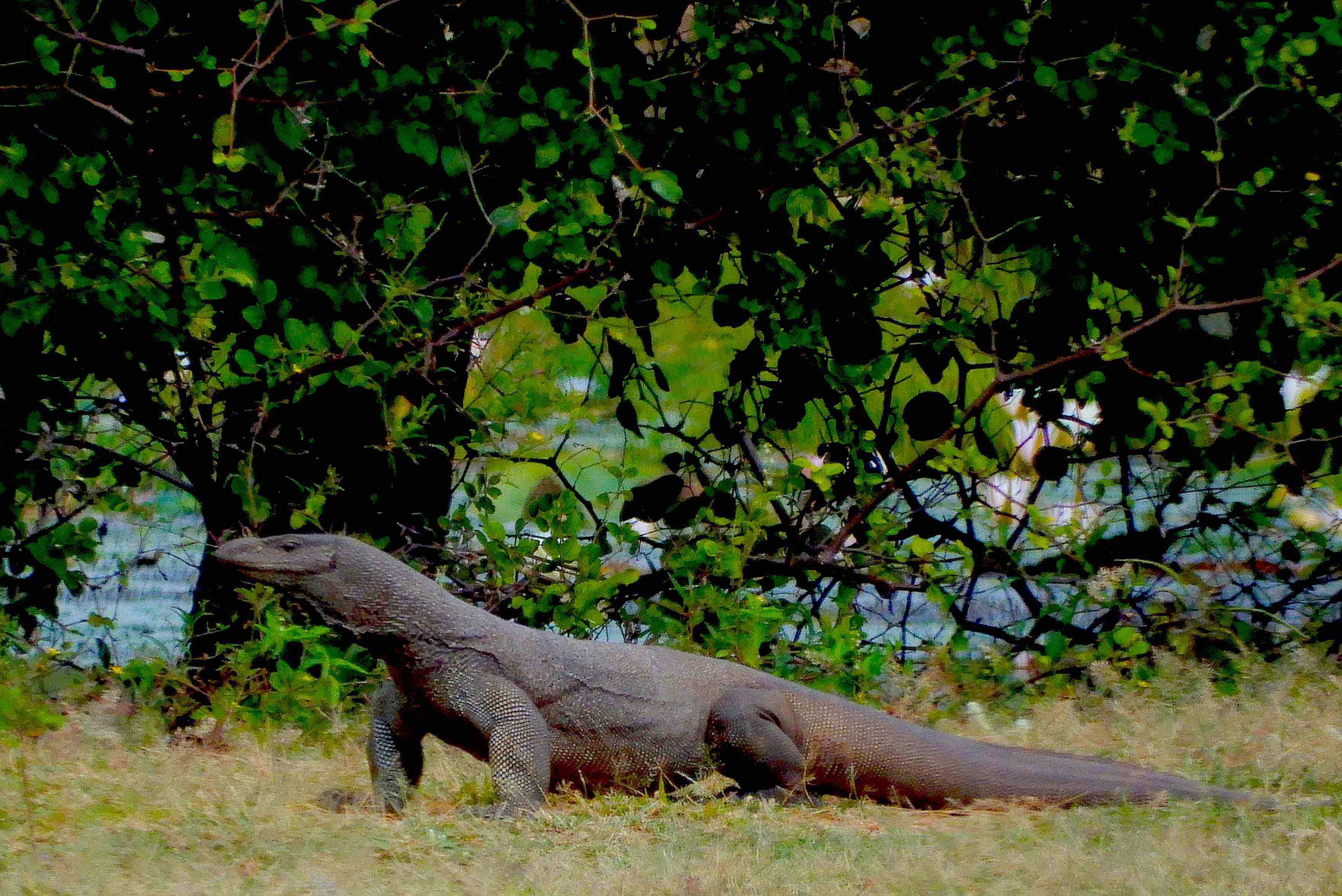
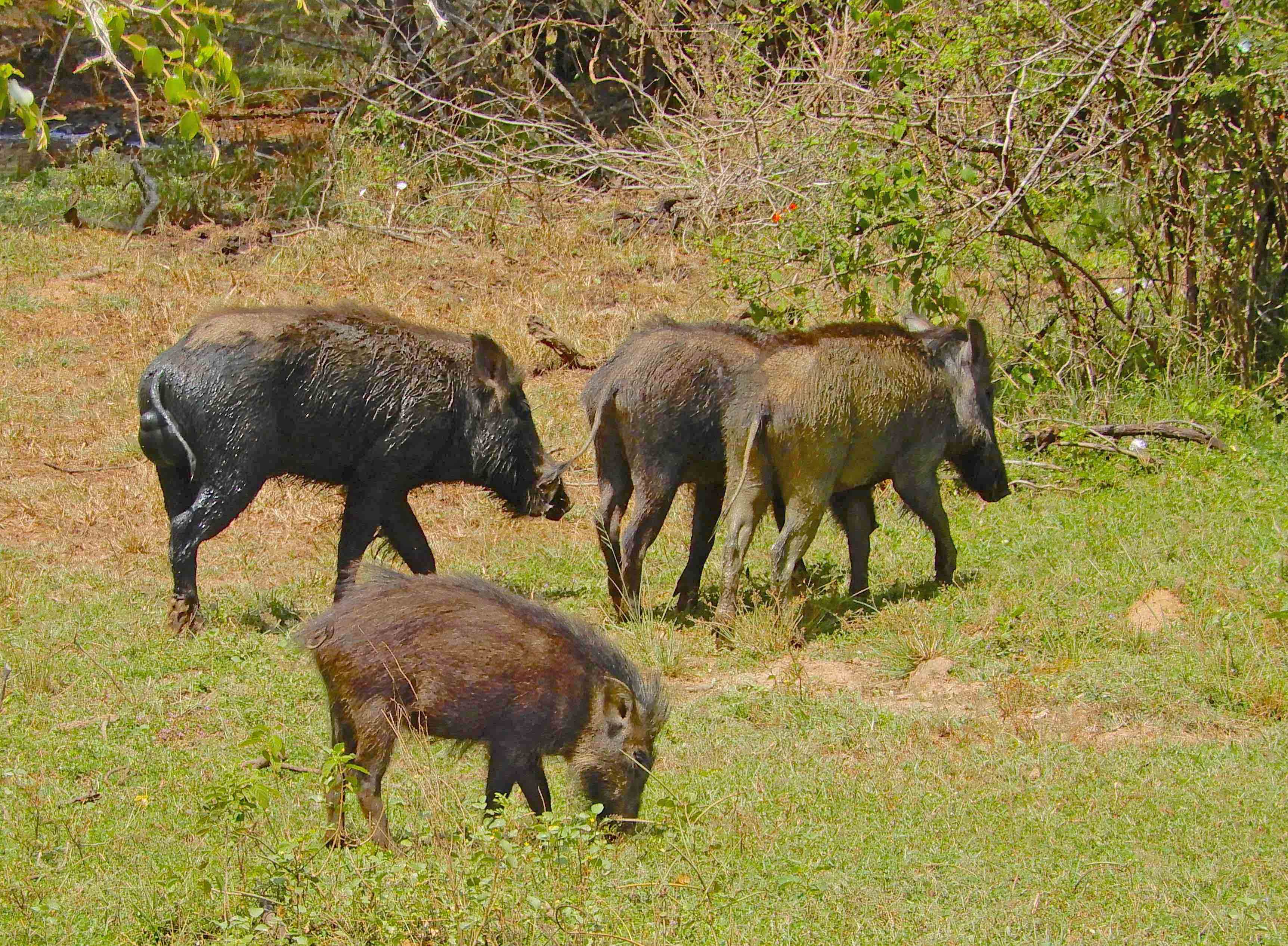
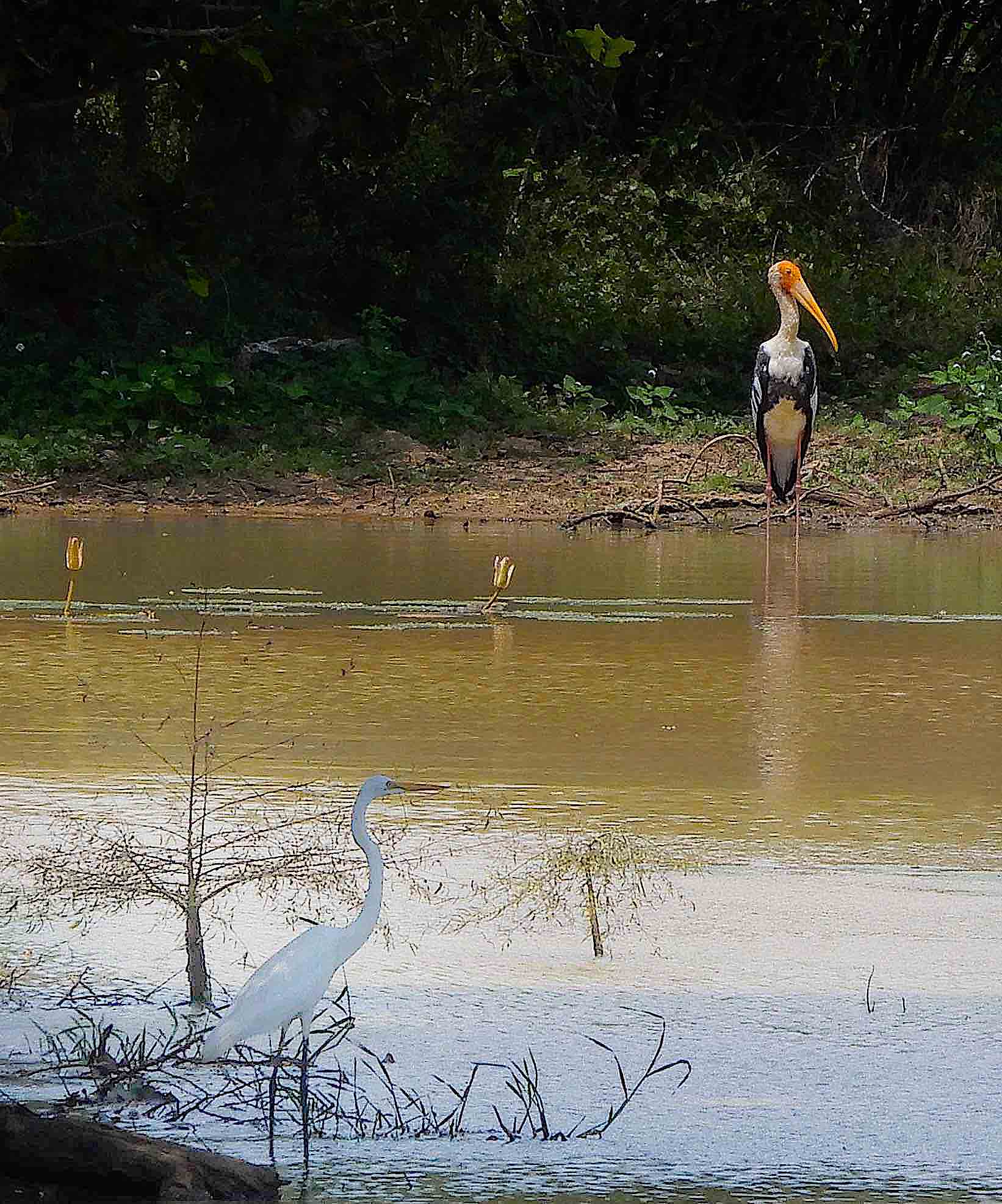
Most guides will be focused on locating herds of elephants and they keep in touch with each other to help locate the herds. While leopards live in the park they are very hard to find so don’t expect to see them. Wild boar, monitor lizards, water buffalo and crocodiles are common sights as well as birds.

Entrance Fees and Permits Entrance fees to Yala National Park vary depending on the time of year and the type of safari you choose. On average the entrance fee for Yala National Park is $30 for foreign visitors and 1,500 Sri Lankan rupees for local visitors. Children under the age of 12 are eligible for a discounted entrance fee of $15. Visitors who are members of certain organizations, such as the Wildlife Conservation Society, may also be eligible for discounts. Payment options include cash or with a major credit card.

Best Time to Visit The best time to visit Yala National Park is during the dry season, which runs from December to April. During this time, the weather is dry and sunny, and the animals are more likely to be out and about.

Todays Image • Making of a Mythical Creature

Singapore Creates An Image Using A Mythical Creature

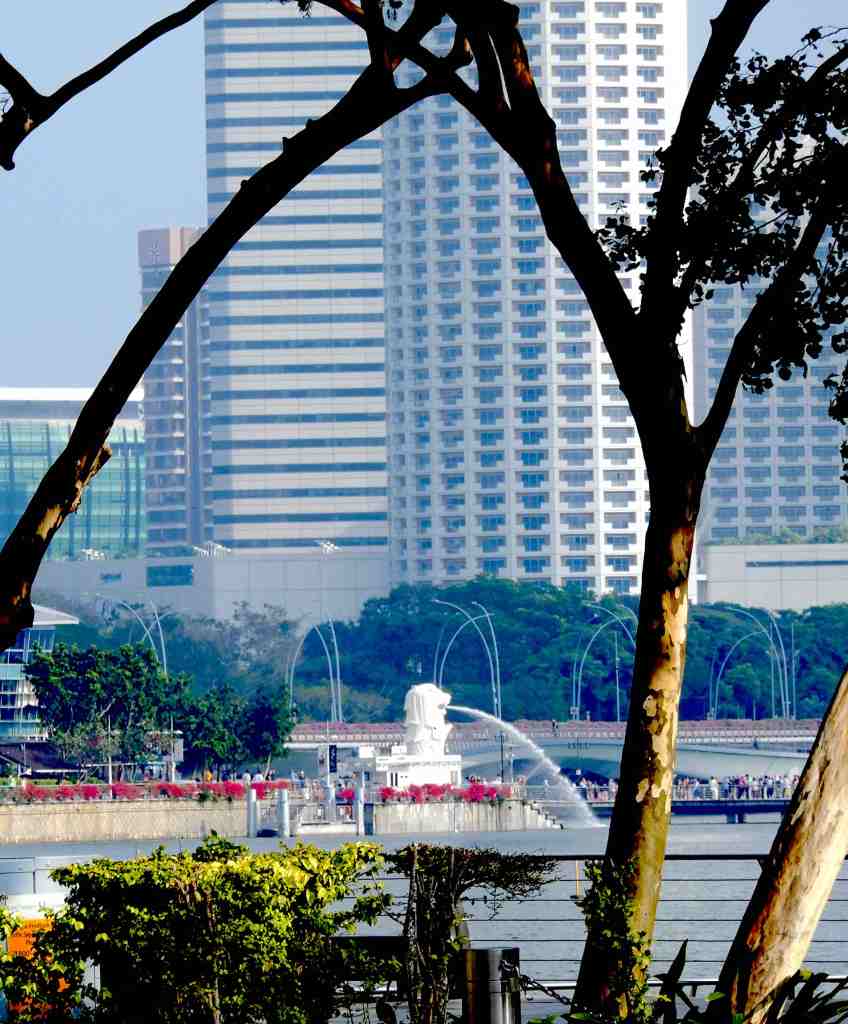
This creature has the head of a lion and the body of a fish. Since it’s origin in Singapore there have been a number of attempts to build a legend and a mythology around this creation.n This Merlion was a recent creation (1964) and has, over the years, become the official symbol of Singapore. Originally designed by Alec Fraser-Brunner, a member of the Singapore Souvenir Committee and curator of the Van Kleef Aquarium, it originally became the logo of the Singapore Tourism Board.

The Merlion is now the official symbol of Singapore. Promoted as a mythical creature with the head of a lion and the body of a fish it is today the prominent symbol of Singapore and Singaporeans in general, and widely used to represent both the city state and its people from sports teams, advertising, branding, tourism and as a national personification.

The Merlion was first used in Singapore as the logo for the tourism board. Its name combines “mer”, meaning the sea, and “lion”. The fish body represents Singapore’s origin as a fishing village when it was called Temasek, which means “sea town” in Javanese. The lion head represents Singapore’s original name—Singapura—meaning “lion city” or “kota singa”.

Join us as we visit historic treasures, natural wonders and vibrant cities set against backdrops that are endlessly changing and visually magnificent.