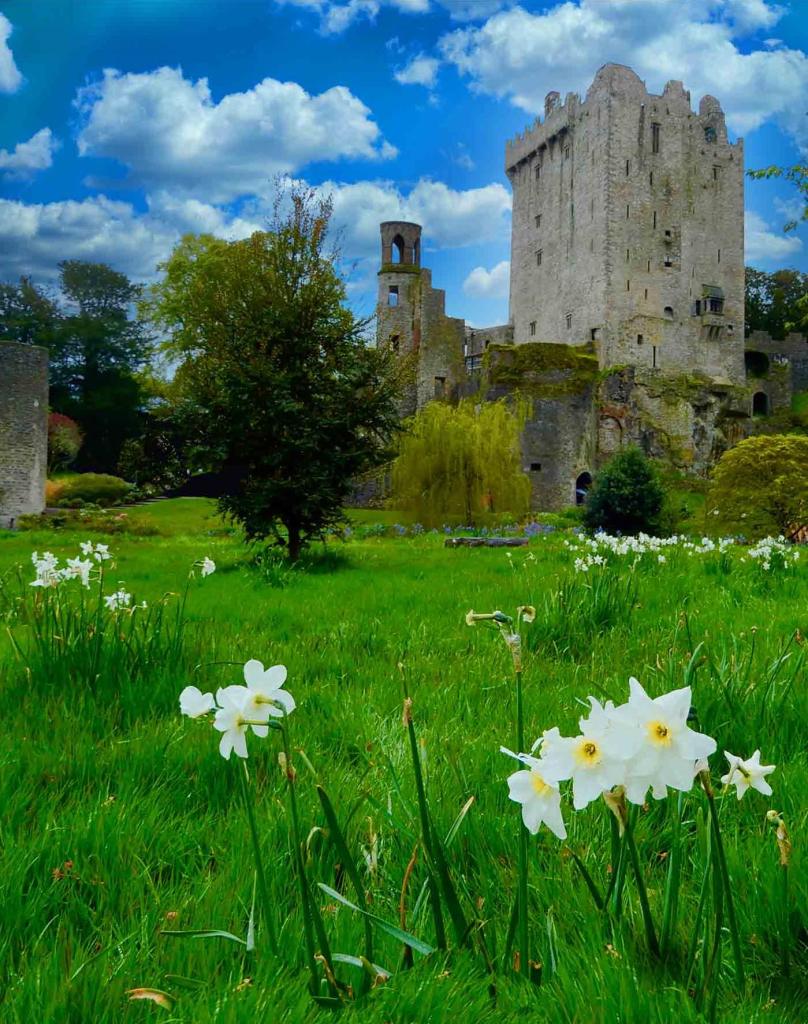
It wasn’t the best weather for visiting Blarney Castle, cloudy with off and on drizzle. But on the positive side maybe it would keep the crowds away. It was our only opportunity to visit Blarney on this our first trip to the Emerald Isle and it seemed like a sort of obligation when visiting Ireland to go and kiss the Blarney Stone.
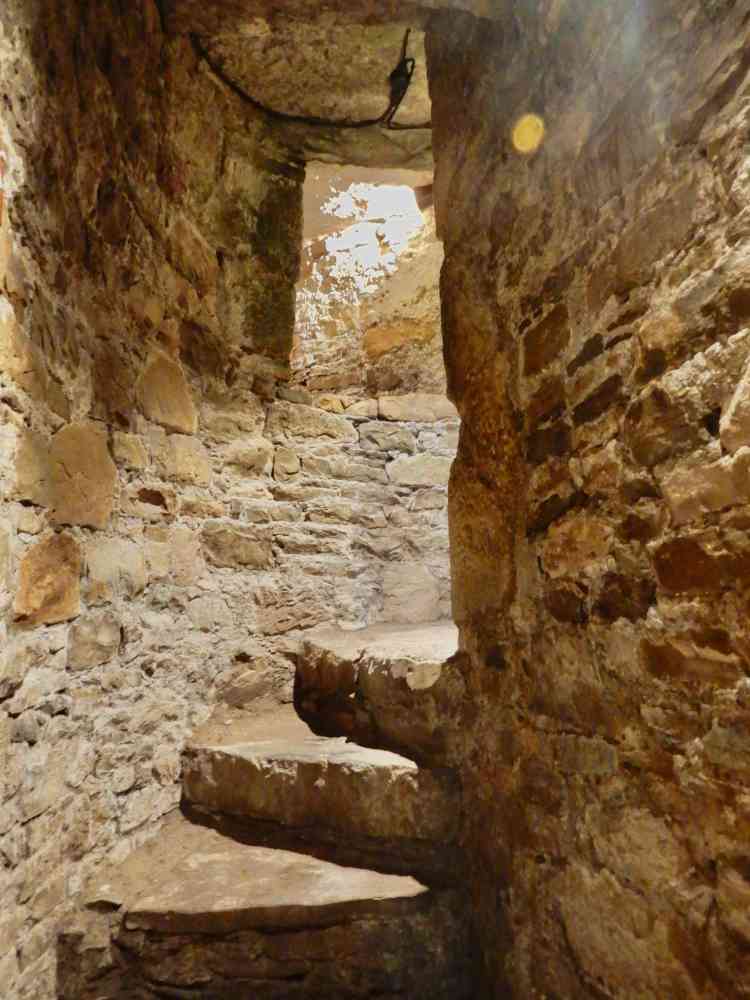
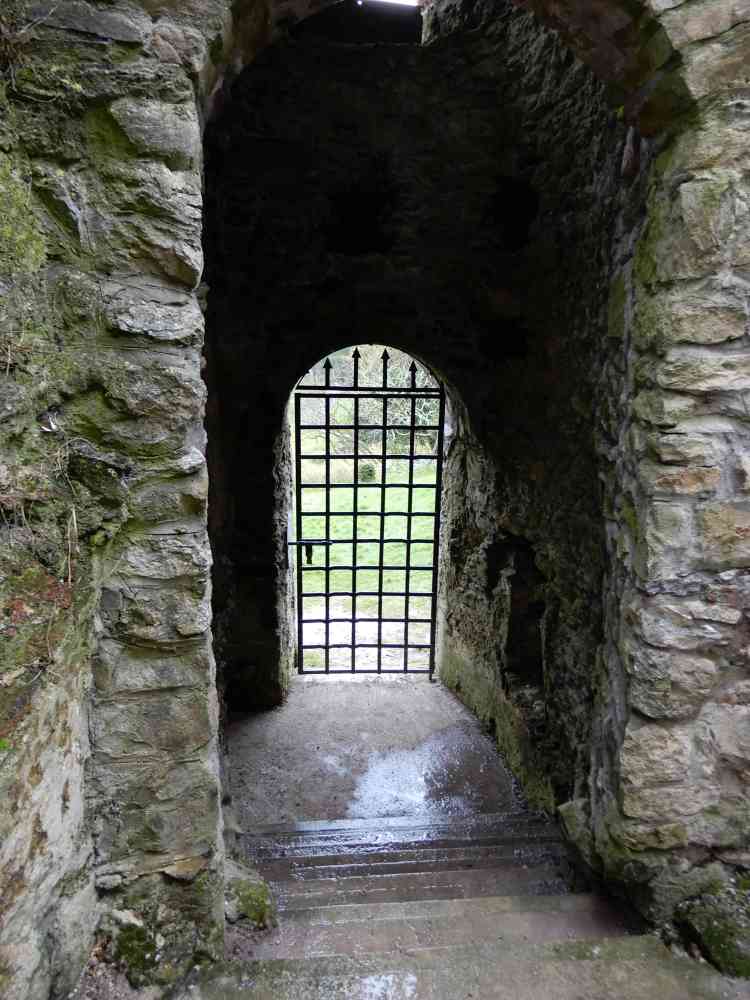
When we got to the castle it was a steady light rain and there was a good line waiting to climb the stairs going up to the top. Blarney Castle is about 115 feet high or about the size of a 13 story modern building. The layout of the castle has two narrow, winding stone steps from the ground level to the top where the Blarney Stone is with only enough width for a single person at a time. One stairs is used to go up, the other down. Before you enter the castle there are signs warning you that if you are not in good enough shape to make the climb, don’t go in. To emphasize the point there was a guide at the door repeating the warning.
In the group ahead of us was an elderly couple (we later learned he was 93) and he assured the guide he was in good shape and could make the climb. About half way through the climb he gave out. With maybe a hundred people behind us and another hundred ahead he sat down and announced he couldn’t go on.
It quickly became obvious that there was no way we were going to get the line behind us to start backing down.We were trapped half way up Blarney Castle. The only hope was to move forward and as the line above us started to open up space ahead several of us started working at carrying him up. Really awkward and it was an effort making just one step at a time. In climbing up there were a couple of small chambers off the stairs and after about twenty stairs we reached one and moved him and his wife inside.
Once at the top the weather was worse. The attendants were in rain coats with umbrellas and we told them what had happened. One said he had been aware of this happening a couple of times in the six years he’d worked at the castle and there was a procedure and they’d take care of the gentleman.
Kissing the stone
As it turned out there was no way to kiss the “stone of eloquence” without getting soaked and while several people went ahead, my wife said I didn’t need any boost to my eloquence and if there was a stone that removed part of the gift that would be the one I should kiss. Besides, someone pointed out that kissing the Blarney Stone was similar to kissing a couple of hundred total strangers…
Planning A Cruise? Start With The Intentional Travelers Port Guides
Recent Posts From The Intentional Travelers You Might Find Interesting:
There are many stories in Irish Mythology of adventures, grudges, voyages, battles and gods and a key character in many of the early tales is the mythical Irish hero Fionn MacCool and his warriors of the Fianna. These were forest-dwelling warriors often referred to in myths dating back to the 3rd Century AD as the soldiers of destiny. Fionn Macumhaill (Finn McCool) was a chieftain in medieval Ireland. With his adventures documented in the Fenian Tales, said to have been recorded as poems by Finn McCool’s son, Oisín, and told and retold by the Irish people for centuries.
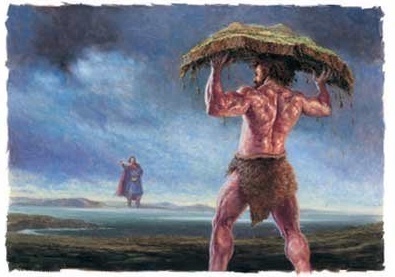
The legend says Finn McCool was a giant of a man and across the waters in Scotland was another giant named Benandonner, also known as the Red Man. Finn McCool and the Red Man exchanged insults from a distance and eventually Mac challenged this Scottish giant to a fight.
According to Irish legend, the Red man accepted the challenge and these two giants began building a causeway across the sea so they could fight. In one version of the story, Finn defeats Benandonner but in another, McCool hides from Benandonner after he realizes that the Red Man is much bigger than he is. To save him Finn’s wife, Oonagh, disguises him as a baby and tucks him into a giant cradle. When Benandonner sees the size of the “baby” he realizes that its father, Finn, must be a giant among giants. He flees back to Scotland in fright, destroying the causeway. Remnants of the causeway are found today at Fingal’s Cave on the Scottish isle of Staffa and The Giants Causeway in Northern Ireland adding confirmation to the legend.
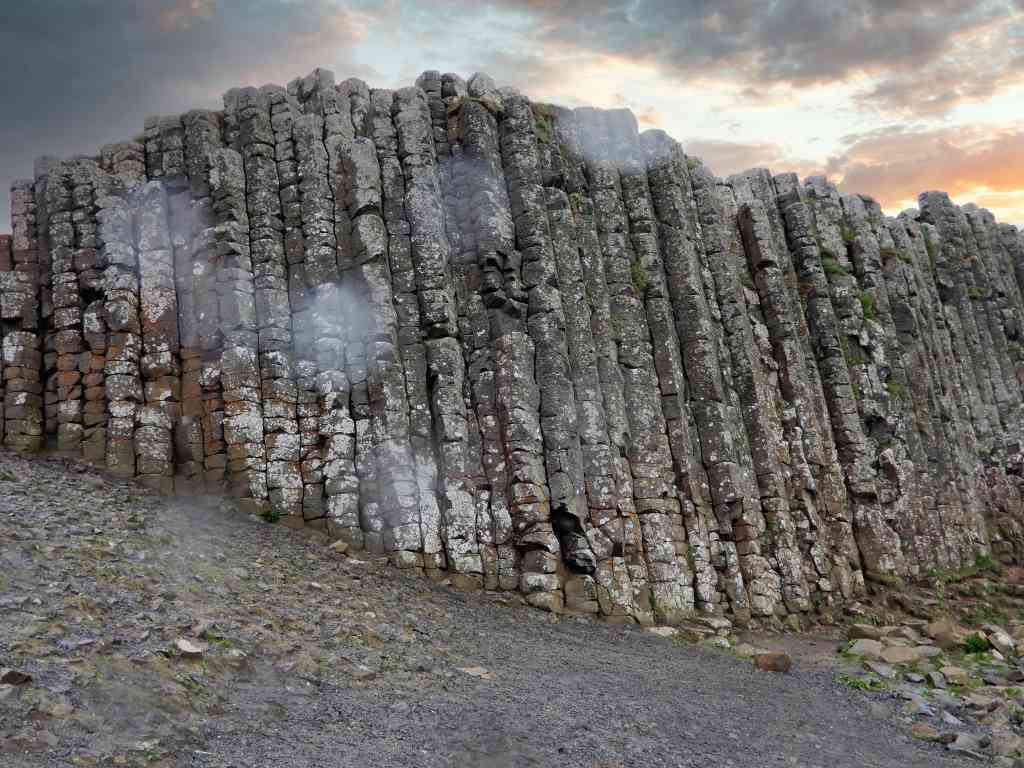
The Giants Causeway – Up on the rugged coast of Northern Ireland about two hours north of Belfast is a geological wonder and a World Heritage Site named The Giants Causeway. The unusual formation was born of natural processes 65 million years ago, when Northern Ireland was subjected to major volcanic activity. During this period, molten basalt came into contact with chalk beds, forming a lava plateau. In this circumstance, the lava cracks and fractures. Cracks opening along the cooling surface get propagated downward, resulting in the long, well-defined columns known as columnar basalt. Some believe water like rain, lakes, or oceans play a role in the cooling and fracturing process. At The Giants Causeway the lava cooled, the plateau contracted and cracked, forming about 40,000 similar sized hexagonal columns of varying heights that look like giant stepping stones. The largest pilers stand over 35 feet tall.
To visit the site there are a number of tour options leaving from Belfast starting at £39 per person. The Giants Causeway has a nice visitors center with a restaurant and snack bar with admission costing about £5. There’s a paved road down to the geological area with buses that run regularly and a number of walking trails. If you drive down there is a private parking lot for £9.
The Giants Causeway and the other end of the formation in Scotland aren’t the only places you’ll find these unusual basalt columns around the world. They include;
Hexagon pool, Golan, Israel
The Cliff of Stone Plates – Ghenh Da Dia in Vietnam
Prismas Basalticos in Huasca de Ocampo, Hidalgo, Mexico
Akun island columnar basalt, Alaska
The Gangolfsberg, Rhön, Bavaria, Germany
Froðba, Faroe Islands
Columnar Basalt in High Island Reservoir, Hong Kong
The Devil’s Postpile in California
Symphony of Stones at Garni Gorge, Armenia
Hexagon pool, Golan, Israel
The site of the Giants Causeway is spectacular and includes a good visitors center, a well paved road down to the Causeway, a shuttle bus and a number of food and refreshment venues around the site that include the Causeway Inn with a cozy bar.
The ruins of Dunluce Castle, where a number of Game of Thrones episodes were filmed, are also not far from The Giants Causeway site.
The Causeway Hotel has a nice cozy pub inside, perfect for taking the chill off after a hike down to the sea and the formations.
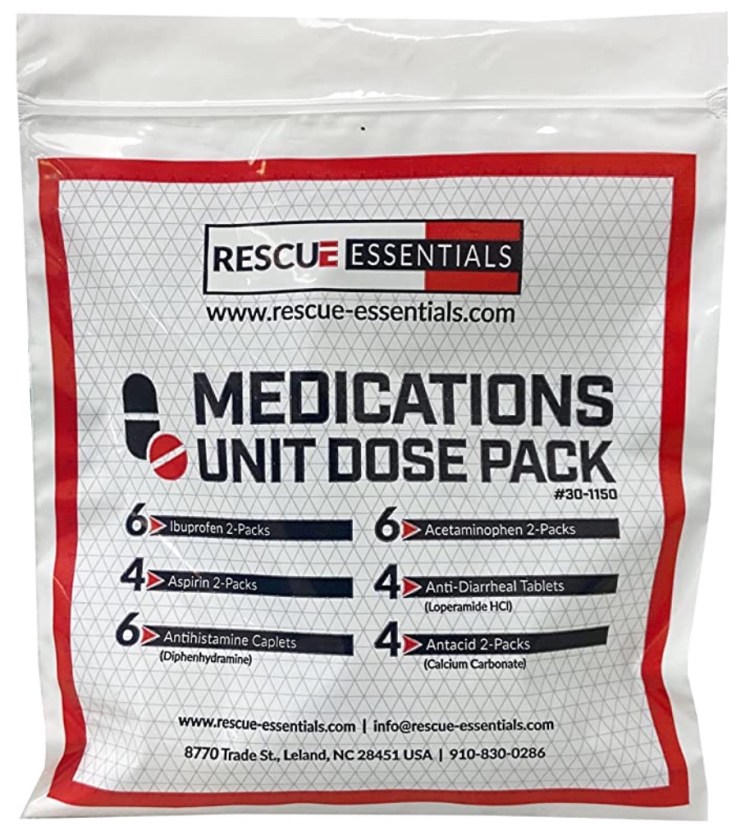
One of our travel essentials often is a ready made pack from Rescue Essentials, a Medications Unit Dose Pack available on Amazon HERE. The pack is only 5.91 x 3.78 x 0.91 inches; 1.13 ounces with individually marked foil packets. Each ziplock bag contains: 12 Ibuprofen (NSAID) – 200 mg tablets (6 twin packs) 12 Acetaminophen (Analgesic) – 325 mg caplets (6 twin packs) 8 Aspirin (4 325mg twin packs) 4 Loperamide HCl (anti-diarrheal) tablets – 2 mg caplets (4 single packs total 8mg) 6 Diphenhydramine (antihistamine) – 25 mg caplets (6 single packs) 8 Calcium Carbonate (antacid) – 420 mg chewable tablets (4 twin packs)
An Ounce Of Prevention
Our first line of defense when traveling is improving our immune system before we get sick and that starts with vitamin C. Several weeks before a trip we start taking it.
Around 1970, Nobel prize winner Linus Pauling (chemistry and the Peace Prize) popularized the theory that vitamin C helps treat colds. He published a book about cold prevention using megadoses of vitamin C. Multiple controlled studies have examined whether vitamin C had any effect after coming down with the common cold and, while the results have been fairly disappointing, it has been established that a regular supplemental regimen of vitamin C has several benefits. It includes reducing the symptoms of a cold and making it less severe. It also reduced duration and increased recovery time by about 8% in adults and 14% in children. Some studies also indicated a supplemental dose of 1–2 grams was enough to shorten the duration of a cold by 18% in children. Other studies with adults found 6–8 grams per day to be effective. Vitamin C in large doses comes packaged as Emergen-C and Airborne. You probably cannot overdose with vitamin C as the body will normally flush excess C quickly from the body.
Another item we carry with us is zinc. One popular form is Cold-Eeze and, while it hasn’t been found to be a preventative, it has been shown that zinc lozenges can reduce the duration of a cold, perhaps by a day or more and also reduce its’ severity.
Sucking on zinc within the first 24 hours after symptoms start and continuing to take it as long as your cold lasts will help shorten your cold and often a flu. According to the Mayo Clinic, zinc may keep cold viruses from multiplying and taking up residence in your nose and throat but there’s no evidence it’ll actually prevents getting a cold.
These are like the adage regarding chicken soup; it might help and it can’t hurt.
Two Prescription Medications
While we haven’t been very successful in convincing our doctors to provide us with prescriptions for travel just in case, we’ve met a number of people that have. Coming down with the flu or an infection in a foreign country can be a real issue. So at least check with your doctor. We pick up ours OTC while traveling and there are a number of countries where this is possible like Mexico, India and and Spain.
There are two specific prescriptions that can be helpful if you do come down with something but there are serious cautions regarding their use. The major issue is understanding when their use applies. Is the illness viral or bacterial is the biggest question to answer because antibiotics are of no use against a virus and anti-virals rarely help with a bacterial infection.
Determining Who The Culprit Is
Viral and bacterial upper respiratory infections have very similar symptoms. Lab testing or a clinical diagnosis is the only way to know for sure, but this can be costly, time consuming and at times not available when traveling internationally. Some symptom differences can help alert you to whether you have a viral or bacterial infection, so pay attention to a number of things.
First, be informed about what is “going around”. Flu outbreaks sweep regions in waves so it isn’t uncommon to have them show up on your trip or a cruise. Usually the news will provide clues to what the current contagion is. Also you may hear that a couple of other travelers or cruise passengers have been specifically diagnosed with the flu or just a cold.
2. Viral infections are milder than bacterial infections, but they tend to last longer. With a virus you will usually feel very sick for 1 to 3 days and then you will start to feel better, but some of your symptoms may linger. Symptoms that linger for ten days or more are likely to be bacterial. Over time, viruses can also lead to things like sinus infections or increased risk of middle ear infections which result from developing an additional bacterial infection.
3. When you blow your nose or cough up mucus, pay attention to the color. While it may be indelicate, color can be an indicator of whether you have a viral or bacterial infection. Thin and clear mucus is more likely to be a viral infection. Greenish mucus is more likely to be a bacterial infection. Keep in mind mucus color is not a completely accurate indicator of a viral or bacterial infection. Make sure you consider additional factors.
4. Pay attention to your throat. A sore throat is common for both viral and bacterial infections and checking for a sore throat is the most common thing a doctor will evaluate to determine if you need antibiotics. Certain types of sore throats can indicate a bacterial infection. For example, white spots are generally caused by bacteria as well as a sore throat without other symptoms, often indicating a strep throat (bacterial).
5. Fevers can present in both viral and bacterial infections but fevers differ with different types of infections. In bacterial infections, fevers tend to go higher quicker. Also, with a bacterial infection, fevers often get worse after a few days but if you improve in a few days it’s likely a viral infection.
Without access to medical attention your best action may be based on an educated guess.
Medications
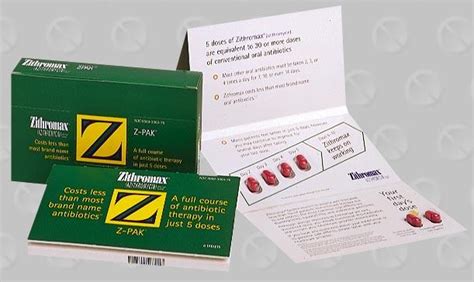
The two prescription medications most often carried when traveling are Z-Packs and Tamiflu® with one used for bacterial infections and the other for virus.
The Z-Packs
First, Z-Packs are easy to use and they’re cheap. They come as a pack of five pills, which you take daily over the course of five days, and they’re highly effective. Azithromycin is well-absorbed when you take it orally, easily enters your body tissues, so it can fight the bacteria causing your infection, and stays active for a long time. Z-Packs have no effect on virus infections but are highly effective against:
Strep throat. Azithromycin is approved for treatment of strep throat. If you are allergic to penicillin, which is usually the first choice of treatment, a Z-Pack is still a good option.
Skin and soft tissue infections. Infections of the skin or soft tissues — like muscles and tendons — commonly caused by Staph and Strep bacteria can be treated with Zithromax. A typical prescription consists of either 500 mg daily for five days or a single dose of 2 grams.
Community-acquired pneumonia. For mild to moderate cases of pneumonia that are acquired outside a hospital, Z-Packs are a useful option.
Acute bacterial bronchitis. In folks with chronic bronchitis or other underlying lung disease, acute bacterial bronchitis can be treated with a Z-Pack.
Chlamydia. For the sexually transmitted disease, Chlamydia, a single one-gram dose of azithromycin is the recommended treatment. Just one dose and done.
Traveler’s diarrhea. Azithromycin can effectively treat traveler’s diarrhea, aka dysentery or bloody diarrhea, caused by the Shigella and Campylobacter bacteria. This makes the Z-Pack a handy companion to bring along on international travel.
Nongonococcal urethritis in men. A single 1-gram dose of azithromycin can treat certain urethra infections in men. Again, one and done!
Tamiflu
The antiviral drug oseltamivir (Tamiflu®), helps your body bounce back faster from the flu.
Researchers find that taking oseltamivir within 48 hours of symptom onset can shave approximately one day from a typical seven-to-10-day illness. A more recent study showed that in patients 65 years old and older without other health conditions, up to two to three days could be shaved off by using oseltamivir.
Oseltamivir interferes with the proteins the flu virus uses to reproduce, giving your immune system time to destroy it.
Tip – If your doctor is reluctant to write a script for Z-Pack or Tamiflu and you travel internationally, there are a number of countries where these are sold OTC. Mexico is one example were we have picked up Z-Packs for as little as $16.
If You Don’t Have Medications (Or Even if You Do)
If you come down with something and don’t have access to those prescriptions, here’s your best course of treatment:
Stay hydrated.
Drinking water and juice to stay hydrated can help cut down on symptoms like a sore throat and stuffy nose. Steer clear of alcohol and super-sugary drinks to help prevent dehydration.
Gargling with salt water.
To combat a sore throat add half a teaspoon of salt to a glass of warm water. The salt draws out excess water in your throat’s tissues, reducing the inflammation, and clears mucous and irritants from the back of the throat. The rinse also flushes out bacteria and viruses, which may help whether you’re getting a cold or want to prevent one in the first place.
Keep your nose clear.
Using a sterile saline nasal spray right after cold symptoms first appear may reduce their impact by moisturizing dry nasal passages and loosening mucous caused by colds. Taking a hot shower allows the warm moisture to clear nasal passages.
OTC Medications
Theraflu
Theraflu is basically a dose of acetaminophen along with several other anti-cold ingredients. It does carry a warning about the risk of liver damage if you take more than the recommended dose or mix with alcohol or other acetaminophen-containing products. Maybe take ibuprofen or acetaminophen alone and brew yourself a hot cup of tea. You’ll get the warm, soothing fluids without the risk of those extra drugs.
Pain Relievers
A pain reliever may be the first thing you reach for when you come down with a cold. Pain relievers for coughs and cold can be very effective. They can help with fever. Anti-inflammatory meds like Advil or Motrin (ibuprofen) or Aleve (naproxen) have the advantage of reducing tissue inflammation, but you should take Tylenol (acetaminophen) instead if you’re on blood thinners
NyQuil And Other Cold & Flu Drugs
This is one of the more popular OTC drugs but it is also one of the most dangerous when abused. Check the indications, side effects and warnings. You need to check to make sure that it is safe for you to take NyQuil (acetaminophen, dextromethorphan, doxylamine, and pseudoephedrine liquid).
Other choices with similar cautions include:
Cruisers may find some available in the ships store and international travelers should talk to pharmacists about alternatives or to suggest something suitable. Stopping by a pharmacy and asking a pharmacist is the easiest and most readily available source of good medical advice. Always read the recommendations and watch out for high blood pressure cautions and concerns about other conditions like glaucoma.
When traveling it’s easy to get lost when looking for the right OTC medication. The brands we are used to just aren’t there. An easy tip we’ve discovered when looking for OTC meds in a foreign country is to take a picture with your cell and use Google translate to help identify medications.
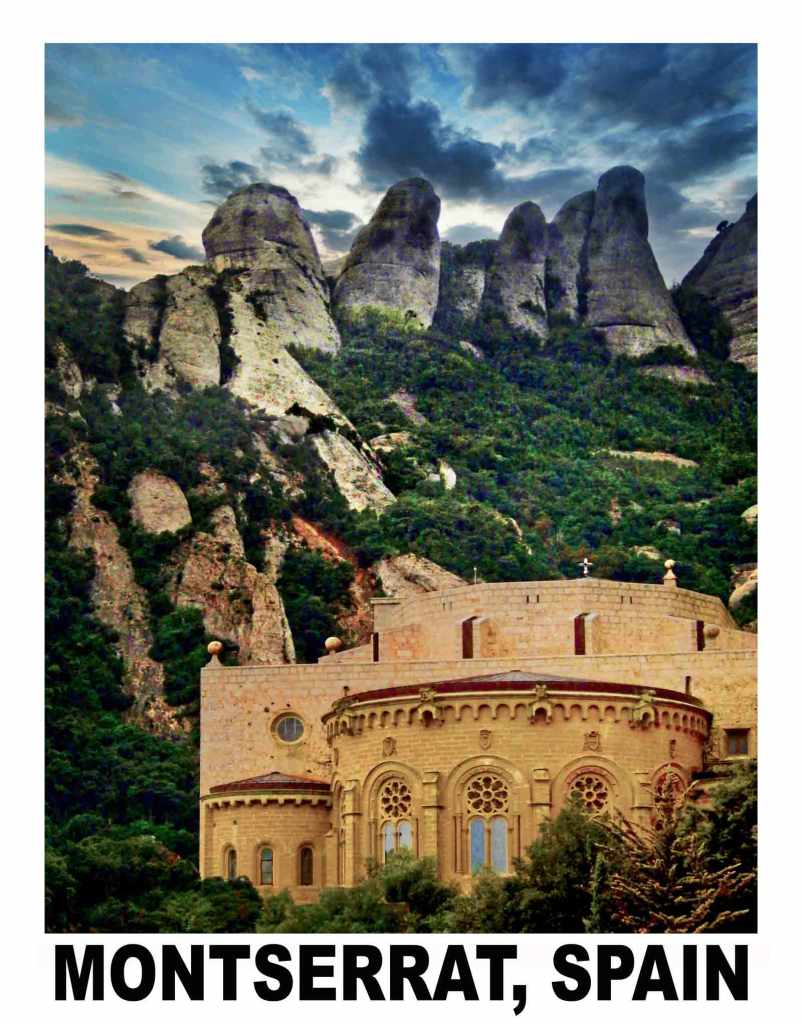
Less than an hour out of Barcelona is a religious mountain. It is not known exactly when Monks first came to Montserrat Mountain and began to build a Monastery but it is believed to be in the ninth century that four Chapels were built (St Mary’s, St. Iscle’s, St.Peter’s and St. Martin’s). Today the mountain is a popular destination for locals, tourists and more than a few rock climbers.
These giclée prints are available in several sizes, custom printed for each individual order on archival, museum grade paper using fade resistant inks.
Join us as we visit historic treasures, natural wonders and vibrant cities set against backdrops that are endlessly changing and visually magnificent. Celebrate a world of travel experiences with these decorating accessories that are perfect for framing.
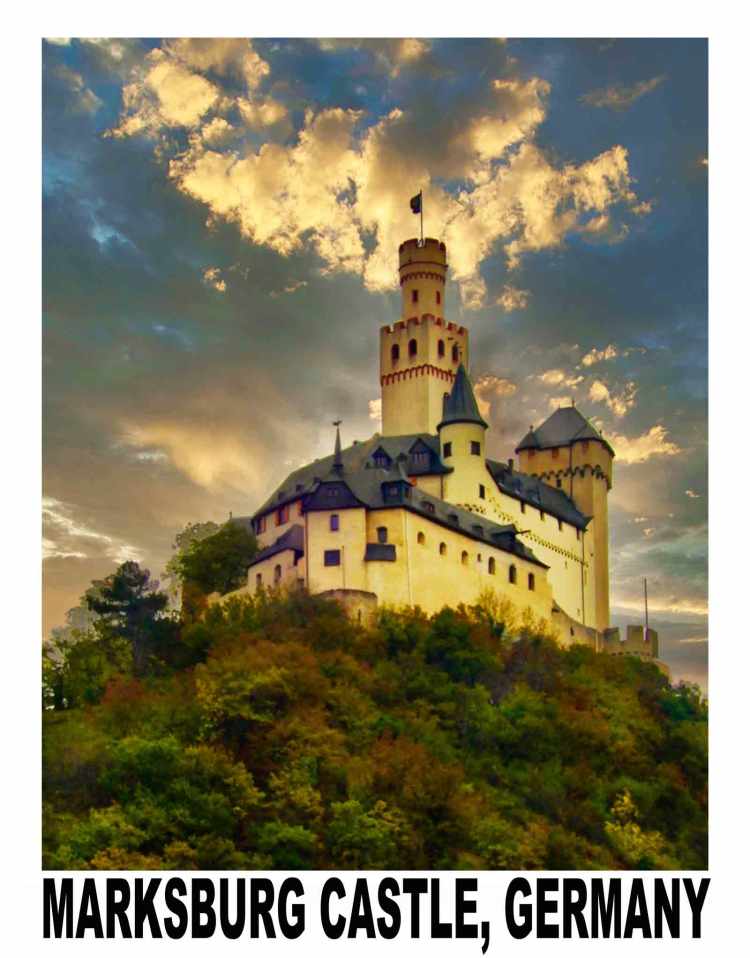
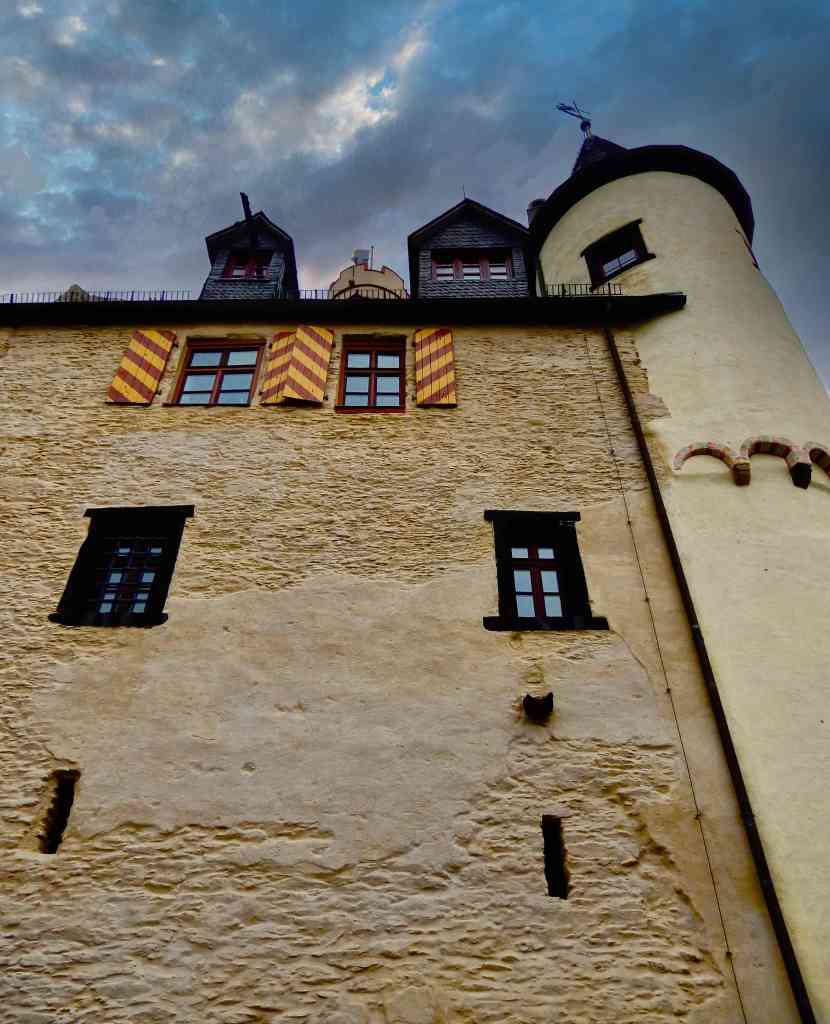
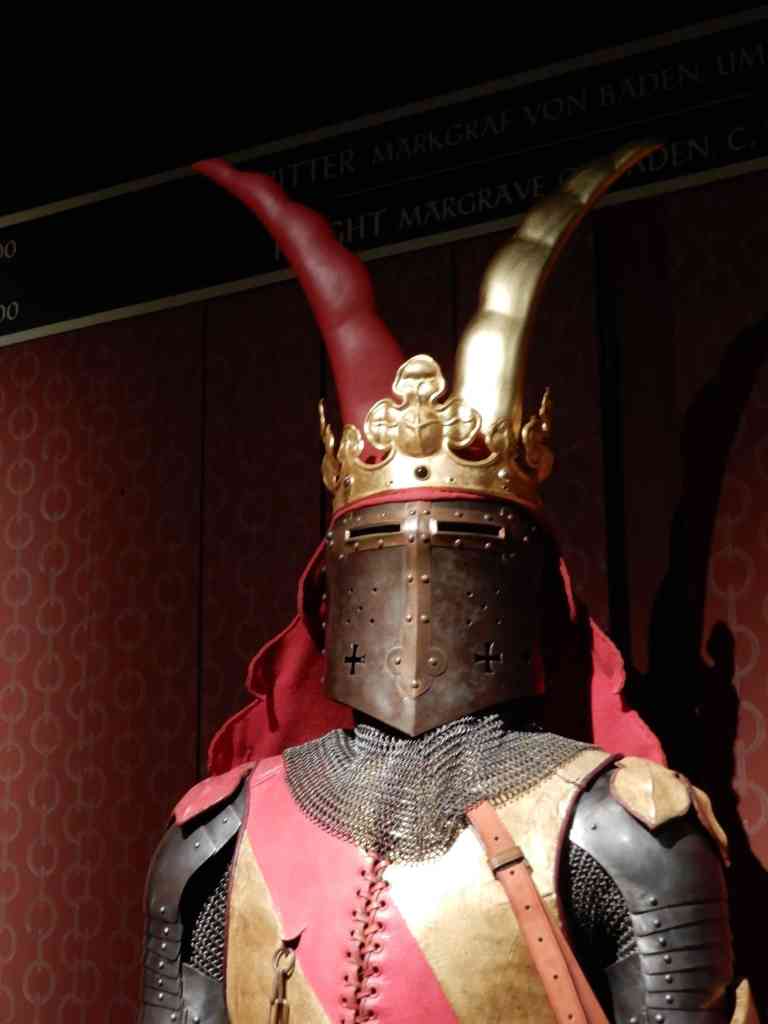
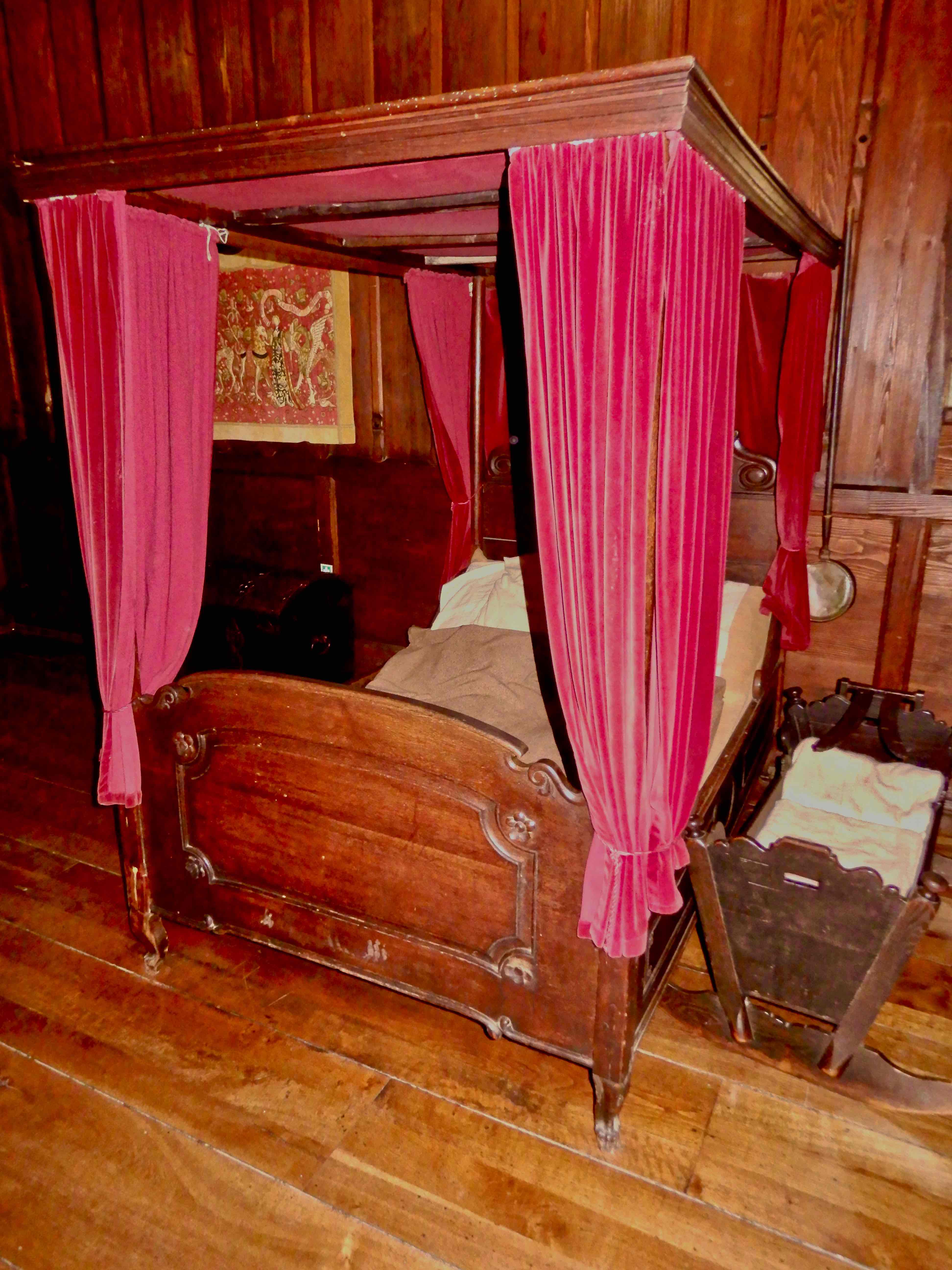
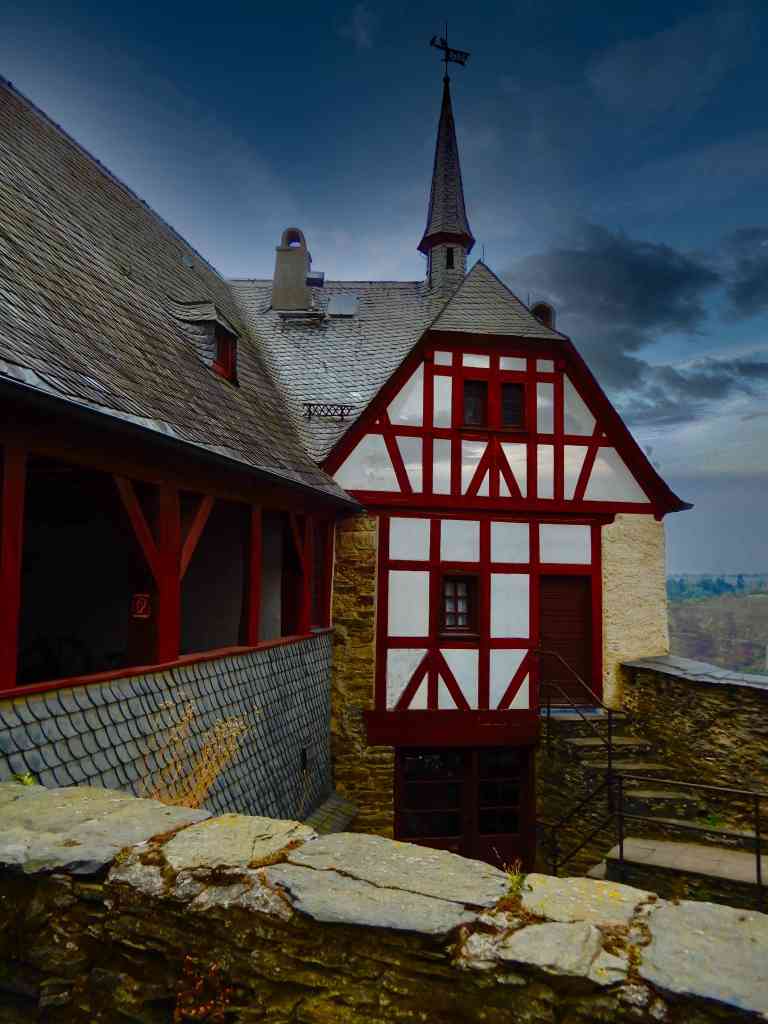
Standing above the town of Braubach, Germany on the banks of the Rhine, is Marksburg Castle, an imposing and historic fortification. The castle was erected to defend the surrounding countryside but also to control the trade that passed through the region on the Rhine river. Of the over three dozen castles along the river, Marksburg is the only one to have never been captured or even fallen into serious disrepair.
The history of Marksburg castle begins in the 12th century, when the start of the castle complex was constructed by the Lords of Eppstein. The castle protected the town of Braubach below, but it also served to reinforce the Eppsteins’ right to collect customs duties on goods and traffic traveling along the trade routes.
The Eppstein family was powerful with four members of the family being Archbishops and Electors of Mainz, another was Archbishop and Elector in Trier. Electors were senior nobles in the Holy Roman Empire with the right to elect the Emperor.
The Eppstein family continued to hold Marksburg castle until 1283, when it was purchased by Eberhard II, Count of Katzenelnbogen. It was the counts of Katzenelnbogen who built the gothic-style additions to Marksburg, which provides the profile seen today. When the last Katzenelnbogen died in 1479, the castle passed to the Landgraves of Hesse through the marriage of the Katzenelnbogen heiress Anna to Heinrich of Hesse.
At that time the castle was strengthened to defend against the new artillery and Marksburg was enlarged to make space for its gun batteries.
In 1806 with the fall of Holy Roman Empire, French Emperor Napoleon granted Marksburg castle to his ally the Duke of Nassau. The Duke used the castle as a war prison and a home for disabled soldiers. In 1900, the German Castles Association took ownership of Marksburg castle with a payment gesture of 1,000 gold marks.
The castle was damaged by American artillery in WWII but the damage was also repaired by the American Occupation Army.
The old town of Cartagena is one of the richest, and full of character places in the city. It was constructed in 223BC, and was Hannibal’s capital city on the Iberian Peninsula, making it an area with plenty of historical monuments, squares, and buildings for you to discover!. It’s an amazing example of the beauty of Andalusian architecture, built within grotesque, little streets.
These giclée prints are available in several sizes, custom printed for each individual order on archival, museum grade paper using fade resistant inks.
Join us as we visit historic treasures, natural wonders and vibrant cities set against backdrops that are endlessly changing and visually magnificent. Celebrate a world of travel experiences with these decorating accessories that are perfect for framing.

























 The Intentional Travelers