Inland a couple of hundred miles from Alaska’s mountainous coast stands a majestic line of rugged mountains known as the Alaska Range. At its center stands Denali, the tallest point in North America and the crown of America’s largest National Park.
These giclée prints will soon be available in several sizes and styles, custom printed for each individual order on archival, museum grade paper using fade resistant inks.
Join us as we visit historic treasures, natural wonders and vibrant cities set against backdrops that are endlessly changing and visually magnificent. Celebrate a world of travel experiences with these posters that are perfect for framing.
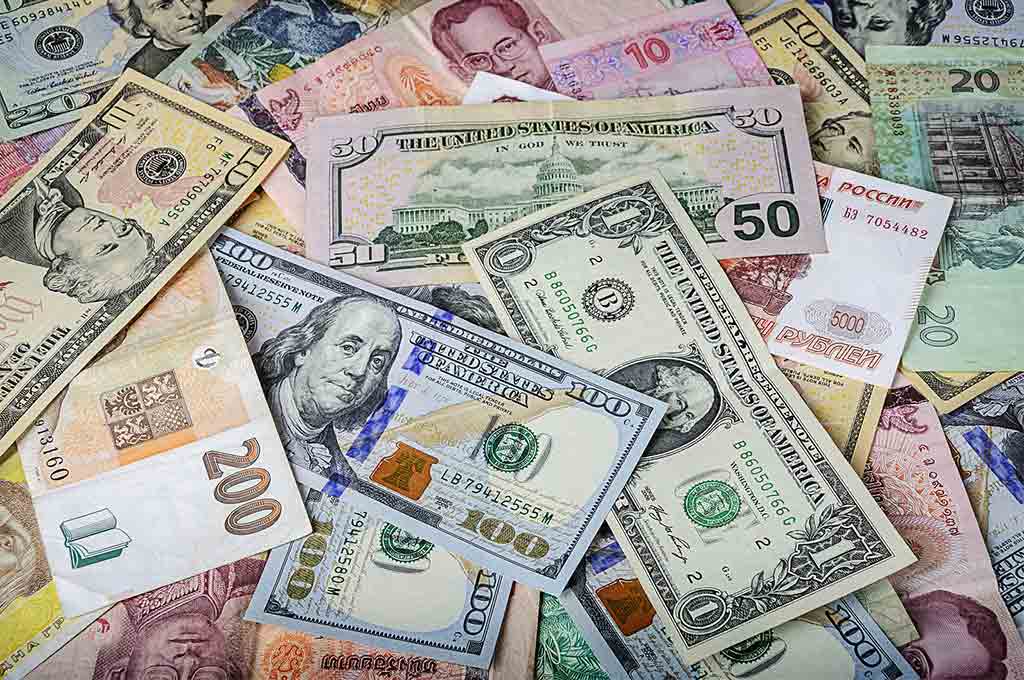
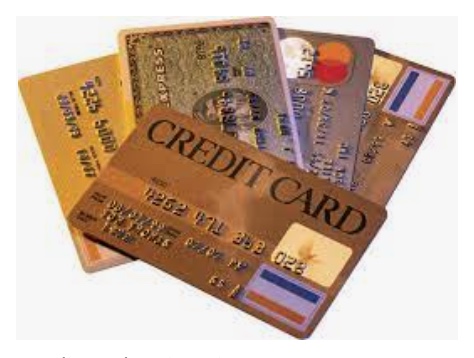
Plastic money is now one of life’s major conveniences but when traveling internationally there are a number of things to look for and do to prevent getting ripped off.
Using Credit Cards
Is Your Card Travel Friendly? – Before you travel check your credit card institutions policies on foreign currency conversion and what fees apply. A number of credit cards do not charge a foreign currency transaction fee and convert transactions at the current daily rate. If yours charges this fee you need to get another card for travel. Some of the better choices include:
Bank of America® Travel Rewards Card
Capital One Quicksilver Cash Rewards Credit Card*
Discover it Miles Cards
Capital One VentureOne Rewards Card
U.S. Bank Altitude Go Visa Signature Card
Bank of America Premium Rewards Card
*Capital One offers a whole range of cards without foreign currency conversion fees.
Carry A Tap Card – Next check with your bank if your card is a “Tap” transaction activated card and if not ask if you can add this feature. American banks seem to be always behind much of the rest of the worlds card features and in some areas tapping (both cards and phones) is the only transaction method..
Don’t Convert To Dollars – Often when traveling internationally and using your credit cards a merchant or restaurant will ask if you want the transaction converted to dollars (or Euros). It seems like a simple request and seeing your receipt stated in Dollars or Euros might seem useful. Just say no or you may get hit with a really high local conversion rate.
Try And Carry Some Cash – Traveling today you will rarely run into situations where your credit card isn’t accepted. A few situations like buses and taxis may require cash so it’s always advisable to be prepared with some small amount of local currency.
Is Your Debit Card Travel Friendly? – Debit cards can be an issue because of the pin number requirement. If you usually prefer using a debit card, before you travel, talk to your bank or credit union. Tell the representative that you plan to use your debit card traveling abroad and ask if your Personal Information Number (PIN) will work overseas. Four-digit PINs work in most countries but if your PIN contains zeroes, it may not work in non-network ATMs.
Using Automated Transaction Machines (ATMs)
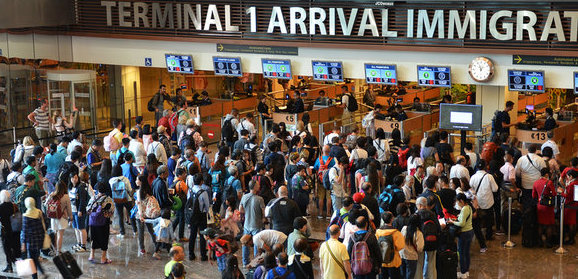
Be Cautious At Airports – Debit cards have some real advantages for managing cash while traveling internationally. First, in most cases, the cost of converting currency is usually better at an ATM than the currency exchange at Airport Kiosks or those Foreign Exchange windows. Although exchanging currency at the airport may seem convenient, it is usually best to avoid this. Those really convenient outlets usually charge outrageously high exchange rates along with transaction fees. Second, with a debit card, if you plan right, you can get conversions only as needed as opposed to carrying a lot of different currencies.
All ATMs Are Not The Same – Like credit cards, debit card fees can vary. Before you go traveling internationally check the fees with your bank and find out the preferred ATM networks to look for. If you do much overseas travel you might consider getting a specific debit card just for foreign travel. In that case it is also a good idea to connect it to an account with a lower balance intended just for travel. While rare, there are stories of people that have lost large amounts that their bank is not responsible for.
Our favorite debit card is the Schwab Bank High Yield Investor Checking Account – more information HERE. When you open a bank account with them, you’ll receive a Schwab Bank Visa Platinum debit card. With this card you don’t have to worry about any foreign exchange transaction fees when you use it as they’re reimbursed by Schwab.
Transaction fees and exchange rates are big profit opportunities for many banking institutions so you need to be cautious. Avoid “independent” ATMs with one of the biggest offenders being Euronet in Europe. Their machines are marked EUR along with a country code – in Hungary they’re EUR HUF. They charge very high fees with terrible exchange rates.
In addition do not allow your ATM transaction to be converted to US dollars in the transaction as additional conversion rates can be added on top.
Our recommendation is to find an ATM outside a local bank displaying the banks name. Again be careful as those “independent” ATMs will often locate their machines near local bank ATMs and often those machines boast “Free Cash Withdrawals” – usually not true. Other ATMs to avoid include Cardpoint, Moneybox, and Cashzone.
Exchanging Money
Before anything stay informed about current exchange rates. There are a number of popular currency converter apps for your phone that provide the latest exchange rates quickly and easily. Most converter apps feature exchange rates for hundreds of countries. They will also allow you to setup your personal currency list to allow you to check at a glance, even offline. Be sure to use the built in calculator to verify all transactions.
Converting Cash For Travel
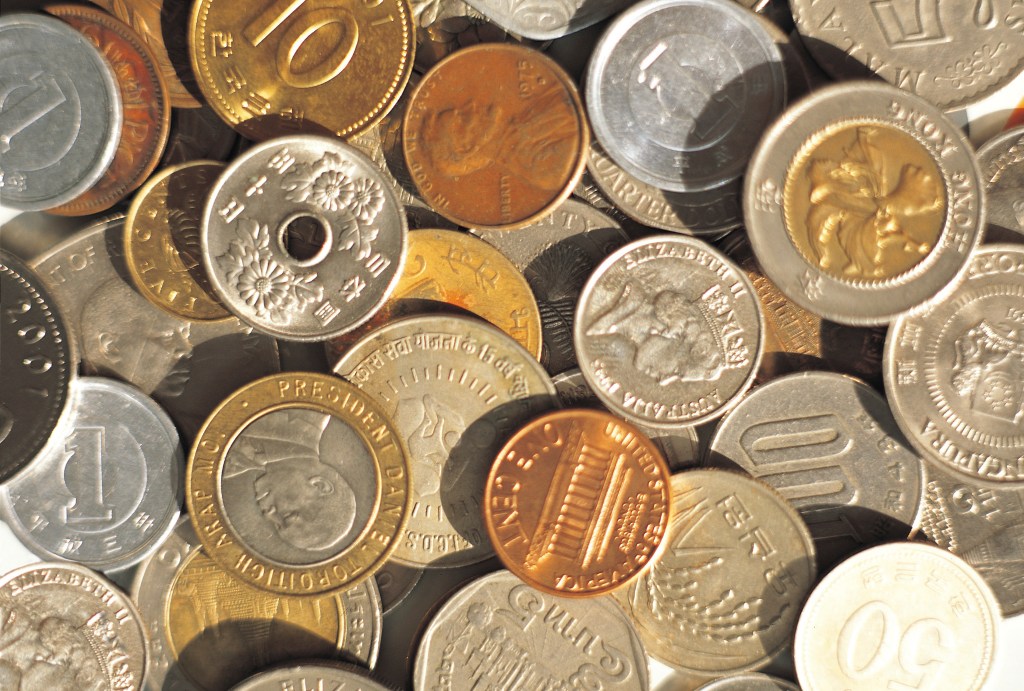
Exchanging cash for travel is another option, especially if you don’t use credit or debit cards. Before you leave check with your bank about buying foreign currency. If you’re going to get a good exchange rate and low fees this is usually the place to go. It’s also very convenient to have cash to tip taxi drivers or skycaps at the arriving airport or buy a coffee or lunch without looking for an outlet to exchange money. Some banks such as Citibank and Bank of America may not charge a fee and will provide options such as doing the transaction online and mailing you the currency.
While traveling another good option is to look for a Western Union outlet, they usually offer better rates and lower fees than most currency exchange outlets. Baring that, go to local banks to exchange your money but unfortunately local banks are becoming reluctant to do the exchange if you aren’t a customer.
An island of superlatives with the beaches at the top of the list. From Sandy Lane to Bathsheba to Rockley there’s a beach to fit every taste. Sandy Lane features a calm bay with a public beach beside an upscale resort, safe for swimming & flanked by tall, shady palms. Bathsheba is rugged, scenic beach featuring dramatic rock formations, known as a destination for surfers. Rockley offers swimming and sunbathing along a sandy stretch of coast offering nearby resorts, eateries & cocktail bars.
These giclée prints will soon be available in several sizes and styles, custom printed for each individual order on archival, museum grade paper using fade resistant inks.
Join us as we visit historic treasures, natural wonders and vibrant cities set against backdrops that are endlessly changing and visually magnificent. Celebrate a world of travel experiences with these posters that are perfect for framing.
The “Big Island” of Hawaii is the largest and southern-most island in the State of Hawaii. It is home to The Volcano National Park which includes Kīlauea, one of the world’s most active volcanoes, and Mauna Loa, the world’s most massive shield volcano. The island has two major towns, Kona on the northwest coast and Hilo on the southeast coast. Both are favorite ports of call for cruise ships.
The Port of Kona or Kailua-Kona
Kona is a favorite stop for cruise ships visiting the “Big Island” of Hawaii. Famous for its namesake coffee, great beaches and an active art community.
Where Your Ship Docks
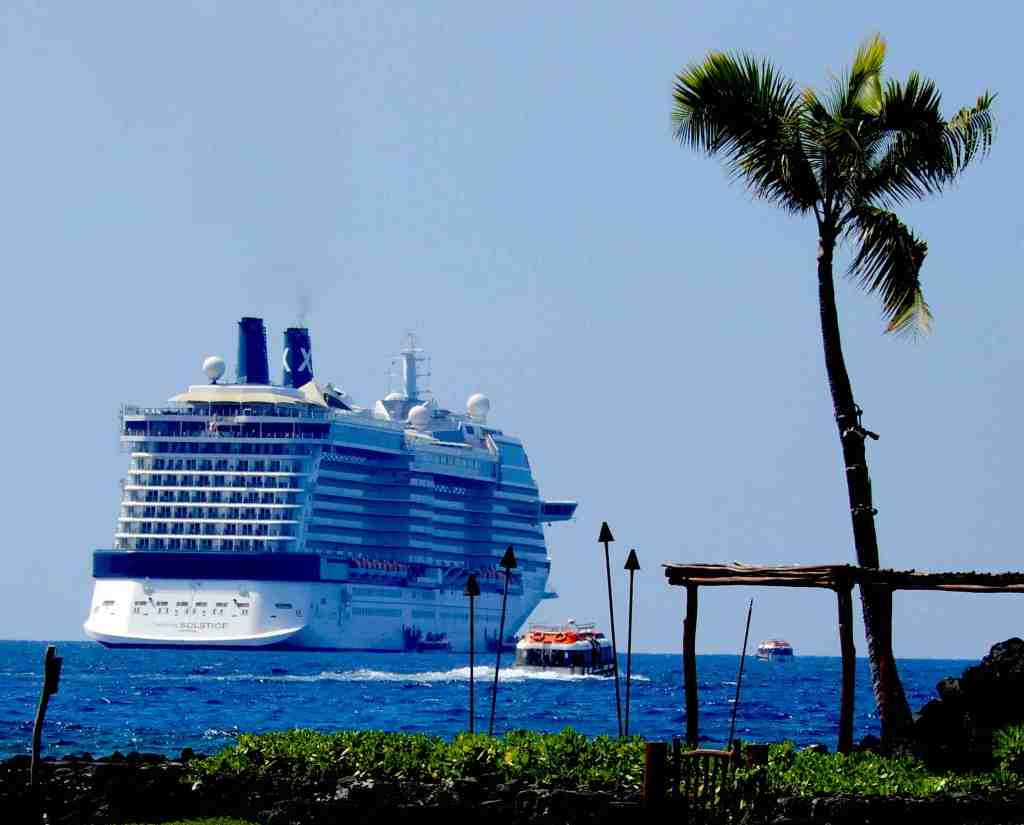
There are no docking facilities in Kona so cruise ships anchor out, using tenders to get ashore. The tenders dock right at the intersection of Palani Road and Ali’i Drive in the heart of town. Ali’i Drive runs along the waterfront and there are a number of restaurants and shops to the south and beaches and parks to the north. Going straight up Palini about a mile will bring you to a Walmart, Post Office, Grocery and a Home Depot.
Wheelchair Accessibility
Disembarking – This is a tender port as cruise ships cannot be accommodated at its piers. Wheelchair bound passengers will encounter challenges both in getting on tenders as well as disembarking at the pier.
Port Characteristics – Kona has a well developed wheelchair friendly infrastructure. The port area is flat or has few inclines. Intersection crosswalks have few issues with curbs or other wheelchair obstacles.
Transportation
The actual town is small and pedestrian friendly. The island of Hawaii also offers free mass transit via the Hele On Bus (see below). There are stops all around the island of Hawaii, with service between Kona and Hilo running Monday through Saturday. All buses are wheelchair accessible, and it’s free to go anywhere on the island. If you want to get out into the countryside on your own the best option is to rent a car available at a few agencies right in town.
Along the waterfront in town
Currency
Hawaii is a state in the United States and the currency is the U.S. Dollar. ATMs are readily available and most credit cards are accepted.
Attractions
Kailua-Kona is on the west coast of Hawaii Island (the Big Island) with a few sites located near town. Hulihee Palace is a former royal vacation home dating from 1838. Mokuaikaua Church, from the 1800s, is Hawaii’s oldest Christian church. On Kailua Bay, reconstructed thatched houses at Kamakahonu National Historic Landmark are erected on the site of King Kamehameha I’s residence. There are a number of good coral reefs located just off Kamakahonu Beach. Kona is also near to Kaloko-Honokōhau National Historical Park with some nice hiking trails.
Hulihee Palace
The Port of Hilo And Volcano National Park
Volcanos
Kilauea crater
Hawaiʻi [The Big Island], Hawaii – It is the largest island in the Hawaiian chain and the youngest geologically. There are five volcanoes on the Big Island that include Kohala, Mauna Kea, Hualalai, Mauna Loa, and Kilauea. Three are considered active (Mauna Loa, Hualalai, and Kilauea) and the rest are considered dormant (Mauna Kea) or extinct (Kohala). Unique with 12 separate climate zones, ranging from the warmth found amid balmy coastal jungles in Puna up to the snowcapped peaks above the slopes of Mauna Kea. Beach lovers take in sunshine and sand at the five star resorts dotted along the Kona coast and for a more laid back and casual lifestyle there’s Hilo, a sleepy little city famous for its small mom-and-pop shops.
Getting Around Hawaiʻi
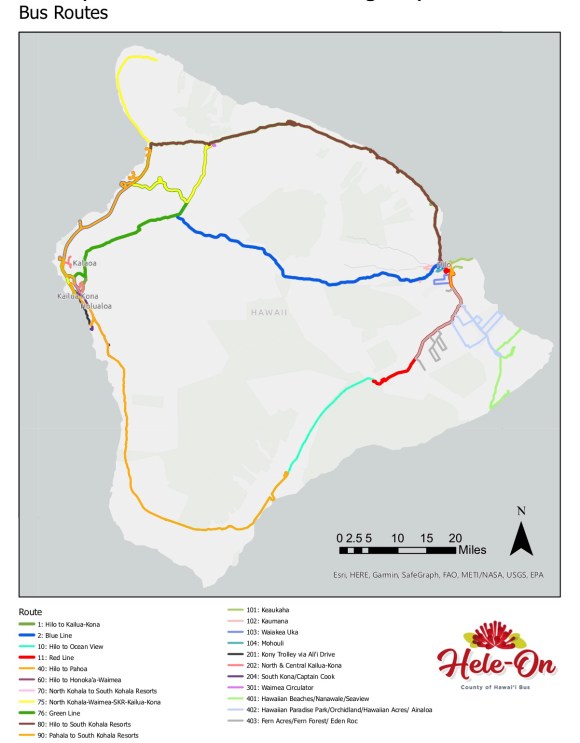
The public bus system on the Big Island is called the “Hele-on bus”. While it covers the whole of the island and using it is mostly free, it is not focused on sightseeing destinations. Using the bus to get around the island can be time consuming. There’s a taxis & shuttle location at 75-214 Ala Onaona Streeet. If you want to head out on your own to see the island the best option is a rental car with a number of options in town:
Thrifty Car Rental Car Rental 73-200 Kūpīpī St Kona, HI 96740
Alamo Rent A Car Car Rental 73-106 A’Ulepe St Kailua Kona, HI 96740
Dollar Car Rental 75-5660 Palani Rd Kailua Kona, HI 96740
AAA Big Island Exotic Car Rentals
Big Island Jeep Rental
Currency
Hawaii is the 50th State and uses the US Dollar and most credit cards are welcome and ATM machines are plentiful. Foreign travelers will need to convert currency (ATM’s are a great option) or get by with using credit cards.
Island Sights
Kahūnā Falls
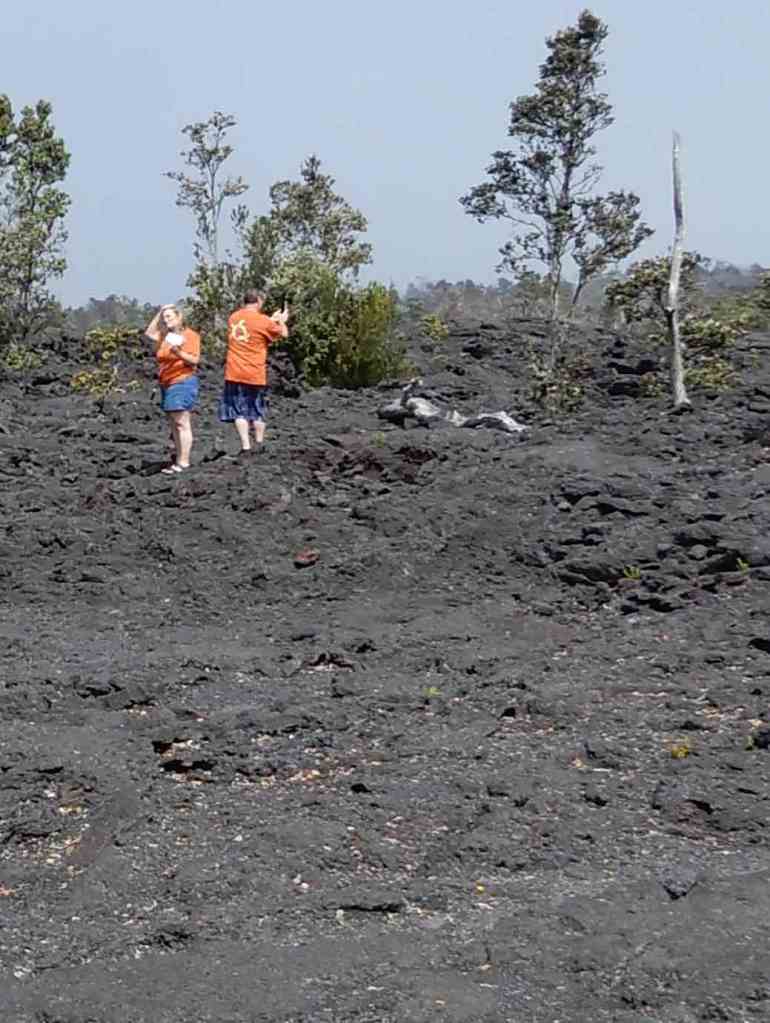
Kilauea lava field
There are five significant waterfalls on the island with Kahūnā Falls located in Akaka State Park being the most popular featuring a good viewing spot that’s only a short walk up a paved trail near the park’s parking lot.
The island is also famous as the principal location of Mauna Loa Macadamia Nut PlantationHERE which operates a nice Visitor Center.
Kilauea at night
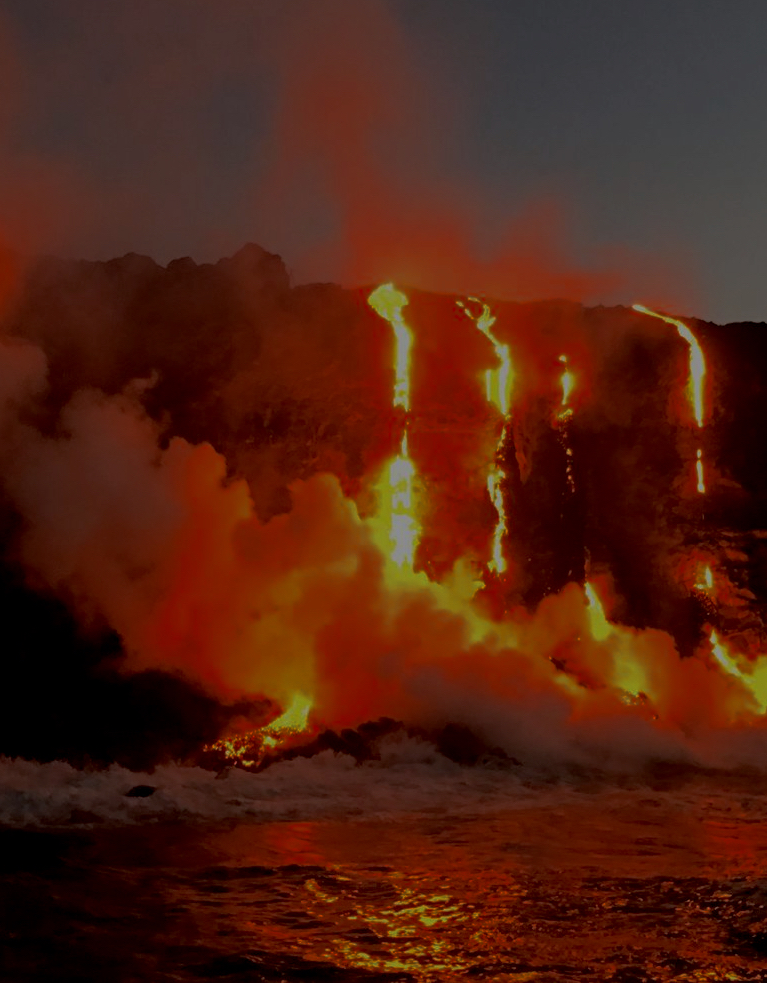
Kilauea lava flows into Pacific at night
Often cruise ships will make port calls twice on Hawaiʻi. One at Hilo and the other at Kona (Kailua-Kona). Depending on the itinerary most ships will cruise the south shore where lava from Kilauea pours constantly into the Pacific ocean. The cruises can be anywhere from early in the morning to late at night. Anytime day or night the show is spectacular with billowing clouds of steam rising above the orange hot lava as it pours into the sea.
Port of Call Hilo
Where Your Ship Docks
Hilo is the largest city on The Big Island and offers docking facilities for cruise ships. Cruise ships dock at piers in Kuhio Bay on Kuhio Street about 2 miles east of downtown Hilo. Free shuttles are often provided to Walmart at Prince Kuhio Plaza Mall two miles south of the pier and the Downtown Farmer’s Market may also provide a free shuttle to cruise passengers.
Wheelchair Accessibility
Disembarking – This port has a cruise ship pier but the ease of disembarking varies by the individual ships gangway designs. For passengers using wheelchairs there can be a moderate ramp incline to deal with in this location.
Attractions In Hilo
There are a number of local activities in and around Hilo. Visit the ‘Imiloa Astronomy Center HERE or Lyman Museum and Mission House HERE. There is also Zoo and GardenHERE and a great farmers market.
Hilo is most popular as the gateway port for visiting the Hawaiʻi Volcanoes National Park where the park protects some of the most unique geological, biological, and cultural landscapes in the world. The park extends from sea level to 13,677 feet. A drive to the park from Hilo is 36 miles and by car takes about 45 minutes.
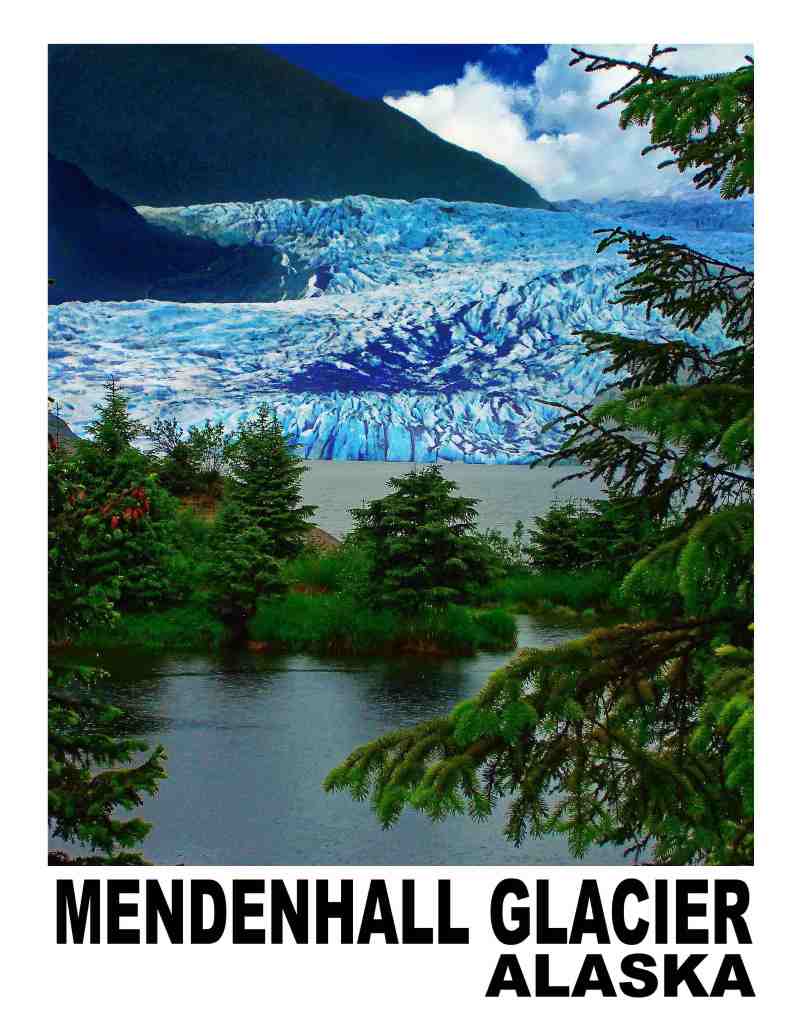
Mendenhall is one of the world’s most easily accessed glaciers. It’s only a short city bus ride out of Juneau, Alaska. The area is managed by the U.S. National Park Service and offers a nice Visitor Center and several miles of great hiking trails. Stopping in Juneau? Don’t pass up a visit the Mendenhall Glacier.
These giclée prints will soon be available in several sizes and styles, custom printed for each individual order on archival, museum grade paper using fade resistant inks.
Join us as we visit historic treasures, natural wonders and vibrant cities set against backdrops that are endlessly changing and visually magnificent. Celebrate a world of travel experiences with these posters that are perfect for framing.
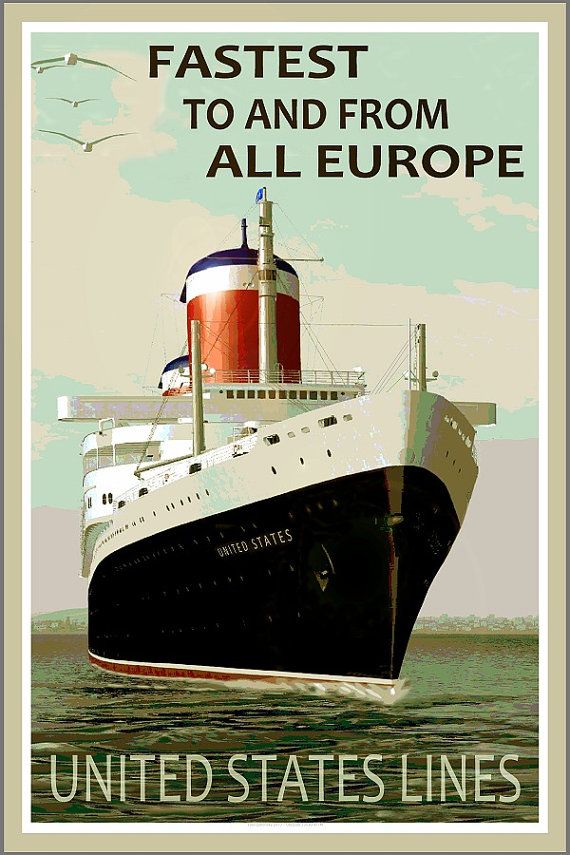
In the early twentieth century most ocean liners were luxury transportation getting people from one part of the world to another. Trans-Atlantic cruises were the most common but there were routes covering the entire globe. Today cruise ships are a whole lot more than just transportation and they have cruising seasons around the world’s in many popular regions.
A repositioning cruise traditionally is when a cruise line needs to move their ships from one seasonal location to another. Winter is high cruising season in the Caribbean while Europe is a Summer market. For that reason several dozen cruise ships head out east across the Atlantic every Spring and back west in the Fall. These Atlantic crossings are by far the most common repositioning cruises but there are repositioning cruises in other markets. They include in the Fall Alaska cruise ships leaving to get back to the Caribbean or west across the Pacific. A late Summer reposition movement goes down to South America in the Fall and back north in the Spring.
Just a decade or two ago these cruises were tremendous bargains but even today they represent opportunities to spend a week or more cruising at really good savings. The down side of these cruises is that on average you spend seven to nine straight days at sea. The up side is that the ships provided the same entertainment, the same great cuisine and the same attentive service. Additionally most of these cruises also provide a port of call or two at each end of the cruise.
Lately, as cruising gets more popular and more people become frequent cruisers the ships have less trouble filling those repositioning cruise cabins and the pricing has often adjusted upward as a result. Even so, if it’s the cruise experience you enjoy these cruises are still a good value considering the length of the cruise relative to price.
Royal Caribbean at anchor Grand Cayman
In addition to those values these cruises offer, some cruise lines offer additional programs for passengers to help fill those sea day stretches. These range from art and craft classes and demonstrations to lectures on a number of topics. In these programs you’ll find artists, college professors, art historians, archaeologist, naturalists, adventure travelers and explorers.
If you love cruising and are looking for new cruise opportunities, take a little time and explore repositioning cruises.
Featured here is a typical offer from Royal Caribbean for a November 2022 sailing from Barcelona to Fort Lauderdale…









 The Intentional Travelers