
Cruising From Athens Port Of Piraeus – A Guide

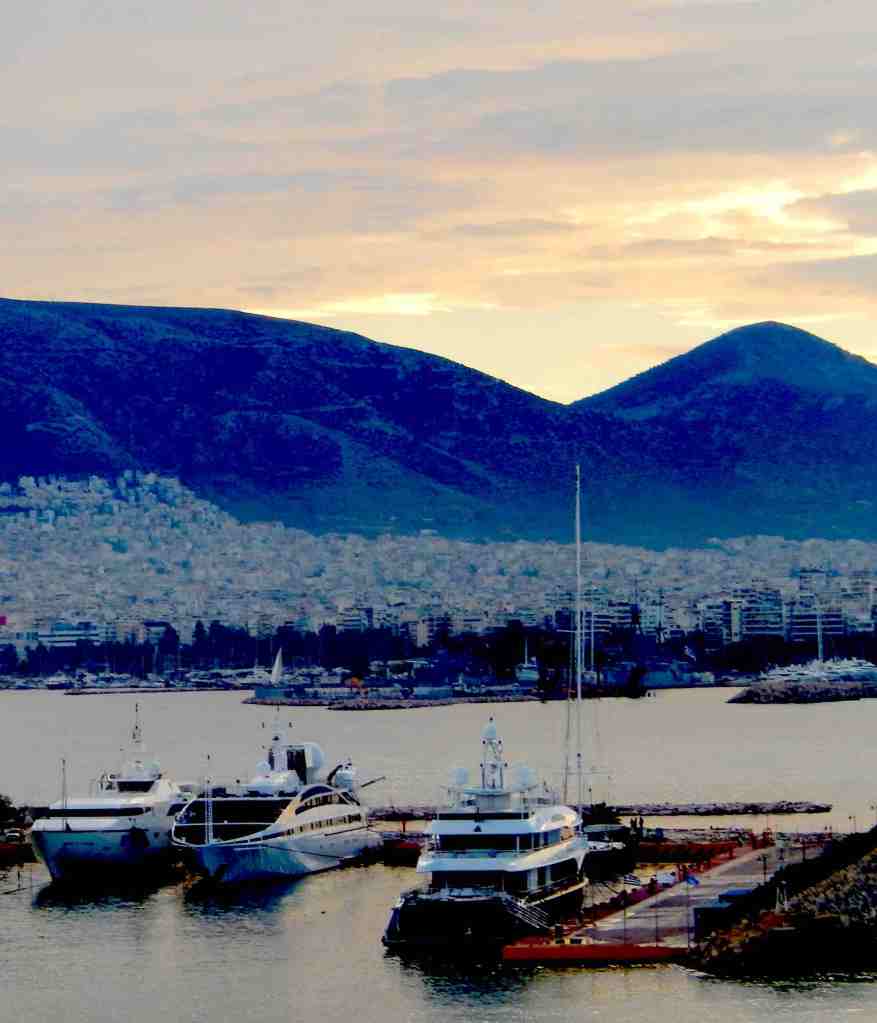
Athens International Airport is a good distance east of Athens with the port of Piraeus even farther away. Still there are a number of options for getting to your cruise ship on your own, especially if you plan to spend some timein Athens before your cruise.

Athens Airport to Piraeus Port by Bus


The cheapest transportation option is the airport bus number X96 which is an express route that connects Athens airport directly to the Piraeus cruise port. The bus runs 24 hours and leaves every 20 to 40 minutes depending on the time of day. The trip takes about about 90 minutes on average. You can find the X96 bus between Exits 4 and 5 on the Arrivals Level. Bus tickets cost 6 € each way for adults and 3 € for children and seniors. Children under 6 years ride free. Tickets can be purchased at the ticket kiosk at the airport bus station or on the bus.
Airport to Piraeus by Taxi


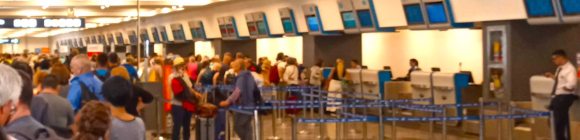
Athens airport taxis are readily available from Athens International Airport to Piraeus port. Available 24 hours, yellow cabs have an official pick up line just at Exit 3 on the Arrivals Level. The total journey takes under an hour and a half with a fare of 54 €

Airport to Athens via Metro/Subway


If you are staying in Athens before the cruise and are traveling light you can take the Athens subway. The Blue Line 3 leaves the airport station every 30 minutes, from 06:30 am to 11:30 pm with a stop at Monastiraki Station in Athens city center. The Metro station is a short walk from to the main terminal using an elevated pedestrian bridge.

Metro/Subway Airport To Piraeus Port

If you would like to use the Metro to get to Piraeus port you’ll need to exit at the Monastiraki Station and switch to the Green Line 1 marked To Piraeus. One-way metro ticket to and from the airport carry a premium charge of costs 10 € for adults and 5 € for children and seniors. A return ticket to the airport is 18€.

The main Piraeus Metro station is located at the back of the port itself and is a fifteen to twenty minute walk from where most cruise ships dock. If you are walking from the pier there is a sky walk over traffic at the subway station location.

The Metro (subway) system in Athens offers various kinds of electronic tickets but for a single day trip the best option is the 90-minute ticket at € 1.90 each way.

There are also:

24-hour ticket at € 4.50 that allows 24 hours to travel any number of times in and out of the various public transportation systems. It does not however include the airport as a destination)

3-day ticket at € 22 (Includes transport to the airport)

5-day tourist ticket at € 10 (It does not include the airport destination)
Piraeus Harbor

There are easy to use vending machines at all stations that accept credit cards and provide instruction in a number of languages. You can also purchase any number of tickets at one time and use them as needed. A discount of 25% is also available for seniors over 65, teenagers under 18 and university students under 25. Children under six ride free. In order to get the discount you will need to purchase tickets from a ticket window.

To enter the metro system tap your ticket at the entry post. From that point the ticket is valid for 90 minutes (with the 90 minute ticket) in the system or until you leave by taping out to exit.

Getting on the train going in the right direction is easy. Each platform is named for the last station on the route. So in order to get the train back to Piraeus follow the arrows showing Piraeus which is the last station on the green line.

Uber And Limo Services

Uber is active in the Athens area and your app will easily quote you a fare when you are in Greece (a recent quote from airport to port was 50 €). There are also a number of online care services like Go Velos where you can arrange for a car to meet you. (https://www.govelos.com/). The driver we have used a number of times is Andreas Panagopoulos and you can email him here – andreas7974@gmail.com.

If you are staying in Piraeus an easy, fast and inexpensive metro trip to the Acropolis can be found HERE.
The Roman City Of Pompeii

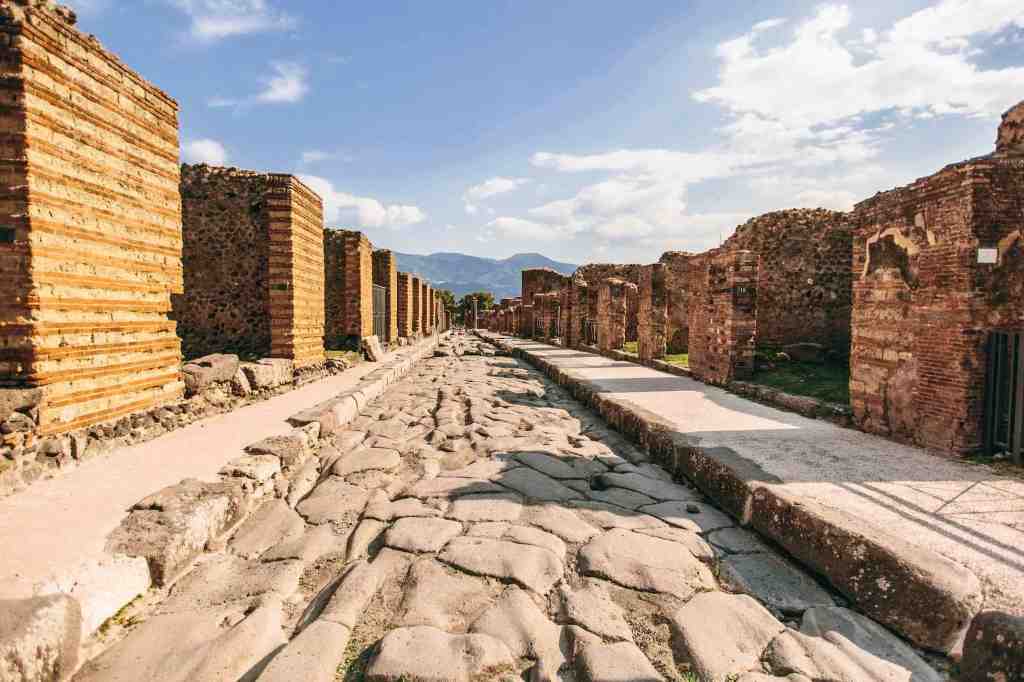
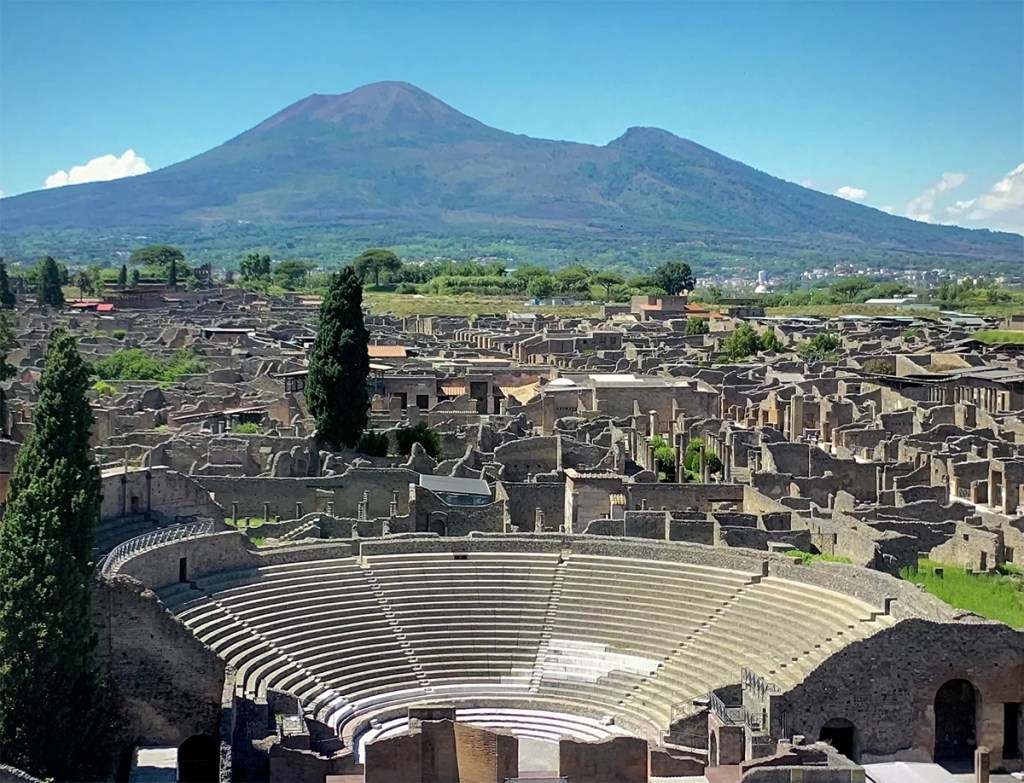
Almost 2,000 years ago a wealthy Roman city, with a population of 11,000 to 15,000 people was located near the southeastern base of Mount Vesuvius, a dormant volcano. These Roman citizens enjoyed many beautiful public buildings, luxurious private houses that featured lavish decorations, furnishings and works of art. Mosaics covered the floors and frescos were common wall decorations. The people attended gladiator games, plays, visited public baths and shopped in several large open-air marketplaces.

It all ended beginning around noon on August 24, 79 AD, when a huge eruption from Mount Vesuvius showered volcanic debris across the city of Pompeii and the whole of the population, that could, fled the city. The eruption followed up the next day with clouds of blisteringly hot gases. Many buildings were damaged or destroyed and any population that remained was quickly killed.

Pompeii, along with Herculaneum and many villas in the surrounding area were buried under 13 to 20 feet of volcanic ash and pumice and remained buried for over fifteen hundred years. The ruins at Pompeii were first uncovered late in the 16th century by an architect named Domenico Fontana. Herculaneum was discovered in 1709, and systematic excavation began there in 1738. Work did not begin at Pompeii until 1748, and in 1763 an inscription (“Rei publicae Pompeianorum”) was uncovered that identified the site as the ancient city of Pompeii.

Today the uncovered city of Pompeii covers five square miles and is being excavated and restored. It is open to the public with admission starting at about US$22. Pre-purchase “skip the line” tickets cost about US$27 with group tour tickets starting at US$50 (Online Tickets HERE).

You can visit Pompeii on full-day bus tours from Rome, just 130 miles away, or on your own you can take a train to Naples and switch to a Naples regional train. Purchase tickets in Naples for Pompeii Scavi.

If you are in Naples on a cruise you can catch a train to Pompeii from Naples near the cruise port. Go to the Porta Nolana Circumvesuviana station only a few blocks from the Naples port entrance. Circumvesuviana is the regional Naples train system that runs around Mount Vesuvius with stops at Herculaneum, Pompeii and Sorrento. At the Circumvesuviana train ticket window purchase tickets for Pompeii Scavi. The cost should be about US$9 round trip. Once at Pompeii Scavi, exit the train station, turn to your right, and walk about 50 meters to the entrance to the Pompeii ruins.

The plaza in front of the Pompeii entrance at the train station

Exploring Battleships

America has never been known to back away from a fight and the American Battleship has served as a symbol of the American motto “Peace Through Strength”.

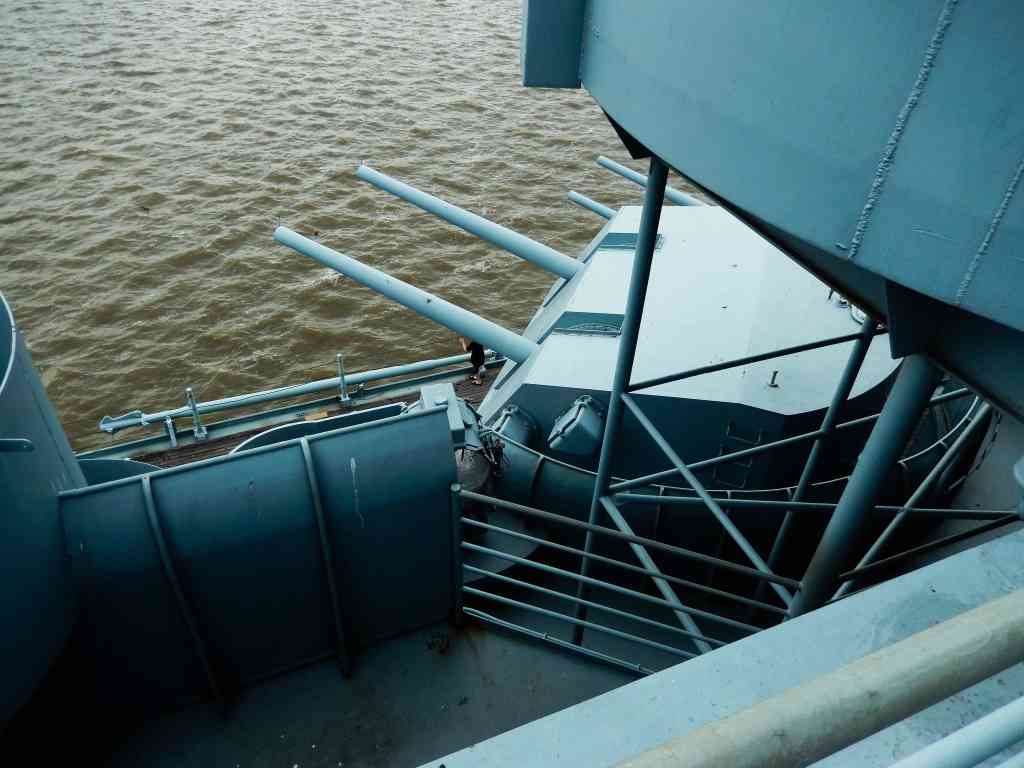
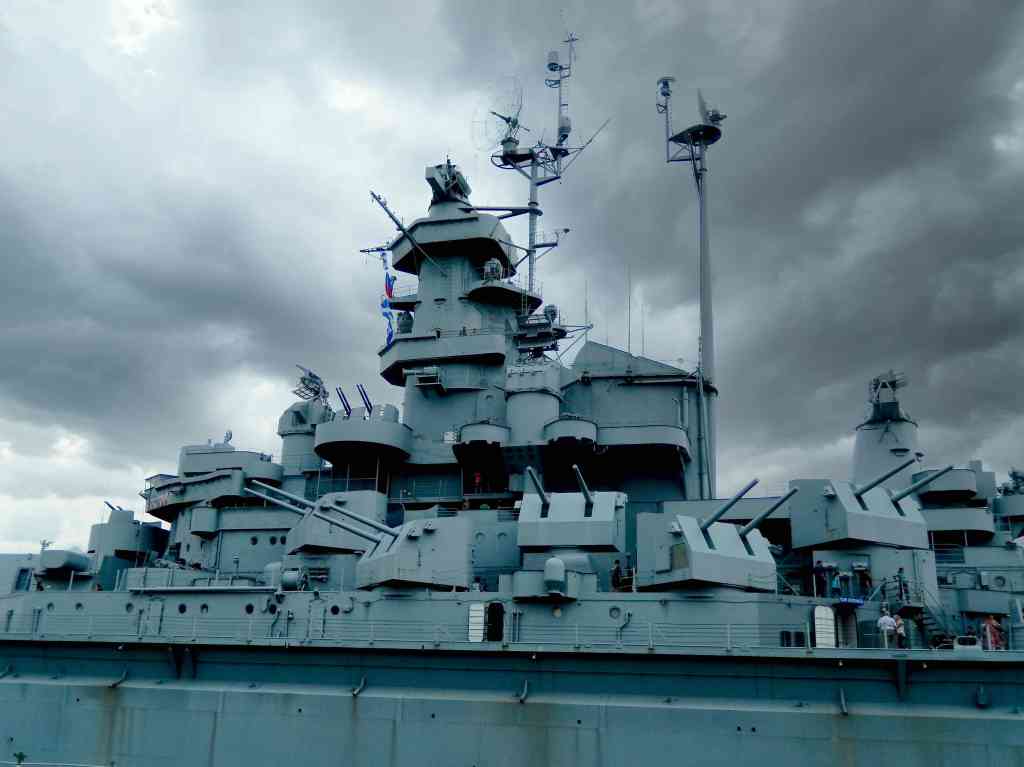
Between 1895 and 1945, the United States Navy commissioned 64 battleships (sometimes referred to as dreadnoughts). As a class of ship they were the largest gun ships ever built. A number of these have managed to survive and are now museums open to visitors in the United States. Recently on a road trip we visited the USS Alabama which is moored permanently at the Battleship Memorial Park in Mobile, Alabama.

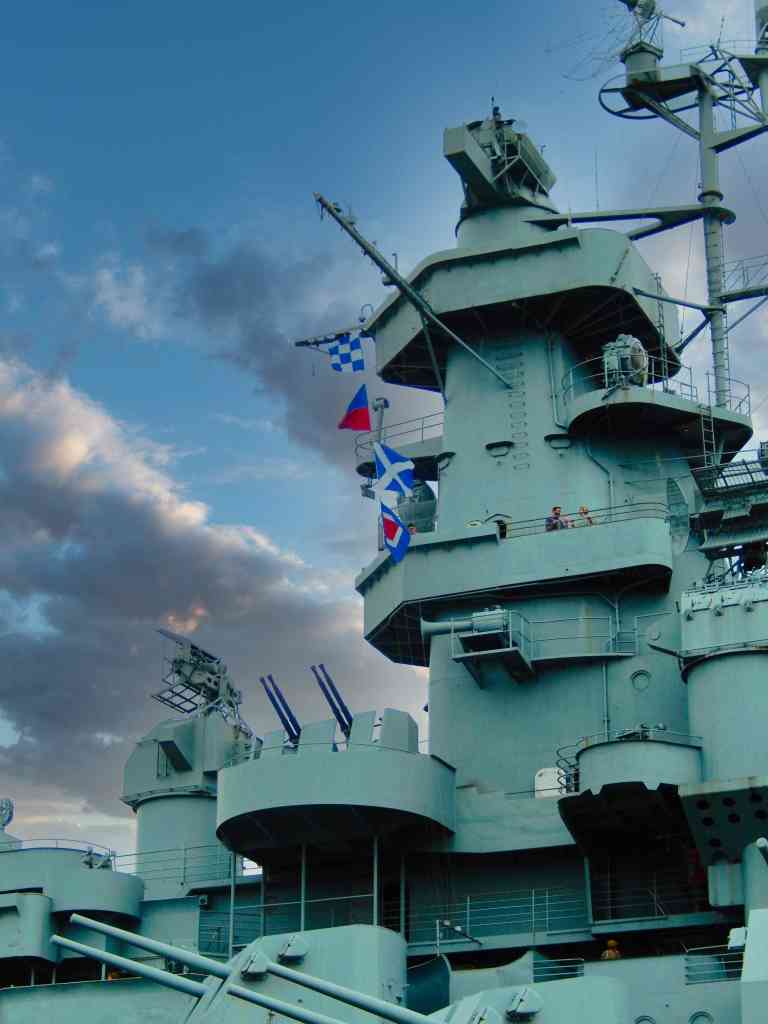
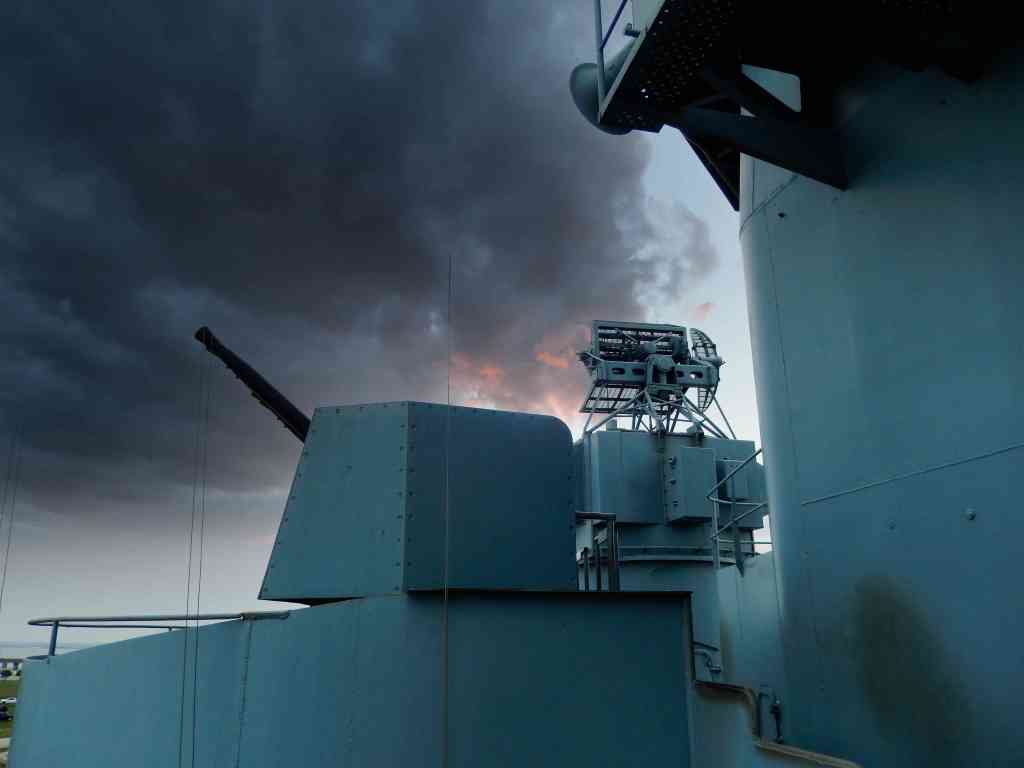
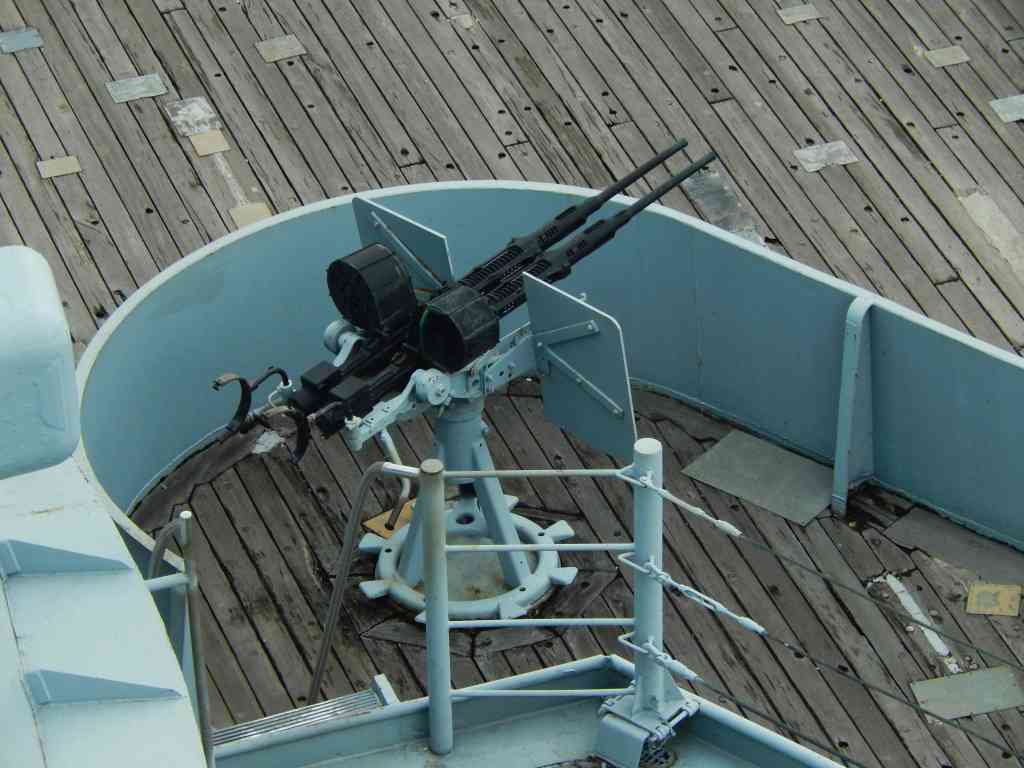
The USS Alabama (BB-60), or Lucky A, was the first American battleship to be launched after the attack on Pearl Harbor. Commissioned later in 1942, the Alabama’s first assignment in the war was to work with the British navy in escorting convoys across the Atlantic. Later its service was in the Pacific, where it was an escort ship providing protection to aircraft carriers. It took part in many engagements near the end of the war including the Battle of the Philippine Sea. The Alabama received the Lucky moniker due to the fact that it incurred virtually no damage and almost no casualties during the war.

The USS Alabama was decommissioned in 1947, and like the North Carolina, the Alabama is in nearly perfect World War II commissioned condition, thanks to its luck and quick removal from service. Because of this it has appeared often in motion pictures and television productions. The Alabama is now a museum and open to the public along with the submarine USS Drum.

Following are the additional battleship museums in America.

USS Texas (BB-35) (Houston, TX) A New York class battleship launched in 1912. The USS Texas is the oldest surviving battleship of the dreadnaught era. Commissioned in 1914, it is also the only remaining American battleship that saw action in World War I. Between the wars it served as the American flagship, and was used for presidential escort duties in the Atlantic. One of the few American battleships that was not at Pearl Harbor when the Japanese attacked in 1941, the Texas was one of the first in action, and was present at several of the largest amphibious engagements of World War II, including naval support of the Normandy invasion as well as the battles of Okinawa and Iwo Jima.

The USS Texas was decommissioned in 1948, but went on to an impressive retirement. It was acquired by the State of Texas, where it was refurbished as America’s first battleship museum. It was also the first World War II battleship to be declared a national monument. Over the course of her service the Texas earned five battle stars, and is one of the most decorated ships still afloat. It is currently moored in the Houston Ship Channel where it is part of the San Jacinto Battlefield State Historic Site.

USS North Carolina (BB-55) Wilmington, NC. A North Carolina class battleship launched in 1940. The USS North Carolina, or Showboat, was one of the last battleships commissioned prior to America’s entry into World War II in 1941. Originally scheduled to be sent to Pearl Harbor with the rest of the Pacific fleet, it narrowly avoided the attack by being assigned to patrol duty on the east coast. It was than quickly transferred to the Pacific to augment the devastated fleet at Pearl Harbor in 1942. The North Carolina was the first American battleship to go on the offensive against the Japanese, and participated at the battle of Guadalcanal in 1942. The North Carolina’s service ended almost immediately after the war, and she was permanently decommissioned in 1947. She remained inactive but was towed to North Carolina in the 1960s. The only surviving ship of the North Carolina-class, it is also the best surviving example of early World War II battleships. It is now located at the USS North Carolina Battleship Memorial site in Wilmington.

USS New Jersey, (BB-62) Camden, NJ, is an Iowa class launched in 1942. The USS New Jersey, or Big J, was one of the longest-serving American battleships of the 20th century, and one of the last to be used in a combat capacity. She sat off the coast of Vietnam and her guns provided cover for ground operations inland. Launched on December 7, 1942, on the one-year anniversary of the attack on Pearl Harbor, the New Jersey was one of the chief battleships active in the Pacific during WWII. She was decommissioned in 1991.

USS Missouri & the USS Arizona Memorial

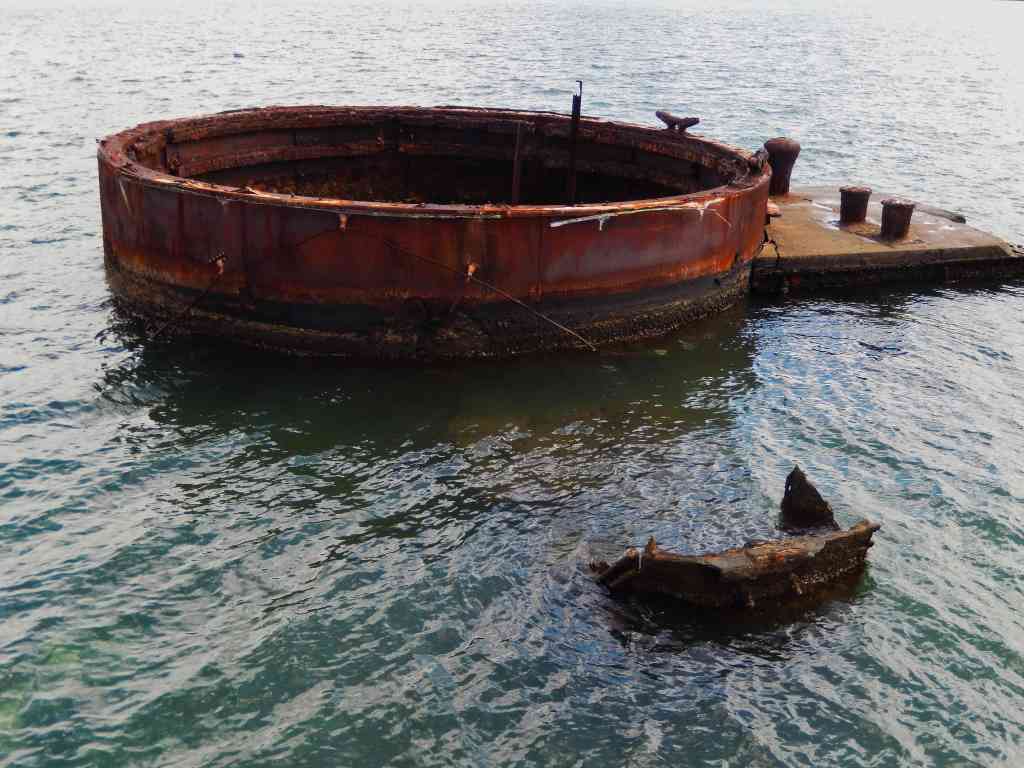
Remains of the USS Arizona

USS Arizona (BB-39) is located in Honolulu, HI. It is a Pennsylvania class battleship launched in 1915. Today the USS Arizona is the final resting place for some 900 of the ship’s 1,177 crewmen who died on December 7, 1941 from the attack on the naval base. Today there is a 184-foot-long memorial over the sunken Arizona that spans the mid-portion of the submerged battleship.

The USS Missouri (BB-63), or Mighty Mo is located at Pearl Harbor in Honolulu, HI and is an Iowa class battleship. Launched in 1943 it was probably the most famous American battleship, and the last to be in active service. One of the last battleships ever constructed in the United States, it was officially commissioned in 1944, just in time to participate in the final campaigns in the Pacific and played host to the Japanese surrender.

The USS Missouri at Pearl Harbor

USS Massachusetts (BB-59) Fall River, Massachusetts is a South Dakota-class ship located at Battleship Cove. The park also has the submarine USS Lionfish.

USS Iowa (BB-61) San Francisco, California is an Iowa-class battleship in the ghost-fleet at Suisun Bay and not currently open to the public.

USS Wisconsin (BB-64) Norfolk, Virginia is an Iowa-class battleship located at the Nauticus National Maritime Center.

The USS Alabama

Getting To Rome’s Cruise Port

Flying Into Rome? Here’s Everything You Need To Know About Getting To And From The Cruise Port Of Civitavecchia By Train, Bus Or Taxi

Getting To Your Cruise Ship In Civitavecchia

Civitavecchia Port
Civitavecchia station

Rome is one of the three largest cruise ports in the Mediterranean and it is the largest metropolitan area of the three which include Barcelona and Athens.

Before getting into the details of getting into Rome and out to the port of Civitavecchia a bit of advice. If you’re taking a Mediterranean cruise out of Civitavecchia and haven’t visited to Rome before you must take a day or two and add time in Rome.

Direct Transfers To Rome’s Port Of Civitavecchia

Flying into Rome’s airport and transferring to the port of Civitavecchia provides few economical options. Most cruise lines will offer transfers to your ship from the airport but these usually run somewhere around $100 per person. There’re also shuttles that you can book HERE but the fare is still about the same.

Most airport taxis will take fares to the Civitavecchia port with prices varying a lot. €120 – €170 is about average, but fares back to the airport usually running much more.

Uber also provides service in the Rome area with Uber Black and a recent quote of €125.93

An Economical Option – Rome’s Fiumicino Airport To The Cruise Port Of Civitavecchia By Train

The trip from Rome Fiumicino Airport to Civitavecchia by train takes about 1 hour 44 minutes. There are over thirty trains per day running routes averaging 31 miles. Do not take the Leonardo Express but rather use regular train service. Almost all trains designated as going to the Termini will stop at Trastevere station where you’ll have to make a train change to a Civitavecchia train. Frecciarossa, Frecciabianca or Trenitalia are the main rail operators on these routes and all offer modern cars with space for luggage and comfortable seats.

If your plans include a day or two seeing Rome, the Termini (Central Train Station) area provides good inexpensive and convenient connecting train service to Civitavecchia. Within an easy walk of the Termini are good local restaurants and wine bars, offering good snacks and light fare and a number of nice hotels. You can also easily catch Metro Lines A and B from the Termini to get around the city.

There are trains leaving the Termini for Civitavecchia about twice an hour throughout the day. Trains to Civitavecchia originate at the main Termini in Rome with most stopping at San Paolo, Tuscolana, Ostiense, Trastevere, and San Pietro. Many are double-deck regional commuters with room to set luggage but make sure you keep an eye on it. Fares are about €7 to €9 per person one way. There are a few faster InterCity trains between Roma Termini and Civitavecchia still costing under €12 each.

Roma Termini vending machines

Train schedules that are easy to understand are posted throughout the stations. Make note of the track number and follow the signs to the platform. Always remember the ticket MUST be validated for use at each platform. Validate before boarding the train, punch the ticket in one of the little green and white machines around the platform area. There can be serious fines for being on a train without a validated ticket.

If you’re not staying near the Termini you can still catch the regional trains at San Paolo Station which is a convenient station that connects to the Rome Metro Line B. Other stations that connect for Civitavecchia include Tuscolana, Ostiense, Trastevere, and San Pietro.

.

Rome transit system
Download this map below
The Shuttle bus area inside the Civitavecchia port

Getting From The Civitavecchia Train Station To The Cruise Port

There are three options getting to the port bus area from the train station. First is CSP (Civitavecchia Public Services) or PortLink buses. These buses leave from the square in front of the station every 20 minutes and take you inside the port to the bus area in under 15 minutes.The ticket costs € 2.00 (luggage included) and can be purchased at the newsstand and the station bar in the station.

Taxis are another option but are usually very expensive with averages costing € 35 plus.

Walking about a dozen blocks from the station in Civitavecchia with the entrance to the port a pleasant walk (Exit the train station and go right). When you get to the McDonalds turn right and go uphill following the street around a turn to the left. A few blocks further along is the ports free shuttle bus area on your left. The free shuttle buses for each ship are clearly marked.

If you are disembarking from a cruise there is usually a free shuttle bus to the train station in Civitavecchia that you can catch at the port shuttle bus stop.

If you’ve been traveling around Italy there are also good train connections from most major cities that will take you to Civitavecchia. A few times we have stayed a night or two in Civitavecchia and there are a number of good, small hotels near local restaurants and only a few blocks from the city’s shopping promenade, the port entrance and the waterfront. Civitavecchia is also more than just a cruise port and deserves some time exploring the city itself if you can fit it into your schedule.

Around Civitavecchia

Getting Into Rome From The International Airport

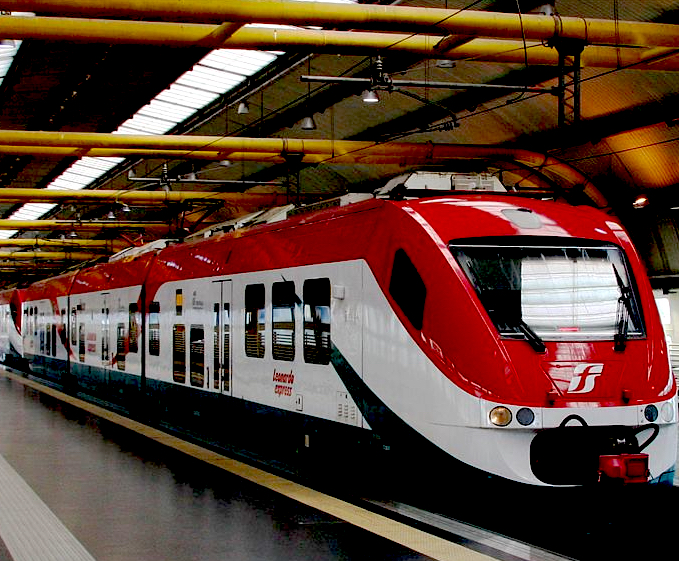
There is a high speed express train that travels from the Fiumicino airport to the Termini in central Rome. Catch the Leonardo Express at the Felice Santini train station located adjacent to Fiumicino airport. To get to the station just follow the signs. Leonardo Express trains leave approximately every 15 minutes. The trains run between 6.40 am and 11.40 pm and cost about € 18 each way.

The Leonardo Express

Buses between Fiumicino (FCO) airport and central Rome offer several options. First, buying bus tickets online before your trip is a bad idea. Buying bus tickets online can actually be more expensive. Once you arrive, you’ll discover that there were a number of bus ticket counters near the baggage area and pricing is usually much lower than what is online. Express bus to Termini should be about €8 each. At Fiumicino airport, the bus departure points are outside of Terminal 3, and off to your right. Buses take about 45 minutes to get to Rome Termini from Fiumicino airport, traffic permitting.

For express bus service Cotral offers a bus from Rome Termini to Rome Airport every 4 hours. Tickets cost €2 – €3 and it takes about 45 min. There is also the Roma Airport Bus T.A.M. for €5 per person. These buses run between 08:00 am and 11:30 pm between Fiumicino (Terminal 3) and a stop outside Termini Station. The return tickets cost €8.00 per person and depart from Termini Station between 4:30 am and 8:30 pm.

For other locations in Rome to the airport we would suggest asking at your hotel. There are buses that can pick you up at many hotels and your front desk can provide advice on traffic travel times, costs and the best bus service.

Download printable copies of our guides for getting around Rome.


Mediterranean Cruise Itineraries

Summer is cruising season in the Mediterranean and the major cruise lines are well established in the market and offer a wide variety of itineraries. There are a number of similarities in most itineraries with the two main embarkation ports being Barcelona and the port for Rome, Civitavecchia. A majority of cruises in the eastern Mediterranean sail out of Piraeus, the seaport of Athens, Greece.

Itineraries vary in length with cruises of around seven days usually stopping at four or five ports of call, those of nine to eleven days make six to eight ports and fourteen day itineraries can call on up to ten ports.

Dubrovnik

Cruises from Barcelona often stop at Spain’s Palma de Mallorca and series of ports east along the coast that usually include Villefranche-sur-Mer on the French Riviera, located near to Nice and Monte Carlo. Favorite Italian ports on those itineraries also include Civitavecchia the port of Rome, Naples and Livorno with its access to Florence and Pisa. Additional popular ports include Genoa on the west coast and Ravenna on the east coast.

Kotor

Most cruises out of Rome/Civitavecchia go south and cruise around the Italian boot passing through the Straights of Messina. Popular destinations on shorter cruises (6 to 8 days) include Naples, Dobrovnik, Kotor in Montinegro, the Greek island of Corfu and Malta. Longer cruises can add Messina, the Greek islands of Mykonos and Santorini, Ephesus, Turkey and Athens.

There are also Rome itineraries that sail west and often include Livorno, Villefranche, Provence France, with stops in the Spanish ports of Barcelona, Cartagena, Malaga and Palma de Mallorca and at times a port call in Gibraltar.

With the popularity of cruising growing there are more and more returning passengers. The cruise companies are always looking to add new ports as an enticement to get them to come back and cruise again. For that reason there are always differences and surprises in searching itineraries so look for one that hits your “must see” destinations or has added new stops.

Santorini

There are some important things you need to consider when planning how you are going to get the most out of your cruise port visits. For most ports of call there is a serious time limit and if you go off on your own you cannot be late returning to your ship as the ship just won’t normally wait for you. If you take a cruise sponsored tour the ship is obligated to get you and your fellow passengers back on board before sailing. That doesn’t mean that you are locked into taking only sponsored tours but you need to plan and allocate extra time to get back to the ship.

When making your plans there are a few ports that many people put high on their list to visit when they decide to cruise the Mediterranean. Here we offer a few highlights along with ideas on getting the most from those all-to-brief stops.

Florence
Corfu, Greece

Livorno with trips to Pisa and Florence – To go on your own you can easily take a train from Livorno Centrale to Florence Santa Maria Novella for €6 to €14 per person one way. You do have to get from the pier to the train station but most cruises offer a shuttle service at a reasonable price into town center. In Livorno you can also buy a combination round-trip ticket that includes the train tickets and a bus to the train station that can be purchased at many convenience shops. The trip takes about one and a half hours and trains run about every half hour. In Florence from Santa Maria Novella you can walk into the historic district in only a few blocks. You can get to Pisa using a local bus or with train trip as it is only twenty minutes away with a moderate walk to the Cathedral and old city walls. More information on Lavorno HERE.

Rome

Civitavecchia / Rome – This is a city that everyone should make an effort to visit. From the buildings of the ancient Roman Empire to the Vatican there are days worth of sightseeing to be experienced. There’s more information on seeing Rome in just one day HERE.

You can also find an article on getting into Rome HERE. In Civitavecchia the train station is a moderate walk along the waterfront from the port and a train to S. Pietro station (Vatican City) takes about 40 minutes. Fares start at €5 per person one way on the commuter trains and up to €20 round trip using regional trains. There is a manned ticket booth at the Civitavecchia station along with automated vending machines. A round-trip bus booked through the ship will cost over €80 and take about two hours each way depending on traffic.

Barcelona

Barcelona -Barcelona is one of the largest cruise ports in the Mediterranean and is used as an embarkation port as well as a popular port of call. The city is a modern and historic place with a number of iconic neighborhoods and attractions. If you are cruising out of Barcelona do not miss the opportunity to spend a couple of extra days visiting this vibrant city.

There are 3 cruise terminals at the World Trade Centre pier called North, South and East terminals and they are not far from the Columbus Monument on the waterfront at La Rambla.

Palma, Spain

Transportation – The T3 PORTBUS (the “Blue Bus”) runs a circuit from all cruise port terminals to the monument of Christopher Columbus. The tickets for the T3 need to be purchased with cash on the bus itself. Single ticket: €3.00, with Return ticket: €4.00. Many of the cruise ships also provide a shuttle bus to their passengers for free or a small charge (usually about €5). Getting to the Gothic Quarter by taxi from the port is normally less than 10 minutes with a fare of about €20.00. A Taxi to Barcelona airport from the cruise port should take about 25 minutes with a fare: of €30.00 – €35.00.

Malaga, Spain

Venice – Unfortunately large cruise ships are no longer allowed to dock at the Venice cruise port. The cruise ships are now shifting Venice visits to two ports about an hour away using Ravenna to the west and Triest to the east. More information on this HERE.

Naples – This city is near to the ruins of the Roman city Pompeii and well worth a visit, but Naples is also not far from the Amalfi coast. There are frequent Trains from Naples to the Amalfi Coast. To get from Naples to Salerno, you can take one of Trenitalia’s Alta Velocità (AV) trains from Napoli Centrale station. The trip is about 30 miles and there are also InterCity and Regionale trains serving this route, with over three dozen trains a day costing €5 each way. From the Positino station it is a good idea to know where you want to visit and take a taxi to the coast but this is still an easy day trip.

The Acropolis

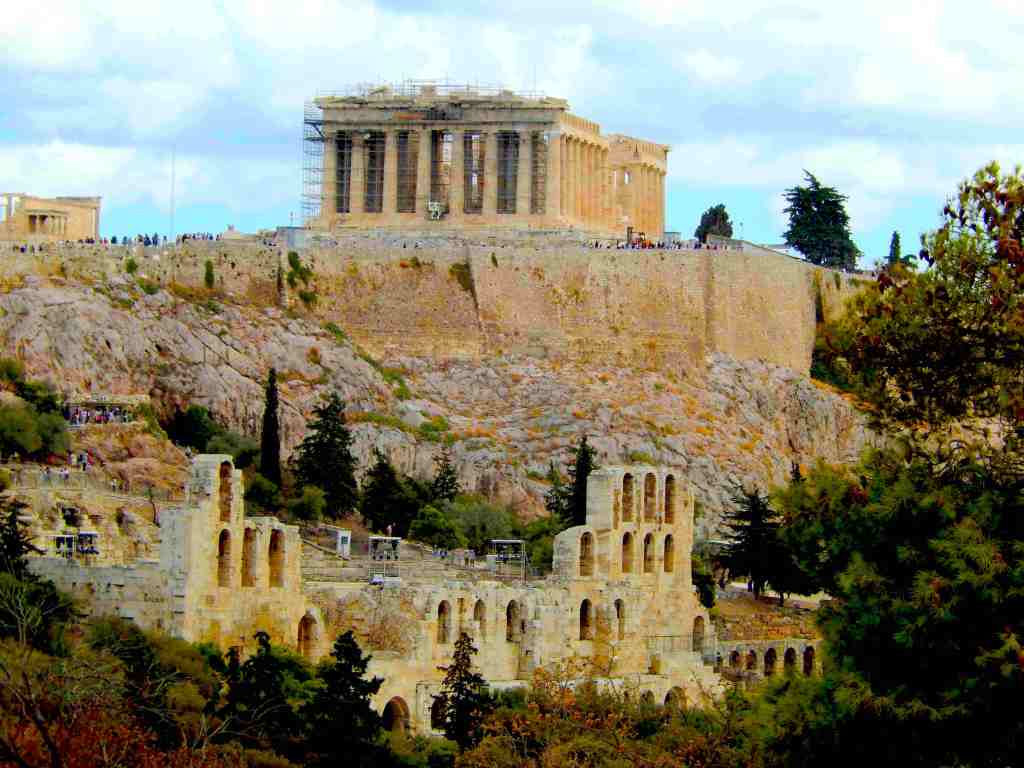
Piraeus and Athens – You can find a good piece on Piraeus HERE. The main attraction is the Acropolis in Athens and it’s well worth a day if this is your first visit. If you wold like to save a good amount over the cruise tours you can use the metro to travel from Piraeus to central Athens. A trip to Athens using the metro costs less than €1. Also a free shuttle bus usually operates in the port taking passengers from the ships to the metro station. Visiting the Acropolis has a general admission €10 and hours vary by season and day of the week. You should also expect a good uphill climb to reach the top but the is an elevator fro people with disabilities.

Villefranche-sur-Mer – You can find a good piece on Villefranche HERE. Less than a half mile around the waterfront is the train station where you can catch frequent trains to Monte Carlo, Nice or Cannes. They run about every twenty minutes and a trip to Monte Carlo takes only fifteen minutes and costs usually under €7.00.

So before you sign up for those expensive tours consider saving some money with some low risk exploring on your own.

Port of Call Reykjavik, Iceland

Stark, Wild, Fascinating Reykjavik

Famous Icelandic hot dogs

Reykjavik is a beautiful city with the focus being its waterfront. On the water at the center of town is the Opera House and the square in front is the usual stop for the shuttles from the dock. That makes it a convenient meeting point where you will catch the returning shuttle. The waterfront between town and the ships dock also features a beautiful walking path, perfect for a stroll to take in the stark beauty of this remarkable location. The city’s waterfront is a popular area, with a view of Reykjavik’s landmark mountain, Mt. Esja across the bay. There is also the striking sculpture Sun Voyager by Jon Gunnar Arnason ,  a massive steel sculpture in the shape of a Viking ship.

Harbor view
Opera House

Where Your Ship Docks– Cruise ships will normally dock at port facilities outside of town. Reykjavik is usually the supplier of shuttle service into town with a round-trip fare that seems somewhat over priced (this is probably related to the high cost of living in Reykjavik). If you don’t mind walking (weather permitting) there is a nice paved walk along the shore into town of only about two miles. There is no cruise ship terminal so ships have to make use of boarding ramps. For people with walking issues and wheelchairs it can be difficult.

Transportation – Taxis are readily available and are surprising inexpensive. A taxi tour of the city can usually be booked with TaxiReykjavik  for durations of 1-3 hours for under $8 per hour. Rental cars are also inexpensive for trips out into the Icelandic countryside to visit the Rift Valley and waterfalls. MORE HERE  about taxi tours.

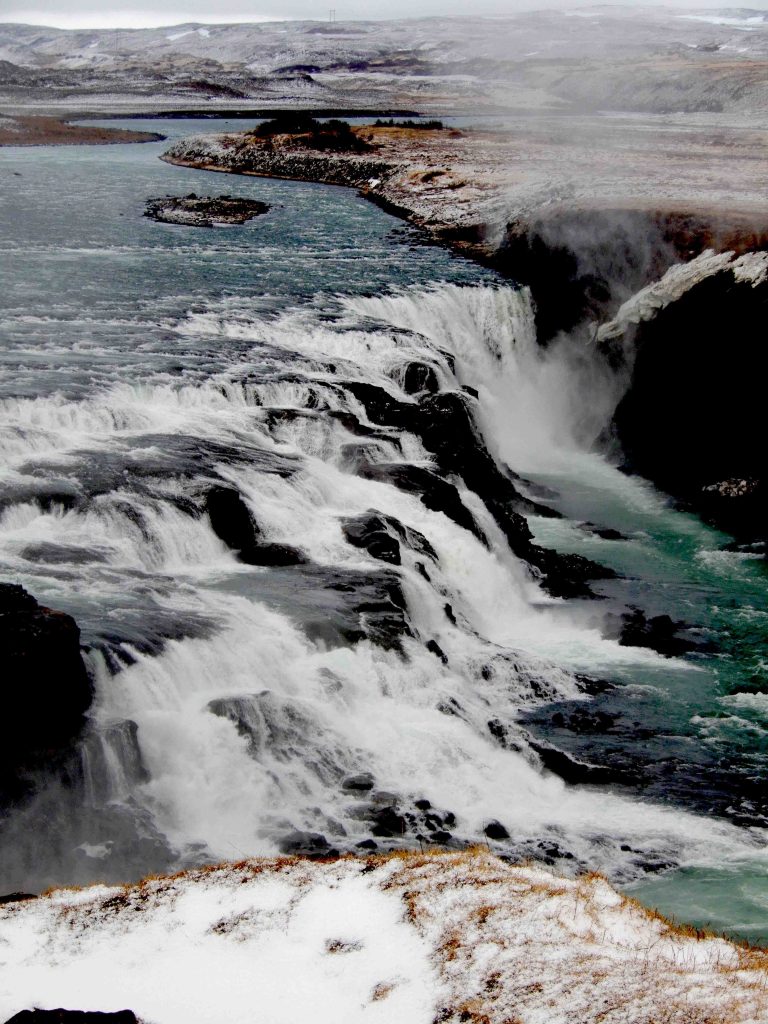
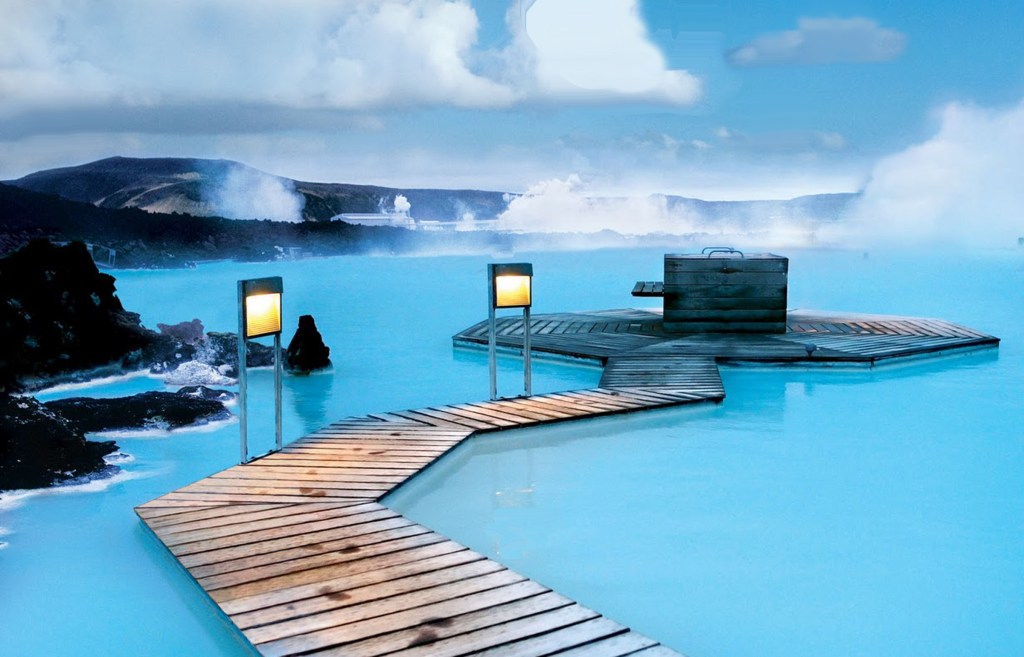
One of the nearest attractions to Reykjavik is the Blue Lagoon. There are hourly bus transfers 7 am to 8 pm to and from Blue Lagoon from Reykjavík via Destination Blue Lagoon. Get a package ticket that includes round-trip fare and admission for under US$60. To get out and see the real wonders of Iceland you will need to rent a car (rental cars are not very expensive) or book a day tour. The most popular trip is the Golden Circle Tour that visits Gullfoss Waterfall, Thingvellir National Park & Geysir thermal field .

Currency – Local currency is the Icelandic króna with about 7,000 being equal to US$1. Credit cards are readily accepted and there are ATM’s available. 

The Blue Lagoon
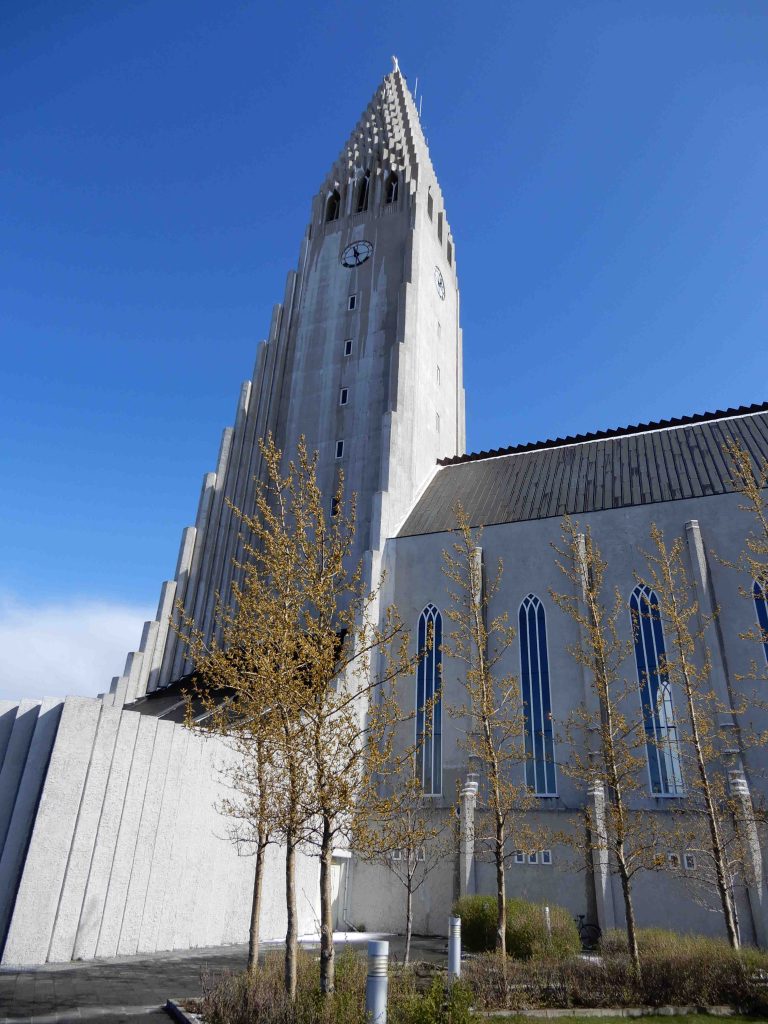
Presbyterian Cathedral

Attractions – Reykjavik’s many museums  offer insight into this country’s fascinating Nordic History. Start with the  Saga Museum  for a look into how the Vikings fought and lived with displays of wax figures depicting scenes of the earliest settlers (circa 874 AD).  The National Museum displays more than 2,000 artifacts from the ninth century to the present.  For a different experience, live actors at the open-air Reykjavik City Museum -Arbaejarsafn offer scenes of how settlers lived in the old days in an open-air museum, and it traces the development of Reykjavik and Iceland from their beginnings to today.

While the Blue Lagoon is located outside Reykjavik, this  is a must if you have enough time in Reykjavik. The mineral-rich thermal waters are a perfect 104 degrees Fahrenheit, and the minerals and algae in the water are supposed to improve skin and even cure psoriasis. The Blue Lagoon is about an hour’s drive from the city. 

The sea around Reykjavik is popular with many types of whales, dolphins and seals. Many whale watching tours also pass by Puffin Island. The whale watching season runs from late March to late October.

Another of Reykjavik’s landmarks is the Perlan, a unique piece of architecture built in 1988. It is a thermal energy operation in which natural hot water is stored for heating the city, it includes a glass dome under which a rotating restaurant is famous for its cuisine. The dome has a viewing platform with  panoramic 360-degree views of the city and its surroundings. Access to the viewing platform is free of charge.

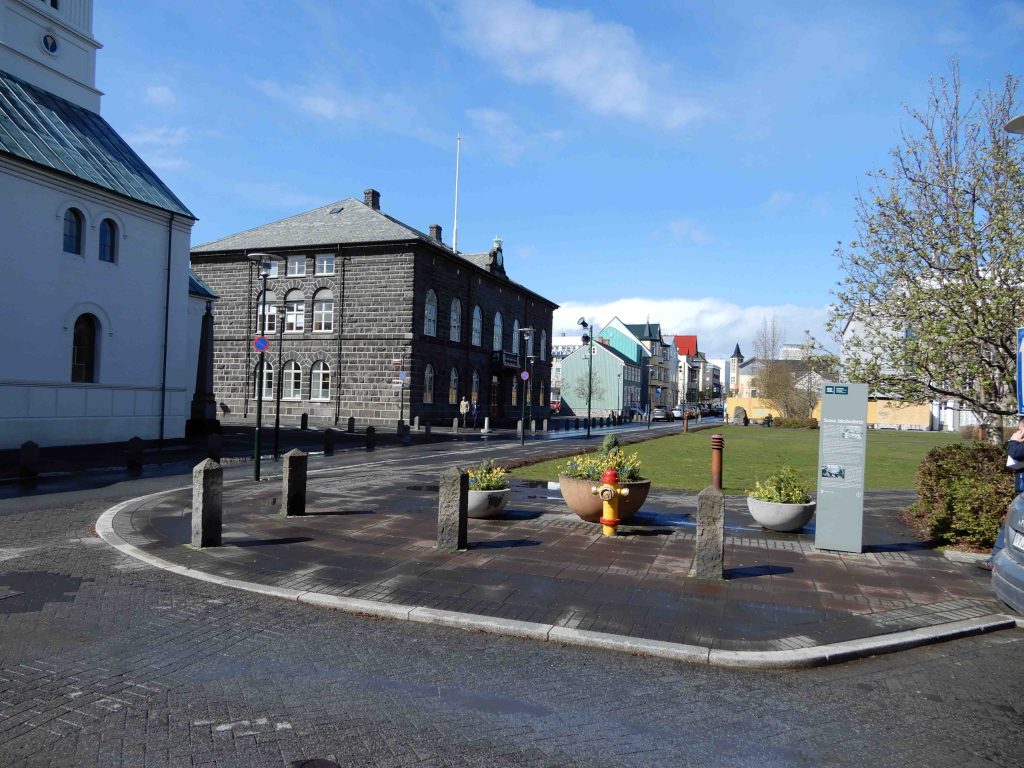
Reykjavik features a beautiful Presbyterian Cathedral as the cities centerpiece with nice shops and restaurants radiating down streets toward the sea. Be sure and have a famous Icelandic hot dog as you explore.

Hallgrimskirkja Church can be seen from almost anywhere in the city. Its steeple rises above all other buildings in Reykjavik and the church can seat over 1000 worshipers. The grounds also feature a statue of the first Viking said to have discovered America, Leifur Eiríksson. The church  nave is open to the public daily and you can purchase tickets to visit the top of the tower for spectacular views of the city. 

Check out walking tours of Reykjavik HERE.