Visiting the Acropolis from the port of Piraeus Greece
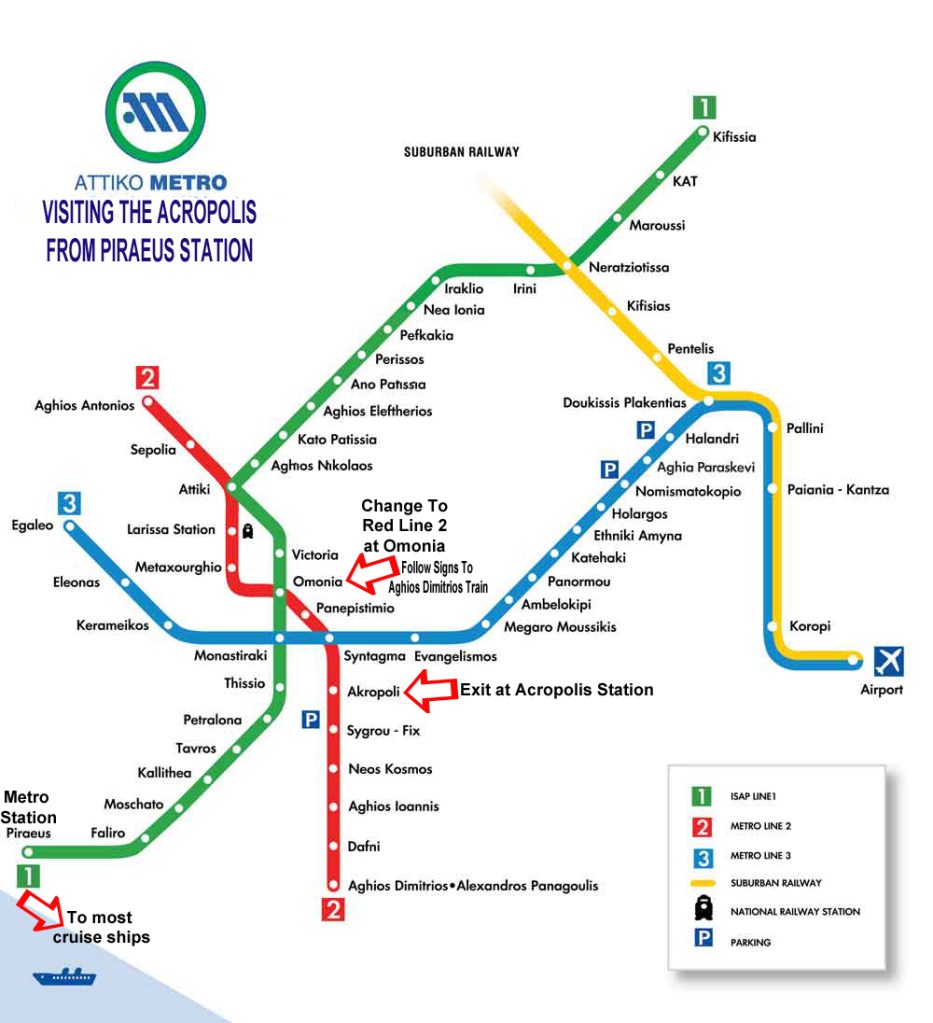
An easy trip from the port of Piraeus into Athens for a visit to the Acropolis is inexpensive and takes about forty minutes each way. The main Piraeus Metro station is located at the back of the port itself and is a fifteen to twenty minute walk from where most cruise ships dock. If you are walking from the pier there is a sky walk over traffic at the subway station location. The Metro (subway) system in Athens offers various kinds of electronic tickets but for a single day trip the best option for a trip into Athens and back is the 90-minute ticket at € 1.90 each way.
There are also:
24-hour ticket at € 4.50 that allows 24 hours to travel any number of times in and out of the various public transportation systems. It does not however include the airport as a destination)
3-day ticket at € 22 (Includes transport to the airport)
5-day tourist ticket at € 10 (It does not include the airport destination)
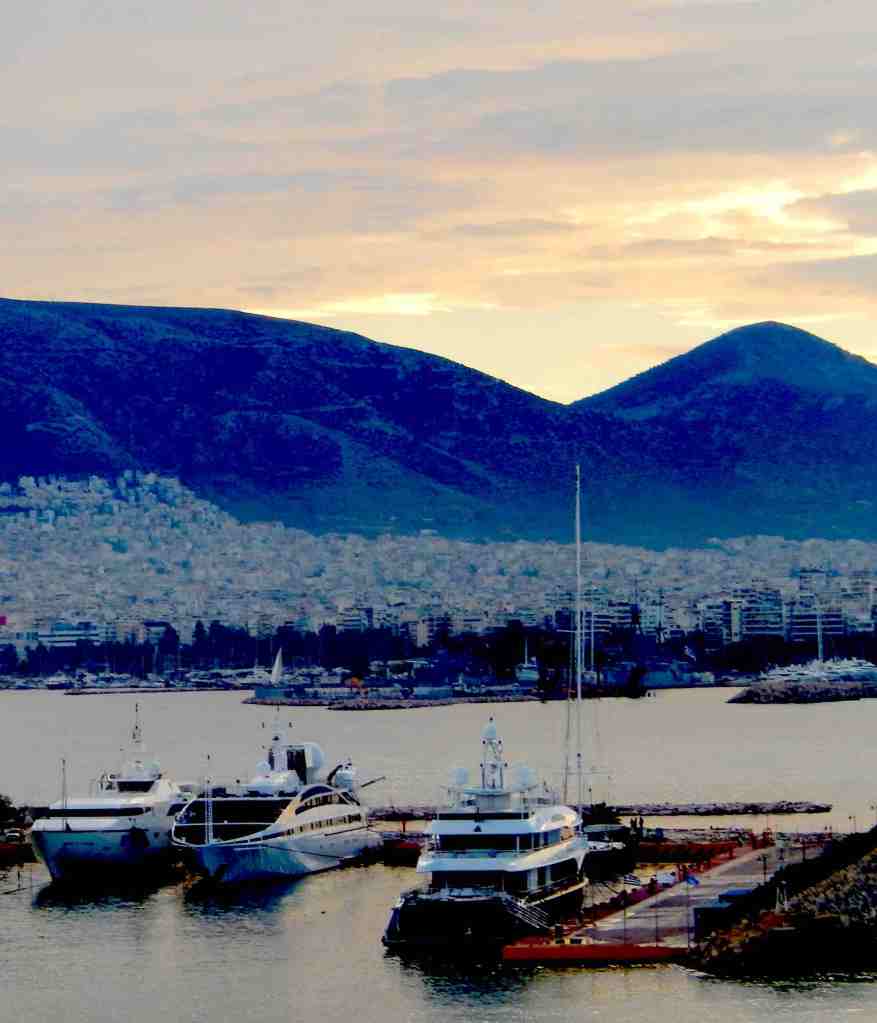
Piraeus Harbor
There are easy to use vending machines at all stations that accept credit cards and provide instruction in a number of languages. You can also purchase any number of tickets at one time and use them as needed. A discount of 25% is also available for seniors over 65, teenagers under 18 years old and university students under 25. Children under seven ride free. In order to get the discount you will need to purchase tickets from a ticket window.
To enter the metro system tap your ticket at the entry post. From that point the ticket is valid for 90 minutes (with the 90 minute ticket) in the system or until you leave by taping out to exit.
Getting on the train going in the right direction is easy. Each platform is named for the last station on the route. So in order to get the train back to Piraeus follow the arrows showing Piraeus which is the last station on the green line.
CLICK THIS MAP TO DOWNLOAD A PRINTABLE PDF COPY
Note – If you are flying in or out of Athens there’s an airport metro stop. The Athens airport subway offers reliable and fast transportation services from and to Athens airport. The Blue Line connects Athens International Airport to Syntagma Square in the center of the city, in only 40 minutes. A one-way Metro ticket from Athens airport to Syntagma Square costs € 10 for adult passengers and € 5 for children, students and elders. The price for a round trip ticket is € 18. Cruising out of the Port of Piraeus? Take the Blue Line to Monastiraki station, switch to the Green Metro Line to get to Piraeus. Furthermore, the subway Blue Line also serves many other areas of Athens. A 3-day tourist ticket includes a return ticket to Athens airport and costs € 22.
A Walking Tour Of The Acropolis Area
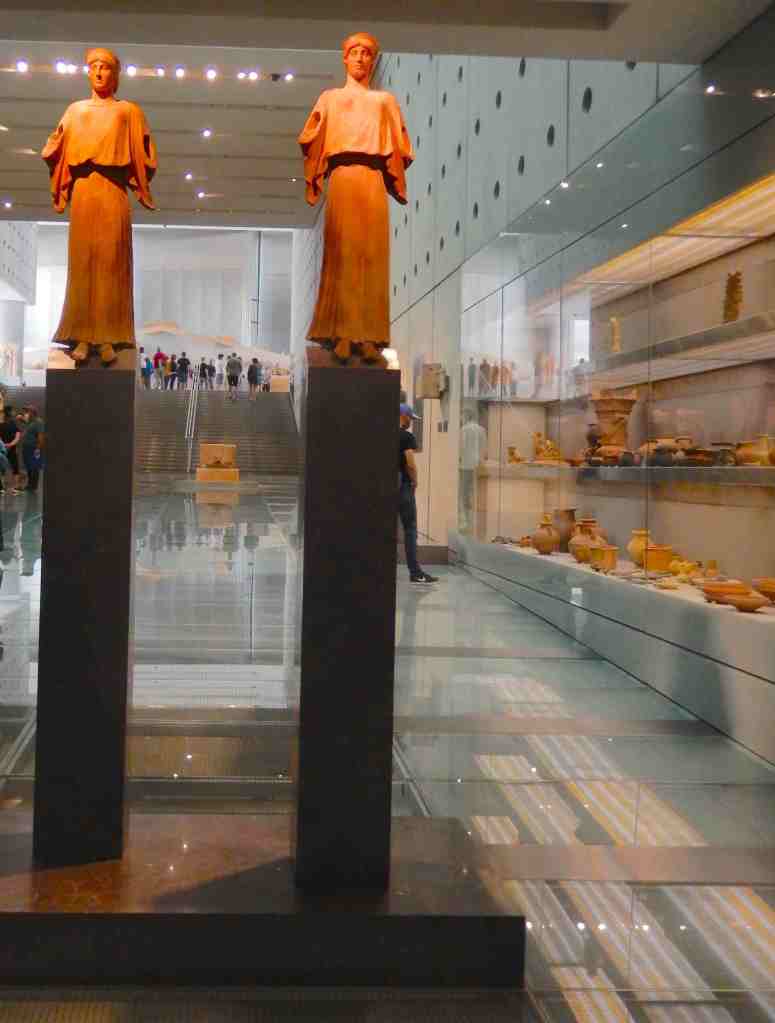
The Acropolis Museum
For a much more in-depth understanding of the history of Athen’s Acropolis a visit to the museum is strongly recommended (admission € 20). Inside are a number of artifacts from excavations along with many of the damaged statuary saved from the Parthenon itself.
The Agora and Roman Forum – ruins of the Forum with remains of the agora built by the Romans from 19-11 B.C. include columns & an octagonal tower.
The Acropolis Museum
Roman Ruins – walking around the base of the Acropolis are a number of archeological sites to explore that include Roman houses and the ancient cisterns.
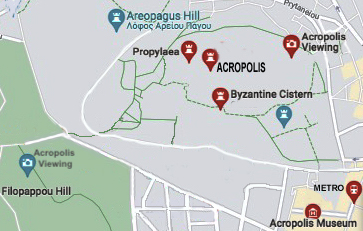
Areopagus Hill (Λόφος Αρείου Πάγου) Historic site sitting high up on another hill it once served as the high court of appeal for judicial cases in ancient Greece.
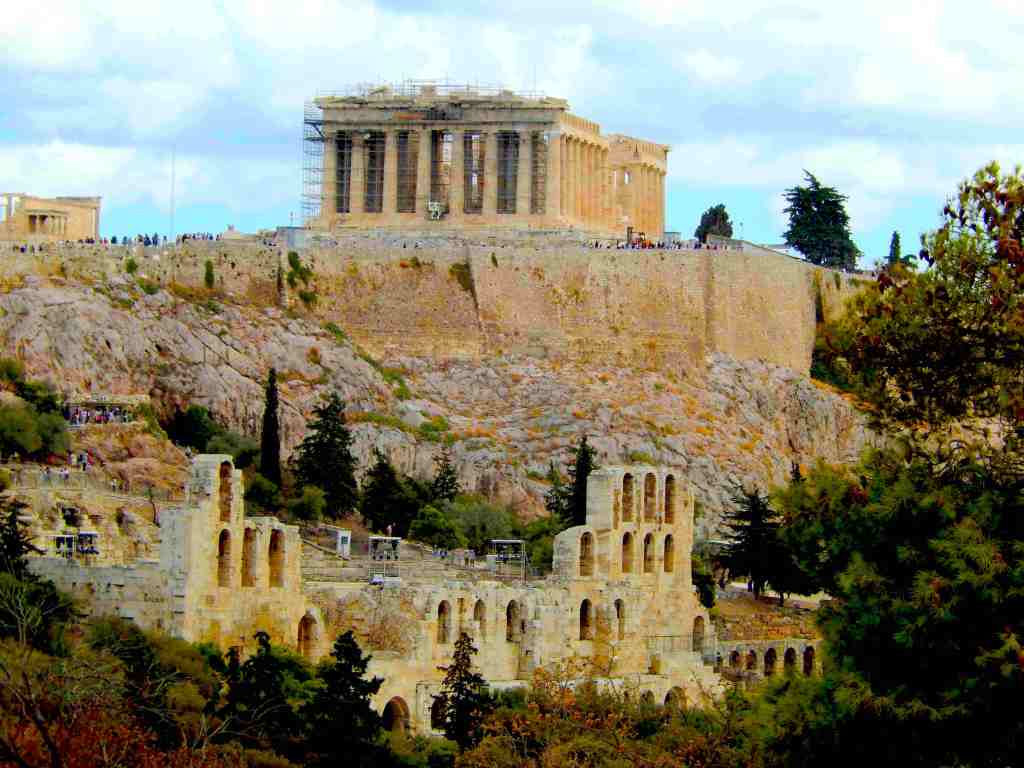
While the highlight of the trip is ascending the Acropolis itself there is much to see around the area. One recommendation is to walk through the Filopappou Hill Park. Admission is free and there are a number of archeological sites to explore. Walking to the top of the hill offers one of the best views of the Acropolis itself.
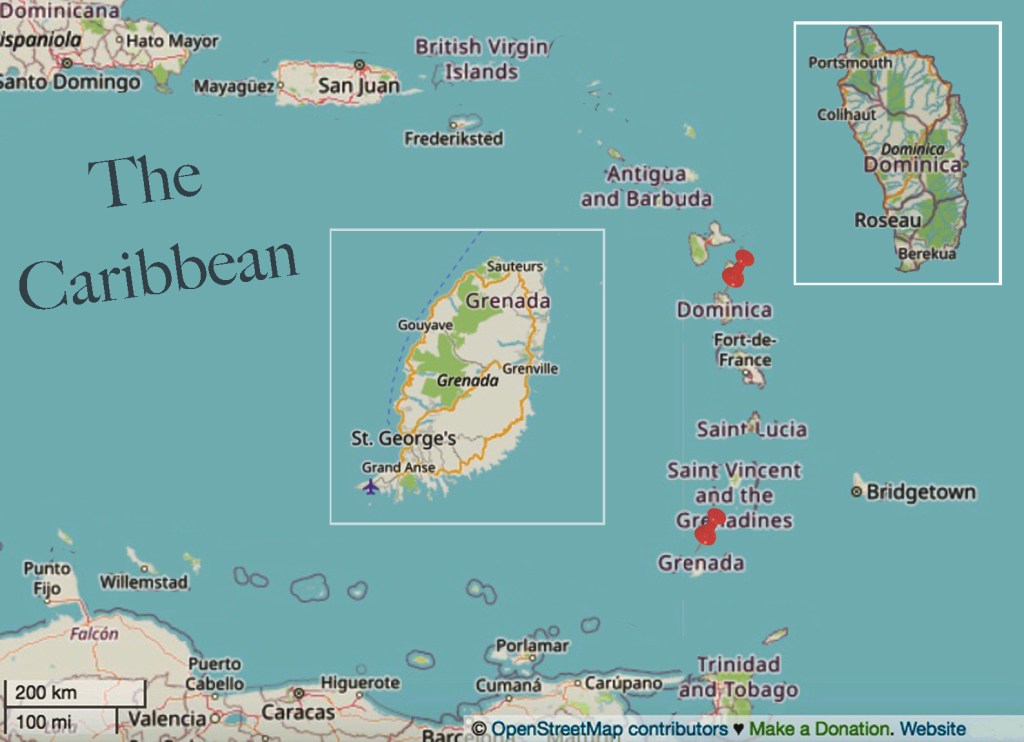
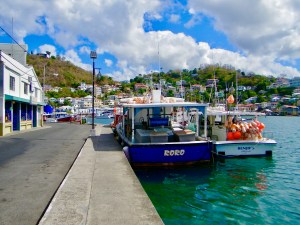
Once an out-of-the-way island, Grenada is gaining in popularity as a cruise port of call. The capital of St. George is considered by many as one of the Caribbean’s most picturesque towns wrapping around a half-moon shaped harbor. Called the spice island it is also a great place to shop for nutmeg and other spices.
Where the Ship Docks – St. George has a well equipped cruise pier and terminal located below Fort St. George and attached to the Esplanade shopping mall.
Grand Anse Beach
Transportation
Getting around the island usually requires a taxi, water taxi or renting a car. Rental cars are available in St. George but you will need to pay about EC$30 for a temporary drivers license.
Taxis – Taxi fares are reasonably inexpensive with a trip around town costing less than EC$11 or US$4 or out to Grand Anse Beach for EC$27 or US$10.
Money – Grenada is part of a group of islands that form a common market and use the Eastern Caribbean Dollar with EC$2.67 equal to one US Dollar. US Dollars and credit cards are normally accepted.
Christ of the Deep statue
Attractions
Beaches – Grenada has an abundance of great beaches but the most popular is Grand Anse Beach not far from the pier in St. George.
The Rain Forest – This island is blessed with some of the richest rain forests in the Caribbean offering a number of nature trails and spectacular waterfalls to visit.
Grenada National Museum – St. George features artifacts and exhibits covering the original natives, slavery, the plantation economy and the islands whaling economy.
Grenada Rainforest
Spices – Known as the spice island you can find many of opportunities to buy spices at really remarkable prices. If you have the time take a tour of a spice plantation or nutmeg sorting house. One of the most popular spices grown on the island is nutmeg.
Underwater Sculpture Garden – Take a snorkeling or scuba trip and dive into Grenadas unique submerged sculptures by Jason Taylor.
Grenada History
Christopher Columbus discovered Grenada in 1498. At the time the island was already inhabited by the Carib Indians, who displaced the peaceful Arawaks who where the original inhabitants. Columbus named the island Concepcion. Later, Spanish sailors claiming it reminded them of Andalusia, named it Granada. The French renamed it La Grenade, and the British changed it to Grenada.
Defending the island the Caribs prevented settlement by Europeans until the mid 17th century. The French were the first to claim and settle the island but were soon challenged by the British. Fort George and Fort Frederick overlooking St. George’s harbor, were built during that conflict. Under the Treaty of Versailles in 1783, the island was finally ceded to the British. Shortly after that the British imported slaves from Africa and established sugar plantations.
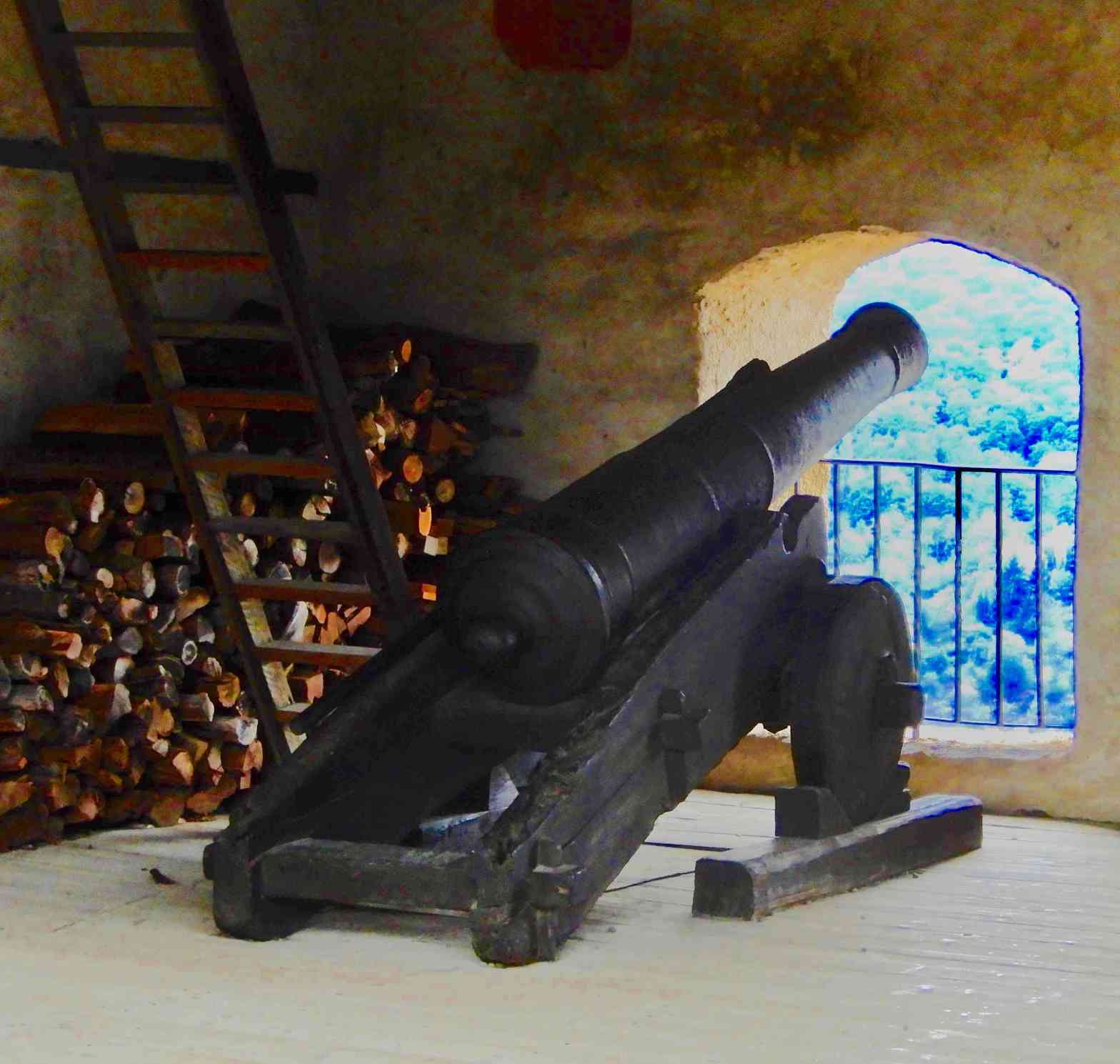
Fort St. George sits above the town.
In 1795 there was a slave revolt led by Julian Fedon, a black planter, that took control of Grenada. While it was eventually put down by the British, soon after slavery was abolished in England in 1834.
In 1877, Grenada became a Crown Colony, and in 1967 it became an associate state within the British Commonwealth before gaining independence in 1974. In 1979, with the support of Cuba, the government was overthrown and a socialist/communist state was established in Grenada. Four years later, at the request of the Eastern Caribbean States and Jamaica, the United States invaded militarily with a “rescue mission,” that expelled the Cubans, restored order, and in December of 1984 a new election re-established the democratic government.
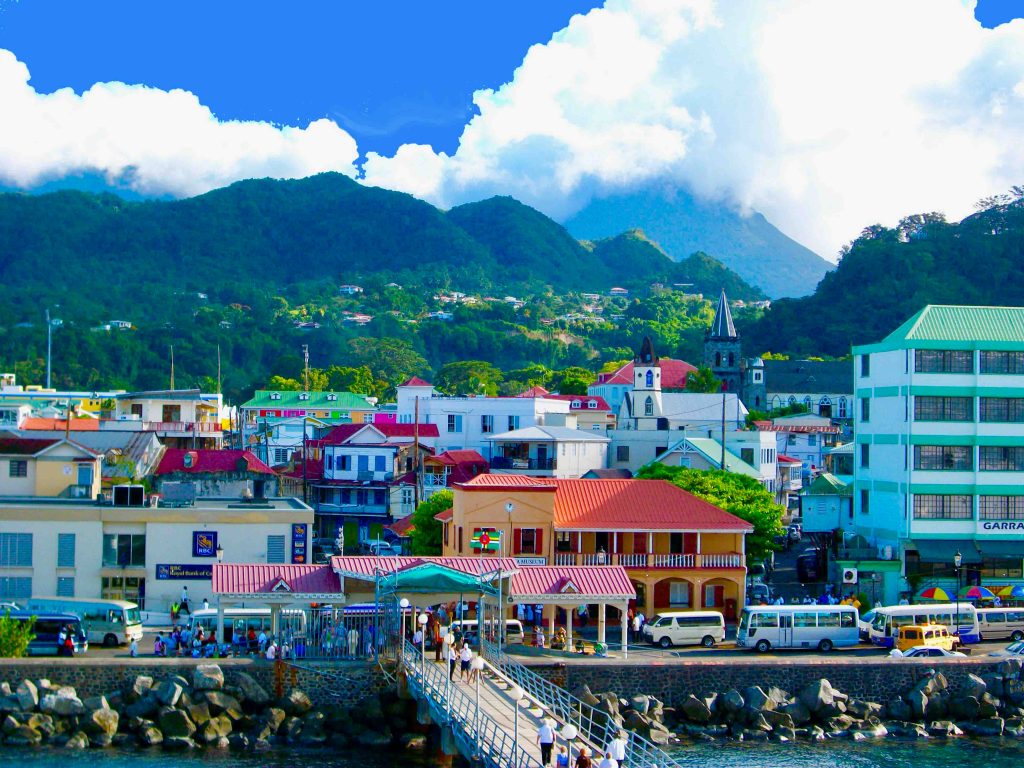
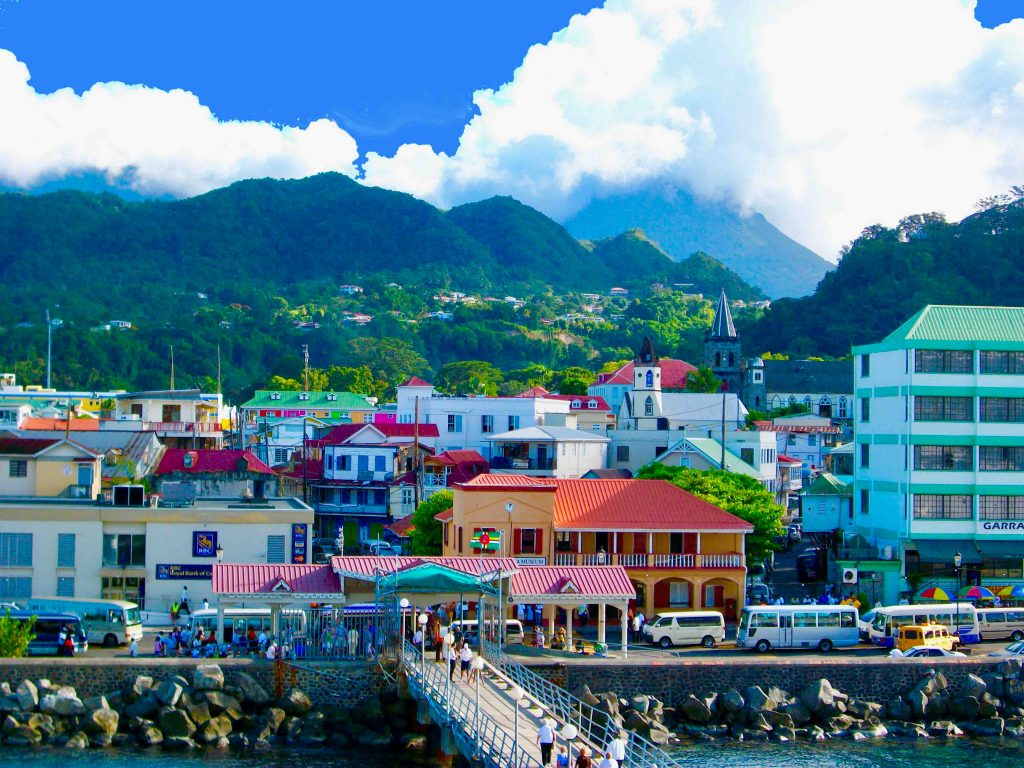
The Cruise Port of Roseau, Dominica
Dominica – The Caribbean’s Nature Island
The rainforests of this tiny nation are what draw visitors to this island along with some incredible snorkeling and diving sites. Dominica is home to numerous hiking trails, many leading to the islands beautiful waterfalls.
Geologically Dominica is one of the most recently formed Caribbean islands. Created by volcanos rising from the sea millions of years ago, this island lies on the line between two opposing tectonic plates. Even today there are a number of steaming springs and fumaroles dotting the islands landscape. The volcanic forces that created Dominica explain why this island, smaller than Manhattan, has mountains reaching almost to 5,000 feet. It’s those mountains that pull moisture from the northeast trade winds with heavy rainfall contributing to its many flowing streams and beautiful waterfalls.
Dominica is probably the safest island in the Caribbean with tourist-targeted crime being very rare with locals being generally friendly and more than willing to help you.
Where Your Ship Docks
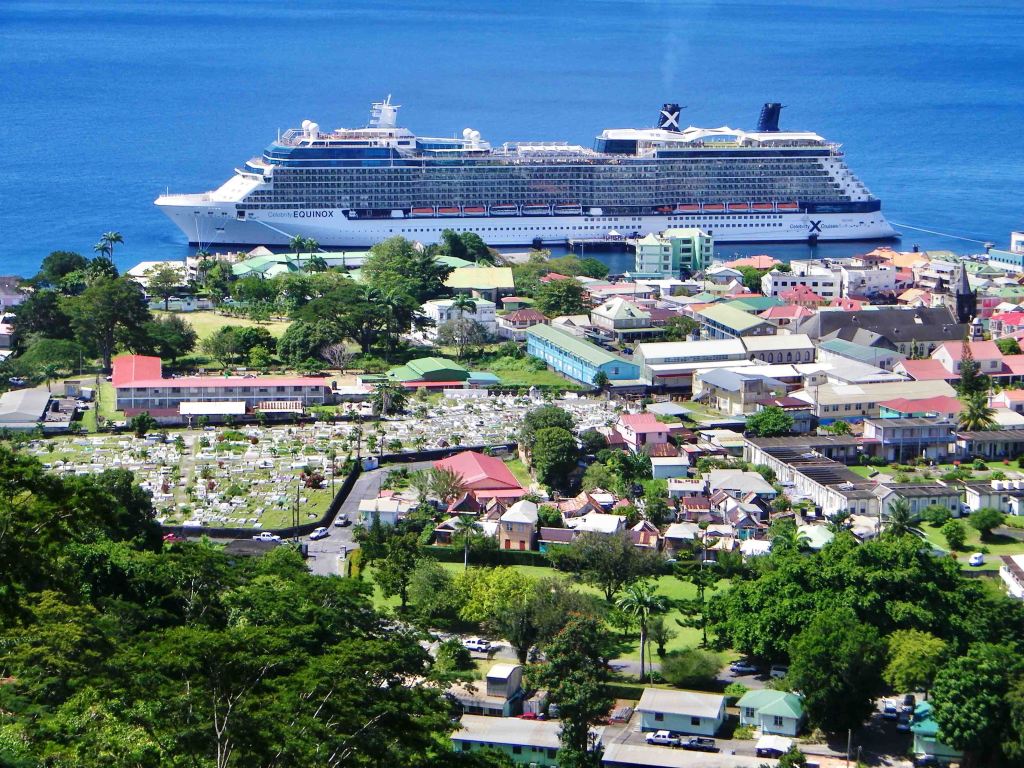
Cruise ships dock at a pier right at the capital of Roseau, located on the western side of the island. Taxis are common but public facilities are not readily available. Walking off the ship will find you in the center of town within a block or two.
Getting Around Dominica.
The easiest and often the least expensive way to get around the Roseau area is by taxi and some drivers will negotiate a price for an island tour. To see more of Dominica you should book a cruise tour or rent a car, as the major sights and destinations are fairly spread out. Rental cars and taxi services are available in downtown Roseau and while there are local minivan bus services that are cheap and run regularly along the coastal routes between Roseau and both Scotts Head and Portsmouth, figuring out routes and times can be a challenge. Also bus service is reduced after business hours with almost none on Sundays.
Currency
Dominica uses the Eastern Caribbean Dollar (EC$) as its official currency. The currency is also shared with Saint Lucia, Antigua and Barbuda, Montserrat, Saint Vincent and the Grenadines, Saint Kitts and Nevis, Grenada and Anguilla, and all are members of the Eastern Caribbean Currency Union. U.S. Dollars are widely accepted along with major credit cards.
Attractions
OFFICIAL DOMINICA TOURIST SITE Dominica is a place for adventures. With volcanic peaks, lush rainforests, rugged coastlines and sparkling waterfalls, which is why it is called the nature island. If you are looking for tropical beaches, they are few and far between. The islands geological history has left most of its shoreline rugged and often beaches are covered in rocks rather than sand. The big attraction here is to explore some of the worlds most interesting rainforest trails with many well maintained and marked.
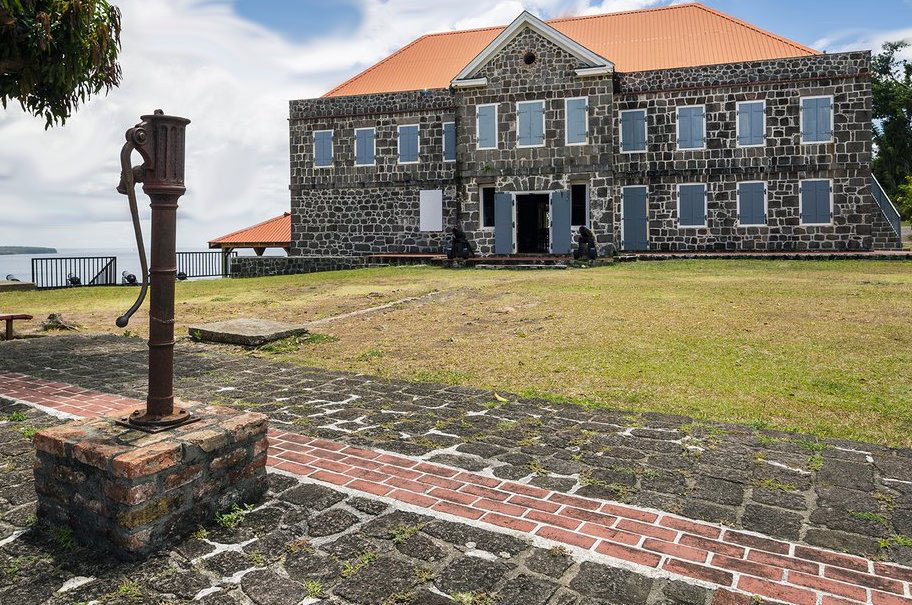
Other attractions include Fort Shirley, part of the Cabrits National Park and located on a scenic peninsula just north of Portsmouth. This fortress is most famously known for a revolt by African slave soldiers in 1802, an event which would lead to freeing of all British slave soldiers in 1807.
Dominica is home to one of the last remaining native populations in the Caribbean** the Kalinago Indians, the descendants of the island’s original people who were known as Carib Indians throughout the Caribbean. The Kalinago are some of the best rainforest guides and offer a number of tours as well as programs demonstrating their way of living and culture.
History
The first European records about Dominica were dated in November 1493, when Christopher Columbus spotted the island, charted it but did not land. Early European contact found Dominica inhabited by the Arawak Indians. Dominica became a French colony from 1715 until the end of the Seven Years’ War in 1763, and then became a British colony from 1763 to 1978. It became an independent nation in 1978.
**The Kuna Indians of Panama’s San Blas Islands are the other native group, but their roots can be traced back to natives living in Central America.
General – The sovereign state of Antigua & Barbuda is located in the middle of the Leeward Islands chain, between the Caribbean Sea and the Atlantic Ocean. In 2017, most of Barbuda’s infrastructure was destroyed by Hurricane Irma and the population was evacuated to Antigua. Rebuilding has been a slow and painful process as resources are extremely limited.
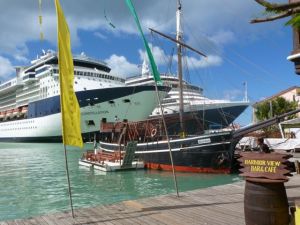
Where You’re Docked – The cruise ships normally dock at Heritage Quay or Redcliff Quay in the downtown area of St. John’s, the capital and largest city on the island. If there are a lot of ships in port, some may dock at the Deep Water Harbour Terminal approximately 1.5 miles from the city. It is best to take a taxi from this area as there are no sidewalks going into St. John’s from the Harbour Terminal. There are plenty of shops and restaurants in the Quay area but many are closed on Sundays and public holidays. There are also several spots that offer WI-FI for either a small fee or free with a purchase. The beautiful St. John’s Cathederal which dates back to 1845 is a historic site to visit near town.
Transportation – There are lots of taxi cabs available from the cruise dock area. Many taxis have a fixed fare set by the government but you can try to negotiate your fare before agreeing on the trip. There is limited public bus service and it can be complicated to use and time consuming. Rental cars can be expensive because, in addition to the rental rate, a $20.00 temporary driving permit is required by the Antiguan government.
In addition to taking a ship’s shore excursion you can usually negotiate an island tour with local taxi drivers. It’s common aso to work out a round trip fare to places like English Harbour or Shirley Heights where the driver will return at a specified time.
Money – The official currency is the East Caribbean dollar (EC) but US dollars are widely accepted. The current exchange rate is US $1.00 = EC$2.70.
Nearby trips:
Shirley Heights Lookout
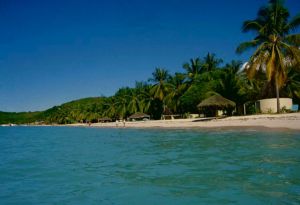
Attractions – Antigua is said to have 365 beaches, one for every day of the year. For tourists, one of the more popular beaches is Dickenson Bay, approximately 15 minutes by taxi from St. Johns. It offers a lively atmosphere with restaurants, bars and beach resorts.
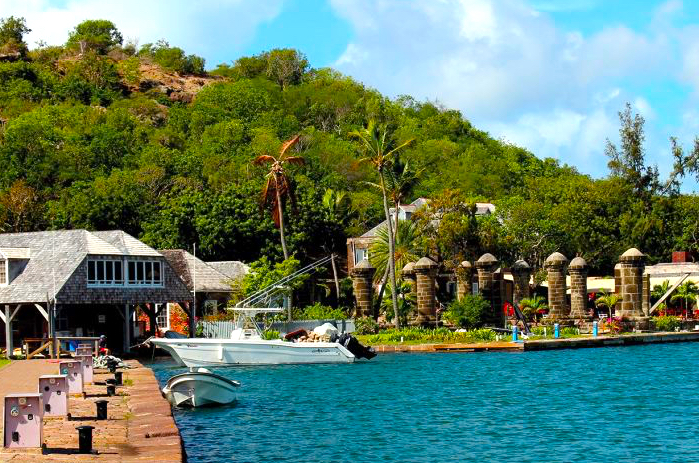
English Harbour
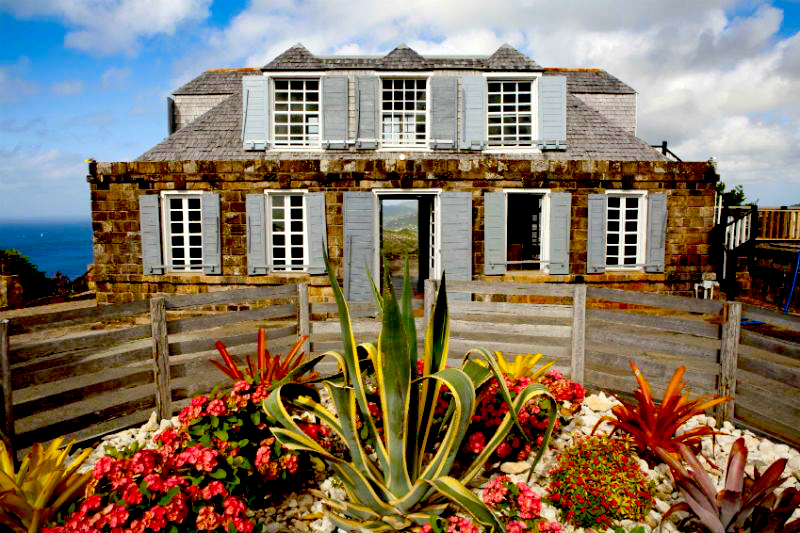
Best view of the island is from Shirley Heights which also provides a nice restaurant for a meal with a spectacular view. A visit can be easily incorporated with a trip to English Harbour and Nelson’s Dockyard, the only working Georgian Dockyard in the Caribbean.
The nation is actually Antigua & Barbuda but 95% 0f the population lives on Antigua. Barbuda is actually one of the few unspoiled islands left in the Caribbean with a large park and bird sanctuary famous for its Flamingo colony. A visit to Barbuda is possible via the Barbuda Express, a 90 minute ferry service operating from the ferry dock in St. John’s. The ferry runs every day with one departure and one arrival daily. Adult r/t tickets run EC$85.00 (there is also a EC$15 landing fee from the government) and children’s fares are less. Advance reservations are recommended. A roundtrip and tour of Barbuda is scheduled every Tuesday and Thursday.
VISIT THE CRUISE LIFE SHOP
English Harbor is the main historic sight on Antigua and is a large natural harbour on the south coast. English Harbour is best known for Nelson’s Dockyard, a former British Navy base; it displays restored 18th and 19th-century buildings, a museum and other historical artefacts from the colonial period of the dockyard, especially from the time it was commanded by Horatio Nelson. The Royal Navy had begun using English Harbour as a safe anchorage in the 17th century and in 1704 Fort Berkeley was built on a spit across the harbour entrance to defend it. Later additional fortifications where built on the high ground above the coast at Shirley Heights.
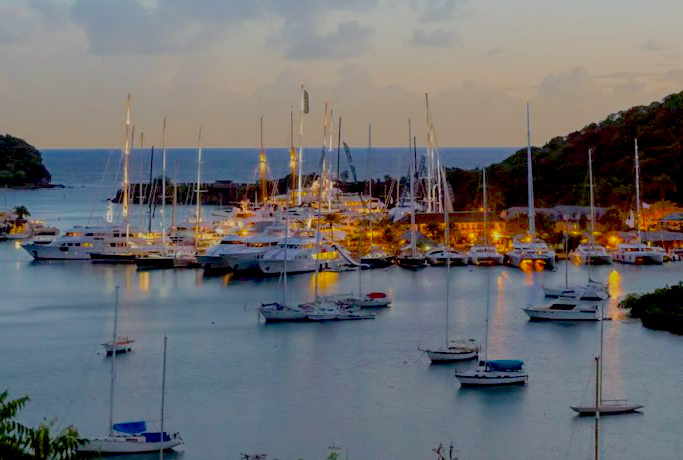
English Harbor is the heart of the yachting community. Antigua Sailing Week is considered the Caribbean’s most prestigious regatta. Held annually at the end of April it features the Round Antigua Race on a Saturday followed by five days of competitive racing off the rugged south coast of the island. Yachts come from all over the world to attend the races and most venues on the island are packed.
We’ve done a great deal of traveling with a fair amount in third world countries and maybe it’s that I’m getting older but the past 24 hours have come near to hellish.
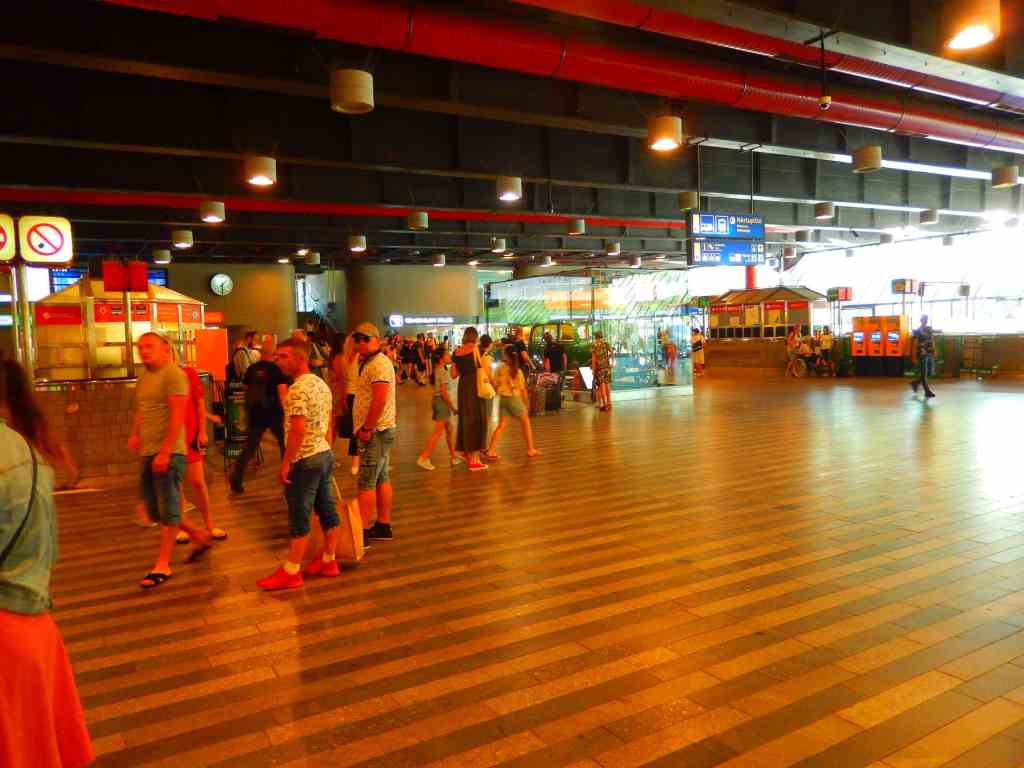
Budapest Nyugati Station
We planned this trip to start in the Balkans with the first half ending in Budapest. The plan next had us taking a train to Prague. The central train station was to be about six blocks from our hotel in Budapest and in Prague just a little further. We purchased round trip first class tickets through Rail Ninja* for a 9:35 AM train direct to Prague. Easy day right? Get up and head to the station around 8 and after a seven hour train ride – Prague.
A bit of information about communicating in Hungary. First there is very little signage or instructions in anything other than Hungarian. Hungarian is one of the worlds most complex languages and because of the average word length, especially in street and town names it is difficult to keep things straight. While many Hungarians speak at least some English (especially if they are in restaurants and shops), the more bureaucratic they are the less likely they speak anything other than Hungarian. Think police, bus and transit workers and especially on trains or in train stations.
Hell – Part One It hit 100°F yesterday with little breeze. While we live in a sub-tropical area this day in Budapest was intense. Normally we love Budapest and do a lot of walking around the city. Not yesterday. We did decide to stop by the train station just to confirm our train location and time.
The first problem we found is that none of the schedule boards the Euro-Liner or Prague (Praha) listed. The second problem was the Nyugati station was undergoing major renovation and most of the interior offices had been relocated. Still 100°F.
Following signs to an i location we found a group of women at card tables with piles of papers and signage not just in Hungarian but also another language. It turned out they were there for Ukrainian refugees to help with finding living accommodations. They told us we needed to go to the “International Ticket and Information” office. Still 100°F.
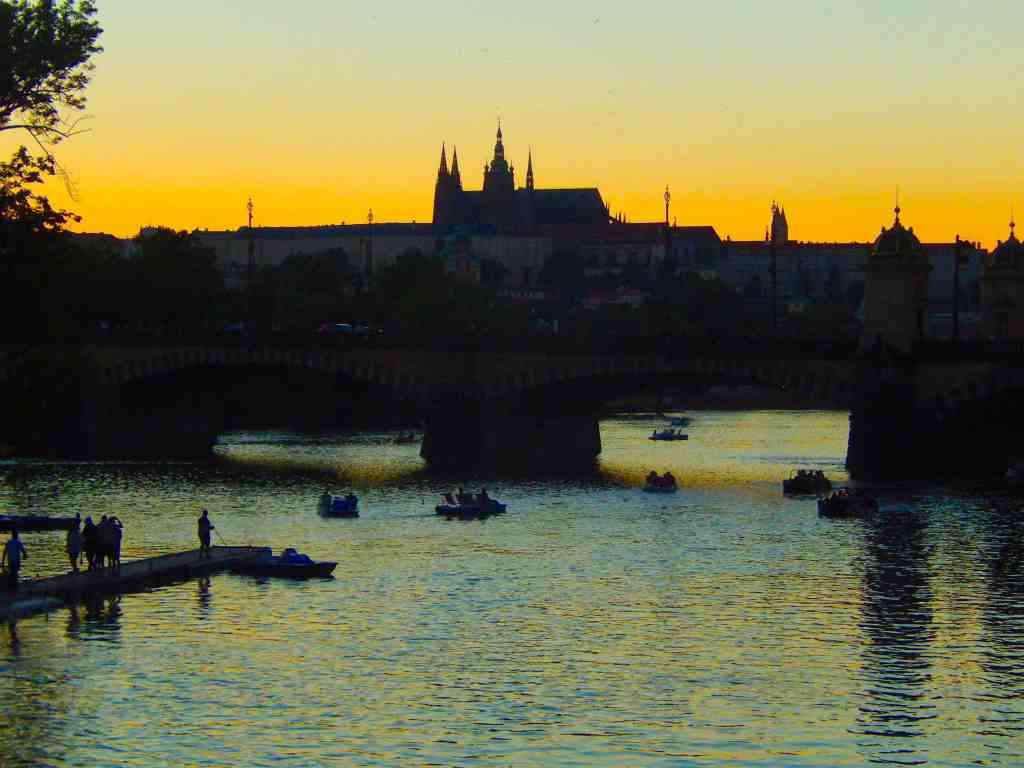
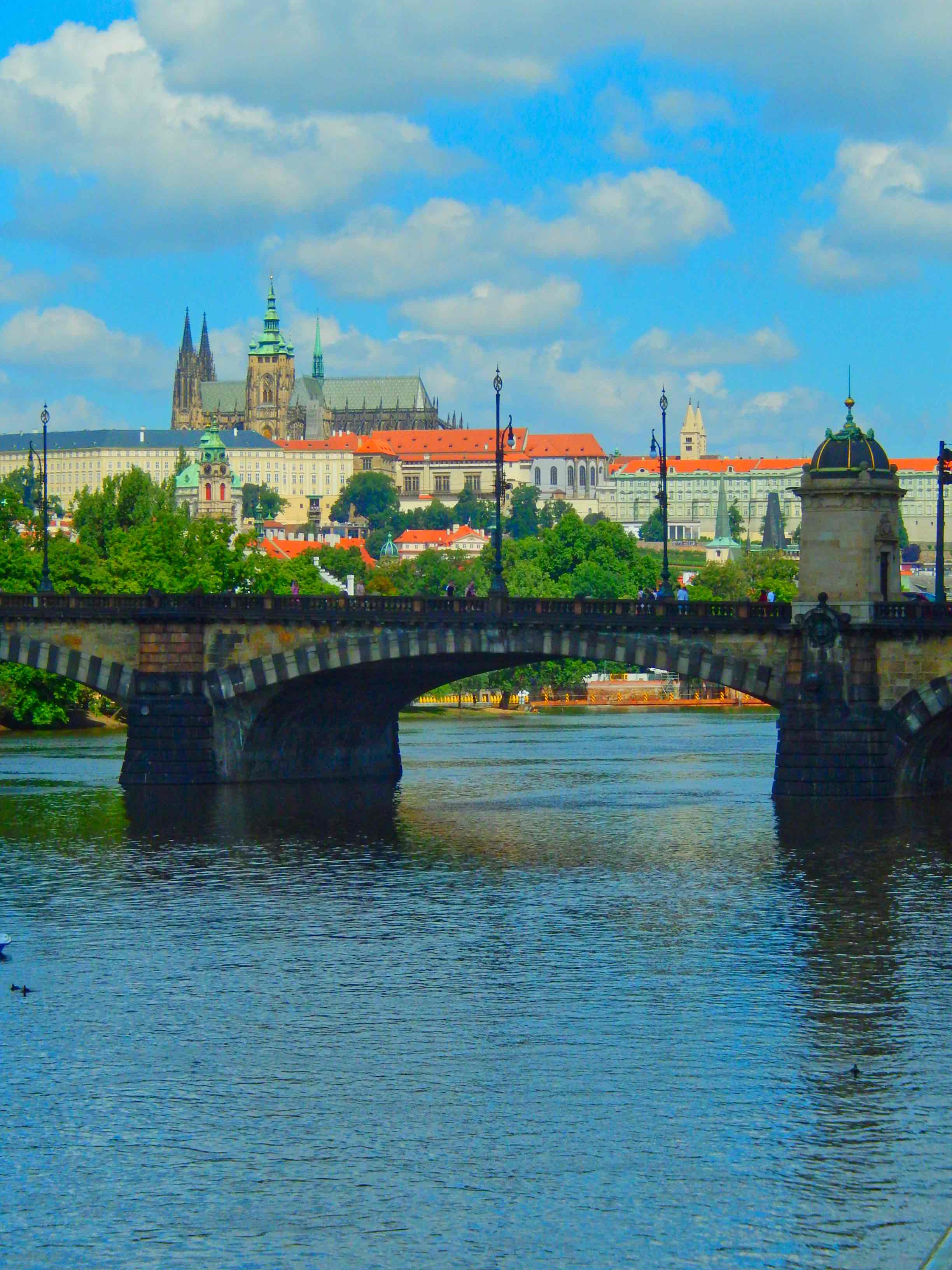
Prague Station
That office was behind the station in a trailer. Windows closed – air conditioner broken – twenty people in line and one window open. Still 100°F. Almost an hour and a half later and the loss of a quart of fluid we get to the window. Showing our ticket she passed back a slip of paper that explained in bits of English that the high-speed tracks into Nyugati station were being replaced and we would have to catch a local train in the morning to Szob to catch the Euro-Liner to Prague (Praha). That train left a half hour earlier than the originally scheduled Euro-Liner. Still 100°F.
That evening after the Sun was setting we went out to visit a ruin-bar that was listed as having good burgers – it had cooled off now to 94°F. The bar was very active in a ruined sort of way but it was located on an interior courtyard and it’s still 94°F.
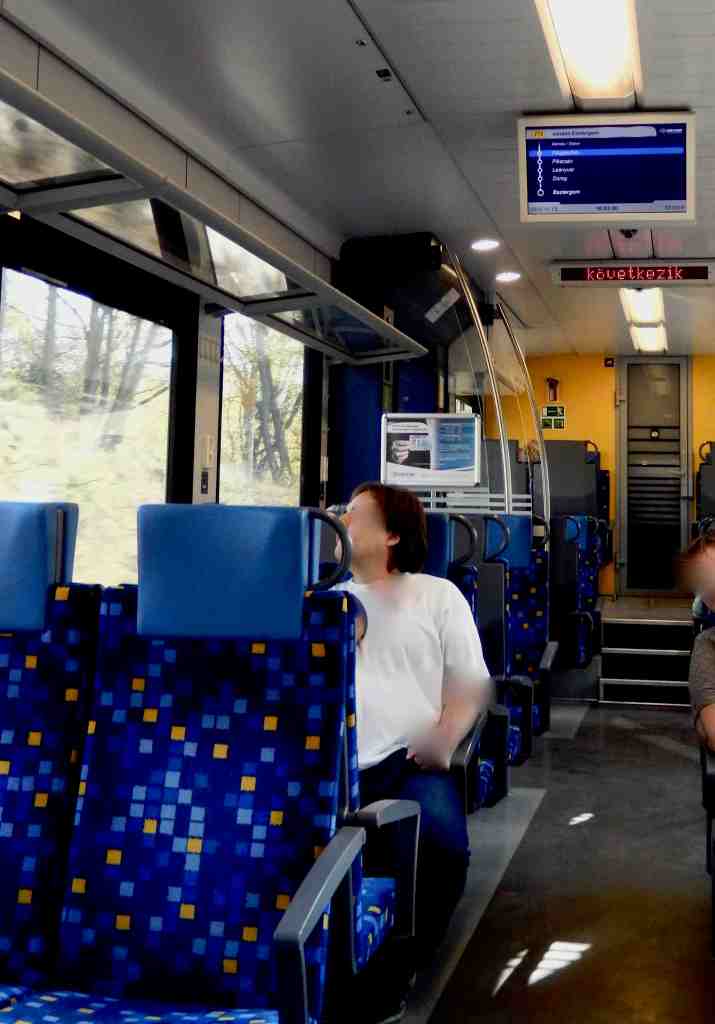
Hell – Part Two Not happy to have to start our trip with a local train ride for an hour, we got to the station and made the train. About a half hour into the trip the conductor came by to check our ticket and launched into a long explanation in Hungarian with the word bus thrown in several times. Acting like a stupid American, I asked a number of questions in English that resulted mostly in weak smiles and shrugs. Finally a woman sitting a few rows back intervened with some broken English. The explanation turned out that the tracks were out before Szob and we would be transferred to buses for the leg into Szob. We asked what station we’d get off at but that produced no answer we could understand. When in doubt – just follow the crowd. The air wasn’t working on the train and the temperature had climbed again to 94°F.
The train stopped at a small train station where there were five buses lined up. By the time we got off the train the first bus was full and we got onto number two. Only a few people were putting the bags under the bus and we were concerned about the confusion at the other end so carried our bags with us. Soon our bus was full but so were the three behind us. The two right behind us pulled out and went around us. The last bus pulled up behind us and before we could pull out three men with bicycles came up. Our driver got out and started working at getting the bicycles into the bus storage and the last bus pulled out leaving us behind. Ten minutes later we got under way.
Arriving at the Szob station it turned out we had to cross the tracks near the entrance to get to our train, which I wasn’t sure I could do handling a suitcase and heavy backpack and dropping down off the platform. Finally I made it and am now writing this from the cool comfort of the Euro-Liner cruising along at about 100 mph.
I spoke too soon – two hours from Prague we stopped. We sat for two more hours while an accident on the tracks ahead was cleared. Getting to Prague and leaving the station for a fifteen minute walk to the hotel it suddenly starts pouring.
Some days nothing goes right…
*Before the trip every attempt we made to book a train, either with Czech Rail or EuroRail ended up forwarding us to Rail Ninja. A service charge was added and later when trying to get help on two different issues returned a response “not our problem – check with the local rail service”! More on this later.



















 The Intentional Travelers