Prague’s Main Train Station

The Stations Park Level Entrance

Prague Central Train Station

Navigating Prague’s Main Station

Train Platforms

Both arriving and leaving Prague by the Main Station can be somewhat confusing, but it isn’t as bad as first impressions usually suggest. The station is very large with three main levels including North and South platform areas. Entrances to the station are on two levels that include a lower level with sidewalks coming in from the park (above photo) and an upper level for street drop offs, pickups and parking access. The central area incorporates a large core with three split levels. After you adjust to its size and the lack of signage in English it’s actually pretty easy to figure out.

Locating Your Train And Getting To The Platforms

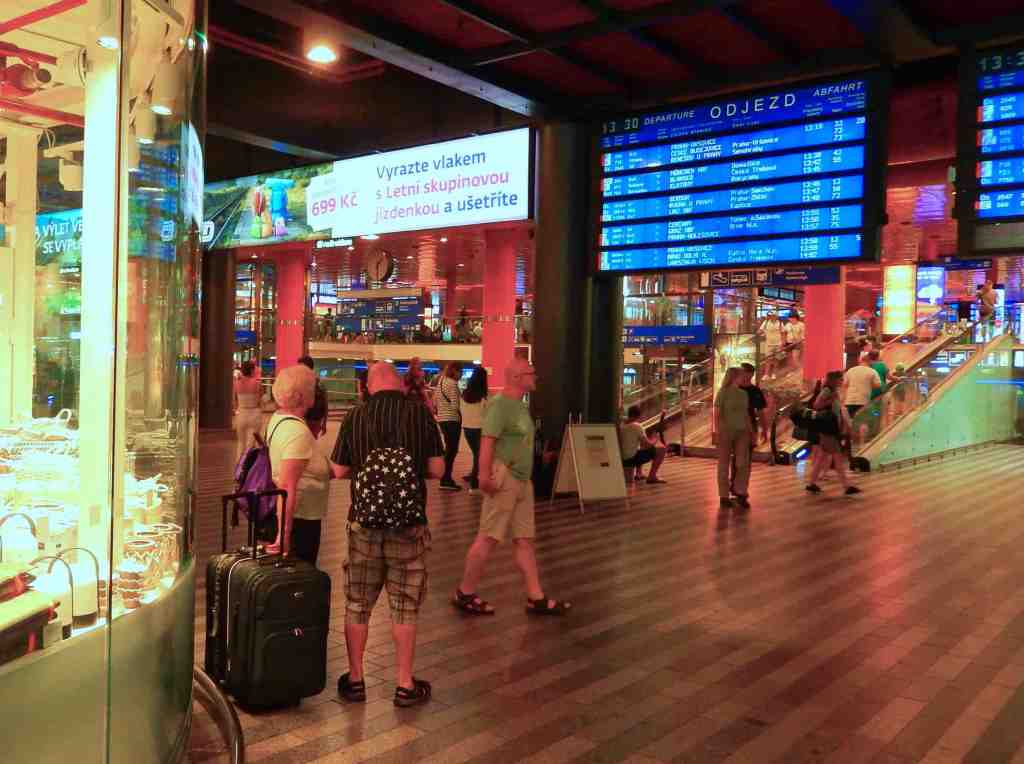
The station has numerous large displays showing the current timetable for the next hours trains. This display shows:

  • The Trains Service
  • The Train Number
  • The Train Name
  • Train Destination
  • Via Cities
  • Scheduled Departure Time
  • Platform – S for North Platforms and J for South
  • Estimated Delay If Any

Exits from the platform area can be by stairs, escalator or elevators (elevators in North side only) with two large passageways leading from the platforms to the main concourse.

There is no food sold in the platform area and smoking is not permitted.
UPPER CONCOURSE – MAIN FLOOR (The Central Concourse)

Station directional signs list this as the train station historic area.

On this level are the public restrooms (Use requires 20 kc or 1 Euro) along with cambio/currency changing office and a large display showing the current train timetables. There are automated ramps to the lower concourse, a cafe, a Burger King and drink/snack vending machines (Czech coins only).

LOWER CONCOURSE – (The Central Concourse) PARKING/STREET ENTRANCE LEVEL

Ticket Office

This level has a larger display showing the current timetable for the next hour. Included in this main concourse are fashion shops, a bookshop and Metro ticket machines but ATMs are found on the next section below.

GROUND CONCOURSE (The Lower Concourse) INFORMATION / TICKETS, LOCKERS AND BUDGET CAR RENTAL

Getting to this level is via a ramp or stairs. Here on the far north side of the station are tourist information that also sells city metro tickets. Shops include a chocolate shop, a coffee shop and a Budget Car rental office. Opposite the shops are windows for domestic trains and on the left a glassed area for international tickets with an ATM nearby. At the far end is supermarket.

Shown at left:

The Main Concourse has three split levels with train schedule boards on each:

The Central Concourse – provides access to the other levels along with shops and food outlets.

The Lower Concourse – Accessed by stairs in the middle that go down to the glass enclosed ticketing area.

The Upper Concourse – Accessed by moving ramps up to a central area with access to the train platforms off to the left for South and to the right for North.

The Prague Main Station Neighborhood

The Prague Main Station is located in the center of Prague between the Old City and the New City (while it’s called the New City it is actually around 500 years old) and only a couple of blocks from Wenceslas Square. That square is the real heart of Prague that includes the main shopping district, the National Museum and is the location of some of the most dramatic events in modern Czechoslovakian history.

The birth of the independent Czechoslovakian state was announced there in 1918. It is also where in 1969 Jan Palach, a student of history and politics at Prague’s Charles University, set himself on fire protesting the installation of a Soviet puppet government. Also in 1989 it was where massive demonstrations led to the overthrow of the communist government. Over 100,000 Czechs filled Wenceslas Square night after night calling for independence. Called the Velvet Revolution from November 17-27, 1989, a free and independent Czechoslovakia was declared on the square on November 27th.

Please Note: Caution is recommended if walking out of the station at night using the park exit. While Prague is considered a very safe city there are unsavory characters that seem to gather in the park outside the train station at dusk.

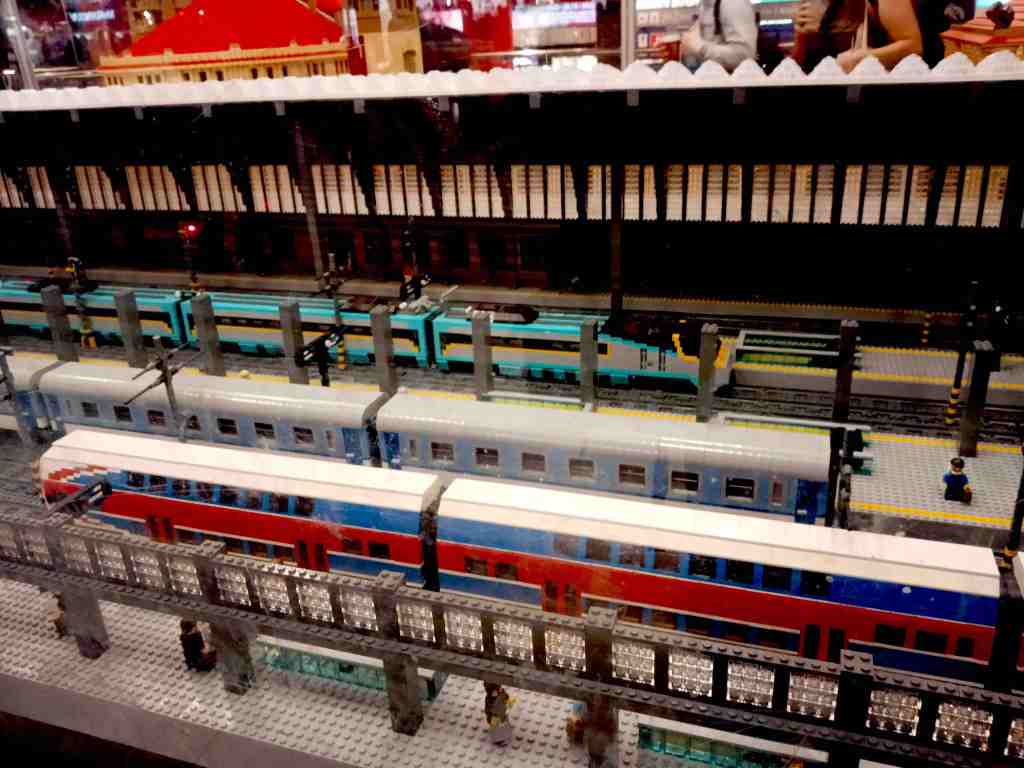
The Lego Prague Train Station

In the Central Concourse at the Prague Main Station is a huge model display of the station made completely with Legos.

Had To Share This

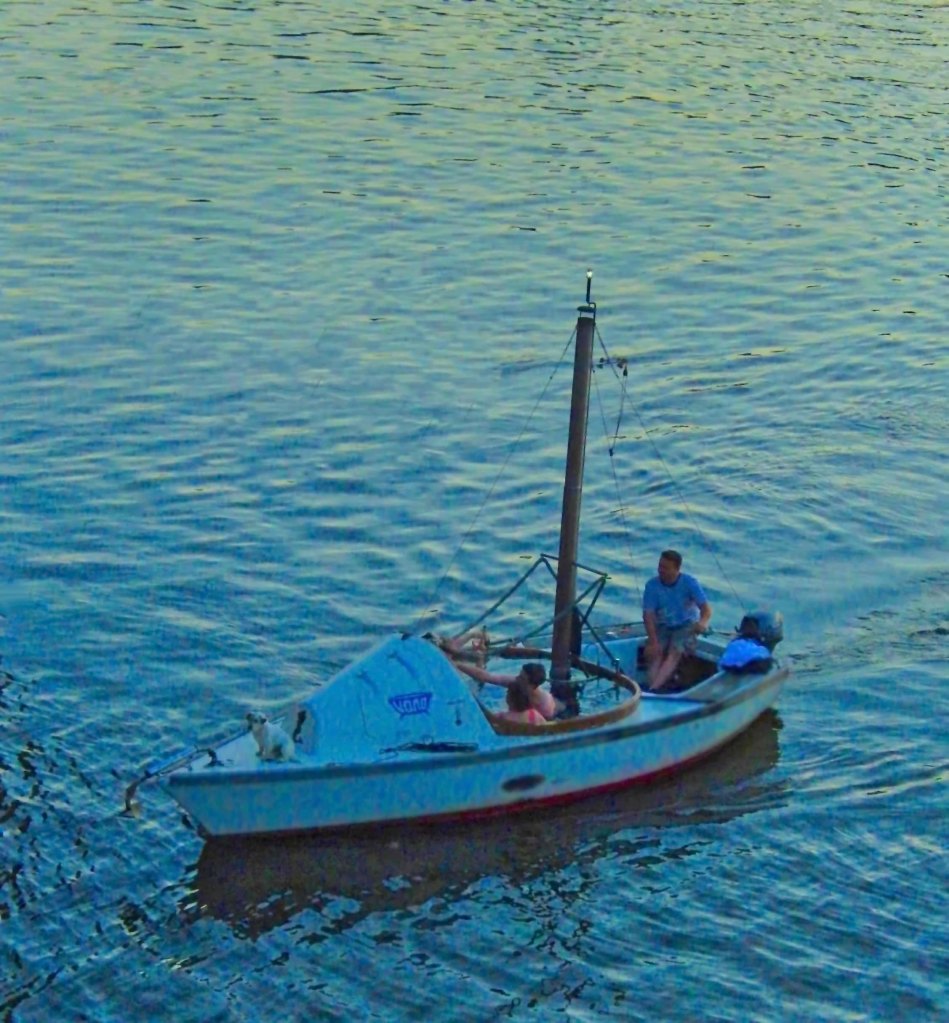
Hot Tub Sailboat

One recent evening in Prague we walked out to the Vltava River to catch the Sunset. Just as we walked back across the bridge and looked down we saw this small sailboat with a large hot tub installed? It was just ready to pass under us and the Sun had set so it was a grab picture in the darkness. ; -)

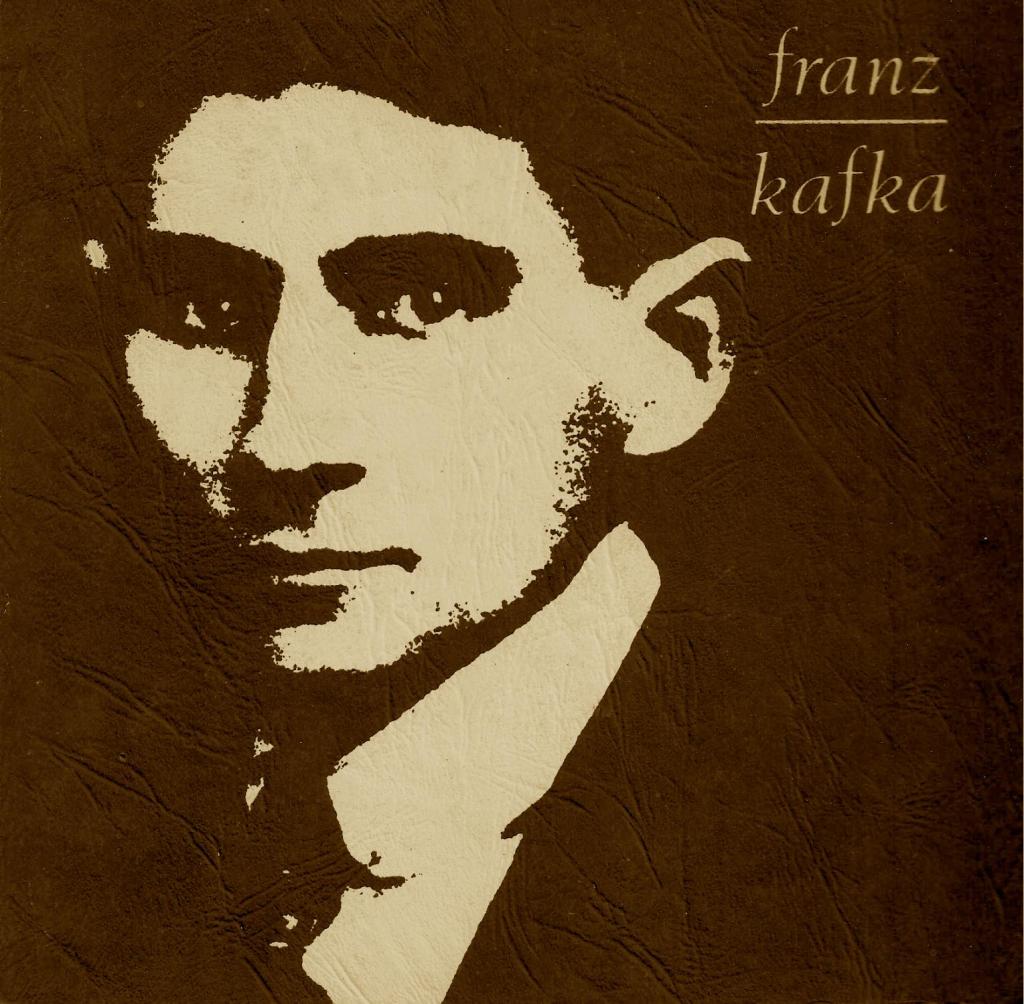
Franz Kafka, Prague’s Favorite Son

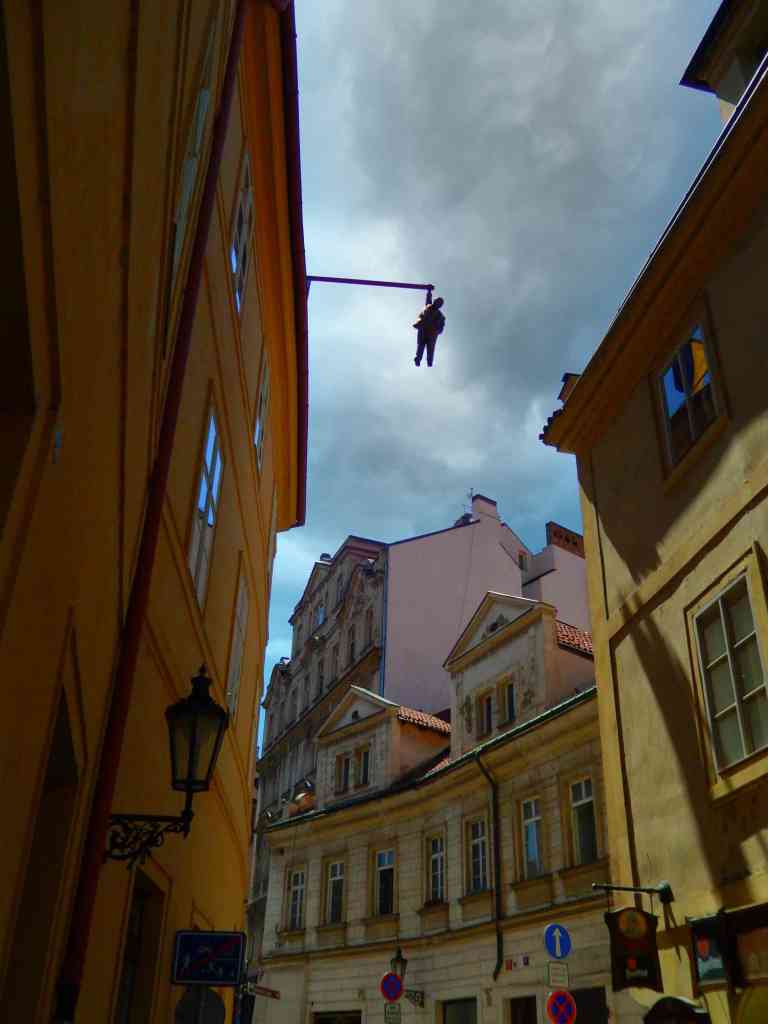
The Hanging Man

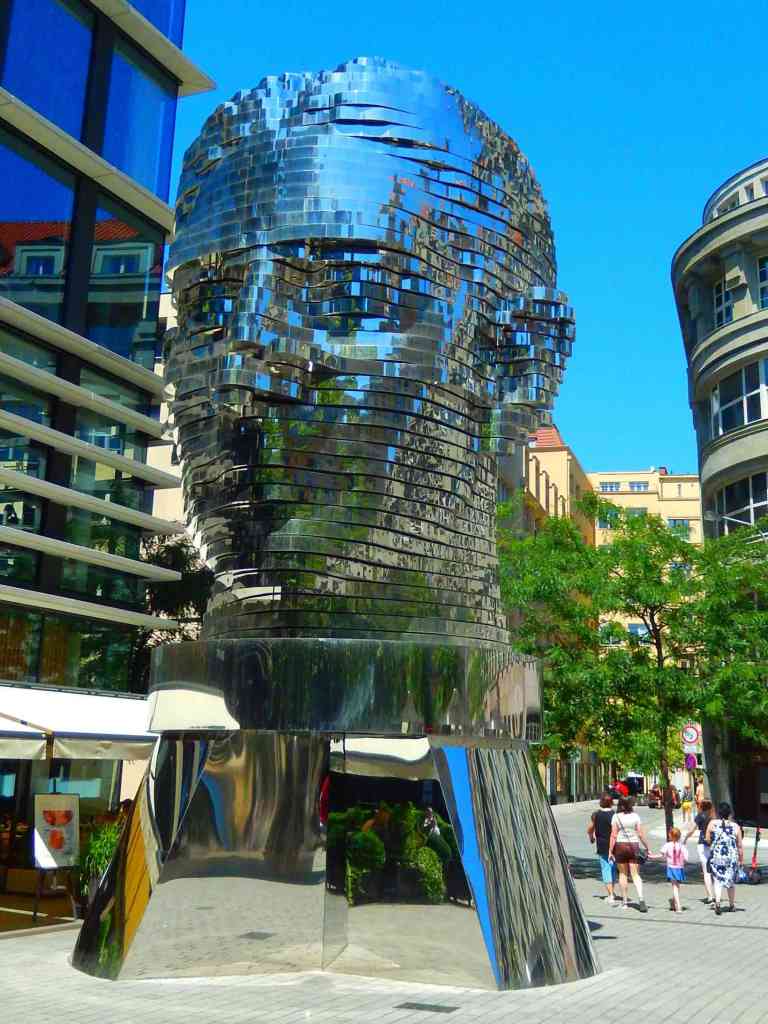
Prague seems to not just celebrate the life of Franz Kafka but to embrace his sense of the bizarre found in his writings. One popular attraction in the city is a giant rotating head of Franz Kafka made of a coil of polished stainless steel. Kafka t-shirts are also a popular item in the tourist shops. Stroll the streets of the Old City and you’ll discover the bizarre popping up in surprising places. Looking up there’s the Hanging Man statue swinging in the air from a building top. Walk into a square and find the Pissing Men statue.

The rotating head of Franz Kafka Prague

Prague is home to The Franz Kafka Museum that holds a collection of historical documents and first editions along with art and numerous exhibits showing his life. The museum is housed in an impressive building that was part of the Hergetova Brickworks on the bank of the Vltava River.

  • All first editions of Kafka’s works
  • Correspondence, diaries, manuscripts, photographs and drawings
  • Three-dimensional exhibits
  • Audiovisual pieces created especially for the exhibition and a soundtrack

There are displays attempting to prove that all of Kafka’s major work describes the city of Prague. The unnamed cathedral in The Trial is St. Vitus Cathedral, where in the last chapter, Josef K’s path describes a trip from Old Town across the Charles Bridge to the border of Lesser Town. It is also claimed that in Judgment the quay and the Vltava river and its bank are described looking from Bendemann’s window. Much effort has gone into proving that Prague’s topography is always present, but not named in Kafka’s stories.

Franz Kafka was a German-speaking Bohemian novelist and short-story writer, who is regarded as a major figure in 20th-century literature. His works offer a bizarre mixing of the elements of realism with a nightmarish unreality. They often feature isolated protagonists living through surrealistic predicaments with incomprehensible social and bureaucratic situations.

Franz Kafka

Born July 3, 1883, in Prague, that was at the time of the Kingdom of Bohemia, Austria-Hungary.

He died June 3, 1924, and is buried in the New Jewish Cemetery, Prague.

If you haven’t read any of Kafka’s stories it is an interesting experience as you get drawn into the mind of a character that often finds himself awake in a nightmarish world. It’s not hard to be drawn into his worlds and in so doing gain some insight like in the Prisoner that seems to offer parallels to aspects of current cultural issues like cancel culture and worrying about what is acceptable thought.

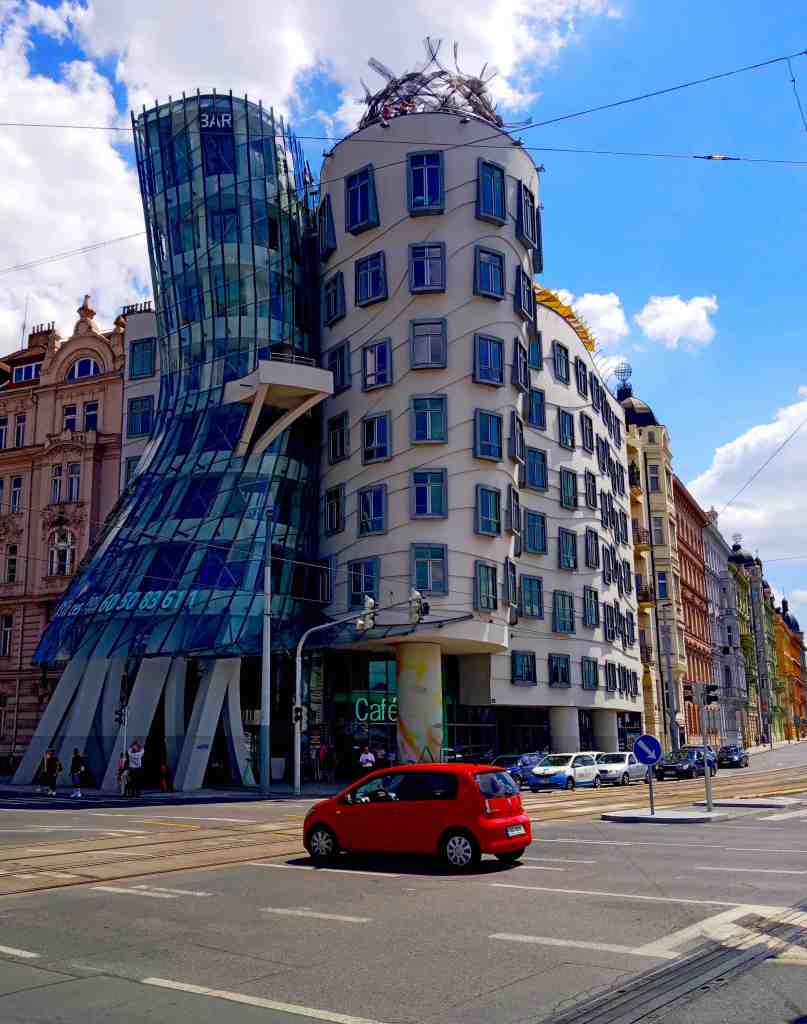
Dancing House Prague

On the Rašín Embankment on the Vltava River in Prague stands “The Dancing House”, sometimes referred to by its nickname Fred and Ginger. The structure is so unique that the building is recognized around the world.

The Dancing House

It was erected on the site of a building destroyed by the U.S. bombing of Prague in World War II. The bombed out structure remained untouched until 1960, when the lot was cleared. The neighboring building and land was co-owned by Václav Havel, who spent most of his life living there. In 1986 Vlado Milunić, an architect in Czechoslovakia, came up with an idea for a project at the location and discussed it with his friend, Václav Havel.

The neighboring plot was actually co-owned by the family of Václav Havel, and he had spent most of his life there. At the time he was a little-known dissident who a few years later, during the Velvet Revolution*, became a popular leader in the country and was subsequently elected president of Czechoslovakia. It was probably his political pull that helped get the project funded.

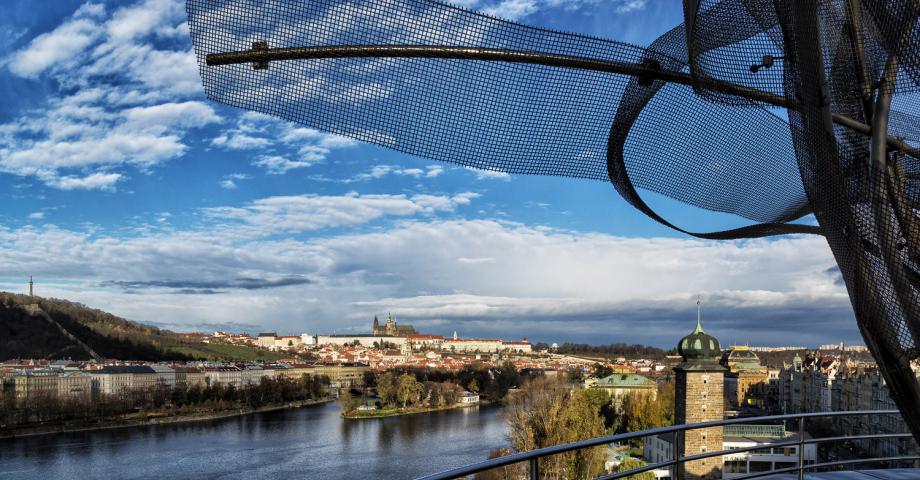
View of Old Prague from the roof top bar

It was designed by a Croatian-Czech architect Vlado Milunić in cooperation with Canadian-American architect Frank Gehry. Designed in 1992 the construction was completed four years later in 1996. In 1992 in Geneva, Gehry and Milunić began to work on Milunić’s original idea of a building consisting of two parts, one static and one dynamic or “yin and yang”, intending to symbolize the transition of Czechoslovakia from a communist regime to a parliamentary democracy.

Gehry was the one who originally referred to the house as Fred and Ginger after the dancers Fred Astaire and Ginger Rogers thinking the house resembled a pair of dancers.

The Dancing House cafe

*The Velvet Revolution, or the Gentle Revolution, was a bloodless uprising that caused a transition in government from communism in the Czech Republic. The revolution occurred between November 17 and December 29, 1989, and was marked by demonstrations led by students and political dissidents against the one-party government of the Communist Party.

Visiting Budapest Summer 2022

Subway Line 1

We love Budapest and were eager to return, so when a chance presented itself we were off. This city has everything from the worlds most beautiful cityscapes, incredible historic sites, amazing shopping districts and a lifestyle that includes lots of outdoor cafes. If you come to Budapest an absolute must is a walk along the Danube after Sunset.

We are very fond of the cities mass transit system and the inexpensive day and multi-day passes. From the historic Line 1 Subway*, to an efficient electric tram network to the city’s busses, getting around Budapest is fast, easy and inexpensive. Unfortunately this Summer there are a few issues in getting around. It seems that in the Summer of 2022 Budapest has undertaken a lot of improvement projects that disrupt a lot of areas. Mass transit is one area that has seen a lot of impact. A number of popular tram lines are out of service along with one major Metro (subway) Line.

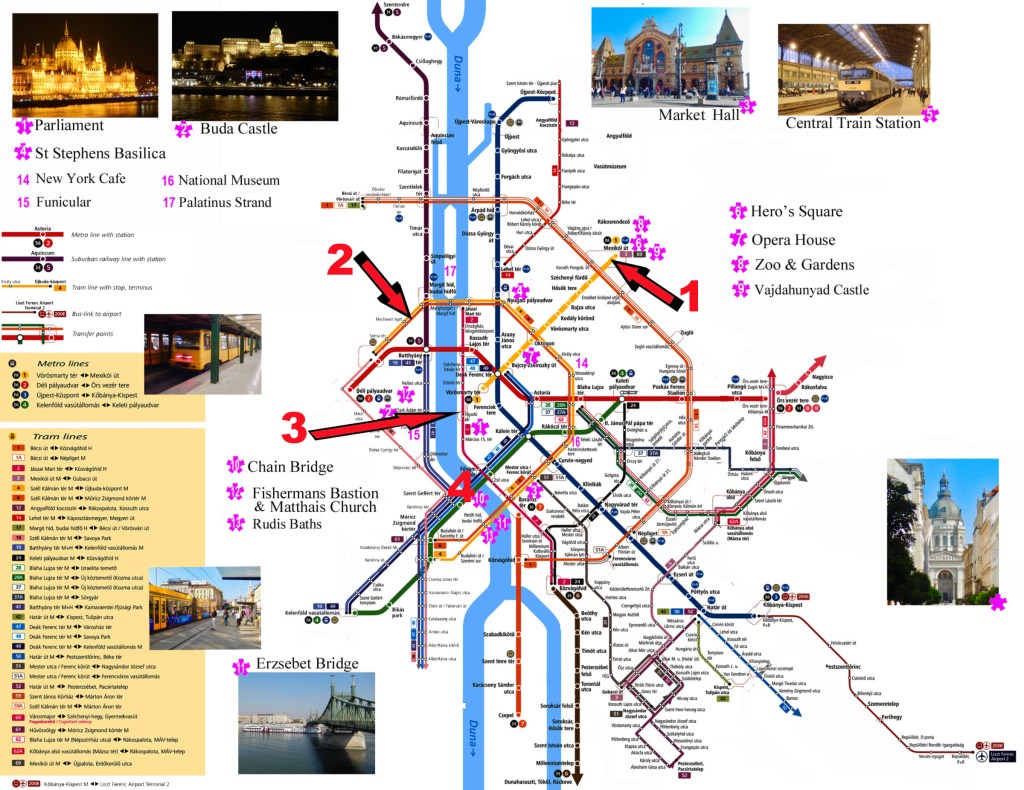
Red Number 1 On The Map – The Number 1 Metro/Subway Line The runs from west of the Octagon out to Hero’s Square is out of service for modernization. Buses have been added to the street above.

Red Number 2 On The Map – Tram lines 4 and 6 that circle half way round the city from west of Margit bridge to the Central Market now stop at the Octagon heading east. Bus service has been added to complete the route.

Red Number 3 On The Map – Tram line 2 that runs from Margit bridge along the east bank of the Danube to Pitofi bridge and beyond is now out of service. No substitute has been added.

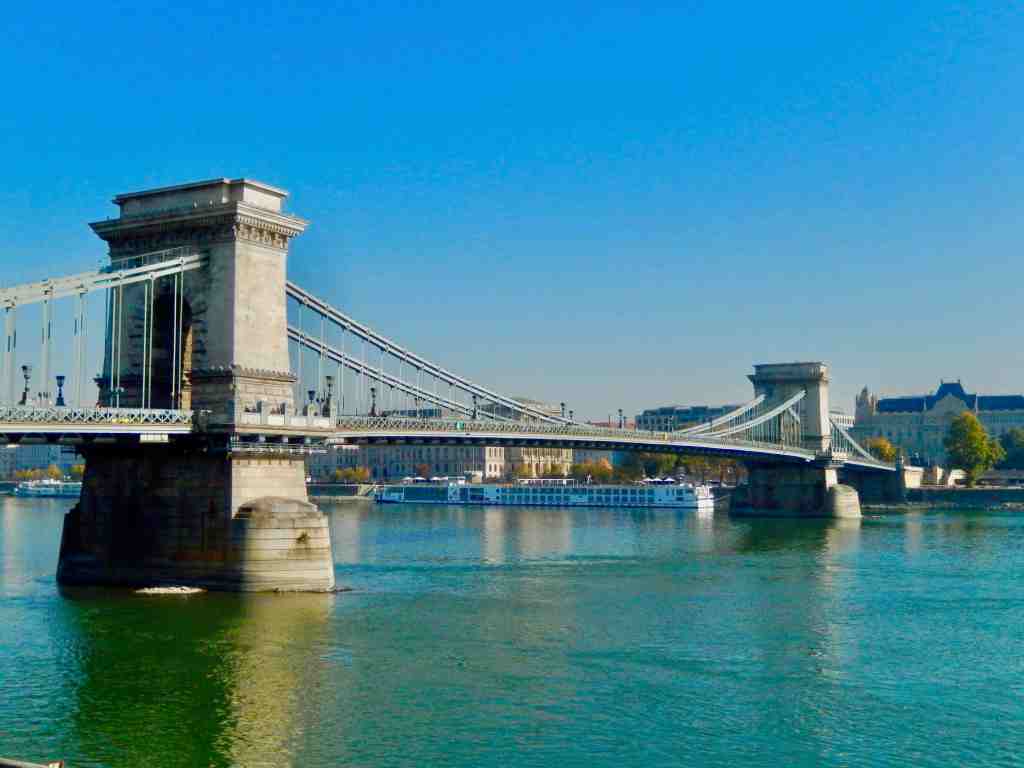
Red Number 4 On The Map – Chain Bridge in the middle of the city is also closed for a major restoration.

Chain Bridge

In addition there are a large number of other construction projects around the city. Buda Castle is impacted as well as the Annex at Matthais Church. Budapest Nyugati Train Station is also undergoing major restoration with many interior offices and services relocated as well as disruption of some service.

All of these changes may require some rethinking in getting around but be assured that Budapest is still amazing and ready to welcome guests.

*The Historic Line 1 Subway in Budapest: It is the oldest line of the Budapest Metro subway system. Line 1 has been in continuous operation since it was first inaugurated on Saturday, May 2, 1896, with only the underground railway system in London being in operation longer.

The Prague Astronomical Clock

Visiting Old Town Prague In The Czech Republic

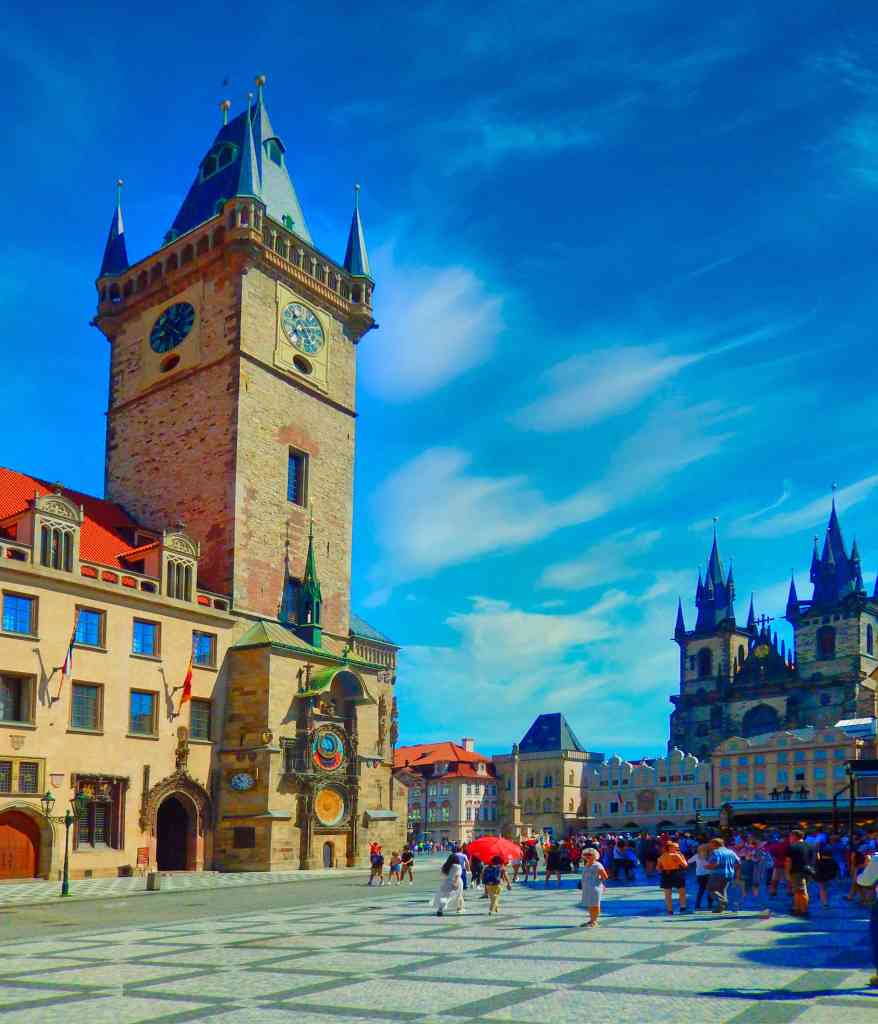
In the center of Old Town Prague on the face of the medieval town hall is a truly remarkable clock. Its origins date back to the year 1410 AD when the city was the capital of the Czech Republic. The Prague Astronomical Clock is the third-oldest astronomical clock in the world and the oldest one still functioning.

This wondrous clock features golden hands and a complicated set of ornate wheels that don’t just track the hours of a 24-hour day but has symbols of the zodiac tell the movements of the heavens. Every hour when the bells toll, windows open and robotic apostles, skeletons, and “sinners” begin a march around the clock.

While the Prague Astronomical Clock dates its creation to 1410 has been embellished and improved over time. In the early 15th century the clock showed only astronomical time and positions but by 1490, the clock location was decorated with Gothic style sculptures and an astronomical dial. In the early 17th century the mechanical figure of Death tolling the bell was added. The mid 19th century wooden carvings of the twelve apostles and a calendar disk with astrological signs added.

Today the Prague Astronomical Clock clock is believed to be the only one on earth that keeps sidereal time along with regular time. Throughout the ages different calendars all have had months based on the lunar cycle, but may define those cycles differently. The synodic lunar month is defined by the visible phases of the Moon. The length of a synodic lunar month ranges from 29.18 days to 29.93 days.

The sidereal lunar month is defined by the Moon’s orbit with respect to the stars. The length of a sidereal month is 27.321 days.

Because of the clocks long history there have been a number of legends associated with this clock. One suggests that the original clock designer was actually blinded by the Prague citizens that commissioned the clock to prevent him from creating a clock for another city. Another legend claims that once the Astronomical Clock stops running the Czech nation will be destroyed and the skeleton will confirm this curse by starting to nod his head.

The city of Prague is a patchwork quilt of architectural styles from gothic cathedrals Romanesque churches, Art Nouveau facades mixed in with Cubist buildings with perhaps more clock towers than any other city in Europe.