The Seven Day Caribbean Itinerary
If you are looking for a little bigger taste of the Caribbean than those three or four night cruises, the next step up is the week-long cruise. The major cruise lines typically divide their itineraries between east and west Caribbean. The east usually includes St. Thomas and the Dutch side of Sint Maarten and often Nassau or Freeport and sometimes Haiti (a private beach area). The west usually includes Grand Cayman and Cozumel with one or two additional ports. These can be Negril, Jamaica, Roatan Island Honduras, Costa Maya Mexico and sometimes Key West.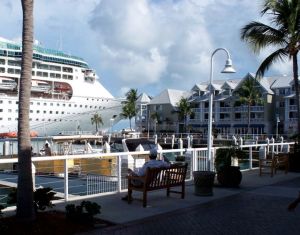
With a few exceptions, most of these ports have things in common: beaches, water sports, diving and snorkeling. If these are your interests, we suggest packing a couple of beach and swim outfits, and, to save money bring sunscreen and a mask and snorkel. Often buying an inexpensive mask & snorkel at home is cheaper than renting at a Caribbean beach.
Stopping in Cozumel offers some duty free bargains. Good buys include silver, onyx and tequila (see customs rules below). Be sure and pick up vanilla as well but avoid ones that include Coumarin and/or high fructose corn syrup. The cruise ships will offer tours including beach trips and snorkeling but if you are looking for a day at the beach our recommendation is to take a taxi to Chankanaab Beach Park and pay the park
admission. You’ll save a lot of money over the tour cost and can go and return when you want. It’s not far and there are usually taxis waiting at the entrance to take you back to the ship. There is a bar, food, snorkeling rental and beach chairs and the water is great. But to get to the reefs it’s a bit of a swim out.
There are two cruise ship areas in Cozumel. One is downtown and only a short walk to shopping and Senior Frogs. The other is a bit north (actually two piers) with shopping areas dedicated to cruise passengers at each. There is also a smaller water front version of Senior Frogs which has a good snorkeling area right next to it. Be forewarned if your group includes teenagers. One of the local pastimes is pouring tequila into young Americans, so keep a watch. Cruise ships used to stay until late at night but most now leave much earlier in the day. We believe it was the teen passengers and out-of-control alcohol that caused this change.
Grand Cayman is the other usual stop on these itineraries and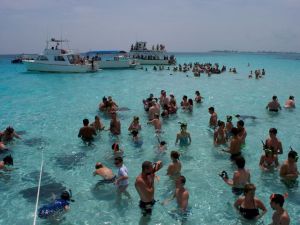 offers probably the better duty free shopping. It is a tender port so you have to take boats in from the ship which drop you off right in the center of Georgetown where there is great shopping. Grand Cayman is dotted with beautiful beaches (one called Seven Mile Beach), terrific snorkeling and diving and many American chain restaurants.
A piece of advice here regarding money. The Cayman dollar is permanently fixed to the US dollar with the exchange rate being one Cayman dollar equaling US$1.25. This makes everything 20% more expensive than it first appears. Be sure to inquire if a price is in US or Cayman dollars to avoid overpaying.
Our recommendation for a great day is a tour to “stingray city”. Pick one that visits the stingrays and also a coral reef for snorkeling. It is advisable to book through your ship as it is a long day and getting back can get dangerously close to missing the departure time for the next port.
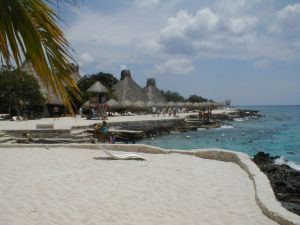
Costa Maya is a Mexican port and a new resort area that the government has developed out of the jungle. When we first visited fifteen years ago it was a pier, a half dozen tourist shops, a bar and an undeveloped beach area. It has now grown into a town, a number of new resorts and a nicely developed beach area.
Roatan is another stop that is often included on seven night cruises and is also very popular with ex-pat Americans and retirees. It has changed a lot over the last decade or so. When we first visited, the ship docked at the Port of Roatan and we walked into the typical Honduran town to shop. Today the ships dock at the Cruise Ship Terminal with its attached shopping village which offers the same selection of jewelry stores and souvenir shops as dozens of other cruise ports.
Key West is our favorite stop with its’ shops and restaurants and an interesting small aquarium only a short walk from the pier. There is also Mel Fisher’s Atocha gold museum and don’t miss the art galleries. Unfortunately cruise ships must sail well before sunset so you will miss the sunset celebration at Mallory Square. (The large cruise ships would block the view of the setting sun) which is a daily celebration in Key West.
Nassau is a port where we would recommend going over to Paradise Island and visiting the Atlantis resort. There is a daily admission fee to enjoy the facilities and most cruise ships offer tours there as well. In addition you can walk through town and shop for souvenirs, duty free watches, jewelry, clothes and liquor (see customs rules below).
Bahamas private island stop. Many cruise lines operate exclusive private islands where they anchor and offer a day of beaches, barbeque, water sports and more.
St. Thomas is the centerpiece of most Caribbean cruises. It is a U.S. possession with world-class beaches, historic sights and true duty free shopping. The cruise ships dock at either the Sub Base east of Charlotte Amalie or The West Indian Company Dock next to Havensight, just to the west of town. Getting into town from the Sub Base will require a taxi (or a tourist bus unique to St. Thomas) but there is a nice walking trail along the water from Havensight which goes thru the shops of Yacht Haven and into town.
There are plenty of things to do on this popular island like: (1) From Havensight take a cable car up to Blackbeard’s Castle Resort for a drink and the view. (2) Go into Charlotte Amalie and sit in the Greenhouse Bar on the waterfront where John Updike wrote a short story for The New Yorker (In a Bar In Charlotte Amalie). (3) Walk down Creque’s Alley where the Mamas and Papas essentially got their start as a musical band (immortalized in the song Creque Alley). (4) Stroll the ten blocks of Kronprindsens Gade and do some shopping or visit the shops and galleries in the alleys like Drakes Passage. (5) Take a trip to the far side of the island to Megan’s Bay, which is consistently named as one of the world’s ten best beaches. (6) Visit Coral World, especially if you have younger children with you.
Because of treaties from the time the United States purchased the Virgin Islands, St. Thomas and St. Croix feature some of the best “duty free” shopping in the islands. The best duty free buys are European goods like Lladro, Rosenthal, Rolex, Dior, L’Occitane as well as duty free liquor where each person can bring back 5 liters duty free to the U.S. (see customs information below).
Cruise ships visit Sint Maarten which is the Dutch side of an island that includes two countries. The north end of the island is the French part or St. Martin. Most cruise ships dock on the Dutch side at a pier area that includes a large shopping village. The island has a number of great beaches along with good diving and
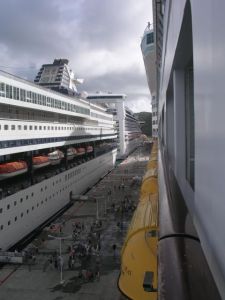
snorkeling locations but they do require a tour or taxi to reach most of them.
To get into the main town of Philipsburg you will need to take a tour bus or taxi. You can also take a taxi over to the French side of the island, which features the smaller and more relaxed town of Marigot with a number of restaurants and cafes featuring an authentic French flavor. There are waterfront restaurants known locally as lolos. These small, vibrant eateries offer a full range of local specialties in an authentic setting that maintains an island market feel. Be careful to allow plenty of time to get back to the ship. With four or more cruise ships in port on some days, afternoon rush hour taking people back to the pier can turn into slow bumper to bumper traffic. Again, this is the major reason to take advantage of ship tours as you are guaranteed not to miss the ship.
Photos from top to bottom: Ship docked in Key west, beach at Costa Maya, Stingray City Grand Cayman, Cruise Port Roatan, Nassua street and Atlantis resort, pier Sint Maarten.
DUTY FREE SPIRITS
There is a lot of confusion about bringing back duty free liquor and how much and from where. The following is from the web site of U.S. Customs (we would also suggest to print this and take it with you, especially if you plan on maxing out the allowance as we have had encounters with Custom Agents that aren’t sure of the rules):
How much alcohol can I bring back from a U.S. insular possession (U.S. Virgin Islands, American Samoa, or Guam) duty-free?
The state you arrive in determines the amount of alcohol you can bring back for personal use.
As long as the amount does not exceed what that state considers a personal quantity*, Customs and Border Protection (CBP) will allow you to enter the U.S. with up to five liters of alcohol duty-free as part of your $1,600 exemption – as long as at least four liters were purchased in the insular possession, and at least one of them is a product of that insular possession. Additional bottles will be subject to a flat duty rate of 1.5% and subject to Internal Revenue Service taxes.
Please note, only one liter of alcohol purchased in a cruise ship’s duty-free shop is eligible for a duty-free exemption, although if at least one bottle purchased on board is the product of an eligible Caribbean Basin country**, then you will be allowed two liters duty free. If you buy five liters of alcohol in – say – the U.S. Virgin Islands (USVI), and one of them is the product of the USVI, then you would have reached your duty-free limit. Any additional purchases made on board in a duty-free shop would be subject to CBP duty and IRS tax.
If you buy four bottles in the USVI, one of which is a product of the USVI, then you could purchase one additional bottle from the onboard duty-free, and it would be eligible for duty-free entry.
* Most States restrictions on the amount of alcohol that can be brought into that State apply only to residents of that State. Usually people transiting a state are not subject to those restrictions, but sometimes regulations change, and if this is a matter of utmost importance to you, you can check with the state Alcohol Beverage Control Board where you will be arriving to find out what their policies are.
** Most Caribbean Basin countries are considered beneficiary countries for purposes of this exemption. (Anguilla, Cayman Islands, Guadeloupe, Martininque and Turks and Caicos are not eligible)
Looking For Something Special? Search this site to find travel inspiration, tips and more.
 Getting ready for a trip can be very stressful. There are endless things to remember to do before you leave home and lots of things to remember to pack. The latter can be particularly important because sometimes, when traveling, you cannot find the items you need or they are very expensive. This is where lists become helpful.



 under 2,000 passengers to between 5,000 to 6,000 and getting bigger each year. Depending on the cabin choice and cruise line selected, prices per person range from just over $100 to thousands of dollars.
 laundry, drink packages along with parties, loyalty lounges, priority boarding and more. Our first cruise which was with our children was with Royal Caribbean and we quickly discovered how family oriented they are with a great kids program as well as family activities. We have cruised a number of times with Carnival, initially because their pricing is more economical. Generally we find their passengers are primarily younger singles and couples who tend to party all day and into the night. More recently we find ourselves cruising more often with Celebrity. We think they cater more to people looking for longer cruises to more different locations and that they represent, we believe, a notch up in service. Royal and Carnival are both in the Caribbean year round while Celebrity sails only in the winter season. Celebrity also offers more, longer cruises than the others.
 on time available, budget and what your interests are.


 The Intentional Travelers