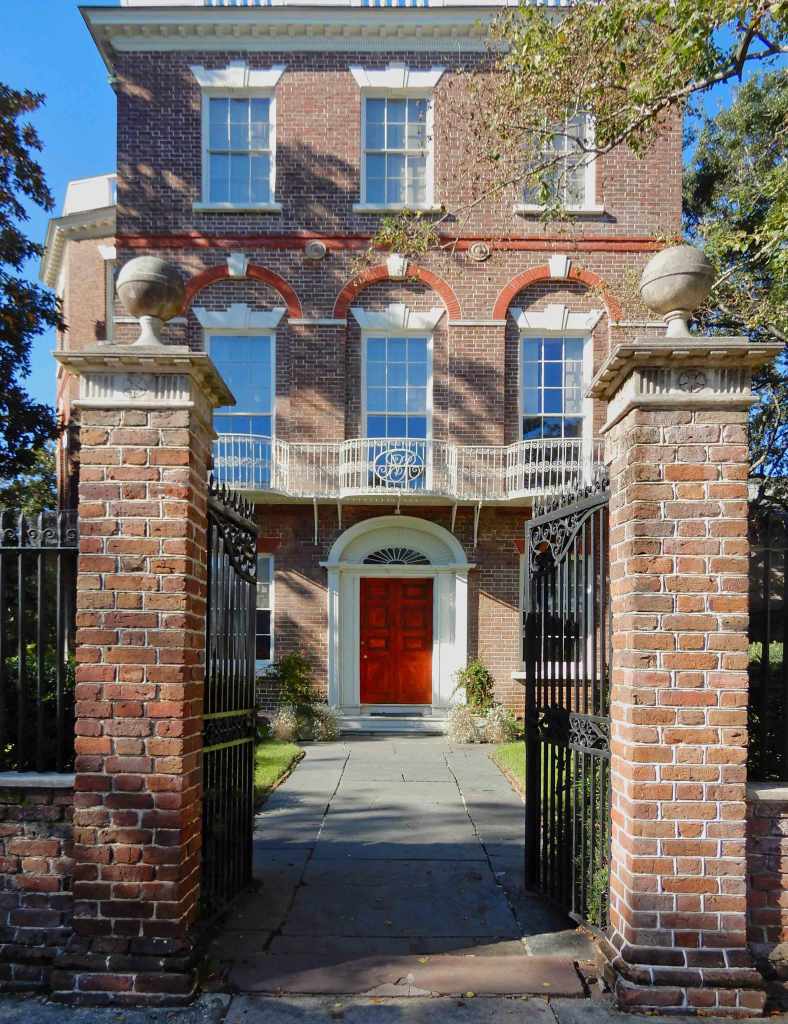
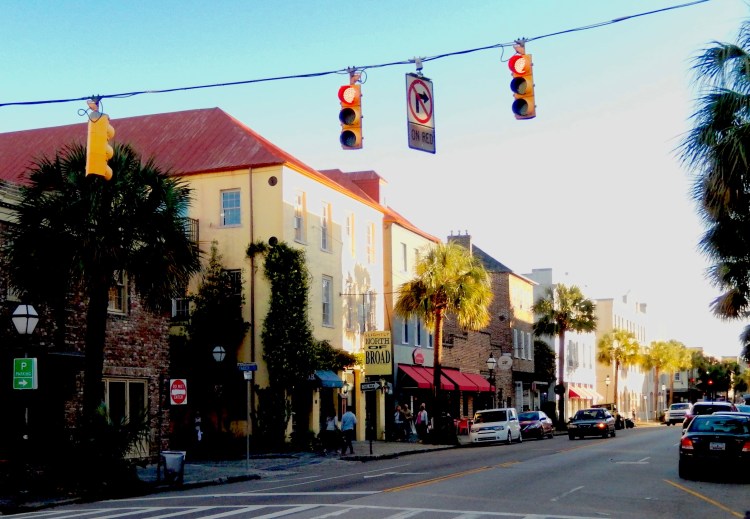
It has been a number of years (actually a few decades) since we last visited and, while it is hard to believe that a city, which is over two and a half centuries old, can change a lot in that time, it really has and much for the better.
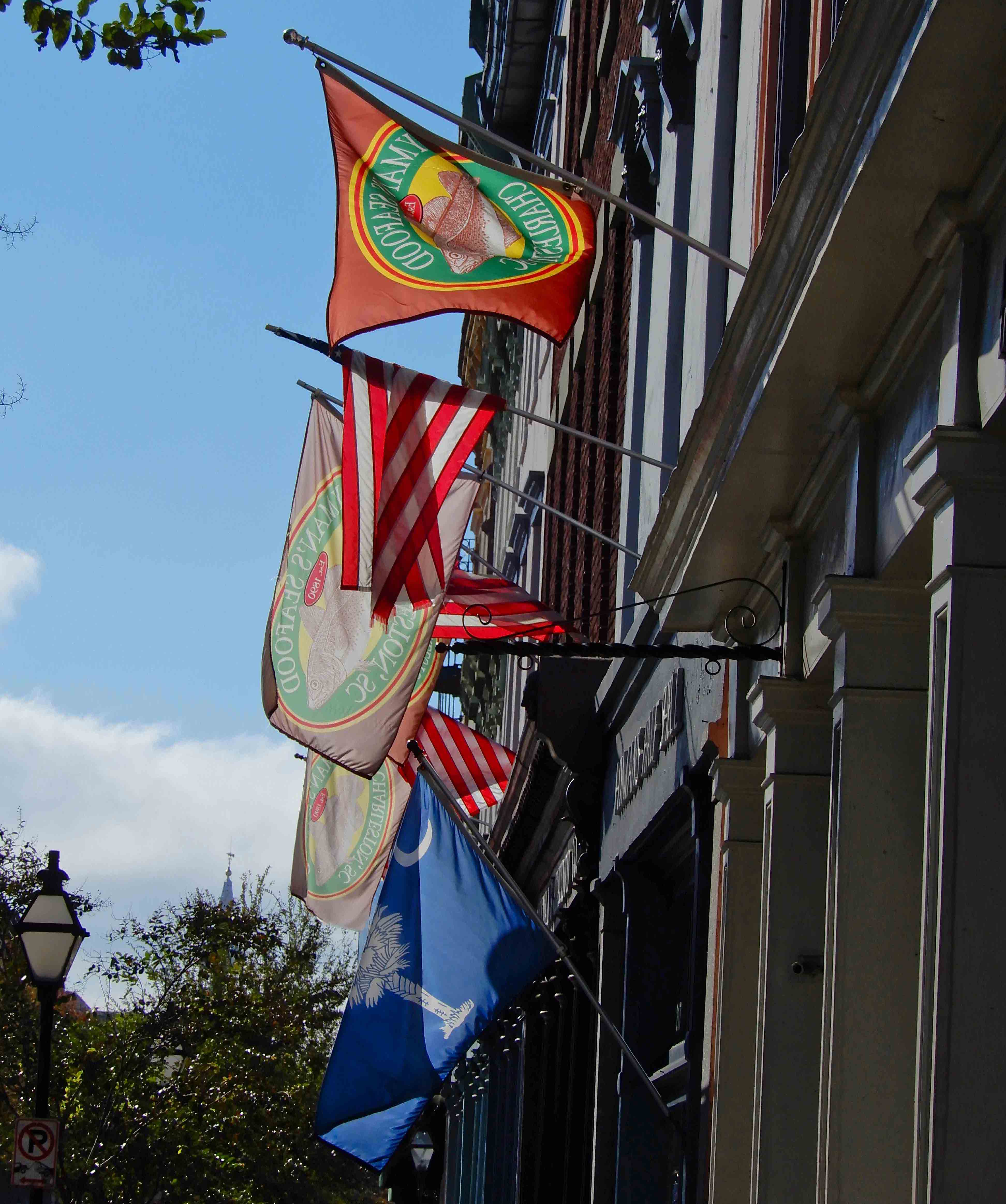
The restaurant scene here has simply exploded. A wide range of culinary styles are offered with special emphasis on the South Carolina “Low Country” recipes of the region. Seafood is featured in classic Southern dishes like shrimp and grits, oyster stew and she-crab soup.
There are a large number of high-end retailers that have moved onto King Street creating a unique shopping venue in the historic district. Another mecca for tourists and visiting shoppers is the City Market on East Market Street. The market stretches for a number of blocks east from Meeting Street with both indoor and open-air buildings. Stalls include local food sellers, crafts, jewelry, art and a limited amount of clothing. There are also a number of stalls featuring traditional Gullah hand-woven sweet-grass baskets which are unique to the region.
Major places of interest when visiting Charleston include:
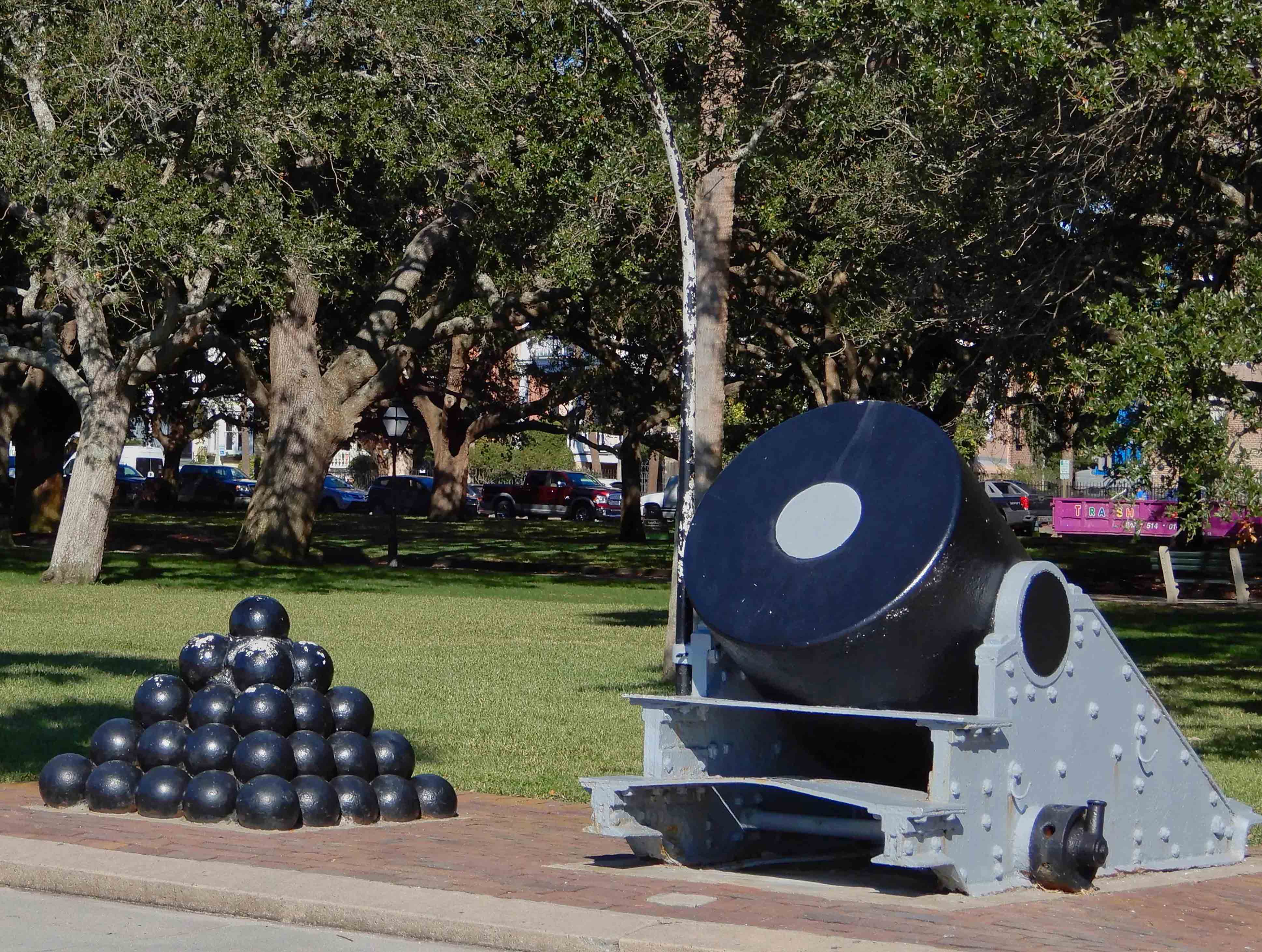
The Battery
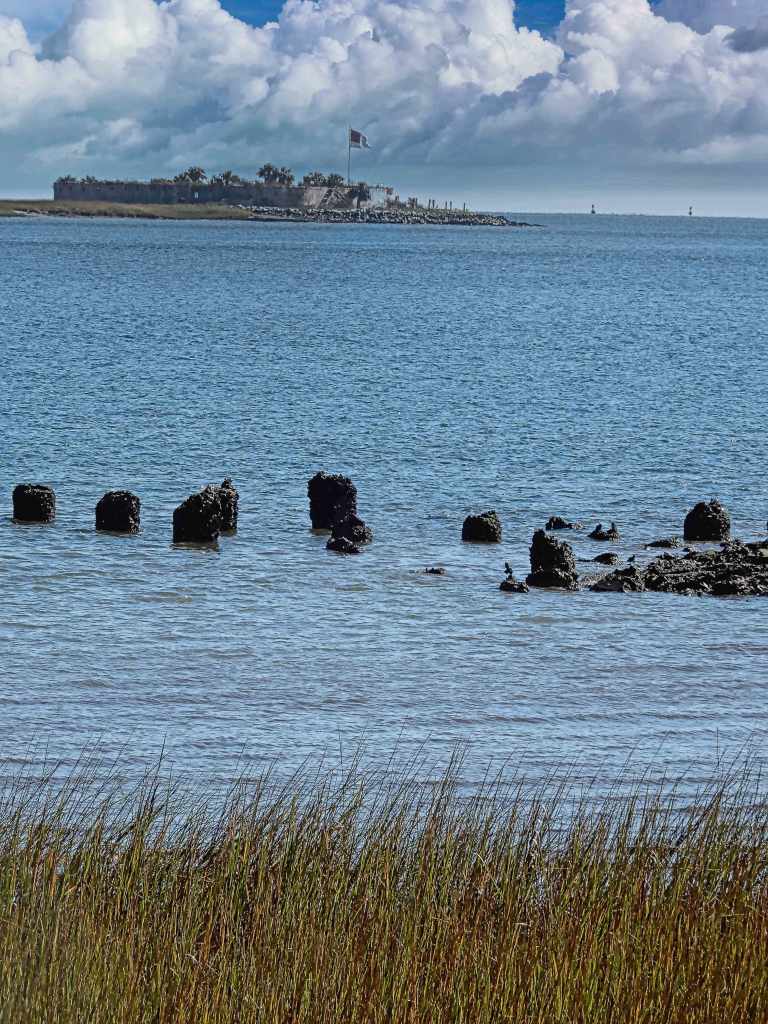
Fort Sumter
The Battery: This is a historic seawall and promenade that runs along the waterfront downtown. It offers beautiful views of the harbor and the iconic Ravenel Bridge along with some amazing colonial homes.
Fort Sumter National Monument: This historic site is where the first shots of the Civil War were fired. Visitors can take a ferry out to the fort and explore the museum and exhibits.
Rainbow Row: This is a row of colorful historic houses on East Bay Street that are a popular photo spot for tourists.
Magnolia Plantation and Gardens: This historic plantation offers tours of the house and gardens, as well as nature trails and a petting zoo.
The Gullah are the descendants of African slaves of various ethnic groups who live in the Low-Country regions of Georgia and South Carolina, in both the Coastal Plain and on the Sea Islands. They developed a Creole language, the Gullah language, and a culture rich in African influences which makes them distinctive among African Americans.
The USS Yorktown Museum
The USS Yorktown (CV-10): This famous aircraft carrier is currently located in Charleston. After it was decommissioned was been turned into a museum open to the public for tours. The Yorktown saw action in the Pacific during WWII and was initially to have been named Bonhomme Richard, she was renamed Yorktown while still under construction, after the aircraft carrier USS Yorktown (CV-5), was sunk at the Battle of Midway.
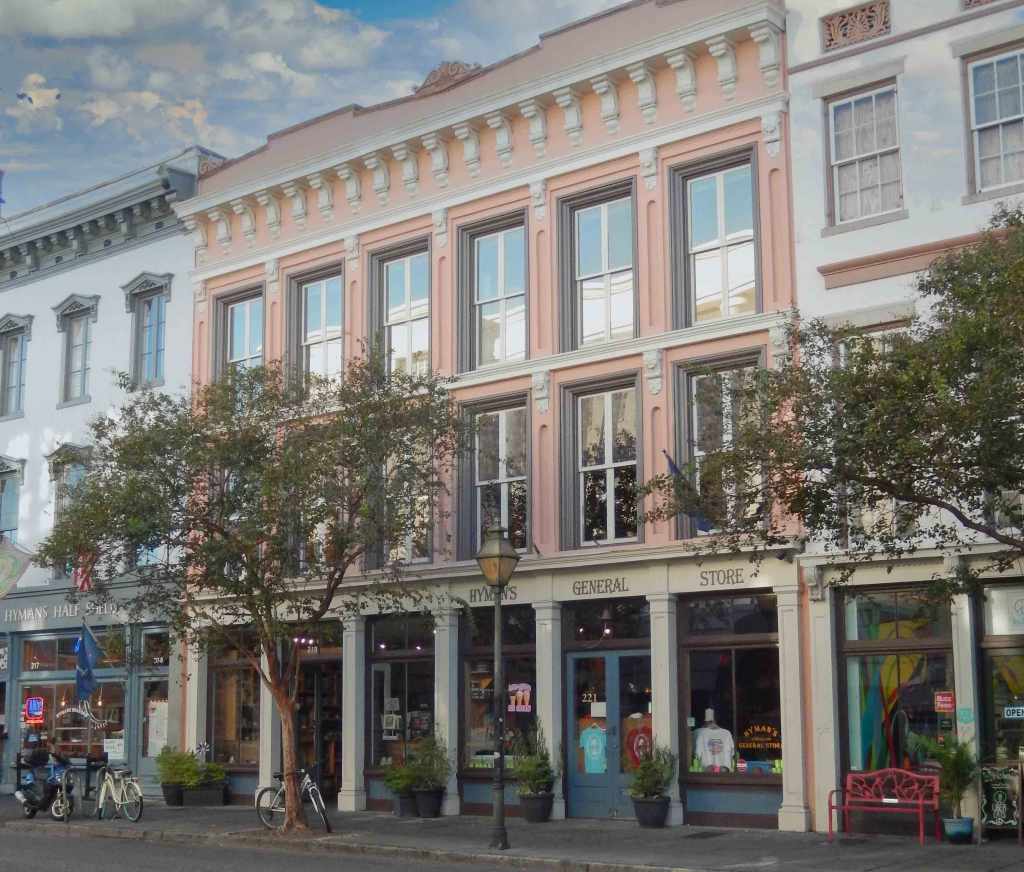
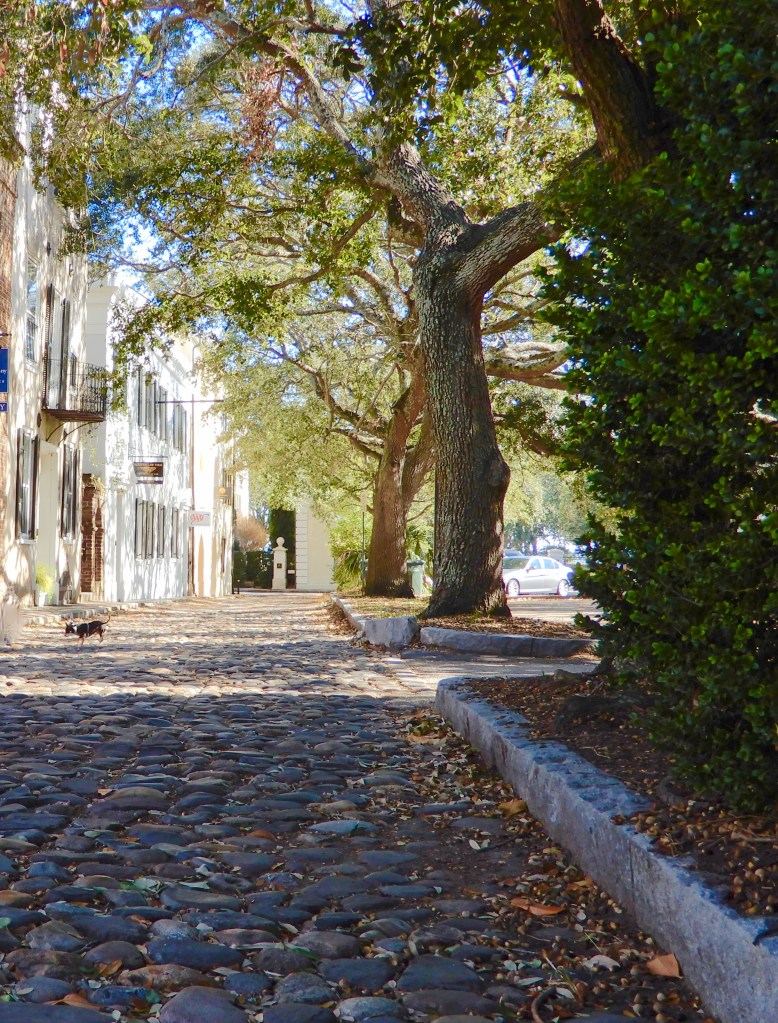
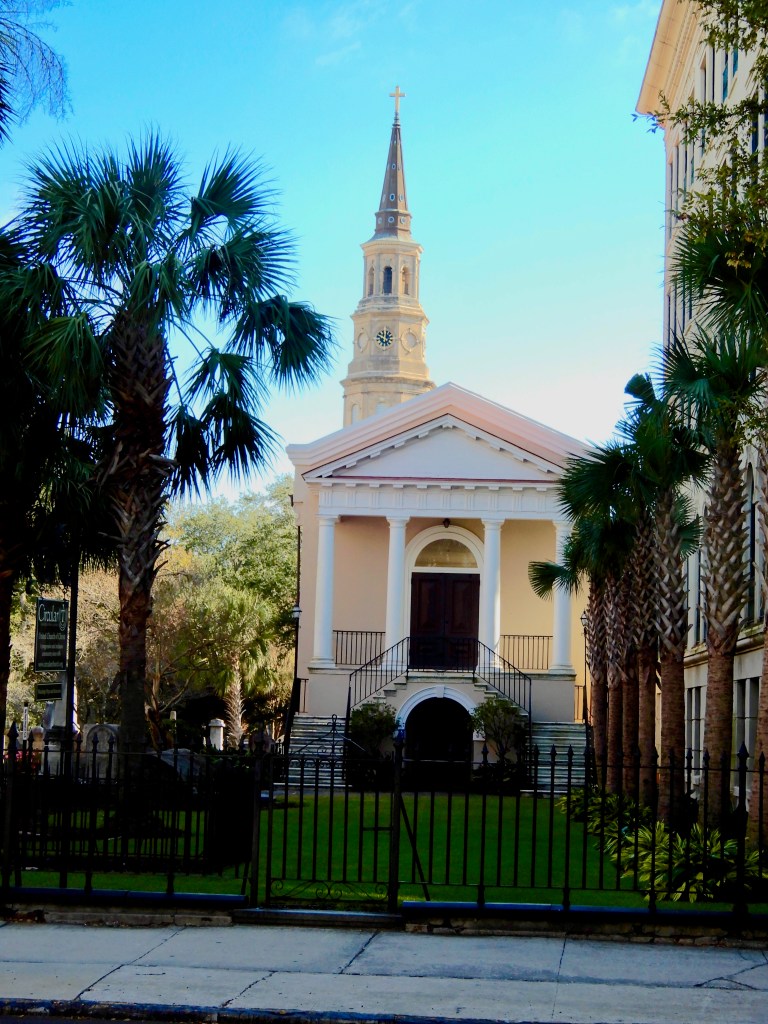
Other big draws to Charleston are the Colonial and Federalist architecture and the revolutionary and civil war historic sites. Good ways to see the town are with narrated horse-drawn carriage tours operated by several different companies or walking tours which can be self-guided or with a tour company.
For accommodations consider a B&B located in a historic house. One recommendation is the Barksdale House Inn, a beautiful bed and breakfast located on George Street in the historic district.
Also don’t leave town without picking up pralines at Savannah’s Candy Kitchen of Charleston or cookies from Byrd’s Famous Cookies.
Janet and her husband, Paul had just arrived in Switzerland one afternoon. Janet laid down for a rest while Paul went out to find a coffee shop. Two hours later Janet woke up to find that Paul hadn’t returned. She went down and checked at the front desk but nobody had any idea where he was.
It wasn’t until the next morning, with the help of the hotel, that Janet learned that he was in a hospital.
Paul had suffered a stroke on the street shortly after leaving the hotel and was now in intensive care. The police at the scene tried to access Paul’s cell phone but it was locked. He had his passport on him so they contacted the U.S. consulate. At the consulate they reached out to the police in Pauls town, who sent a patrol car to the address in his passport but nobody was there and there were no neighbors around.
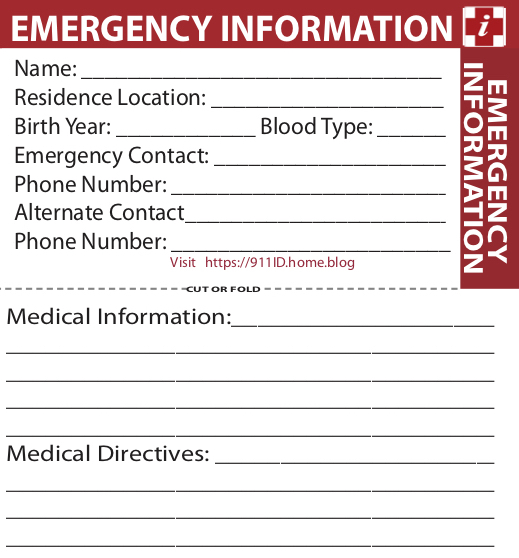
Had Paul been carrying a simple emergency ID card that included Janet’s cell number somebody would have contacted her within hours of his stroke.
For a couple of dollars and a few minutes filling out an ID card most of the anguish suffered in the story above could have been avoided – again, what’s in your wallet?
The Intentional Travelers have for years offered an inexpensive Emergency Identification Card in either hard copy form or as a downloadable document in our shop on Etsy. To get yours simply click HERE.
In addition to Emergency ID cards The Intentional Travelers also offers free Living Wills and Advanced Medical Directives you can download, fill out and print by visiting our web location here 911ID.home.blog
International Medical Care
In addition to the story above things got even worse. While Paul and Janet had both Medicare and supplemental health insurance their coverage didn’t extend to areas outside of the United States. Because they hadn’t purchased additional international travel insurance the medical bills from Switzerland far exceeded US$100,000. For additional information on international travel insurance click HERE.
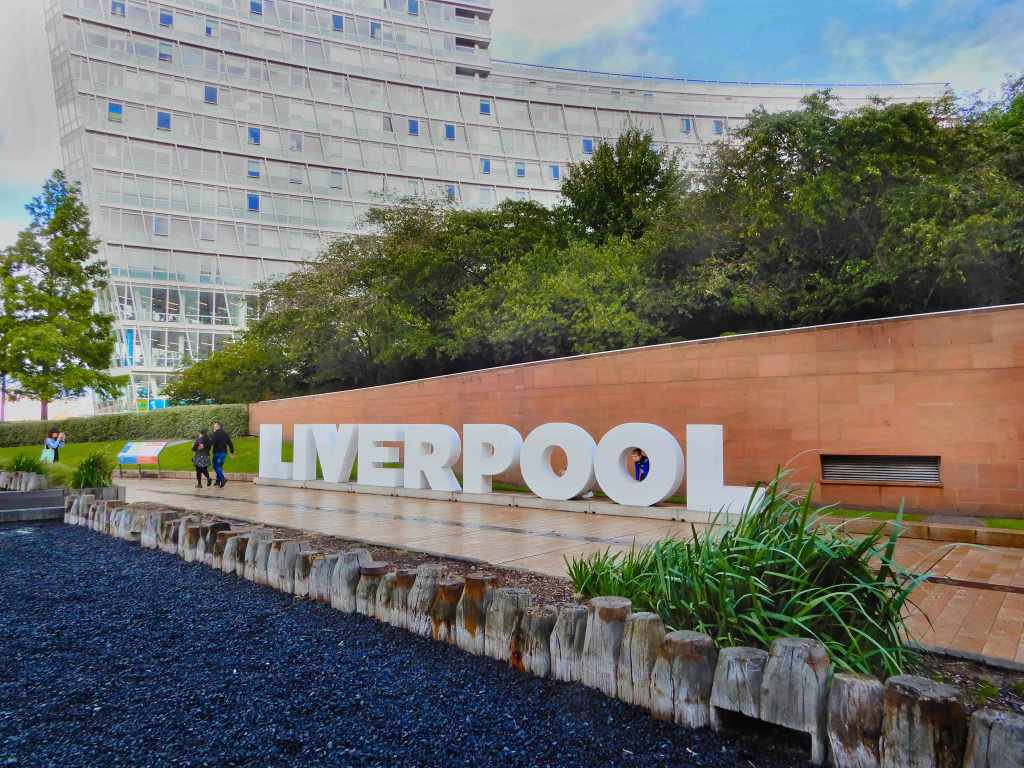
Liverpool is a remarkable city located in the northwest of England, along the eastern side of the Mersey Estuary. It is the fifth largest metropolitan area in the UK and is known for its rich cultural heritage, music scene, football clubs, and historic waterfront.
The Beatles stroll near Liverpool’s waterfront
Where Your Ship Docks
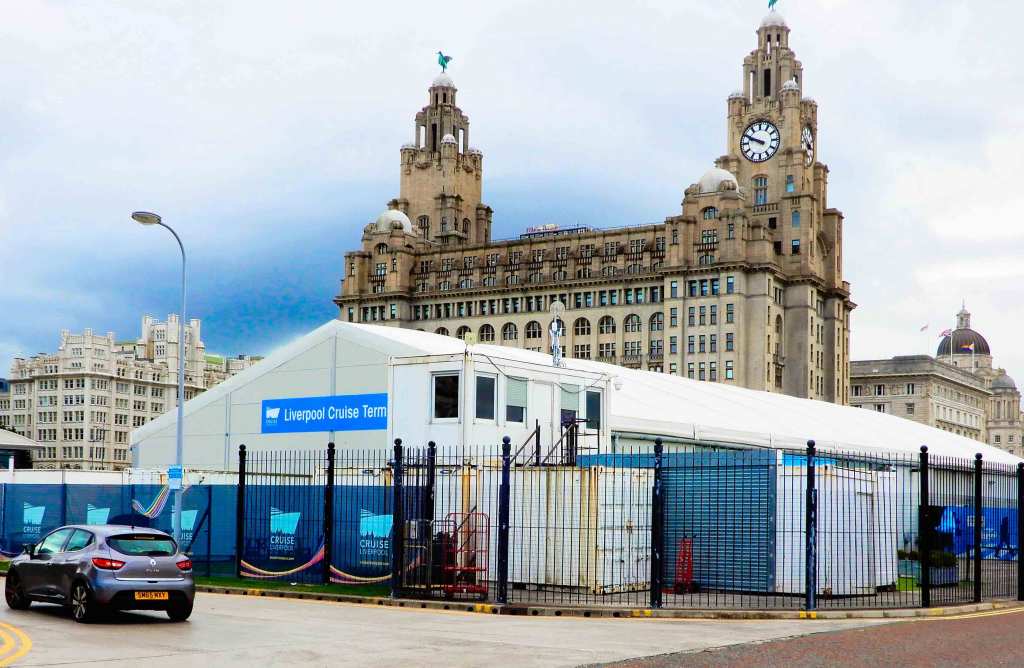
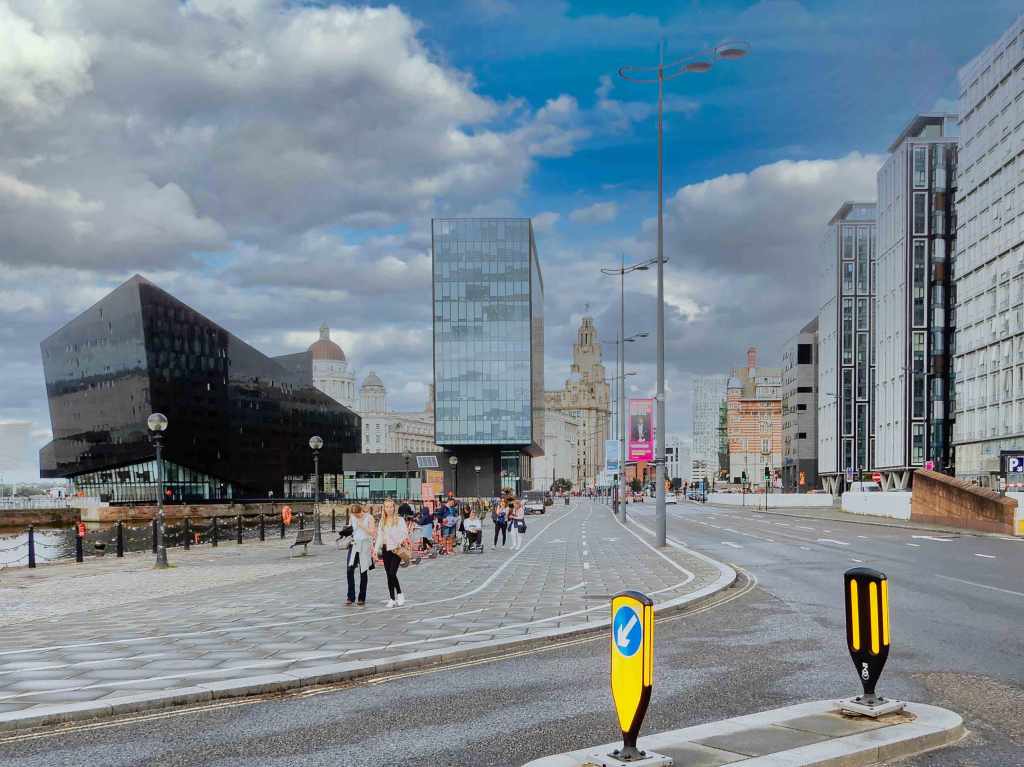
There are cruise ship docks right on the downtown waterfront. Because the water level changes there are floating platforms used to access the ships gangways. Depending on the water level there can be some steep ramps getting up to street level. There you’ll find a reception tent for cruise passengers which includes public facilities.
The River Mersey, which runs through Liverpool, is affected by tides as it flows into the Irish Sea. The tide levels in the River Mersey can vary throughout the day and can also be influenced by the phases of the moon.
Wheelchair Accessibility
Disembarking – This port has a developed cruise ship pier but the ease of disembarking varies by the individual ships gangway designs. The cruise pier disembarks right into downtown. For passengers using wheelchairs there can be changing ramp heights at times with steep inclines to deal with in both locations.
Gates at China Town
Transportation
Liverpool is an easy town to walk in with a number of wide walking malls for pedestrian shopping. There is also convenient and inexpensive public transportation with an adult single day bus pass starting at £5.00 for tickets that can be used at any time of day, on any bus service in Merseyside, no matter who operates it. For routes and additional transportation options Liverpool has an excellent website HERE.
Remember, you’re in England so look right before crossing streets.
Currency
England is back on the English Pound and generally Euros and Dollars are not accepted. ATM machines are readily available and most credit cards are welcome.
Attractions
The Beatles Story: This museum tells the story of the famous band, The Beatles, who originated from Liverpool and have become local heros.
The Cavern Club: The club is still open and is a popular local attraction. The original club, where The Beatles famously performed in the 1960s, was closed in 1973 but a replica club was built on the same site and opened in 1984 and is still a thriving music venue today and is usually open for tours in the daytime.
Liverpool Cathedral: A stunning example of Gothic Revival architecture and is the largest cathedral in Britain. Its construction began in 1904 and was completed in 1978. The cathedral was designed by architect Giles Gilbert Scott, who also designed the iconic British red telephone box.
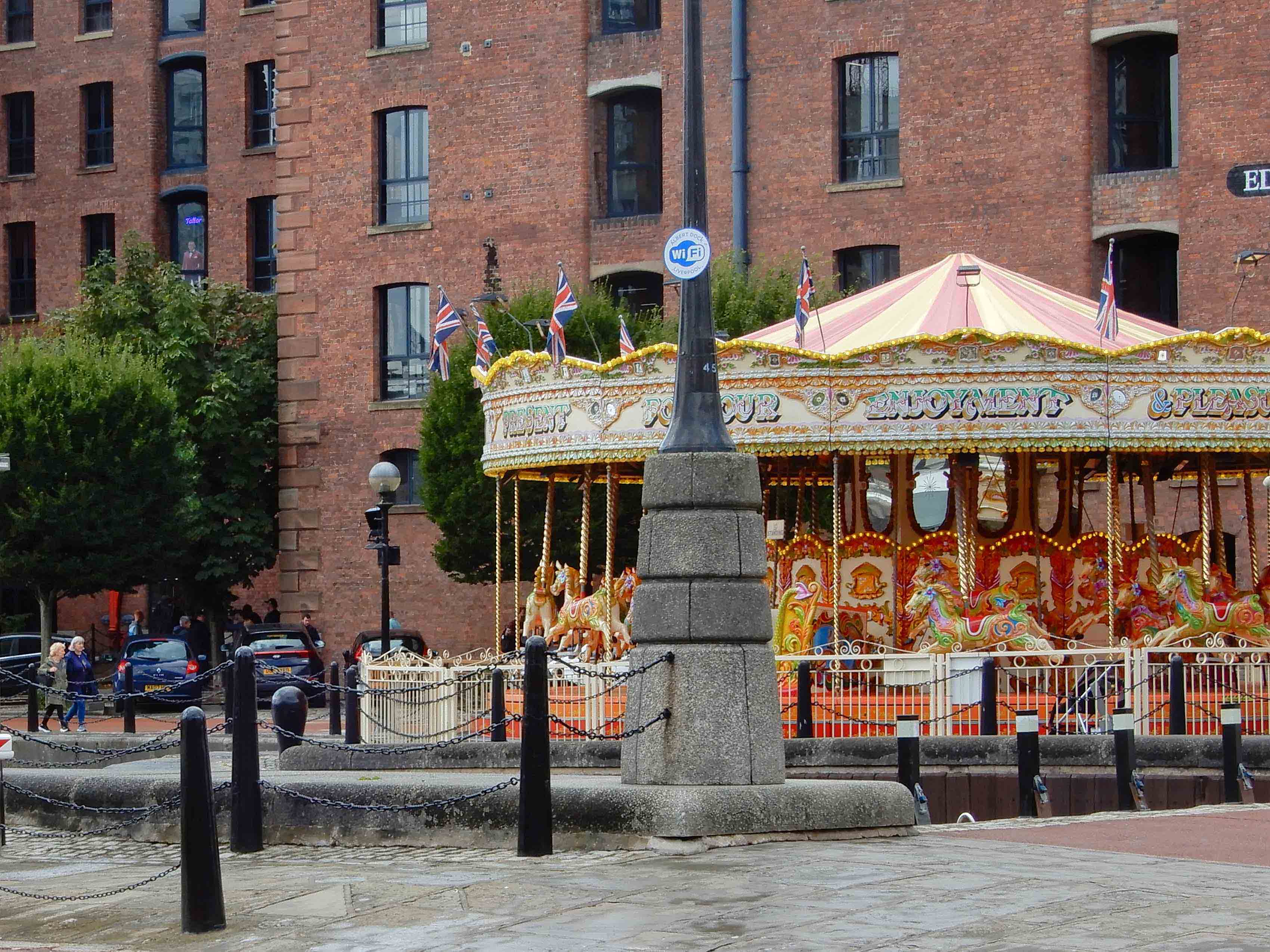
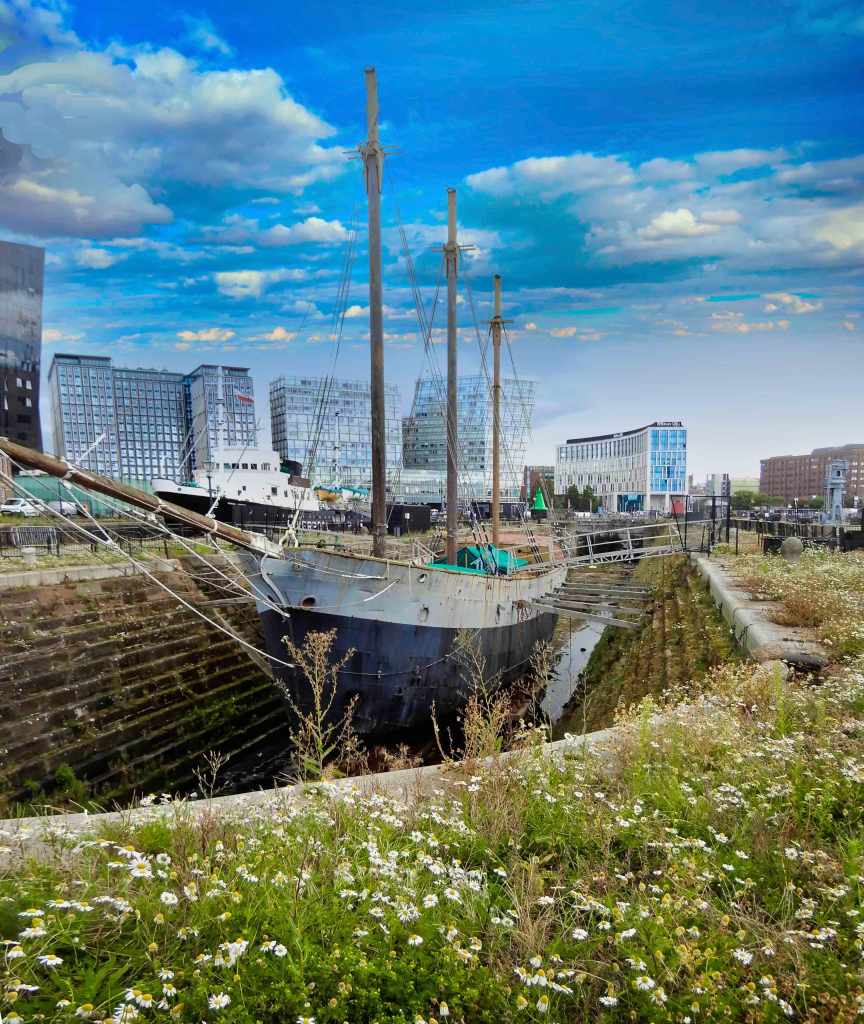
Albert Dock: This historic dock area is only a short walk up the waterfront from the cruise dock past the statue of the Beatles. It has been transformed into a popular waterfront entertainment destination with restaurants, shops, and museums. It features a carousel, some historic ships and a couple of museums.
Merseyside Maritime Museum: This museum explores Liverpool’s maritime history and includes exhibits on the Titanic and Lusitania.
Anfield Stadium: Home to Liverpool Football Club, this stadium offers tours for fans to explore the grounds and learn about the team’s history.
Walker Art Gallery: This art gallery features a collection of European paintings, sculptures, and decorative arts.
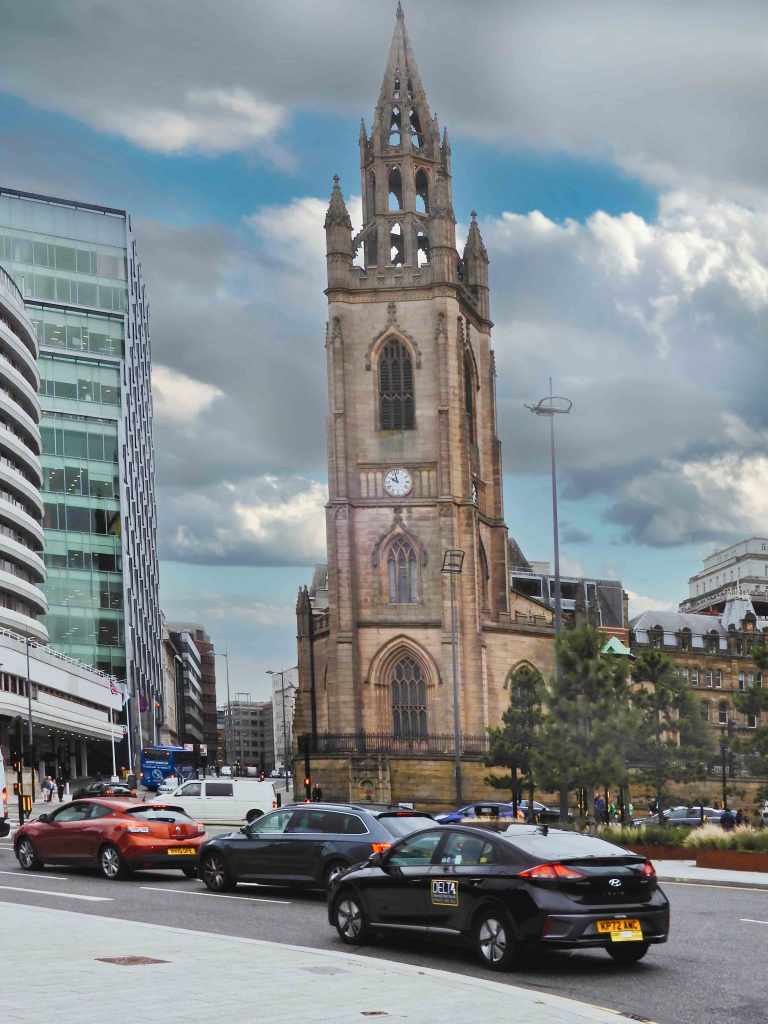
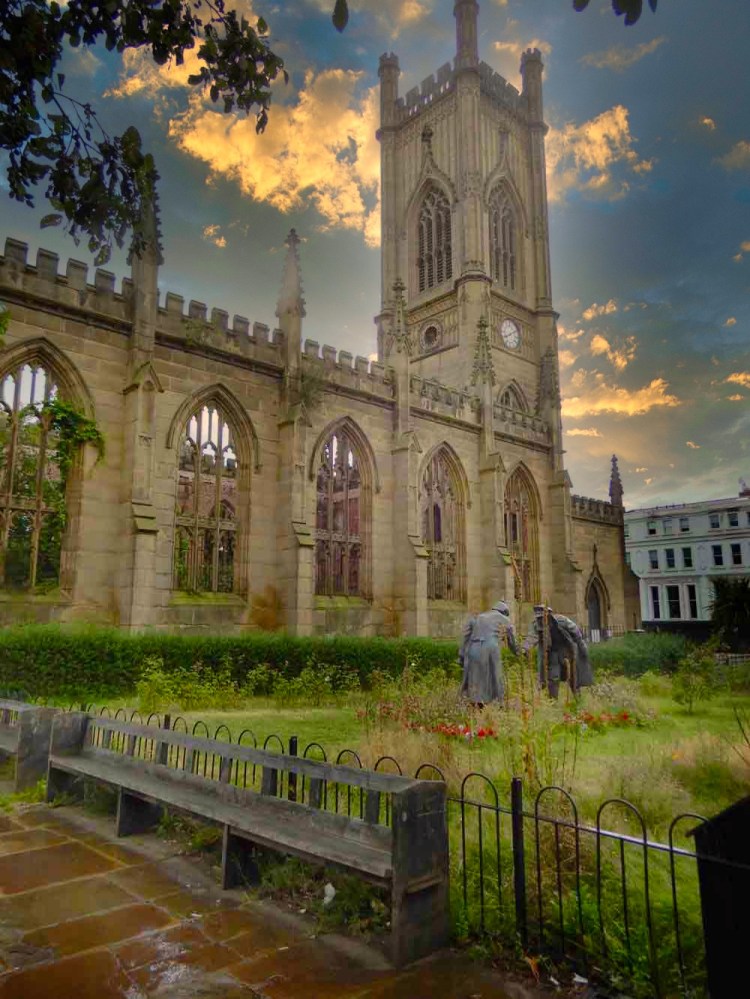
The Bombed Out Church: Officially known as St. Luke’s Church, it is a former Anglican parish church that during the Second World War, was partially destroyed by German bombing in 1941, leaving only the outer walls and tower standing. Today, the church is preserved as a memorial to those who lost their lives during the war.
The Bombed Out Church
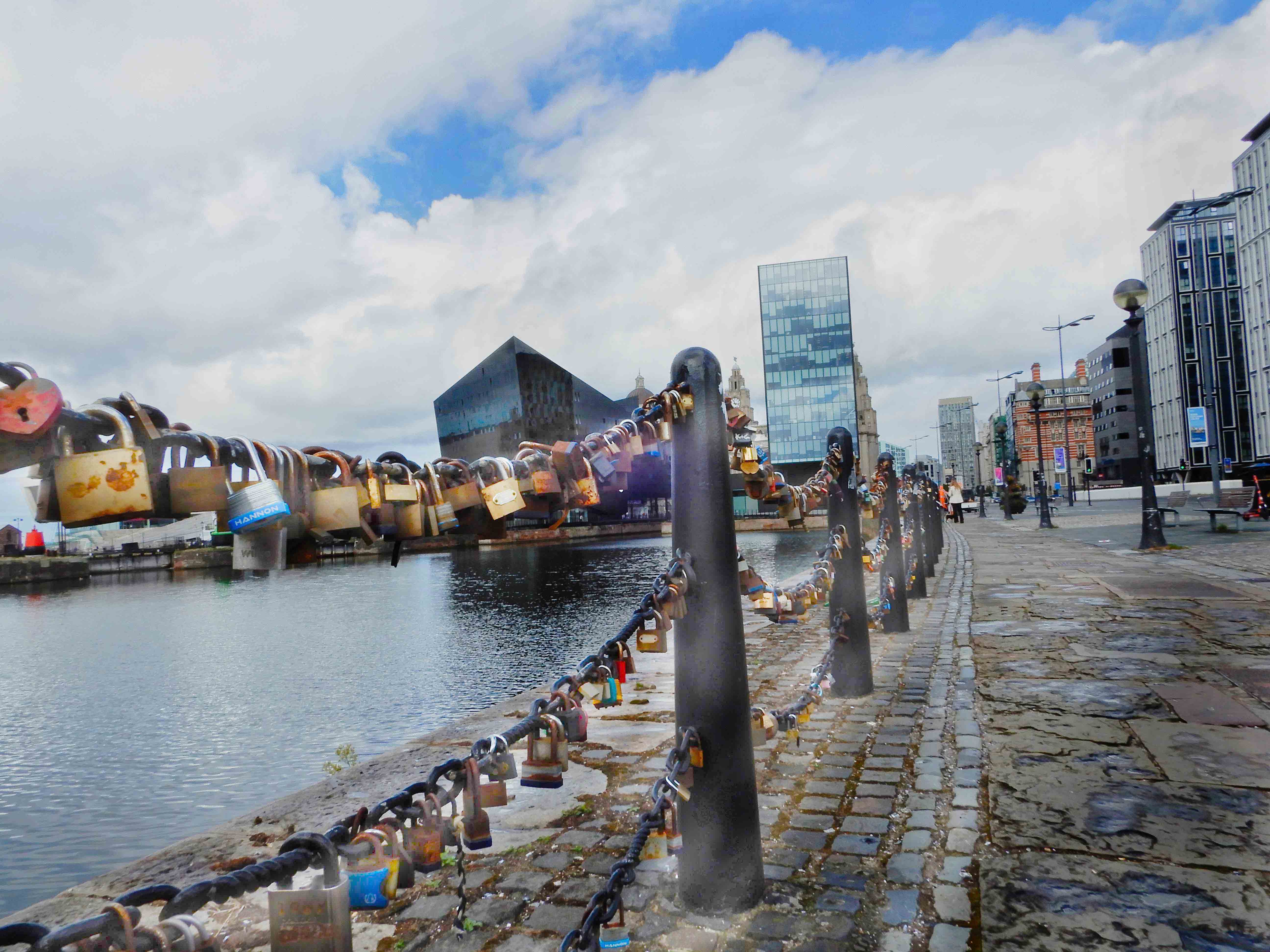
And yes, lovelocks are a major part of the waterfront in Liverpool too.
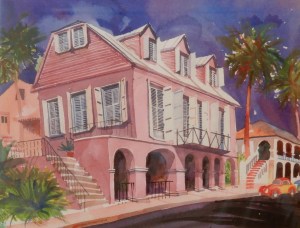
A few years ago at an outdoor art fair there was an artist showing watercolors of scenes in the Caribbean. One caught my eye as it was an old house that I thought I recognized and I asked if it was on St. Croix. She said yes and that she had lived there for a while. I bought it. Not long ago we made a trip back to St. Croix and without any real intent I found myself across the street from what I thought was that same old house.
I can’t be sure it is the house as much of the house has probably changed over time and that architecture is common in the Virgin Islands, but it didn’t stop me from thinking about these sort of properties and how the island has failed to protect much of its history.
This house sits one street back from the sea on King Street in Frederiksted, St. Croix and is in an advanced state of disrepair. I have spent a lot of time in St. Croix over the past thirty-five years and can remember seeing this particular house a great number of times. I can never remember it being worthy of a spread in Architectural Digest but mostly it was one of the better properties on the street.
A couple of devastating hurricanes have swept across St. Croix doing a significant amount of damage all across the island but the condition of this particular house appears more the result of time and neglect than those storms. The watercolor, which I believe was painted between ten to twenty years ago, shows it in much better condition than now.
Looking at this house from a historical perspective I am sure that a few hundred years ago this was a large and elegant townhouse in a thriving Dutch colonial town. Virgin Island towns were wealthy places with sidewalks covered with brick colonnades to protect people from the tropical sun and the frequent passing showers. Construction was mostly of locally fired brick with stucco coatings and upper floors were built of heavy wood with tall windows to catch the ocean breezes. Roofs we usually of hip-roof design to prevent hurricane winds from finding something to push against and windows and doors were protected with substantial shutters. Most townhouses also contained inner courtyards or rear gardens for comfortable outdoor living in the shade of mahogany trees.
Today as back than, St. Croix has two principle towns. Christiansted on the Northeast side of the island and Frederiksted on the West-end. Christiansted sits within a protective reef and features a good sailboat anchorage. In addition to housing the government buildings it also has a thriving tourist economy. Frederiksted, which is blessed with a deep water pier and a very attractive beach along the waterfront has struggled for decades just to stay alive.
On that January visit it was obvious that the island government had invested* in improving the pier, nearby support buildings, streets and waterfront parks. Unfortunately this seems to be just a facade on a crumbling town. Just one street back from the waterfront many buildings sit empty. There are few shops and restaurants, the streets are littered and there seems very little to engage cruise passengers when their ship docks here. If you look past the current decay you can catch glimpses of what this town once was and maybe imagine what it could become again. It is going to take a new plan and commitment by the government, land owners and local residents to work a real change.
Consider cruise stops like Costa Maya, Sint Maarten, Roatan Island, and Willemsted. If other Caribbean locations can build cruise piers and entire visitor villages from scratch, why cannot St. Croix simply rehabilitate the town that it already has?
While cruise lines seem to be showing increased interest in St. Croix as a destination, we believe Frederikstead is now the biggest obstacle to developing this tourist themed business for the island.
* I’m not sure I approve of thinking about government using the word investing when it relates to using tax dollars.
Sometimes traveling can be concerning and with the chance of riots, civil disturbances and demonstrations rising around the globe, staying informed and taking extra precautions are recommended.
Extra Protection While Traveling
The United States State Department has a program to help you while you travel internationally. Travelers are urged to enroll in the Smart Traveler Enrollment Program (STEP) to receive security messages and make it easier to locate you in an emergency. The State Department uses security messages to convey information to you about terrorist threats, security incidents, planned demonstrations, along with information about natural disasters.
Enrollment is free and it creates an account that includes your contact information along with how to get in touch with your emergency contacts should something happen. You use the account online to update your travel information before and while you travel, which is automatically transferred to embassies and consulates near your travel locations.
Sometimes having Big Brother watching over you might be a good thing…
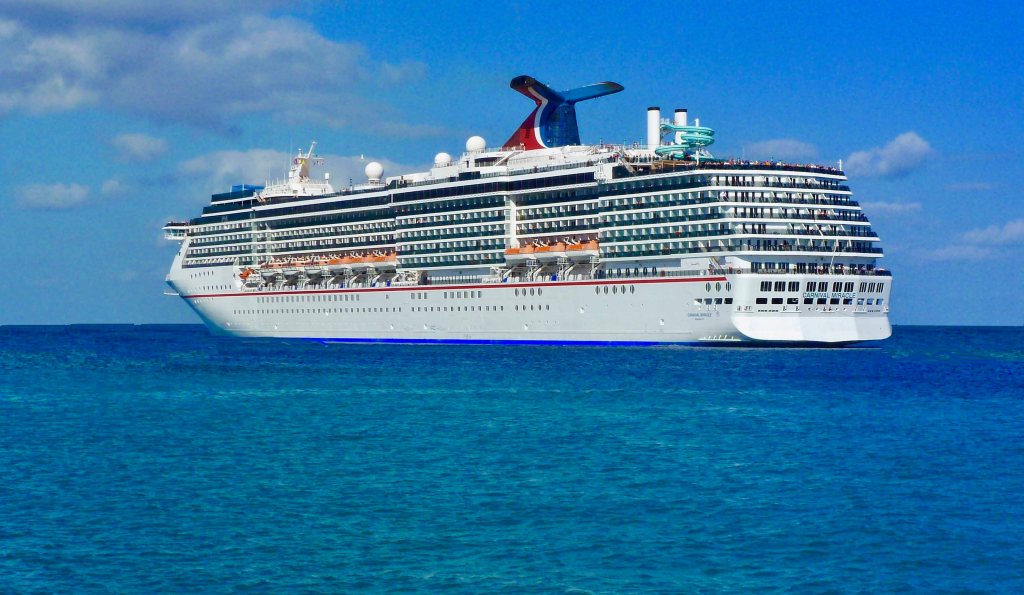
Cruising is a great value for travel and more and more people are taking advantage of the cruising. There are however a few areas of unusual costs along with some opportunities to save…
Carry A Bottle Of Wine Onboard
Even with drink packages and those “drinks included” fares, this is still something that shouldn’t be overlooked. Many cruise companies allow each person when boarding to bring on one bottle of wine (check with the cruise company or your travel agent). For a couple that saves $50 to over $100 during the cruise compared to buying wine onboard. Don’t forget that corkscrew and ask your stateroom attendant to bring you wine glasses. There are also a growing selection of chocolate and coffee wines available today and they’re a good substitute for that evening aperitif instead of the high price of a glass of Baileys.
How To Get Money Off Your Onboard Account
If you have cruised much you have probably experienced onboard credits on your account. They can happen in a number of ways from refunds, advance payments, incentives or gifts. In some cases those credits will evaporate at the end of your cruise if not used. Rather than going on a spending spree there’s a way to quickly turn credits into cash.
Most cruise ships now have digital accounts in the casinos for playing slot machines. No more buckets of coins and no more pulling handles. The usual process now is to use your onboard account to put money on your casino account. To play a slot machine you insert a ticket or your room card and load money onto the machine. When you’re done playing or want to switch machines you cash out and the machine prints out your balance on a ticket.
Even if you aren’t a gambler you should take advantage of this hack. To cash out your onboard credit simply put it on the casino play account. Then to cash out simply take the balance ticket to the casino cashier and take the cash out.
Beating The High Cost Of Phone Service
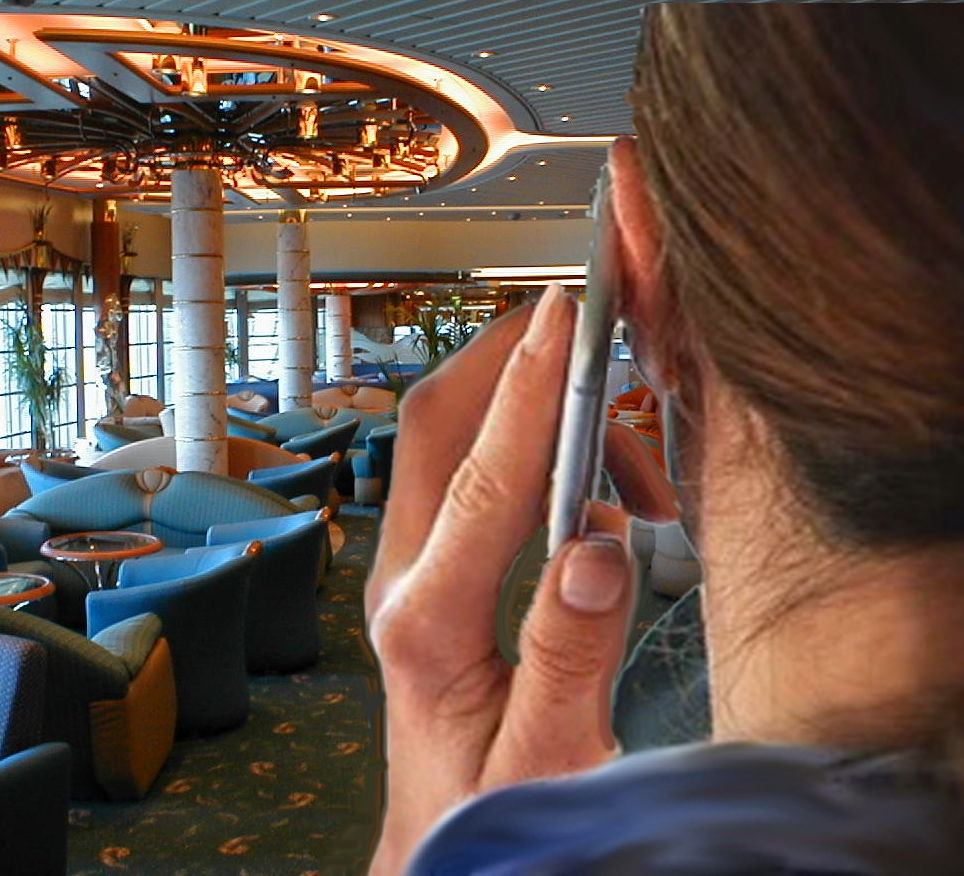
Onboard telephone service can cost $5 or more per minute and cell service isn’t any cheaper. Talking with family or friends can cost hundreds of dollars while at sea, but there are options.
First before you go cruising be sure and check with your cellular service provider and find out what calling services are available on cruise ships and what the costs are. Many cellular companies and newer phones have internet calling now built in. Look for this option on your phone and ask your cell service for details. Pay attention to text service costs onboard (receiving and sending) as this can be an inexpensive and useful way of staying in touch.
Next, plan ahead and work out options with those you would like to stay in touch with. The best approach is to look into cell phone apps and coordinate using a VoIP services. All cruise ships offer internet in various packages or pay by use service that make VoIP service significantly less expensive than cellular calling. Even ships with slower internet are usually good enough for simple voice calling.
Here’s a list of the top apps for making VoIP calls:
WhatsApp – Cost: Free. WhatsApp is popular for messaging, but something most people overlook is that it supports video and voice calls. The service is popular and quality is very good. If you need to call actual phone numbers though, this app might not be the best option.
Facebook Messenger – Cost: Free. A great application, Facebook messenger includes support for SMS messages, voice calls, and video calls. It works best for text messages, the voice quality quality depends on how fast your Internet connection is. There is also Facebook Messenger Lite which often provides better voice service but only provides text and calls.
Google Duo – Cost: Free. Another video calling application Google Duo supports regular voice calls well. To use Duo everyone needs to be on the app. The voice quality is superior and it’s very simple to use. It’s free and is available on iOS devices and is often pre-installed on some Android devices.
Google Hangouts – Cost: Free. If you’re looking for more features like sending pictures, Google Voice number for phone calls, voicemail, and SMS texting this is a good choice but for simply making calls Duo may actually perform better.
Magic Jack and MagicApp – Cost: telephone service $15 to $45 per year. One of the more popular SIP/VoIP apps around Magic Jack uses an actual phone number to make calls. The app includes SMS support, landline support, and cross-platform support.
Skype – Cost: Free. It’s one of the most popular VoIP apps in existence with direct support for both Facebook and Microsoft and a massive user base. You can also use this app to send text messages and to make video and voice calls. And for a fee you can call landlines. It’s also available as a desktop application but seems to require more bandwidth for good voice quality than the above choices.
Please Note: Currently there is only one cell service serving cruise ships and it is owned by AT&T. While it is not a too expensive option we’ve discovered that it has serious issues! For more on that click HERE.
An Inexpensive Solution For Seasickness
Getting seasick can take much of the fun out of your cruise and people spend lots of money on patches, pills and even acupuncture treatments. Here’s an inexpensive approach we found that really works. Take ginger capsules. Before discovering this treatment my wife had a serious issue with seasickness and her doctor recommended she try this. Now, starting a couple of days before and all through the cruise she takes three ginger capsules a day with food. In over 50 cruises she’s had no issues with seasickness.
Consider Booking Your Next Cruise Onboard
All the cruise ships have future cruising offices onboard ready to help you plan your next sailing with them. Oddly too many people just ignore this option. Maybe they would rather deal with their travel agent or don’t think there’s any real savings to be found. Perhaps they haven’t decided where they want to go on the next cruise. Actually all of those excuses don’t have much merit.
In the world of travel we seem to be bombarded constantly with bargains of the day. Save 20% today only. Book now and get free stuff. We have an exclusive discount with XYZ cruises. It’s hard to take most seriously and the truth is you shouldn’t. Usually the deals are available to everyone regardless who you deal with. There are some exceptions to this and booking a cruise on board is one. Some specials only available when booking onboard include reduced deposits, extra onboard credits and stateroom upgrades. Even if you’re not sure what you want there can also be future cruise coupons you can buy while onboard and decide later on that cruise.
Next time you cruise go and have a chat with the “future cruise” staff. You might be surprised…
Bring Onboard Your Own Cabin Upgrades
While the newer ships are catching up with the times some older cruise ship staterooms are missing some important features. Get in the habit of packing a few essentials to avoid dealing with stateroom shortcomings.
A Nightlight – Newer ships now usually have a nightlight in the bathroom but you should’n’t expect older ships to have this feature. There are a number of motion activated, battery operated nightlights on the market and they don’t take up much space. Our favorite is one that recharges off a USB power port (at Amazon HERE).
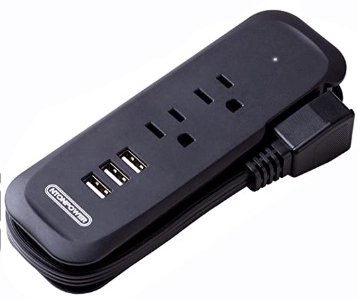
Power Strips – Traveling with cell phones, tablets and laptops requires a lot of charging and older ships are seriously short on power outlets. Adding a power strip to your suitcase can reduce that charging logjam. Our favorite is a compact strip with a small extension cord and a couple of outlets and two USB charging ports (at Amazon HERE). One word of caution – sometimes ships have rules about extension cords and multi outlets and while there are situations where it could be an issue, the voltages involved with charging phones and tablets are low and not a proble. Just in case get in the habit of storing these in a drawer during the day to avoid problems.
Clothespins, Hooks and Laundry Soap – Rinsing out a few things while cruising can help you pack lighter and can save you money too. Packing a couple of travel packets of laundry soap like Sink Suds takes up no room (at Amazon HERE).
Plastic clothespins can help not just with hanging up some rinsed out items but come in handy keeping that beach towel in place on the pool loungers. Another item that can be worth its weight in gold is a wall hook or two. Magnetic hooks will usually stick to cruise ship metal doors and 3M Command hooks can be attached to walls and easily removed.
It’s amazing how important these item can be so make up a small package with these items and add it to your suitcase before your next cruise.
Know Your Shore Excursion Options Before The Cruise
This is important for a couple of reasons. First, deciding on tours before your cruise and booking can save you some money. Cruise ships need to plan ahead for each cruise in order to schedule resources and often offer a discount for booking shore excursions ahead.
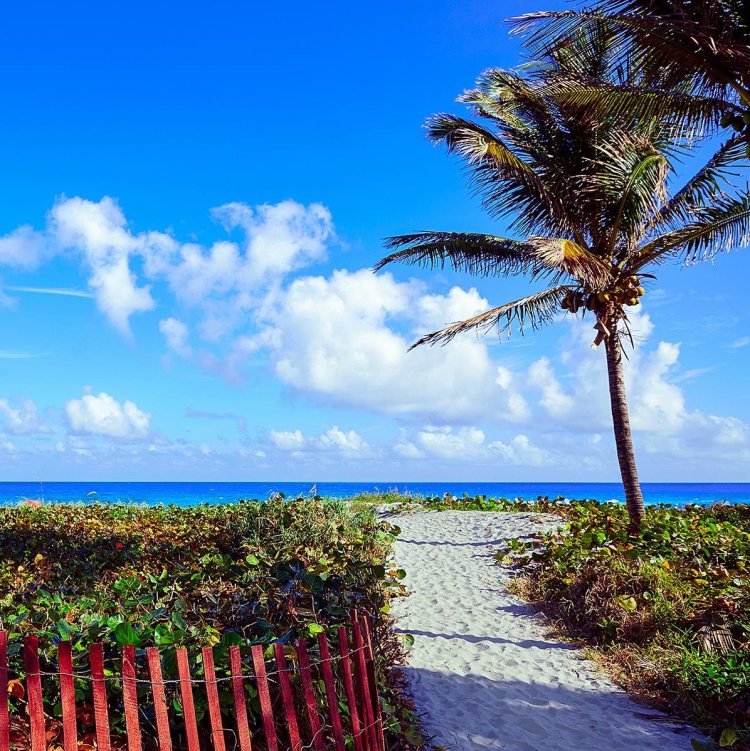
Next, a little research can allow you to go ashore on your own, do what you’re interested in and save a lot of money. A day at the beach is a great example. Instead of paying $50+ each for a beach excursion, you can catch a taxi, rent beach gear, have lunch and take a taxi back to the ship and save as much as 50%. See more HERE.

























 The Intentional Travelers