A Pick Of The Best Florida Beaches

Get a jump on Summer and get in some serious beach time. There’s no better time for sun on the beach than Florida in the Spring with its hundreds of miles of sandy beaches lined with palm trees and lapped by crystal turquoise waters. If you’ve been dreaming about a Florida beach vacation here’s some tips on what to consider.
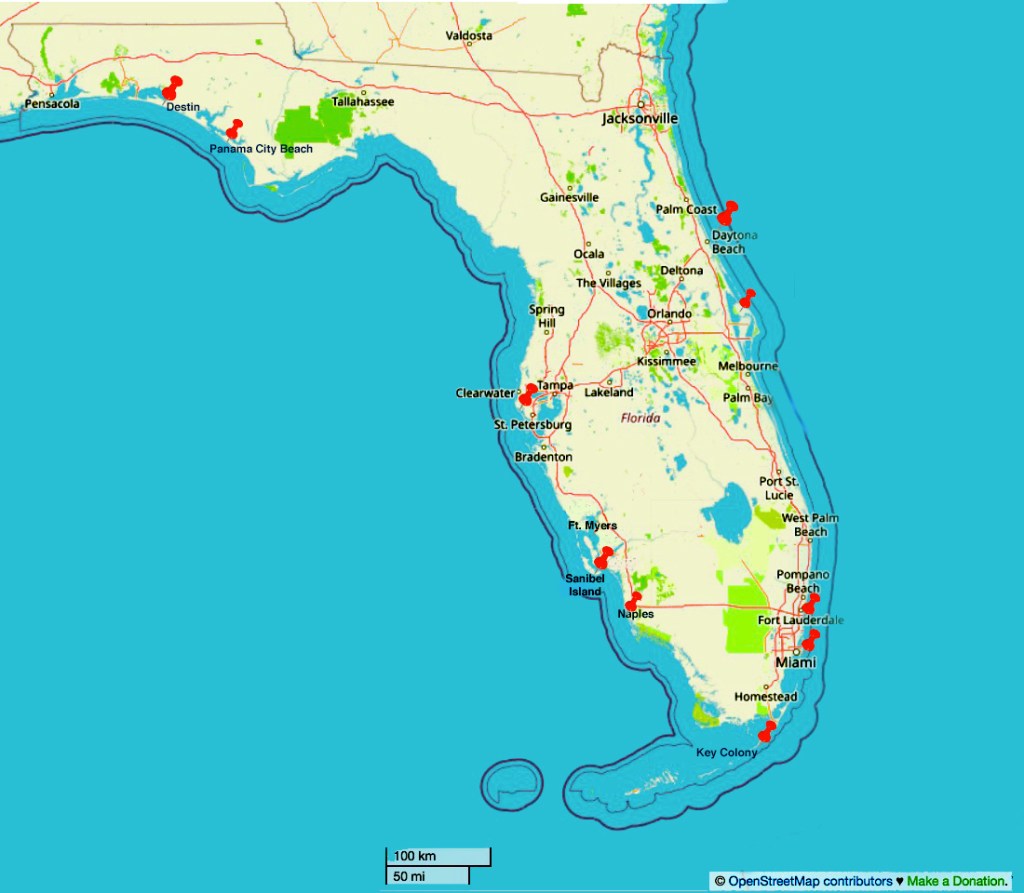
Floridas best beaches

First, Florida is not all hot tropical weather all the time. The state has three primary temperate zones:

  • A sub-tropical zone with mostly warm winter months that includes the Florida Keys, Miami through Palm Beach on the Atlantic coast and Marco Island up to Tampa on the Gulf.
  • A moderate zone with cool evenings and nights through the Winter months that stretches from the sub-tropical zone north for 50 to 100 miles.
  • A mild temperate zone with a climate stretching through Northern Florida that can see average winter days in the 50° to 60° range and where frost is not uncommon.

The Panhandle – This piece of Florida is a popular vacation destination but its season actually runs from Spring to Autumn because of its mild temperate zone location. Also because there are no major airports nearby it is often a summer driving vacation destination for Southeastern families and Spring Breakers.

Destin

Destin Beach

A stretch of Florida coast heading east from the Alabama line that features some of the cleanest, whitest sand in the whole world, gorgeous Gulf waters and frequent sunshine. Centered on Destin this stretch of Florida coast is one of the state’s most affordable beach areas. Along with stretches of resort hotels and beach communities Destin also offers some remarkable state park beaches like June White Decker Park and Crystal Beach. Again season runs from Spring to Fall.

Panama City Beach

Panama City Beach’s 27 miles of beautiful white sand Gulf beaches offers a range of accommodations. Because of its resort vibe and wide selection of activities and restaurants it’s a popular Spring Break destination and a Summer family vacation destination.

The Treasure Coast

The best moderate Winter beaches are mostly found on the central East Coast and include wildlife refuges, long barrier island beaches, the Space Coast all within easy driving distance of Orlando.

Merritt Island

Daytona Beach

Famous for its wide expanse of white sand beach Daytona also draws Spring Break crowds, a biker week and the famous Daytona 500 race. It also has the advantage of the theme parks of Orlando only an hours drive away. If your looking for a bit more action than just lounging on the beach this city has a lot to consider.

Merritt Island

The unincorporated “town” of Merritt Island is located on Florida’s largest island and is adjacent to the Merritt Island National Wildlife Refuge and also serves as the home of NASA’s Kennedy Space Center with its launch activities and the popular Visitors Center. Located on the north end of a stretch of coast that includes Palm Bay, Melbourne, Titusville, Vero Beach and Hutchinson Islands there’s a lot to take in.
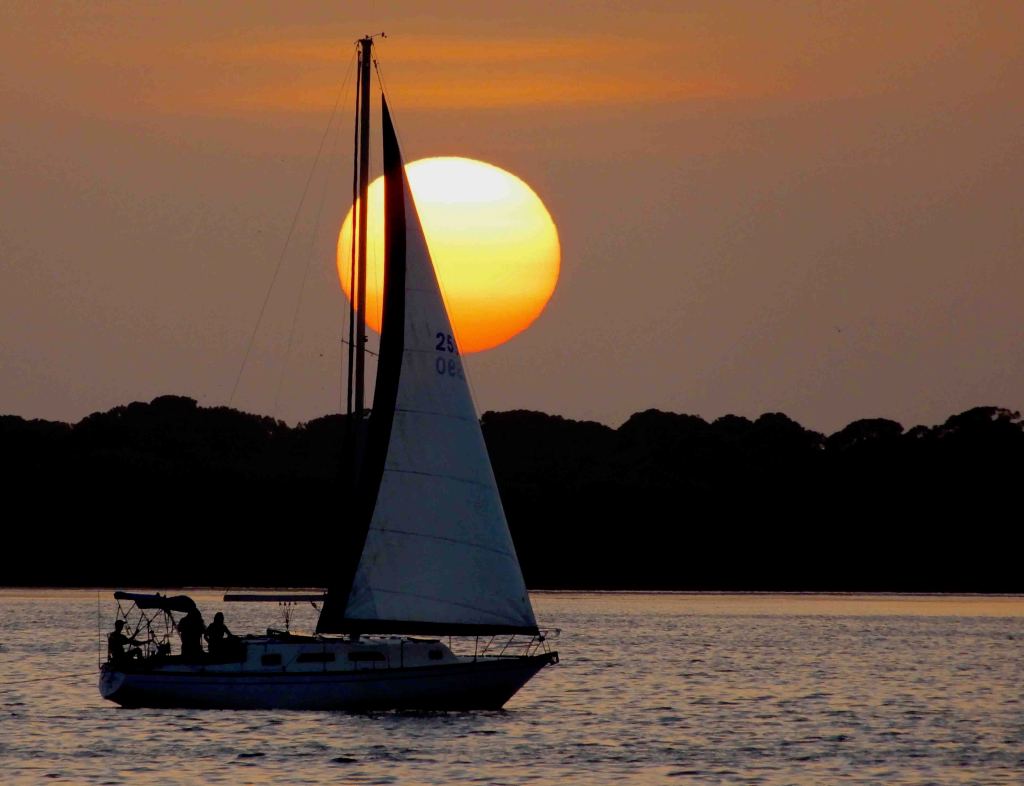
Clearwater

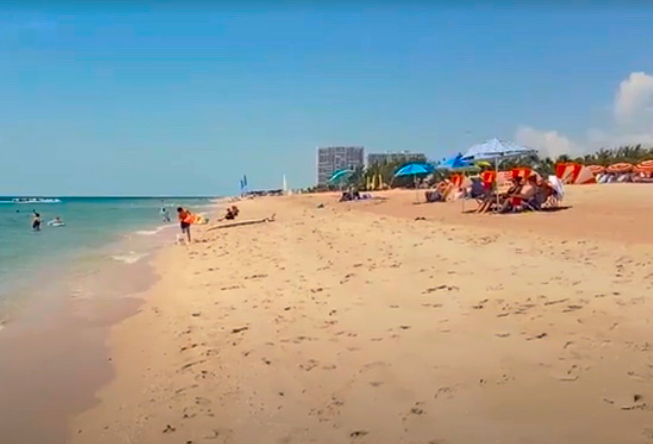
West Palm Beach South to Miami includes the beautiful beaches of the Fort Lauderdale area, the excitement of Miami’s South Beach and incredible diving and sport fishing.

Ft. Lauderdale

Fort Lauderdale

Ft. Lauderdale

Located on a strip of land south of Boca Raton and North of Miami between the Florida Everglades and the Atlantic Ocean, it includes towns like Pompano Beach, Hollywood and Dania Beach. This area draws Winter vacationers to its warm weather, white beaches and crystal clear waters all surrounded by the excitement of a major metropolitan city.

Miami and Miami Beach

Miami Beach

This world class city has a decidedly Latin vibe with it famous South Beach, incredible resort hotels and magnificent beaches. You could spend a month here and never run out of things to do.
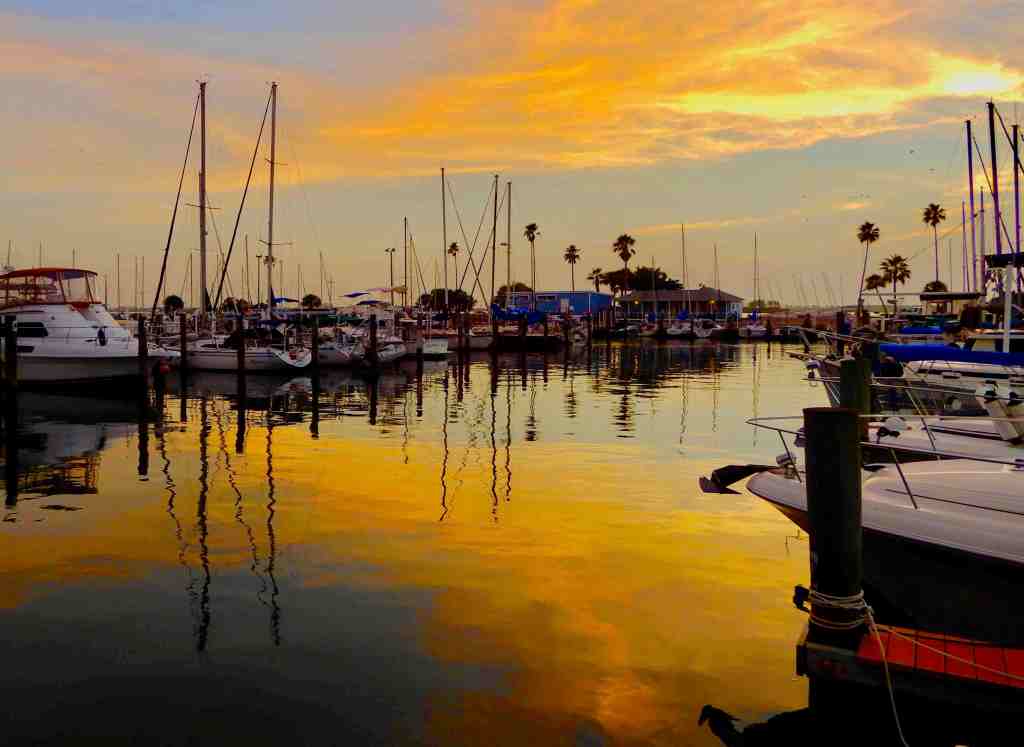
St. Petersburg

The Florida Keys draw boaters, sport fisherman scuba divers and snorkelers to its warm clear waters. Hundreds of islets, islands and quays (keys) stretch south from Miami to Key West but if you are looking for fantastic beaches this isn’t what you are looking for with one small exception.

Key Colony Beach
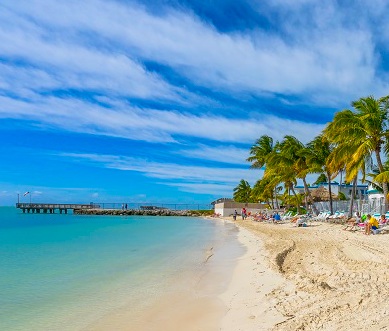
Located just east of Marathon this small town features one of the best beaches in the Florida Keys. The beach stretches for less than a mile in front of a row of classic beach motels but you are only minutes away from the attractions of Marathon, Islamorada and about 50 miles from Key West.

Naples

Florida’s Southern Gulf Coast includes another hundred plus miles of fantastic beaches. After crossing through the Everglades from Miami on the Gulf Coast you’ll discover a number of famous islands and beach resorts. Starting in the south is Marco Island, farther north is Sanibel and Captiva and in between is the upscale beach town of Naples. Traveling north along the coast are great beaches at Sarasota, St. Petersburg, Clearwater and Dunedin along with stretches of sany barrier island beaches.

Naples

Wall to wall with golf courses, gourmet restaurants and fancy boutiques, Naples is a seriously upscale Florida beach town. While the luxury resorts and fancy restaurants can make Naples seem a bit expensive there are moderately priced accommodations to be found and luckily, the beautiful beaches are free to enjoy. Watch for the frequent dolphins swimming near the beach and visit Naples’ iconic fishing pier.

Sanibel Island

Great beaches and one of Floridas best places for shelling. Shell hunting there even has a name – the Sanibel stoop. Like its sisters, Marco and Captiva, Sanibel has a laid back feel that benefits from its sense of being off the beaten path. Perfect choices if you are trying to just get away.

Tampa Bay Clearwater Beach

Vero Beach

Another major metropolitan center is Tampa Bay with its string of white sand beaches the area also offers major attractions like the Florida Aquarium, Busch Gardens, the Dali Museum and some of the best Sunsets anywhere. At Clearwater Beach’s Pier 60 watching a breathtaking sunset is a popular pastime. The 1,000-foot pier with its lights draws anglers here at night to fish.

When your dreams start drifting to tropical climes, remember Florida has an antidote waiting for you.

An Urgent Concern In International Travel

Traveling around the world there is one challenge that seems to regularly show up and that’s where to go? I don’t mean as in travel but really go. When at home it’s something we take for granted. Americans believe it is a public right and resent any effort to place a charge on access. Elsewhere around the world it can be a challenge to find one and in some places understanding how to use them is a serious issue and public restrooms are rarely free. We’re talking about restrooms, WC, toilets, lavatories, wash rooms, privies and you’d think for a room with so many names just in English they’d be everywhere?

America is pretty restroom friendly with lots of options and almost all for free. Similarly are Canada, Australia and New Zealand and while Europe has improved somewhat, free restrooms are rare and real public restrooms are often difficult to locate. Other issues as you travel are what is the procedure for accessing them and how to actually use the facility. Are you likely to find toilet tissue and what forms of payment are expected?

Singapore MRT station

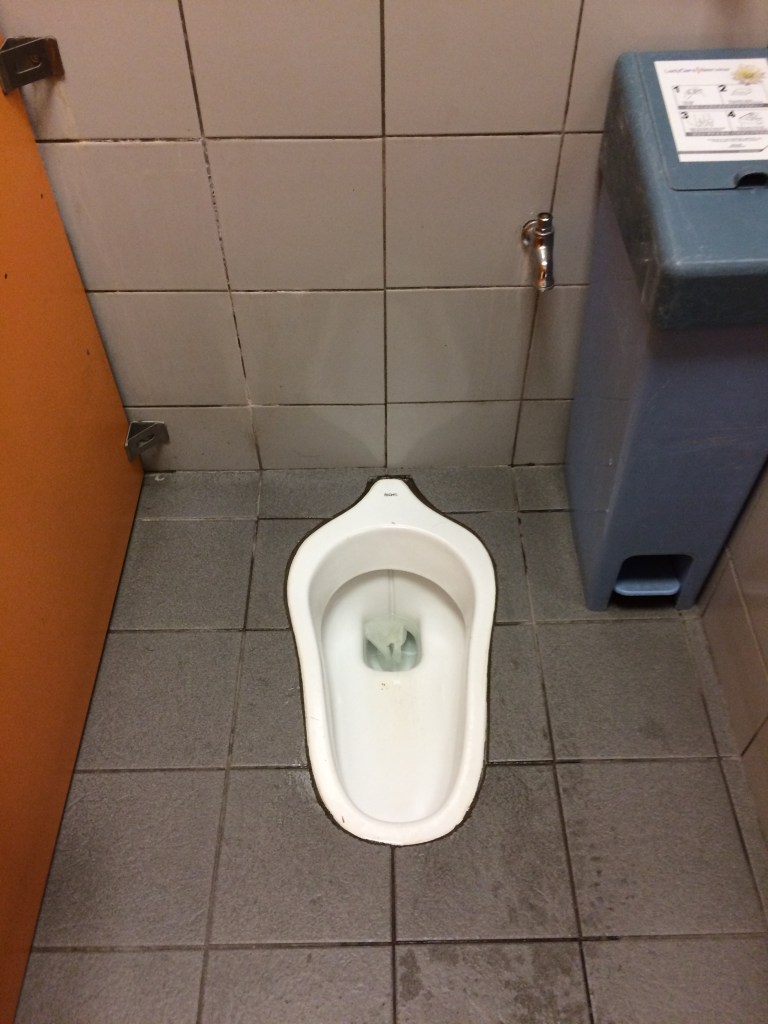
Asia seems to have evolved a completely different approach to toilet design and while they modernized over the years they often remained consistent to the original tradition. In many locations in Asia a floor level hole is the norm and squatting is the method of use.

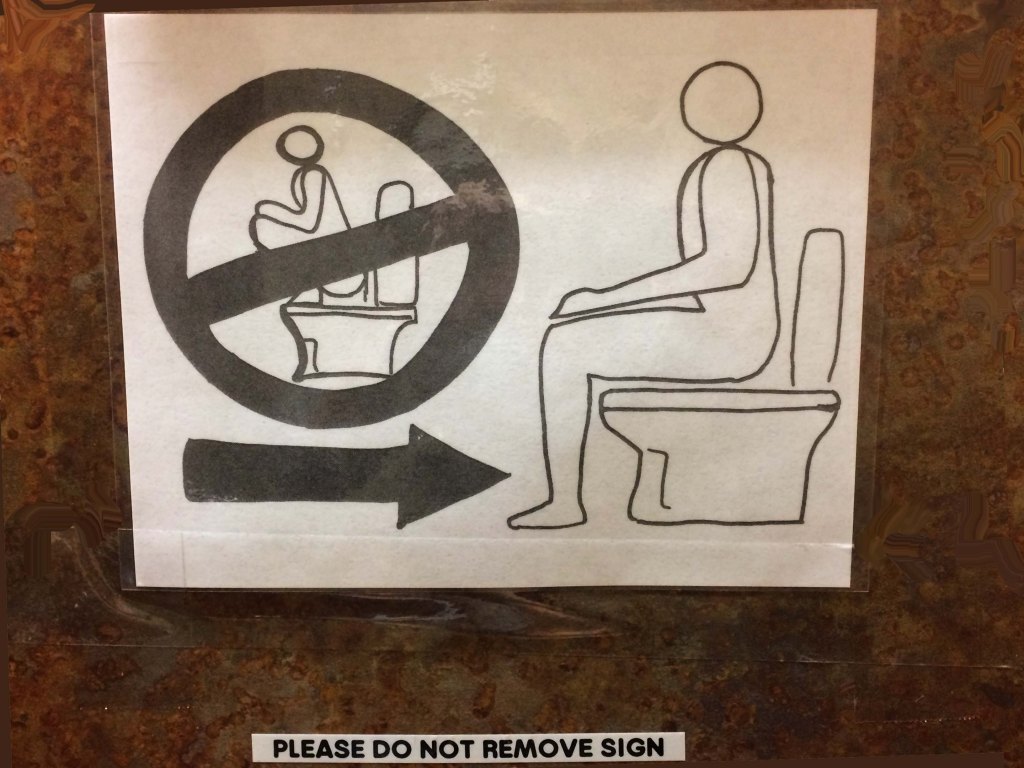
With the increase of Asian tourists in the United States the National Park Service has started installing graphic instructions in park restrooms to prevent accidents in using the Western style toilet.

The good news is things are changing around the world with airports and hotel room facilities becoming more westernized.

It’s a good idea to have a game plan for when you’re out in public in a foreign country. Our first option is to look for a bar, cafe or coffee shop. Bars and coffee shops are a fixture of urban life everywhere in the world and almost all of them have restrooms, many cleaner than average. While often access isn’t public we get in the habit of simply buying something in the bar (cafe or coffee shop) and then ask to use the bathroom. A coffee in a bar or cafe is often under $2 or 1€ and most have private bathrooms for customer use.

Another good option for locating free public restroom is to look for department stores, shopping malls, and hotel lobbies. Another great option, because they’re American companies, is to look for the ubiquitous McDonalds and Starbucks which are reliable locations for free restrooms. In that vein you can also look for Burger Kings and in Asia Jollibee, a good fast food restaurant which is now opening stores in America too.

pissoir and sanisette in Paris

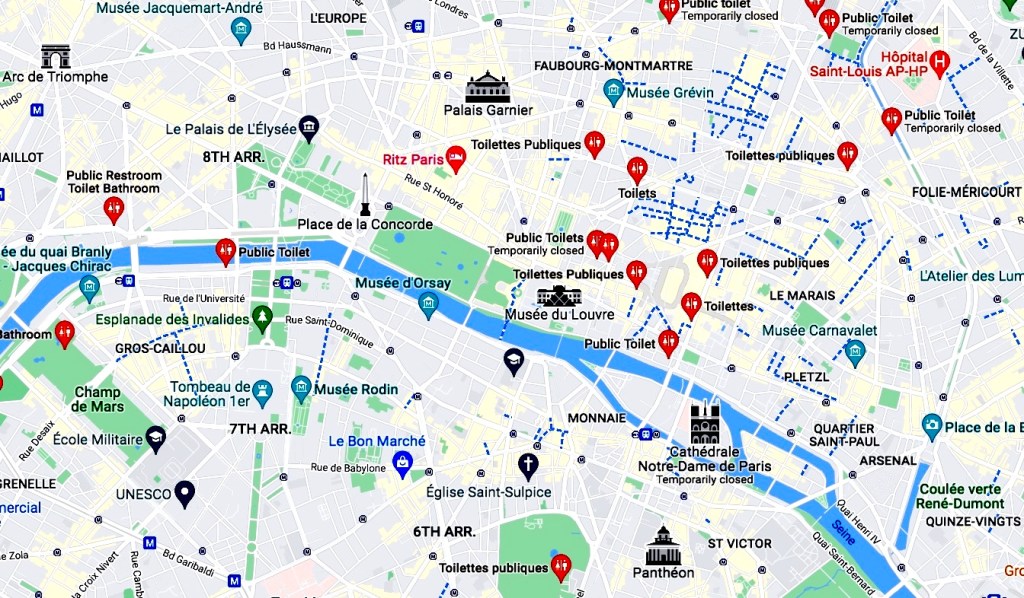
Most people have made Google on their cellphone a must when traveling internationally and Google maps is an invaluable resource for helping find restrooms. Bring up your Google map for your current location and add restrooms to the search bar. You’ll find a map marked with public restrooms. Tapping go will give you walking directions to the nearest location. Unfortunately the app doesn’t normally indicate if there’s a fee or actually on what floor.

Google Map results from the Louvre area in Paris
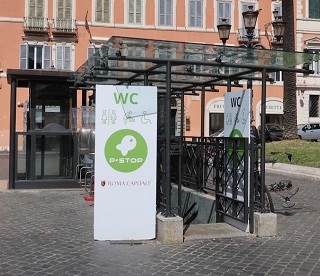
Rome Public P-Stop WC

Every country seems to have their own approach to restrooms and public use and even different European countries vary. Before traveling do a little research on what to expect where you’re going and a couple of phrase cards in the local language asking where are the restrooms can come in handy. Google translator is also a good app to carry and use.

Italy – Today you can find some pretty clean public bathrooms in a few places around major Italian cities. They are called “p-stops” and they are run by the City of Rome, Florence, Venice and several others. The cost is 1€. WC is also a common marking in Italy.

France – Public urinals, or pissoirs as they’re known in French, have a long history dating back to the late 1800s and Paris has recently installed a series of new outdoor urinals creating a bit of controversy. In addition Paris has more than 400 public toilets, called sanisettes, located on the public footpaths around Paris. They are free to use and all have access for the disabled. Many of the sanisettes are open 24 hours.

Amsterdam has had public urinals for years, and cities in Belgium and Australia have also recently started installing modern versions.

French EUROmodul public restrooms in Copenhagen

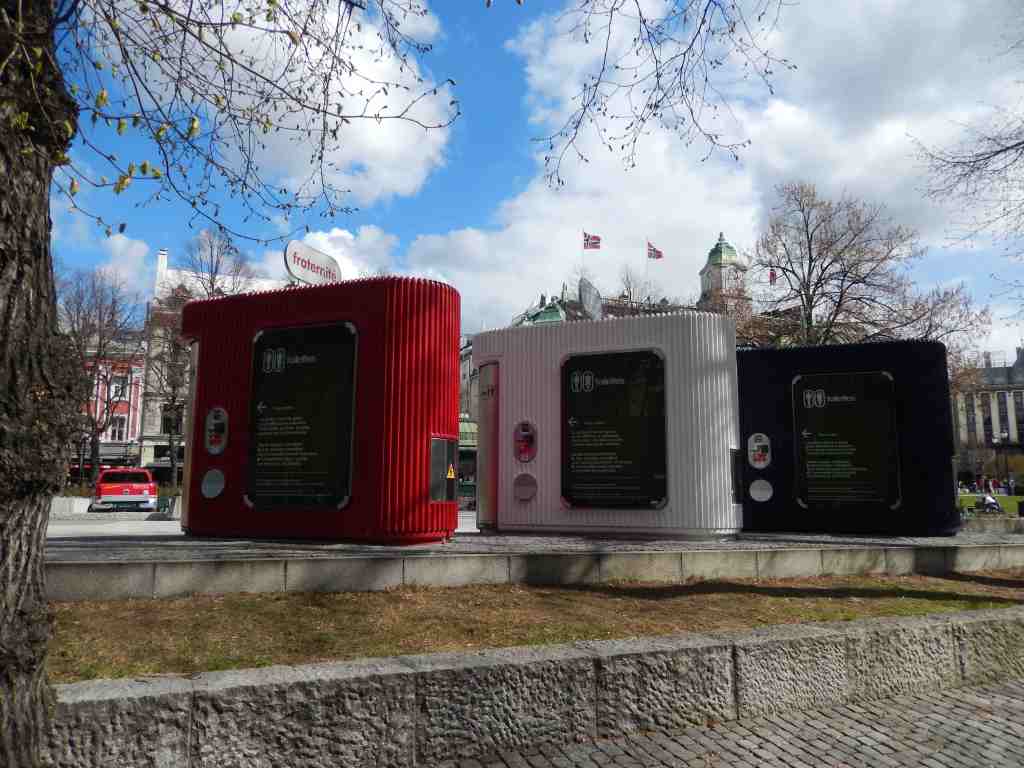
A French company called EUROmodul has gone global and is designing and installing public toilets around the world. Their modern freestanding units are intended for use in urban locations where necessary infrastructure is available (water and sewage connection). These toilets are equipped with different quality levels of sanitary equipment with toilets having anti-vandal characteristics in order to ensure the safety and longevity of the equipment and the toilets themselves. Their revenue stream is based on per use fees, usually about 1€.

Japan – you’ll often find traditional Japanese-style toilet as well as some Western toilets. Depending on the size of the city you may find only Japanese-style public restrooms with major cities providing a mix. Japanese commodes like much of Asia are at floor level. On the bullet trains the handicapped stall is a Western-style toilet. Get in the habit of keeping a copy of the Kanji symbols for 男 men and 女 women for easy identification.

As you travel internationally the best approach to being prepared is always carry some small change in local money for getting access to WCs and be sure and have some tissues on you in case the facility has no paper.

Bathroom

Italian “stanza da bagno” French “salle de Bains” Hungarian “fürdőszoba”

Spanish “baño” Greek “λουτρό” (loutro) Dutch “badkamer”

German “Badezimmer” Swedish “badrum” Japanese 浴室 (yokushitsu)

Polish “łazienka”

CLICK TO GET YOURS – FREE SHIPPING

Port of Call Stavanger, Norway

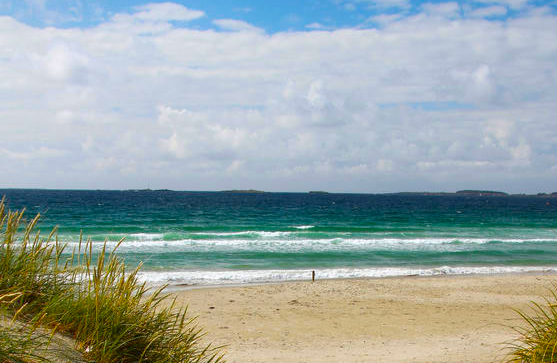
Sola beach

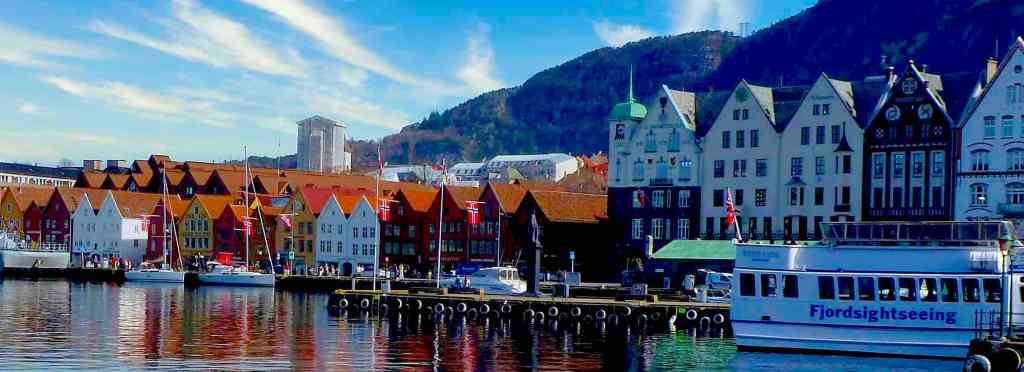
This beautiful coastal town has become a victim of its success. Oil exploration in the North Sea since the 1970s has drastically impacted this town creating runaway development and an inflated cost of living. Still Stavanger’s Old Town is beautiful and boasts some of the best-preserved wooden historic buildings in Norway, with some dating back to the 1700’s.

Two highlights in the Stavanger region are the Sola beach and the impressive Preikestolen (the Pulpit Rock), named the world’s most breathtaking viewpoint. Towering 1,800 feet above the Lysefjord, Preikestolen is the most visited natural attraction in Norway.

The city of Stavanger is a university town and the center of Norway’s offshore oil industry. Fortunately the small city centre, is easy to get around in on foot. Go shopping for fantastic seafood, art galleries, and hunt for bargains in the shops. Take a stroll through Norway’s best-preserved wooden houses in the Gamle Stavanger area.

Where Your Ship Docks

Cruise ships dock at the Port Authority piers that are less than a mile from the Old Town. Often there is a shuttle bus offered that will take you to the the lake park at the top of Stavanger’s Old Town. The piers do not have a terminal or any public facilities.

Transportation

Taxi service is available in central Stavanger with average fare in town being approximately 150Kr.

The city has a good bus system with frequent service. The area of central Stavanger is contained within a single bus zone, but to get to the airport takes three zones and about forty minutes. Traveling by bus requires the use of passes which offer savings over walk-on fare. A single ticket fare for the central zone costs 33kr, while it’s only 85kr for a 24-hour pass and 260kr for a 7-day pass. Keep in mind that the majority of the city’s attractions are focused on the Old Town and are very walkable.

The easiest way to buy passes is via a smartphone app, which you can load up with money or connect it to your debit/credit card. A smart card known as the Kolumbus card is also available and works in a similar way to the app. Tickets can also be bought by cash or debit/credit cards at a customer service center or at one of the ticket machines located at most bus stops around the city center. Cash only is accepted onboard buses.

Currency

Norwegian Krone (Kr) is about 8.85Kr to 1 US$. Credit cards a gladly accepted and ATM machines are readily available.

Attractions

Canning Museum in Stavange – An incredibly interesting museum housed in an old cannery. Stavanger was once home to more than half of Norway’s canneries and in the 1920s they provided a majority of the town’s work. Next door is a building showing a restored workers’ cottage furnished in 1920s style.

Norsk Oljemuseum (Norway Oil Museum) -This museum explores the technical side of oil exploration and drilling, and looks at the workers whose lives are spent in the oil industry. It has exhibits that covers the history of Norwegian oil, including the Alexander Kielland tragedy of 1980, when 123 oil workers were killed, along with the 1972 decision by parliament that relocated Statoil to Stavanger.

One really popular attraction outside Stavanger is the classic hike to Preikestolen or Pulpit Rock. Preikestolen formed more than 10.000 years ago and is Norway’s iconic natural landmark standing over 1,800 feet above the fjord. From the perfectly flat top of this high cliff you will experience one of the most dramatic views in the world.

From Stavanger to visit this amazing formation will take all day. The best way to get to Pulpit Rock is to take the #100 bus and a taxi, a trip of over one hour and costs Kr 600 – Kr 750 each way. Once there the 8-kilometer hike takes about 4 hours round trip and gains almost a thousand feet in elevation.

CLICK TO GET YOURS – FREE SHIPPING

Explore With The Intentional Traveler

Not All Those Who Wander Are Lost

Caio, buenos dios and welcome to all YOU wanderers and dreamers. Join us as we offer up reflections on where we’ve been and dream about where we’re going next.

Ancient streets, natural wonders and exotic cultures are waiting to experience…

Come along and join us as we travel around the world and offer ideas on amazing places, natural wonders and incredible cruise itineraries.

While we know that subscribing to yet another email list is probably the last thing you want to do, we promise we’ll do everything we can to make this one worth your while. No spam or selling your address and if we don’t live up to your expectations, just cancel at any time.

Exploring destinations from Australia to Reykjavik, Antarctica to Singapore

Over eighty countries, hundreds of cities, dozens of National Parks and over fifty cruises, please join us as we continue our journey.

CRUISE LIFE

The cruise life is becoming more popular by the day, as people are discovering the value and opportunities in cruising. For luxury travel there’s no better way to explore the world than on a cruise ship. Join us as we explore the Cruise Life with ideas on itineraries, booking a stateroom, selecting a ship and saving some money…

Hiking Ideas, Bits Of History, Photographic Tips, Our Custom Maps, And Money Saving Ideas

There’s more in store inside The Intentional Traveler with informative articles on taking photographs, understanding the history behind a place along with our regular magazines and travel news reports.

Visiting

Walt Disney World

Reviews on places to stay, were to eat and ideas on getting ready for that family trip. Informative posts from almost fifty years of visiting the magic.

The Grand Floridian Seven Seas Lagoon

OUR STORY

We’re Judi & Dennis

We’ve spent our life together traveling the world. Years ago we had a business that worked with Caribbean companies and we traveled around the islands frequently. We also had a number of opportunities to visit countries in Europe and since we’ve retired we spend almost a third of each year traveling.

In retirement we need to watch our expenses and are always looking for opportunities to save money. The plan is the less we spend the more places we can travel.

We’ve been in Florida for over forty years (access to that Caribbean market) and have spent a lot of time at Disney World and now that we’ve retired we live in a town just north of Disney World.

In 1999 we discovered cruising for a family vacation and have been hooked ever since. We’re now well over fifty cruises and have sailed every ocean with over 80 Century Club destinations visited. If it hadn’t been for COVID we’d be over 100 by now.

Thanks for visiting our travel site and we hope you’ll come back often.

Today No Place Is Out Of Reach

From the tropical beaches of the Caribbean, to the frozen waters of the South Pole, and the palaces of Southeast Asia, adventure is just waiting for us. Every journey begins with a single step.

Making The Most Of Your Cruise

A Cruise Life Special Edition

If you just book a cruise and pack your bags you could miss out on a number of ways to save money and enhance that cruise experience. To get the most out your cruise vacation you need to plan ahead and be prepared to take advantage of a number of opportunities. Here we offer a few tips to enhance that upcoming cruise.

Pack A Cruise Necessity Kit

There are times that your onboard cabin will have everything you need but sometimes there are shortcomings that can be a real inconvenience. Maybe you need more than one coat hook? Need a nightlight in the bathroom? There are easy answers to those problems that don’t take up much room when you pack.

    A couple of 3M Command Hooks can be a lifesaver. These handy hooks take up no space, will attach to any smooth wall and are easy to remove.

    A battery powered night light can be a plus. Most cruise cabins have the bathroom light switch outside the door. Turning on the light and opening the door will often illuminate the whole stateroom, but leaving a night light in the bathroom eliminates this problem.

    While cruise ships seem to frown on multi-outlets in staterooms they often seem a necessity. Our favorite is a compact multi-outlet with a short, stowable cord. Ours has three outlets, two USB ports and surge protection. We charge up our devices overnight and stash the multi-outlet when we are out of the cabin.

    A small first aid and medication kit is also handy. Adhesive bandages are normally available from the clinic or at guest relations but carrying a few with you along with anti bacterial ointment keeps you prepared at all times. We carry individual packets of Neosporin and wipes in our kit. Small packs of multi-sympton cold relief and cough drops insure you have what you would normally use and avoids the high prices in the gift shop. 

If you carry battery operated devices, a few spare batteries (non lithium) may also come in handy. 

Tips To Save Money

While we believe cruising is actually one of the less expensive ways to take a holiday*, it is easy to lose control of a budget onboard a cruise ship. The trick is to know where the money goes and what alternatives there are. 

First and foremost, consider your choice in staterooms. Most ships have rates that start with an “inside” cabin and go up to suites and concierge class. Our decision on a cabin is based on the itinerary. For Atlantic crossings we usually go for an inside cabin. Eight or nine days of looking at water isn’t worth the cost of a veranda cabin considering we don’t spend that much time there. If we are cruising Alaska, a veranda is our choice because the scenery is spectacular and whale watching is a frequent pastime. There are also times when booking an inside cabin isn’t the least expensive option, so be aware of that possibility. 

    Know how much you can expect to spend on drinks and what alternatives are available. A single alcoholic drink can cost between $5 and $18 plus gratuity and cruise companies have introduced drink packages that average $50 plus per day. Many ships now require all occupants of a stateroom to buy the package and, if one is a non-drinker, you’re paying double. If you aren’t much of a drinker a package may not be a good value. Paying attention to the onboard “drink of the day,” buckets of beer and happy hour specials can really reduce your bar tab considerably.

    Buying wine by the bottle can also provide a savings. When onboard, or even before you depart, you can buy bottles of wine. At $35 to $50 and an average of six glasses per bottle, that can represent a significant savings over ordering by the glass. If you buy in the dining room or speciality restaurant you can have the bottle saved for the next few nights. You can also order bottles sent to your cabin before boarding and your cabin attendant will be happy to keep you supplied with wine glasses. You can also take that bottle to the dining room for service there.

    Most cruise ships allow you to bring a bottle of wine with you when you board. If you’re going to drink, don’t let this opportunity go to waste. We usually bring a bottle of chocolate wine with us and use it as a substitute for a cordial in the evening. 

    Fancy coffees are expensive but coffee and tea are usually free. Most ships have a coffee bar or two open all the time and if you’re looking for afternoon tea or an evening coffee, picking one up free along with a dessert or cookie can save a lot of green. 

Tips For A Better Embarkation Day

On the day of sailing there are a few things you can depend on. First, boarding usually begins somewhere around 11:00 AM and, as people board,  the majority migrates up to the buffet on the upper deck. Second, you will see a lot of passengers loaded down with backpacks and carry-on bags just sitting around so empty seating can be hard to come by. Additionally, most cruise ships will have passageways blocked until sometime between 1:00 and 2:00 PM when passengers are allowed into their staterooms. Finally, for the duration of the cruise the pool deck and spas will never be as empty as on that first day.

All of the above suggests a strategy that can greatly improve your enjoyment of that embarkation day. Consider ours:

  1. Lose that extra carry-on load. By early evening, chances are your bags will be delivered to your cabin and, with a little planning, you can survive until then. We recommend checking most of the load with a porter on the pier. Carry a light backpack with a few carefully selected items. Consider, the important stuff like medications, a bathing suit, tee shirt and flip flops. A good book or e-reader and perhaps your laptop.
  2. Leave the herd and find your own space. Usually by 12:30 the buffet is a sea of people walking around with trays looking for a table and many are lugging suitcases too. If you’re really hungry, there are probably a few lesser known options like hamburgers on the pool deck or a speciality venue or two that the crowds haven’t thought about yet.
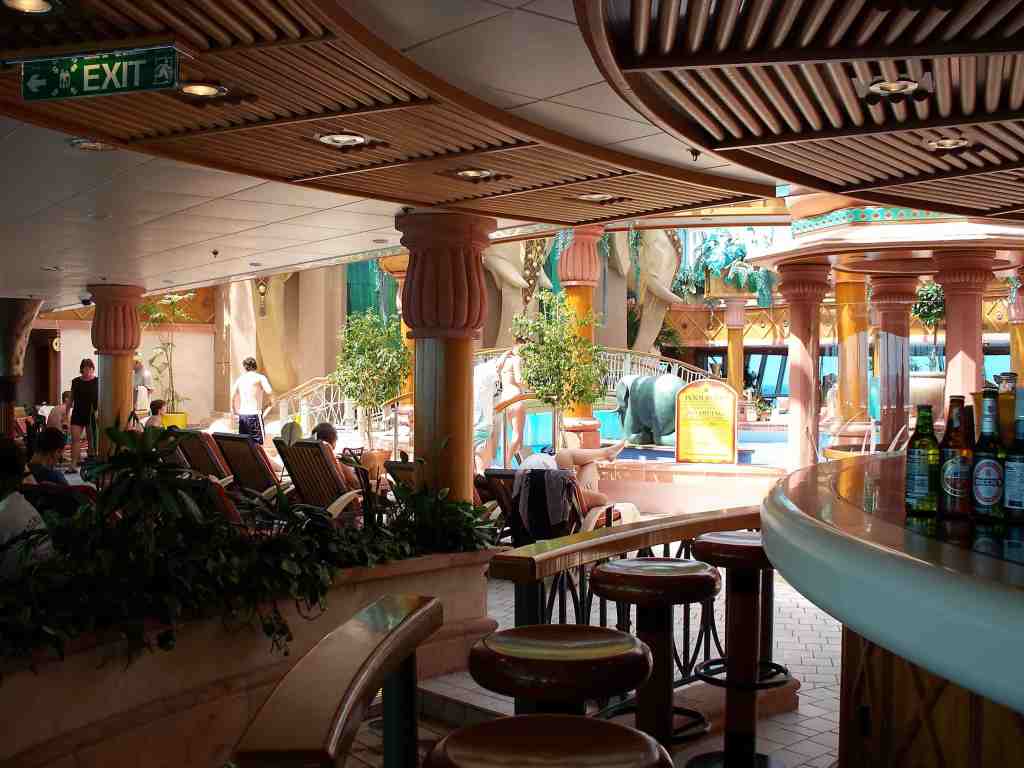
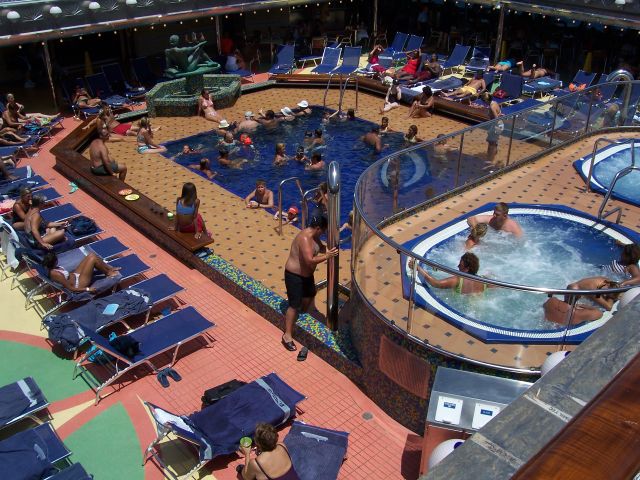
  3. Pack for a day at the pool. If you pack a swim suit you can change, stretch out on a pool deck lounger and open up that book you’ve wanted to read. Isn’t that what you’ve been looking forward to? Instead of standing around waiting for the stateroom to open, get a head start on that vacation. The pool bar will be more than happy to pour you a drink and there’s a good chance the spa is open as well.

Keep Up An Active Exercise Program

Years ago, while at home, we exercised regularly at the gym and, when we went cruising, we made morning sessions in the ship’s gym a must. We’re not sure when it became a problem, but it started being difficult to find open equipment in the morning without a long wait. Since that time we’ve adapted. For the last decade we have never ridden elevators while onboard. With our usual cabin choice being on decks seven through nine and dining and entertainment on deck four or five and cocktail hour on decks ten or fourteen, we climb a lot of steps on an average day. Add in a walking course on the top decks and we get plenty of exercise on a cruise.

    Not spending any time in those crowded elevators also reduces our exposure to germs which multiply in crowded spaces and it leaves the elevators more available to those that really need the help getting around. We can’t even count the number of times we have climbed up or down several decks and beaten friends who were riding the elevator.  

Things To Avoid When Selecting A Cruise Cabin

We love cruising and, overall, the experiences have been fantastic but there have been exceptions. On more than one cruise our cabin was so noisy we couldn’t get much sleep. There are usually two sources that contribute to this problem.

The Party Crowd – Some cruises are magnets for a party crowd. These are usually Caribbean cruises with shorter itineraries which tend to attract a younger and noisier crowd. Not that we object to having fun but you can make plans to avoid the noise issue by paying attention to cabin location. Staterooms that are right at elevator lobbies or are just inside passageways leading from public spaces can be very loud. People that are partying late and imbibing a bit aren’t known for being quiet on the way to their cabins.

Noisy Ship Spaces – On more than one occasion we have been in cabins that were obnoxiously noisy during the night. We’ve always been amazed when the ship claims that nobody else has had issues with the cabin but then what can you expect them to say? Our remedy is to pay attention to the ship’s deck plans and avoid booking certain cabins. Now we only book cabins with other cabins on either side or behind us. If you pay attention, there are cabins with nothing indicated in the space next to them. Sometime these areas are crew stairwells or storage areas but they can also be machinery spaces which generate noise at odd hours. Also, take a look at the deck above the cabin. These can be dining rooms or pool decks or even clubs which will often be noisy late at night. 

Any time we’ve had an issue with a noisy cabin those empty spaces have been the culprit. Once, when we were under a dining room, it seemed that they were moving furniture all night long. Fortunately, when we have had a problem, the ship has usually been able to find us another cabin. Lately, however, cruises are sailing completely booked and that option is disappearing. Avoid that risk and be aware when you are selecting your location.

*Without considering airfare and hotel nights, cruising can be less expensive than a land based vacation. Totaling the cost of hotel rooms, meals and entertainment for a family, and often you’ll discover that cruising comes in the winner.  

Cruise Tours Or Do It Yourself?

Weighing Port Shore Excursions Against Going It Alone

A lot of people prefer the convenience of a ship sponsored tour, and there’s a lot to be said about what you get using professional guides and dedicated transportation.

If you’re not a “guided tour” enthusiast we completely understand. First and foremost you can save a fair amount of money by touring on your own and you get to pick what you’re interested in seeing and for how long.

From our point of view the biggest problem with guided tours is that you become a prisoner of the tour. It isn’t uncommon to get stuck visiting some place that you just aren’t interested in. It just doesn’t seem right spending forty-five minutes at a chocolate factory or a nut packer or souvenir outlet on a tour you paid to join? Unfortunately it’s all to common for tour operators to be paid to deliver people to that business. The other case is visiting a location where you could spend hours and are informed you have to be back on the bus in a half hour. Going it on your own eliminates those problems.

There is also the issue of cost. If you understand your options, often you will see that the ships shore excursion will cost you significantly more money than if you went off on your own.

Consider a few examples to illustrate this point:

A Day At The Beach

Cruises in the Caribbean and the Mediterranean often offer shore excursions focused on a day at the beach. While convenient you will more than likely be paying a premium for that beach excursion. Consider these examples:

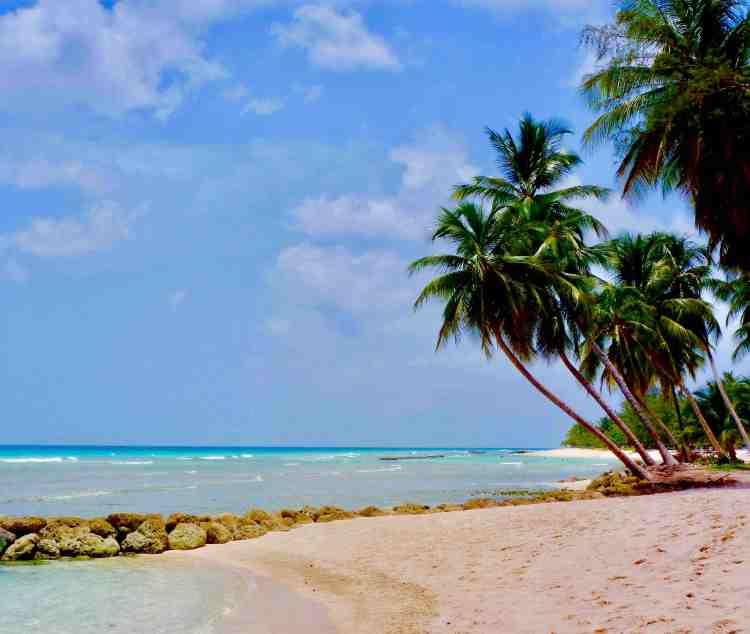
Barbados – There are many beautiful beaches in Barbados but the easiest one to get to is Boatyard Beach on Carlisle Bay. It is a great beach with white sand and tropical turquoise water. It’s only about a 20 minute walk along a seaside sidewalk from the cruise terminal or an inexpensive taxi ride. An admission fee of US$20.00 is charged to use the facilities which includes a beach chair, shared umbrella, one cocktail, free WIFI and complimentary transport back to your ship.

Cozumel Chankanaab National Park – When you get down to it, this is a day at the beach. The park is equipped with bars, restaurant, along with beach and snorkel rental options. A taxi ride will cost between US$10 and US$20 each way (make sure you have plenty of singles as drivers don’t offer change) and park admission is about US$21. A recent tour booked through the cruise ship cost $69 per person. That’s $138 for what would have cost $62 for two people going on their own.

Easy And Popular Attractions To Do On Your Own

Mendenhall Glacier

Mendenhall Glacier Alaska – This is a national park outside of Juneau Alaska. The park is serviced by a public bus route from the historic downtown area near the cruise docks with round-trip fare being $31. Add to that the admission to the park (NPS standard fees) $20 which totals $51 ($31 if you have a NPS Golden Eagle Senior Park Pass). The basic cruise tours usually start around $75 and if they add in a salmon bake it can cost an extra $20 to $30. For more on Mendenhall CLICK HERE.

Rome from the Port of Civitavecchia – If your cruise has Rome as a port of call there usually is a tour named something like “Rome On Your Own” for around $100 per person which includes a bus ride from Civitavecchia in to central Rome (usually St. Peters) and back to the ship. Only six blocks from the Civitavecchia seaport is the town’s train station and for as little as US$12 you can get a round-trip ticket to the St. Peters station in Rome with trains running about every half hour. For two that’s a savings of $172 and the trip in and back on the train is actually significantly faster than the tour bus (no traffic). Just be sure and schedule your return to allow plenty of extra time.

For more on visiting Rome from Civitavecchia CLICK HERE and for our eight hour tour of Rome on your own CLICK HERE.

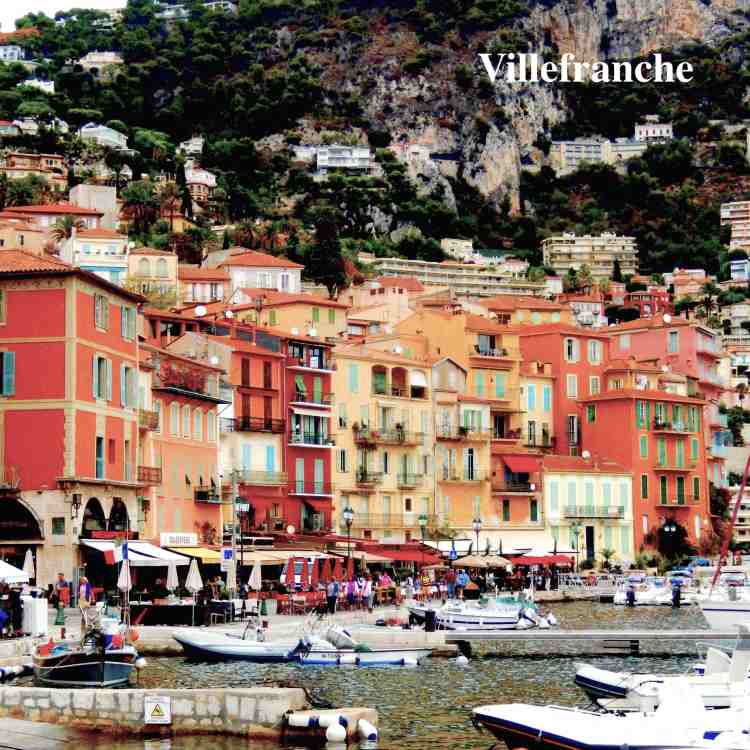
Monte Carlo From Villefranche-sur-Mer

Another interesting tour comparison is a trip into Monte Carlo from the popular port of Villefranche-sur-Mer. Most cruise sponsored tours start at $75 per person. Monte Carlo is a beautiful but compact city and going on your own simply requires walking seven or eight blocks from the cruise tender dock to the train station and buying a US$12 round trip ticket. It’s only a short twenty minute train trip with trains running every half hour. In Monte Carlo near the station you can buy a Hop-On-Hop-Off Monte Carlo bus tour for under US$30.

In order to head off on your own and save money you do have to be a bit adventurous. We are pretty independent and are usually comfortable using local buses and trains as we travel. Our biggest fear is missing the ships departure so we always build in a good time allowance as we make our plans. We are also good at doing research on our destinations and have a good idea of what we want to see and how to do it before we even leave on a trip.

A Few Ship Sponsored Tours That Are A Must

On the other side of the equation are examples of ship excursions that are well worth the cost:

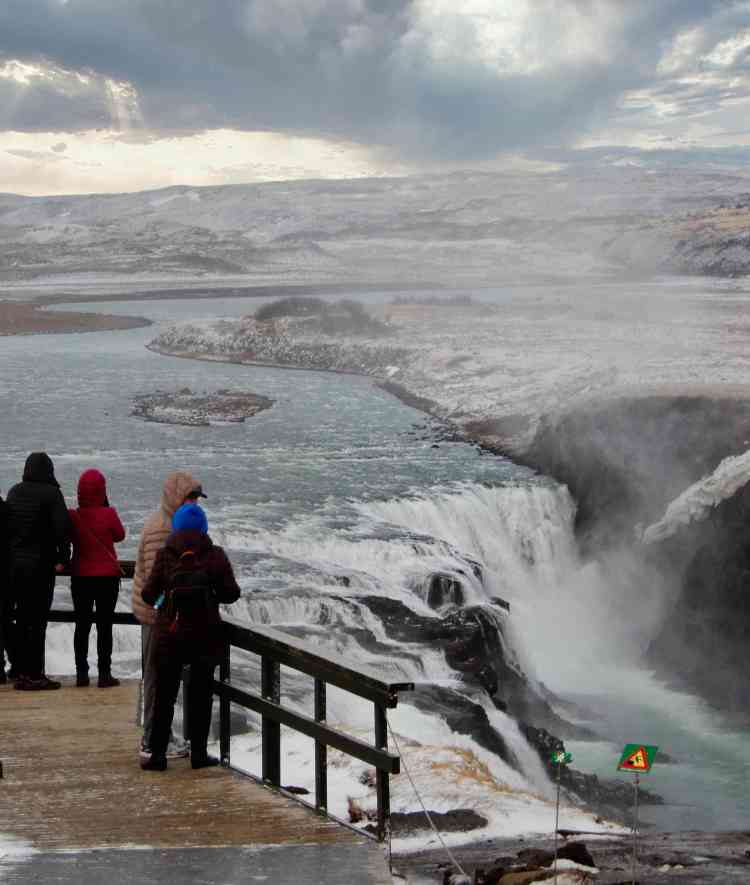
The Golden Triangle Iceland – This tour is a bit pricy but so are the local tour companies. Often the reason this tour is better is often ships dock in the afternoon and sail shortly after noon the next day, disqualifying local tours as an option. While you can consider renting a car there is the issue of time. The tour itself probably travels over a hundred miles and takes you to geo-thermal fields, waterfalls(!!) and Icelands rift valley where the earths crust is pulling apart. No shopping stops or misspent time. If you are going to Iceland don’t miss the Golden Triangle.

Ephesus

Ephesus Turkey – The ancient city of Ephesus, located near the Aegean Sea in modern day Turkey, was one of the great cities of the Greeks and later the Romans in Asia Minor. It’s home to the Temple of Artemis, one of the Seven Wonders of the Ancient World. Today, the ruins of Ephesus are a major attraction located some distance from the port. Again not inexpensive but a great experience (it usually does include a stop at a rug showroom). You might be adventurous but think hard before renting a car for half a day in Turkey.

Seeing Bangkok

Bangkok’s port is Laem Chabang and it’s well over an hour drive from the city. Attempting to use public buses is a serious challenge, especially on a tight time schedule. If this is a first visit to Thailand do not pass up a trip into Bangkok, it is an experience not to be missed. If your ship is staying overnight in Laem Chabang one option is to consider booking a two day tour with a major tour company and stay the night in Bangkok. But for a single day the ships tour is probably the best option.

Wine & Food Tours

Wine and food tours are a staple of ship sponsored excursions and often are some of the more reasonably priced tours. Taking advantage of these at times provides a good way to see a city or the countryside and sample local fare.

A Wine & Tapas Tour in Palma – This one usually isn’t very expensive and includes stops at several different tapas bars and free time in town for shopping on your own. The drive back to the pier can include brief stops at the castle overlook above town and a nice drive along the coast. A good answer to filling an afternoon in Mallorca.  For more information CLICK HERE.

Jerusalem – Regardless of where your ship docks, Jerusalem is at least an hours trip away. The city is also huge with streets and alleys that present as a never ending maze. To really see Jerusalem in a day or two, a guide is almost a must. The convenience and the time you save makes a ships shore excursion worth the cost.

Ports With Great Public Transportation For Exploring On Your Own

Another thing to pay attention to is the port of calls public transportation. There are dozens of cities with great and inexpensive public transportation. Most have ticket vending machines with instructions in English along with great system maps. Before you travel check out your ports and if the offer tourist tickets.

Singapore – While there are several cruise docks in Singapore, the nearest Metro Station is only a few blocks walk from each. The Singapore Metro system is clean, well marked and best of all the signage is in English. CLICK HERE for specific information.

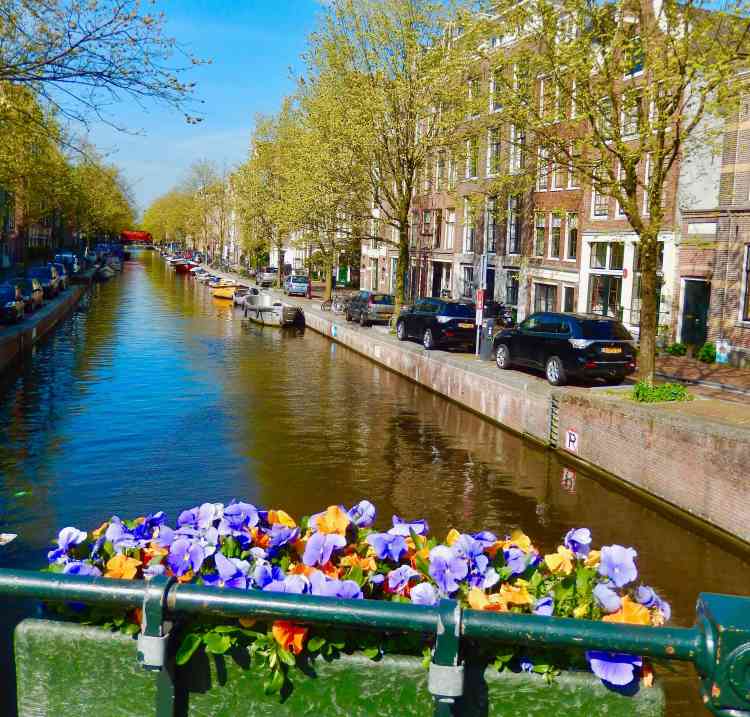
Amsterdam – The center of Amsterdam is focused on the Central Train Station that can be reached in a short seven to ten block walk from the ships pier. A series of tram routes fan out from the train station and The Amsterdam City Card allows you to travel on Amsterdam’s GVB-trams, buses, and metros. This popular one-, two-, three or four day pass also provides free or discounted access to many of the city’s museums and attractions. A one-hour canal cruise by boat is also included with the pass.

Sydney – Cruise ships dock at a pier next to Sydney’s historic Rocks area with only a short walk to Circular Quay where you can catch ferries around the harbour, pick up a bus or a light rail. Ask about the Opal Card which gives you easy system access for a very reasonable price. MORE HERE.

Hong Kong – Like Singapore, Hong Kong has a very modern and inexpensive metro system with easy to use ticket vending machines and route information in English. It is also common for there to be free bus service that will take you from the cruise pier to a number of destinations. MORE HERE.

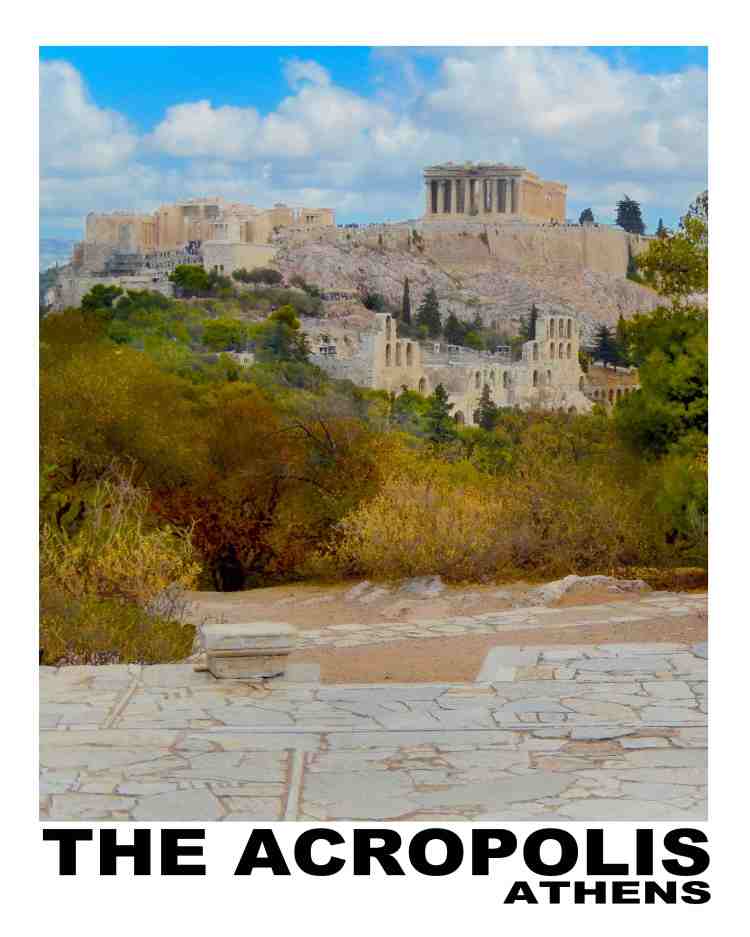
Athens – Piraeus is the seaport for the city of Athens and while a bit out of the city, the cruise ships dock less than a mile from a metro station. Easy to get to by just following the water front. Fare is only a couple of Euros and the Thissio stop on the green line from Piraeus is only a short walk to the Temple of Hephaestus and the Acropolis even has its own stop. An easy trip on your own that represents a major saving.

Cruising And Seeing The World

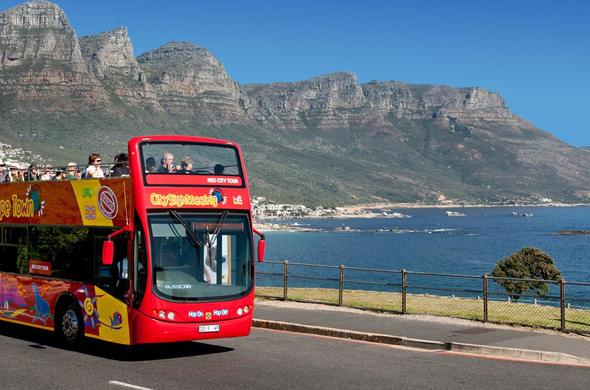
One of the biggest issues involving cruising is you usually have less than one day to see a new city. That’s barely enough time to see even the major highlights. We actually consider this an advantage of sorts. Cruising to us is a good way to sample a number of new places while on a trip and if we’re taken with a place we usually make plans to return and spend more time. In a similar way a friend of ours likes to take Hop-On-Hop-Off buses to quickly familiarize himself with a location and that helps him decide what he wants to focus on later.

In closing there are can be tours and situations where the cost is just too good to ignore. Sometimes that is because you’ve got onboard credits that you just need to spend and other times it can be a perk offered by the cruise or your travel company.