Port of Call Skagway, Alaska

Spend a Day in a Gold Rush Town

Skagway is a popular port of call on Alaska cruise itineraries. With a population that fluctuates between 700 in winter and 2,000 in summer it is easy to see what drives the economy. While Skagway is small and a bit isolated that doesn’t mean there isn’t anything to do. Historically Skagway has its beginnings in the Yukon gold rush when it was established as the port of entry for the famous Chilkoot trail leading up to the Yukon gold fields. Today it is a tourist destination with a lot of interesting options for spending a day off a cruise ship from shopping, riding a train or helicopter to even wilderness adventures.

Where Your Ship Docks
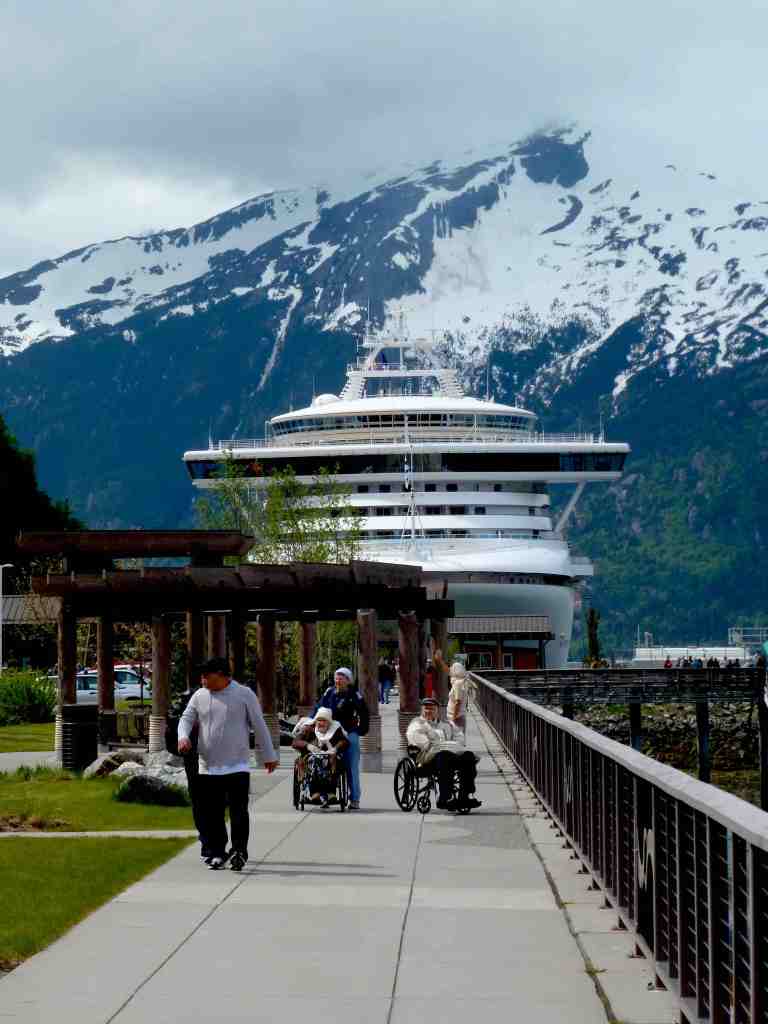
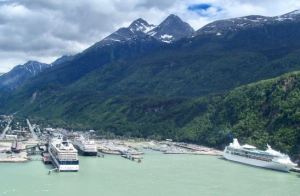
Cruise pier Skagway
Cruise pier Skagway
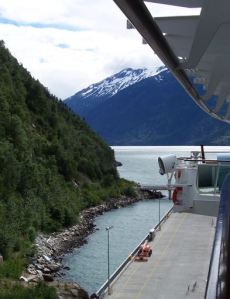
Ships tag the rocks above the pier

There are several modern docks right near town with specific docks designated for different cruise lines. While there are no facilities right on the docks it is a short walk to public facilities going into town with more available near the foot of State Street that runs up thru town.

Transportation

Taxis are available but the town itself can be walked in a short period. There are locations to visit on the outskirts of town like the gold mine where a taxi would be your best option. There are also Pedi cabs and a number of tour operators that offer short excursions around the area.

Currency

Riding The White Pass & Yukon RR

Alaska is a U.S. state and the U.S. Dollar is the preferred currency with most major credit cards accepted as well as ATM machines in town.

A Bit Of History

With a growing population of over 10,000 people, Skagway, Alaska, was on many peoples minds as word of the Klondike Gold Rush spread in 1897 – 98. They called the town Skagway for the Tlingit Indian name “Skagua,” which means “the place where the north wind blows.”

The town was founded in 1895 by Captain William Moore, a former steamboat captain, who traveled north from British Columbia to work for a surveyor. He is credited with discovering the White Pass route through the Coastal Mountain Range. He selected a site where the Skagway River entered into the salt-water Lynn Fjord. He filed a 160-acre homestead claim at the head of the White Pass Trail in 1887, and he and his son, Ben, built a cabin, a wharf and sawmill. He began to chart and mark the White Pass Trail in expectation of a flood of miners to the gold rush. The first rush of prospectors landed at Skagway in the summer of 1897. After all of his planning Captain Moore was pushed aside and ignored by the newcomers who took over the Moore homestead and the surrounding area and laid out a townsite without consulting him. They even forced Moore to relocate his cabin since it stood in the way of a newly plotted street.

Downtown Skagway 1898

Between 1897 and 1898, Skagway became a lawless town, described by the Canadian North-West Mounted Police as “little better than hell on earth.” Gun fights, prostitutes, and liquor were ever-present on Skagway’s streets, and the towns leader was a con man named “Soapy” Smith, who became the boss of a pack of robbers, gamblers and swindlers who ran the town.

The National Park Service Visitor Center at 2nd Avenue and Broadway in Skagway is a place to begin your exploration of the area’s rich gold rush heritage. Preserving History & Becoming an International Historical Park in 1997 with the park celebrating the centennial of the Klondike Gold Rush.

Attractions

If you are looking for a scenic excursion The White Pass and Yukon Railroad provides train rides up thru the mountains to the White Pass and back. Their station is right in town and tickets are usually readily available. There is also a gold mining attraction near town where you can pan for gold. There are a number of whale watching boat trips and a helicopter tour that will take you up to land on a glacier.


State Street also has the usual lineup of tourist retail stores with an emphasis on jewelry. For some unique items look for local artists and crafters gift items.

Helicopters heading for a glacier
Helicopters heading for the glacier fields

If you are looking to book a tour our suggestion is to book on your own instead of through the ship. You will have a whole day in Skagway with plenty of time to set something up. By calling the helicopter tour service in Skagway the day before arriving in Skagway you can save almost fifty percent on booking a helicopter trip up to a glacier.

Tip: Most U.S. and Canadian cell services do not have any surcharge for using you phones in Alaska. Just make sure you have a land based signal and are not on the ships cellular service.

Current News February 14th 2022

An Editorial On Cruising, The CDC And Policy

The CDC Has A Plan To Regain Authority Over Cruising

Introduction

Our Cruising Experiences In The Age Of Covid

In the past three months my wife and I have taken three cruises. While on the first cruise it was reported they had a case of Covid-19 onboard. The positive case with their family left the ship in the next port and we had no more Covid-19 reports on the cruise. The second cruise was Covid-19 free and the most recent cruise reported several of the crew had tested positive with two reporting symptoms during the last cruise. One of them recovered during our cruise and after testing negative resumed her job as Loyalty Ambassador.

Required wearing of masks changed to mask free on the second cruise and we were told that the last ship would eliminate masking on the next cruise. Between the three cruises we were tested before boarding each time and had additional tests before entering several ports.

The second cruise was a trans-Atlantic with no cases and no mask wearing

It is our opinion that most cruise ships are dealing well with new health requirements and generally we do not feel at risk while cruising. Over the past two years most people have come to terms with accepting the risks of contracting Covid-19 and are getting on with their lives and getting back to travel. This new CDC program is simply more evidence that governments just can’t surrender their control regardless of circumstances.

The CDC And The New Voluntary Cruise Program

Not being happy with technically being forced to lift their “no sail” and “provisional sailing”orders, the CDC has come up with another scheme to discourage Americans from booking on cruise ships or at least to make some people feel uncomfortable booking future cruises. The obvious intention of their new program is to make the policy appear reasonable while demonstrating that the CDC has a carefully crafted plan to improve the safety for future cruising.

Examining the new program it quickly becomes obvious that the real intention is to coerce the cruise industry into participating by threatening to provide to the public classifications of ships as “Gray” instead of their “Vaccination Standard of Excellence” or “Highly Vaccinated” classification. Gray cruise ships would be foreign-flagged cruise ships operating in U.S. waters that have chosen not to participate in CDC’s COVID-19 Program for Cruise Ships. With this it is important to understand that as of now there is only one large, ocean going cruise ship that is a U.S. flagged vessel.

American flagged ships will not have to follow most of the new policies.

Ships that receive the “Vaccination Standard of Excellence”– the highest category – will require at least 95% of passengers and crew to be up-to-date with all COVID-19 vaccinations, including boosters.

“Highly Vaccinated” ships will denote ships sailing with at least 95% of passengers and crew fully vaccinated (but less than 95% total that have received all COVID-19 vaccines, e.g. boosters).

Finally, “Not Highly Vaccinated” ships will be ships that have less than 95% of passengers and crew onboard that are fully vaccinated.

Once a cruise line agrees to place their ships into the program the CDC will institute a whole galaxy of additional regulations and requirements along with current CDC policies and any new policies they might implement in the future. This includes all participating ships must have a COVID-19 response plan in place that includes protocols for training all crew in COVID-19; onboard surveillance of passengers and crew that test positive for COVID-19 or other illnesses similar to COVID-19; and testing plans that match CDC technical instructions. Response protocols will also need to be in place for onboard isolation and quarantine, with consideration for capacity during an outbreak, and for onboard medical staff and hospital-grade equipment for treating positive cases. Cruise ships will also need to have adequate protective gear for medical staff, publish procedures for disembarkation of COVID-19 positive passengers, and a statement of intent that the cruise ship operater will observe all measures of its COVID-19 response plan, inclusive of any public health recommendation updates given by the CDC.

February 14, 2022 From The CDC Website

The CDC’s COVID-19 Program for Cruise Ships, including color status definitions and thresholds has been Announced by the CDC.

A New Policy Is Being Implemented By The CDC

Further complicating the re-introduction of cruise ships to the American market the CDC will now recommend that cruise ships operating or planning to operate in U.S. waters select to participate in CDC’s COVID-19 Rating Program for ships. The program will be based on information coerced from cruise companies supplied to the CDC “voluntarily”. The CDC will use the data to assign color coded status for ships in the program based on data about the vaccine status of crew and booking passengers per cruise.

The CDC reports that their color-coding system will give travelers information they can use to make informed decisions about their safety before choosing to travel on specific cruise ships. Color status designations indicate the number of vaccinated people onboard, COVID-19 cases reported for each ship, whether an investigation is needed along with additional public health measures recommended for a ship that it it should be taking, and whether a ship has opted out of the program.

These ships may have their own COVID-19 health and safety protocols, which CDC has not reviewed or confirmed. CDC cannot confirm the COVID-19 public health measures implemented on “Gray” designated ships. Therefore, CDC does not recommend that travelers book on these ships.

But wait there’s more…

Daily Data Reporting- Cruise ships participating in the new program will be required to fill out and submit daily COVID-19 forms to the CDC, which the agency will have discretion to post publicly.

Enhanced Onboard and Onshore COVID-19 Testing and Isolation.

All crew must be screened before embarking or disembarking in the United States. All crew members must undergo viral testing within specific 48-hour period to detect possible positive cases of COVID-19.

Anyone who produces a positive antigen test result must be reported as positive and may not be retested to eliminate false positives. All positive cases are classified as new cases unless the person is asymptomatic and has proof of recovery from COVID-19 within the last 90 days.

Any passengers who report COVID-19 or COVID-19-like symptoms will be immediately tested and isolated, regardless of vaccination status. Retesting will not be an option.

Ships with a “Vaccinated Standard of Excellence”, close contacts of passengers who test positive for COVID-19 must be tested immediately, quarantined for five full days after their last contact with the infected person, and then retested. On “Highly Vaccinated” and “Not Highly Vaccinated” ships, close contacts must quarantine for 10 days and may only end quarantine if they are asymptomatic and test negative. There are no exceptions to this program — and no clarity as to whether this 10-day quarantine must be completed onboard, ashore, or both.

Quarantining Policy Under the New CDC COVID-19 Program

The new CDC program has specific guidelines for quarantined cabins, including the requirement that quarantined individuals be isolated in single-occupancy cabins with their own bathroom

Quarantined guests may not have direct contact with anyone outside of the onboard medical staff, and their cabins may not be serviced by crew. Meals must be served in disposable containers with single-use cutlery and must have contactless delivery.

The CDC also requires that cruise lines implement surveillance of isolated passengers to make sure they are complying with their quarantine orders.

On ships with a Vaccinated Standard of Excellence, symptomatic isolated passengers may rejoin their cruise after five days if they are asymptomatic or have been fever-free for 24 hours. Confirmed asymptomatic cases will be allowed to leave isolation after five days and with a negative antigen test taken on day five. On ships with other vaccine classifications, the waiting period bumps up to 10 days — all of which seemingly must be served onboard.

Virtually all of these CDC requirements have little to do with helping cruises become safer and much to do with exercising power and control.


Travel Shopping For Gifts And Souvenirs

International Travel And Bargain Opportunities

Vanilla in Mexico, jade in Central America, salmon in Alaska, macadamia nuts in Hawaii, paprika in Hungary, these are just a few of the items that we look for when traveling. Taking advantage of these bargains while traveling provides an opportunity to bring home not just memories but really good quality items at often remarkable savings.

Think Outside The Box

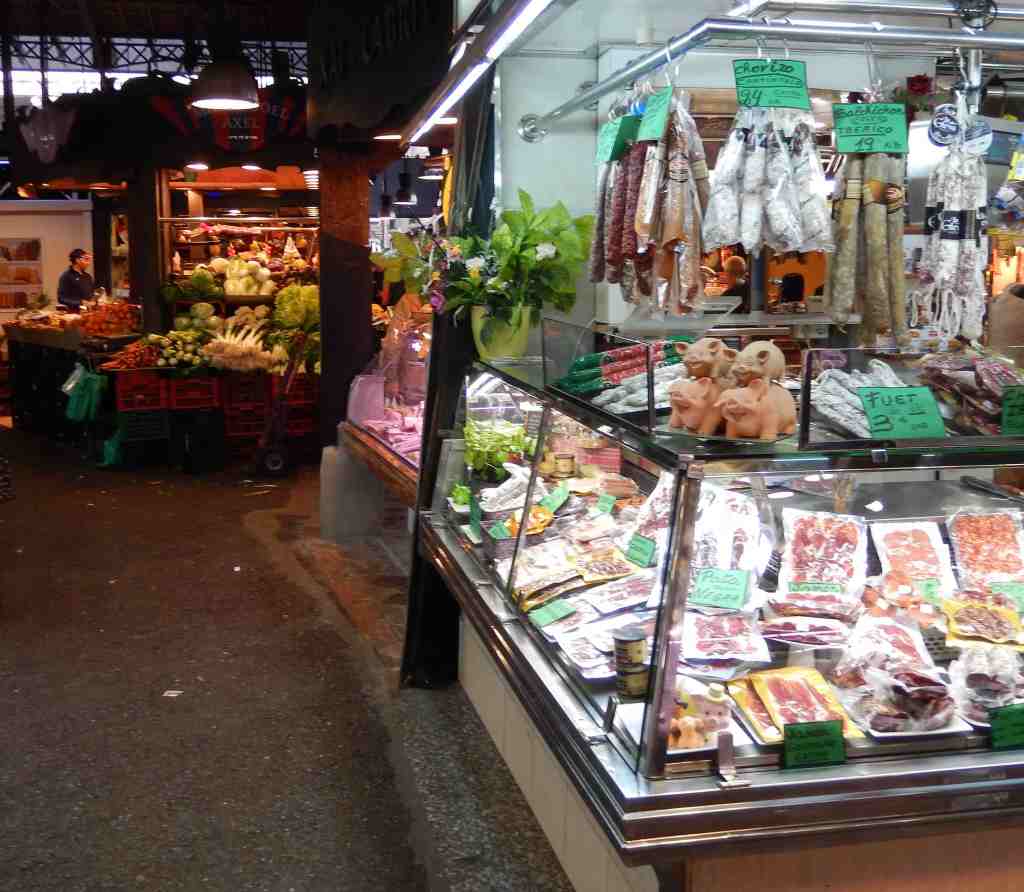
While it’s easy to shop for many of the notable local speciality items in tourists areas, the real bargains come from thinking outside the box. While visiting places ask yourself “where do the locals shop ?” Chances are you won’t find them standing in line at Hilo Hatties in Hawaii to buy macadamias or the waterfront Alaska gift shop to buy their salmon (Tip for buying salmon – look for the Wild Alaska Salmon & Seafood Company). Local supermarkets and street markets are treasure troves of unique local products and an excellent way of seeing how locals shop.

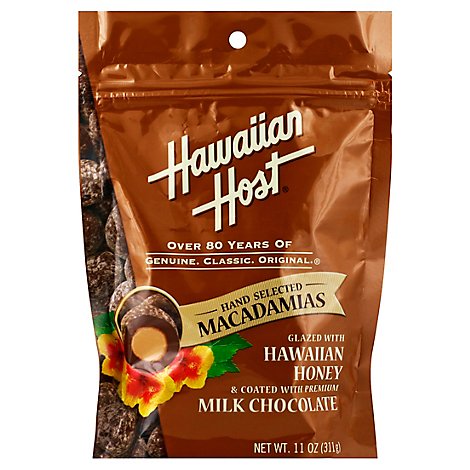
Macadamias In Hawaii – In Hawaii the Mauna Loa plantation is famous for being the largest grower and packager of these gems, but it is far from the best place to shop. What the locals know is that the drug chain CVS has special sales on Macadamias every few weeks and if you know about CVS coupons it’s possible to save 50% when buying Macadamia Nuts

Distilled Spirits In USVI Duty Free Shops – Duty free liquor in the United States Virgin Islands has for decades been one of the things to buy. Besides being duty free, Americans can bring back four or five liters duty free when going home. Unfortunately, retailers serving the tourist trade along with the local government have been taking advantage of the USVI’s reputation. They’ve been profiteering more and more in recent years with the result of many tourist shops being almost on par with U.S. prices. Want to save from 25% to 30% over those “duty free” shops? Go where the locals shop. Pueblo is the USVI grocery store chain where you can buy duty free and be given one of those six bottle cartons too.

Mexico For Tequila, Vanilla* and Silver – America’s neighbor to the south has some shopping opportunities that shouldn’t be passed up when you visit. Mexico is deservedly famous for silver, onyx and pottery with prices often too good to pass up. Two additional items that are always a good deal are vanilla and tequila (check U.S. duty free exceptions before you buy).

*In shopping for vanilla don’t be tempted by those large, cheap bottles of vanilla available in many gift shops. They may not contain real vanilla extract, and sometimes may contain something that could hurt you. That “something” is coumarin, an extract of the tonka bean that imparts an intense vanilla aroma and thus makes it smell like the real thing. Coumarin was banned as food additive in the U.S. in 1940 because of moderate toxicity. Pay attention and make sure you know what you are getting.

Local Spices, Pepper Sauces and Speciality Foods – From Thailand to India, Hungary to France and all over Latin America there are lots of unique speciality items to shop for. Don’t pass up an opportunity to bring home Hungarian Paprika or Greek Oregano or maybe French Pate**.

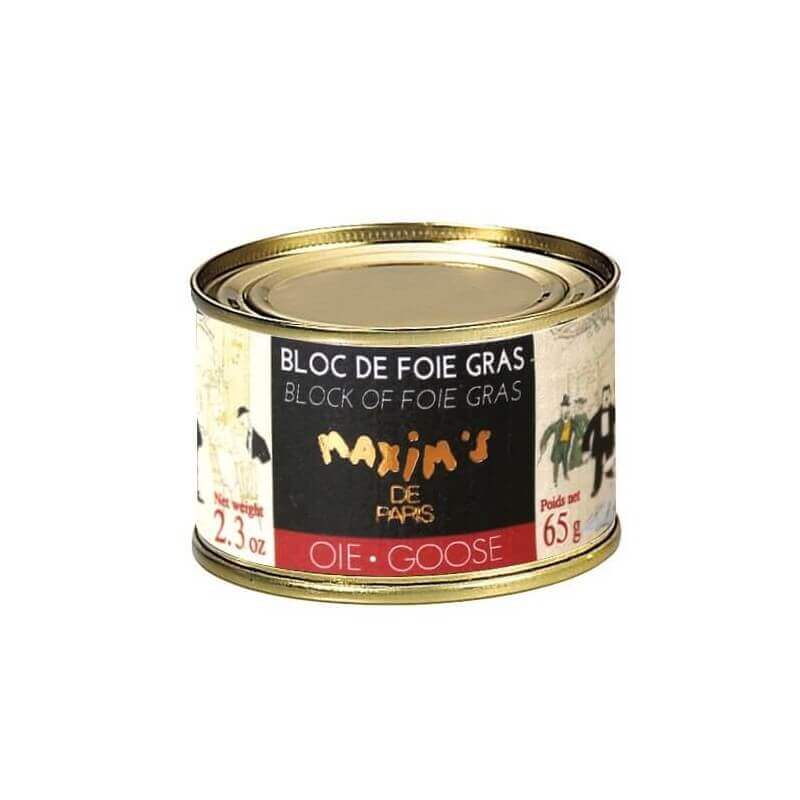
**Pate and a U.S. Customs Oddity – It seems that the U.S. Customs policies regarding bringing back Pate and Foie Gras as well as other packaged meats is somewhat poorly defined. One policy declares that “Cooked poultry meat or poultry meat products will be inspected by U.S. Customs & Border Protection. Items appearing to be “thoroughly cooked throughout will be allowed entry. Items that do not appear thoroughly cooked throughout will not be allowed”.That leaves deciding if it is allowed up to the individual agents and their understanding about an items being thoroughly cooked throughout. Another entry appearing on the USDA and Customs websites states, “If the declared meat product is packed in hermetically sealed containers and cooked by an acceptable commercial method after such packing to produce articles that are shelf-stable without refrigeration it can be allowed entry into the U.S. if intended only for personal use.”

Some Economies Can Represent Exceptional Opportunities For Bargains While Traveling

While traveling in much of the Western world you will see currency values ebb and flow on a regular basis but usually not so much as to represent major savings. There are some world economies that do in themselves provide buying opportunities however. Places where Euros and Dollars are really strong allow you to travel less expensively and shop for some real bargains.

Vietnam and its neighbors, aside from being eager to accept U.S. Dollars offer options to do serious shopping for bargains. Locally made items demonstrate great values along with made to order clothes and some unique manufactured goods.

Other countries that have been struggling to recover from a recession or have been forced to devalue their currency are also opportunities. Over the past decade countries like Argentina, Greece and the Philippines have offered great travel opportunities on a limited budget.

Photo Essay • Amsterdam’s Keukenhof

Images and impressions from our travels near and far…

Each Spring Holland celebrates its famous tulips with an event called The Keukenhof. An opportunity for its tulip growers to show off their creations, The Keukenhof is virtually a Worlds Fair of tulips.

Located outside Amsterdam amidst the growers tulip fields, The Keukenhof attracts visitors from across Europe and from around the world. Featuring seven million flowers in bloom the Keukenhof opens each year in late March and can be reached within half an hour from The Hague, Haarlem, Leiden and Amsterdam.

Beyond the Keukenhof Gardens are hundreds of acres of tulips


Are Bloggers Victims of Social Media Algorithms?

Blogging & Are We Being Played? There’s a lot in the news lately about the social media companies manipulating our children online to keep them engaged and how much harm it may be doing. It is obvious that these entities know a great deal about human psychology and how to take advantage of people online.…

Standing Watch Above The Rhine

People, places and captured moments selected from The Intentional Travelers photo collection. Marksburg Castle on the Rhine River Marksburg Castle, a majestic fortress located above the town of Braubach in Rhineland, Germany. This castle holds the unique distinction of being the only hilltop fortress on the Rhine that has never been captured or destroyed. Originally…


Photo Essay The Acropolis In Athens

Photographic impressions from our travels near and far…

The Porch of the Maidens on the Acropolis stands watch above modern Athens

The Athens Acropolis • Most people relate the Acropolis with Athens but an acropolis is actually a Greek word meaning a citadel or a fortified section of a Greek city. It is typically built on high ground or on a hill. Most Greek cities in the fifth century BC had an acropolis.

Dating back to 500 BC, this high rocky ground in the center of Athens, while famous for its incredible temples, is more noteworthy as the birthplace of the very concept of democracy. If you get the chance to visit spend some time marveling at the structures but also reflect upon those people who changed the way we think about government.

When visiting Athen’s Acropolis there are a number of trails throughout the area. One is wide and paved and circles about half way around the Acropolis peak and goes by a number of ancient Roman sites and offers a few good outdoor restaurants. For the best views of Athens as well as the Acropolis take the trail to the Filopappou Hill. That trail passes by the Church of Saint Demetrius Loumpardiaris and the Prison of Socrates. A bit of an uphill climb but well worth the effort.


The Church of the Holy Sepulcher

The History Behind The Celebration Of Easter Without question the holiest site in all of Christendom is located in the Christian Quarter of Jerusalem. It represents the location where Jesus was crucified and where his body was laid to rest. Today there is a high level of certainty that the location has been actually identified.…


The Cruise Port of Sydney, Australia

One of the worlds great natural harbors, see where you’ll dock, local attractions, transportation and history of this fantastic port of call.

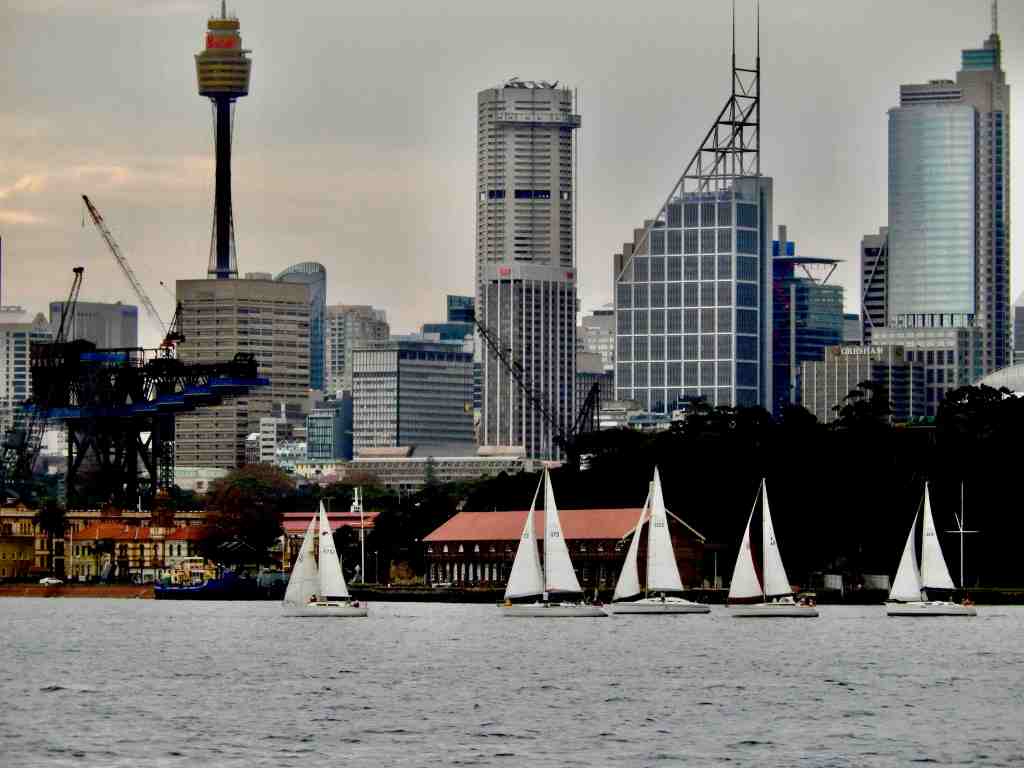
If the world has a perfect port of call, this is it. Besides being the worlds greatest natural harbor, the harbor is surrounded by a truly remarkable city. The center of the Sydney harbor area is Circular Quay with ferries leaving regularly for dozens of destinations like Manley Beach, Watson’s Bay and Luna Park. In addition the Circular Quay is located near the Sydney Opera House, the harbor bridge, the Rocks and metro transportation hubs (links to more info below). The great news is that cruise ships dock just across from Circular Quay.

Where Your Ship Docked

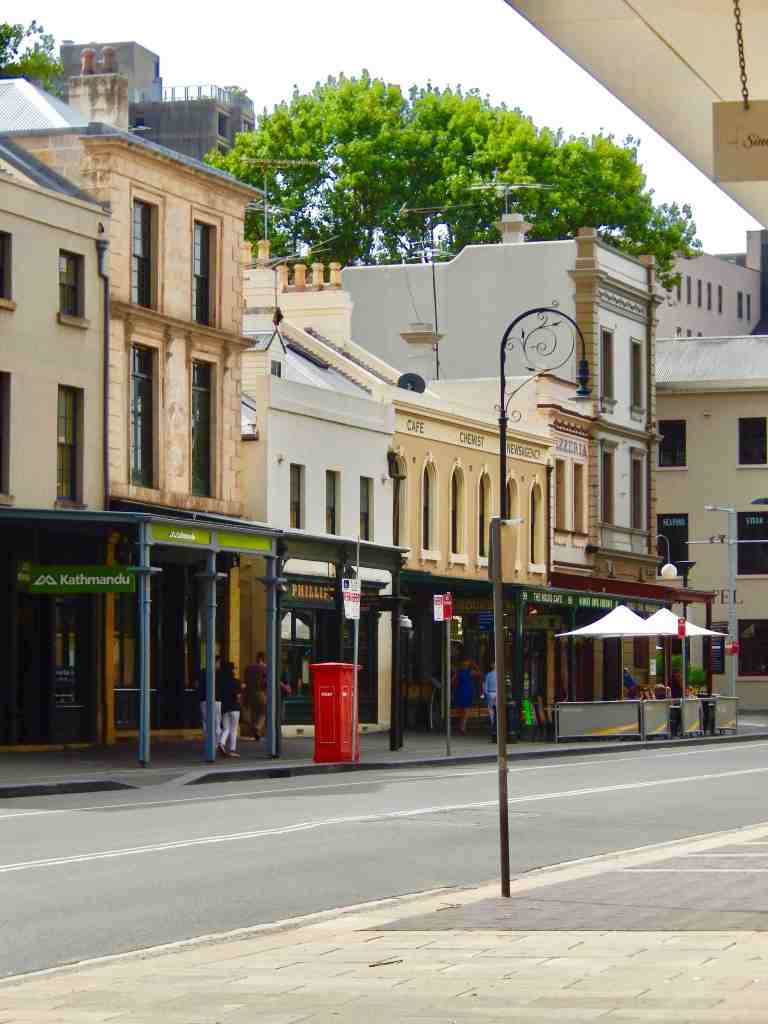
One of the great things about Sydney as a port of call is the pier location. It docks right next to The Rocks, a great historic neighborhood with restaurants, shops and a museum. Less than a half mile walk behind The Rocks is Darling Harbor which is a modern centerpiece to the area with more fantastic attractions and great restaurants. A short walk in the opposite direction is Circular Quay where you can catch any number of ferries to destinations all around this huge harbor.

Transportation

Circular Quay

Getting into the central city is just a short walk from the pier and the mass transit options are really good. If you are going to be in Sydney for a while or if you want to spend your day traveling on your own, be sure and get an Opal Card (links to more info below). Because ships dock very near Circular Quay you can also catch a ferry to any number of locations around the harbor (Opal Card works on the ferries too).

Currency

You should get some currency exchanged even if you plan on relying on credit cards just just to buy incidentals. Currently the Australian dollar is equal to 76¢ U.S. Most credit cards are welcome and ATM machines are plentiful.

Also it’s important to know that Australians DON’T tip. If you go to a restaurant and the menu says $10.00 that is exactly what you should expect to pay. Most listed prices include all taxes and gratuities.

History

Sailing westward from New Zealand across open sea in April 1770 Capt. Cook became the first known European to reach the east coast of Australia, making landfall near present-day Point Hicks. He then proceeding north and landed at Botany Bay.

Australia became an English colony in 1788 when the first prisoners assigned to the new penal colony of Australia arrived at Botany Bay inside the area of todays Sydney Harbor. When America won its freedom, England lost the ability to assign criminals to their American colonies and switched to Australia to deposit people they thought unfit to live in England. While thousands of criminals were banished to Australia on 16 January 1793 a ship arrived at Sydney Cove carrying the first few hundred free settlers looking for opportunity and they were soon followed by thousands more.

The Rocks

Local Highlights

Within a couple of blocks of the pier are two museums, the Museum of Contemporary Art and the Discovery Museum, both worthy of a visit.

The Rocks – As you leave the ship and begin walking you have two choices; off to the left you are heading toward Circular Quay and the downtown district and the Opera House on the other side of the Quay. If you go straight ahead and up some large stairs you will find yourself in the middle of The Rocks. The Rocks became established shortly after the English colony’s formation in 1788. The original buildings were timber with thatched roofs, and later many were replaced with local sandstone block, this limestone is where the area derives its name. This neighborhood is the original foundation of the city of Sydney. From the earliest history of the Rocks, the area had a reputation as a slum and the convicts’ side of town and was often frequented by visiting sailors because of the numerous rum bars and prostitutes.

The Sydney Opera House – It dominates the harbor right across from where cruise ships dock. Even if there are no productions scheduled there are still guided tours ($) of this architectural masterpiece.

The Harbour Bridge – This structure dominates the harbor and there are actually tours that will walk you up the suspension cables to the very top if you feel brave enough.

Luna Park – This is an amusement park located across the harbor from Circular Quay with a stop on two ferry routes. It is mostly an evening and night destination if you are spending a couple of days in the harbor area.

Darling Harbor – Less than a half mile west of the pier through The Rocks is Darling Harbor with with a number of very good restaurants, shops and Sea Life the Sydney Aquarium.

Royal Botanic Gardens – Just to the east of Circular Quay is a large park that includes The Gardens along with The Rose Garden and Pavilion.

Catch a Ferry – Don’t miss an opportunity to grab a ferry at the Quay and see Sydney from the water. Visit Manley Beach, a popular surfing beach and Watson’s Bay for good fish n’ chips.

Manley Beach

If you are spending a few days in Sydney we’d recommend getting an Opal Card for public transportation. You can catch a metro and bus out to Bondi Beach which is one of the worlds more famous surfing beaches and has a remarkable walking trail along the cliffs. You can also take a train on the Opal Card out to the Blue Mountains which is about an hour and a half out of Sydney.