For what should be an insignificant piece of land sitting at a crossroads going from someplace to someplace else, this spot has historically been the center of a lot of attention. In planning for this trip we did a deep dive into the history of this city and for a five thousand year history of Jerusalem see our write up HERE.
The vault of the Holy Sepulchre inside the shrine.The shrine of The Last Supper.
When we first arrived our impression was one of stark landscapes. The whole time we were there the sky was bright blue with almost no clouds. Everything was the color of Sun-bleached sand from the land to the buildings and the walls which are everywhere. It’s also hard to find flat places anywhere in Jerusalem – this is a city of hills.
The focus of any first visit is the old city enclosed within high walls and there will be plenty of visitors. Jerusalem is claimed to be the birthplace of two great religions, Judaism and Christianity and a significant site in the history of Islam. Over 56% of the worlds believers claim a connection to this Holy place and pilgrimages have attracted people to this city for a couple of thousand years. The right for pilgrims to visit was the focus of the Crusades.
The main Jewish pilgrimage site in Jerusalem is the Western Wall. Known as the Kotel it is part of the retaining wall of the Temple Mount, where the First and Second Temples which is located on the very site where Abraham was commanded by God to sacrifice his son Isaac.
Jerusalem is the most significant site in the Christian faith where Jesus taught, was crucified and where he was resurrected.
The three holiest sites in Islam are the Masjid al-Haram, or Grand Mosque, (in Mecca) ; the Al-Masjid al-Nabawi, or Prophet’s Mosque, (in Medina) and Al-Aqsa Mosque in Jerusalem.
Shortly into our visit we realized that this is actually dozens of cities built one upon another. Over five thousand years this city’s inhabitants have built fortified walls on numerous occasions only to have them torn down and later replaced. The Israelites tore down the Canaanite’s walls, the Roman’s tore down the Israelites walls, the Muslims tore down the Crusader’s walls and all through these periods the city got buried, excavated and buried again.
Excavations below current street level are everywhere.
After the Second Jewish-Roman War in 135 AD the Romans literally destroyed the city and left it in rubble. In 313 AD the Roman Emperor Constantine became a Christian and appointed his mother Helena as Augusta Imperatrix, and gave her unlimited access to the imperial treasury in order to locate the relics of the Christian tradition. She traveled to Jerusalem and is responsible for a number of excavations and the building of new Christian shrines. The city became reborn again.
Almost every building project unearths the past. Here an excavation at street level is diving two thousand years into the past.
In 637 the Muslims conquered the city and declared the Temple Mount a holy site and erected the Al-Aqsa Mosque and the Dome of the Rock on the site. In the eleventh century the Crusades began to secure the rights of Christians visiting the Holy Land. These religious wars between Christians and Muslims went on for three hundred years to gain control of holy sites considered sacred by both religious groups.
The streets of the old quarters twist around shrines and dive under each other in a maze of shops and excavations.
While there are a number of controversies surrounding the religious sites in Jerusalem and their accuracy, but dwelling on that completely misses the point of a visit to this Holy City. Even if you miss a step or two you are still walking in their footsteps. Highlights of a visit to Jerusalem should take in:
The Church of All Nations at the Mount of Olives
The Mount of Olives – Several key events in the life of Jesus, as related in the Gospels, took place on the Mount of Olives, and in the Acts of the Apostles it is described as the place from which Jesus ascended to heaven. Because of its association with both Jesus and Mary, the mount has been a site of Christian worship since ancient times and is today a major site of pilgrimage.
An olive tree in the Gardens of Gethsemane
The Gardens of Gethsemane – Gardens across the Kidron Valley on the Mount of Olives, a mile-long ridge paralleling the eastern part of Jerusalem, where Jesus is said to have prayed on the night of his arrest before his Crucifixion.
The Western Wall – The Wailing Wall, or Kotel, is an ancient limestone wall in the
Lines waiting to pray at the West Wall
Old City of Jerusalem near the Golden Gate. It is the only remaining section of the Jewish Temple. It is a relatively small segment of the “Western Wall”.
The Church of the Holy Sepulchre – The
The Church of the Holy Sepulchre
shrine is a church in the Christian Quarter of the Old City of Jerusalem. The church contains, according to traditions dating back to at least the fourth century, the two holiest sites in Christianity: the site where Jesus was crucified, at a place known as Calvary or Golgotha, and Jesus’s empty tomb, where he is said to have been buried and resurrected.
A shield marks station 5 of The Way of the Cross
The Way of the Cross – The Way of Sorrows or the Via Crucis, refer to a series of markers depicting Jesus Christ on the day of his crucifixion. The stations attempt to follow the ancient Via Dolorosa in Jerusalem which is believed to be the actual path Jesus walked to Mount Calvary. There are a couple of versions of the Via Crucis with one marked on maps with markers that pass though the Muslim and Christian Quarters of Jerusalem and ends at the Church of the Holy Sepulchre .
Location believed to be the site of The Last Supper
The Last Supper Room – A second-story room in Jerusalem that commemorates the “upper room” where Jesus shared the Last Supper with the disciples. It is located directly above the Tomb of David and near the Dormition Abbey on Mount Zion.
The Dome of the Rock stands above the Wailing Wall on the Temple Mount
Al-Aqsa Mosque and the Dome of the Rock – The Temple Mount is a holy site within the Old City for Jewish, Christian and Muslim people. All visitors are allowed to tour the compound and the Al-Aqsa Mosque, with the exception of the Dome of the Rock. It is recommended that non-Muslims visit with a guided tour though.
Before a recent visit to Jerusalem I spent some time looking into its history. I arranged this history by pulling from dozens of articles and weaving them into a consistent and continuous narrative.
To speak about Jerusalem is often like stumbling around in the dark. Visiting Jerusalem might help to push back the darkness, but it is likely to be only like striking a match, it offers some brief light but soon you are again in the dark. Nobody speaks of this place without prejudice and with roots that go back hundreds if not thousands of years.
Why is this place so significant? Many claim it is because God has touched this city so many times and that may be part of it, but much of the truth is found elsewhere. The city sits upon mountainous terrain at the very crossroads of history. Historically it was less a target and more an intersection for armies of conquest going someplace else. It occupies a spot going to or coming from Africa, India and Europe. The Egyptian’s goal wasn’t to conquer the land around Jerusalem, but had their sites set on the Assyrians. The Babylonians, the Egyptians, the Greeks and the Romans as well as the Phoenicians, Assyrians, Turks and a few Europeans passed through bound for somewhere else and often as an afterthought, made some claim to this piece of land.
Digging two thousand years under a street
Archaeological excavations point to the Canaanites having built massive walls on the eastern side of what is today Jerusalem for the protection of their land over three thousand seven hundred years ago. Later historical records indicate that a reunified Egyptian New Kingdom under Pharaohs Ahmose I and Thutmose I considered Jerusalem a protectorate under the authority of Egypt three thousand five hundred years ago. Three hundred years after that, as the Egyptian power in the region waned other histories noted the rise of a number of city states and small kingdoms in the region. According to the Old Testament, Jerusalem at this time was known as Jebus with the Canaanite inhabitants known as Jebusites.
Israelite history claims the right to Jerusalem about three thousand years ago, when King David and his army defeat the Jebusites and sacked the city. They claimed Jerusalem their capital and the surrounding countryside the Kingdom of Israel. The city, which at that point stood upon the Ophel, was, according to the biblical account, expanded to the south, with David, according to the Book of Samuel, constructing an altar at the location of a threshing floor purchased from Araunah. Following King David, King Solomon built a temple at a location which the Book of Chronicles says was the location of David’s altar. This Jerusalem temple site soon became the main place of Israelite worship, replacing other notable sites, such as Shiloh and Bethel.
Records from the Old Testament, along with archaeological discoveries indicate the Kingdom of Israel was politically unstable until 732 BC. During that period in 925 BC, according to Egyptian history, Israel was invaded by Pharaoh Sheshonk I who is also the first Pharaoh mentioned in the Bible for capturing and pillaging Jerusalem. Seventy five years later in 850 BC, Israel’s army was involved in a battle against the Assyrian King Shalmaneser III in the Battle of Qarqar with Jehoshaphat of Judah allied with Ahab of the Northern Kingdom of Israel.
The Golden Gate into Old Jerusalem
The Bible records that shortly after this battle, Jerusalem was sacked by Philistines, Arabs and Ethiopians, who looted King Jehoram’s house, and carried off all of his family except for his youngest son Jehoahaz. Later, most of Canaan, including Jerusalem was conquered by Hazael of Aram Damascus. The Bible states, Jehoash of Judah gave all of Jerusalem’s treasures as a tribute to Hazael who still killed “all the princes of the people” within the city. Fifty years later, Jerusalem was sacked by Jehoash of Israel, who destroyed the walls and took Amaziah of Judah prisoner.
At the close of the First Temple Period, Jerusalem was the the only religious site in the surrounding kingdom and a place of pilgrimage for all who claimed to be Israelites.
In 597 BC Jerusalem was conquered by the Babylonians, who then took the young King Jehoiachin into Babylonian captivity, together with most of the Israelite aristocracy. Zedekiah who was placed on the throne in Jerusalem by Babylonian king Nebuchadnezzar, rebelled, and Nebuchadnezzar, who was the most powerful ruler in the region, recaptured the city. The Babylonians then took Zedekiah into captivity, killed all his descendants along with other major citizens of Judah. The Babylonians then burnt the temple, destroyed the city’s walls, and appointed Gedaliah son of Achikam as governor of Judah. Shortly after, Yishmael, son of Netaniah, a surviving descendant of Zedekiah assassinated Gedaliah. Many of the remaining people of Judah, fearing the wrath of Nebuchadnezzar, fled to Egypt.
According to the Old Testament and the historical narrative of the Hebrew Bible, with corroboration by the Cyrus Cylinder, after thirty to forty years of captivity in Babylon, Cyrus II of Persia allowed the Jews to return to Jerusalem and build the Temple again. The books of Ezra–Nehemiah record that the construction of the Second Temple was finished in the sixth year of Darius the Great in 516 BC, following which Artaxerxes I sent Ezra and then Nehemiah to rebuild the city’s walls and to govern the Yehud province within the Eber-Nari satrapy.
When Alexander the Great conquered the Persian Empire, Jerusalem and Judea came under Greek control and influence. Following Alexander’s death his empire was divided between his generals with Egypt ruled by Ptolemy I and Jerusalem and Judea fell under Ptolemaic control. In 198 BC, after the Battle of Panium, Ptolemy V lost Jerusalem and Judea to the Seleucids under Antiochus the Great. During Seleucid rule Jews continued to Hellenize Jerusalem until 140 BC, when a rebellion led by the High Priest Matityahu ben Yoḥanan and his five sons: Simon, Yochanan, Eleazar, Jonathan and Yehuda ha-Makabi took control of of the city. Known as the Maccabees they created Jerusalem as the capital of the independent Hasmonean Kingdom. Lasting from 140 BC to 37 BC. It was ruled by Simon Maccabaeus, the son of Matityahu and by seven generations of his family. Two Hasmonean ruling brothers Hyrcanus and Aristobulus asked Rome to intervene on their behalf against a fundamentalist revolt, causing Judea to fall under the central rule of Rome as a Roman province. The last Hasmonean king was Aristobulus’ son Antigonus II.
In 37 BC, Herod the Great captured Jerusalem after a short siege, that ended Hasmonean rule. Herod ruled with permission and authority as a regional governor of Rome. Herod was probably born around 73 BC in Idumea, south of Judea. He was the second son of Antipater the Idumaean, a high-ranking official under Hyrcanus II, and Cypros, a Nabatean. Herod’s father was by descent an Edomite, whose ancestor converted to Judaism before his birth. Herod was raised as a religious Jew.
Herod rebuilt the Second Temple, upgraded the surrounding complex, and built himself a palace. At that time Pliny the Elder wrote about Jerusalem as “the most famous by far of the Eastern cities and not just the cities of Judea.” The Roman Tacitus wrote “Jerusalem is the capital of the Jews. In it is a Temple possessing enormous riches.” Herod also built Caesarea Maritima which replaced Jerusalem as the capital of the Roman province. Following Herod’s death in 4 BC, Judea and the city of Jerusalem came under direct Roman rule by Roman prefects, governors, and legates. Nevertheless, Herod’s descendants remained nominal kings of Judaea Province as Agrippa I and Agrippa II from 41 to 94 AD.
In 66 AD, the Jews rose up against the Roman Empire in The Great Revolt. A number of Roman legions under General Titus reconquered and literally destroyed much of Jerusalem in 70 AD. The Second Temple was burned and all that remains of where the Temple stood today is the Western Wall. Titus’ victory is commemorated in Rome by the Arch of Titus which shows the Menorah from the Temple being carried in a victory procession. After the end of the revolt, if Jews wanted to live in Jerusalem they had to pay a Jewish Tax.
In the 1st century AD, Jerusalem became the birthplace of Early Christianity being the location of the crucifixion, resurrection and Ascension of Jesus Christ. It was in Jerusalem that, according to the Acts of the Apostles, the Apostles received the Holy Spirit at Pentecost and began preaching the Gospel and proclaiming their faith.
Today what is known as the “Old City” of Jerusalem was actually laid out by the Roman Emperor Hadrian in the 2nd century AD, when he rebuilt Jerusalem as a Roman city. After Hadrian visited the ruins of Jerusalem he ordered it rebuilt, naming it Aelia Capitolina. Hadrian built a large temple to Jupiter, on a site which later became the Church of the Holy Sepulchre. Shortly after the rebuilding there was another revolt led by Simon Bar Kokhba. The Emperor Hadrian responded with several Roman Legions, putting down the rebellion and killing a half million Jews, and resettling the city again as a Roman colony. Jews were forbidden to enter the city except on a single day of the year, Tisha B’Av a day mourning the destruction of both Temples. For over a century the city was an unimportant Roman outpost.
The Emperor Constantine, converted to Christianity, rebuilt Jerusalem as a Christian center of worship and pilgrimage and called a congress of Christian elders in the First Council of Nicaea in 325 AD. Constantine’s mother, Helena, made a pilgrimage to the city and claimed to have identified a number of Christian historical sites and building the Church of the Holy Sepulchre in 335. Jews were banned from the city throughout the remainder of its time as a Roman province but Christian pilgrims began visiting in large numbers till the beginning of the seventh century.
Although the Qur’an does not mention the name “Jerusalem”, the city was one of the Arab Caliphate’s first conquests in 638 AD; according to Arab historians of the time, the Rashidun Caliph Umar ibn al-Khattab personally went to the city to receive its submission, praying at the Temple Mount in the process.
At the time of the Muslim conquest, the Temple Mount was the site of an elaborate Byzantine church with an elaborate mosaic floor. In 682 AD, 50 years after Muhammad’s death, ‘Abd Allah ibn al-Zubayr rebelled against the Caliph of Damascus, conquered Mecca and barred pilgrims from traveling south to the Hajj in Mecca. ‘Abd al-Malik, the Umayyad Caliph, responded by creating a new Muslim holy site. Using sura 17, verse 1, “Glory to Him who caused His servant to travel by night from the Sacred Mosque to the Farthest Mosque, whose precincts We have blessed, in order to show him some of Our Signs, He is indeed the All-Hearing, the All-Seeing.” And declared the Temple Mount in Jerusalem as that “Farthest Mosque” mentioned in the verse.
The Dome of the Rock stands above the Wailing Wall
The Islamization of the Temple Mount by Abd al-Malik was sealed with the construction of the Dome of the Rock around 695 AD. It was built over the flat foundation site of the historic Jewish Temples. Shortly after that the al-Aqsa mosque began construction at the other end of the mount sealing Muslim control over the entire Temple Mount by the end of the 8th-century. Throughout the entire period of Muslim conquest until the Crusader capture of Jerusalem in 1099, various Arab and Muslim structures were built on the mount that included memorial sites and gates. After the Crusader period when the Muslims had regained complete control of the city, building projects in Jerusalem and around the Temple Mount sought to further establish the city as an Islamic center of faith and culture.
From the early seventh century to the early nineteenth century control of Jerusalem and the surrounding territory changed hands dozens of times, driven mostly by claims of the three major religions on the importance of Jerusalem. From 638 AD on, Muslims became a major influence in the region with Christian Crusaders, attempting to regain control in the name of their faith.
Major events in the conflict over Jerusalem in this period included:
638 AD The first Muslim conquest
695 AD Mosque construction on the Temple Mount
1033 AD Egyptian Fatimid Caliph Al-Hakim bi-Amr Allah ruler of Jerusalem destroys all Christian churches
1071 AD Jerusalem captured by Turk Atsiz ibn Uvaq, as part of the expansion of the Seljuk Empire
1176 AD Bloody riots between Sunnis and Shiites resulting in a Shiite massacre in Jerulselam
1098 AD The Fatimids take Jerusalem and expel the Sunnis with a majority of them killed.
1099 AD The First Crusade and the first Crusader conquest of Jerusalem
1187 AD Jerusalem is recaptured by the Muslim commander Saladin who allowed entry into the city by all religions
One of the most famous battles of the various Crusades was the Battle of Arsuf in the Third Crusade. In it Richard The Lionheart of England defeated the combined Muslim forces under the great commander Saladin.
Saladin attacked Richard’s army as it was marching from the knight stronghold of Acre to Jaffa. Following a series of harassing attacks by Saladin’s forces, battle was joined on the morning of 7 September 1191. Richard’s army held together most of the day until the Knights Hospitallers broke rank and charged the center of Saladin’s army. Richard then had all his forces join the attack. Richard regrouped his army after that attack and led it to a final victory. The battle resulted in the coastal area of central Palestine, including the port of Jaffa, fully under Christian control. By most estimates Richard commanded 15,000 troops against Saladin’s 25,000 man force of mostly cavalry.
Although the Third Crusade failed to retake Jerusalem, Richard, needing to return to England, negotiated a three-year truce with Saladin. The truce, known as the Treaty of Jaffa, ensured that Christian pilgrims from the west would once again be allowed to visit Jerusalem. Saladin also surrendered control to the Crusaders of the coast south to Jaffa.
1219 AD Jerusalem’s walls are razed by order of al-Mu’azzam, the Ayyubid sultan of Damascus fearing another Crusader takeover
1229 AD A treaty with Egypt’s ruler al-Kamil cedes Jerusalem’s control to Frederick II of Germany calling a ten year truce between Christians and Muslims
1239 AD Frederick II after truce expires begins rebuilding the city walls
1240 AD Jerusalem’s walls again demolished by an-Nasir Da’ud, the emir of Kerak
1243 AD Jerusalem again under Christian control declaring it The Kingdom of Jerusalem
1291 AD The Kingdom of Jerusalem ends with Franciscan monks in control at Acre, Sidon, Antioch, Tripoli, Jaffa, and Jerusalem establishing good political relations between the Christian governments and the Mamluk Sultanate of Egypt
1342 AD Pope Clement VI approved an entity known as the Franciscan Custody of the Holy Land
In 1517, Jerusalem came under the authority of the Ottoman Turkish Empire and began a period of peace under Suleiman the Magnificent, including the reconstruction of the walls of what is now the Old City of Jerusalem with only the Wailing Wall being an original structure. Jews returned to the city in large numbers. The Ottoman Empire ruled Jerusalem and much of the Middle East from about 1516 to 1917.The rule of Suleiman and the Turkish Sultans was responsible for an age of “religious peace” where Jew, Christian and Muslim all enjoyed freedom of religion. During that period it was possible to see a synagogue, a church and a mosque in the same neighborhood and the city remained open to all religions.
After World War I in 1917, Great Britain took over Jerusalem, which was designated as part of Palestine at the time. The British controlled the city and surrounding region until Israel became an independent state in 1948.
When British General Allenby took Jerusalem in 1917, the city was a mix of neighborhoods and ethnic communities, each with its own religious character. This continued under British control, as the city prospered and grew outside the old city walls. Sir Ronald Storrs, the first British military governor of the city, issued a town planning order requiring new buildings in the city to be faced with sandstone to preserve some of the overall look of the city as it expanded. During the 1930s, two significant Jewish institutions were added to the city, the Hadassah Medical Center and Hebrew University built on Jerusalem’s Mount Scopus.
British rule marked a period of growing unrest. Arab resentment at British rule and the growing influx of Jewish immigrants (by 1948 one in six Jews in Palestine lived in Jerusalem) boiled over in anti-Jewish riots in Jerusalem in 1920, 1929, and the 1930s that caused significant damage and several deaths. The Jewish community organized self-defense forces in response to the Jerusalem pogrom of April 1920 and some Jewish groups carried out bombings and attacks against the British because of restrictions on Jewish immigration during World War II imposed by the White Paper of 1939. The level of violence continued to escalate throughout the 1930s and 1940s. In July 1946 members of the underground Zionist group Irgun blew up a part of the King David Hotel, where the British forces were temporarily located, an act which led to the death of 91 civilians.
A nation of soldiers
On 29 November 1947, the United Nations General Assembly approved a plan which would partition the British Mandate into two states: one Jewish and one Arab. Each state would be composed of three major sections, linked by extraterritorial crossroads, to include an Arab enclave at Jaffa. An expanded Jerusalem city would fall under international control as a Corpus Separatum. In May 1948 the US Consul, Thomas C. Wasson, was assassinated outside the YMCA building. Four months later the UN mediator, Count Bernadotte, was also shot dead in the Katamon district of Jerusalem by a radical Jewish group.
After the partition, the fight over Jerusalem escalated, with serious casualties among both fighters and civilians on the British, Jewish, and Arab sides. By the end of March 1948, just before the British withdrawal, and with the British increasingly reluctant to intervene, the roads to Jerusalem were cut off by Arab irregulars, placing the Jewish population of the city under siege. The siege was eventually broken after civilian massacres occurred. The British Mandate ended in May 1948 with British withdrawal.
The 1948 Arab–Israeli War followed. Ignoring the UN ruling, Jordon invaded the city of Jerusalem which led to massive displacement of Arab and Jewish populations as Jews in the Old City fled to west Jerusalem as a unit. Fighting escalated as the Arab village of Lifta, within the bounds of Jerusalem, was captured by Israeli troops with its residents loaded on trucks and taken to East Jerusalem. The villages of Deir Yassin, Ein Karem and Malcha, as well as neighborhoods to the west of Jerusalem’s Old City such as Talbiya, Katamon, Baka, Mamilla and Abu Tor, also came under Israeli control, and their residents were relocated. The war resulted in the western half of the New City becoming part of the newly formed state of Israel, while the eastern half, along with the Old City, an occupied zone by Jordan. A shakey cease-fire resulted with both sides making concessions and promises. Jordan breached its commitment to appoint a committee to discuss, among other topics, free access of Jews to the holy sites under its jurisdiction, mainly the Western Wall and the important Jewish cemetery on the Mount of Olives, as provided in the Article 8.2 of the Cease Fire Agreement between it and Israel dated April 3, 1949. Jordan permitted the paving of new roads in the cemetery, and tombstones were used for paving in Jordanian army camps. The Cave of Shimon the Just became a stable. Jordan is reported to have ransacked 57 ancient synagogues, libraries and centers of religious study in the Old City Of Jerusalem, 12 were totally and deliberately destroyed. Those that remained standing were defaced, used for housing of both people and animals. Appeals were made to the United Nations and in the international community to declare the Old City an ‘open city’ and stop the lawless destruction. The UN never took up the request. On 23 January 1950, the Israel Knesset passed a resolution that named Jerusalem the capital of Israel.
The history of the city of Jerusalem and the area surrounding it literally represents thousands of years of wars, sieges, conquests, destruction, major population displacements, attempts to replace or obliterate religious historical sites and bar ethnic groups and religious pilgrims access to their heritage. For over three thousand years the Jewish people, the Israelites have been an integral part of Palestine with Christians and Muslims also claiming Palestine for playing a significant part in their beliefs and history.
The question isn’t who can claim this piece of real estate as their own land but why should anyone be denied access to this sacred place? The 1947 United Nations General Assembly resolution on Palestine actually demonstrated a reasonable solution that tried to take into account the importance Jerusalem holds for so many people. The real current tragedy is an irrational hatred that drives too many people unwilling to work toward a peaceful compromise and resolution. At the beginning of the twentieth century a movement developed that wanted to return the dispersed worldwide Jewish people to their original homeland. At the time, there was already a significant Jewish population in Palestine with one in six of everyone who called themselves Jewish still living in Jerusalem.
We now speak about Palestinians as if they are an easily identified ethnic people but that is simply not the case. While Palestinians today are mostly Muslim, and are mostly of the Sunni branch, there are a number of Christian and Jewish people who also consider themselves Palestinians. DNA studies broadly find little distinction between these Muslim, Christian and Jewish Palestinians who have lived for generations in Palestine. Worldwide there are somewhere around 10 million people who call themselves Palestinians with the majority still living in Palestine. The real divide is which religion a Palestinian claims and the divide was created by believed cases of aggression and persecution by one group against another with most issues having arisen within the past hundred and fifty years. In that time there have been uprisings, attacks, displacements and wars over Jerusalem. The conflict is now fueled mostly by hate with reason having little chance in the current climate.
Celebrity Cruises was founded in 1988 by the Greece-based Chandris Group. In 1997, Celebrity Cruises Ltd. merged with Royal Caribbean Cruise Line to form Royal Caribbean Cruises Ltd., and has been a wholly owned subsidiary of the latter since then. The company has its headquarters in Miami, Florida. Celebrity’s signature logo is an “Χ” displayed on the funnel of Celebrity ships, and is the Greek letter chi, for “Chandris”.
Celebrity consistently has the highest overall rating on CruiseCritic surveys along with the most ships on their top ten cruise ship survey.
Celebrity cruises characterizes itself as a more upscale experience featuring longer and farther reaching itineraries. They are also noted for their onboard lecture series called Beyond The Podium, with notable guest lecturers often with a focus on the region being visited. They often provide a number of onboard classes from painting to jewelry making and “behind the scenes” tours. Celebrity also pride themselves on their live musicians performing in venues throughout the ship along with the quality of their theatre stage productions.
The Solarium
Onboard you are more likely to find lawn croquet than water flumes and naturalist lectures rather than scavenger hunts. Every ship features a number of speciality restaurants, wine bars and cafes.
Solstice Class
Croquet on the Solstice lawn
Celebrity Solstice 2008 • 121,878 • GT 2,850 passengers • Refurb October 2021 – Celebrity Solstice is one of our most decorated ships at sea with a world of innovations. The first Lawn Club at sea. The first cruise line to have five women redesign its staterooms. Outstanding cuisine takes dining to a whole new level. Celebrity Solstice® also features Canyon Ranch Spa® and fitness center. Pamper yourself with spa treatments.
Celebrity Equinox 2009 •121,878 GT •2,850 passengers• refurb in 2019
Celebrity Eclipse 2010 •121,878 GT• 2,850 passengers• Refurb November 2020
Celebrity Edge 2018 •130,818 GT • 2,918 passengers – The Edge Class of ships was designed to shatter expectations. Featuring luxuriously designed rooms that erase the boundary between indoors and out, a cantilevered Magic Carpet SM soaring above the sea, and a collection of 29 world-class restaurants, bars, and lounges, Celebrity Edge has been voted Best New Ship by the editors of Cruise Critic.
Intrusive or helpful? It’s all a matter of perspective. If you have a Gmail and a Google account, you already have this feature working for you if you know it or not (we didn’t). It seems that any travel confirmation that comes to you through your Gmail is categorized and recorded by the algorithms of Google and added to Google travel. Also if you use Google Calendar the information is also added to your calendar (provided they recognize the entry as travel?).
We knew something was going on about a year or two ago when hotel reservations started getting added to our Google travel calendar automatically. Irritating at first – someone or something is reading our emails! We are basically private people and have avoided leaving trails of information about us whenever possible. It’s a generational thing and our generation (rightfully so) resisted giving out our SS number even though governments kept making it more and more mandatory (SS was never intended to be a national identification number).
Last week a friend asked if we knew about Google Travel? I had no idea so I logged into my Google account and typed google.com/travel into the address bar. I was amazed (shocked?). Going back over three years were surprisingly accurate partial itineraries of most of our trips.
Weekend in Singapore
Zion National Park & Vegas
Marseille & Paris
Chimney Rock, NC
Buenos Aries & Iguazu Falls
Florence & Rome
London & Athens
Cedar Key, FL
and on and on…
Unfortunately almost all the information was incomplete. Even so maybe we should embrace this. Heck, Google almost knows more about me than I know. I tried adding additional information to a future trip but it turned out to be really awkward or just not possible. With a little investigation it turns out that you cannot provide or add any information or links about cruises or land tours (maybe if you book through something like Expedia that google is working with and use your Gmail as their contact email? Not sure).
In researching this it turns out that Google also had a travel app but it was discontinued in August 2019, supposedly in favor of using their travel web page which they claim is phone optimized. If they are going to assemble files on us about our travel plans from our email account maybe they should let us know (it’s probably buried in their ten thousand word terms of use) and maybe they should make it so it’s actually useful instead of just half done?
Google also suggests that you should make your Google accounts more secure – maybe start using a better password and changing it regularly. It would also seem likely that other companies might find our travel plans of some value and we wouldn’t be shocked if Google shares (two weeks before a recent trip to Singapore I started seeing ads on my search page for Singapore tours and restaurants)??
This got us thinking maybe there is something out there that gets it right and after a little searching and experimenting we settled on TripIt.
TripIt
The problem with itineraries is they are usually assembled from several sources. Expedia, a travel agent, maybe hotels.com, Marriott or Southwest Airlines. If you’re like us you use a number of email addresses to sort out important contacts from companies that tend to throw emails at you non-stop. As discussed above Google Travel just isn’t doing the job. Our recommendation is now TripIt.
TripIt‘s website/app seems to bring it all together. It allows you to:
Add an email address to your TripIt account to search automatically for confirmations to be added to your TripIt itinerary
Forward confirmation emails from additional addresses to your TripIt account
Manually add items – easy to do
Link itineraries to display in your calendar – Google, Apple, Microsoft…
Provide access to others to view your plans and trips (great for family)
Keeps important information in the record like flight times and numbers, hotel addresses and dates
Provides you with notices and reminders via email
TripIt Itineraries list
The app and website are free but they also have a Pro version but we’re not sure what else is needed to justify a Pro version?
Start by creating an account at their website and downloading the app to your phone and/or tablet. Log in on all devices and any additions or changes are posted on all your devices. Next register an email address where it will regularly search for travel confirmations. We used Gmail and it quickly located all current items. You can also forward confirmations from other email addresses to your TripIt account. You first register additional email addresses to your account that you will forward from and they provide a forwarding address. Next you can have TripIt add the information to your calendar automatically, They also provide for you to add names to the account so family members can view you itineraries if you would like.
All in all TripIt does everything Google should have done, gives you complete control and doesn’t feel like someone is sneaking around peeking over your shoulder. Five stars.
The Rhône region of France extends from Marseille, through historic Avignon, Arles, the Roman city of Vienne, Lyon, France’s culinary heart and west of the Beaujolais wine region and includes dozens of quaint Provençal villages along its banks.
The Rhône River winds its way from Switzerland into France beginning at the Rhône Glacier in Valais, and flows to join the Saône River in the city of Lyon. From there it winds on past some of the region’s most significant landmarks with many dating back to the Roman era. Going on south past the Ardèche, the river moves past expanses of lavender and sunflower fields and past Avignon before it empties into the Mediterranean west of Marseille.
Most people, when they think of France, picture Paris, the French Riviera – Cote d’Azur, the beaches of Normandy, but usually not Roman ruins and Medieval castles. It’s probably not on the short list of most peoples travel plans, but it should be. River cruising on the Rhône through the heart of France is an enjoyable experience. There’s a lot to see, the people where amazing and chances are you will learn some surprising history. You will discover Avignon, the “City of Popes,” and the historic Papal palace, see the massive Roman Colosseum of Arles, still hosting bull fights today, experience the ancient Roman city of Vienne and a number of riverside villages dating back almost a thousand years.
Viking River Cruises
We are long time cruisers but have come to river cruising just recently. In the Summer of 2019 we cruised for eight nights on the Viking Longboat Buri from Avignon to Lyon, France and both the ]boat and this region greatly exceeded our expectations. This was only our second river cruise and will probably not be our last. If you are an ocean cruiser and haven’t taken a river cruise before here’s what we see as the differences.
Level of Service
Because the passenger compliment is counted in the dozens and not thousands the atmosphere is much more intimate and the staff seems a bit more focused on your individual needs. It is also easy to become quickly acquainted with a number of the staff and the quality of the wait-staff, servers, bar staff seems higher than our experience on cruise ships.
Accommodations
The cabins are smaller compared to ocean staterooms but if you are like us and don’t spend time in your room this isn’t much of an issue. On our first river cruise we had booked a room with a balcony and decided this wasn’t worth the expense. Most evenings we tied up side-by-side with other longboats and when we opened our curtains we usually found the view being another stateroom only inches away.
Life On Board
The boats lounge or the top deck is where you will spend most of your time on board. The lounge is the central gathering place and extends to a patio deck where breakfast and lunch can be enjoyed. The lounge usually features live music at lunch and in the evening features music for dancing.
There aren’t any stage shows or swimming pool or gym but we assure you they won’t be missed and with walking tours most mornings you’ll still get some good exercise. A lot of people are fond of cruising because of the food and again river cruising will probably not disappoint. Also in the case of Viking they work very hard to expose their guests to tastes of the region being visited and also bring on local entertainment on a few occasion.
Stops Along The Rhône
This particular cruise provides a number of interesting stops along the river which include;
Avignon
Avignon, the “City of Popes” is normally the starting point for the cruises going north. This walled city’s name dates back to the 6th century BC. The first citation of Avignon (Aouenion) was made by Artemidorus of Ephesus. The historic walled city, which includes the Palais des Papes, the cathedral, and the Pont d’Avignon, became a UNESCO World Heritage Site in 1995. The Papal Palace, the medieval monuments and the annual Festival d’Avignon have helped to make the town a major center for tourism.
The Festival d’Avignon is an annual festival held every summer in July in the courtyard of the Palais des Papes and other locations in the city. Founded in 1947 it is the oldest festival in France and one of the world’s largest. In addition to the official festival, often hundreds of shows are presented in Avignon at the same time of the year adding to the festivities.
Arles
Near to Avignon is Arles. The Arles Colosseum and Amphitheater are one of the most popular tourist attraction in this city. They were built around the 1st century BC and the Colosseum was capable of seating over 20,000 spectators on three tiers. Today it has been mostly restored and is home to regular bullfights. After the Roman Empire fell the amphitheater became a shelter for the population of Arles and the Colosseum was transformed into a fortress with four towers added on.
Vienne
Traveling north toward Lyon you will come to the ancient Roman city of Vienne. Before the arrival of the Romans, Vienne was the capital city of the regions Gallic people. It was established as a Roman colony in 47 BC under Julius Caesar, with Vienne becoming a major Roman city, ideally located along the Rhône, a major transportation route. Numerous remains of Roman buildings are still visible in modern Vienne today.
For two weeks in July Vienne plays host to a jazz festival. It is recognized as one of the best jazz festivals in Europe, featuring way over 100 jazz musicians. With one of the most picturesque settings amongst Roman amphitheater structures the mostly outdoor music festival creates the perfect atmosphere for music lovers featuring full days and nights of the new and old sounds of jazz music.
Nobody should spend time visiting this region of France without planning on sampling French wine. Some of the widely recognized names include Côtes du Rhône, Châteauneuf-du-Pape and Beaujolais. All within easy reach of the river with numerous tours leaving from the riverboats. Unlike many ocean cruise ships, the river boats usually tie up right in the center of towns within an easy walk to many sights. Most river cruises also include daily tours in the cost of the cruise and we really enjoyed this option. The atmosphere onboard a river cruise also strikes us as much more relaxed and accommodating even though we seemed to do less reading than on ocean cruises probably because our days were so full.
Summer is cruising season in the Mediterranean and the major cruise lines are well established in the market and offer a wide variety of itineraries. There are a number of similarities in most itineraries with the two main embarkation ports being Barcelona and the port for Rome, Civitavecchia. Venice, Italy is another popular embarkation port with some cruises to the eastern Mediterranean sailing out of Piraeus, the seaport of Athens, Greece. Itineraries vary in length with cruises of around seven days usually including four or five ports of call, those of nine to eleven days make six to eight stops and fourteen day itineraries calling on up to ten ports.
Dubrovnik
Cruises from Barcelona often stop at a series of ports east along the coast that usually include Villefranche-sur-Mer on the French Riviera, located near to Nice and Monte Carlo. Favorite Italian ports visited include Rome/Civitavecchia, Naples and Venice, with Venice often being an overnight visit. Additional popular ports include Livorno, for its proximity to Pisa and Florence, along with Genoa on the west coast and Ravenna on the east coast.
Kotor
Most cruises out of Rome/Civitavecchia go south and cruise around the Italian boot passing through the Straights of Messina. Popular destinations on shorter cruises (6 to 8 days) include Naples, Venice, Dobrovnik, Kotor in Montinegro, the Greek island of Corfu and Malta. Longer cruises can add Messina, the Greek islands of Mykonos and Santorini, Ephesus, Turkey and Athens.
Pisa
There are also Rome itineraries that sail west and often include Livorno, Villefranche, Provence France, with stops in the Spanish ports of Barcelona, Cartagena, Malaga and Palma de Mallorca and at times a visit to Gibraltar.
With the popularity of cruising growing there are more and more returning passengers. The cruise companies are always looking to add new ports as an enticement to get them to cruise again. For that reason there are always differences and surprises in searching itineraries so look for one that hits your “must see” destinations or new stops.
Santorini
There are some important things you need to consider when planning how you are going to get the most out of your cruise port visits. For most ports of call visits have a serious time limit and if you go off on your own you cannot be late returning to your ship. The ship just won’t normally wait for you. If you take a cruise sponsored tour the ship is obligated to get you and your fellow passengers back on board before sailing. That doesn’t mean that you are locked into taking only sponsored tours but you need to plan and allocate extra time to get back to the ship.
Corfu, Greece
When making your plans there are a few ports that many people put high up on their list to visit when they decide to cruise the Mediterranean. Here we offer a few highlights along with ideas on getting the most from those all-to-brief stops.
Florence
Livorno with trips to Pisa and Florence – You can easily take a train from Livorno Centrale to Florence Santa Maria Novella for €6 and €14 per person one way. You do have to get from the pier to the train station but most cruises offer a shuttle service at a reasonable price into town center. In Livorno you can also buy a combination round-trip ticket that includes the train tickets and a bus to the train station that can be purchased at many convenience shops. The trip takes about one and a half hours and trains run about every half hour. In Florence from Santa Maria Novella you can walk into the historic district in only a few blocks. You can get to Pisa in much the same way but the train trip is only twenty minutes with a moderate walk to the Cathedral and old city walls.
Rome
Civitavecchia / Rome – This is a city that everyone should make an effort to visit. From the buildings of the ancient Roman Empire to the Vatican there are days worth of sightseeing to be experienced. There is good information on seeing Rome in one day HERE.
You can find a good article on getting into Rome HERE. In Civitavecchia the train station is a moderate walk along the waterfront from the port and a train to S. Pietro station (Vatican City) takes about 40 minutes. Fares start at €5 per person one way on the commuter trains and up to €20 round trip using regional trains. There is a manned ticket booth at the Civitavecchia station along with automated vending machines. A round-trip bus booked through the ship will cost over €80 and take about two hours depending on traffic.
Barcelona
Barcelona -Barcelona is one of the two largest cruise ports in the Mediterranean and is used as an embarkation port as well as a popular port of call. The city is a modern and historic place with a number of iconic neighborhoods and attractions. If you are cruising out of Barcelona do not miss the opportunity to spend a couple of extra days visiting this vibrant city.
There are 3 cruise terminals at the World Trade Centre pier called North, South and East terminals and are much closer to the Columbus Monument on the waterfront at La Rambla.
The third terminal is Sant Bertrand, and it to is near the World Trade Center (refer to our cruise terminal map). Sant Bertrand is usually used for ferries to the Balearic Islands.
Palma, Spain
Transportation – The T3 PORTBUS (the “Blue Bus”) runs a circuit from all cruise port terminals to the monument of Christopher Columbus. The tickets for the T3 need to be purchased with cash on the bus itself. Single ticket: €3.00, with Return ticket: €4.00. Many of the cruise ships also provide a shuttle bus to their passengers for free or a small charge (usually about $5 to $8). Getting to the Gothic Quarter by
taxi from the port is normally less than 10 minutes with a fare of about €20.00. A Taxi to Barcelona airport from the cruise port should take about 25 minutes with a fare: of €30.00 – €35.00.
Malaga, Spain
Barcelona is a city steeped in culture and history and many think it is the city itself that is the main attraction. From great food to an exciting night life, from the old Gothic quarter to the modern shopping districts this is truly a remarkable city. The Gothic Cathedral in the heart of the Gothic quarter is a must-see as is a walk up Las Ramblas. Make sure to save time to explore the winding side streets with their shops and restaurants. There are also a number of great museums in the city. The MACBA (museum of modern art) and the CCCB next door are worth an hour or two. The Picasso and the permanent Dalí exhibition in the Gothic Quarter are always worth a visit. The Caixa Forum is a museum which has different art exhibitions every month. It is just off Plaça Espanya, on Avenida Marques.
Venice – Cruise ships dock at the cities cruise port and most ships offer water shuttles into the area near Piazza San Marco. That’s a good option but you can also walk out of the port. With a good map or phone app you can navigate through the city and reach the Piazza in only about a mile and a half through a number of interesting neighborhoods.
Pompeii
Naples – This city is near to the ruins of the Roman city Pompeii and well worth the time , but Naples is also not far from the Amalfi coast. There are frequent Trains from Naples to the Amalfi Coast. To get from Naples to Salerno, you can take one of Trenitalia’s Alta Velocità (AV) trains from Napoli Centrale station. The trip is about 30 miles and there are also InterCity and Regionale trains serving this route, with over three dozen trains a day costing €5 each way. From the Positino station it is a good idea to know where you want to visit and take a taxi but this is still an easy day trip.
The Acropolis
Piraeus and Athens – You can find a good piece on Piraeus HERE. The main attraction is the Acropolis in Athens and it’s well worth a day if this is your first visit. If you wold like to save a good amount over the cruise tours you can use the metro to travel from Piraeus to central Athens. A trip to Athens using the metro costs less than €1. Also a free shuttle bus usually operates in the port taking passengers from the ships to the metro station. Visiting the Acropolis has a general admission €10 and hours vary by season and day of the week. You should also expect a good uphill climb to reach the top but the is an elevator fro people with disabilities.
Monte Carlo
Villefranche-sur-Mer – You can find a good piece on Villefranche HERE. Less than a half mile around the waterfront is the train station where you can catch frequent trains to Monte Carlo, Nice or Cannes. They run about every twenty minutes and a trip to Monte Carlo takes only fifteen minutes and costs usually under €7.00. So before you sign up for that expensive tour consider some exploring on your own.



 When we first arrived our impression was one of stark landscapes. The whole time we were there the sky was bright blue with almost no clouds. Everything was the color of Sun-bleached sand from the land to the buildings and the walls which are everywhere. It’s also hard to find flat places anywhere in Jerusalem – this is a city of hills.


 The focus of any first visit is the old city enclosed within high walls and there will be plenty of visitors. Jerusalem is claimed to be the birthplace of two great religions, Judaism and Christianity and a significant site in the history of Islam. Over 56% of the worlds believers claim a connection to this Holy place and pilgrimages have attracted people to this city for a couple of thousand years. The right for pilgrims to visit was the focus of the Crusades.
 The main Jewish pilgrimage site in Jerusalem is the Western Wall. Known as the Kotel it is part of the retaining wall of the Temple Mount, where the First and Second Temples which is located on the very site where Abraham was commanded by God to sacrifice his son Isaac.
 The three holiest sites in Islam are the Masjid al-Haram, or Grand Mosque, (in Mecca) ; the Al-Masjid al-Nabawi, or Prophet’s Mosque, (in Medina) and Al-Aqsa Mosque in Jerusalem.


 Before a recent visit to Jerusalem I spent some time looking into its history. I arranged this history by pulling from dozens of articles and weaving them into a consistent and continuous narrative.


 Saladin attacked Richard’s army as it was marching from the knight stronghold of Acre to Jaffa. Following a series of harassing attacks by Saladin’s forces, battle was joined on the morning of 7 September 1191. Richard’s army held together most of the day until the Knights Hospitallers broke rank and charged the center of Saladin’s army. Richard then had all his forces join the attack. Richard regrouped his army after that attack and led it to a final victory. The battle resulted in the coastal area of central Palestine, including the port of Jaffa, fully under Christian control. By most estimates Richard commanded 15,000 troops against Saladin’s 25,000 man force of mostly cavalry.
 The question isn’t who can claim this piece of real estate as their own land but why should anyone be denied access to this sacred place? The 1947 United Nations General Assembly resolution on Palestine actually demonstrated a reasonable solution that tried to take into account the importance Jerusalem holds for so many people. The real current tragedy is an irrational hatred that drives too many people unwilling to work toward a peaceful compromise and resolution. At the beginning of the twentieth century a movement developed that wanted to return the dispersed worldwide Jewish people to their original homeland. At the time, there was already a significant Jewish population in Palestine with one in six of everyone who called themselves Jewish still living in Jerusalem.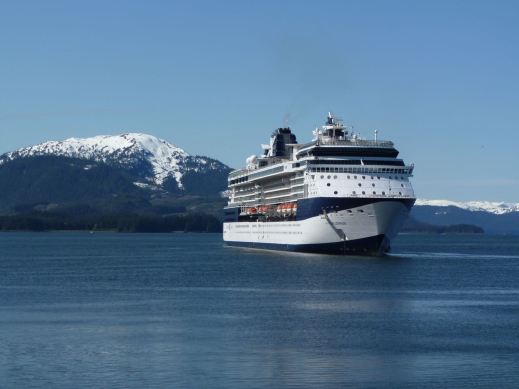
 Chandris Group. In 1997, Celebrity Cruises Ltd. merged with Royal Caribbean Cruise Line to form Royal Caribbean Cruises Ltd., and has been a wholly owned subsidiary of the latter since then. The company has its headquarters in Miami, Florida. Celebrity’s signature logo is an “Χ” displayed on the funnel of Celebrity ships, and is the Greek letter chi, for “Chandris”.
 Celebrity cruises characterizes itself as a more upscale experience featuring longer and farther reaching itineraries. They are also noted for their onboard lecture series called Beyond The Podium, with notable guest lecturers often with a focus on the region being visited. They often provide a number of onboard classes from painting to jewelry making and “behind the scenes” tours. Celebrity also pride themselves on their live musicians performing in venues throughout the ship along with the quality of their theatre stage productions.


 We knew something was going on about a year or two ago when hotel reservations started getting added to our Google travel calendar automatically. Irritating at first – someone or something is reading our emails! We are basically private people and have avoided leaving trails of information about us whenever possible. It’s a generational thing and our generation (rightfully so) resisted giving out our SS number even though governments kept making it more and more mandatory (SS was never intended to be a national identification number).
 Start by creating an account at their website and downloading the app to your phone and/or tablet. Log in on all devices and any additions or changes are posted on all your devices. Next register an email address where it will regularly search for travel confirmations. We used Gmail and it quickly located all current items. You can also forward confirmations from other email addresses to your TripIt account. You first register additional email addresses to your account that you will forward from and they provide a forwarding address. Next you can have TripIt add the information to your calendar automatically, They also provide for you to add names to the account so family members can view you itineraries if you would like.
 The Rhône With Viking River Cruises
 The Rhône region of France extends from Marseille, through historic Avignon, Arles, the Roman city of Vienne, Lyon, France’s culinary heart and west of the Beaujolais wine region and includes dozens of quaint Provençal villages along its banks.
 Most people, when they think of France, picture Paris, the French Riviera – Cote d’Azur, the beaches of Normandy, but usually not Roman ruins and Medieval castles. It’s probably not on the short list of most peoples travel plans, but it should be. River cruising on the Rhône through the heart of France is an enjoyable experience. There’s a lot to see, the people where amazing and chances are you will learn some surprising history. You will discover Avignon, the “City of Popes,” and the historic Papal palace, see the massive Roman Colosseum of Arles, still hosting bull fights today, experience the ancient Roman city of Vienne and a number of riverside villages dating back almost a thousand years.
 Viking River Cruises
 We are long time cruisers but have come to river cruising just recently. In the Summer of 2019 we cruised for eight nights on the Viking Longboat Buri from Avignon to Lyon, France and both the ]boat and this region greatly exceeded our expectations. This was only our second river cruise and will probably not be our last. If you are an ocean cruiser and haven’t taken a river cruise before here’s what we see as the differences.
 Level of Service
 Accommodations
 Life On Board
 There aren’t any stage shows or swimming pool or gym but we assure you they won’t be missed and with walking tours most mornings you’ll still get some good exercise. A lot of people are fond of cruising because of the food and again river cruising will probably not disappoint. Also in the case of Viking they work very hard to expose their guests to tastes of the region being visited and also bring on local entertainment on a few occasion.
 This particular cruise provides a number of interesting stops along the river which include;
 Avignon, the “City of Popes” is normally the starting point for the cruises going north. This walled city’s name dates back to the 6th century BC. The first citation of Avignon (Aouenion) was made by Artemidorus of Ephesus. The historic walled city, which includes the Palais des Papes, the cathedral, and the Pont d’Avignon, became a UNESCO World Heritage Site in 1995. The Papal Palace, the medieval monuments and the annual Festival d’Avignon have helped to make the town a major center for tourism.
 Near to Avignon is Arles. The Arles Colosseum and Amphitheater are one of the most popular tourist attraction in this city. They were built around the 1st century BC and the Colosseum was capable of seating over 20,000 spectators on three tiers. Today it has been mostly restored and is home to regular bullfights. After the Roman Empire fell the amphitheater became a shelter for the population of Arles and the Colosseum was transformed into a fortress with four towers added on.
 regions Gallic people. It was established as a Roman colony in 47 BC under Julius Caesar, with Vienne becoming a major Roman city, ideally located along the Rhône, a major transportation route. Numerous remains of Roman buildings are still visible in modern Vienne today.
 Nobody should spend time visiting this region of France without planning on sampling French wine. Some of the widely recognized names include Côtes du Rhône, Châteauneuf-du-Pape and Beaujolais. All within easy reach of the river with numerous tours leaving from the riverboats. Unlike many ocean cruise ships, the river boats usually tie up right in the center of towns within an easy walk to many sights. Most river cruises also include daily tours in the cost of the cruise and we really enjoyed this option. The atmosphere onboard a river cruise also strikes us as much more relaxed and accommodating even though we seemed to do less reading than on ocean cruises probably because our days were so full.
 variety of itineraries. There are a number of similarities in most itineraries with the two main embarkation ports being Barcelona and the port for Rome, Civitavecchia. Venice, Italy is another popular embarkation port with some cruises to the eastern Mediterranean sailing out of Piraeus, the seaport of Athens, Greece. Itineraries vary in length with cruises of around seven days usually including four or five ports of call, those of nine to eleven days make six to eight stops and fourteen day itineraries calling on up to ten ports.


 The Intentional Travelers