Cruise Port New Orleans, The Big Easy

 To begin with New Orleans is a destination virtually in a class by itself. The
  city is famous for its history having been settled first by French trappers in the seventeenth century, than ceded to the Spanish in 1762 by Treaty. Following a number of fires in the late eighteenth century the Spanish rebuilt the French Quarter using mostly fired brick, including the most impressive structure in New Orleans, St. Louis Cathedral. The architectural character of the French Quarter, including multi-storied buildings with inner courtyards, arched doorways, and the extensive use of decorative wrought iron, were actually characteristic of the Spanish colonies
Beginning in 1800 Spain and France signed a series of treaties stipulating that Spain give Louisiana back to France, these confirmed and finalized the retrocession of Spanish Louisiana to France. In April 1803, Napoleon sold Louisiana which then included portions of more than a dozen present-day states along with New Orleans to the U.S. in the Louisiana Purchase.
Involved in a war with England, in 1814 New Orleans defended itself against a large English force sent to take the city. Marshaling forces (regular, militia, and naval) and recruiting pirates led by Jean Lafitte, Maj. Gen. Andrew Jackson routed the British in a decisive battle in the early morning of January 8, 1815.
Anchored by the famous French Quarter with its iconic architecture the downtown area wasn’t big enough to hold all that was going on so it’s spread out into the adjacent neighborhoods and the warehouse district with famous eateries, clubs and trendy galleries.

Famous for throwing one of America’s biggest parties each year called Mardi Grau, the truth is the party virtually never stops in this city. The sidewalks of Bourbon Street are packed at night and some of its bars and restaurants virtually never close. Home to a musical tradition second to none and a restaurant scene famous around the world New Orleans isn’t just a cruise port it’s a destination.
Where You Dock
 The Mississippi waterfront runs along the French Quarter and the growing Warehouse District and in the middle of it all is the Riverwalk Mall where the cruise ships tie up. Virtually in the heart of everything the cruise terminal is attached to the outlet shops of the Riverwalk Shopping Mall and only blocks from Canal Street and The French Quarter.
Transportation
 If you are flying into New Orleans to catch a cruise expect to pay a little over $50 for a taxi ride to the cruise terminal. There is a public bus route that will take you into downtown from the airport for less that $4 but the trip takes about forty minutes. We have found an advertised shuttle to be unreliable but the airport has a very convenient ride share pick-up area. A recent Lyft ride cost us $32.
In downtown New Orleans there are numerous good hotels and if you aren’t up to walking there are pedicabs, street cars and easy to catch taxis.
Currency
Being the United States the currency is the Dollar and if you are visiting from out of the country you will find a number of conveniently located currency exchange outlets along with ATM machines.
Attractions
 New Orleans is an attraction in itself. Just walking the French Quarter, listening to street music, eating Creole food, visiting Jackson Square and window shopping is a true experience but there are some other things to consider:

St. Louis Cathedral built in 1789 is the oldest cathedral in the United States.
Saint Louis Cemetery is a famous New Orleans cemetery (actually 3) where most of the graves are above-ground vaults constructed in the 18th and 19th centuries.
Preservation Hall is a jazz venue in the French Quarter. The building is famous for a house band, a record label, and a music foundation.
The National WWII Museum, formerly The National D-Day Museum, a military history museum located in the Central Business District. New Orleans was the manufacturing center for the landing craft used for WWII beach assaults. The museum focuses on the contribution made by the United States to Allied victory in World War II.
The Audubon Aquarium of the Americas located on the waterfront is run by the Audubon Institute, which also operates the New Orleans Audubon Zoo and the Insectarium on Canal Street.
Food
 When it comes to food New Orleans has more than its share of famous chefs including Emeril Lagasse, Paul Prudhomme, John Besh, John Folse,, Donald Link, and on and on. With restaurants like Emeril’s New Orleans, K. Paul, Commanders Palace, Brennen’s, and Emeril’s Delmonico you’ll run out of time before you run out of great restaurants.
 You’ve got your passport and your bags are packed, but are you ready financially to travel abroad?
 Next we reserved a guide and 4×4 in the Falklands but were told that we couldn’t use credit cards. No ATMs and they also use their own version of Pound Sterling. After several emails back and forth we settled with being able to pay with cash in British Pounds or US Dollars (no Euro’s).
 Here are a few tips on money and international travel
 6. Carry telephone numbers.

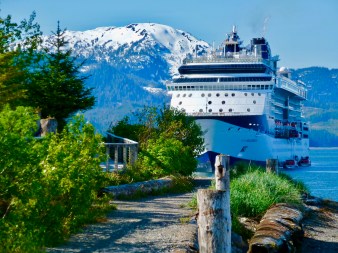


 Thailand is one of the most advanced and open nations in Southeast Asia, and was once known as Siam. It is bordered by Myanmar (Burma) to the north, Laos to the northeast, Cambodia to the southeast and Malaysia on the south along Thailand’s isthmus. Thailand is a constitutional monarchy, and tourists are welcomed with open arms by these friendly people.
 want to go it alone and see some of the countryside there are good car rental services. We’ve always been amazed with Thailands highway rest stops usually lined with a half dozen or more American franchises. One rental company near Laem Chabang that comes highly recommended is:
 On our last visit we were on a cruise that spent two days in Laem Chabang. After some research we pre-booked a private tour through
 Thailand is also famous for floating markets where goods are sold from boats. Originally developed when rivers and canals played an important role in daily life, most floating markets operating today serve primarily as tourist attractions.
 One unique market is the Famous Maeklong Railway Market. It is located in a congested town and sits right on an active train track. As trains approach vendors pull back their awnings and displays with only minutes to spare and are right back in business as soon as the trains pass. A unique experience as you stand there with train only only inches away.


 While we are just not “guided tour” enthusiasts, we have been on a fair number of them. To begin with, there are some land tours that make good sense to do. The first is where there is someplace you really want to see and even the bus trip is on a very tight schedule. The one thing you can be sure of is, if you are on a ship sponsored tour the ship isn’t going to sail without you. And yes, we have seen people left behind. We have taken a number of tours also because the costs were just too good to ignore. Sometimes that is because we have onboard credits that we just need to spend and others have been provided by our agency as a perk.
 and snorkel rental stuff. A taxi ride will cost between US$10 and US$20 each way (make sure you have plenty of singles as drivers don’t offer change) and park admission is about US$21. A recent tour booked through the cruise ship cost $69 per person. That’s $138 for what would have cost $62 on your own.
 Mendenhall Glacier Alaska – This is a national park outside of Juneau Alaska. The park is serviced by a bus route from the historic downtown area with round-trip fare being $31. Add to that the admission to the park (NPS standard fees) $20 which totals $51 ($31 if you have a NPS Senior Park Pass). The basic cruise tours usually start around $75. They often will add in a salmon bake for $20 to $30 more. For more on Mendenhall
  or first cruise stop in Civitavecchia we booked the “Rome On Your Own” tour at $89 each which included a bus ride in to Vatican City and back to the ship. Six blocks from the Civitavecchia port is the train station and for as little as US$12 you can get a round-trip ticket to the St. Peters station. For two that’s a savings of $154 and the trip in and back can actually be quicker.
 The Golden Triangle Iceland – This tour was a bit pricy but so were the local tour companies. The reason we selected this tour is because our ship docked in the afternoon and sailed shortly after noon the next day disqualifying local tours. We also considered renting a car but again were concerned about the times. The tour itself was great. We probably traveled over a hundred miles and saw thermal fields, waterfalls(!!) and Icelands rift valley where the earths crust is pulling apart. No shopping stops or misspent time. If you are going to Iceland don’t miss the
 Ephesus Turkey – The ancient city of Ephesus, located near the Aegean Sea in modern day Turkey, was one of the great cities of the Greeks and later the Romans in Asia Minor and home to the Temple of Artemis, one of the Seven Wonders of the Ancient World. Today, the ruins of Ephesus are a major attraction located some distance from the port. Again not inexpensive but a great experience (it did include a stop at a rug showroom). We might be adventurous but there was no way I was going to rent a car for half a day in Turkey and I still am not aware of any convenient public transportation.
 A Wine & Tapas Tour in Palma – This one wasn’t that expensive and included nice stops at three different tapas bars and free time in a nice in-town shopping area. The drive back to the pier included brief stops at the castle overlook above town and a drive along the coast. A good answer to filling an afternoon in Mallorca. For more information
  The Intentional Travelers