The Cruise Port of Vancouver

Gateway to Alaska cruising and a departure port for cruises to Hawaii this port has much to offer visitors.
This port is a popular gateway to many Alaska cruises. While it owes much of its popularity in the cruise industry to an old and archaic U.S. law called the Jones Act it deserves to be recognized as a great destination as well. Vancouver is the largest western Canadian city with a large natural harbor and a thriving economy. Famous for a number of nearby wine regions, its great natural beauty and a vibrant city atmosphere.
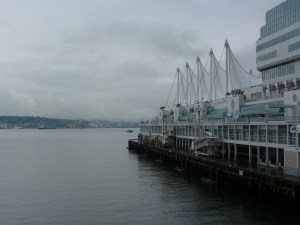
The cruise terminal at Canada Place

The issue with the Jones Act prohibits cruise lines from picking up passengers in one U.S. port and allowing them to disembark in another U.S. port. Vancouver, Canada allows the cruise lines to avoid the problem of picking up passengers from a U.S. port.

Downtown Vancouve

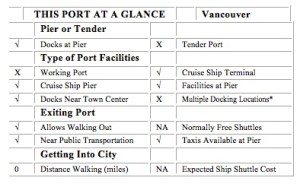
Where You Dock – The cruise pier in Vancouver is called Canada Place and it is centrally located with a nice cruise terminal. Canada Place is also a convention center and community event venue so take the time to discover what’s going on inside. Just walking out of the terminal finds you in downtown with a tourist office within a couple of blocks of the pier. Only a few blocks walk to the southwest is Gastown, a popular historic district with lots of restaurants and clubs. A few blocks farther south is Vancouver’s Chinatown, which is home to a large Asian population replete with markets and excellent Chinese restaurants.

Transportation

Taxi – Taxis are common and fares average about $10 for trips within the central city. A taxi trip to the airport should cast about $30.
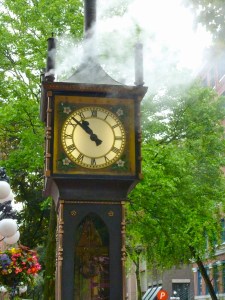
Gastown Steam Clock

Rapid Transit – The Canada Line is Vancouver’s rapid transit rail connecting Vancouver International Airport (YVR) to downtown Vancouver in about 30 minutes. Trains leave every few minutes and run from 5 am till after midnight. Fares run about $3.00 per trip.

Bicycles – Vancouver is a very walkable city and you will discover that many locals commute on bicycles. There are a number of rental locations not far from Canada Place. Spokes Rentals is only four blocks down the waterfront (1798 W Georgia Street).

Money – A Canadian dollar is currently about US$0.80 and unlike the Eastern Canadian cities Vancouver businesses will often insist on cash being in Canadian currency. Credit cards are welcome and ATM machines are plentiful.

Local Sights

Gastown and Chinatown, as mentioned above are not far from Canada Place and well worth a visit. Because of the large Chinese population there are a number of restaurants featuring authentic Chinese cuisine with great dim sum. Gastown is located not far from the cruise terminal and is the old section of Vancouver. Lots of restaurants, bars and shops.
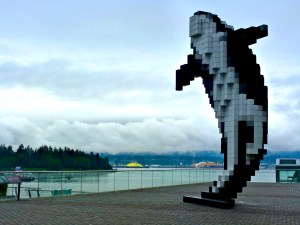
Vancouver Aquarium located in Stanly Park down the waterfront to the northeast about a mile. It is Canada’s largest and a great attraction especially if you are traveling with children.

Science World with its iconic dome was originally built for Expo ’86, and is home to a number of interactive exhibits as well as one of the world’s largest OMNIMAX theaters is located less than a mile and a half from Canada Place.
Capilano Suspension Bridge is a ways out of town but people from all over the world come here to experience this bridge and the natural beauty of the area. It is located in the Capilano area.

Port of Call Skagen, Denmark

The Marina “Fiskepakhuse”

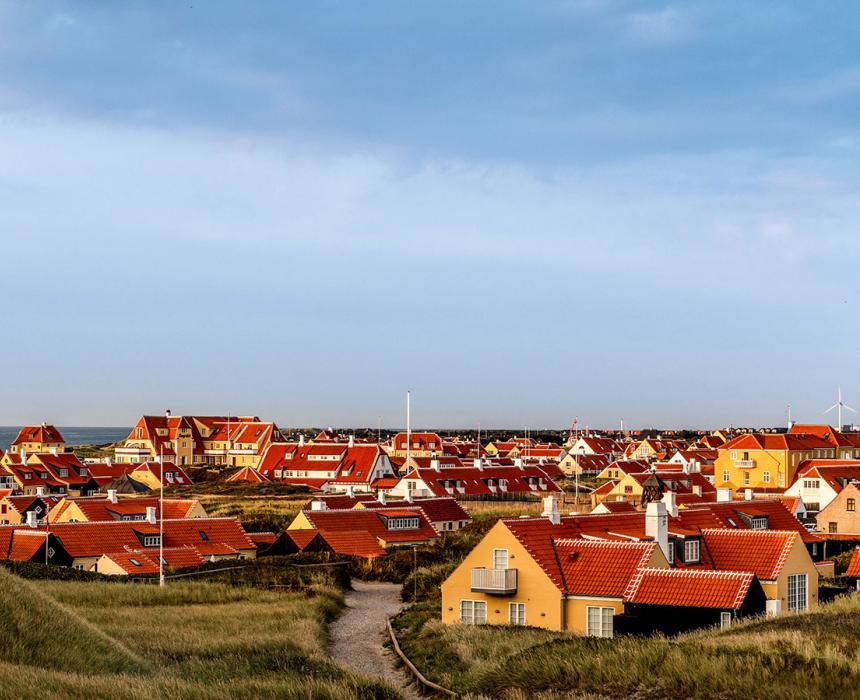
Skagen (pronounced as if the g wasn’t there), Denmark is a smallish port located on the Jutland peninsula and is Denmark’s northernmost town. Besides having a watch company named after it, Skagen is also noted for its beach, sand dunes and scenery.

Town Square

Where Your Ship Docks

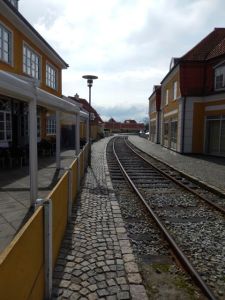
Skagen has docking facilities for large cruise ships right at the towns charming fishing harbor and marina with fishermen selling their catches and good restaurants within the famous old “Fiskepakhuse” market. There are public facilities within a short distance of the pier and the center of town itself is within a half mile walk.

skagan4.jpg
Welcome to Skagen

While ashore in Skagen do some shopping. Look for Glaspusterblaeser, a great glass blowing shop in an old post office building that’s located at Sct. Laurentii Vej 13. They offer a number of hand blown Christmas ornaments that make great take home gifts along with some interesting glassware.

There is also a Skagen watch store selling the designer watches, which took their name from the town. SEE MORE HERE.

Transportation

Skagen is a small town without a need for public transportation and while there are a couple of rental car agencies there really isn’t much reason to go outside the town and the nearby beach.

Currency

The currency of Denmark is the Danish Krone with the Krone fixed to the Euro. Credit cards are welcome and there are available ATM machines.

Attractions

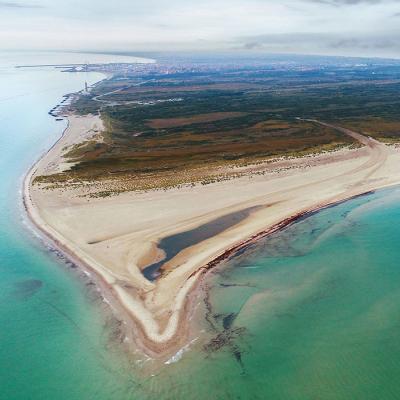
 On the northeastern outskirts, is Grenen Beach at the convergence of the Skagerrak and Kattegat Seas. The area is famous for the swirling currents and shifting sand bars.

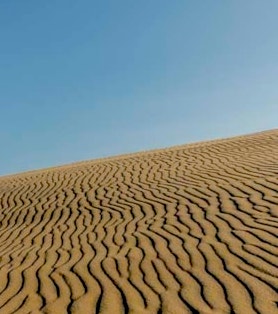
The Dune of Råbjerg Mile– This is a migrating dune, Råbjerg Mile,and is more than a half mile wide and over a half mile long, it is made of roughly 3.5 million cubic yards of sand, and is 120 feet high. The dune migrates around 50 feet towards the Northeast each year. All attempts to stop the migrating dune have failed and it is expected to cut Skagen off completely in a century or so.

The Sand Church – In the dunes on the west side of Skagen stands the tower of the old Sct. Laurentius Church, today known as ‘The Sanded Church’ rising from the sand dune. For four hundred years Sct. Laurentius served its congregation, until drifting sand started to block the road, cemetery and in 1795 the congregation was forced to to the drifting sand and the church was closed.

The Sand Church

The painters of Skagen are famous and “Skagensmalerne” is the name of the artist colony, with artists being attracted to Skagen since the 1870s. They have portrayed the life in Skagen, the rough living conditions of the fishermen and the local scenery making both Skagen and North Jutland a popular art destination. The painters brought their talent to Skagen and painted what they saw there. Much of this art is now on display in Skagen’s Museum that contains almost 2,000 sculptures, drawings and paintings from the period from 1870-1930.

The Skagen Bunker-museum enables you to explore a genuine German war time bunker. Today the bunker is laid out as a modern war museum, and inside the bunker you can find a film room, operations room, soldiers, uniforms, weapons, etc.

Key West and a Cruise

A Dispatch From Key West or The Canary In America’s Coal Mine

My wife and I are getting back to traveling and cruising and we just booked and headed off on a last minute Caribbean cruise. On this cruise our ship spent a day in Key West and I learned a few things that got me to thinking. Before arrival we were told that there were going to be environmentalist protests in the town but they probably wouldn’t disrupt our visit. Okay, fine – this is Key West and normal is never normal.

If you have caught any news over the past few years about Key West you may have heard that “the city” is trying officially to ban cruise ships from visiting. Casually the news has reported that the city fathers believe that the cruise ship visits disrupt the peaceful character of Key West and Covid gave them an excuse to try and change things. In the past Key West put in a requirement that cruise ships had to depart an hour before sunset so as not to block the sunset celebrations each day at Mallory Square, which is a long standing daily ritual here. These new plans are different. When the city council tried banning cruise ships the state of Florida stepped in and said they didn’t have the authority but it seems they still haven’t given up.

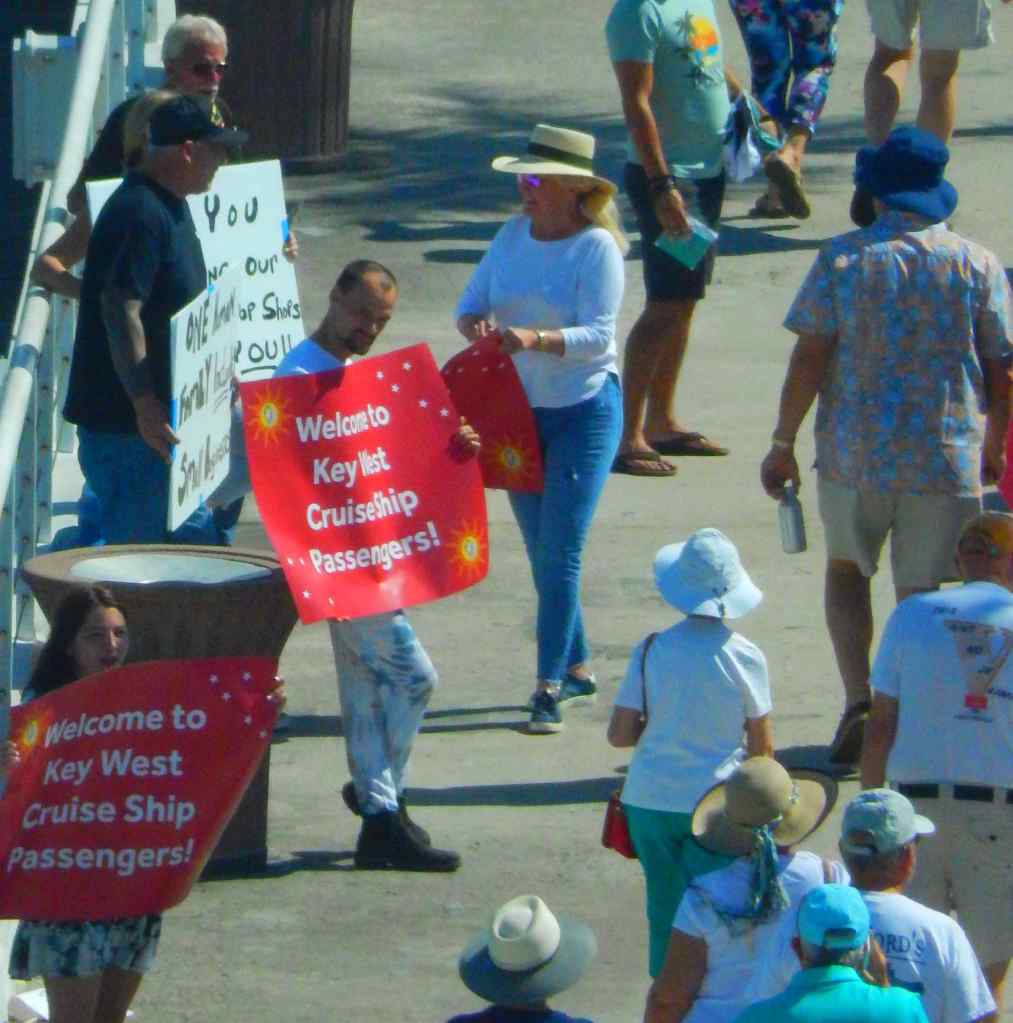
Today when we docked there were a lot of people out on the waterfront holding up signs and though we couldn’t read them we told ourselves that this didn’t look good. Much to our surprise when we went ashore almost all the signs said things like “Welcome Cruise Ships To Key West” and “Welcome Ashore, We’re Glad Your Here”. Approaching the groups we got into a number of conversations that really surprised us. We were told that we were probably the fifth ship into Key West since Covid shut everything down and that a majority of the Conchs (that’s what Key West residents call themselves) didn’t want to see cruise ships banned at all.

A Bit Of History

I first visited Key West when I was in the Navy back in the 60’s. Back then it was still a Navy town and in the evening Sloppy Joes* was a sea of white uniforms. This Southern most town in the continental United States was actually a blue color place. The main occupation was working shrimping trawlers and rolling Cuban cigars. It was also a place where people who, for one reason or another, didn’t want to be found, often ended up. It produced an odd and kooky atmosphere that often seemed like a continuous party. Conchs also made their living tending bar, waiting tables, selling T-shirts, working boat charters and diving excursions.

Ernest Hemingway, Harry Truman, Jimmy Buffet and a list of famous eccentrics loved the town. Back in the early 80’s when we became Florida residents we often spent weekends in the Keys. Key West was a fun place where bars were open late into the night hosting an active gay community featuring a gay carnival each year. Hemingway was celebrated as the islands favorite resident with a week long festival each year in his honor and a salvage diver named Mel Fischer was selling shares in his search for Spanish treasure from a card table in front of the post office**.

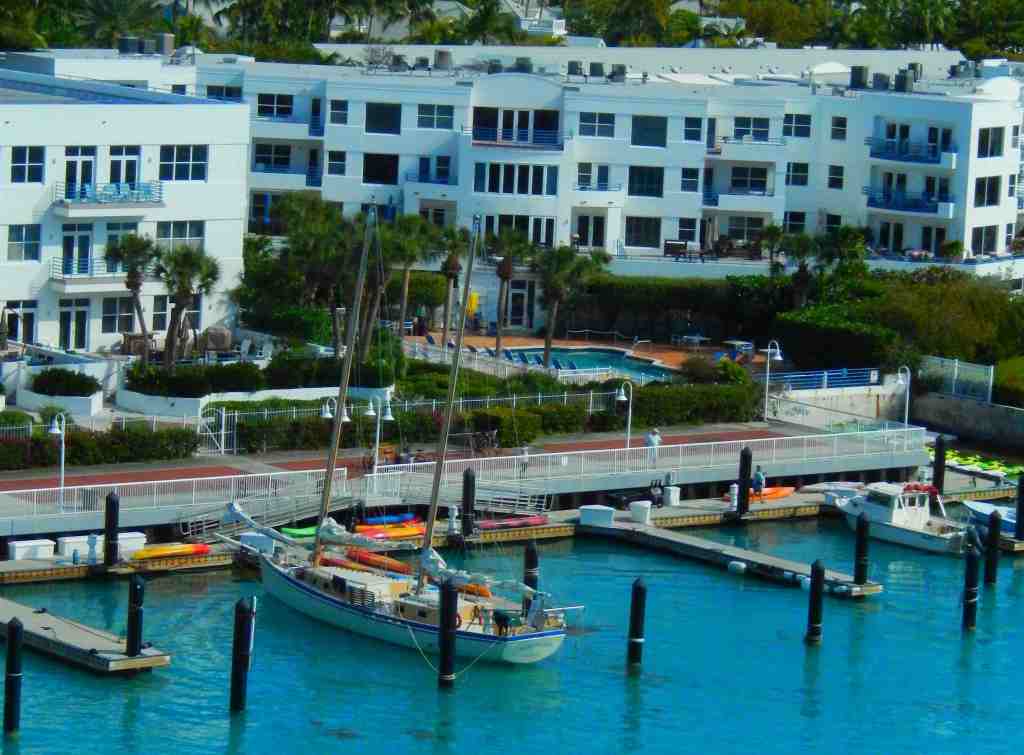
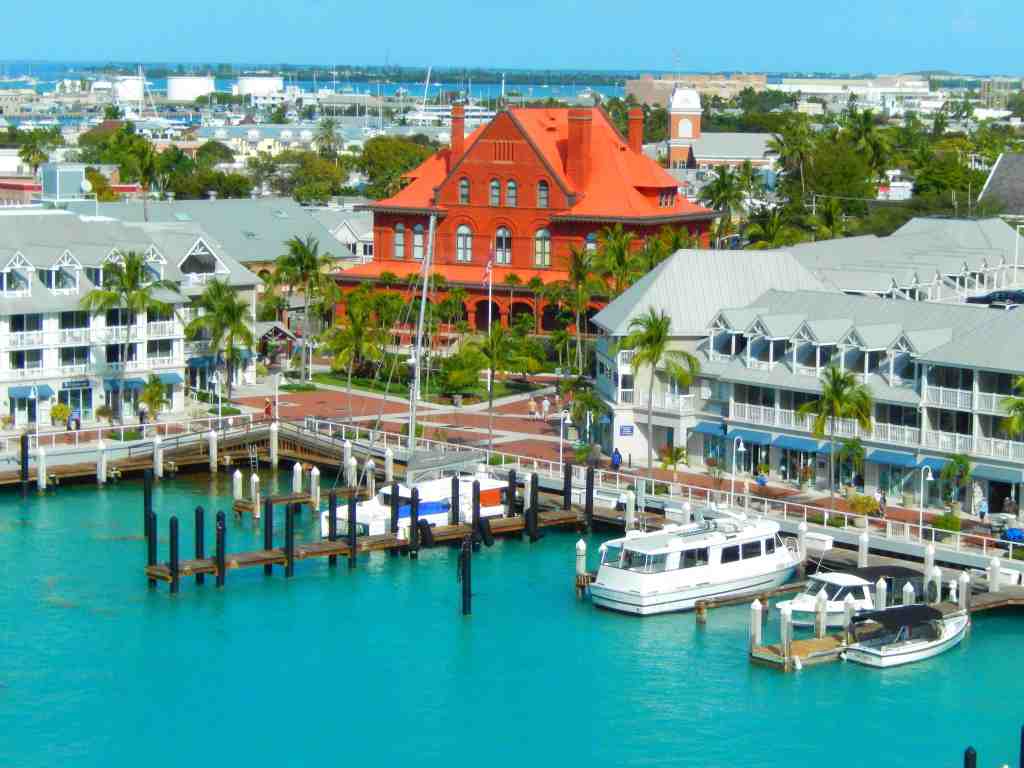
Some time between the 1980’s and today the large Navy base closed much of its operations and sold off a lot of its land near downtown where luxury condos sprang up. More condos got developed on the east side of the island near what Key West called its beach and the island’s property values began to sky-rocket. America’s elites flocked to the Sun and water of Key West, turning those condos into million dollar properties and driving up all property values in general. It also seemed while they talked up the towns kooky character, quietly they sought to “normalize” the town. Big yachts began to dock in the downtown marina and five star resorts opened.

Back To Today

As we left the ship today and began talking to the couple of dozen sign holders welcoming the cruise passengers to Key West we learned some interesting stories. They talked about the new millionaire property owners and their money influencing Key West’s government. They complained about property values pricing locals out of the place where their parents and grand-parents raised their families. How bartenders and restaurant workers and fishermen had to move miles North up the Keys to find affordable housing and even that was becoming difficult.

They said that the real Conchs with their blue color jobs were also dependent on the steady stream of visitors that drove down to Key West and the cruise passengers that poured ashore every day or two. They talked about how the new efforts by the city government is driven by the new elite property owners and the corruption bought with their money.

These new wealthy, elite residents didn’t want the views of the sunset from the balconies of their newly bought waterfront condos blocked by those visiting cruise ships. Many felt threatened by the odd characters that filled the downtown streets at night. They would prefer that the quirky character of Key West get toned down a bit and that the “woman going crazy on Caroline Street” and Key West’s other off-center characters be moved off the island. Simply put their “money talked”.

We’re not so sure how well they’ll do fighting this problem. Our fear is that what’s happening in Key West is being repeated in hundreds of other locations around this country from San Francisco to Brooklyn to even rural Montana and is actually an attack on middle class, blue collar America. As the American middle class shrinks the country bifurcates into the elite “haves” versus everyone else, empowered by the politics of division and controlled by limiting access to information by the new internet gatekeeper companies.
Time will tell and we’ll be watching Key West…

*Sloppy Joes is a famous bar frequented by Ernest Hemingway and lots of sailors on a regular basis.

**More on Mel Fisher and Treasure Salvors HERE

Florida History In Ocala

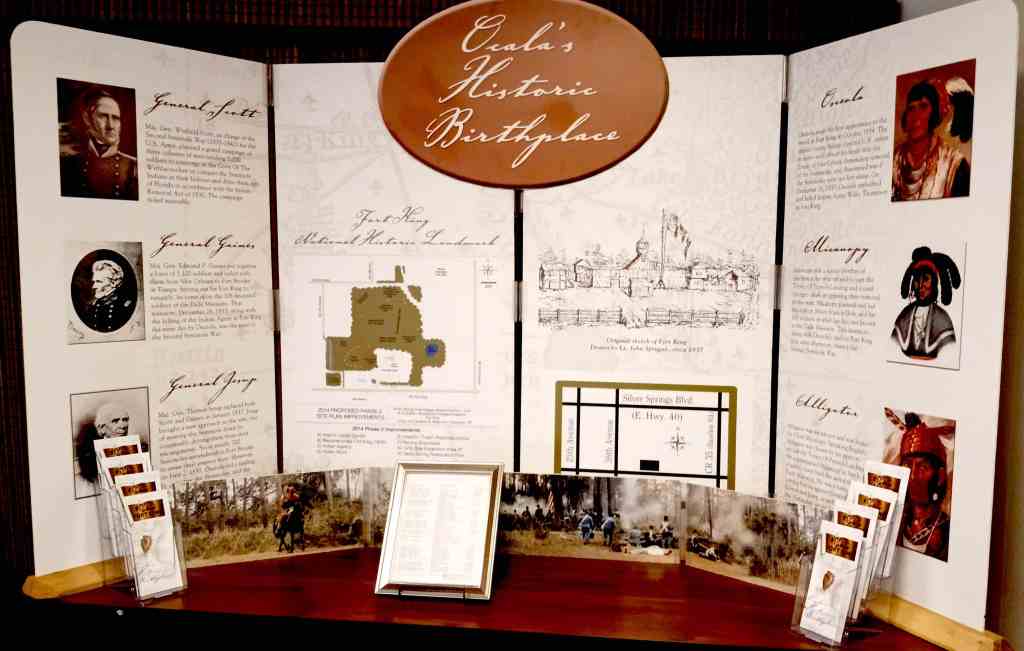
Fort King, Ocala, Florida

It’s unusual to come across an early nineteenth century stockade fort in the middle of a Florida town. Not something you expect outside of Disney World, but that’s what you’ll find in Ocala.

It’s a historically accurate replica of Fort King on its original site. Designated a National Historic Landmark the site is being developed into a park that includes an interesting and informative museum. For the state of Florida this is almost ancient history with early settlers, the Seminole Wars and Andrew Jackson.

There’s history all around if you’ll just take the time to look and understand that it is important to explain who we are and for our future. Here’s a peek into Florida’s history and what happened around Fort King.

Every state in America is noted for its tribes of American Indians that include Comanches, Blackfoot, Algonquin, Shaenee, Shoshone, Sioux and almost a hundred additional tribes. In Florida we recognize the Seminoles as our major Indian tribe, but who are they historically?

It seems Seminole history in Florida starts with bands of Creek Indians from Georgia and Alabama migrating to the state in the 1700s. Wars with other tribes along with conflict with the arriving Europeans caused them to move south seeking new lands. At the time Spain controlled Florida and encouraged these Indian migrations hoping to provide a buffer between their claimed land and the British colonies to the north.

A fort exhibit

It was at this time that these Florida Indians became known as the Seminole, a name that meant “wild people” or “runaways.”

Florida has long been considered an inhospitable place filled with swamps, and scrub land, cursed with hot weather, high humidity, mosquitoes and alligators. Even so by the late eighteenth century settlers began to look for land to settle in Florida and in 1819 Spain saw the inevitable and agreed to sell Florida to the United States.

Soon these new settlers were coming into conflict with these Seminoles and the government decided the situation needed a solution. In 1823 the Treaty of Moultrie Creek was signed between the United States and leaders of the Seminole Nation. That treaty had the Seminoles relocate to a large tract of land in what is now Central Florida. The treaty also prohibited white persons from entering or settling on the “Seminole lands”. The Ocala area was central to the Indian towns and the army built Fort King to assure that both sides kept the treaty.

In a reversal of policy and against the treaty terms Congress passed The Indian Removal Act in 1830 at the urging of President Andrew Jackson who had once fought the Seminoles in Florida and also defeated the Creek Indians in 1814. This resulted in the forced negotiation of the controversial Treaty of Payne’s Landing requiring that the Seminoles be removed to new lands in what is now Oklahoma.

Engraving from Seminole Wars

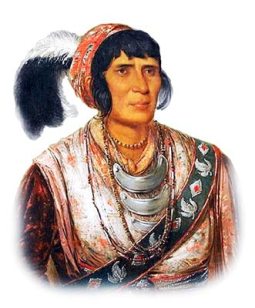
A core group of Seminoles, led by the warrior Osceola fiercely opposed the treaty forcing the government to reoccupy Fort King and the associated U.S. Indian Agency. General Wiley Thompson, the U.S. Agent assigned to Fort King and Osceola engaged in a number of confrontations. This resulted in General Thompson ordering Osceola chained and thrown into the guardhouse cell.

Released several days later, Osceola declared that war was the only option left. On December 28, 1835, he attacked Fort King when Wiley Thompson and Lieutenant Constantine Smith went for a walk outside the post. Thompson was shot numerous times and scalped. Six others were also killed but Fort King was too strong to take. That same day a larger force of Seminole warriors attacked troops on their way to Fort King in a fight known as Dade’s Battle, leaving over 100 soldiers dead. This would become the start of the Second Seminole War.

Chief Osceola

Fort King was abandoned in May of 1836 in favor of Fort Drane that was built nearer the swamps where the Seminoles were hold up. Fort King was reoccupied in April of 1837. It served as a base for raids and in 1840 Captain Gabriel Rains of the 7th U.S. Infantry led 16 soldiers on a recon that were attacked by a Seminole war party. They managed to fight their way back to Fort King, with three men killed.

After defeating the army in early battles of the Second Seminole War, Seminole leader Osceola was captured in 1837, when U.S. agents tricked him by inviting him under a truce to talk peace.

Ft. King Historic Marker

Five years later the Second Seminole War was declared over on August 14, 1842. Fort King was evacuated for good the following year. By 1858, when the United States declared a formal end to the Third Seminole War over 3,000 Seminoles were moved west of the Mississippi River leaving only 200 to 300 Seminoles in the Florida swamps.

As a footnote, today Florida is proud to call the Seminoles their indian tribe and the Noles are happy to be a part of todays Florida. back a few years ago when there was a movement to strip sports teams of their Indian names the Seminoles made it very clear that they were thrilled with their name being attached to Florida State University. The Noles have done very well in Florida recently with the Hard Rock Cafe International (USA), Inc. being sold to the Seminole Tribe of Florida in 2007 with the corporate headquarters at the Seminoles Reservation in Davie, Florida.

Port of Call Ft. Lauderdale

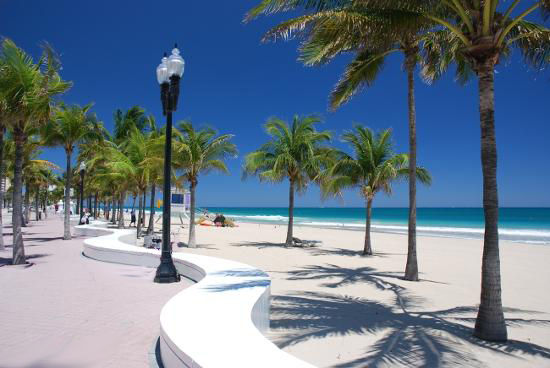
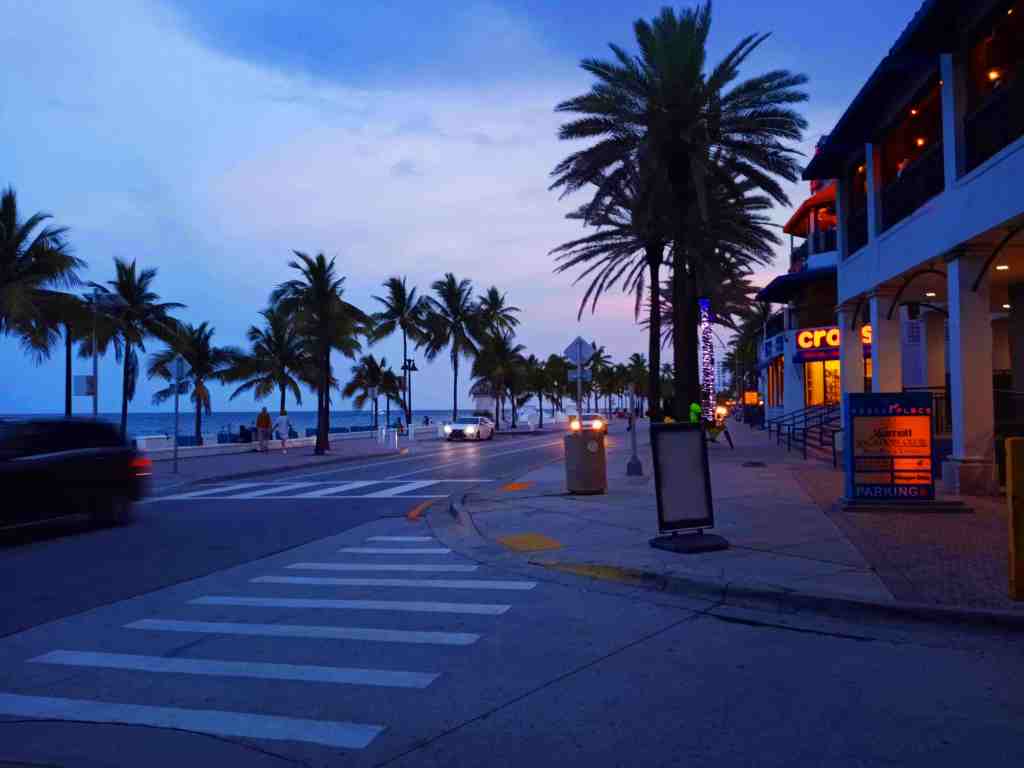
Ft. Lauderdale is a popular South Florida tourist destination as well as a major cruise departure port that has much to offer. As a cruise departure port it has the unique advantage of being located within two miles of its international airport. As a tropical vacation city it boasts some of the best beaches in America.

What’s In The Cruise Port Of Call Of Ft. Lauderdale

Ft. Lauderdale is a popular South Florida tourist destination as well as a major cruise departure port that has much to offer. As a cruise departure port it has the unique advantage of being located within two miles of its international airport. As a tropical vacation city it boasts some of the best beaches in America. The city occupies a strip of land 15 miles wide between the Atlantic Ocean and The Everglades and north of Miami and south of the Palm Beaches.

If you’re visiting Ft. Lauderdale as a cruise port of call there are a number of great options to fill your day. If you are looking to spend a day at the beach you are only a few miles from the main beach that runs miles along highway A1A. On the way to the beach from the port is 17th Street Causeway with a number of good shopping locations. Between the south end of the port and the ocean is a barrier island called John Lloyd State Park which is reached by going south to Dania Beach and coming back north along the ocean.

Where Your Ship Docks

Port Everglades is a major port capable of handling a large number of cruise ships at its terminals along with docking commercial tankers and freighters. Because of its size it is not advisable to try walking out.

Transportation

Taxis are readily available inside the port and rates are about average. There are rental car pick-up buses available to take you from the cruise terminal over to the airport to rent a car but it is highly recommended that you reserve a car ahead of time. The buses will also return you to the port. Because of port security Uber and Lyft can bring passengers into the port but it is difficult for them to do pick-ups at the port. Local bus service stops at the Northport section of Port Everglades near the convention center which can be up to two miles from the main cruise terminals. The city also features water taxis on the New River that runs through the middle of the city.

Currency

U.S. Dollars and some businesses will accept Canadian Dollars at a premium. Major credit cards and debit cards are commonly accepted and ATM’s are common.

Attractions

The Discovery Center Museum

This is a major metropolitan city with something for everyone including great shopping on Los Olas Blvd. and The Galleria Mall. Activities offered include sport fishing trips, skin and scuba diving, cruising the inter-coastal past million dollar mansions and of course beach water sports. You can also go west to the Everglades for airboat tours. Between Los Olas and the New River are a number of places to explore including the River Walk, The Discovery Center Museum and the historic Stranahan house.

Sights of interest noted on the map:

  • 1 John Lloyd Beach State Park
  • 2 Pier 66 Hotel
  • 3 Bahia Mar Marina
  • 4 Central Ft. Lauderdale Beach
  • 5 River Walk
  • 6 Discover Center Museum
  • 7 Ft. Lauderdale International Airport
  • 8 Southport 17th Street shops

Photo Essay • The Panama Canal

Photographic impressions from travels near and far…

One of cruising’s great experiences is transiting the Panama Canal. Over one hundred years old the canal remains one of mans greatest engineering accomplishments. Coming into the canal ships are lifted eighty-five feet above sea level by a series of locks to Lake Gaton. After transiting the lake ships are again lowered to sea level by more locks.

The Porch of the Maidens on the Acropolis stands watch above modern Athens

Lake Gaton

Are Bloggers Victims of Social Media Algorithms?

Blogging & Are We Being Played? There’s a lot in the news lately about the social media companies manipulating our children online to keep them engaged and how much harm it may be doing. It is obvious that these entities know a great deal about human psychology and how to take advantage of people online.…

Standing Watch Above The Rhine

People, places and captured moments selected from The Intentional Travelers photo collection. Marksburg Castle on the Rhine River Marksburg Castle, a majestic fortress located above the town of Braubach in Rhineland, Germany. This castle holds the unique distinction of being the only hilltop fortress on the Rhine that has never been captured or destroyed. Originally…