The Shetland’s Port of Lerwick

Port of call Lerwick in the Shetland Islands has been a crossroads for Vikings, Scottish lords and modern day fishing fleets. Many historic sites and a large puffin population.
The Shetland Islands, formerly Zetland, are a subarctic island group in the Northern Isles of Scotland, situated in the Northern Atlantic, between Great Britain, the Faroe Islands and Norway. Lerwick is the government center of the Shetland archipelago and the most northerly town in Great Britain. The name comes from Old Norse Leirvík, meaning ‘muddy bay’. The town is situated on a fine natural harbor on Bressay Sound on the eastern coast of Shetland Mainland.

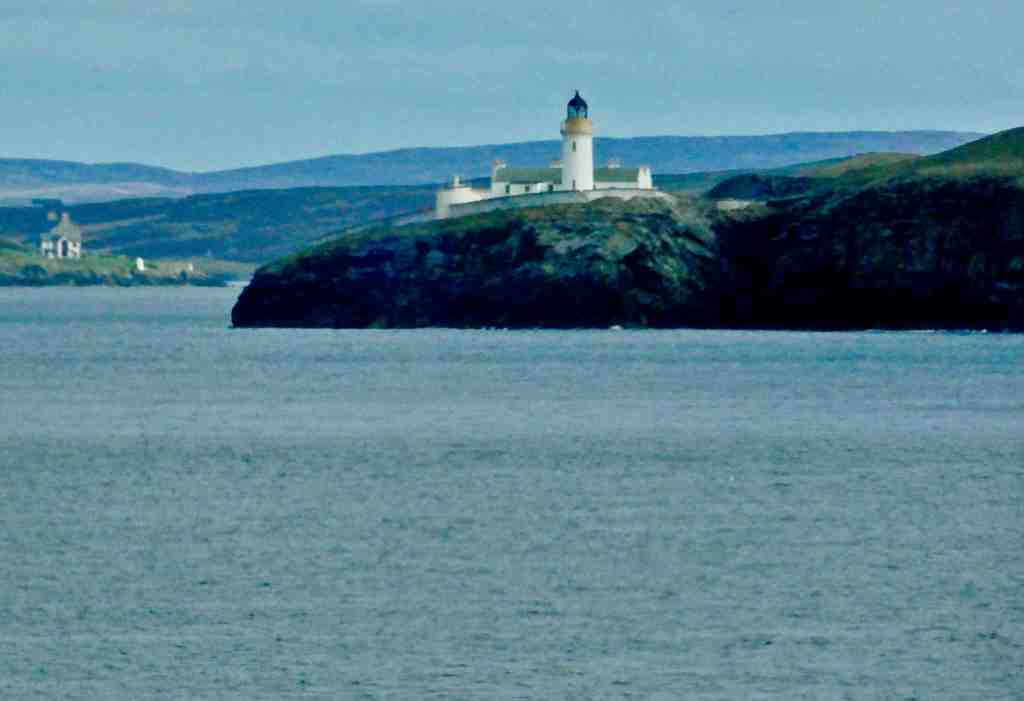
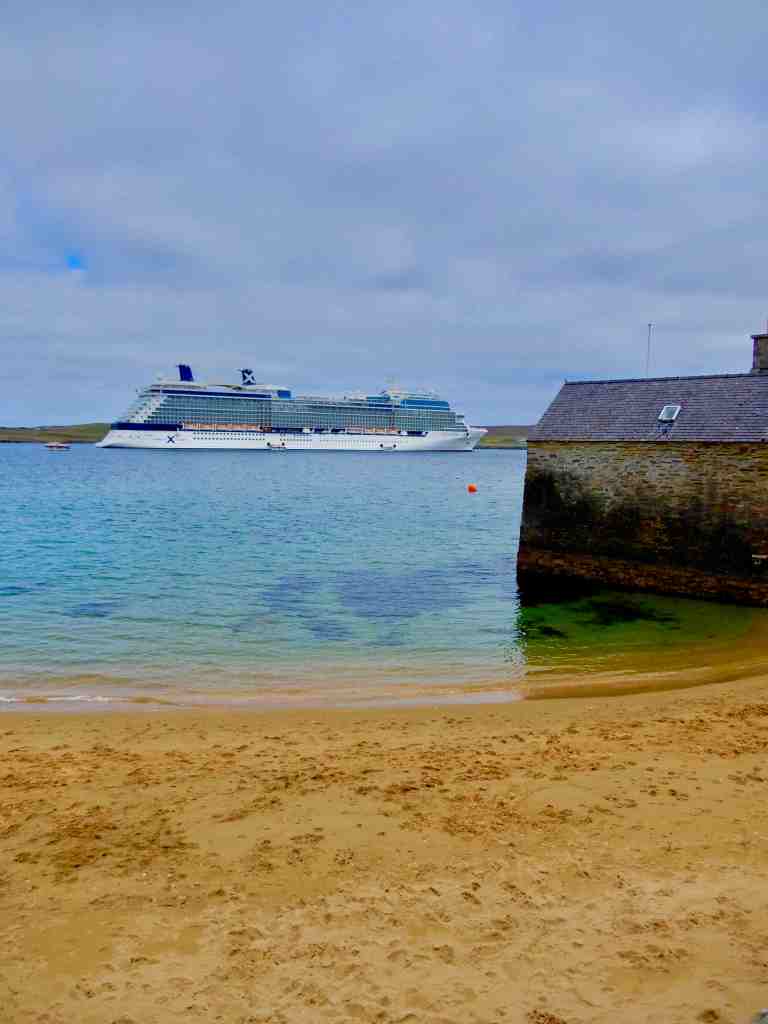
As your ship cruises into Bressay Sound you will pass the headlands and the Bressay lighthouse and anchor just off historic Lerwick.
To get a good feel for the place and the people that live here you can stream a popular television show that is a very good police show centered in Lerwick called Shetland.

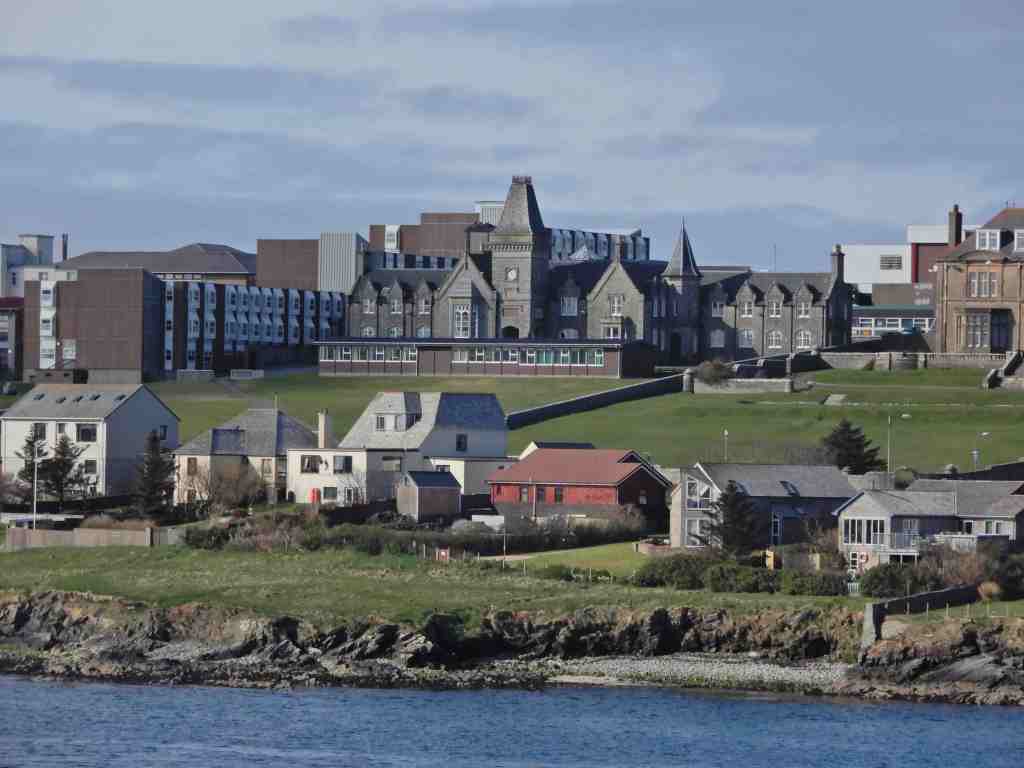
Getting Ashore -Cruise ships will normally anchor out and use tenders to reach shore. The tenders will dock right in the center of this picturesque town with its narrow streets and historic buildings.
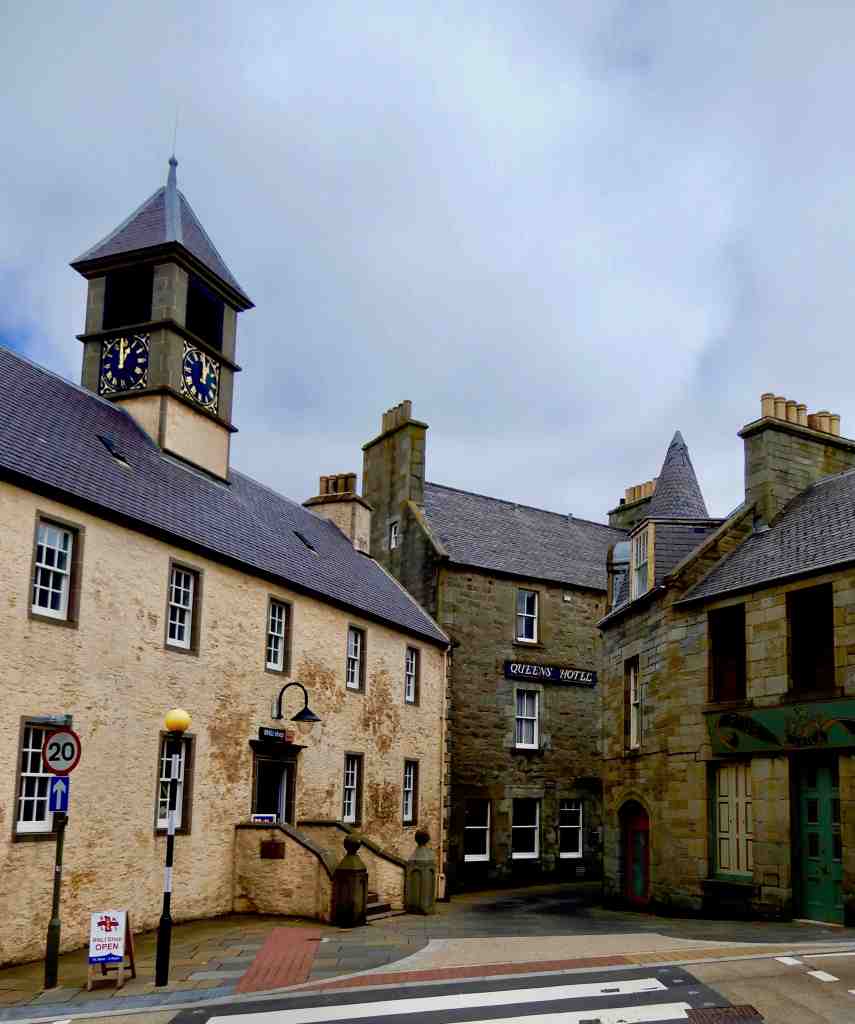
Transportation – While there is a good public bus network (www.zettrans.org.uk) with its hub at Lerwick that reaches most points on the main island, and connect with ferries to other islands it will occupy a fair amount of time to get around. The Lerwick bus depot is conveniently located near the center of town. Buses on a route going south from Lerwick leave about every hour and a trip to Sumburgh takes about 45 to 50 minutes. Along that route you will find the Broch of Clickimin, Jarlshof Prehistoric and Norse Settlement, the airport and the puffin nesting area at the park at Sumburgh Head.
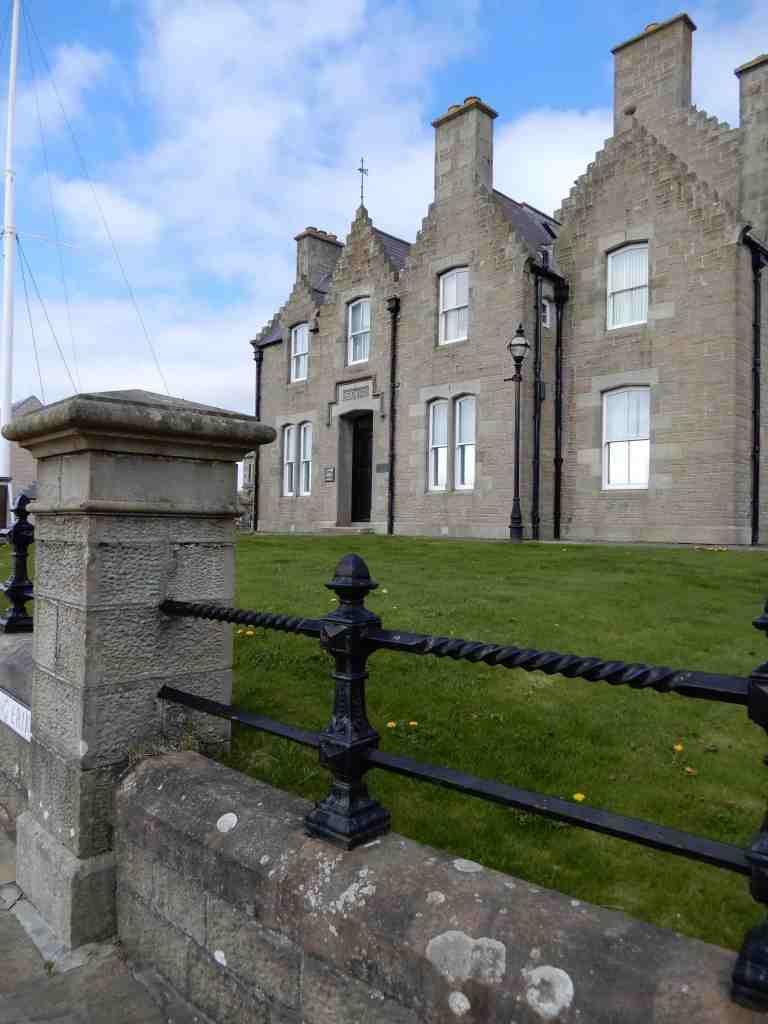
Because of the time constraints involved in a day in port the best approach is to take an organized tour or better still rent a car. Shetland has really good roads and renting a car is pretty easy. Rates average about £40 a day. Companies include Bolts Car Hire and Star Rent-a-Car located near the bus station.

Money – The Shetlands is part of Scotland and has now reverted to the English Pound. US Dollars and Euros are not generally accepted but most credit cards are welcome.

Local Attractions:
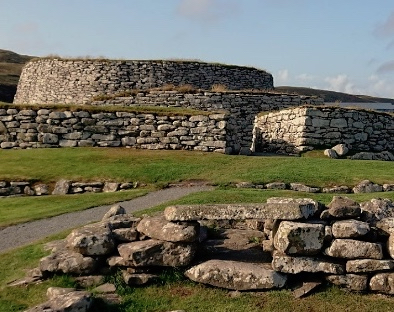
Clickimin Broch

The Broch of Clickimin is a large, well-preserved partially restored broch (a broch is an Iron Age stone hollow-walled structure unique to Scotland) dating to the late Bronze Age and is located just a mile north of town.
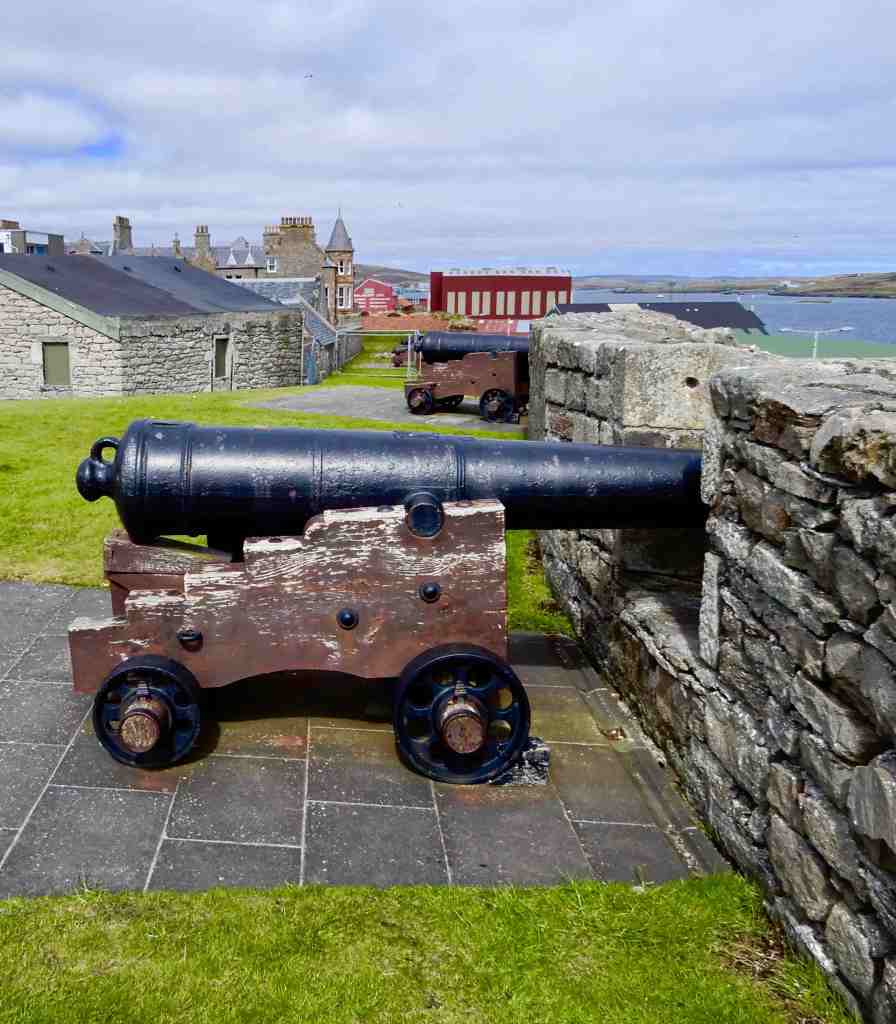
Fort Charlotte in the centre of Lerwick, Shetland, is a five-sided artillery fort, with bastions on each corner. The grounds and exterior battlements are open to the public and it offers good views of the towns harbor area. Today Fort Charlotte is managed by Historic Scotland, and is the base for Shetland’s Territorial Army. Visitors must call to get the keys to visit buildings.

Lerwick is home to a number of nice art galleries and gift shops. Art and crafts with puffins being the most popular subject.
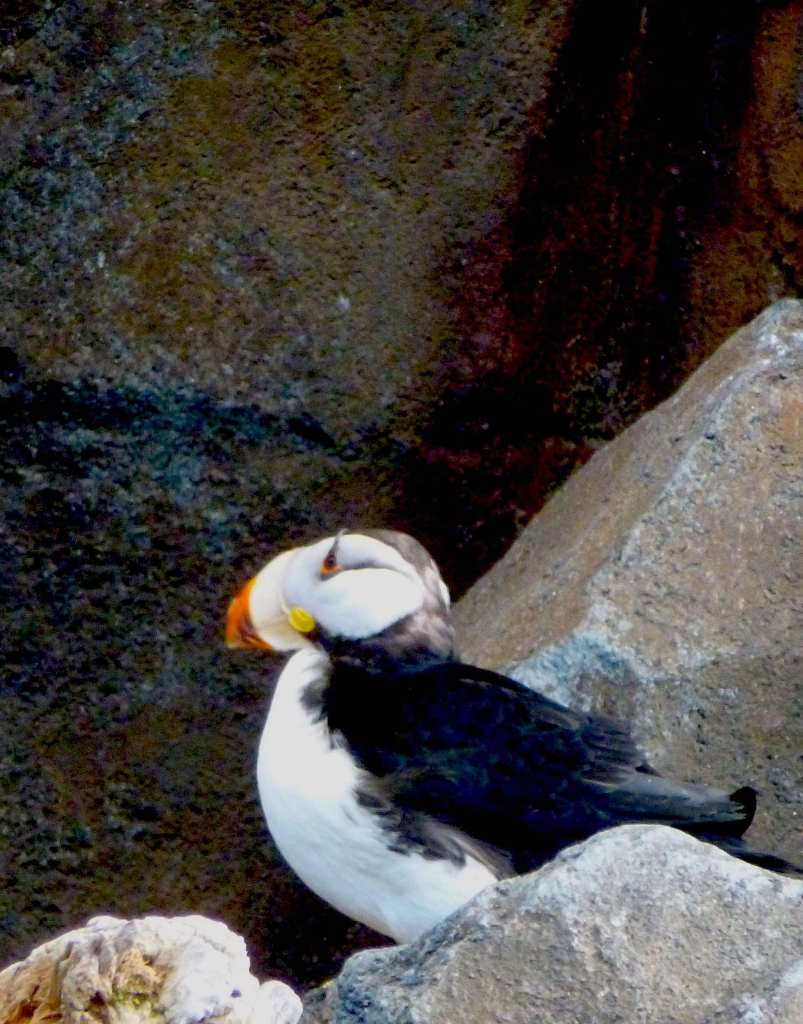
The Shetland Island’s Puffins. These islands are home to a large population of puffins in the UK, making them a good place for puffin-watching as well as other bird watching but puffins only if you’re visiting from May through July. Puffins remain at sea the rest of the year. Within the Shetland Islands there are a number of places to see puffins, but of all puffin colonies on Shetland, Sumburgh Head is the most easily accessed. The site is about twenty miles south of Lerwick and a short drive from Sumburgh airport. The puffin grounds are just a few yards from the Sumburgh Head car park. The nesting grounds have around 5,000 puffins that nest, fish and fly on both sides of the headland so the chances are you will see puffins flying around the moment you step out of your car. The site is run by the Royal Society for the Protection of Birds.

Scalloway Castle
Jarlshof Castle


Port of Reykjavik, Iceland

Stark, Wild, Fascinating Reykjavik

Famous Icelandic hot dogs

Reykjavik is a beautiful city with the focus being its waterfront. On the water at the center of town is the Opera House and the square in front is the usual stop for the shuttles from the dock. That makes it a convenient meeting point where you will catch the returning shuttle. The waterfront between town and the ships dock also features a beautiful walking path, perfect for a stroll to take in the stark beauty of this remarkable location. The city’s waterfront is a popular area, with a view of Reykjavik’s landmark mountain, Mt. Esja across the bay. There is also the striking sculpture Sun Voyager by Jon Gunnar Arnason ,  a massive steel sculpture in the shape of a Viking ship.

Harbor view
Opera House

Where Your Ship Docks– Cruise ships will normally dock at port facilities outside of town. Reykjavik is usually the supplier of shuttle service into town with a round-trip fare that seems somewhat over priced (this is probably related to the high cost of living in Reykjavik). If you don’t mind walking (weather permitting) there is a nice paved walk along the shore into town of only about two miles. There is no cruise ship terminal so ships have to make use of boarding ramps. For people with walking issues and wheelchairs it can be difficult.

Transportation – Taxis are readily available and are surprising inexpensive. A taxi tour of the city can usually be booked with TaxiReykjavik  for durations of 1-3 hours for under $8 per hour. Rental cars are also inexpensive for trips out into the Icelandic countryside to visit the Rift Valley and waterfalls. Click HERE  for more about taxi tours.

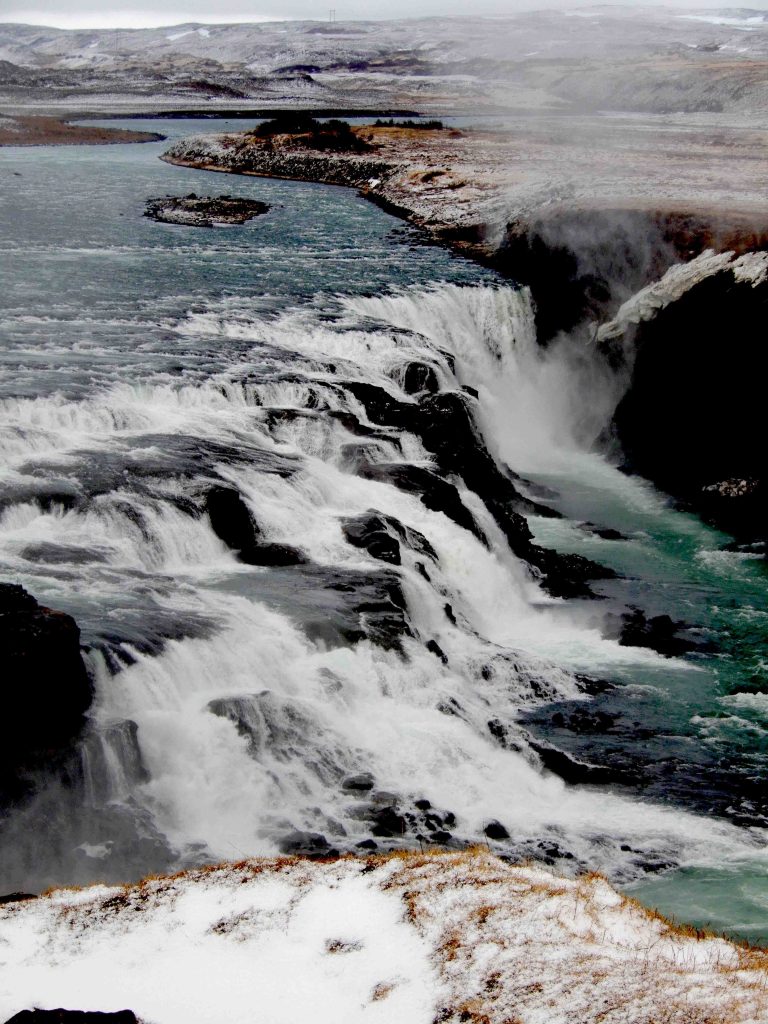
One of the nearest attractions to Reykjavik is the Blue Lagoon. There are hourly bus transfers 7 am to 8 pm to and from Blue Lagoon from Reykjavík via Destination Blue Lagoon with a package that includes round-trip fare and admission for under US$60. To get out and see the real wonders of Iceland you will need to rent a car (rental cars are not very expensive) or book a day tour. The most popular trip is the Golden Circle.

Currency – Local currency is the Icelandic króna with about 7,000 being equal to US$1. Credit cards are readily accepted and there are ATM’s available. 

Presbyterian Cathedral

Attractions – Reykjavik’s many museums  offer insight into this country’s fascinating Nordic History. Start with the  Saga Museum  for a look into how the Vikings fought and lived with displays of wax figures depicting scenes of the earliest settlers (circa 874 AD).  The National Museum displays more than 2,000 artifacts from the ninth century to the present.  For a different experience, live actors at the open-air Reykjavik City Museum -Arbaejarsafn offer scenes of how settlers lived in the old days in an open-air museum, and it traces the development of Reykjavik and Iceland from their beginnings to today.

While the Blue Lagoon is located outside Reykjavik, this  is a must if you have enough time in Reykjavik. The mineral-rich thermal waters are a perfect 104 degrees Fahrenheit, and the minerals and algae in the water are supposed to improve skin and even cure psoriasis. The Blue Lagoon is about an hour’s drive from the city. 

The sea around Reykjavik is popular with many types of whales, dolphins and seals. Many whale watching tours also pass by Puffin Island. The whale watching season runs from late March to late October.

Another of Reykjavik’s landmarks is the Perlan, a unique piece of architecture built in 1988. It is a thermal energy operation in which natural hot water is stored for heating the city, it includes a glass dome under which a rotating restaurant is famous for its cuisine. The dome has a viewing platform with  panoramic 360-degree views of the city and its surroundings. Access to the viewing platform is free of charge.

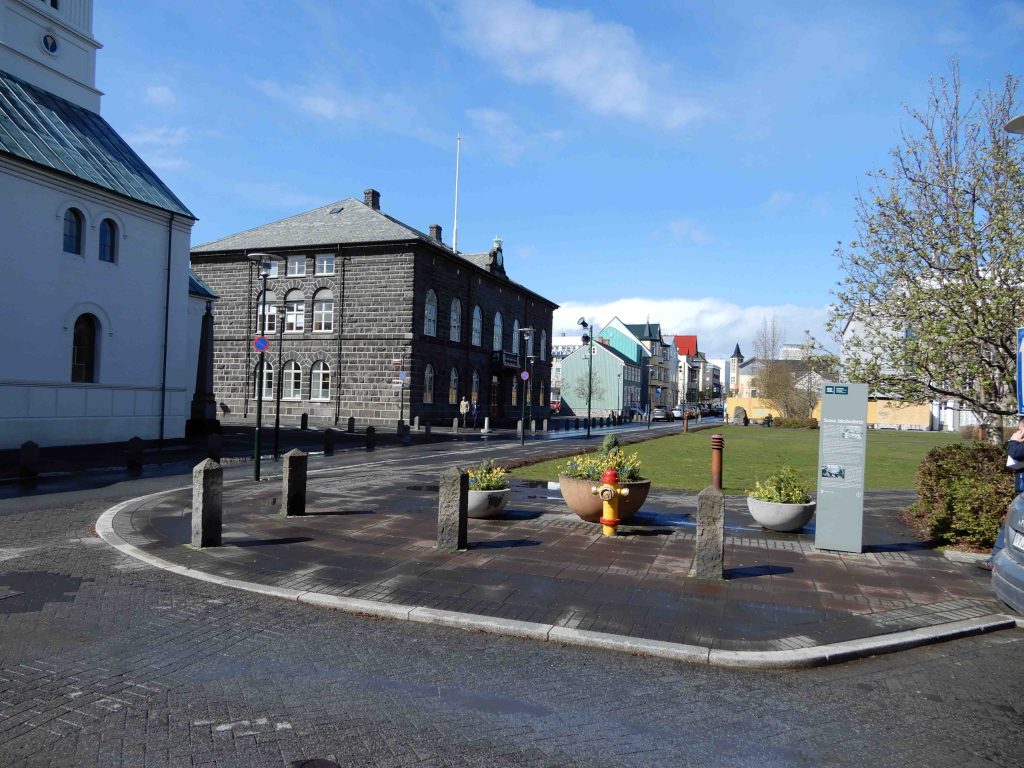
Reykjavik features a beautiful Presbyterian Cathedral as the cities centerpiece with nice shops and restaurants radiating down streets toward the sea. Be sure and have a famous Icelandic hot dog as you explore.

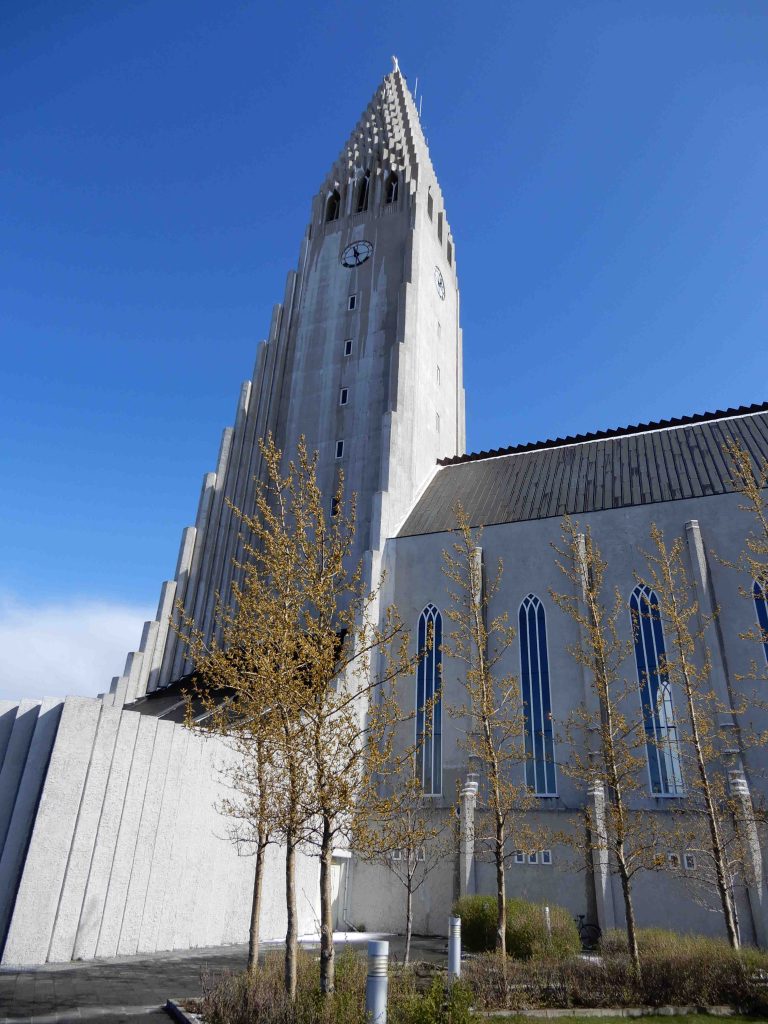
Hallgrimskirkja Church can be seen from almost anywhere in the city. Its steeple rises above all other buildings in Reykjavik and the church can seat over 1000 worshipers. The grounds also feature a statue of the first Viking said to have discovered America, Leifur Eiríksson. The church  nave is open to the public daily and you can purchase tickets to visit the top of the tower for spectacular views of the city. 

Check out walking tours of Reykjavik HERE.

Amsterdam • A Port of Call

Amsterdam, Heart of The Netherlands

Approaching The Netherlands from the North Sea cruise ships navigate the North Sea Canal. The canal runs from the IJmuiden locks to the Coenhaven. East of the Coenhaven, the waterway is called the River IJ (both letters are capitalized) and continues up to the Oranjesluizen locks located in the eastern part of Amsterdam. Than from the Oranjesluizen up to the Passenger Terminal in Amsterdam. Unfortunately ships that are transiting into Amsterdam often come in before dawn so as to be tied up early in the day. Passengers that are sailing out of Amsterdam late in the day get a much better appreciation of the systems that protect Holland from the North Sea.

Amsterdam is the largest city in the Netherlands famous for tulips, cheese, marijuana, red light districts and canals,. Many people call the country Holland but the true name is the Netherlands with Holland being the name of two of its states. The people are Dutch as is the name of their language.

The most important thing to know about Amsterdam is when walking in the city, pay attention and stay out of the bike lanes and watch out for bikes! Everyone rides bikes to get around in this city and in most areas there is a designated bike lane between the sidewalks and the street. The biggest mistake visitors make is seeing the traffic stop and step off the sidewalk without looking for bicycles. Keep you eyes open for bikes – a bicyclist moving at ten miles an hour can do a lot of damage to a pedestrian.

Where Your Ship Docks

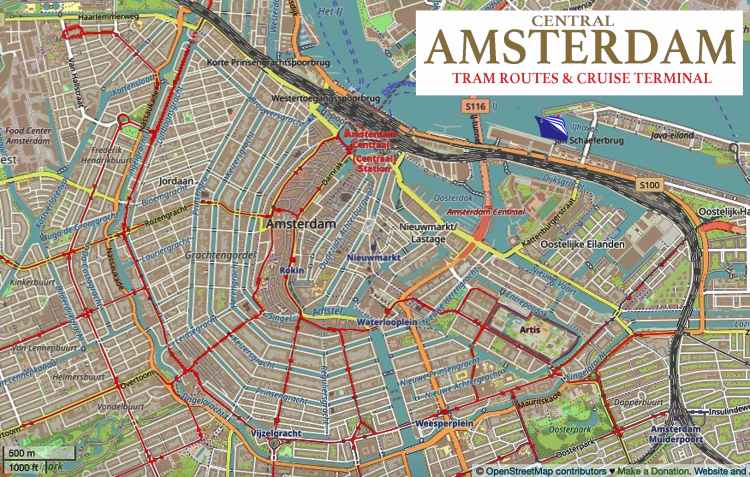
Your ship will dock at the Cruise Terminal on the river IJ. The cruise facilities are modern with good access to public facilities. From the terminal it is just a 10-minute walk to the central train station. With the cruise ship at your back walk off to your right along the waterfront to reach the station and central Amsterdam.

The cruise terminal is only a 20 minute ride from Amsterdam’s Schiphol Airport and just a ten minute walk to Amsterdam Central Train station. There is also frequent train service from the station to Schiphol Airport. Amsterdam has an excellent and inexpensive bus system
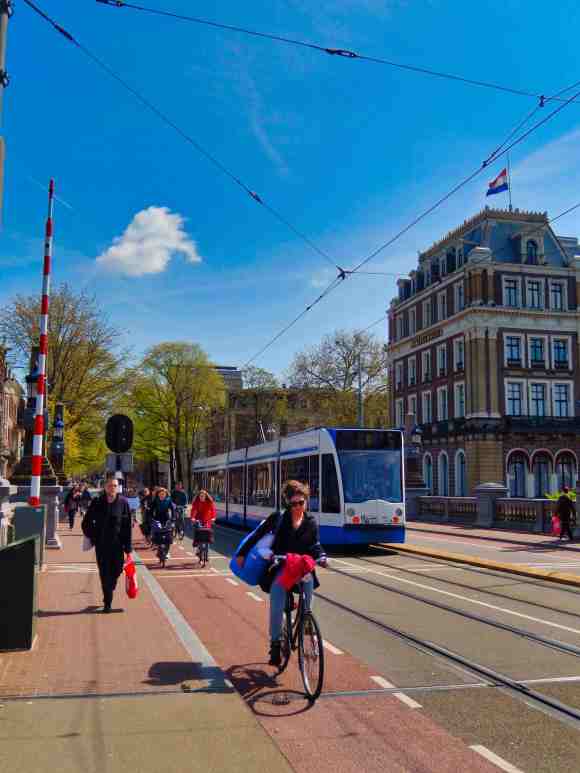
The city is laid out like a fan with major streets radiating out from the Amsterdam Central Train station. The major canals arc across the fan along with a number of city streets. Most major streets are serviced by trams which run every few minutes.

Traveling within Amsterdam by public transportion is easy to understand and very convenient. The network is operated by GVB throughout the central city and connects its neighborhoods with trains, trams, metro, bus and ferry. The least expensive and most convenient way to see the city is with GVB day passes. Available from 1 to 7 days, with prices starting from €8.50 per person, per day and valid on trams, buses and metros operated throughout Amsterdam. You can buy your tickets in advance from the GVB website HERE.

The Netherlands, like other members of the EU uses the euro as its official currency. You will often discover that to avoid the use of the 1 and 2 cent coins, many cash transactions are rounded to the nearest five cents in the Netherlands. Credit and debit cards a commonly accepted but U.S. Dollars need to be changed into Euros.
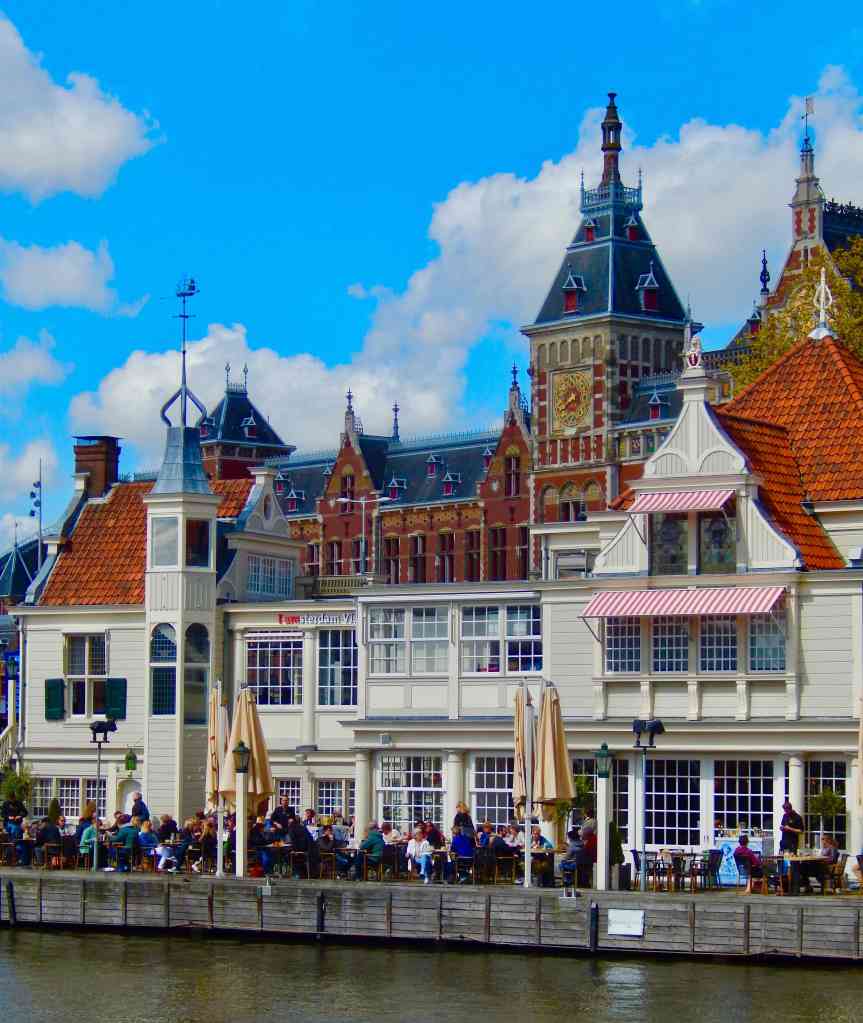
This is a beautiful city and great for walking (watch out for the bicycles!). Canals lined with boats are at every turn and like most major cities there are books dedicated to seeing this city. Museums, galleries, gardens and historic places are everywhere but often it’s just the cities neighborhoods that make a visit memorable.

Rijksmuseum – One of Amsterdam’s most popular attractions – and certainly its most important art repository – the Rijksmuseum was founded in 1809 to house the country’s huge collection of rare art and antiquities.

Van Gogh Museum – A must-visit for art fans and historians, the spectacular Van Gogh Museum has been one of Amsterdam’s top attractions since it opened in 1972.

Vondelpark – The largest and most visited park in Amsterdam, Vondelpark occupies 116 acres.

The Anne Frank House – On the Prinsengracht, the Anne Frank Museum is dedicated to the all-too-short life of one of the world’s best-known Holocaust victims.

If you are visiting in the Spring (usually from late March through early May) a must see is the Keukenhof Gardens, one of the worlds largest flower festivals featuring acres of tulips. Visit our article on the Keukenhof  HERE.

CLICK MAP TO DOWNLOAD A COPY

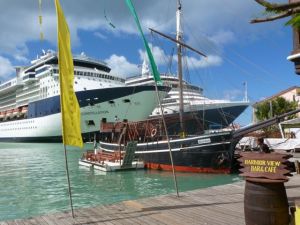
Port of Call Antigua, W.I.

General – The sovereign state of Antigua & Barbuda is located in the middle of the Leeward Islands chain, between the Caribbean Sea and the Atlantic Ocean. In 2017, most of Barbuda’s infrastructure was destroyed by Hurricane Irma and the population was evacuated to Antigua. Rebuilding has been a slow and painful process as resources are extremely limited.

Where You’re Docked – The cruise ships normally dock at Heritage Quay or Redcliff Quay in the downtown area of St. John’s, the capital and largest city on the island. If there are a lot of ships in port, some may dock at the Deep Water Harbour Terminal approximately 1.5 miles from the city. It is best to take a taxi from this area as there are no sidewalks going into St. John’s from the Harbour Terminal. There are plenty of shops and restaurants in the Quay area although many are closed on Sundays and public holidays. There are also several spots that offer WI-FI for either a small fee or free with a purchase. The beautiful St. John’s Cathederal which dates back to 1845 is a historic site to visit in town.

Transportation – There are lots of taxi cabs available from the cruise dock area. Many taxis have a fixed fare set by the government but you can try to negotiate your fare before agreeing on the trip. There is limited public bus service and it can be complicated to use and time consuming. Rental cars can be expensive because, in addition to the rental rate, a $20.00 temporary driving permit is required by the Antiguan government.

In addition to taking a ship’s shore excursion you can usually negotiate an island tour with local taxi drivers. It’s common aso to work out a round trip fare to places like English Harbour or Shirley Heights where the driver will return at a specified time.

Money – The official currency is the East Caribbean dollar (EC) but US dollars are widely accepted. The current exchange rate is US $1.00 = EC$2.70.

Nearby trips:

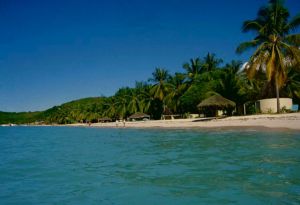
Attractions – Antigua is said to have 365 beaches, one for every day of the year. For tourists, one of the more popular beaches is Dickenson Bay, approximately 15 minutes by taxi from St. Johns. It offers a lively atmosphere with restaurants, bars and beach resorts.

Best view of the island is from Shirley Heights which also provides a nice restaurant for a meal with a spectacular view. A visit can be easily incorporated with a trip to Nelson’s Dockyard, the only working Georgian Dockyard in the Caribbean.

The nation is actually Antigua & Barbuda but 95% 0f the population lives on Antigua. Barbuda is actually one of the few unspoiled islands left in the Caribbean with a large park and bird sanctuary famous for its Flamingo colony. A visit to Barbuda is possible via the Barbuda Express, a 90 minute ferry service operating from the ferry dock in St. John’s. The ferry runs every day with one departure and one arrival daily. Adult r/t tickets run EC$85.00 (there is also a EC$15 landing fee from the government) and children’s fares are less. Advance reservations are recommended. A roundtrip and tour of Barbuda is scheduled every Tuesday and Thursday.

VISIT THE CRUISE LIFE SHOP

English Harbor is the main historic sight on Antigua and is a large natural harbour on the south coast. English Harbour is best known for Nelson’s Dockyard, a former British Navy base; it displays restored 18th and 19th-century buildings, a museum and other historical artefacts from the colonial period of the dockyard, especially from the time it was commanded by Horatio Nelson. The Royal Navy had begun using English Harbour as a safe anchorage in the 17th century and in 1704 Fort Berkeley was built on a spit across the harbour entrance to defend it. Later additional fortifications where built on the high ground above the coast at Shirley Heights.

English Harbor is the heart of the yachting community. Antigua Sailing Week is considered the Caribbean’s most prestigious regatta. Held annually at the end of April it features the Round Antigua Race on a Saturday followed by five days of competitive racing off the rugged south coast of the island. Yachts come from all over the world to attend the races.

Bangkok’s Cruise Port At Laem Chabang

Laem Chabang Cruise Gateway to Bangkok, Thailand

Cruising in the South China Sea is becoming increasingly popular which normally includes one or two ports of call in Thailand.

Thailand is one of the most advanced and open nations in Southeast Asia, and was once known as Siam. It is bordered by Myanmar (Burma) to the north, Laos to the northeast, Cambodia to the southeast and Malaysia on the south along Thailand’s isthmus. Thailand is a constitutional monarchy, and tourists are welcomed with open arms by these friendly people.

Where The Ship Docks

Most cruise ships dock at the port of Laem Chabang on the Gulf of Thailand, a full two hours south of Bangkok, the nation’s capital.

Often smaller ships dock at Klong Toey on the Chao Phraya River, right on the outskirts of Bangkok.

Inside the Grand Palace Complex

Terminal facilities at Laem Chabang

This port is located along the southeast coast and serves primarily as a working industrial port. While there are supposed to be facilities being developed to include a terminal, currently there is not much there for cruise passengers.

Transportation

Getting into Bangkok by taxi is estimated to cost about $40 each way with bus service costing about $7.50. We’ve known people that tried the buses and eventually gave up trying to catch the right bus and hired a taxi.

The roads and highways in Thailand are very well maintained and if you want to go it alone and see some of the countryside there are good car rental services. We’ve always been amazed with Thailands highway rest stops usually lined with a half dozen or more American franchises. One rental company near Laem Chabang that comes highly recommended is:

Take it Easy Bike & Car Rental

Address: 329/48, Soi Pattaya New Plaza, 50m off 2nd Road, Opposite Soi 7 – Soi 8, Central Pattaya, Pattaya 20150 .                      Phone: 089 007 7804    Rental cars can be arranged ahead of arrival for pick up at the port through their web site.

Currency

Thailand uses the Baht at an exchange rate to the U.S. Dollar of one Baht equals about 3¢. While most credit cards are welcome if you are going to spend a day or two in Bangkok it is recommended that you exchange for local Baht.

Attractions

The capital city of Bangkok is the big attraction, with the best place to start being the Grand Palace. This is the central sightseeing attraction in the city, and it’s overwhelming in its historical significance and stunning architecture. The grounds are packed full with royal palaces, temples, and history, the highlight is Wat Phra Kaeo, Temple of the Emerald Buddha. A relic within this temple is said to be a piece of bone from the Buddha himself. While there also visit the Temple of the Reclining Buddha, its official name is Wat Phra Chetuphon Vimolmangklararm Rajwaramahaviharn and it measures 135 feet long. Allow a number of hours to do the Grand Palace grounds but also try and visit the famous Wat Po and Wat Arun, the Temple of the Dawn rising above the Chao Phraya River. We would also recommend taking a water trip through canals and along the river.

Thailand is also famous for floating markets where goods are sold from boats. Originally developed when rivers and canals played an important role in daily life, most floating markets operating today serve primarily as tourist attractions.

Maeklong Railway Market

One unique market is the Famous Maeklong Railway Market. It is located in a congested town and sits right on an active train track. As trains approach vendors pull back their awnings and displays with only minutes to spare and are right back in business as soon as the trains pass. A unique experience as you stand there with train only only inches away.

Temple of the Dawn
Grand Palace Complex

While there are tons of cultural and historic attractions to see in Bangkok and the people are remarkably polite and friendly be aware of con artists; they frequently prey on tourists. Though the cruise port is a good distance from the city, venturing into the the city to see the sights is something that shouldn’t be missed.

Grand Palace Complex
Temple of the Dawn

Flying Health Advice

Keeping Safe While Flying

Note: In the times of the Covid pandemic there is actually a bit of good news for air travelers. With all the emphasis on mask wearing you will no longer stick out in a crowd if you use masking as a precaution. While some airlines are requiring N95 masks to fly it’s a good idea to embrace the idea. You can find the N95 masks HERE. Likewise because of increased airline sanitation it is becoming less likely that you will pick up a bug from flying. It’s still recommended that you don’t let your guard down

Often cruising requires a flight to get to the ship and often these can be really long distance flights. This exposes that love-hate side to travel. Getting there is great but traveling there not so much. Long distance flights are usually no fun at all, especially if you fly coach and with a price difference on international flights as high as ten times, many feel the pain is worth the price savings.

It’s often suggested to get up and walk around to help circulation but that is just not practical on night flights where you are stuck between two or three people on a wide body jet. The cabin crew isn’t pleased either with isle walkers getting in their way.

Compression Socks

You can find some relief if you plan ahead on those long flights, especially if your cramped in coach. One area of particular concern is the toll it can take on your circulation. It isn’t unusual to discover that your ankles swell and maybe even hurt on and after a long flight. While the risk of developing blood clots on a flight is pretty low, it does go up with age and as travel length increases.

A lot of athletes and seniors already know the solution. Ask you doctor and he’ll tell you to wear compression socks. These stockings help increase circulation and reduce the risk of swelling or worse, deep vein thrombosis (DVT) and clotting on long flights.

An excerpt from the Mayo Clinic explains, “Compression stockings steadily squeeze your legs, helping your veins and leg muscles move blood more efficiently. They offer a safe, simple and inexpensive way to keep blood from stagnating.” Find them HERE.

Twisted Pillow

Another useful item is a travel pillow to help reduce strain on the neck. I’ve been traveling with my inflatable half-donut for a number of years and the only thing I have to recommend it is it deflates flat and does help. One concern is it doesn’t help at keeping your head up straight and that seems to be where the strain is.

Recently I found a straight line, bendable pillow that has a rigid center. It allows you to bend it so there is a higher point on one end that is supposed to support your head when wrapped behind the neck. Available HERE.

Masks and Nose Filters

Another concern with flying is getting trapped in that enclosed environment along with a number of people sneezing and coughing. It’s not uncommon to come down with a flu or cold within a few days of a long flight. One approach is to do what a lot of Asian flyers do and wear a face mask (with Covid that is getting much more acceptable). While it may seem odd to see an entire group exiting a plane wearing surgical masks, it does have a practical side. Another option is to use nose filters. They’re discreet little adhesive pads with HEPA filters that you stick to each nostril. There are several kinds with one called First Defense. You can find them on Amazon and Ebay. There are a number of competitors out there including 3M and WoodyKnows (also available from Amazon ) that claim to offer the same protection.

Sanitize

Another practice that has become common after the recent pandemic is using hand sanitizer. While airlines claim to sanitize the area around seats there’s no harm in doing a little sanitizing of your own. Spritz the trays, control panel and seat arms as a minimum.

Another lesson that has come into practice is keep your hands off your face as much as possible. The most common way to catch and spread a virus is to give it access at your mucus membranes. Mouth, nose and especially your eyes. and it’s remarkably easy for your hands to pick up a bug off surfaces. In the case of most bugs they can’t gain access to your body without contacting a mucus membrane. Washing your hands frequently is a must too.