
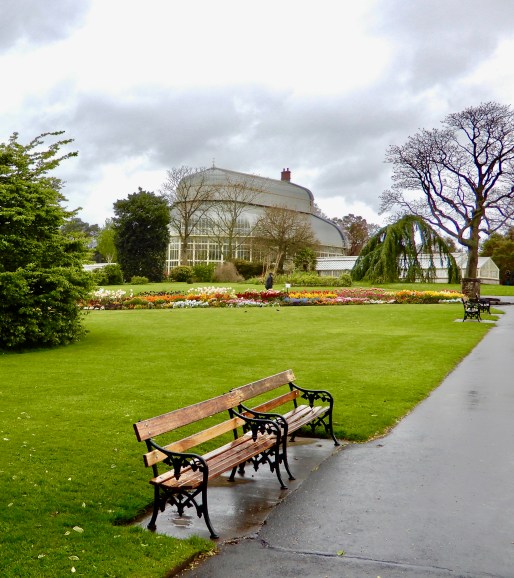
For several days this May we visited a number of gardens while in Dublin, Ireland. The weather was mostly good with one morning of rain when we headed out for the National Botanic Gardens. By the time we reached the gardens the rain had lifted.
The National Botanic Gardens – This is a really beautiful garden with a number of greenhouses matching several environments. There were greenhouses dedicated to orchids, another to tropical plants and another to desert flora. The outside gardens cover a number of acres and feature several different styles. Admission is free, there is a restaurant and gift shop as well as a number of special programs including lectures and concerts. If you have time while in Dublin do yourself a favor and go see this garden.

Backed up to the Botanic Gardens is Glasnevin Cemetery and Glasnevin Cemetery Museum. The museum’s web site describes it as “the guardian and storyteller for over 1.5 million people. From the ordinary to the truly extraordinary, these people helped shape the Ireland of today. We want to share their stories and times with you through tours of the cemetery, a visit to the museum or through a genealogy search for your family history”. While in the neighborhood stop in at the well known Gravediggers Pub for a pint.
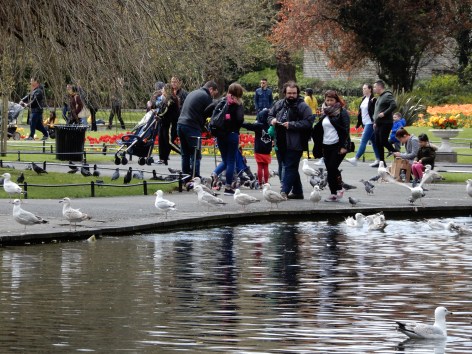

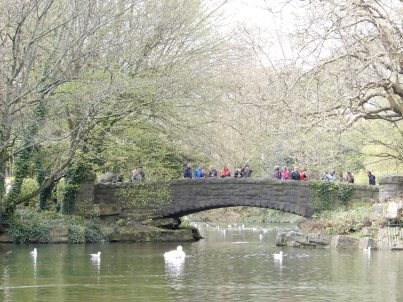
St. Stephen’s Green is located in the heart of Dublin and is a focus in the area, and provides an oasis of green in the middle of this busy city. The Dublin Public Works web site describes this garden as “four centuries of history that are eventful and complex, involving such important figures as Arthur Guinness, 1st Baron Ardilaun, and Countess Constance Markievicz. The park itself hosts a large number of important sculptural monuments to Irish history. Many species of birds and plants also call the park their home. Public facilities at St Stephen’s Green Park include a playground and a garden for the visually impaired”.
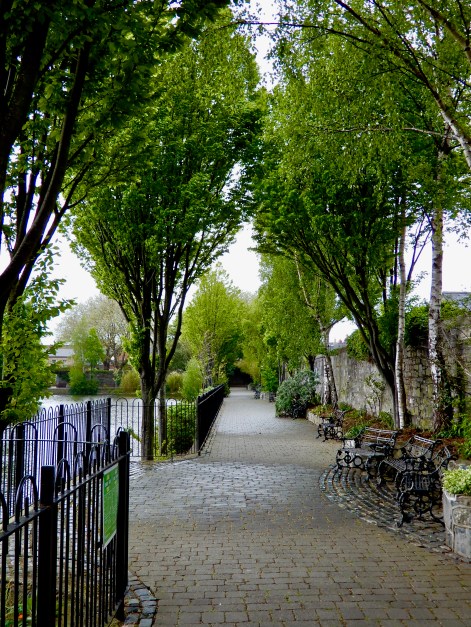
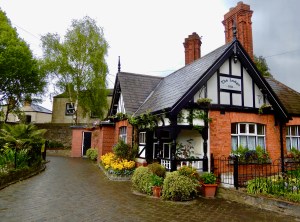
Half way from the River Liffey to the National Botanic Gardens we stopped at the Blessington Street Park or “The Basin” and what a find. Located near the intersection of Royal Canal Bank and Primrose Avenue this is a beautiful and well kept pocket park surrounding a lake. After walking thru this park we thought how lucky the neighbors are to live next to this gem.

 General –
 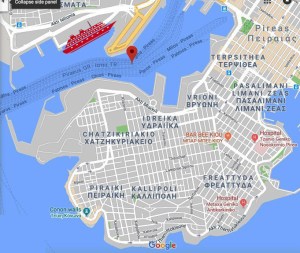 Where You Dock – Most cruise ships will dock along the northwest side of the port. There is a good walking sidewalk around the port and if you walk north and than continue around the port off to the east you will reach the central district in less than half a mile.
 To get from Piraeus to the Acropolis by metro, take the metro from Piraeus to Thissio (15 mins). At the metro station follow the pedestrian avenue towards the Acropolis. The walk is another 10 minutes to reach the Acropolis.
 Acropolis -First and foremost there is ancient Athens and the Acropolis and if you haven’t visited before this is not o be missed.
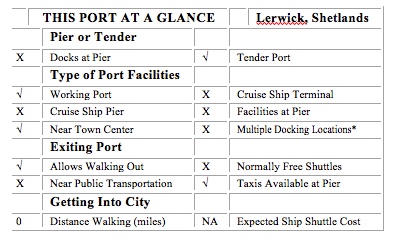 Located in the North Sea one hundred fifty miles north of Scotland, Lerwick, the major town in the archipelago is the major Shetland port.
 Getting Ashore -Cruise ships will normally anchor out and use tenders to reach shore. The tenders will dock right in the center of this picturesque town with its narrow streets and historic buildings.
 Transportation – While there is a good public bus network (www.zettrans.org.uk) with its hub at Lerwick that reaches most points on the main island, and using ferries to other islands. The Lerwick bus depot is conveniently located near the center of town. Unfortunately schedules aren’t good for day tours from Lerwick.
 The Broch of Clickimin is a large, well-preserved but restored broch (a broch is an Iron Age stone hollow-walled structure unique to Scotland) dating to the late Bronze Age and is located just a mile north of town.
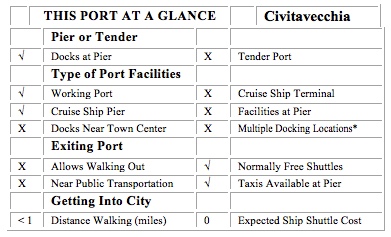 General – Civitavecchia is a seaside city and major port serving the city of
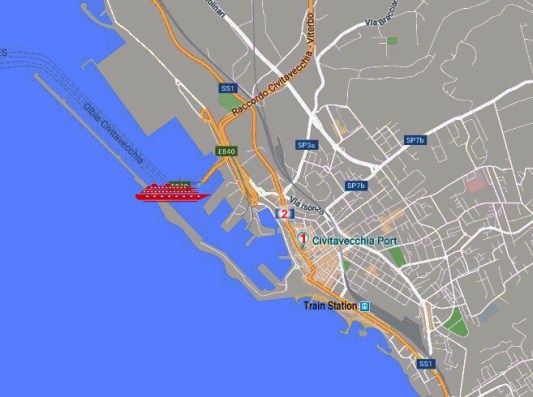
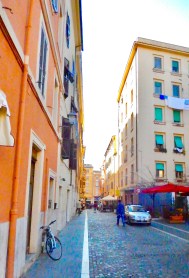 Rome. The city is served by frequent train service from Rome along with service to other Italian destinations. The Cruise port is only a short five or six block walk along the waterfront on Via Aurelia. Once at the port there are usually free shuttles to the cruise ships. How the shuttles run seems to change often.
 The main entry to the port is marked on the map with a red 1 but the more
  likely location to catch the shuttle is marked with a red 2.
 Transportation – The best way to get into Rome is to take a
 Taxis are available but are famous for overcharging with the short ride from the port to the train station quoted as high as €10 or €15.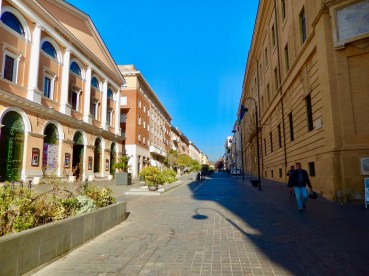
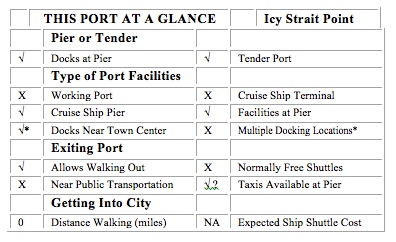 General – This is a nature port on Chichagof Island which opened in 2004 and is only open when cruise ships are in. It was developed by the Native Tlingits and celebrates their culture. It is the ideal location for viewing wildlife and sea life. Hoonah, the only town on the island is described as the largest Tlingit Village in the state.
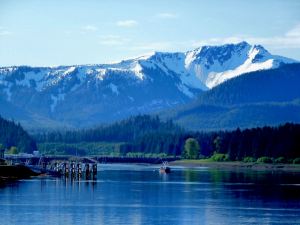

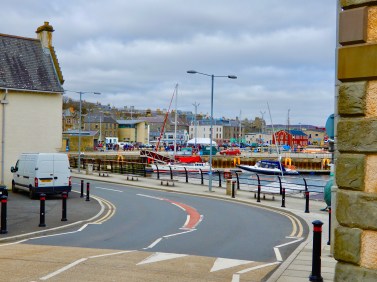
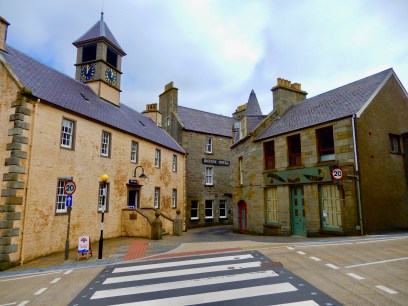
 Located in the North Sea one hundred fifty miles north of Scotland is the Shetland Islands where modern opportunities and history meet. Most buildings in Lerwick, the major town in the archipelago, are made of local stone and have the appearance of being from a different era. Narrow alleys and streets don’t appear to have been made with automobiles in mind at all. The town owes its success to its location, finding shelter in the lee of the island of Bressay across the channel and its good harbor. The town takes its name from Norse meaning ‘mud-bay’ and was a safe harbor for Dutch fishermen in the seventeenth century. This town is a good base for exploring the Scandinavian history, beautiful seascapes and wildlife of the Shetland archipelago.
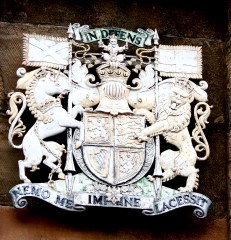 “Nemo me impune lacessit” is the motto on the Royal coat of arms of the Kingdom of Scotland and translates to “No one attacks me with impunity”, and has been loosely rendered in Scots as Wha daur meddle wi me? (in Scottish Gaelic Cha togar m’ fhearg gun dìoladh, ). It is also alternatively translated into English as No one can harm me unpunished.
 The Shetland Islands are home to a large population of puffins, making them a good place for puffin-watching as well as other bird watching. Within the Shetland Islands there are a number of places to see puffins, with some requiring only a short hike.
 The Intentional Travelers