Ravenna, Italy • A Port Of Call

Ravenna, A Jewel On The Northern Adriatic

Cruises are now adding Ravenna to their itineraries more often, but don’t just rush off to visit Venice. This city is a treasure not to be missed, especially if you have an interested in art, architecture and history.

Ravenna in the northern Italian province of Emilia Romagna hasn’t been a major cruise destination in the past but now that Venice has closed its port to most cruise ships Ravenna is getting more interest. Royal Caribbean and Celebrity are now using Ravenna as a port to visit Venice as well as a new embarkation port. Located only two and a half hours from Venice by tour bus and with frequent train service starting at €12 it is gaining popularity for day trips visiting Venice.

Ravenna itself, often overlooked, is an incredible treasure trove of art and history with its basilica containing the worlds most extensive collection of Byzantine mosaics. The city was the capital of the Western Roman Empire from 402 AD until the Western Empires collapse in 476. Today, Ravenna is home to eight world heritage sites, is known for its great food and is located on good beaches on the Adriatic coast that include some great beach resorts.

Where Ships Dock

The Ravenna pier capable of accommodating several cruise ships is about 5 miles outside the city and shuttles are normally provided. To catch a train to Venice you also need to get into the station located in the center of town. There is no cruise terminal or regular facilities near the pier.

Wheelchair Accessibility

Disembarking – This port has a developed cruise ship pier but the ease of disembarking varies by the individual ships gangway designs. For passengers using wheelchairs there can be a moderate ramp incline to deal with. Getting into Ravenna will require using a bus.

Port City Characteristics – This city has a well developed wheelchair friendly infrastructure. The port area is flat or has few inclines. Intersection crosswalks may have few issues with curbs or other wheelchair obstacles like street and sidewalk pavers.

Old city gate

Transportation

Getting into Ravenna usually is by a shuttle bus and there will probably be very little in the way of taxis available at the pier. With Venice no longer providing access for cruise ships Ravenna is becoming one of the gateway ports for visiting Venice. Expect bus tours to Venice to become common and train service takes about 2 to 3 hours each way.

Currency

Italy uses the Euro and Ravenna requires you to change some money as Pounds, US and Canadian Dollars are not usually accepted. The are ATM’s readily available and credit cards are welcome.

Must See Attractions

Eight Unesco World Heritage Sites

  1. The Mausoleum of Galla Placidia meant to be the resting place of Galla Placidia, the sister of the Roman Emperor Honorius who had transferred the capital of the Western Roman Empire from Milan to Ravenna in 402 AD.
  2. The Neonian Baptistery and…
  3. Arian Baptistery with both including plain octagonal shaped brick exteriors with lavish interiors.
  4. The Basilica of Sant’ Apollinare Nuovo with its 26 mosaic scenes from the New Testament, being the oldest mosaics in the world. It is the the only chapel of the early Christian era that is still fully preserved.
  5. The Mausoleum of Theodoric built in 520 AD by Theodoric the Great, King and unifier of the Ostrogoths.
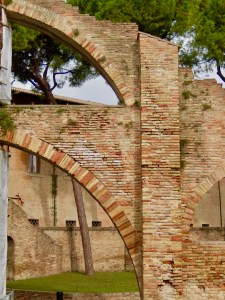
Flying buttress on the Basilica of San Vitale
Dante’s Tomb

The city is also the site of the Tomb of Dante Alighieri the author of The Divine Comedy. He was exiled from his native Florence to Ravenna in 1318, where he completed Paradise, the final section of his famous three part work. Dante is buried in the graveyard beside the San Francesco Basilica.

The jewel of the city is the “Basilica of San Vitale“, one of the most important examples of early Christian Byzantine art and architecture in Europe. Built in the 6th century it is especially noted for the colorful mosaics of Christian icons that decorate the interior walls and ceilings.

The Roman Catholic Church has designated the building a “basilica”, the title bestowed on church buildings of exceptional historic and ecclesiastical importance, even though it is not an architectural basilica form.
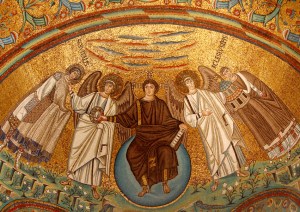
The Basilica of San Vitale was begun by Bishop Ecclesius in 526 AD, when Ravenna was under the rule of the Ostrogoths and completed by the 27th Bishop of Ravenna, Maximian, in 547.
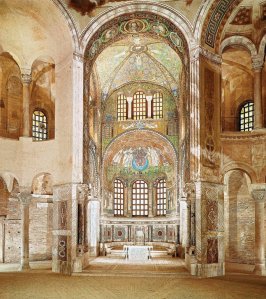
The church has an octagonal plan with the building combining Roman elements: the dome, shape of doorways, and stepped towers; with Byzantine elements: polygonal apse, capitals, narrow bricks, and one of the earliest examples of the flying buttress. The church is most famous for its collection of Byzantine mosaics, the largest and best preserved outside of Constantinople. The church is of extreme importance in Byzantine art, as it is the only major church from the period of the Emperor Justinian I to survive virtually intact to the present day. Furthermore, it is thought to reflect the design of the Byzantine Imperial Palace Audience Chamber, of which nothing at all survives. The Church also inspired the design of the church of the Saints Sergius and Bacchus in Constantinople, and also was the model used by the Emperor Charlemagne for his Palatine Chapel in Aachen in 805. Centuries later the San Vitale dome was the inspiration for Filippo Brunelleschi in the design for the dome of the Duomo of Florence, Italy.

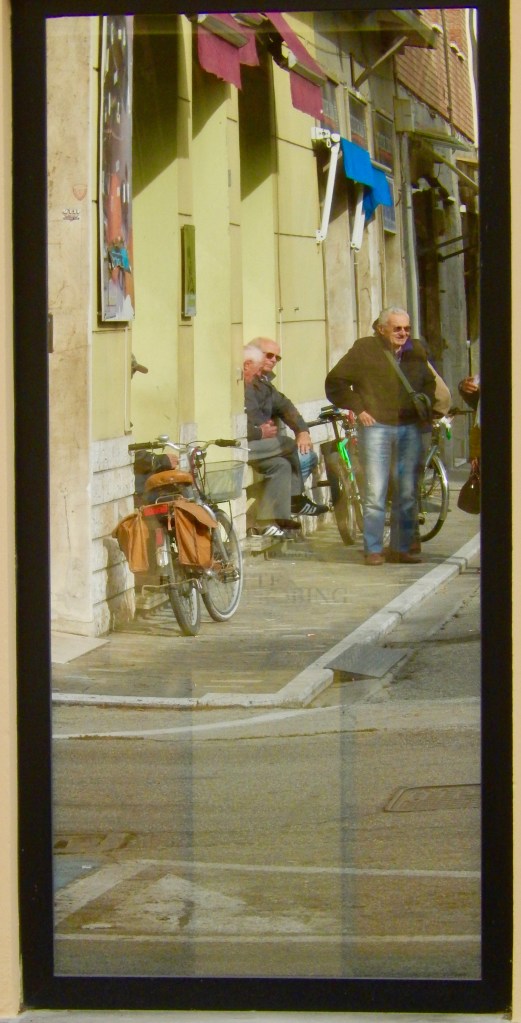
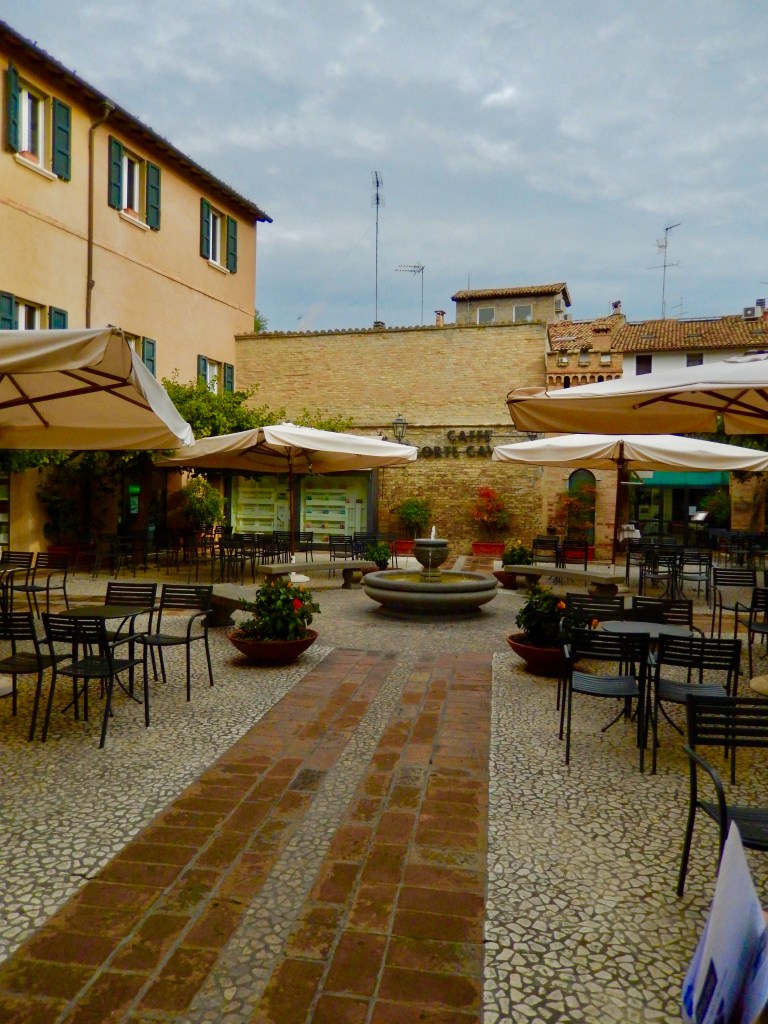
Besides the history and good food the city is also a very easy place for walking. It features a number of wide pedestrian malls lined with good shops, cafes and restaurants.
Outside the city towards the Adriatic beaches you will pass a number of canals dotted with interesting fishing huts. They use huge and elaborate fishing net contraptions that don’t seem a very sporting way of fishing. Even at the beach there is a long pier also with a number of these fishing huts and nets.

Of additional historic interest is the lagoon just north of the Ravenna pier. At the time that Ravenna was the capital of the Western Roman Empire the lagoon was the home port of the Roman fleet, the largest navy in the Mediterranean at the time. Excavations are exposing piers, shipyards and associated ruins from the period.

Farther north just beyond the archeological site is the resort area of Marina Romea featuring one of the best beaches along the coast and was founded in the the 20th century. The town itself is a green oasis with a small boat marina, a riding school, sports facilities and beautiful paths running through the pine woods out to a golden beach.

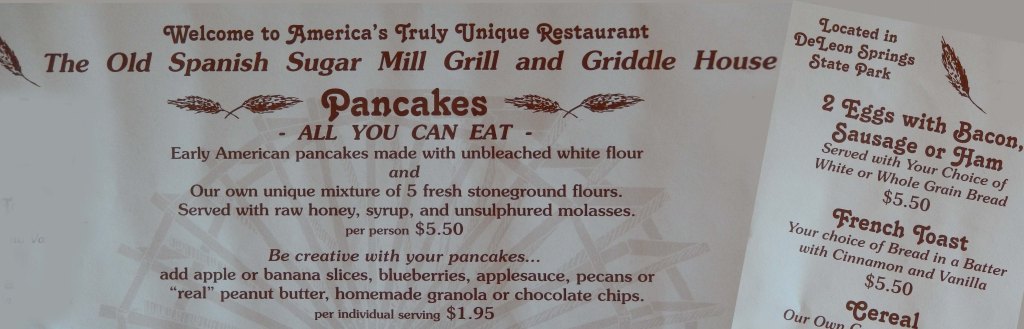
Old Spanish Sugar Mill, A Florida Tradition

The Old Spanish Sugar Mill, A Griddle House Restaurant

Located ten miles north of DeLand Florida and only twenty five miles west of Daytona Beach is a Florida park named De Leon Springs and inside the park is a truly unique restaurant.

The Old Spanish Sugar Mill must be doing something right since they have been open for almost sixty years. Originally the location was a private resort at one of Florida’s amazing fresh water springs and when the state added it to its parks the restaurant remained open on the property. While it sells a menu of sandwiches and snacks to visitors at the springs, its real claim to fame is breakfast. If your family includes children this is a must if you are visiting the area.

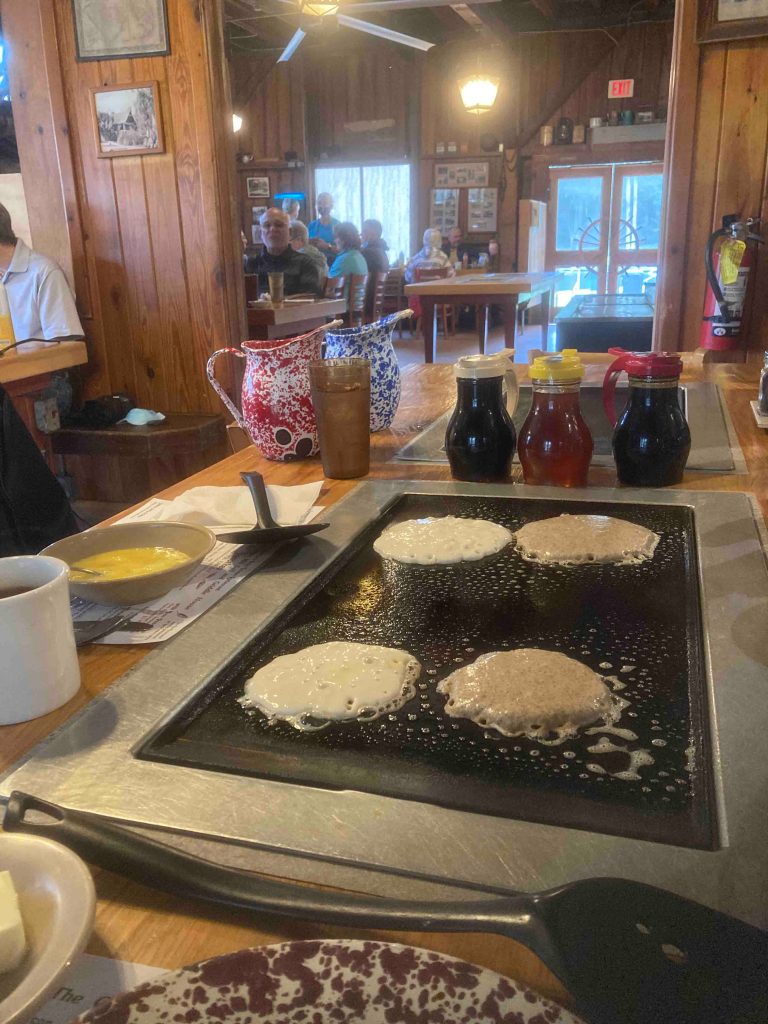
The main attraction is pancakes, griddle cakes or flap jacks, if you prefer. Each table has a griddle built in and when you order pancakes you get two pitchers of pancake batter, a spatula, butter, syrup, honey and molasses. The batters include are made with stone-ground flours and include unbleached flour and five grains. If you order eggs they come in the shell with a bowl to help scramble or just slide them on the griddle. The basic plan is you cook your own eggs and pancakes and you guaranteed to have fun if you are seven to seventy.

To visit the The Old Spanish Sugar Mill Grill House you need to pay the park admission but that’s actually a bonus. After breakfast spend some time around the springs, walk the nature trails or take a boat excursion. All-in-all a great family outing.

De Leon Springs State Park

Wallpaper • Yosemite Winter Storm

For Desktop Wallpaper

It’s Free!

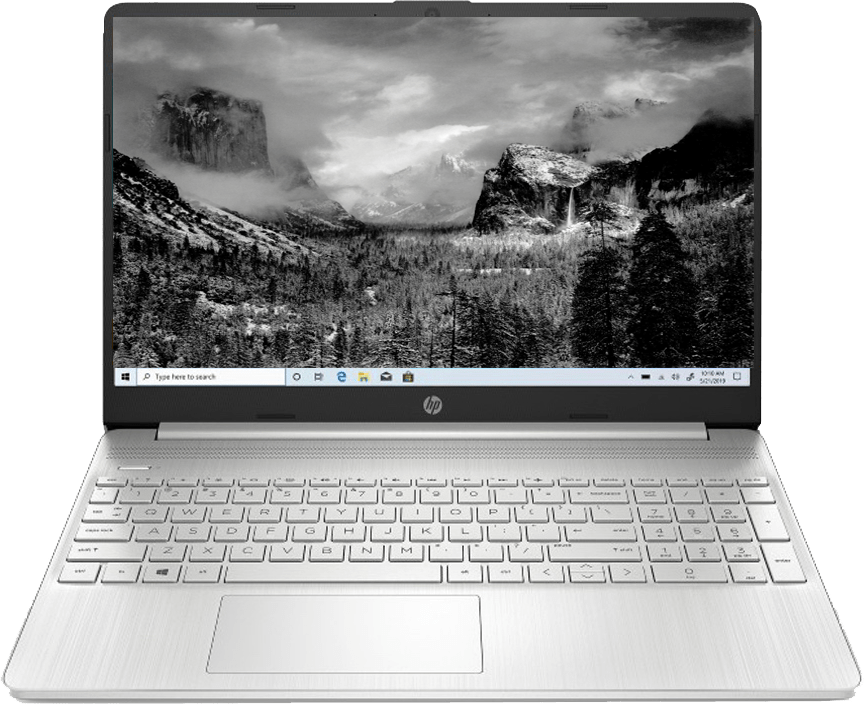
Feed those travel daydreams using our computer wallpaper collection. This photograph by Ansel Adams of Y0semite valley winter storm was taken in a contract by the National Park Service. It is a beautiful and easy to navigate desktop image perfect for inspiring that wanderlust in each of us. Download this photograph in a jpg file and use as computer wallpaper or crop for your handheld device (instructions below).

Yosemite Winter Storm

How To Use This File – On clicking the “Download” button above you will be redirected to a new page containing this image in an open jpeg format available to download.

  • To download drag and drop the image or option click to select download location.
  • Transfer the image to your desktop image folder.
  • Select the image from your desktop options.

Cruise Port Buenos Aries, A Guide

Buenos Aries, Argentina – Gateway To Cape Horn And Antarctica

Arriving in Buenos Aries

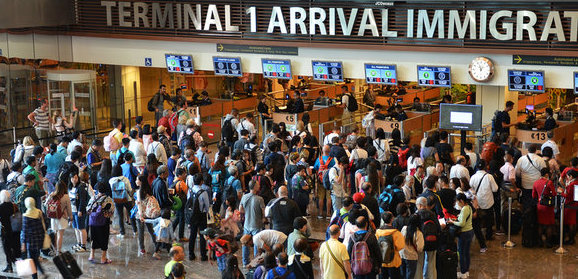
Buenos Aires has several airports but the two you are likely to use are the major international airport, referred to as Ezeiza and the-in city Jorge Newbery Airport. Most inbound international flights will come in to Ezeiza while many regional flights use Jorge Newbery.

Ezeiza, its official name is Ministro Pistrani International Airport, is located about 15 miles southwest of Buenos Aires. It is the largest and busiest airport in the region.

Jorge Newbery Airport is actually an international airport too located just to the northeast of downtown Buenos Aires and serves as the main hub for a majority of domestic flights.

The travel time from Ezeiza to city center by taxi is at least 30 minutes or up to 40-60 minutes depending on traffic. Options include official taxis, Remis or organized private cars, or public bus. Uber may be an option but they seem to be in a constant process of being shut down by the government. There are also online car service booking sights which we prefer for a couple of reasons.

After arriving at Ezeiza you may need to get cash for bus or a taxi. DO NOT change money at the changing booths in the airport. They’re famous for low rates of exchange and charge additional service fees. If you really need local currency use an ATM in the arrivals area of the airport in front of the McDonalds. Because of financial problems in Argentina and erratic inflation you may discover that many drivers actually prefer Euros and Dollars. Keep track of exchange rates – recently1 US$ = 135 Argentine Peso (ARS).

Authorized Taxis – The taxi stands operated outside the airport are not the most trustworthy option so ask what the rate is and if they will accept Dollars and do a bit of comparison shopping before accepting.

Remis Service – In Argentina the ” remis (or remises) ” are a very popular option. A remis is a sort of taxi service, but the difference is that you just hire a driver with his/her own personal car. Actually they are considered the safest option for a ride from EZE. They can be booked online or paid in advance at an airport kiosk or booths inside of the airport. By all means avoid the rogue taxis outside the airport. By booking online you can have a driver waiting for you with a sign at the exit of baggage inspection. The drivers are mostly bilingual and Whatsap is usually the preferred method of communication.

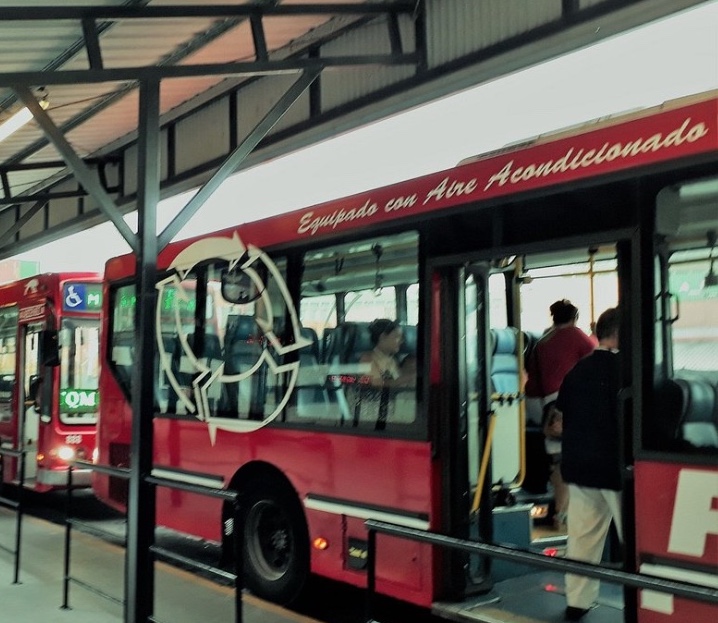
Public Bus – Line 86 of the local bus system is the only public transport that runs regularly from the airport. The bus will only cost about US$3-5 but will take about two hours. During rush hours there may not be much room for suitcases.

View of the port area

One of South America’s busiest cruise ports, Buenos Aries is one of the largest cities in South America with a lot to see and do. Famous for the Tango and great steaks it is also a treasure trove of history and packed full of interesting sights. Most cruises are using Buenos Aries as a embarkation or disembarkation port but that doesn’t mean it should be overlooked as a destination in its own right. You will discover that hotels are moderately priced and good restaurants are plentiful and inexpensive.

Where the Ships Dock

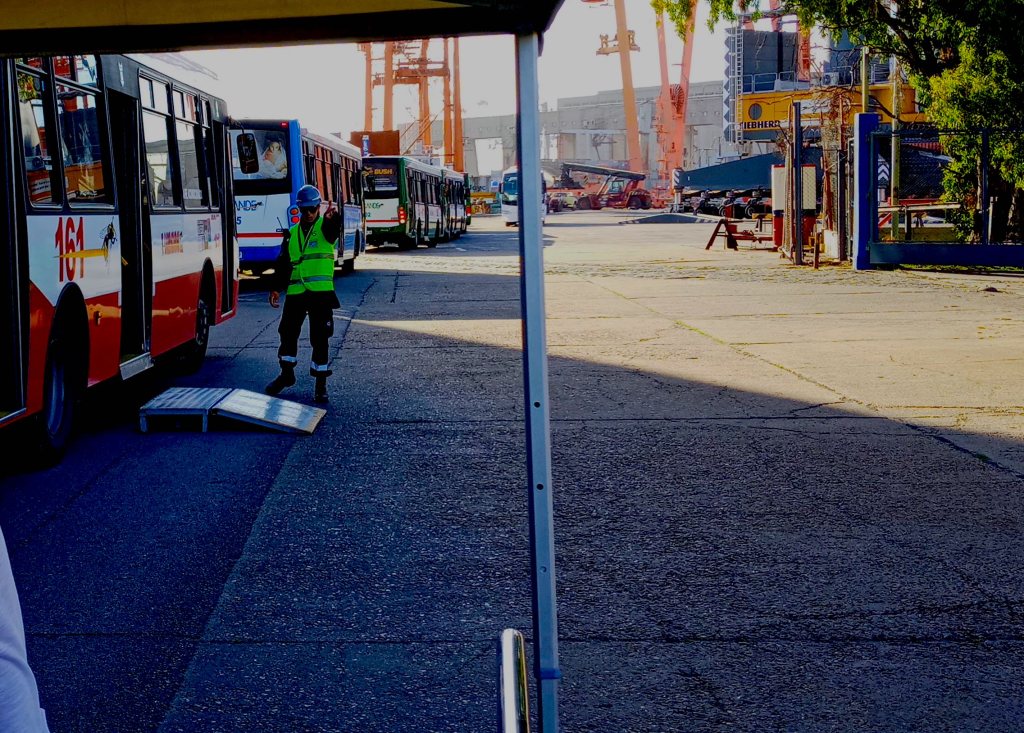
Buenos Aries does not have a very convenient port facility and it has been that way for a number of years. It doesn’t look as if they are in any hurry to upgrade. While it does have a cruise terminal it is located so far from most piers that they use buses to get passengers to the ships after check-in. Be aware that you are boarding the ship from the pier and they us an erector set structure of steep ramps to access the ship. It is very unfriendly for peole traveling in wheel chairs. You also cannot walk in or out of the port from the ship. The terminal facility is located only a couple of miles from the downtown area but it is not easy to reach on foot and the only easily available transportation are taxis (more on taxi under transportation).

Cruise port boarding ramps

Transportation

If you are going to or coming from the cruise terminal you are pretty much going to be getting a taxi or hiring a Remis. While you can walk out from the terminal, it is almost a mile walk to the nearest metro station located near the Sheraton hotel and that’s along heavily trafficked roads. It’s an additional half mile to the nearest shopping mall.

Taxis are supposed to be metered in Buenos Aries but there are a number of exceptions and add-on fees which are difficult to understanding. Because of that, taxis can be very inexpensive so be prepared to often be surprised. For us a taxi from the Odalisque area to the in-town airport was 400 pesos while a ride the other way the next evening cost 700 pesos.

Buenos Aries has an excellent and modern subway system (Subte) with two hurdles to overcome for foreign visitors. First, like much of the city there is very little signage in anything but Spanish and few locals speak anything but Spanish. Second you need a SUBE card to ride which is available at subte stations, or at eight Tourist Assistance Centers. We did not see any information regarding a one or two day visitor card either. OFFICIAL METRO SITE IN ENGLISH

Taking a taxi to the port is pretty straight forward but we would recommend flagging a cab on the street and traveling on the meter. Several times we paid much higher fares by having our hotel call a taxi for us. Traveling from the Odalisque to the port on a meter should run 300 to 350 Pesos (tipping is not customary).

Leaving the port is another story. There seems to be a system in place to extract significantly higher fares from passengers. Upon exiting we were told that all taxis are on a fixed fare (no meters) from the port and a ride to the Odalisque would be US$15 or 600 Pesos (that conversion rate made the dollar quote much cheaper?). We had similar experiences using taxis to and from the in-town as well as the international airport.

The International Airport is a good distance out of town with a taxi ride from the port recently quoted at US$40. We took a metered taxi from our hotel near the Odalisque for less than US$25 in Pesos. Many taxis actually prefer to be paid in US$. When we originally arrived at the International airport we had booked a car online at a fixed price and by texting we located the driver right outside the terminal.

Currency

At this writing the exchange rate is about 38 Argentine Pesos to one US Dollar. Because of inflation rates over the past several years buying Pesos before leaving the United States is almost impossible. It is also very difficult to use American Dollars in Argentina except in high tourist locations. Money Exchange locations are sparse and at high traffic places, like the airport, the rates aren’t very good. In town you can get better rates buying Pesos mostly because there is speculation among changers against the Peso. We eventually used a shop advertising Western Union and got more than fair rate.

Attractions

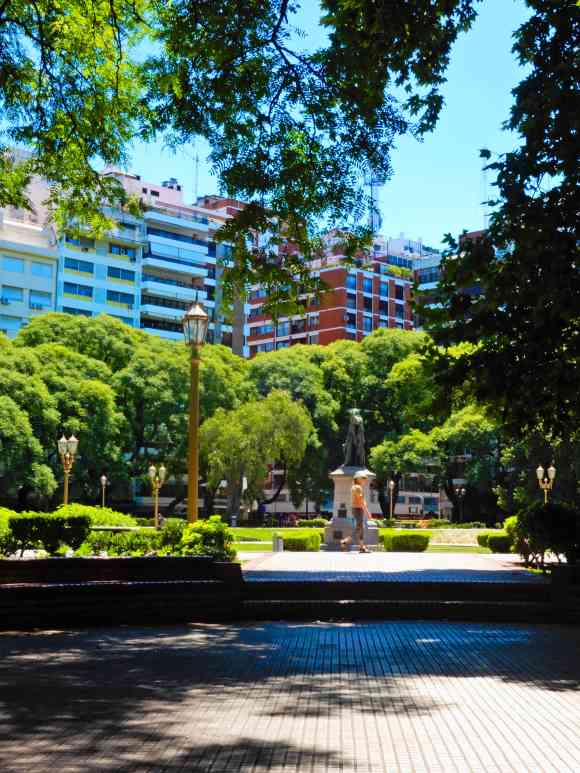
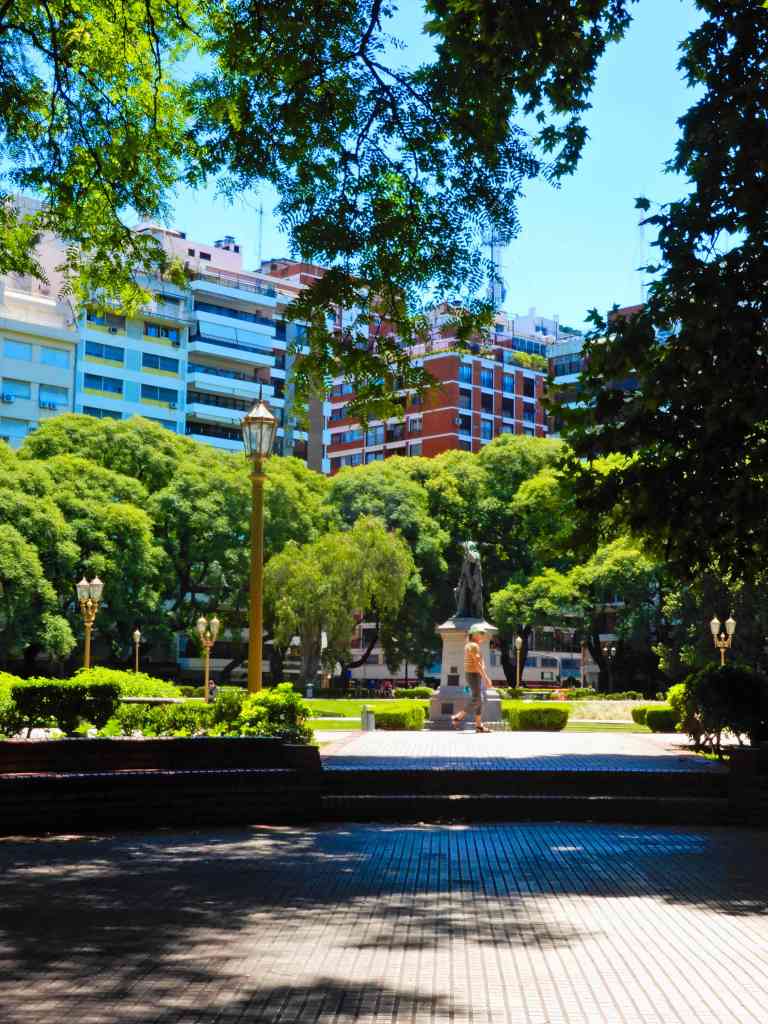
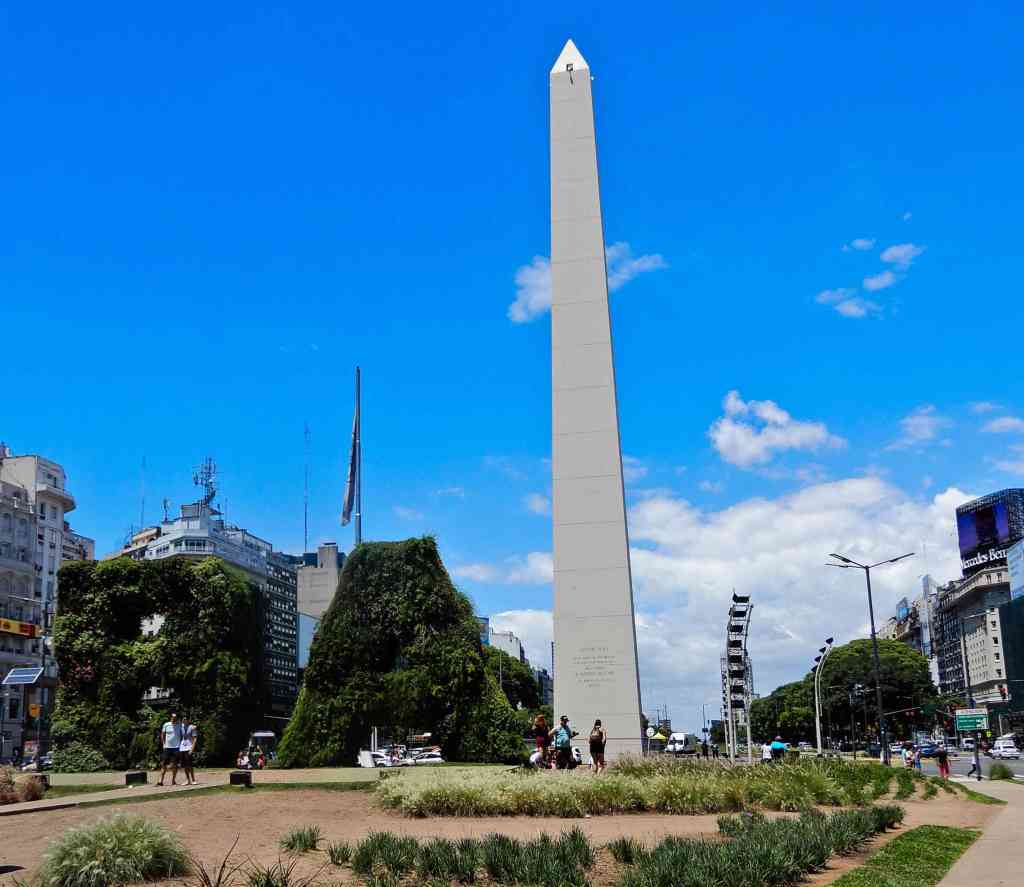
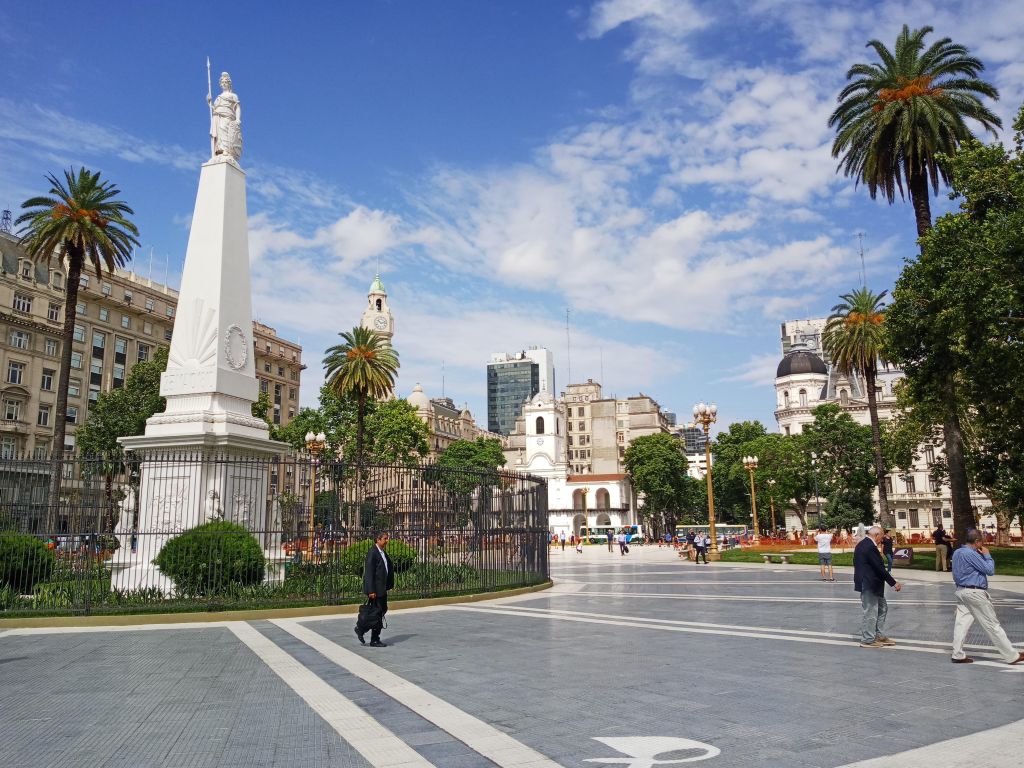
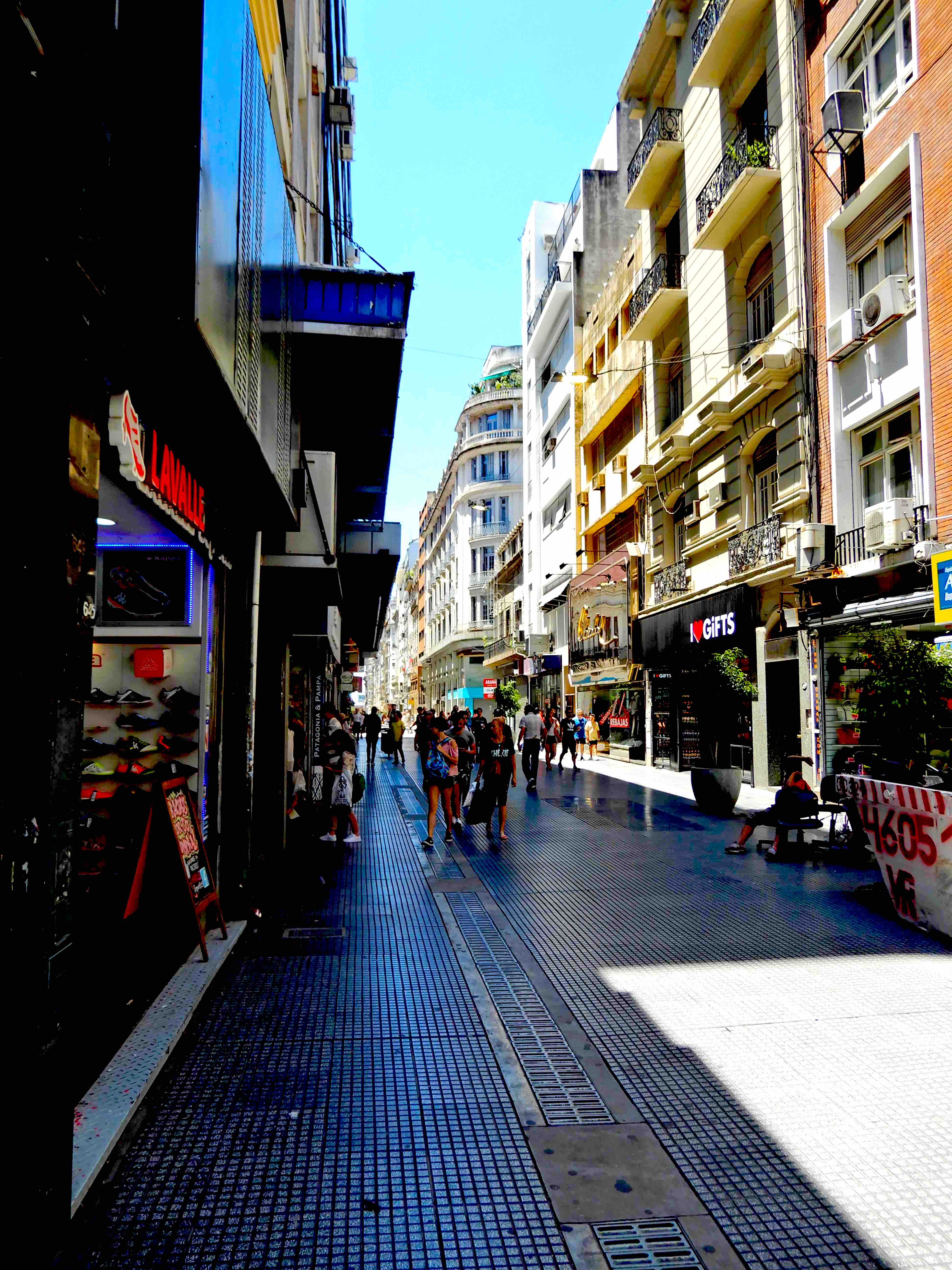
Buenos Aries is a large metropolitan area and like most it covers a wide range of environments. You will find everything from grand residences, and upscale neighborhoods to large slums. The city is criss-crossed by wide boulevards running through upscale shopping districts attached to mazes of side streets with incredible cafes, coffee shops and restaurants It is home to the Tango that is a national obsession. You can experience the Tango in restaurants or large stage show productions, small dance clubs and on the streets of the barrios (neighborhoods) where the people come out and dance in the evenings. Because of the exchange rate there are great restaurants and cafes where prices are hard to believe. The national dish is steak and the Argentines really know their way around an open fire grill. It is also the nations capital and you will numerous museums, galleries and historic buildings. If you are cruising out of Buenos Aries do yourself a favor and spend a few days seeing this lively and interesting city.

One strong suggestion we would make is try and plan a trip out to Iguassu Falls. It requires a plane ride and probably two days to see but it is one of the world’s true natural wonders and an easy add-on to a visit to Buenos Aries. MORE HERE

The TSA Rules

The TSA is the United States Transportation Safety Administration and it is currently responsible for inspecting all passengers along with any items they intend to carry onto all commercial airliners taking off from U.S. Airports. TSA also operates inspections at some foriegn airports for flights coming to America.

After our Sequined Top post we got numerous inquiries about more info on TSA rules. Also be sure and check out our article on the Immigration FastPass too.

The official TSA guidelines state, “You cannot  take any objects in your hand baggage or on your person that could cause injury to yourself and other passengers”.

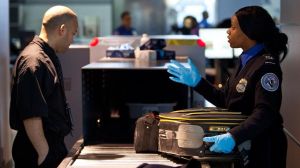
Transportation Safety Officers (TSO’s) are trained, certified and authorized, in accordance with applicable TSA standards and directives, to inspect individuals, accessible property and/or checked baggage for the presence of explosives, incendiaries, weapons or other prohibited items. At a checkpoint they are the authority as to “what cannot be taken past the inspection area” and arguing is seriously discouraged.

TSA Website Offers the Following Travel Checklist information:

Before Packing And The 3-1-1 Rule

  • Liquids, gels and aerosols packed in carry-on must follow the 3-1-1 liquids rule:

The rule of thumb for liquids, gels and aerosols: You’re allowed to take as many 3.4 ounce or smaller sized containers that will fit in one sealed, clear, quart-sized zip-top bag – and one bag per person. Make life simple by packing liquids in your checked baggage. That way, you don’t have to worry about the 3-1-1 liquids rule:

  • 3.4 ounces or less per container
  • 1 quart size, clear, plastic, zip top bag (all liquids must fit in bag)
  • 1 bag per passenger

Deodorant: Flying with deodorant isn’t a sticky situation. Stick deodorant is not limited to 3.4 oz or less, but gel or spray deodorant is.

Makeup: Any liquid makeup cosmetics such as eyeliner, nail polish, liquid foundation, etc., should be placed in the baggie. That goes for perfume as well. Powder makeup is fine.

  • Review the prohibited items list for both carry-on and checked baggage.
  • If purchasing a baggage lock, be sure to look for those that are TSA recognized.
  • Tape a card with your name and contact information on your electronics.

When Packing

  • Pack items in layers (shoes one layer, clothes one layer, electronics one layer, etc.)

Not Allowed Items

Shaving Razors: In brief, all razors are allowed in checked bags. Disposable razors are allowed in carry-on bags, and safety razors with removable blades are not. Check out the blog post for pictures of razor examples and more information.

Major Rules And Policies

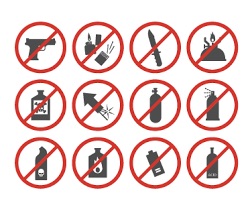
Firearms are only allowed in checked baggage and must be unloaded, placed in a locked, hard-sided container and declared to your airline.All fireworks contain explosive materials and are not permitted in checked or carry-on baggageCigarette lighters. you can take a lighter on the plane. But no more than one. Confusingly, “you must keep the lighter on your person throughout the flight”.Pack large electronics on top layer of carry-on for screening accessibility.Place your 3-1-1 bag with liquids, gels and aerosols in the front pocket of your carry-on for accessibility.If traveling with a pet, be sure to bring a leash so carriers can be properly screened.

Advice Before Leaving For The Airport

Before Leaving for the Airport. Give yourself enough time to arrive at the airport early (one hour minimum before flight).Wear easily removable shoes. Passengers with a disability or medical condition may call ahead to the TSA Cares toll free helpline at (855) 787-2227 for specific information.

Before Entering the TSA Checkpoint

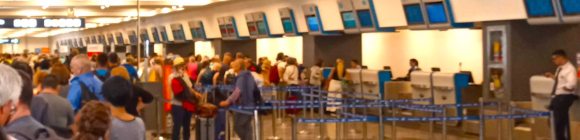
Eligible passengers look for the TSA Pre✓® lane for expedited screening at participating airports. Have your ID and boarding pass out for inspection.In Standard Screening LaneRemove the 3-1-1 liquids bag and place it in the bin.Ensure pockets are empty (keys, tissues, currency, wallets, cell phones, etc.) and remove bulky jewelry (valuable items can be placed in carry-on).Remove your shoes and place them directly on the X-ray belt.Remove personal electronic devices larger than a cell phone from your carry-on bag and place them into a bin with nothing placed on or under them for X-ray screening. (E.g. laptops, tablets, e-readers and handheld game consoles.)Remember to check the bins and collect all belongings after going through screening.

Screening Equipment

Metal Detectors – Before going thru remove all metal objects from your person. That should include car keys, cell phones, belt buckles and coins.

Scanners – Unlike the metal detectors you must remove everything from your pockets before going thru even non-metallic objects. They can detected small plastic pill cases and glass eye dropper bottles. They have even found a two pack of breath mints and when that happens you are going to get delayed.

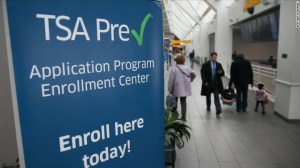
How to get into the TSA fast lane.

Getting Expedited Screening

TSA Pre✓® – TSA Pre✓® allows eligible travelers to receive expedited screening. In layman’s terms, it means you get through security quickly. The average wait time in TSA Pre✓® lanes is under 5 minutes! Even if a TSA Pre✓® line looks longer, they move much faster than a standard lane with more convenience. For TSA Pre✓® travelers, there is no need to remove shoes, laptops, liquids, belts and light jackets. 

TSA Pre✓® travelers (including those enrolled in Global Entry, NEXUS and SENTRI), have access to faster TSA Pre✓® lanes at more than 200 airports when flying with participating airlines. To find the program that best suits your travel needs, 

What if TSA Pre✓® Is Not Reflected on Boarding Pass: If you’re looking at your boarding pass and you don’t see the TSA Pre✓® indicator even though you’re an approved trusted traveler, the TSA is here to help! Get live assistance by tweeting @AskTSA or via Facebook Messenger. Our AskTSA team can help resolve any issues.

Our experience is to check your boarding pass before leaving the counter. If it’s missing the agent can easily correct the boarding pass.

TSA Pre✓® and Traveling Companions:

On times while traveling either my wife or I don’t get a TSA Pre✓® on our boarding pass. We have asked agents and they have, on more than one occasion, told us that if one of us is pre-cleared the other can go with them thru TSA Pre✓®. As close as we have come to confirmation on this is following notice on the Ask TSA web site:

Traveling with children: Screening is simpler for children 12 and under, so they can keep their shoes on. Read about how to best pack for your child and read how “Kids rule the airport”. Children 12 and under may also travel through the TSA Pre✓® lane if one or both of their pare

Navigating Those Ports To Get To Your Cruise

So we’ve booked our cruise, the bags are packed and we’ve the trip to the airport. What did we forget? Maybe we need to research how to get to our cruise ship? The easiest choice would be to book transfers to the ship with the cruise line, but it could be we’ll be missing out on a lot?

If you’re cruising, chances are you like to travel, and if that’s the case why not look into the opportunity of getting some twofers on that next trip? If you’re traveling cross country or maybe an ocean, spending a few days near your cruise port could be an add on you shouldn’t pass up.

A Guide To Embarkation Ports Around The World

Below are links to articles on information about getting to that cruise ship in a number of major departure ports, along with a few tips on what to expect and how to get around those ports. Happy travels!

CRUISING FROM BARCELONA

Barcelona is one of the largest cruise ports in the Mediterranean and a favorite departure port.

CRUISING OUT OF ROME

Civitavecchia is the cruise port of Rome and here we offer everything you need to know to get from the airoprt to Rome and to the port.

ATHEN’S PORT OF PIRAEUS

Another popular departure port for Mediterranean cruises, Athens and its port are worth a few days spent sightseeing.

THE PORT OF VANCOUVER

A favorite departure port for Alaska cruises, Vancouver is a beautiful city to visit for a few days.

THE PORT OF BUENOS ARIES

Gateway to Antarctic cruises and South America itineraries Buenos Aries is a vibrant and popular cruise departure port.

GETTING TO FLORIDA CRUISE PORTS

Florida is the cruise gateway to the Caribbean featuring four major cruise ports. Find everything you need to know about getting to your cruise here..

THE PORT OF AMSTERDAM

Another favorite cruise port for ships going around the British Isles, into Scandinavia and the North Atlantic, Amsterdam has a lot to offer.

CRUISING FROM SINGAPORE

Singapore is a major embarkation port for cruises around the South China Sea and across Asia and a world class city n its own right.

SYDNEY AUSTRALIA

Sydney is the major port for embarking on cruises around Australia, New Zealand and the South Pacific.