Mediterranean Cruise Itineraries

Summer is cruising season in the Mediterranean and the major cruise lines are well established in the market and offer a wide variety of itineraries. There are a number of similarities in most itineraries with the two main embarkation ports being Barcelona and the port for Rome, Civitavecchia. A majority of cruises in the eastern Mediterranean sail out of Piraeus, the seaport of Athens, Greece.

Itineraries vary in length with cruises of around seven days usually stopping at four or five ports of call, those of nine to eleven days make six to eight ports and fourteen day itineraries can call on up to ten ports.

Dubrovnik

Cruises from Barcelona often stop at Spain’s Palma de Mallorca and series of ports east along the coast that usually include Villefranche-sur-Mer on the French Riviera, located near to Nice and Monte Carlo. Favorite Italian ports on those itineraries also include Civitavecchia the port of Rome, Naples and Livorno with its access to Florence and Pisa. Additional popular ports include Genoa on the west coast and Ravenna on the east coast.

Kotor

Most cruises out of Rome/Civitavecchia go south and cruise around the Italian boot passing through the Straights of Messina. Popular destinations on shorter cruises (6 to 8 days) include Naples, Dobrovnik, Kotor in Montinegro, the Greek island of Corfu and Malta. Longer cruises can add Messina, the Greek islands of Mykonos and Santorini, Ephesus, Turkey and Athens.

There are also Rome itineraries that sail west and often include Livorno, Villefranche, Provence France, with stops in the Spanish ports of Barcelona, Cartagena, Malaga and Palma de Mallorca and at times a port call in Gibraltar.

With the popularity of cruising growing there are more and more returning passengers. The cruise companies are always looking to add new ports as an enticement to get them to come back and cruise again. For that reason there are always differences and surprises in searching itineraries so look for one that hits your “must see” destinations or has added new stops.

Santorini

There are some important things you need to consider when planning how you are going to get the most out of your cruise port visits. For most ports of call there is a serious time limit and if you go off on your own you cannot be late returning to your ship as the ship just won’t normally wait for you. If you take a cruise sponsored tour the ship is obligated to get you and your fellow passengers back on board before sailing. That doesn’t mean that you are locked into taking only sponsored tours but you need to plan and allocate extra time to get back to the ship.

When making your plans there are a few ports that many people put high on their list to visit when they decide to cruise the Mediterranean. Here we offer a few highlights along with ideas on getting the most from those all-to-brief stops.

Florence
Corfu, Greece

Livorno with trips to Pisa and Florence – To go on your own you can easily take a train from Livorno Centrale to Florence Santa Maria Novella for €6 to €14 per person one way. You do have to get from the pier to the train station but most cruises offer a shuttle service at a reasonable price into town center. In Livorno you can also buy a combination round-trip ticket that includes the train tickets and a bus to the train station that can be purchased at many convenience shops. The trip takes about one and a half hours and trains run about every half hour. In Florence from Santa Maria Novella you can walk into the historic district in only a few blocks. You can get to Pisa using a local bus or with train trip as it is only twenty minutes away with a moderate walk to the Cathedral and old city walls. More information on Lavorno HERE.

Rome

Civitavecchia / Rome – This is a city that everyone should make an effort to visit. From the buildings of the ancient Roman Empire to the Vatican there are days worth of sightseeing to be experienced. There’s more information on seeing Rome in just one day HERE.

You can also find an article on getting into Rome HERE. In Civitavecchia the train station is a moderate walk along the waterfront from the port and a train to S. Pietro station (Vatican City) takes about 40 minutes. Fares start at €5 per person one way on the commuter trains and up to €20 round trip using regional trains. There is a manned ticket booth at the Civitavecchia station along with automated vending machines. A round-trip bus booked through the ship will cost over €80 and take about two hours each way depending on traffic.

Barcelona

Barcelona -Barcelona is one of the largest cruise ports in the Mediterranean and is used as an embarkation port as well as a popular port of call. The city is a modern and historic place with a number of iconic neighborhoods and attractions. If you are cruising out of Barcelona do not miss the opportunity to spend a couple of extra days visiting this vibrant city.

There are 3 cruise terminals at the World Trade Centre pier called North, South and East terminals and they are not far from the Columbus Monument on the waterfront at La Rambla.

Palma, Spain

Transportation – The T3 PORTBUS (the “Blue Bus”) runs a circuit from all cruise port terminals to the monument of Christopher Columbus. The tickets for the T3 need to be purchased with cash on the bus itself. Single ticket: €3.00, with Return ticket: €4.00. Many of the cruise ships also provide a shuttle bus to their passengers for free or a small charge (usually about €5). Getting to the Gothic Quarter by taxi from the port is normally less than 10 minutes with a fare of about €20.00. A Taxi to Barcelona airport from the cruise port should take about 25 minutes with a fare: of €30.00 – €35.00.

Malaga, Spain

Venice – Unfortunately large cruise ships are no longer allowed to dock at the Venice cruise port. The cruise ships are now shifting Venice visits to two ports about an hour away using Ravenna to the west and Triest to the east. More information on this HERE.

Naples – This city is near to the ruins of the Roman city Pompeii and well worth a visit, but Naples is also not far from the Amalfi coast. There are frequent Trains from Naples to the Amalfi Coast. To get from Naples to Salerno, you can take one of Trenitalia’s Alta Velocità (AV) trains from Napoli Centrale station. The trip is about 30 miles and there are also InterCity and Regionale trains serving this route, with over three dozen trains a day costing €5 each way. From the Positino station it is a good idea to know where you want to visit and take a taxi to the coast but this is still an easy day trip.

The Acropolis

Piraeus and Athens – You can find a good piece on Piraeus HERE. The main attraction is the Acropolis in Athens and it’s well worth a day if this is your first visit. If you wold like to save a good amount over the cruise tours you can use the metro to travel from Piraeus to central Athens. A trip to Athens using the metro costs less than €1. Also a free shuttle bus usually operates in the port taking passengers from the ships to the metro station. Visiting the Acropolis has a general admission €10 and hours vary by season and day of the week. You should also expect a good uphill climb to reach the top but the is an elevator fro people with disabilities.

Villefranche-sur-Mer – You can find a good piece on Villefranche HERE. Less than a half mile around the waterfront is the train station where you can catch frequent trains to Monte Carlo, Nice or Cannes. They run about every twenty minutes and a trip to Monte Carlo takes only fifteen minutes and costs usually under €7.00.

So before you sign up for those expensive tours consider saving some money with some low risk exploring on your own.

Port of Call Reykjavik, Iceland

Stark, Wild, Fascinating Reykjavik

Famous Icelandic hot dogs

Reykjavik is a beautiful city with the focus being its waterfront. On the water at the center of town is the Opera House and the square in front is the usual stop for the shuttles from the dock. That makes it a convenient meeting point where you will catch the returning shuttle. The waterfront between town and the ships dock also features a beautiful walking path, perfect for a stroll to take in the stark beauty of this remarkable location. The city’s waterfront is a popular area, with a view of Reykjavik’s landmark mountain, Mt. Esja across the bay. There is also the striking sculpture Sun Voyager by Jon Gunnar Arnason ,  a massive steel sculpture in the shape of a Viking ship.

Harbor view
Opera House

Where Your Ship Docks– Cruise ships will normally dock at port facilities outside of town. Reykjavik is usually the supplier of shuttle service into town with a round-trip fare that seems somewhat over priced (this is probably related to the high cost of living in Reykjavik). If you don’t mind walking (weather permitting) there is a nice paved walk along the shore into town of only about two miles. There is no cruise ship terminal so ships have to make use of boarding ramps. For people with walking issues and wheelchairs it can be difficult.
Transportation – Taxis are readily available and are surprising inexpensive. A taxi tour of the city can usually be booked with TaxiReykjavik  for durations of 1-3 hours for under $8 per hour. Rental cars are also inexpensive for trips out into the Icelandic countryside to visit the Rift Valley and waterfalls. MORE HERE  about taxi tours.

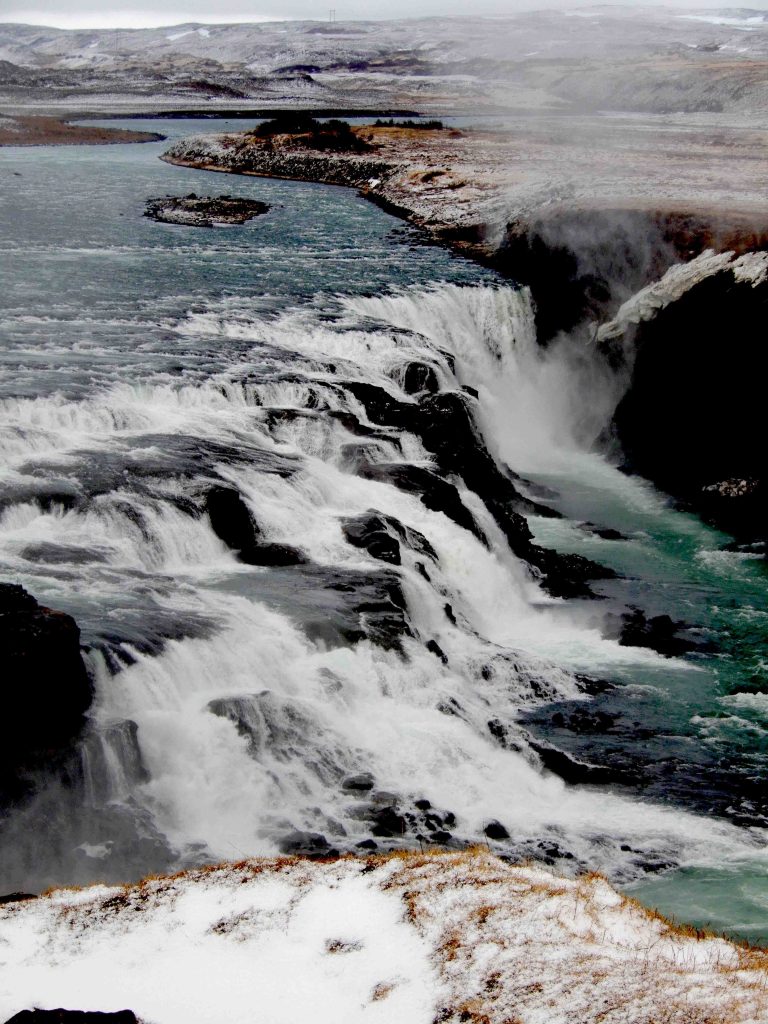
One of the nearest attractions to Reykjavik is the Blue Lagoon. There are hourly bus transfers 7 am to 8 pm to and from Blue Lagoon from Reykjavík via Destination Blue Lagoon. Get a package ticket that includes round-trip fare and admission for under US$60. To get out and see the real wonders of Iceland you will need to rent a car (rental cars are not very expensive) or book a day tour. The most popular trip is the Golden Circle Tour that visits Gullfoss Waterfall, Thingvellir National Park & Geysir thermal field .

Currency – Local currency is the Icelandic króna with about 7,000 being equal to US$1. Credit cards are readily accepted and there are ATM’s available. 

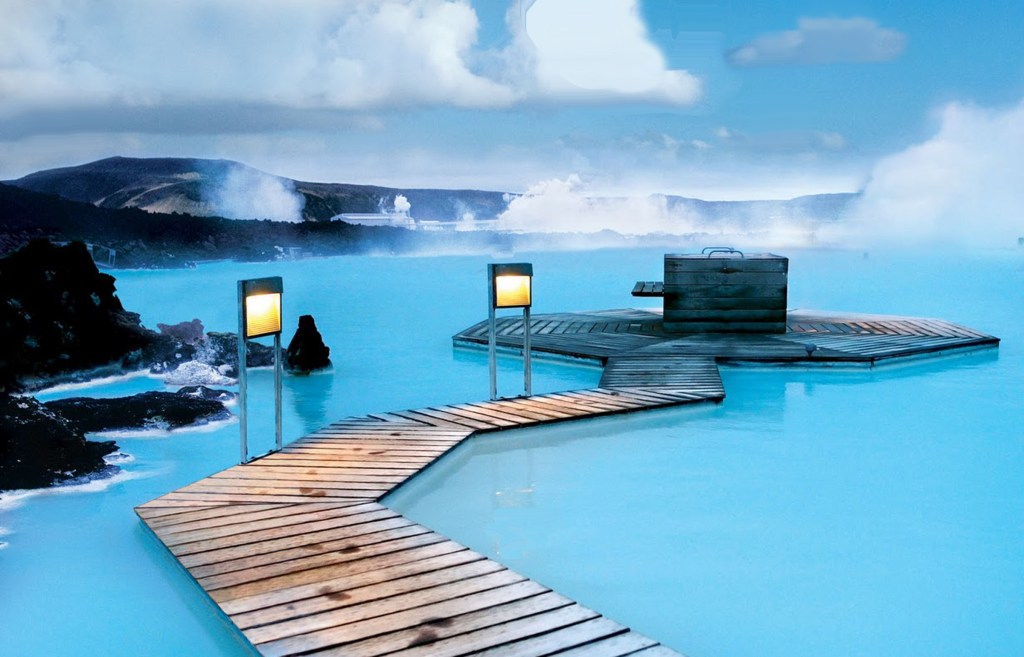
The Blue Lagoon
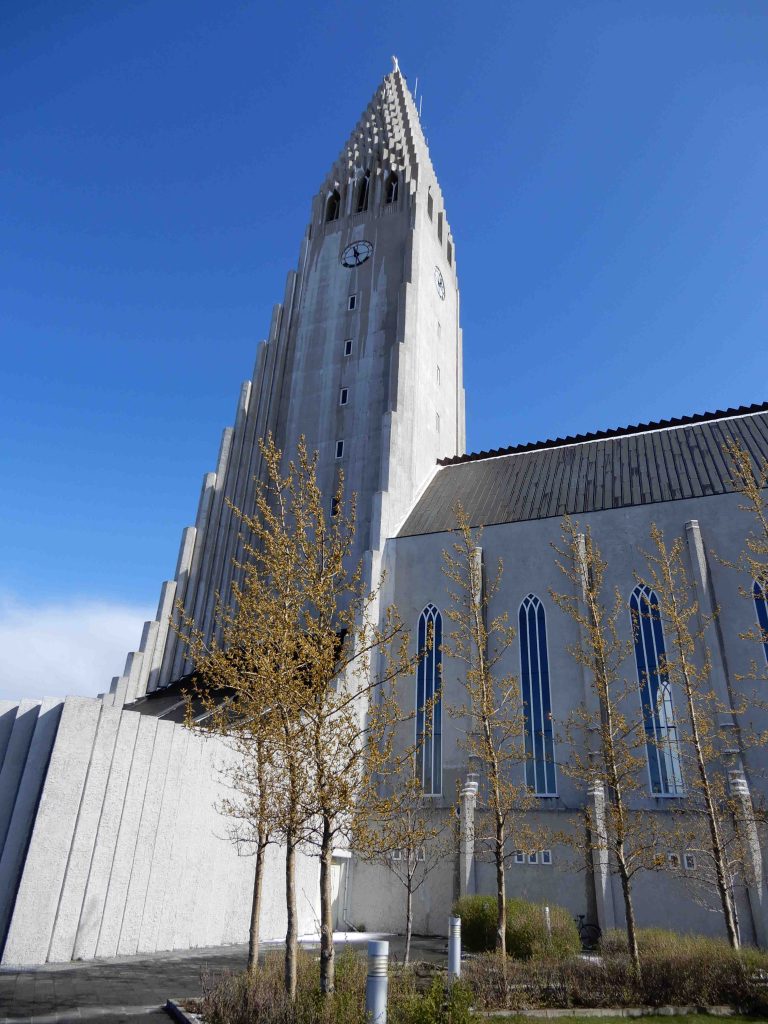
Presbyterian Cathedral

Attractions – Reykjavik’s many museums  offer insight into this country’s fascinating Nordic History. Start with the  Saga Museum  for a look into how the Vikings fought and lived with displays of wax figures depicting scenes of the earliest settlers (circa 874 AD).  The National Museum displays more than 2,000 artifacts from the ninth century to the present.  For a different experience, live actors at the open-air Reykjavik City Museum -Arbaejarsafn offer scenes of how settlers lived in the old days in an open-air museum, and it traces the development of Reykjavik and Iceland from their beginnings to today.

While the Blue Lagoon is located outside Reykjavik, this  is a must if you have enough time in Reykjavik. The mineral-rich thermal waters are a perfect 104 degrees Fahrenheit, and the minerals and algae in the water are supposed to improve skin and even cure psoriasis. The Blue Lagoon is about an hour’s drive from the city. 

The sea around Reykjavik is popular with many types of whales, dolphins and seals. Many whale watching tours also pass by Puffin Island. The whale watching season runs from late March to late October.

Another of Reykjavik’s landmarks is the Perlan, a unique piece of architecture built in 1988. It is a thermal energy operation in which natural hot water is stored for heating the city, it includes a glass dome under which a rotating restaurant is famous for its cuisine. The dome has a viewing platform with  panoramic 360-degree views of the city and its surroundings. Access to the viewing platform is free of charge.

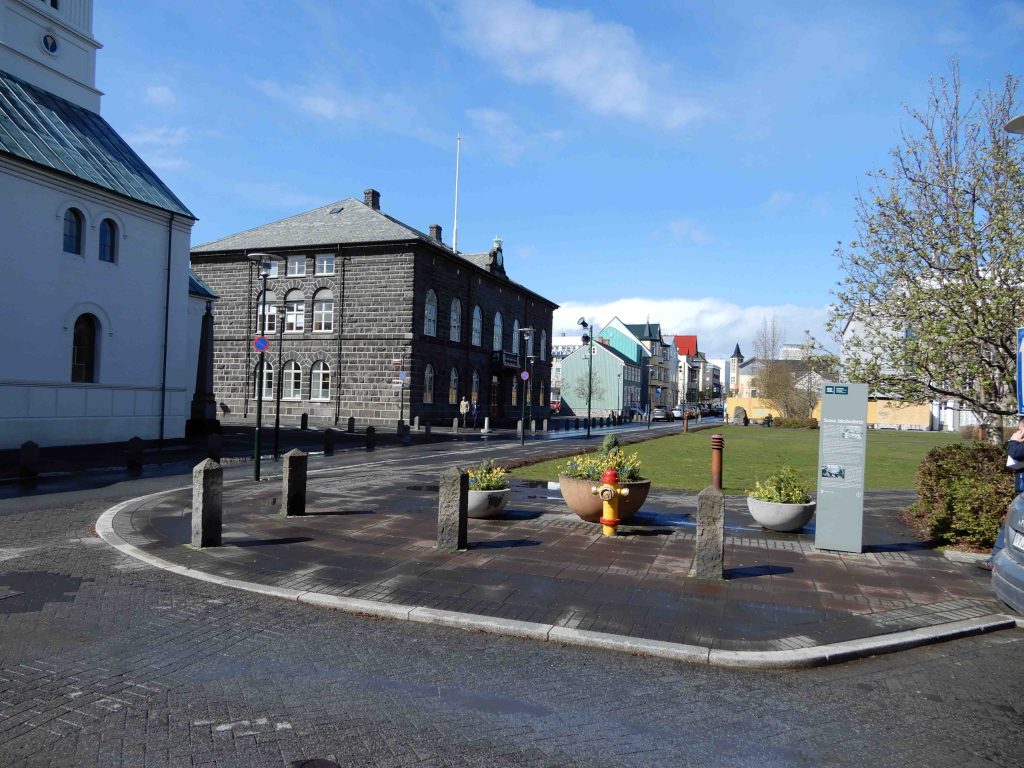
Reykjavik features a beautiful Presbyterian Cathedral as the cities centerpiece with nice shops and restaurants radiating down streets toward the sea. Be sure and have a famous Icelandic hot dog as you explore.

Hallgrimskirkja Church can be seen from almost anywhere in the city. Its steeple rises above all other buildings in Reykjavik and the church can seat over 1000 worshipers. The grounds also feature a statue of the first Viking said to have discovered America, Leifur Eiríksson. The church  nave is open to the public daily and you can purchase tickets to visit the top of the tower for spectacular views of the city. 

Check out walking tours of Reykjavik HERE.

Searching For Kürtőskalács In Budapest – An Update 2022

Kürtőskalács In Budapest

A Short Story

Budapest is probably one of the World’s most underappreciated cities. In Europe we’ve spent time to Rome, London, Paris, Amsterdam, Athens, Vienna, and more and we would put Budapest near the top of our list. It has incredible cityscapes and gardens and a walk along the Danube at night is magical. Cafes and restaurants are great and the public transportation is World class.

We spent a number of days in Budapest five years ago and this summer we were eager to get back. Before our last trip, as usual, we did research and one thing that stood out was that we had to try Kürtőskalács the favorite Hungarian pastry. When we returned much had changed and one major was the availability of Kürtőskalács.

Market Hall

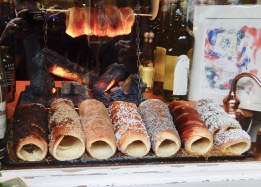
What we discovered is Kürtőskalács or Kürtős kalácsis are a Hungarian pastry also known as chimney cake, or stove cake or Hungarian wedding cake. It is baked on a tapered cylinder on a spit over an open fire or hot charcoal and rolled in a number of various flavor coatings. Originally from Transylvania, it is famous as Hungary’s oldest pastry and is found in other European countries under different names.

Five years ago since it is considered the national pastry of Hungary you would think the search should be easy. Right? The first problem experienced was the Hungarian language and having no idea how to pronounce Kürtőskalác. Hungarian is a very hard language to learn because it is complex and very unique and despite the country’s location in central Europe, its dialect is nothing like those spoken in neighboring nations. While Hungary’s language is generally referred to as Hungarian in fact its proper name is “Magyar” and worldwide it’s only spoken by 13 million people with over 9 million of those living in Hungary. While a large number of Hungarians have a good command of English, virtually all signage displays are in only Hungarian. From just the word Kürtőskalác you can see how difficult the language is.

Recognizing the language problem I put Kürtőskalác on a note app in my cellphone so I could show people what I was looking for. Budapest has a famous Market Hall with food and restaurant stalls and seemed like the logical place to start. Everyone was very eager to help but had no suggestions as to where to find them. One baker gave us directions to a place four or five blocks away that might make them. They didn’t and couldn’t suggest where to go next.

It is a pastry and you would think it would be common in bakeries but we learned that’s not the case. It seems it is the requirement to bake over charcoal or open flame that causes a problem for indoor shops.

After five days in Budapest we gave up our search to find some Kürtőskalács. On day six we took a train to spend a day in Slovakia and returned to Budapest after Sunset. As we walked out of the Central Station there was a line going down the sidewalk leading to a food truck. It was a Kürtőskalác food truck! We started with a cinnamon-sugar one to share but will surely come back in a day or two.

Returning this past June the change was amazing. Everywhere we turned there were shops and stands selling Kürtőskalács. On a five block long pedestrian mall, that had no Kürtőskalács five years ago, we could now take our pick from six different vendors. Within two blocks of our hotel there were two. Even the Market Hall had two stands and we’re left with wondering what has happened since our last visit?

Hungary’s Magyar Cowboys

Keeping the Magyar Csikós Tradition Alive

Long before cowboys roamed the American West, there were Hungary’s Csikós. Nobody is really sure how far back the Hungarian cowboy tradition goes but we know they are descendants of the Magyar warriors.

To understand how important the Magyar heritage is to the Hungarian population and why Hungary is unique in Europe you need to look back fifteen hundred years. The Magyar roots go back to China and Northern India and are intermixed with the Hun invasion led by King Attila. Both groups were probably independent but shared similar traits and origins. Both were famous warriors and horsemen who migrated west out of Asia into Europe and probably fought local populations and the Romans for control of territory. The Hungarian language is a topic of much debate but is probably a mix of the protolanguage Finno-Ugric and Turkish and is believed to not be related to the original Magyar.

Since 480 AD the Magyar have been native to Hungary and the Puszta or Great Hungarian Plain that stretch across 56% of Hungary and includes large parts of Romania, Serbia and Croatia. The traditional Magyar Csikós horsemen of the Puszta have been caring for their horses and tending their herds for countless hundreds of years.

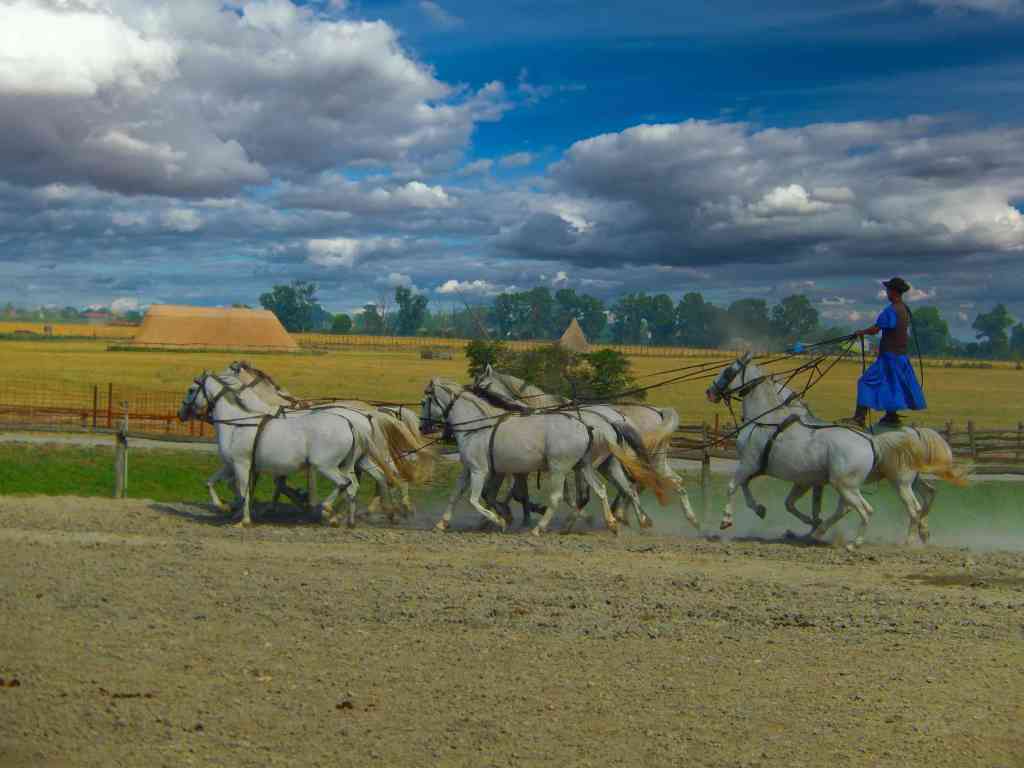
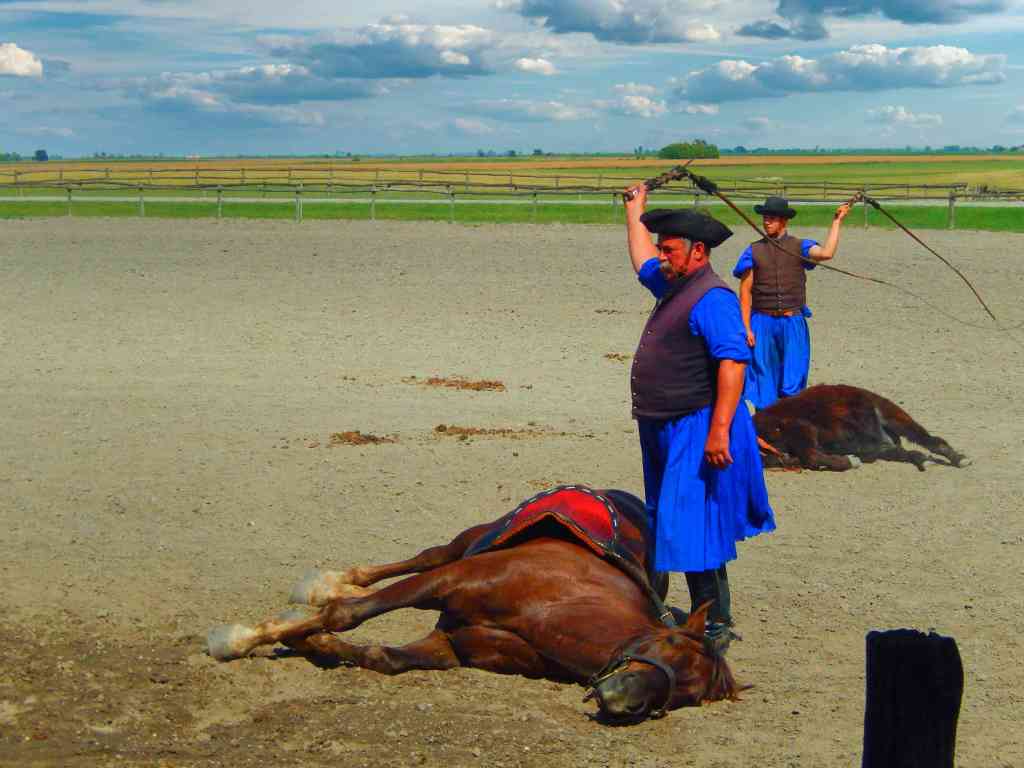
Today in Hungary the traditions of the Magyar cowboys are carried on at a Hungarian horse show on a ranch near Kalocsa, Hungary. It is connected to a UNESCO declared part of the Puszta, the Hortobágy National Park, and a World Heritage Site since 1999. Included in the show are demonstrations of the Csikós renowned horsemanship – as well as of the specific practices unique to their traditions. In the 18th and 19th Centuries, when highwaymen (or betyárs) roamed the plains and attacked ranches and travelers, it was vital for horses to be trained to fight and evade. The Csikós taught their horses to lie flat on the ground on command, concealing them and their rider in the tall grass. They also conditioned the horses to the sounds of gunshots by loudly cracking their whips.

The Hortobágy National Park was founded in 1973, occupying over 500 square miles, the park is both the country’s largest protected area and the largest continuous natural grassland in all of Europe. The region is still home to these mounted herdsmen who keep the culture alive with traditional dress featuring a blue linen shirt and trousers or skirt with a black, wide-brimmed hat and feather. Today these Csikós hold a similar place in the country’s cultural history as cowboys do in the United States.

Florida’s Air Force Armament Museum

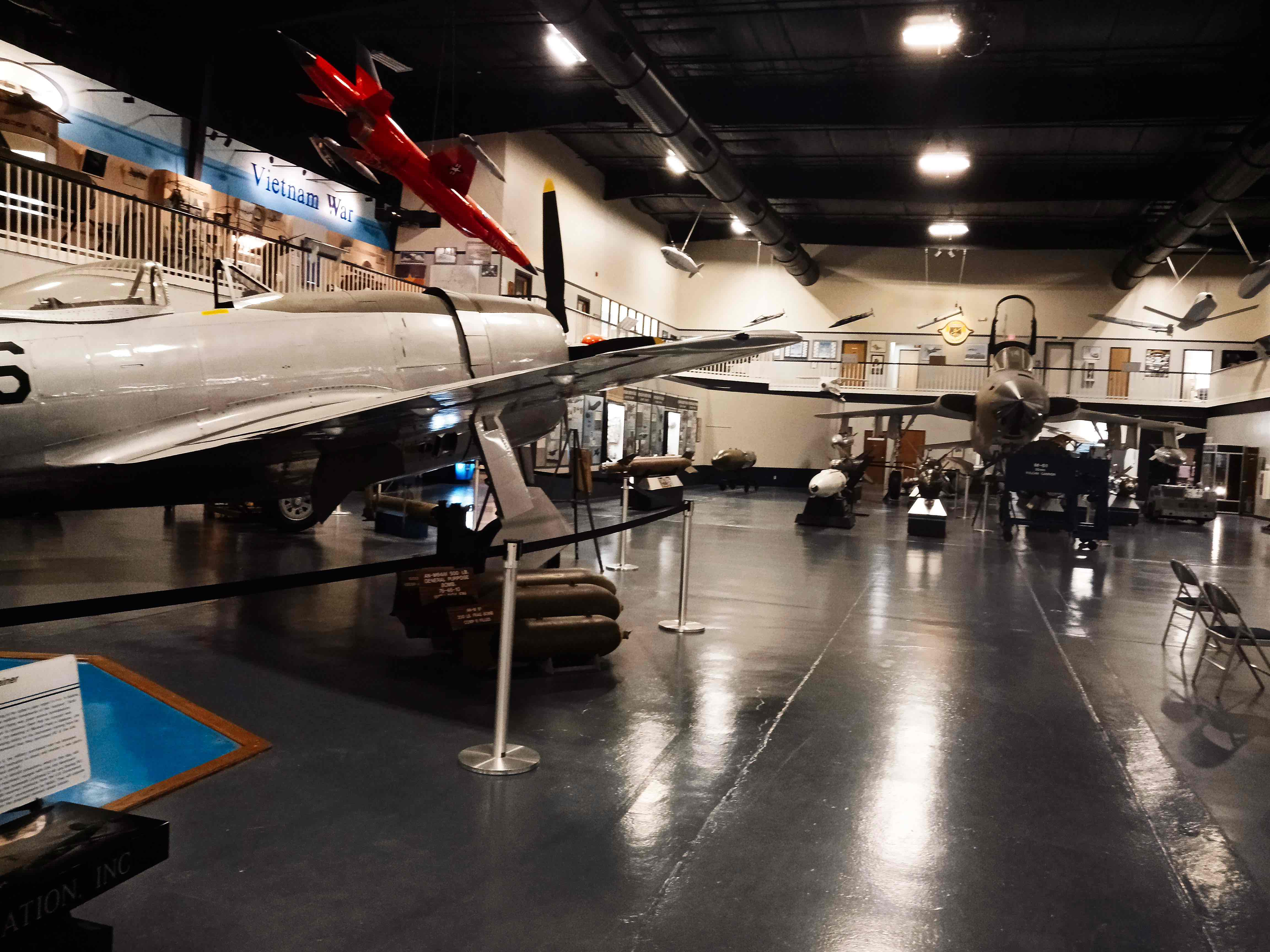
Up on Florida’s Panhandle is Eglin Air Force Base located not far from Fort Walton Beach. The base is home to the Air Force’s 96th Test Wing and a very interesting museum. The Air Force Armament Museum at Eglin is the only museum in the world dedicated to the collection, preservation and exhibition of artifacts and memorabilia associated with Air Force Armament and their delivery aircraft and systems.

Puff The Magic Dragon

Open to the public the museum exhibits over 29 different aircraft on its grounds and inside, including an AC-130, B-17, B-25, B-52, P-51, A-10, F-15, F-16, F-100, F-101, and additional aircraft from the WWII era through to today. There are hundreds of pieces of armament on display with some included in a large gun collection, along with bombs and missiles that include the Sparrow, Sidewinder, a Bunker Buster and the MOAB (nicknamed the “mother of all bombs”.

The museum is open every day from 9:30 AM to 5:00 PM including most holidays

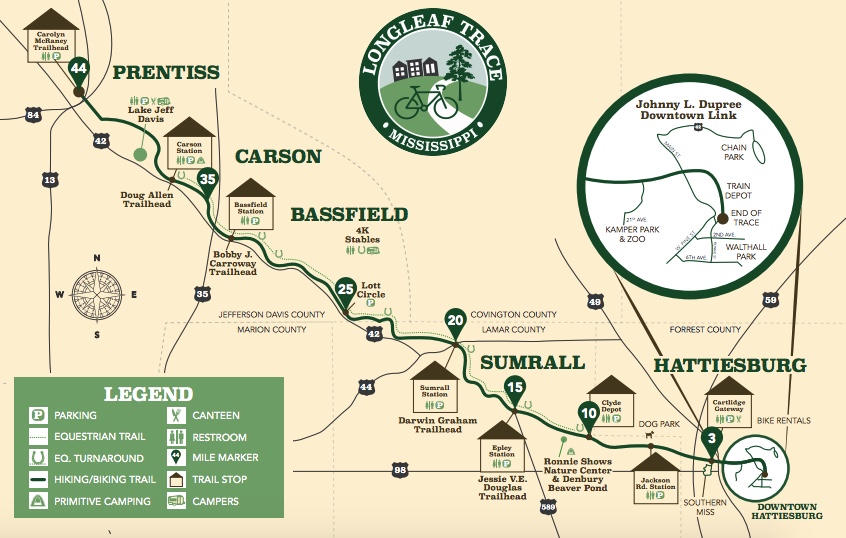
Hiking The Longleaf Trace In Mississippi

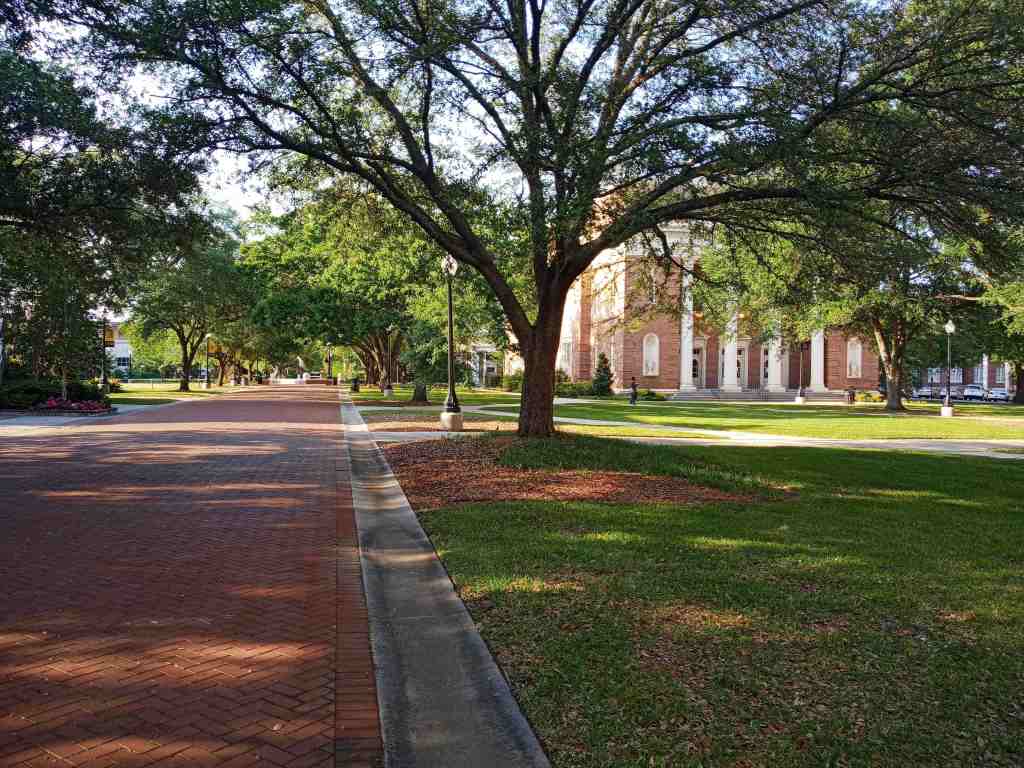
Beginning in Hattiesburg Mississippi it is one of the countries longest hiking and biking trails. Originating in downtown Hattiesburg it runs past the beautiful campus of the University of Southern Mississippi and on for almost 45 well maintained miles.

Southern Miss Campus Hattiesburg

The Longleaf Trace was completed as a Rails-to-Trails conservancy project in 2000, making use of a portion of an abandoned line of the Mississippi Central Railroad. Once a bustling line through the Pine Belt region of Mississippi, it serviced the flourishing timber industry at the turn of the last century through the 1920’s. By the 1970’s a number of railroads once in service were no longer necessary, and the Illinois Central line of the Mississippi Central Railroad was abandoned.

Famous Campus Rose Garden

A group of Mississippi locals took up the project for the preservation of the old railroad right of way to make certain that the remarkable asset was preserved. Work began to pave the path for a new purpose as a pedestrian, equestrian, and bicycle trail for residents and visitors to enjoy. In the early 1990’s work began to remove the tracks between Prentiss and Hattiesburg, paving the way for today’s trail. Beginning at the gateway in Hattiesburg near The University of Southern Mississippi, the Longleaf Trace traverses through five communities for over 44 miles of nature-filled fun and challenge!