Traveling The Blue Ridge Parkway • Day 4

Linville Falls North Carolina

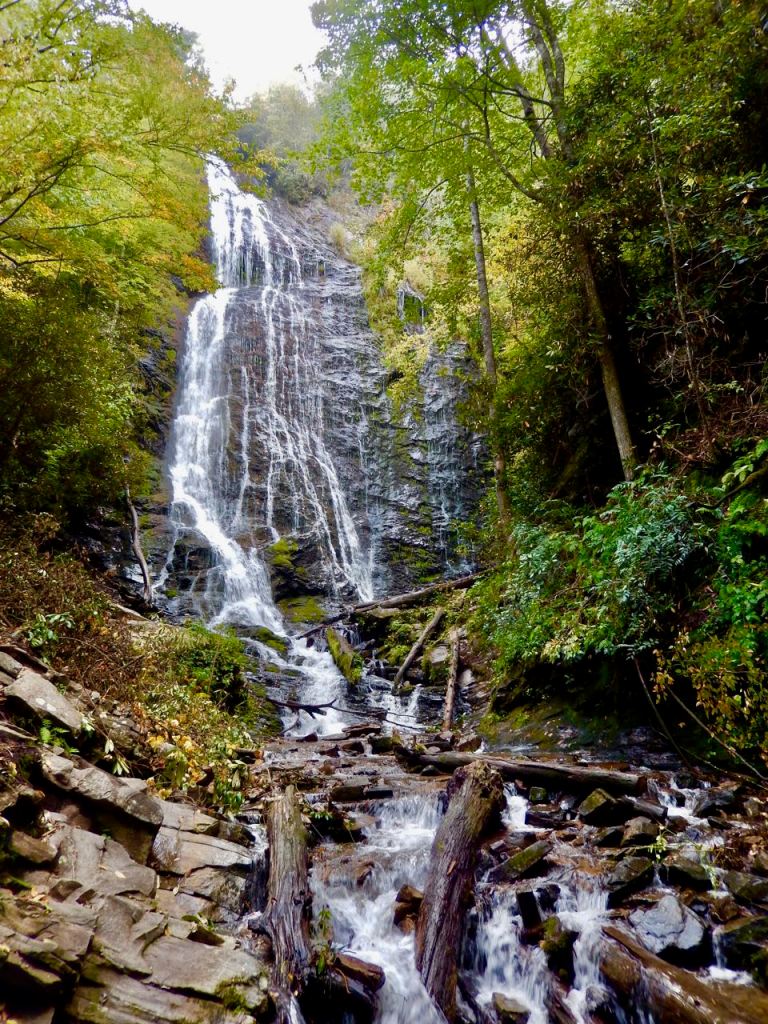
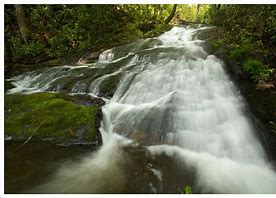
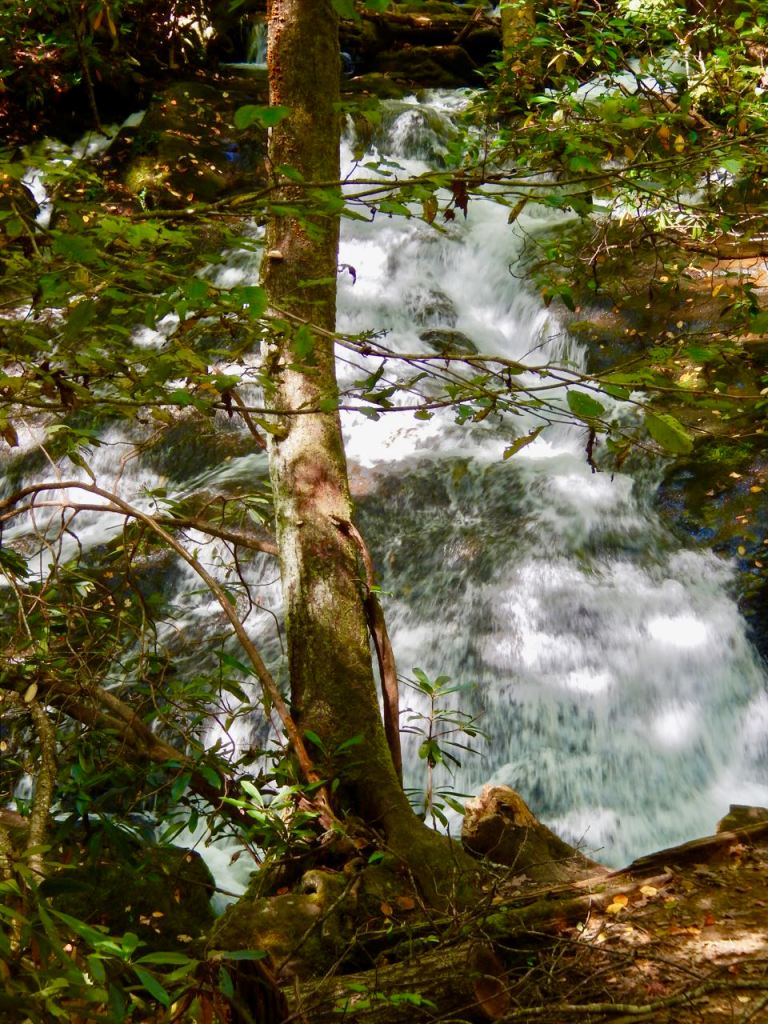
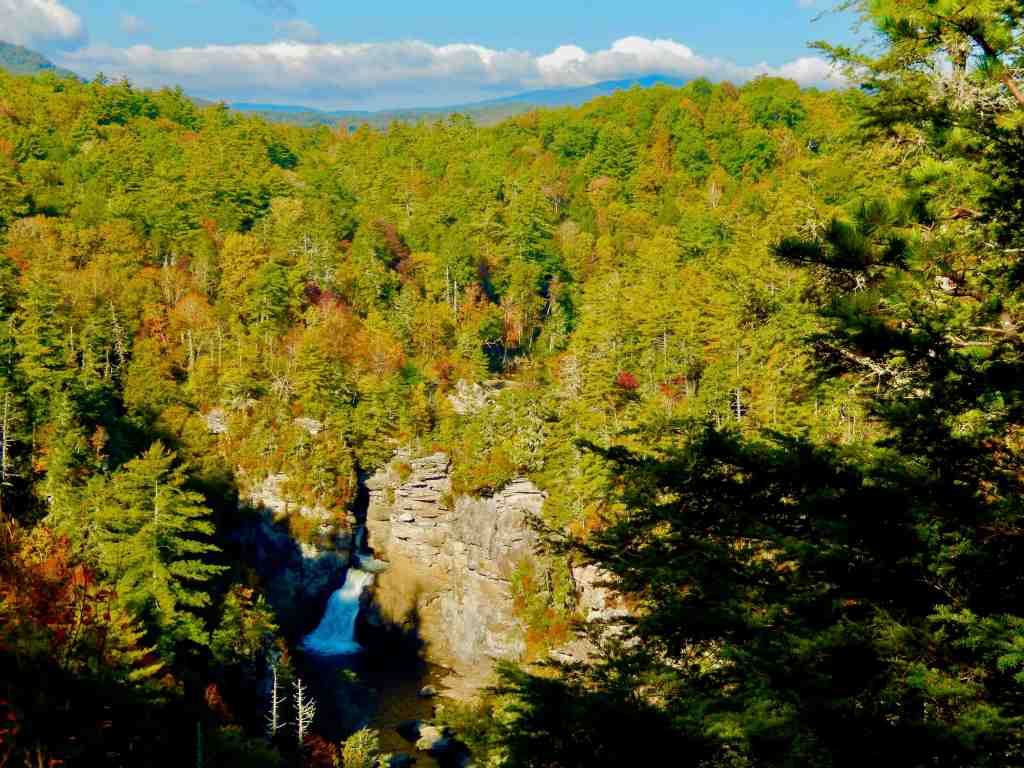
One of the highlights of traveling the Blue Ridge Parkway is spending time around Linville Falls. There are almost a dozen trails for hiking with many offering vantage points overlooking the various levels of the falls as the Linville River drops into the Linville Gorge. While most of the trails to the fall’s overlooks are moderate to difficult the views are well worth the effort required.

The geology of the area is fascinating as it was fashioned by a rift where a major layer of rock was forced up over top of another about 275 million years ago forming the Linville Falls Thrust Plate. Millions of years of erosion sculpted the rock into the river’s channel and the amazing Linville Gorge. Surrounding this geologic feature are miles of virgin forest featuring hiking trails through hardwood trees dotted with thickets of rhododendrons.

The Linville Falls are near milepost 316 about a mile North of a route 221 entrance features a Visitors Center, camping and picnic tables. The Linville River flows placidly by the Visitors Center, next to a large parking lot, featuring a bridge and some easy level nearby hiking trails.
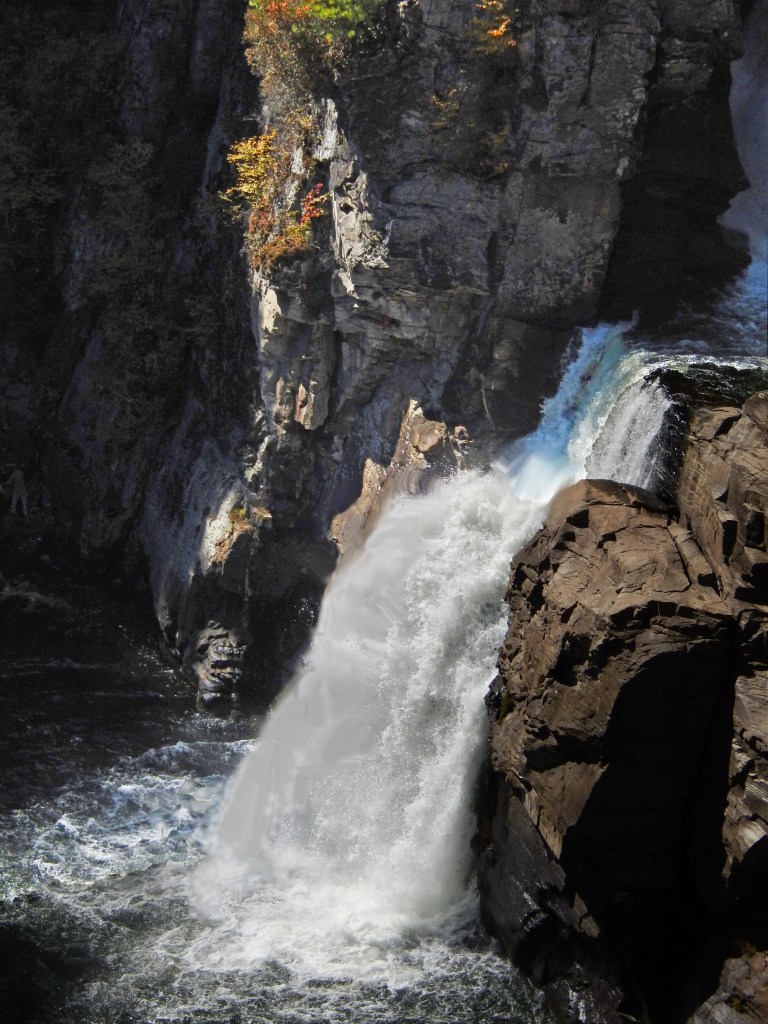
If your are looking for an easier hike, there is actually an shorter hike to get to the falls just off route 221 that cuts off almost a half mile of the trip to the upper falls overlook. The falls themselves are actually not in the Blue Ridge Park but are part of the Linville Falls Wilderness Area which has an access parking lot almost a half mile nearer the upper falls overlook.

To reach that lot exit the Parkway at 221 and turn left at the stop sign. Travel a short distance down the road and take the first left. The Wilderness area entrance is less than a mile down on the right. The parking lot is unpaved but a short trail does connect with the trail from the Visitors Center. In addition to the upper falls trail, the lower falls and the Linville gorge overlooks the Wilderness area also has miles of hiking trails suitable for serious wilderness hikers*.
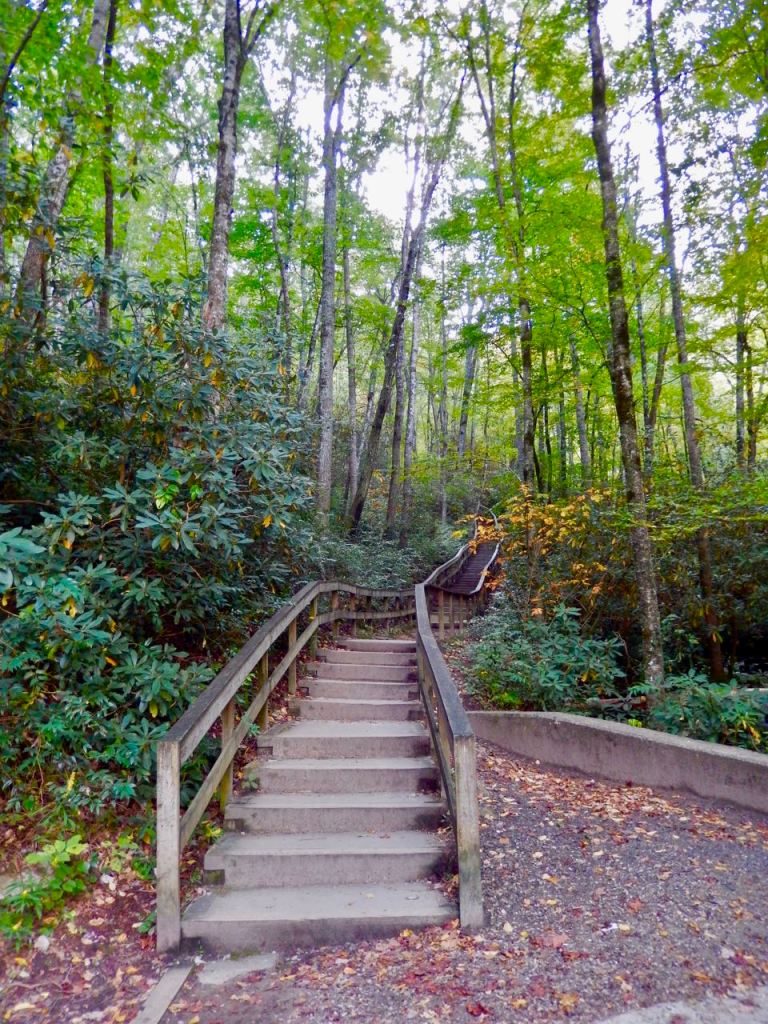
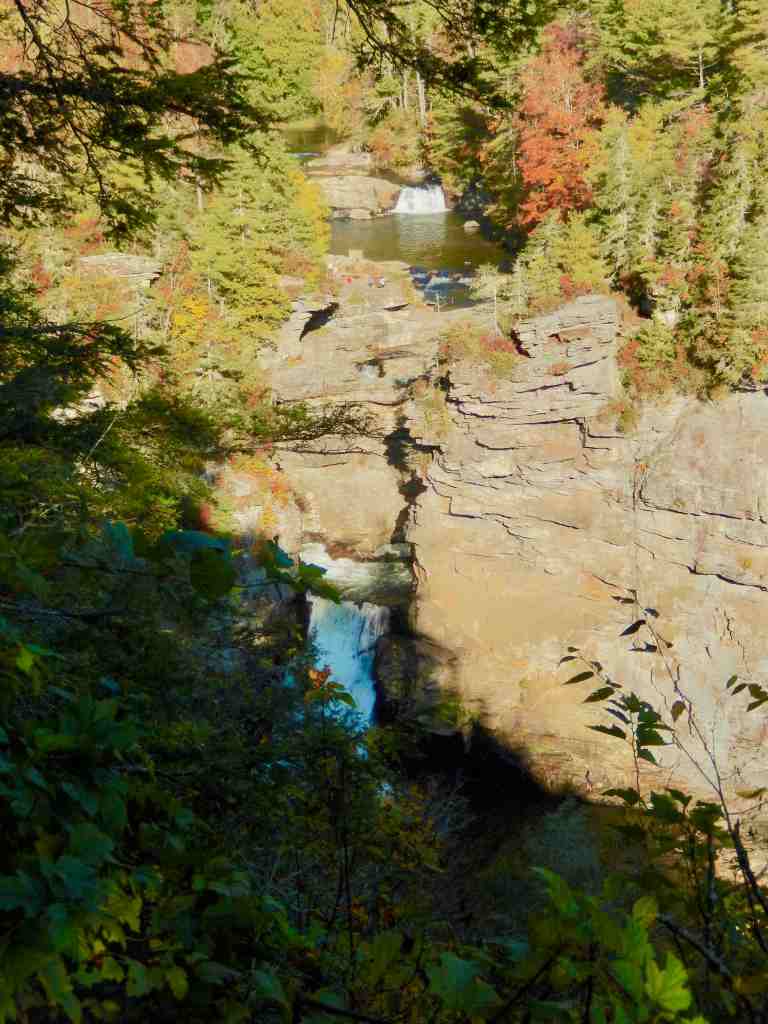
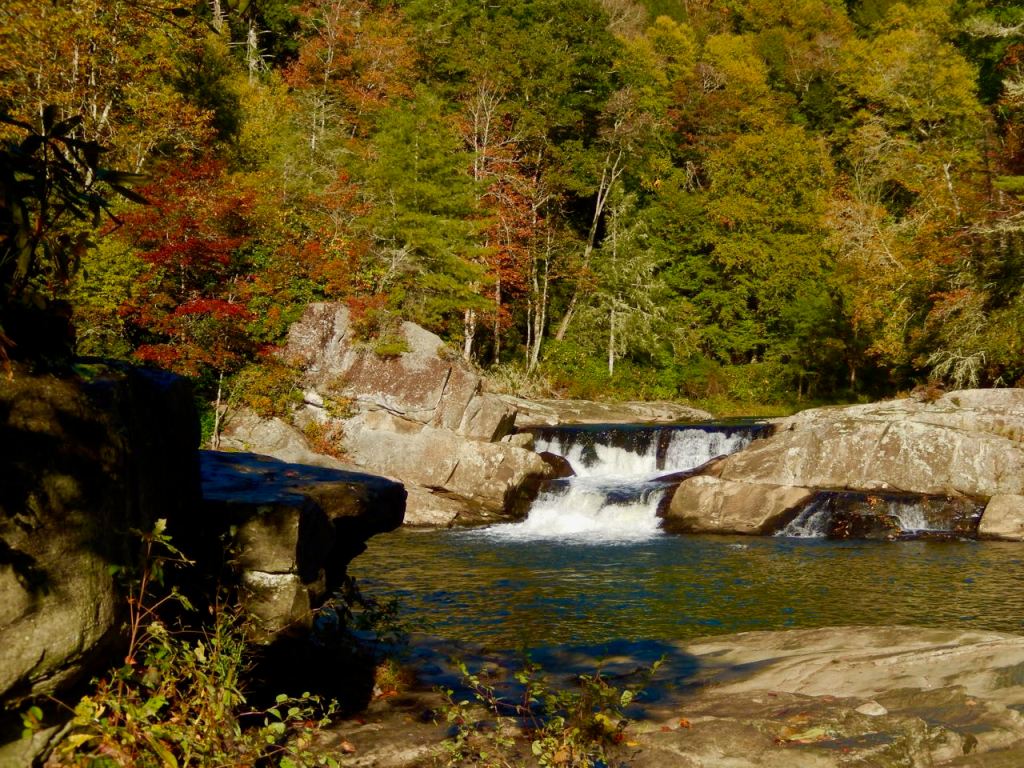
Back at the Linville Falls Visitors Center there is an additional trail that starts off to the left side of the parking lot that will take you to an overlook over the Plunge Pool on the opposite side of the river. The trail starts by going up a short flight of stairs into a section of rhododendrons and is about 0.7 miles round trip.
*Look for a detailed article on these trails soon.

Traveling The Blue Ridge Parkway • Day 2

Working our way up the Blue Ridge Parkway starting at the southern entrance in Cherokee, North Carolina.

October 5th – Cherokee, North Carolina. Today the plan was to start out with a hike on the Conaluftee River Trail from the Conaluftee Visitors Center. That would be followed by a short hike to Mingo Falls and ending with a longer hike on the Smokemont Loop Trail and up a spur trail to the Chasteen Creek Cascade.

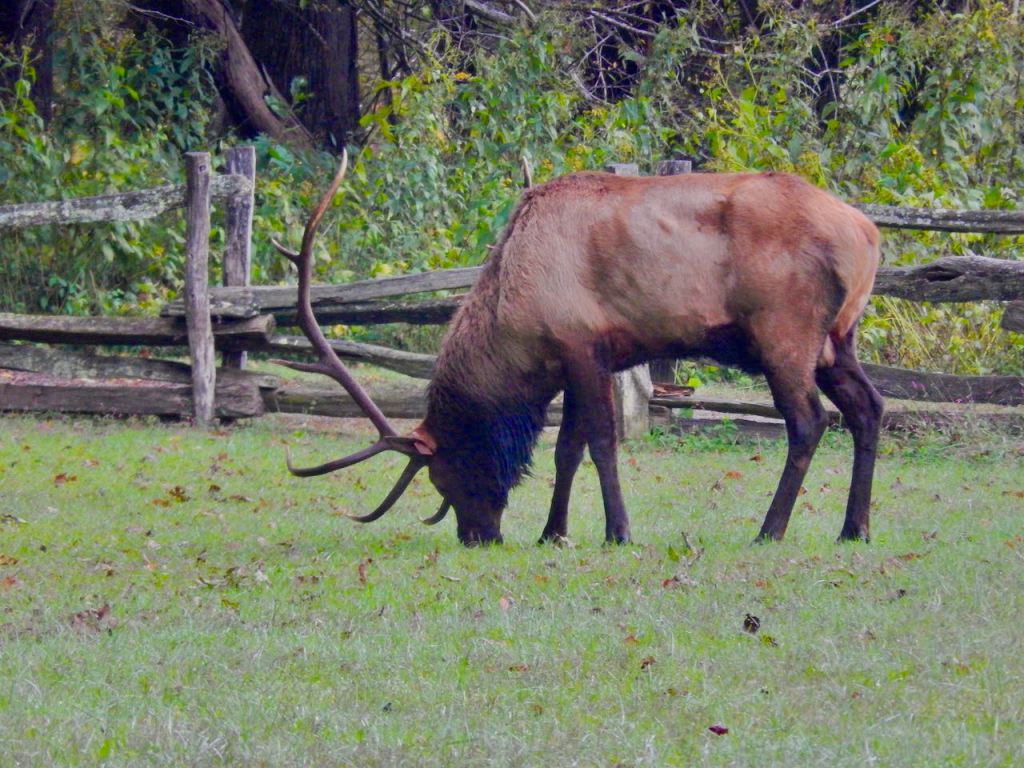
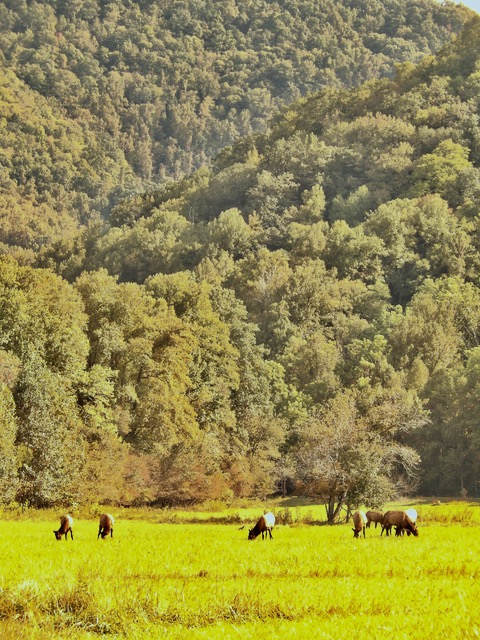
Conaluftee River Trail – Shortly after heading out along the river trail we came across a number of photographers in waders in the river with some really long camera lenses. They were staked out waiting for herds of elk to wade across the river. Around that time we heard bull elk calling from both sides of the river and within a couple of minutes a cow elk with three young calves crossd the river right next to us. Out of the woods on the other side came a large bull elk calling and all four of them disappeared into the forest. A while later another bull and several cows came up river started grazing next to the farm museum site. A great start of the day.

Mingo Falls

Mingo Falls – To get to the parking lot for Mingo Falls from the National Park drive towards Cherokee and take the first left after the entrance to the Blue Ridge Parkway. Over the river turn left and follow the road. There is a sign pointing to the parking lot for the falls. At the back of the parking lot is a set of stairs with 218, uneven steps going up toward the falls. While only about a quarter mile to the falls it is a good climb but worth the effort. At 120 feet tall, the Mingo waterfall is one of the tallest and most spectacular in the southern Appalachians.

Smokemont Loop Trail and the Chasteen Creek Cascade trail can be tricky to find and easily misunderstood. The entry point is less than 3 miles west of Smoky Mountains National Park’s Conaluftee Visitors Center. It’s on the right past the Mingus Mill*. Signs indicate the Smokemont camp area but once your make the turn you come to a T without directions. Turn left toward the Smokemont Campground. At the entry to the campground is a booth and a sign that says “Campers Only”. If anyone is there simply tell them you looking for the Chasteen Creek Cascade trail. Drive to the back of the campground and there’s a small parking lot next to a sign that says “Road Closed”.

As you walk up the trail you are on a upside down J shaped access trail that will take you to the Smokemont Loop Trail in about 2.25 miles. The Smokemont Loop starts there and is about 6.5 miles long. In less than 2 miles you’ll come to a fork with Chasteen Creek to the right and Smokemont Loop to the left. The cascade is about a mile up to the right and at any additional fork go left. These two trails are actually hiking – horse riding trails and there is often a fair amount of riders out on the trail.

Going farther up the Smokemont Loop Trail is also a highly recommended hike with a moderate incline with beautiful views of the Oconaluftee River Valley.

*Mingus Mill – A half-mile north of the Oconaluftee Visitor Center is Mingus Mill. Built in 1886, this historic grist mill uses a water-powered turbine instead of a water wheel to power all of the machinery in the building. Located at its original site, Mingus Mill stands as a tribute to the test of time.

Traveling The Blue Ridge Parkway • Day 1

We’re working our way up the Blue Ridge Parkway starting at the southern entrance in Cherokee, North Carolina.

October 4th – First stop is Cherokee, North Carolina arriving in the afternoon for our trek up the Blue Ridge Parkway. Not wanting to get into a long hike late in the day we headed out to the Smoky Mountains National Park Visitors Center and a short hike in the direction of Mingo Falls.

It’s been some time since I read anything about the reintroduction of elk into the North Carolina mountains and I hadn’t given it any thought when planning this trip so it was a real shock when we ran into a herd of elk first thing.

Reintroduction of elk into Great Smoky Mountains National Park began in 2001 when 25 elk were brought from the Land Between the Lakes National Area of Tennessee. In 2002, the National Park Service imported another 27 animals.

So far the elk seem to be improving the mountain forest environment as the elks’ grazing is active enough to stimulate good plant regrowth. They keep fields clear by keeping the grasses shorter and make it easier to navigate for smaller animals, such as rabbit or turkey, and also make it easier for birds of prey to search through the shorter grasses. They are also adding to the network of game trails in the forest. However the elk have been missing from this environment for over a hundred years and researchers are still studying the impact of their reintroduction watching for signs of stress.

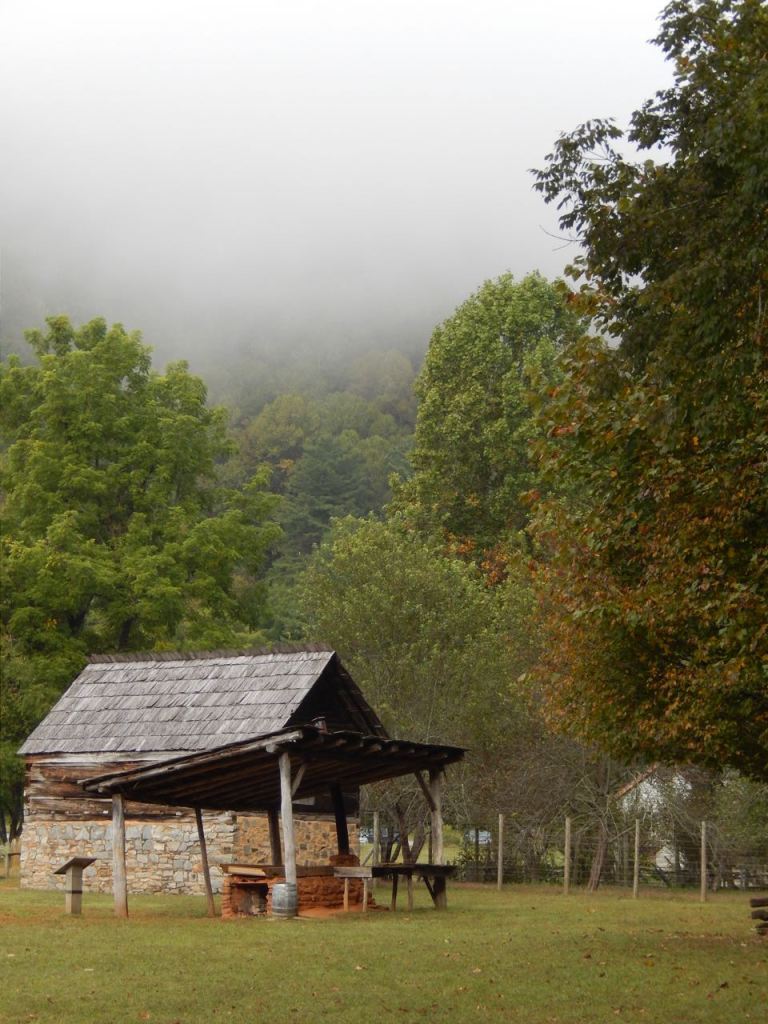
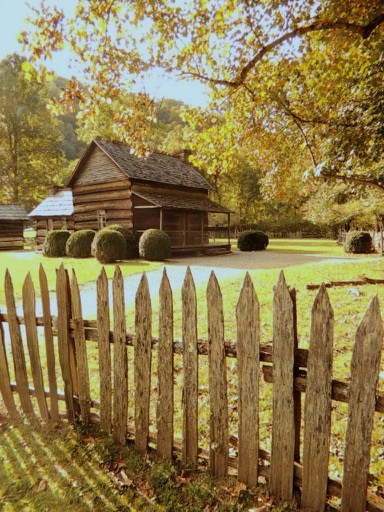
Coming across a heard of elk and a male with an impressive set of antlers was a real surprise that pushed off the Mingo Falls hike until tomorrow morning. In the meantime we headed back to the Visitors Center and a visit to the Mountain Farm Museum.

Searching For Kürtőskalács In Budapest

Kürtőskalács In Budapest

A Short Story

Budapest is probably one of the World’s most underappreciated cities. In Europe we’ve been to Rome, London, Paris, Amsterdam, Athens, Vienna, and more and we would put Budapest at the top of our list. It has incredible cityscapes and gardens and a walk along the Danube at night is magical. Cafes and restaurants are great and the public transportation is World class.

Before our trip, as usual, we did research and one thing that stood out was that we had to try Kürtőskalács the favorite Hungarian pastry.

What we discovered is Kürtőskalács or Kürtős kalácsis are a Hungarian pastry also known as chimney cake, a stove cake or Hungarian wedding cake. It is baked on a tapered cylinder on a spit over an open fire or hot charcoal and rolled in a number of various flavor coatings. Originally from Transylvania, it is famous as Hungary’s oldest pastry and is found in other European countries under other names as well.

Since it is considered the national pastry of Hungary the search should be easy. Right? The first problem experienced was the Hungarian language and having no idea how to pronounce Kürtőskalác. Hungarian is a very hard language to learn because it is complex and very unique and despite the country’s location in central Europe, its dialect is nothing like those spoken in its neighboring nations. While Hungary’s language is generally referred to as Hungarian in fact its proper name is “Magyar” and worldwide it’s only spoken by 13 million people with over 9 million of those in Hungary. While a large number of Hungarians have a good command of English, virtually all signage displays are in only Hungarian. From just the word Kürtőskalác you can see how difficult the language is.

Recognizing the language problem I put Kürtőskalác on a note app in my cellphone so I could show people what I was looking for. Budapest has a famous Market Hall with food and restaurant stalls and seemed like the logical place to start. Everyone was very eager to help but had no suggestions as to where to find them. One baker gave us directions to a place four or five blocks away that might make them. They didn’t and couldn’t suggest where to go next.

It is a pastry and you would think it would be common in bakeries but we learned that’s not the case. It seems it is the requirement to bake over charcoal or open flame that causes a problem for indoor shops.

After five days in Budapest we gave up our search to find some Kürtőskalács. On day six we took a train to spend a day in Slovakia and returned to Budapest after Sunset. As we walked out of the Central Station there was a line going down the sidewalk leading to a food truck. It was a Kürtőskalác food truck! We started with a cinnamon-sugar one to share but will surely come back in a day or two.

Two weeks later we were in Germany and discovered a shop window in a small village selling the German version called schornstein cakes and it was exactly the same.

More Packing Tips and Packing Gear

We spend a quarter to a third of our time traveling and we have become very skilled at picking what makes sense to carry and deciding what should be left behind. Size and weight matter a lot and multi-purpose items are golden. We’ve carefully selected these products for utility and value and those marked with an asterisk have become part of our regular travel gear. Clicking on any of the product images will link directly to an Amazon page where you will find more descriptive information, additional reviews and where you can place an order. Please note that we may receive a commission on some items through the Amazon Affiliate program should you make a purchase. We do not recommend anything that we haven’t personally evaluated.

SUITCASES & PACKING TIPS

Want To Pack Tight And Avoid Wrinkles?


Do The Army Roll

The Holy Grail of packing is a way of getting maximum density in your gear while avoiding the bother of wrinkled clothes. To that end the military has a system. It’s called an Army roll (it’s also called a military roll but let’s give the U.S. Army the credit) and it really does work. Based first on the understanding that folds produce creases and loose packing of clothes adds wrinkles, the system was developed over years of practice.

The Army Roll may seem counter intuitive but it can be applied to many clothing items. In general its approach is to first fold clothes so that any creases are where they would be considered normal. Pant legs stretched tight along front and back creases and shirts folded so that the creases are straight down both sides of shirt front. After that the garments are rolled up tight and held in place. Often this uses cuffs and shirt tails folded up a few inches to tuck the roll into. Army rolls can work on lacks, shirts, jackets and even sport coats. For detailed information there are literally dozens of online videos – use the search term “army roll”.

A number of years ago we were on a cruise and our table mates were a retired couple who claimed that they traveled with only two carry-on suitcases and a couple of small shoulder bags and they used the Army roll system of packing. Over two weeks we remarked about their outfits and on formal night he even showed up in a tuxedo. On disembarking we can confirm that they walked out of the terminal wheeling those two carry-on bags behind them.

TRAVELER’S CHOICE LUGGAGE

Birmingham Ballistic Nylon Expandable Rollaboard Luggage, Black, Checked-Medium 25-Inch, Also Well Under $100

  • Made of 1680 denier water-repellent fabric
  • EVA foam construction provide exceptional durability while lightweight
  • Ergonomic aluminum push-button handle system
  • Full interior lining with zippered mesh pocket and Tie-down straps to secure your belongings
  • In-line skate wheels with crash-guard wheel housings for lasting durability

Tasmania 100% Pure Polycarbonate Expandable Spinner Suitcase For Well Under $100

100% Pure Polycarbonate allows the shell to absorb impact by “flexing” when under stress. • Interior lid with “U” zip mesh cover and tie-tapes to secure belongings. • Convenient add-a-bag strap gives you the option to carry an additional bag. Expansion gusset offers 25% more packing capacity. • Aluminum telescopic handle system with self-lock mechanism. Dual spinner wheels provide smooth and quiet 360 degree maneuverability. • Overall Dimensions: 25.5”H x 17.5”W x 10.5”D Expands to 12”D.


Here’s our way of keeping clothes tight when packing. Make use of packing cubes. One of the major causes of rumbled and wrinkled cloths is packing them too loose. Packing cubes work really well at keeping packed clothes from shifting around and picking up wrinkles. A great addition when using the army roll.

Packing Cubes

Click the image to link to this item on Amazon.com

The ultimate accessories for organizing your suitcase are packing cubes. Keeping clothes tight is an important part of reducing wrinkles and these inner packing cubes help with that. Another advantage is they allow you to segregate clothes into useful groups. No more rummaging through a suitcase, messing up clothes, looking for an item. We also use them to separate a group of clothes for a one night hotel stay while on a trip. No unpacking half a suitcase. When shopping for cubes you need to pay a lot of attention to the sets individual sizes for the best configuration to fit your suitcases.


DIY Wrinkle Release Travel Trick

While there are a number of commercial wrinkle release products available the active ingredients are pretty similar and the bottles are usually too big to pack for a trip. In addition the largest ingredient is mostly water, so why carry a bottle of water with you when you travel?

When you do unpack and discover some wrinkles in your clothes, don’t panic, there are a couple of solutions (pun unavoidable) available.

Our Easy Travel Wrinkle System

Click the image to link to this item on Amazon.com

Our system involves carrying a 2 or 3 oz spray bottle containing just a very small amount of ingredients. Once we are settling in and hanging up clothes we fill that spray bottle up with water and shake vigorously and mist those clothes wrinkles. Here’s the secret formula.

To a 2 or 3 Ounce Bottle add the following ingredients

  • 1 Teaspoon rubbing alcohol
  • 1/4 Teaspoon uncolored fabric softener
  • Shake

When needed, fill the bottle with water and shake well and mist those wrinkles away.

The Easier and Free Alternative

The truth is that a gentle mist of just water will relax most cloth enough to drop out those wrinkle. So if you don’t want to bother mixing up a batch of wrinkle remover, just carry that empty bottle and just fill with water. Less hassle and it works almost as well.


Port of Call Roatan Honduras

The Caribbean Island of Roatan, Honduras

Roatan is the largest of the Honduran Bay Islands in the Caribbean and is becoming a popular cruise itinerary destination. Like many Caribbean destinations it is recognized for its beautiful beaches, water sports, including premier scuba and skin diving, and modern resorts. It also has a growing number of American and Canadian ex-patriots and seasonal residents attracted by its beauty and low cost of living. To accommodate the cruise ships the Honduras government sponsored development of Mahogany Bay with modern cruise ship docks, a well equipped duty free village and a beautiful beach recreation area with great facilities and water sports.

Sailing into Mahogany Bay

Where You Dock

Most Cruise ships are now docking at the Mahogany Bay facility on the southwest coast. The beautifully laid out area includes piers, a duty free shopping area and a beach area. In addition there is also the Port of Roatan located a bit farther west past Barrio Loma Linda and occasionally cruise ships may still dock there. It is about five miles between the two port facilities.

Transportation

The best way to get around Roatan is by hired taxi or a rental car. Taxi’s are inexpensive and are eager to negotiate an island tour at a good price (share with other passengers an save more).

Money

The local currency is the Honduras Lempira with one being worth about US 5¢. US Dollars are usually welcome and most major credit cards are accepted.

Mahogany Bay beach area

Attractions

Outdoor recreation is the focus on this Caribbean island with sandy beaches and clear, warm water being the central attraction. There are also several zip line facilities on the island and a dolphin encounter at Anthony’s Key Resort that’s very popular.

If your ship docks at Mahogany Bay you can spend the day right at the ports beautiful beach. It’s equipped with water sports equipment, beach loungers and umbrellas with a number of excursions leaving right from the cruise port.

A little over a mile from Mahogany Bay is the town of Barrio Loma Linda. It is not a resort area but a typical small Honduran town with stores and restaurants along with a couple of crafts facilities working in leather and wood.