Insurance & International Travel

A recent incident and a conversation with a travel friend highlighted the importance of international travel insurance.

Please note that this is written for American travelers but we are also aware of similar plans offered in Canada and other countries, but you will need to explore options based on your home country.

There are a number of different categories and types of travel insurance that apply to a number of specific travel plans that complicate the insurance decision. Generally, insurance is available to cover problems in five specific areas:
  • Trip Cancellation and Interruption
  • Theft of Property Losses
  • Health and Accident coverage
  • Medical Repatriation
  • Life insurance

In truth, most travelers we talk to are too casual in selecting travel insurance. This articles concerns are focused in three main areas. First is a concern about having to cancel an expensive trip at the last minute and losing deposits and prepaid money. The second is travel interruption caused by missing difficult air connections or a cruise sailing. Lastly are medical cost concerns while being out of the country.

Another area that requires paying attention to is exactly what are the conditions where the coverage takes affect. Insurance policies are very specific legal documents and all too often coverage we thought we had doesn’t apply in some circumstances. Just recently a number of travelers were faced with giving up their travel costs or putting their health in jeopardy.

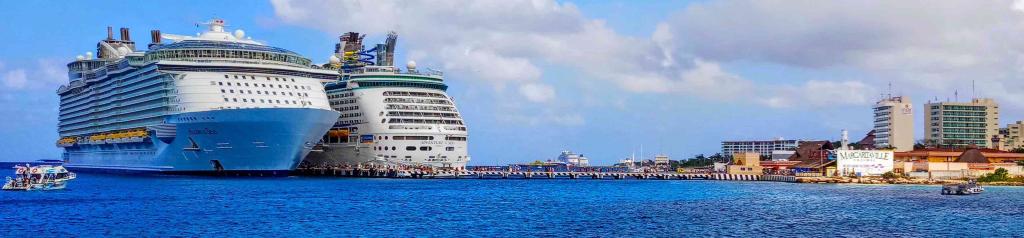
As the Corona virus started spreading around the world and countries started closing their ports, cruise ships and their passengers were placed in an interesting position. Initially cruise ships started adjusting their itineraries instead of canceling cruises. Passengers that were worried about their health wanted to cancel their cruise soon discovered that insurance companies concluded that those concerns were not covered by the cruise cancellation insurance with no refund.

The cost of insurance is not insignificant and everyone needs to evaluate the potential financial risk against the actual cost of the insurance policy. With a long cruise the cost could be very high and while the insurance could be costly the loss could be significant as well in the event you have to cancel or unavoidably miss a sailing.

One area where many people leave themselves seriously in jeopardy involves international medical emergency insurance. Too many people think that their health insurance will cover them out of the country and the truth is that is rarely the case. Unless your health insurance specifically indicates this is a covered item you are risking much too much. In one example we know about a retired couple was traveling in Europe believing that Medicare and their supplement covered them. They learned the terrible truth after a serious stroke left them with a quarter of a million dollars of medical bills.

Because many cruises involve international destinations most cruise policies provide medical cost reimbursement (up to specific amounts) and property theft and loss protection. Some also, but not all, cover the cost of medical repatriation.
Specific air travel insurance mainly is focused on the life insurance component and not on medical costs and trip interruption, which, in many cases is the airlines responsibility.

Because we frequently travel internationally our health insurance does have an international travel component that pays up to $50,000 for each of us with a lifetime cap of $50,000.

We also carry a medical evacuation and repatriation policy that over the past number of years has seemed reasonable to us. The cost for the two of us has been less than $200 for the annual plan.

Situational Considerations

Cruise only – Let’s say you are taking a Mediterranean cruise with flights into and out of the sailing port, a cruise insurance policy usually provides the appropriate amount of coverage in most areas. You can at times be charged for medical services while onboard and will have to submit documents to get reimbursed under these policies. Most cruise policies also cover medical expenses if you need care in a local clinic or hospital while on the cruise as well as medical evacuation and repatriation. The same policy usually extends coverage while on booked cruise/land packages.
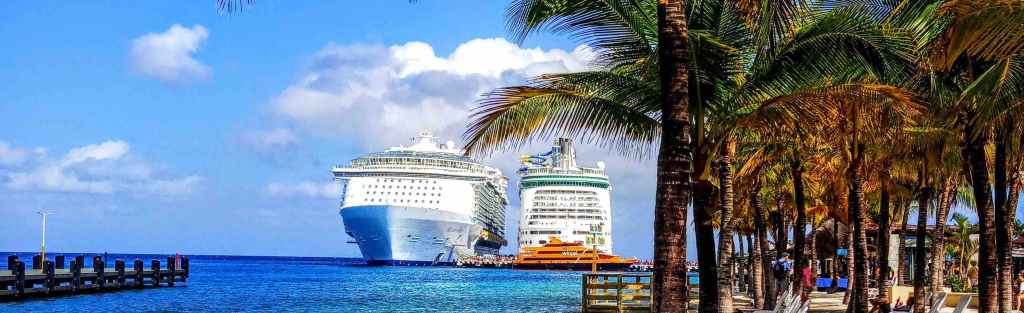
Cruise with an extended land itinerary – If you are taking that Mediterranean cruise but then plan to go off on your own for a couple of weeks in Europe, chances are that cruise policy will terminate on disembarking the ship. For that reason you need to understand that you will not be covered for medical emergencies above the limits of your American health insurance.

Frequent international travel – If you are a frequent international traveler it is most important to analyze your risk concerns and how much you are comfortable paying. You have options of buying a complete medical plan (Geoblue) , a medical evacuation plan (EA+) or a complete annual insurance policy (Allianz, Amex) that offer some coverage in virtually all areas. One caution is that most annual policies only provide coverage while on trips of less than 60 days each.

In our case we take a number of cruises and international trips a year and our biggest concerns are medical emergencies and evacuation so we keep an annual MedEvac plan in place. We believe our Medicare supplement offers adequate (we hope) medical coverage for now and will buy cruise policies on individual trips as mentioned above.

There are also complete annual travel policies, which should be considered if you travel internationally often. Generally they have lower limits on coverage, especially in areas like trip cancellation and property loss. For example most annual policies limit cancellation protection to $2,000 per year. To the right is an example from a recent annual generic quote provided by Alianz for a typical retired couple.

Note: 26 European countries require health insurance to visit.

In early 1995 twenty-six European countries signed an agreement that abolished enforcing their borders between member states. As a result the area mostly functions as a single country for international travel purposes, with a common visa policy. Anyone from a country that requires them to apply for the Schengen visa to enter Europe must provide proof of international health insurance.

The 26 countries in the zone are Austria, Belgium, Czech Republic, Denmark, Estonia, Finland, France, Germany, Greece, Hungary, Iceland, Italy, Latvia, Liechtenstein, Lithuania, Luxembourg, Malta, Netherlands, Norway, Poland, Portugal, Slovakia, Slovenia, Spain, Sweden, and Switzerland.

A letter from your insurance company is required, and this needs to mention that you will be covered in Europe for any medical, evacuation and repatriation expenses during your whole stay. The medical expenses have to be covered for at least 30,000 euros.

Americans and Canadians along with a number of other nationals do not need this visa to visit. Because of the immigration and pandemic crisis of the past years there have been a number of Schengen countries that are again enforcing their borders on an emergency basis.
This post was prompted by a travel friend contacting me wanting to know what travel insurances we use. We compared notes and kicked around some scenarios and decided it was a good subject to to explore in depth.

Also thanks to a  visitor from Reviews.com  we were directed to their extensive article on buying travel insurance and if you have questions about specific recommendations I would highly recommend reading this article from Reviews.com HERE.

INSURANCE AND LESSONS FROM COVID-19

A Number Of New Articles About Travel And Insurance Are Now Recommending “Cancel for Any Reason” Insurance

The fact is most travel insurance policies only reimburse you for canceling your cruise under specifically identified conditions. Most of those involve medical issues with you or immediate family. Some policies also provide for work related emergencies. Based on our experience with COVID-19 we now see a number of issues we hadn’t considered with most travel insurance.

Our Recent Experience Involving COVID

We were recently booked on a pair of cruises that went from Singapore to Rome with 14 ports of call and had paid in full (inside 90 days). As coronavirus issues began to appear our cruising companions cancelled early on and got full credit towards a future cruise. As things began to get worse we contacted the cruise line and they were no longer agreeing to issuing credits. 48 hours later they cancelled the cruise, gave refunds along with future cruise credits. After that we contacted our insurance carrier and were informed that they weren’t accepting claims involving coronavirus but might consider our air portion because our cruise was cancelled. After that we just contacted the airlines and got future credits to use within 12 months.

Insurance And Travel Advisories

It seems that under standard cancellation coverage, you cannot cancel due to travel advisories from the CDC, State Department or other government agencies. You can’t cancel because the cruise line changed the itinerary, or for fear of terrorism, or concerns about epidemics or natural disasters.

CFAR Insurance

Because of these issues there have been a number of articles suggesting that CFAR (cancel for any reason) policies are the answer. If you want the freedom to cancel your trip for any reason at all — and still get reimbursed for travel costs there are CFAR policies available.

We have another 30 day cruise scheduled in the fall across the Pacific and around Japan so we decided to investigate CFAR policy costs for that itinerary. Our current standard policy covering that cruise cost us about $350. We received a CFAR quote from the same carrier that would reimburse our “deposits” only should we cancel for any reason for a premium of $1,500 and seemed to not offer reimbursement two weeks before the trip. That exceeds our currently paid deposits by almost $800 with questions about the actual costs, in full, being covered making this a bad deal.

If anyone finds CFAR insurance that makes more sense we’d love to hear about it.

Insurance Is Still Important

We still believe travel insurance should be an important part of your travel plan. Its benefits usually include trip interruption, emergency medical and emergency transportation, travel delay, lost luggage and more but we need to understand there are major exclusions like pandemics, natural disasters, insurrections and government actions.

The burden is on all of us travelers to educate ourselves on things like terrorism, tropical storms and disease outbreaks affecting our vacation destination. Also if you choose to buy standard coverage after an event becomes “known” even if you didn’t know about the situation your, benefits would be severely limited, making that travel insurance policy almost useless.

Hiking In Haleakalā National Park

Going to spend some time on Maui, Hawaii? Don’t miss spending some time hiking on Haleakalā. If you can fit it in, catch a sunrise from the peak (Sunsets are less spectacular as the volcano’s top is usually shrouded in clouds by evening). There are few places like this where you can drive from sea level to 10,000 feet in a couple of hours and go from beaches, lush tropical surroundings to stark desert.

Haleakalā National Park encompasses some 33,000 acres of the volcano. One of America’s greatest National Parks, it’s the premier hiking site on Maui with choices in trails from a few minutes to several days. Standing over 10,000’ it is often chilly with temperatures that can dip into freezing, and snow can at times, cover the ground in winter.

Haleakalā’s so called “crater” actually isn’t a crater but resulted from of two large valleys that eroded away and than merge at the summit of the volcano. Haleakalā also isn’t extinct, but dormant, having erupted several times over the past 1,000 years.

Silver Sword

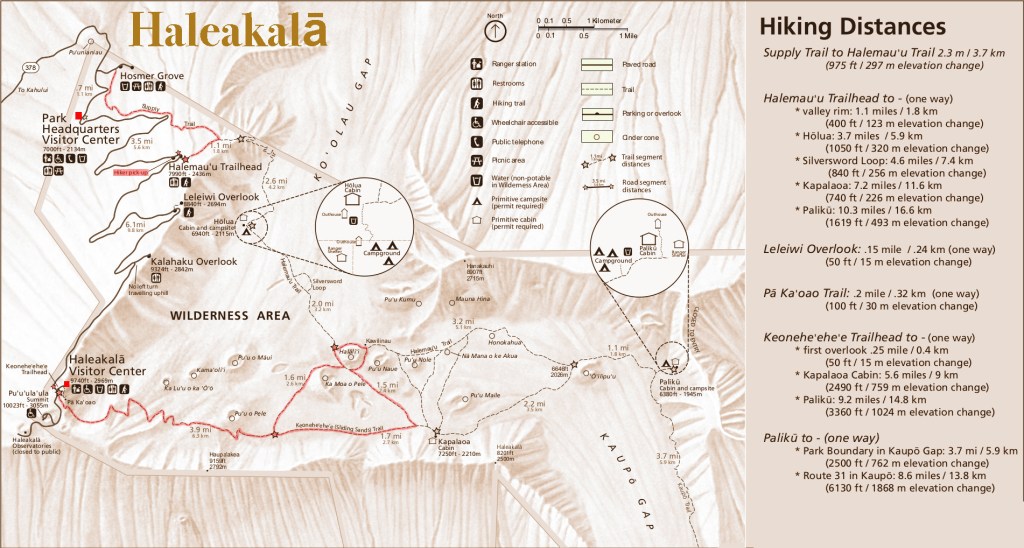
The summit area of Haleakala National Park boasts over 32 miles of hiking trails. These trails range in difficulty from short 10 minute walks to multi-day overnight trips, and each trail shows different faces of Haleakala.

One of the most spectacular things you will ever experience is catching a sunrise from the top of Haleakalā ,but unless you are hiking on foot you will need to get a Sunrise Reservation. All visitors in private or rental vehicles wanting to view sunrise at Haleakalā National Park must make sunrise viewing reservations ahead of time on recreation.gov. HERE

Hiking on the volcano is almost like being transported to another world from multi-colored shifting sands to stark cliffs and spires, the incredible scenery is incredible. Because it’s isolated on a mid-Pacific island standing 10,000 feet tall the park has a number of interesting species that include the silversword a plant that’s unique to Haleakalā. Living among the desert cinder landscape of the Haleakalā slopes and Summit, silverswords are characterized by the silvery hairs on their sword-like succulent leaves and their low-growing rosette. They can live up to 90 years. Also found on the volcano is the Hawaiian petrel or ‘ua’u an endangered species of migratory seabirds along with the world’s rarest goose, the nēnē.

Because of the fragile landscape hikers must remain on the designated trails. It’s the law and getting caught off the trail could result in serious fines. Trails are designated and carefully marked because you are hiking near some of the world’s rarest plants and animals. Venturing off of the trails could do serious harm to local plants.

Mount top observatory (closed to public)

From the Visitor’s Center the most popular trail heads down into the crater along the Sliding Sands – Halemau’u combo trails which is a C-shaped trail into the most picturesque portion of the Haleakala crater with a minimum hike of 12 miles. The first 4 miles of the trail is the largely downhill to the spectacular Sliding Sands trail leading into the crater that features views of a extra-terrestrial landscapes. Returning to the Visitor’s Center requires that 4 mile trek going uphill.

Halemau’u Trail: This trail traces the contours of the cliff walls of the crater before terminating at a loop for viewing ʻāhinahina (Haleakalā silverswords), and other endangered species.

Visitors Center

The Supply Trail is fairly steep trail, and becomes steeper as it nears the connection with the Halemauu Trail at 3.5 miles. At the end of the Supply Trail, head down the Halemauu Trail about a quarter mile for some incredible views of Haleakala’s crater.

Keonehe’ehe’e to Halemau’u: This one-way hike through Haleakalā crater requires you to hitchhike back to the place you began which is pretty common practice.

Hosmer Grove Loop Trail: This very short loop travels through a forest with diverse tree and interesting bird species.

Kīpahulu District is a detached portion of Haleakalā National Park accessible 12 miles past Hāna. It is not possible to access Kīpahulu from the main area of the park. This district trail offers the best waterfall hike on Maui as well as a sculpted lava coastline with several ancient Hawaiian settlement sites.

International Cell Phone Service 2020

Current cell phones are one of modern life’s miracles, but they also present multiple issues in international travel, especially for Americans. U.S. based cell service is usually a costly option when traveling outside of America and, from experience, we’ve found it is often not the most reliable option. Before you leave on a trip, contact your carrier to find out what your options are and the potential costs but apply a bit of skepticism to what they tell you.

If you are traveling internationally from the United States and are looking for cellular service there are four main categories you need to be aware of and the issues with each.

1. The First is economy carriers which offer low monthly fees and often a number of data and messaging options. They include Straight Talk, Citizens, Cricket and more. These services generally offer no international roaming service.

2. Next are prepaid phone plans with many of these services being offered by major American carriers like Verizon and additional economy carriers. Again there are very few, if any, that provide international roaming.

3. The third option is an international cellular company with most of them focused primarily on providing service for only international roaming. Using a GSM SIM card they are usually based in a foreign country and often provide their service using a foreign registered phone number with the most common countries being England and Lithuania. Several offer the option of subscribing to an additional phone number based in your home country. These include Cellular Abroad also marketed as National Geographic, One Sim Card, Holiday Europe and more. A search for “international sim prepaid” will usually provide a dozen or more options.

4. They last, and most convenient service, is one of the major U.S. based cellular companies that include, AT&T, T-Mobile, Sprint and Verizon. All of those companies provide international roaming options but you still need to know what each has as options and what potential issues there could be.

There are also a number of clever services that you can use if you need the ability to have long phone calls or need a lot of data.

Depending on where you are traveling and for how long, one option to consider using a dual-SIM phone with one of the American major cellular contracts and also install a prepaid service like One Sim Card which also provides an app for VOIP when you have wifi service available.

Another option if you will frequently have good wifi or inexpensive data available is a VOIP phone service like MagicJack that also provides a VOIP app for your phone. That can provide unlimited telephone service.

Understanding CDMA, GSM and LTE

Thinking about phones and cellular services for your next trip? It’s important to have a passing knowledge of the services involved in order to make the right decision.

GSM and CDMA are network technologies for cellphones. They were both developed in the nineties to provide primarily for 2G service. In the US the FCC decided on a “dual-system” approach allowing either GSM or CDMA. Today the United States still uses a mix of different technologies while most of the rest of the world, has settled on GSM. That’s why GSM is the preferred technology for traveling the world.

With the introduction of 3G, American carriers just improved the original GSM and CDMA technology. Because of the reliance on CDMA by some companies, the switch would have required a massive expenditure.

With the introduction of 4G a completely new cellular system for connectivity was adopted called LTE. Designed for data it worked better than previous technology and carriers began replacing everything else with with the LTE system. Things like switching to VoIP (voice over internet) to replace traditional cellular service calling.

Unfortunately, while the cellular networks made the switch, many phone manufacturers continued to use LTE only for data and continue to use GSM or CDMA for voice and texts. So you’re stuck with choosing between a CDMA and GSM phone if you want voice. Two major companies, Verizon and Sprint are now on LTE. Improving VoLTE (voice LTE) solved the voice over CDMA problem allowing phasing out 3G greatly improving their customers use when traveling internationally.

Unfortunately, the four major carriers now provide LTE on different frequency bands and provide phones that are specific to their frequencies, making it difficult to switch. Around the world there are currently some 40 additional frequencies being used that need to be considered.

So now in selecting a service or even an unlocked phone you need to investigate compatibility with LTE networks. That’s because LTE is an umbrella term with many different frequencies. In the U.S., Sprint uses LTE (TD-LTE), a version of LTE with relatively low compatibility while T-Mobile, Verizon, and AT&T all have LTE bands of their own.

Fortunately many phone manufacturers are now making phones that support CDMA, GSM along with LTE on many bands. That’s why phones now list information on bands and frequencies. In the United States you will find carriers listing these bands and frequencies also:

Carrier 4G LTE Bands 4G LTE Frequencies

AT&T 2, 4, 12, 17 1900, 1700 abcdef, 700 bc

Verizon 2, 4, 13 1900, 1700 f, 700 c

T-Mobile 2, 4, 12 1900, 1700 def, 700 a

So if you are considering buying an unlocked phone pay attention to supported bands and frequencies. Also Switching GSM phones between different networks is easier than with CDMA phones, because all GSM phones use removable SIM cards.

Verizon and Sprint in the United States use a technology called CDMA (Code Division Multiple Access). Most other carriers and the world use what’s called GSM (Global System for Mobile Communication). There are phones on Verizon and Sprint that also support GSM, but those that don’t won’t work as world phones.

International Options From The U.S. Major Cellular Companies

Verizon

Your first option on Verizon is their TravelPass plan, which gives you the option to take your regular talk, text, and data with you on your trip (meaning, you use whatever amount of talk, text and data speeds you regularly use within the United States).

You will be charged $5 a day per line for days you use your service in Mexico and Canada and a rate of $10 per day for 130 additional countries. Most popular countries are included in this list, such as Argentina, Australia, Chile, France, the Netherlands, South Africa, the United Kingdom, and more.

Activating your TravelPass is required through Verizon Wireless and when you use your phone in an international location, your phone will automatically recognize where you are and will connect and your TravelPass kicks in for 24 hours. and it won’t renew or use another pass until 24 hours. Using your phone after that starts another 24 hour cycle.

T-Mobile

T-Mobile is a great option for international travel because their plans make things real simple.

The T-Mobile One plan for unlimited data lets you keep your unlimited data and texting when you travel to 210 locations and countries. However, they cap your data at 128 kbps throttled down to 2G or 3G speeds. They also charge for international phone calls, usually at 20¢ or 25¢ per minute. Often you can use a VOIP app to make calls on the data service.

T-Mobile also offers International Passes for faster data while you’re traveling abroad. Their 5 GB pass keeps you on a 4G network for 10 days also with unlimited calling at a cost of $35. They also have an option for 15 GB for 30 full days at $50.

AT&T

On both the Unlimited & More and the Unlimited & More Premium plans on AT&T, you will be able to travel to Mexico and Canada with all of your talk, data, and text already paid for. Their Mobile Share Plus plans allow you to use your talk, text, and data when you are in Mexico.

In 100+ other countries, AT&T offers an International Day Pass for $10 a day (based on 24 hours from start time), offering the unlimited talk, text, and data already in your regular plan.

There’s also the Passport plan that costs $60 for 30 days and offers 1 GB of data and unlimited texting. You can raise this to 3 GB of data for $120 for the month. At that point, you should never go any further if you value your budget, because they charge you $50 for every GB over the 3 GB limit. Phone calls are not included and you will be charged 35¢ per minute.

Sprint

You can add Sprint Global Roaming to your regular plan and it can remain on your account for free for as long as you want to keep this add-on. By enabling this feature, you can travel to 185 locations with coverage for text and data included. This is only on 2G speeds, though and it also doesn’t include voice calling which are charged at 20¢ a minute.

For faster speeds with the Global Roaming add-on, you can pay for a High-Speed Data Roaming Pass for 24 hours or a full week. The price will vary based on where you are traveling. In Canada and Mexico, a day pass will be $2 or a weekly pass will cost $10. Most other destinations will cost you $5 a day or $25 for a week.

You can also look at specific plans available in other countries like Sim2Roam in Australia a prepaid SIM Card with 28 Days Unlimited Calls, texts and 25GB of Data.

Safe Travel Isn’t An Accident • An Update

Safe Travel Tips

There are some real horror stories out there and we’ve heard a few. The ones you really don’t want to hear are the ones told by family and friends and they’re usually about travel adventures gone wrong. After a couple of decades traveling around the world like us, you’re bound to learn a few things along the way about protecting and taking care of yourself. Here are a few safe travel links and safe travel tips.

First – never think it isn’t going to happen to you. Believing the worst can’t happen to you is the stupidest rationalization anyone can make. It actually prevents too many people from thinking about the unthinkable and stops them from taking steps to be prepared.

  • Accidents
  • Medical Emergencies
  • Disasters
  • Civil Unrest

These can happen anywhere at anytime and while it doesn’t mean you should give up traveling, it does mean you can, and should, make plans just in case.

Second – don’t guess at what protection you have or how things could work in a crises situation while traveling. On far too many occasions we heard about friends that thought that their health insurance would work overseas just like it does back in the United States. The sad truth is, often health insurance that provides good protection in America provides very little and often no protection while traveling out of the United States. Getting stuck for hundreds of thousands of dollars in medical bills isn’t the best moment to realize this.

Third – the old adage “an ounce of prevention is worth a pound of cure” is really good advice. Buying insurance has always seemed to me to be expensive but if you start looking into areas like travel insurance you will find a number of policies that seem very reasonable. My wife and I have maintained emergency evacuation insurance for a number of years at a cost for both of us around $200 a year.

Another thing that we do to be prepared is pack a first aid and medication kit when we travel. Sometimes there just isn’t a pharmacy available and a small kit of over-the-counter meds for stomach problems, flu and cold remedies and bandages are worth their weight in gold.

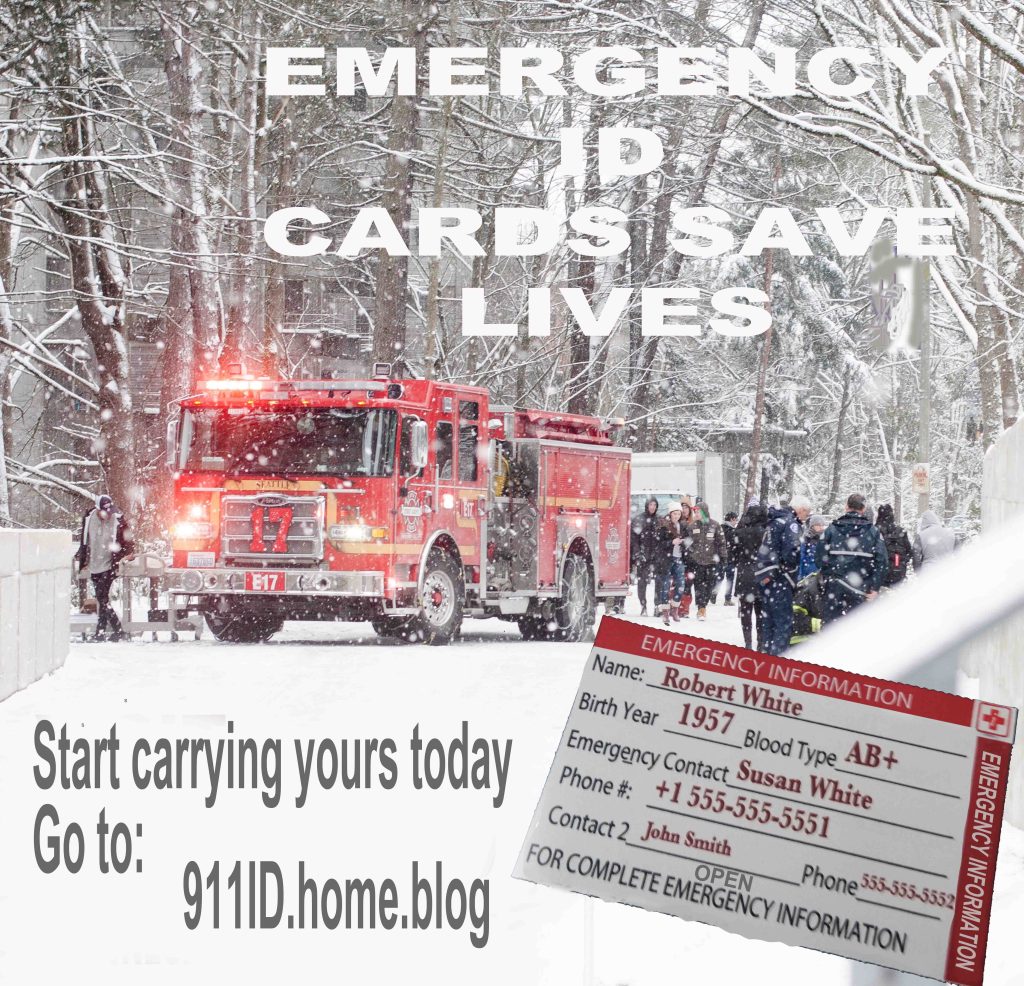
After hearing about a couple of real tragedies experienced by traveling friends we started always carrying emergency ID’s. What’s in your wallet or purse? Oddly a driver’s license or even a passport doesn’t provide any good contact information. Also if you have specific medical issues, how are first responders and medical professionals supposed to understand your situation?

Consider the 911ID card and information system. It starts with a card you carry on you but the system also provides for access to almost all the recommended information one needs in a medical emergency. Look into it HERE.

What’s In Your Wallet?

MEDICAL DIRECTIVES In addition to an Emergency Identification card we should all have Medical Directives (Living Will or Proxy) available in case of a medical emergency. Get and give peace of mind and fill out a living will. It’s easy, quick, and free – get your forms here:

What Makes Some Great Cities So Appealing?

This is part two from “Must Visit Cities”.

Thinking about our choices of favorite cities we noticed a few things they seemed to have in common and it surprised even us. Maybe you’ll figure out what they are?

Great cities make you feel welcome and leaves you wanting to be there.

The first thing that struck us is that most cities that we really enjoy visiting are clean. Very little litter. Trash really says a lot about the livability of a place and so does graffiti. If the locals don’t care how their city looks they can’t be happy living there.

Graffiti, just like cleanliness, speaks with a load voice. In many cites graffiti is ugly and nasty and says that this is not a nice place to be. Sometimes it’s threatening. There are cities where much of the graffiti is actually street art and that actually lightens the mood in a place.

That leads to the next characteristic – friendliness. I think the attitude that keeps a place clean is also the same attitude that lifts people’s spirits and makes a city seem friendly. It doesn’t take long once you are in a city to feel that difference. We’ve been in cities where all you had to do was act a little lost and people would come up to you asking if they could help. Not all cities are like that.

Mass transit is another big deal and just like cities are different so is what you find on mass transit. In Singapore the trains and stations are spotless and the riders friendly. More than once young people not only offered us seniors their seat but were insistent. In New York – not very likely.

There’s more we could add but let us know what you think?

The Worlds Ten “Must Visit” Cities

The world is full of great cities, think Paris, Tokyo, Rome, Rio, and everyone has their own favorites. While we’ve visited a couple of hundred we do have some real favorites and we’re still exploring with, hopefully, a long way to go still. I’m not real sure what makes a city so appealing but I think many have some similar characteristics.

Thinking about our choices of favorite cities we noticed a few things they seemed to have in common and it surprised even us. Maybe you’ll figure out what they are?

1. Sydney

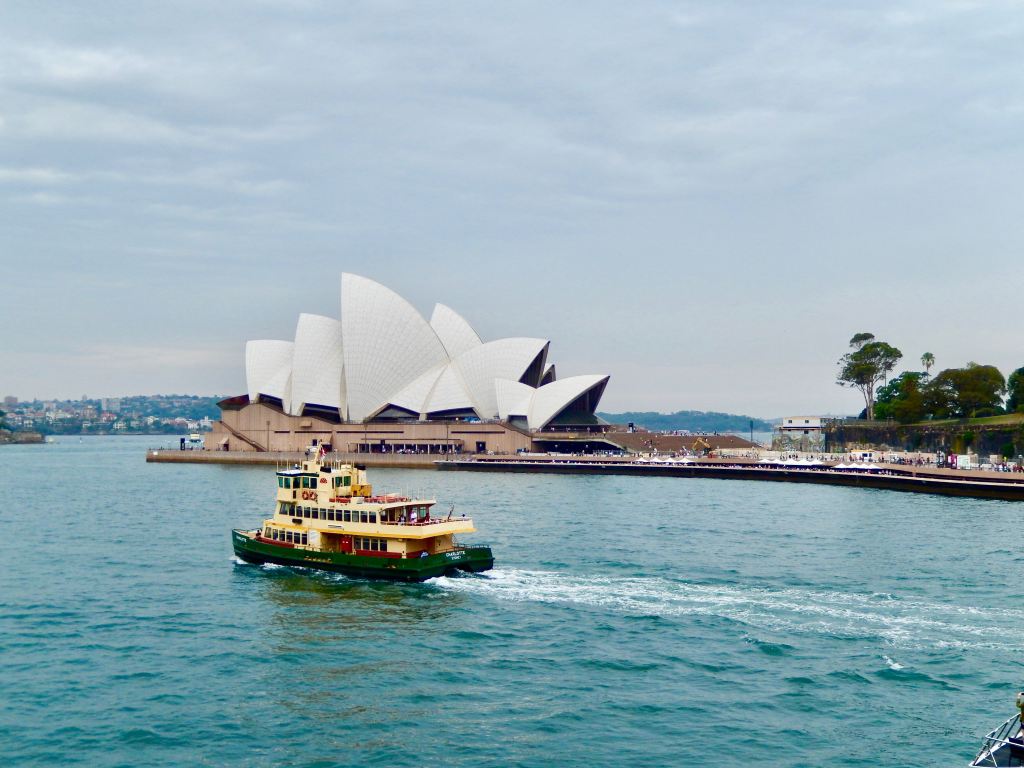
We love this city for a number of reasons. One big reason is the Opal card and the metropolitan transit system. It can take you out to Bondi Beach and incredible surfing or to the Blue Mountains for great scenery and hiking. You can take ferries all around the huge natural harbor and get all around the city from the nightlife in The Rocks to dinner and sunsets at Darling Harbor. There’s so much to see and do.

2. Budapest

This city is a close tie with Sydney. Great people, restaurants (goulash soup is a new favorite), a lively nightlife (ruin bars!) and some of the the most spectacular cityscapes you’ll find anywhere. This is a sophisticated, modern city and the Danube at night is unbelievable.

3. Singapore

This is one of the worlds most modern cities. Things don’t get old here they just tear them down and build something new. There are some historic temples and notable structures but they are overshadowed by fantastic skyscrapers and fancy new attractions. Theme parks, two incredible gardens, beaches and large public spaces. Another draw is a great metro system. One of the most modern, inexpensive and fast.

The city is a fantastic blend of many cultures with an Indian and Chinese sections and the official language is English.

4. Vancouver

Vancouver might not be on a lot of lists but we truly love this city too. Maybe it’s a matter of size and location because this city has a lot to offer in a reasonably compact area. Gaslight area for restaurants and nightlife, Chinatown is a city in its own right with countless restaurants. Situated near to wilderness areas and a great wine region with good ferry service over to Vancouver Island and a number of coastal towns.

5. Amsterdam

Famous for its anything goes attitude this city is at the same time surprisingly conservative. Built on a series of canals that arc around the central city there is a lot of history here. If you are planning a visit, go in the spring when the tulips are in bloom and don’t miss a visit to the Keukenhof, Europes biggest flower show with acre after acre of tulips on display.

6. Honolulu

Island cities are, by their very nature, not large but Honolulu is an exception. Maybe it’s because so many people discovered they can live in paradise and still have the excitement of a major city. Honolulu sits on one of the worlds truly great beaches, Waikiki, right next to upscale resorts and shopping. The island of Oahu also features a lot to see from the North Shore surf to Pearl Harbor.

7. Venice

This city of palaces, cathedrals and canals almost can’t be described in just words. It was a leading European economic and trading power from the Middle Ages and the Renaissance. At its height it held significant territories along most of the Dalmatian coast of the Adriatic Sea, and islands like Crete with all that wealth flowing back to Venice. Much of its glory survives even today.

8. Bangkok

The jewel of Southeast Asia, Bangkok is a magnificent blend of history and the modern. Its heart is the Grand Palace complex established in 1782, it consists of not only royal and throne halls, but also renowned Temples like the Reclining Buddha and Emerald Buddha. The Thai people are incredibly friendly, the food is fantastic and the city has some great hotels and restaurants.

9. Jerusalem

For a city that has spent most of history being conquered by armies going to someplace else this is possibly one of the worlds most significant spots. Jerusalem is of major importance to three great religions drawing pilgrims from all over the world. Just walking the streets and passageways of old Jerusalem is an overwhelming experience.

10. Let’s Hear About Your Favorite City?

Add your choice below…