A Plan For Digital Nomads To Build Remote Careers

Our favorite Digital Nomad, Vivek is back with more great advice.

More people than ever dream of packing a laptop, buying a one-way ticket, and working from a beach café in Bali or a mountain lodge in Spain. But turning that dream into a sustainable, fulfilling career takes more than Wi-Fi and wanderlust.

Aspiring digital nomads must build adaptable careers, balance freedom with stability, and learn to thrive in motion.

TL;DR

Success as a digital nomad comes from pairing flexibility with focus. Build remote-ready skills, choose income streams that travel well, manage time zones like a pro, and invest in community. It’s not just a lifestyle—it’s a long-term work model that rewards self-discipline, continual learning, and smart financial planning.

The Lifestyle Equation (Table)

Core ElementDescriptionExample/Action
Skill MobilityFocus on skills that are in global demand and easily delivered online.Web design, marketing, copywriting, development.
Income StabilityBalance freelance work with retainers or productized offers.Offer monthly content packages to clients.
Routine FlexibilityBuild a schedule that adapts to travel constraints.Work early to enjoy long afternoons exploring.
Financial CushionMaintain a 3–6 month buffer to manage travel or client shifts.Keep funds in multiple currencies if possible.
Community BuildingConnect digitally and locally for support and opportunities.Join nomad hubs like Lisbon, Chiang Mai, or Medellín.

FAQ: “Do I Need to Quit Everything to Become a Digital Nomad?”

Not at all.

Many successful nomads start part-time, keeping a hybrid model while testing different regions and time zones. A slower transition helps reduce stress and financial risk. You can begin by working remotely for your current employer, freelancing on weekends, or developing a side business that eventually funds your travels.

Build Skills That Travel

Start with skills that are independent of geography: UX design, writing, coding, marketing, customer success, and consulting are prime candidates. Sites likeToptal remain gateways for finding international clients. Pair them with modern tools—Zoom, Asana, Notion, and Slack—to collaborate across borders without missing a beat.

For those looking to go deeper into business, management, and entrepreneurship, earning a degree can be a game-changer. By choosing to earn a business administration degree, aspiring nomads can develop essential skills in finance, marketing, and operations that make them more competitive as remote founders and freelancers.

Online degree programs make it easy to study while traveling or working full-time, giving digital nomads both flexibility and credibility.

How-To: Create a Nomad-Ready Career

  1. Audit your skills → What can you deliver remotely right now?
  2. Choose one stable income stream → Retainers or recurring projects.
  3. Build a portable workflow → Cloud storage, password managers, global payment systems like Wise or Payoneer.
  4. Test time zones → Work remotely from a nearby country first before going global.
  5. Simplify assets → Use lightweight gear (laptop, external SSD, travel Wi-Fi).
  6. Establish financial safety nets → Separate business and personal accounts, automate savings.
  7. Invest in your professional identity → Build a LinkedIn profile, website, and consistent digital presence.

The Freedom-Discipline Paradox

Digital nomadism rewards self-discipline. While it’s easy to get swept up in the adventure, productivity is what sustains the journey. Tools like Clockify help track focus. Co-working spaces—from Bali’s Dojo to Mexico’s Selina—provide both infrastructure and community. Staying grounded isn’t about restriction—it’s about consistency in motion.

Highlighted Tool: Notion — The Nomad’s Command Center

Notion is a popular all-in-one workspace that many nomads use to organize client projects, store travel plans, and maintain personal journals. You can create shared dashboards, manage client deadlines, and even embed expense trackers. Its offline sync helps when you’re working somewhere with unstable internet.

Pro Tip: Diversify Visibility

Treat yourself like a business. Publish content on platforms like LinkedIn and Substack. Share experiences, lessons, and insights from your travels—these posts not only attract new clients but also build digital credibility that follows you anywhere.

The Mindset Shift

Being a digital nomad isn’t about escaping routine—it’s about designing one that fits you. Set clear work hours, practice asynchronous communication, and maintain balance between exploration and execution. Every flight delay, every timezone mix-up, and every café Wi-Fi hiccup becomes part of the learning curve.

Key Takeaway

The modern digital nomad isn’t just a traveler with a laptop. They’re entrepreneurs of their own time and expertise—crafting work that moves with them.

Conclusion

Thanks For Visiting


Planning A Cruise? Start By Checking Out The Intentional Travelers Port Guides

Looking for specific information?


Recent Posts From The Intentional Travelers You Might Find Interesting:

Thanks For Joining The Intentional Travelers

As a small and independent website creator your subscribing to The Intentional Travelers is very important to us. It not only validates the work that we do but with you subscribing it also helps with our internet rankings which is the internets way of deciding how to place us in the search processes.

So thanks for your interest in The Intentional Travelers it really means the world to us…

Subscribe Here:

Subscribe and receive notices of new posts delivered right to your email inbox. For a focus on specific areas of interest from The Intentional Travelers please let us know any particular interests on our subscription form below::

← Back

Thank you for your response. ✨

I’m Particularly Interested In:

Our Promise To You

The Intentional Travelers will always respect your privacy and will never sell your information or share it with anyone else.

If you no longer want to receive our notices there will always be an unsubscribe link in every email and ours is easy to locate and really works with a single click.

In every case involving a product recommendation we will clearly indicate if we receive a commission on a sale.

Remembering The Attack On Pearl Harbor December 7, 1941

The USS Arizona Memorial sitting above the sunken ship

On December 7, 1941, the Japanese Navy launched a surprise attack on the U.S. naval base at Pearl Harbor, Hawaii. The attack began at 7:48 am and lasted for about two hours, resulting in the deaths of 2,403 Americans and the destruction of numerous ships and aircraft. The attack was a major turning point in World War II, as it led to the United States’ entry into the war.

The USS Missouri looking past the sunken USS Arizona remains

The attack was planned and executed by the Imperial Japanese Navy, which had been growing increasingly aggressive in its territorial ambitions in the Pacific. The Japanese hoped that by launching a surprise attack on the U.S. Pacific Fleet at Pearl Harbor, they could cripple American military capabilities in the region and secure their own dominance.

The attack was a devastating blow to the United States, but it also galvanized the American people and strengthened their resolve to fight back against Japan and its allies. President Franklin D. Roosevelt famously referred to the day of the attack as “a date which will live in infamy,” and just one day later, on December 8, 1941, the United States declared war on the nation of Japan.

Today you can tour Pearl Harbor with several significant sites to take in. Parking for the Visitor Center is free and there is no fee to visit the USS Arizona Memorial. However, due to its popularity, tickets are required and can be reserved in advance online for a small fee. Same-day tickets are also available on a first-come, first-served basis at the Pearl Harbor Visitor Center, but it’s recommended to arrive early as they tend to go quickly.

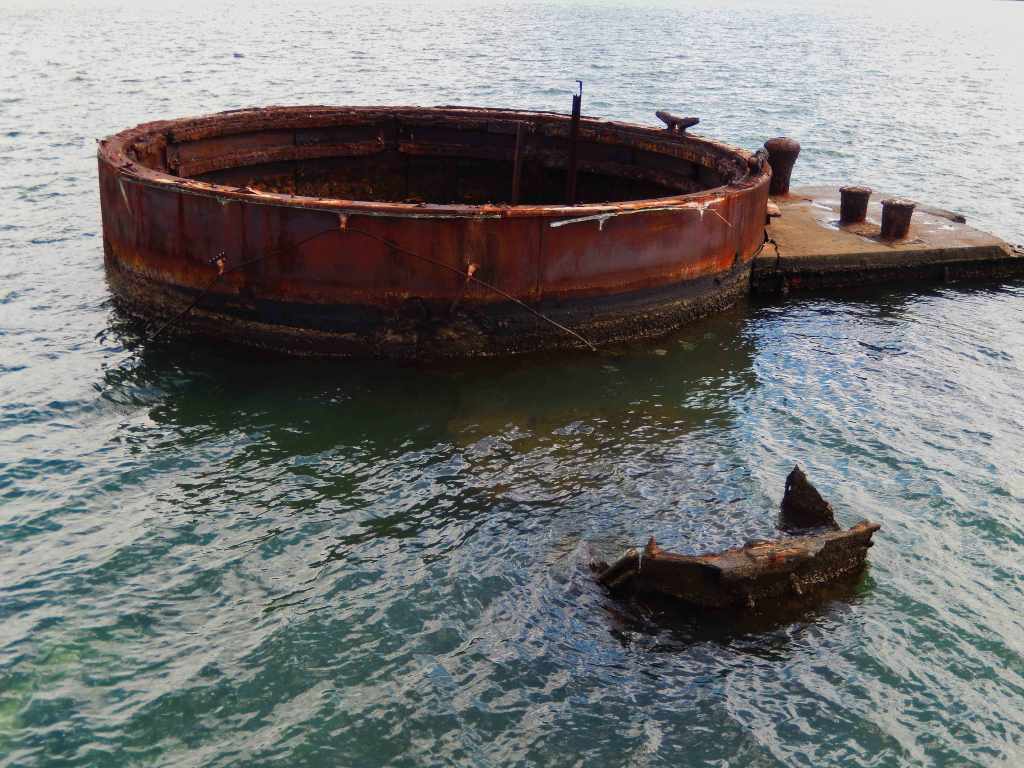
A gun turret from the sunken USS Arizona sticks out of the water next to the memorial

Pearl Harbor Visitor Center: Begin your visit here to learn about the events of December 7, 1941, through exhibits, films, and displays.

USS Arizona Memorial: Take a boat out and pay tribute to the fallen sailors and explore the memorial built over the sunken battleship USS Arizona.

USS Bowfin Submarine Museum & Park: Tour the WWII submarine USS Bowfin and learn about its history and the experiences of submariners.

Battleship Missouri Memorial: Step aboard the USS Missouri, where the Japanese surrender was signed, and explore this historic battleship.

Pacific Aviation Museum Pearl Harbor: Discover a vast collection of aircraft and exhibits that showcase the history of aviation in the Pacific.

Planning A Cruise? Start By Checking Out The Intentional Travelers Port Guides.

Looking for specific information?

Recent Posts From The Intentional Travelers You Might Find Interesting:

Thanks For Visiting

But Wait – Don’t Leave Yet! Take A Few More Seconds And

Free Lula Art In Montevideo?

Art, politics and graffiti are often difficult to separate and nowhere is the mix more pervasive than in latin America. Just a few years ago walking down a street in Montevideo there were oddly still a lot of Free Lula graffiti posted but we weren’t sure if this artistic doorway was connected to the scrawl of LULA LiBRE! next to it?

Screenshot

Planning A Cruise? Start By Checking Out The Intentional Travelers Port Guides

Looking for specific information?
Recent Posts From The Intentional Travelers You Might Find Interesting:

Thanks For Visiting

Taking The Athens Metro; Piraeus To The Acropolis

Visiting the Acropolis from the port of Piraeus Greece

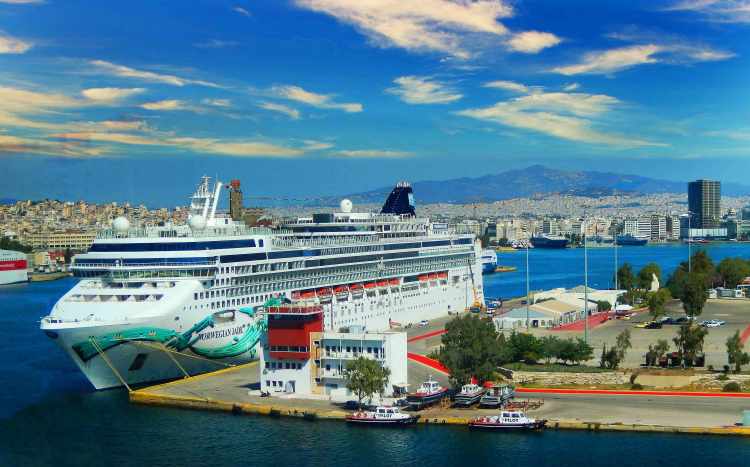
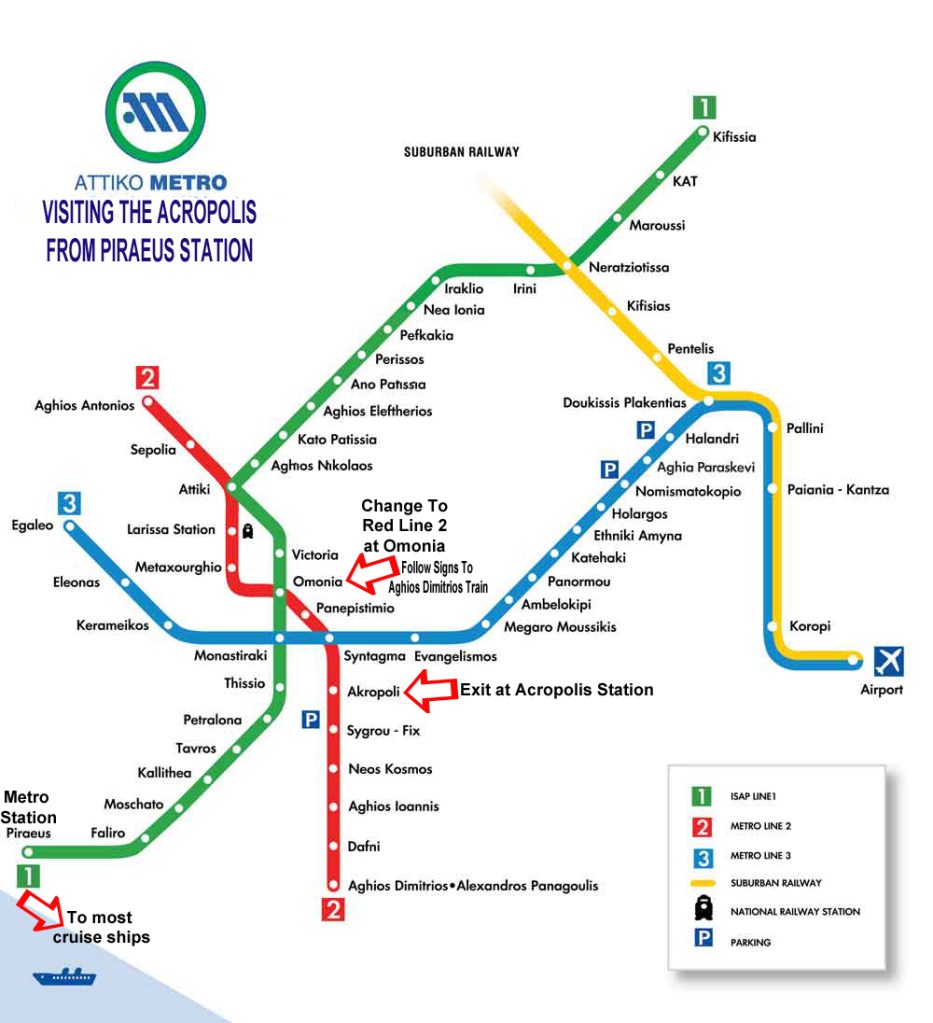
If you’re visiting Athens on a cruise or just staying in Piraeus (Athen’s port) don’t waste your money on an Acropolis tour. For only a few dollars you can take the Athens Metro to the Acropolis Station. It’s a trip of less than 40 minutes allowing you to explore on your own for hours and be back in time for dinner.

The View From The Filopappou Hill

Taking the Metro

An easy trip from the port of Piraeus into Athens for a visit to the Acropolis is inexpensive and takes about forty minutes each way. The main Piraeus Metro station is located at the back of the port itself and is a fifteen to twenty minute walk from where most cruise ships dock (some cruises may offer a shuttle bus). If you are walking from the pier there is a sky walk over traffic to the subway station location. The Metro (subway) system in Athens offers various kinds of electronic tickets but for a single day trip the best option for a trip into Athens and back is the 90-minute ticket at € 1.90 each way.

There are also:

A 24-hour ticket at € 4.50 that allows 24 hours to travel any number of times in and out of the various public transportation systems. It does not however include the airport as a destination)

A 3-day ticket at € 22 (Includes transport to the airport)

5-day tourist ticket at € 10 (It does not include the airport destination)

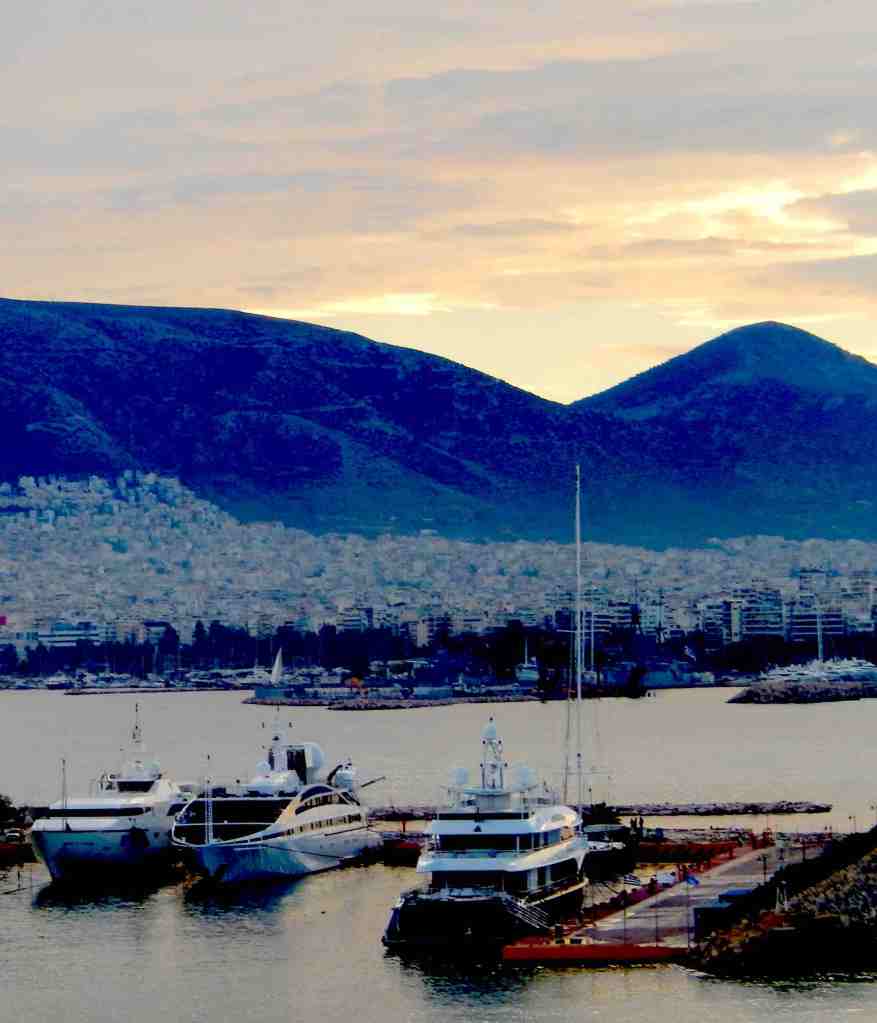
Piraeus Harbor

There are easy to use vending machines at all stations that accept credit cards and provide instruction in a number of languages. You can also purchase any number of tickets at one time and use them as needed. A discount of 25% is also available for seniors over 65, teenagers under 18 years old and university students under 25. Children under seven ride free. In order to get the discount you will need to purchase tickets from a ticket window.

To enter the metro system tap your ticket at the entry post. From that point the ticket is valid for 90 minutes (with the 90 minute ticket) in the system or until you leave by taping out to exit.

Getting on the train going in the right direction is easy. Each platform is named for the last station on the route. So in order to get the train back to Piraeus follow the arrows showing Piraeus which is the last station on the green line.

CLICK THIS MAP TO DOWNLOAD A PRINTABLE PDF COPY

Note – If you are flying in or out of Athens there’s an airport metro stop. The Athens airport subway offers reliable and fast transportation services from and to Athens airport. The Blue Line connects Athens International Airport to Syntagma Square in the center of the city, in only 40 minutes. A one-way Metro ticket from Athens airport to Syntagma Square costs € 10 for adult passengers and € 5 for children, students and elders. The price for a round trip ticket is € 18. Cruising out of the Port of Piraeus? Take the Blue Line to Monastiraki station, switch to the Green Metro Line to get to Piraeus. Furthermore, the subway Blue Line also serves many other areas of Athens. A 3-day tourist ticket includes a return ticket to Athens airport and costs € 22.

A Walking Tour Of The Acropolis Area

The Acropolis Museum

The Acropolis Museum

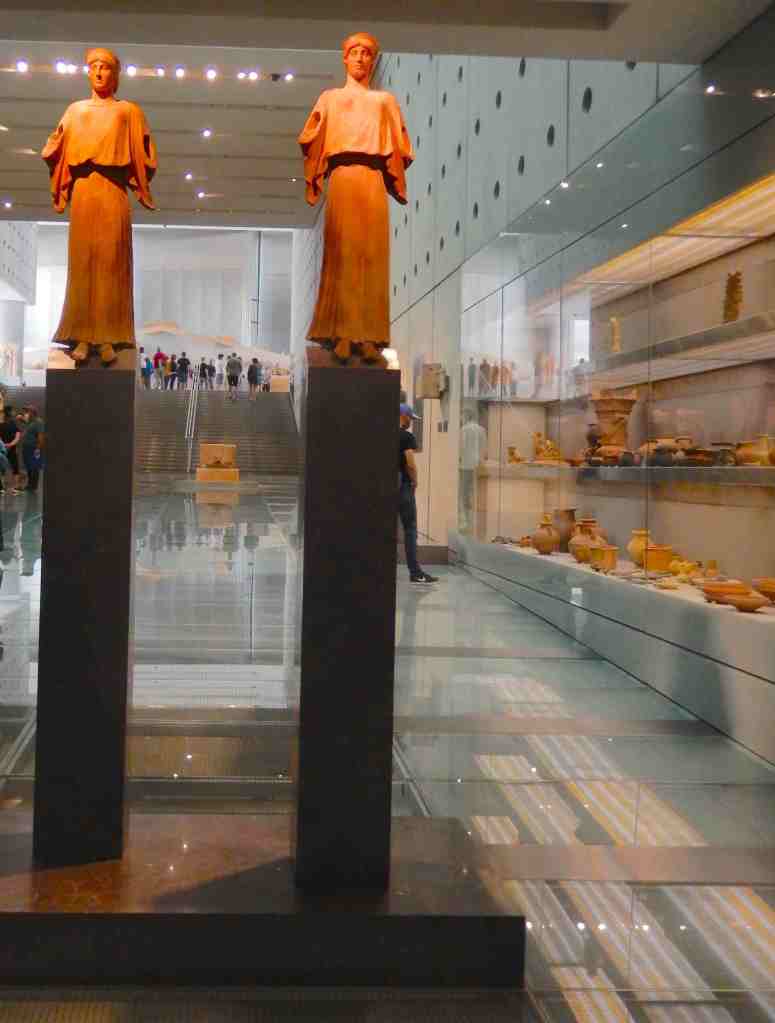
For a much more in-depth understanding of the history of Athen’s Acropolis a visit to the museum is strongly recommended (admission € 20). Inside are a number of artifacts from excavations along with many of the damaged statuary saved from the Parthenon itself.

The Agora and Roman Forum ruins of the Forum with remains of the agora built by the Romans from 19-11 B.C. include columns & an octagonal tower.

Roman Ruins walking around the base of the Acropolis are a number of archeological sites to explore that include Roman houses and the ancient cisterns.

Areopagus Hill (Λόφος Αρείου Πάγου) Historic site sitting high up on another hill it once served as the high court of appeal for judicial cases in ancient Greece.

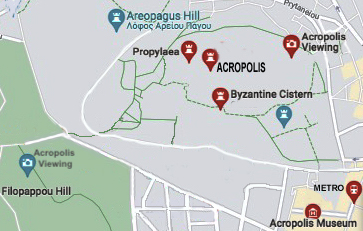
While the highlight of the trip is ascending the Acropolis itself there is much to see around the area. One recommendation is to walk through the Filopappou Hill Park. Admission is free and there are a number of archeological sites to explore. Walking to the top of the hill offers one of the best views of the Acropolis itself.


Planning A Cruise? Start By Checking Out The Intentional Travelers Port Guides

Looking for specific information?

Recent Posts From The Intentional Travelers You Might Find Interesting:

Thanks For Visiting

Discovering the Sounds of Morocco: Folk Instruments

  • A Tbel is a large drum played with sticks, often used in outdoor performances.
    Usage..
  • A Gimbri (Guembri) a three-stringed bass instrument often handmade from wood and animal skin.
  • Bendir, a frame drum with a skin head, typically played with the hands.
  • Riq a type of tambourine with a wooden frame and metal jingles.
  • Nay is a handmade end-blown flute made from a reed.
  • Loutar, a string instrument similar to a lute, often with a rounded body.
  • Castanets a percussion instruments made of two pieces of wood that are clicked together.

Planning A Cruise? Start By Checking Out The Intentional Travelers Port Guides

Looking for specific information?

Recent Posts From The Intentional Travelers You Might Find Interesting:

Thanks For Visiting

Haven’t joined us yet? It only takes a second and would really mean the world to us…