
This is somewhat travel related but it is more a commentary on the nature of things in general.
A few years ago at an outdoor art fair in Ft. Lauderdale there was an artist showing watercolors of scenes in the Caribbean. One caught my eye as it was an old house that I thought I recognized and I asked if it was on St. Croix. She said yes and that she had lived there for a while so I bought it. In January of this year we made a trip back to St. Croix and without any real intent I found myself across the street from what I thought was that same house.
I can’t be sure it is the house as much of the house has probably changed over time and the architecture is common in the Virgin Islands, but it didn’t stop me from thinking about these kind of properties and how the island has failed to protect much of its history.
 This house sits one street back from the sea on King Street in Frederiksted, St. Croix and is in an advanced state of disrepair. I have spent a lot of time in St. Croix over the past thirty-five years and can remember seeing this particular house a great number of times. I can never remember it being worthy of a spread in Architectural Digest but mostly it was one of the better properties on the street.
A major hurricane swept across St. Croix last September doing a significant amount of damage all across the island but the condition of this particular house appears more the result of time and neglect than that storm. The watercolor, which I believe was painted between ten to twenty years ago, shows it in much better condition than now.
 Looking at this house from a historical perspective I am sure that a few hundred years ago this was a large and elegant townhouse in a thriving Dutch colonial town. Virgin Island towns were wealthy places with sidewalks covered with brick colonnades to protect people from the tropical sun and the frequent passing showers. Construction was mostly of locally fired brick with stucco coatings and upper floors were built of heavy wood with tall windows to catch the ocean breezes. Roofs we usually of hip-roof design to prevent hurricane winds from finding something to push against and windows and doors were protected with substantial shutters. Most townhouses also contained inner courtyards or rear gardens for comfortable outdoor living in the shade of mahogany trees.
Today as back than, St. Croix has two principle towns. Christiansted on the Northeast side of the island and Frederiksted on the West-end. Christiansted sits within a protective reef and features a good sailboat anchorage. In addition to housing the government buildings it also has a thriving tourist economy. Frederiksted, which is blessed with a deep water pier and a very attractive beach along the waterfront has struggled for decades just to stay alive.
 On that January visit it was obvious that the island government had invested* in improving the pier, nearby support buildings, streets and waterfront parks. Unfortunately this seems to be just a facade on a crumbling town. Just one street back from the waterfront many buildings sit empty. There are few shops and restaurants, the streets are littered and there seems very little to engage cruise passengers when their ship docks here. If you look past the current decay you can catch glimpses of what this town once was and maybe imagine what it could become again but it is going to take a new plan and commitment by land owners and local residents to work a real change.
Consider cruise stops like Costa Maya, Sint Maarten, Roatan Island, and Willemsted. If other Caribbean locations can build cruise piers and entire visitor villages from scratch, why cannot St. Croix simply rehabilitate the town that is already there?
While cruise lines seem to be showing increased interest in St. Croix as a destination, we believe Frederikstead is now the biggest obstacle to developing this business for the island.
* I’m not sure I approve of thinking about government using the word investing when it relates to using tax dollars.
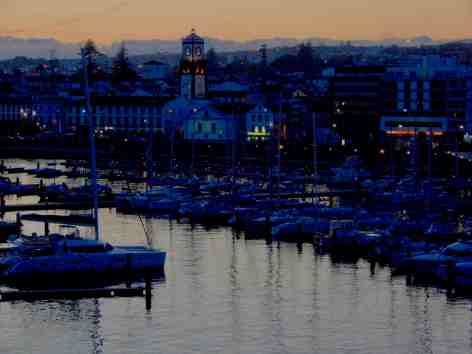 The first stop on the current itinerary finds us 850 miles due west of Portugal on a volcanic archipelago consisting of nine major populated islands. The islands are a possession of Portugal but are characterized officially as the Autonomous Region of the Azores (in
  Portuguese they are
  green twin lakes in a dormant caldera which have become a major tour destination.
 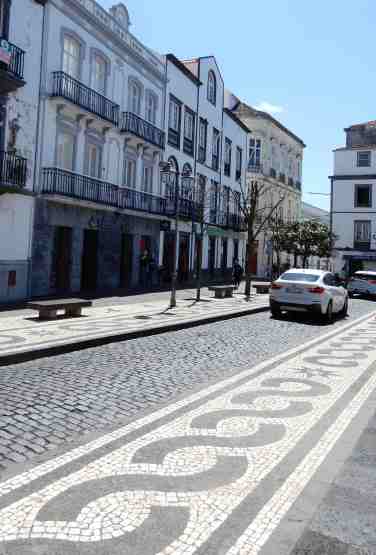 Ponta Delgada is the largest city in the archipelago and you have to admire a city where all the streets and sidewalks consist of mosaics of black and white rock pavers. Maybe this has a
 practical explanation but the artistry involved left us stunned. I’m not sure we have seen anything like these before. The pace of life here seems relaxed with numerous outdoor cafes and restaurants. As is expected, seafood is the cornerstone of the diet with a decidedly Mediterranean flavor.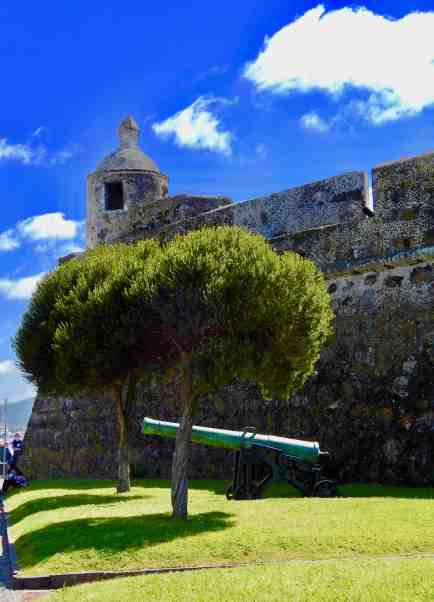


 Because of the location of the archipelago it is on the migration route for a number of whales and other sea mammals as well as a favorite wintering location. Blue whales, Sperm whales and Humpbacks are frequently sighted and w





 Credit Cards for International Travel
 credit cards there is no reason to not make them your primary resource for paying while you travel. Often it can save you money over making several currency exchanges. One important thing to understand is that the best card for your everyday needs at home may not be the best card for international travel. You need to shop wisely.
 The good news is that Visa and Mastercard are accepted almost everywhere, which makes either one a good choice for the American traveler. There are some additional considerations in choosing a credit card for international travel.
 A number of years ago we weren’t concerned about identity theft – just didn’t think it was a high-risk problem. Over the past five or six years we have been victims more than once and now believe the protection is well worth the expense. Each recent attack was caught by our ID theft service quickly but we also take some additional steps to protect us.
 We have used a couple of different services and our experience is they are very similar. We were however with Equifax and overseas when their data breach occurred and trying to deal with them was not a pleasant experience*.
 Your credit report contains information about your payment history that all creditors and lenders use to make credit decisions about issuing you credit. When you freeze your credit report, creditors and lenders can’t pull your credit report or credit score**. Since most banks require a credit check, an application for credit would likely be denied. You can freeze your credit report at all three major credit bureaus, but it must usually be done individually.
 Trimani Enoteca


 The Intentional Travelers