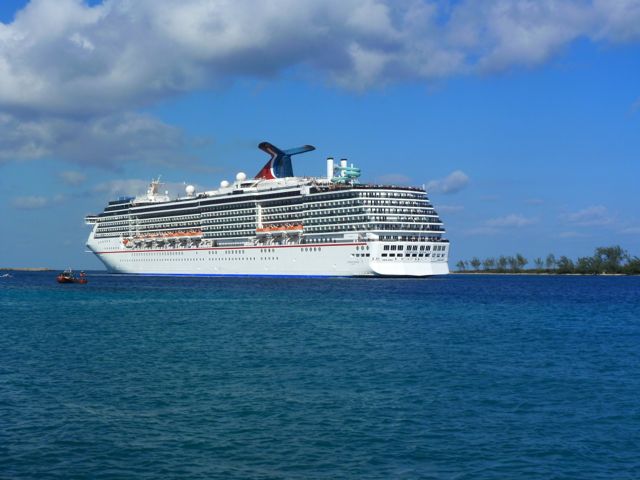
Port Of Call Rhodes Greece

The Island of Rhodes Greece – Crossroads of the Eastern Mediterranean

Rhodes (Greek: Ρόδος, romanized: Ródos [ˈroðos]) is the largest of the Dodecanese islands of Greece and is also the island group’s capital.

The island was the site of the Colossus of Rhodes, a statue of the Greek sun-god Helios, erected by Chares of Lindos in 280 BC. It was listed as one of the Seven Wonders of the Ancient World, constructed to celebrate Rhodes’ victory over the ruler of Cyprus, Antigonus I Monophthalmus. According to most descriptions, the Colossus stood approximately 108 feet high, about the height of the modern Statue of Liberty. It collapsed and was destroyed during the earthquake of 226 BC.

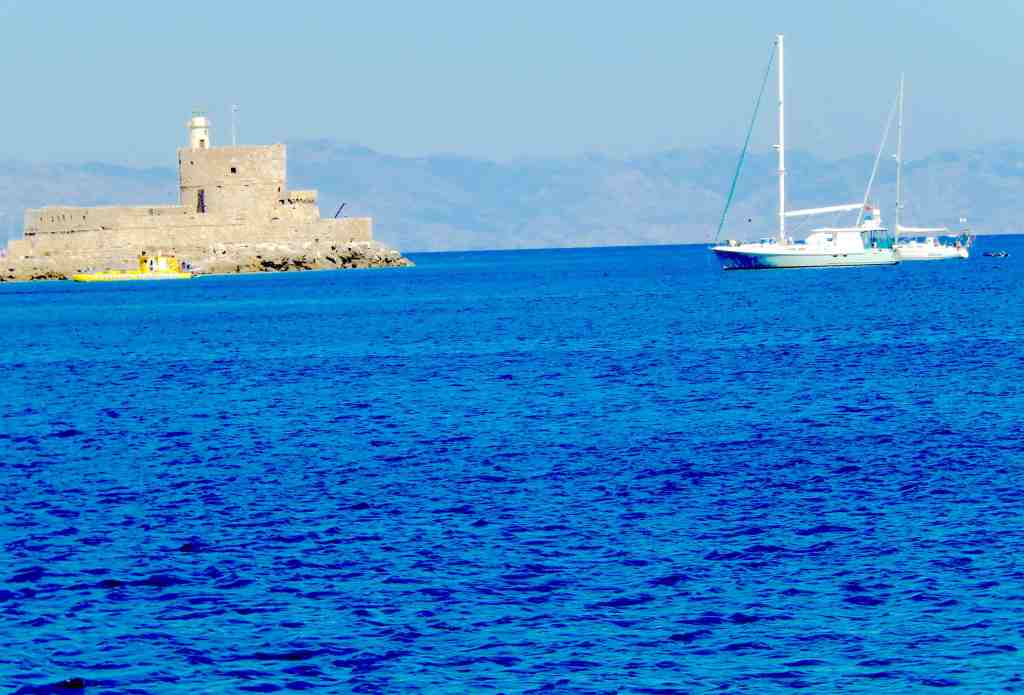
When the knights of Saint-John arrived on the island in 1309, they built an impressive citadel city. The two and a half mile long fortified walls, with a number of strongholds and towers remain extremely well-preserved even today.

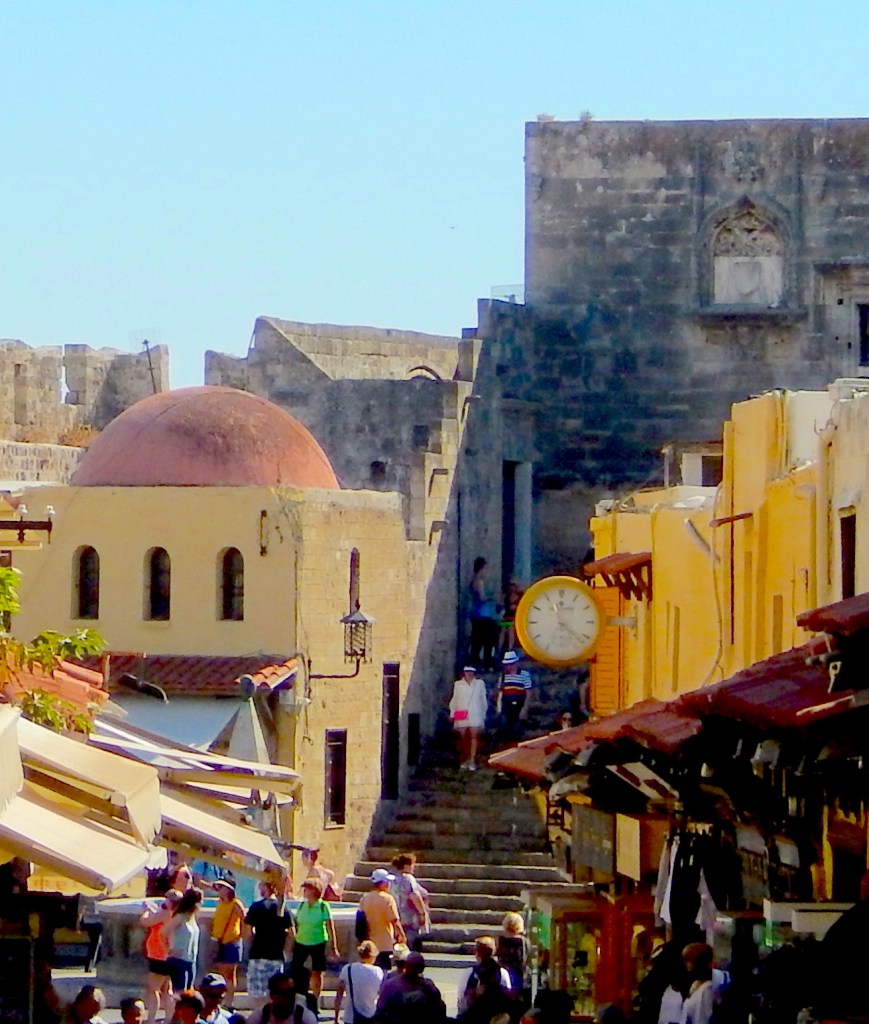
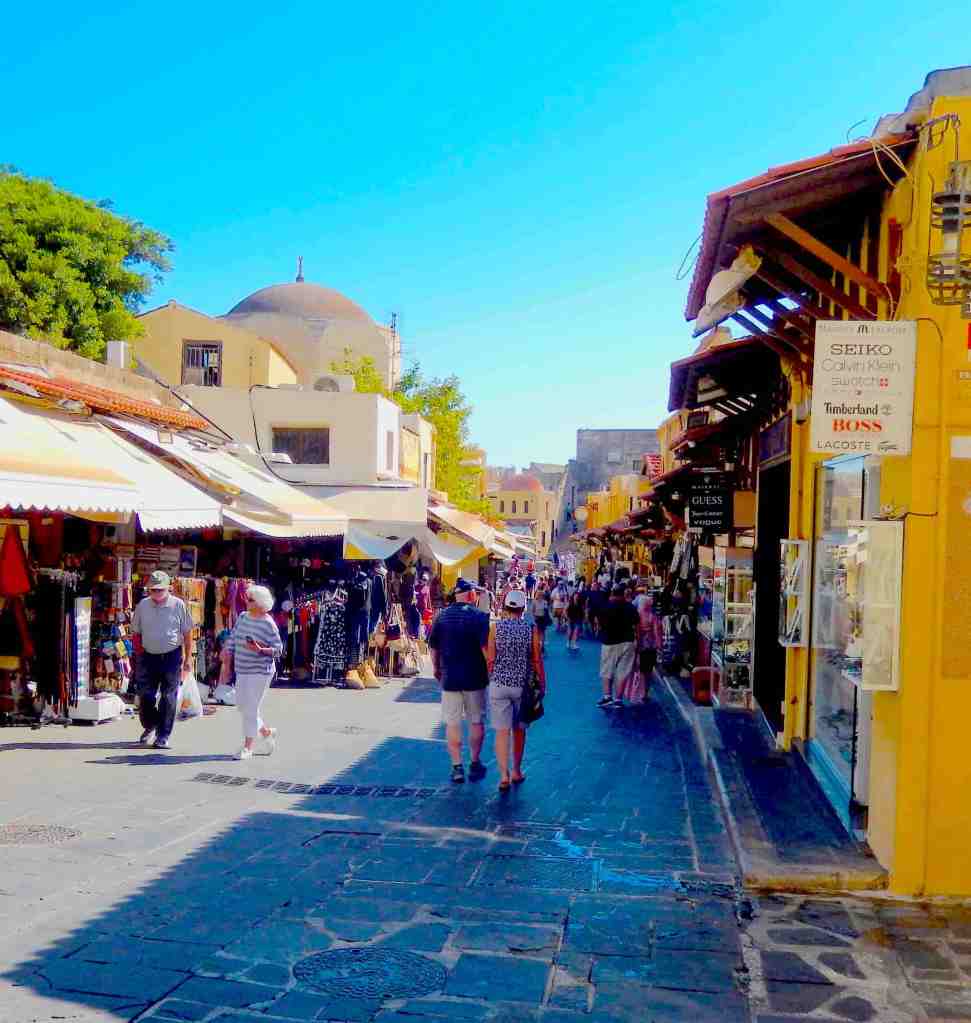
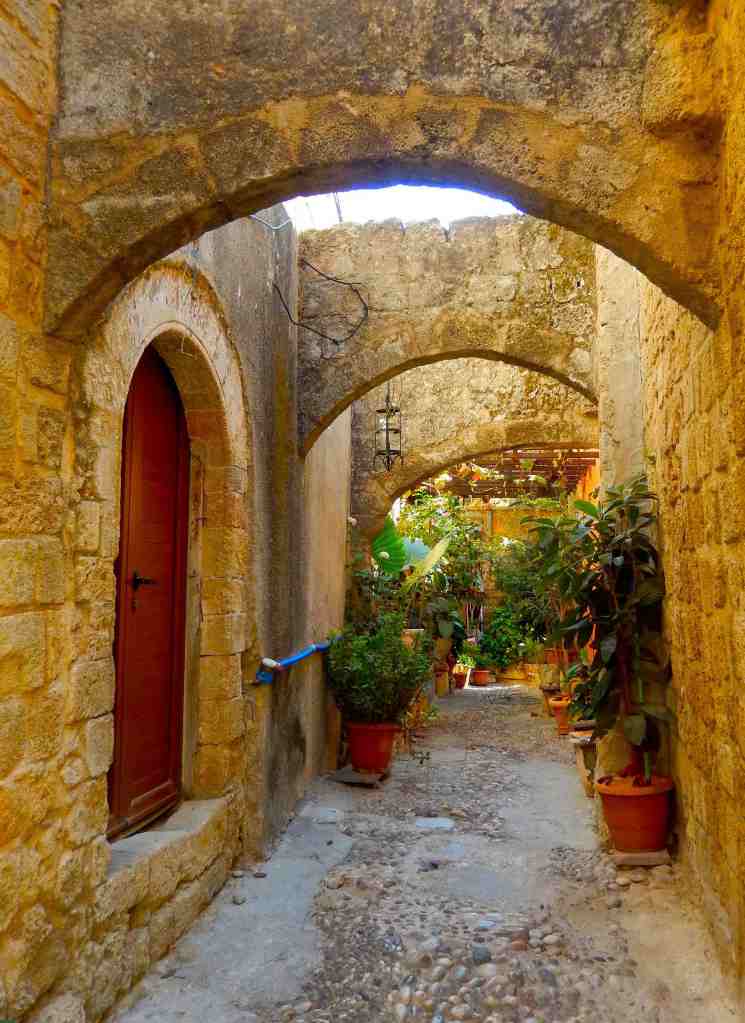
There are only walking streets inside the walls of the old city with an occasional motor bike or scooter permitted. Wander through paved medieval streets and alleys while visiting historical monuments. The winding streets are lined with many taverns, restaurants, galleries and shops.

Where Your Ship Docks

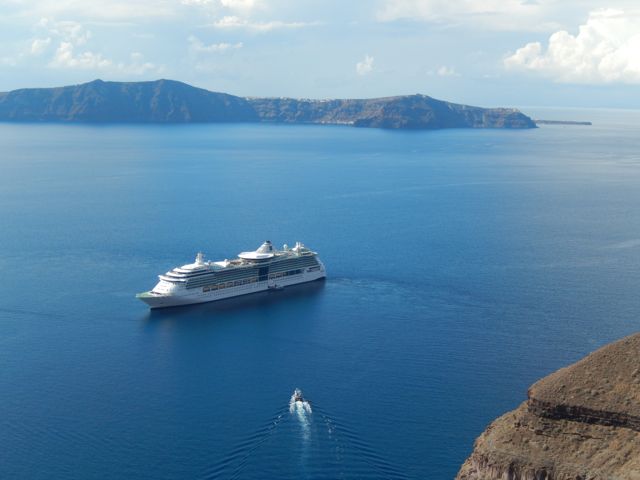
The island of Rhodes is about forty miles in length and cruise ships dock at the far north end only a short walk from the Medieval City of Rhodes. The medieval city is far and away the island’s major attraction and became a UNESCO World Heritage site as the largest and best preserved medieval fortified city in Europe! The pier is situated to be convenient to the medieval city with a nice seaside walkway public facilities just inside

Transportation

For a day visit to the Medieval City o­f Rhodes a leisurely walk is all that’s needed. If you would like to get out and see the island there are a number of rental car agencies right at the pier and there are taxis available also but be sure and negotiate fare before starting out.

Currency

Rhodes is part of Greece and the local currency is the Euro. Generally US and Canadian Dollars are not taken but credit cards are widely used and there are numerous ATM’s available.

Attractions

The Palace of the Grand Master of the Knights of Rhodes: one of the first castles built by the knights. Inside, you will discover a museum dedicated to Rhodes’ History and the Grand Master’s apartment, with its magnificent mosaic floors.

The Street of the Knights: there, each of the languages had its own inn (also called “auberge” or “palatial residence”). You will discover the Inn of the Tongue of France, or the Inn of the Tongue of England for example.

The Archaeological Museum of Rhodes is located in the medieval Hospital of the Knights. There, you will find many ancient objects found in Rhodes and the other Dodecanese Islands.

The Roloi Clock Tower, features beautiful views of the Old City from the top.

The Byzantine Art Museum displays many frescoes and icons from the Byzantine period.

Church of Agia Triada (Holy Trinity) Erected sometime between the late 15th and early 16th century this church is situated on Leonidou Rodiou square. Some of the original frescoes that once decorated its interior have been preserved

Agia Aikaterini, originally St. Catherine’s Cathedral it was built in the 14th century, and converted to a Moslem mosque when the Ottomans captured Rhodes in1522. It’s said to be the first Christian church to be converted to a mosque. Süleyman the Magnificent prayed at this mosque after he conquered Rhodes.

The Suleyman Mosque, built during the Turkish occupation of Rhodes.

In the modern city of Rhodes, you will find vestiges of the Rhodes’ Acropolis, located about a mile from the medieval city, on Monte Smith. There, you can see the remains of the Stadium, the Theatre and the Pythian Temple of Apollo. This archaeological site is small, but admission is free.


Welcome

Going on just a day trip or planning a major world tour, welcome to The Intentional Traveler. Our site is dedicated to all those who wander. So sit back and spend a moment or two exploring our twenty years of travels in The Intentional Traveler.

Our site is organized into major sections;

  • The Intentional Traveler – Featuring information on destinations, sights and travel tips with a few reviews and stories from the road.
  • Cruise Life – Information on cruise ships, itineraries, ports of call and a few money saving tips. Some good advice for novice and experienced cruisers.
  • A Bit Of History & A Story Or Two – At times we’ll share a bit of the history we’ve learned as we explore a place and sometimes we’ll offer up a story or two from the road.
  • Photography – Off and on in my life I’ve been a photographer and here I share ideas on improving picture taking.
  • Tips, Collected Information & Maps – From baggage fees to tip getting through customs our maps that help explore a place or use a metro.

Join The Intentional Traveler

While we know that subscribing to yet another email list is probably the last thing you want to do, we promise we’ll do everything we can to make this one worth your time. No spam or selling your address and if we don’t live up to your expectations, just cancel at any time.

Get notices of new posts and special features right in your inbox. Every email includes a convenient unsubscribe button just in case we didn’t live up to your expectations.

A

While we know that subscribing

Explore The Intentional Traveler

Over twenty years and eighty countries we’ve visited. some incredible National Parks, iconic cities, monuments and a world of wonders. Looking for travel inspiration? We’ve got a few suggestions.

Explore The Cruise Life

Dreaming of a cruise? Browse our Cruise Life section featuring itineraries, cruise ship information, ports of call, things not to miss and advice on selecting staterooms, tours, saving money and much more. Welcome aboard!

More For Those Who Wander

From photography to travel gadgets, staying safe on the road and ideas on saving money, there’s a lot to more to The Intentional Traveler.

Tours, itineraries, ideas and a story or two from the Road

From exotic places to tropical resorts, the list is virtually endless and we’ve got some advice you might find worthwhile.

Magic Kingdom entrance

Where Do You Want To Go?

Remember, every journey begins with that single step. What are you waiting for?

William & Megan James

Get Inspired

The world is yours to explore

Rome’s Enotecas / Wine Bars

After a long day walking thru the sights of Rome with maybe a late lunch on the Via Veneto what would be better than finding a wine bar for happy hour – just the perfect finish to a great Roman day.

Italian wine bars are called Enoteche, an Italian word derived from a Greek word which literally means “wine repository”. The word is used to describe a particular type of local or regional wine shop that originated in Italy long ago and recently has spread to some other European countries.

A genuine enoteca is intended to give locals, visitors and even tourists the opportunity to taste wines at a reasonable price before buying the bottle. Regionally an enoteca is often run in collaboration with local wineries and tourism organizations in an area. They were created as a source of information on local wines rather than as regular retail outlet.

There are a number of these wine bars in Rome with many serving snacks and light dishes. If you are not looking for a full meal these are good choices. Four highly rated enotecas in Rome neighborhoods are:

Trimani Enoteca

One especially good choice would be the highly rated Trimani Enoteca which genuinely deserves the praise it gets. Trimani has been a name in Rome for a very long time, with its founding family selling wine for over 175 years. It is one of the best known enotecas in Rome. It features wines from all over the world at remarkably fair prices.

The atmosphere is welcoming and comfortable and the staff knowledgeable and friendly. Plan on spending a while over some good glasses of wine, maybe a generous cheese plate and a small bite or two off the menu.

Trimani Enoteca
Trimani Enoteca

Trimani Enoteca is located at via Goito 20, Rome, Italy not far from the Termini.

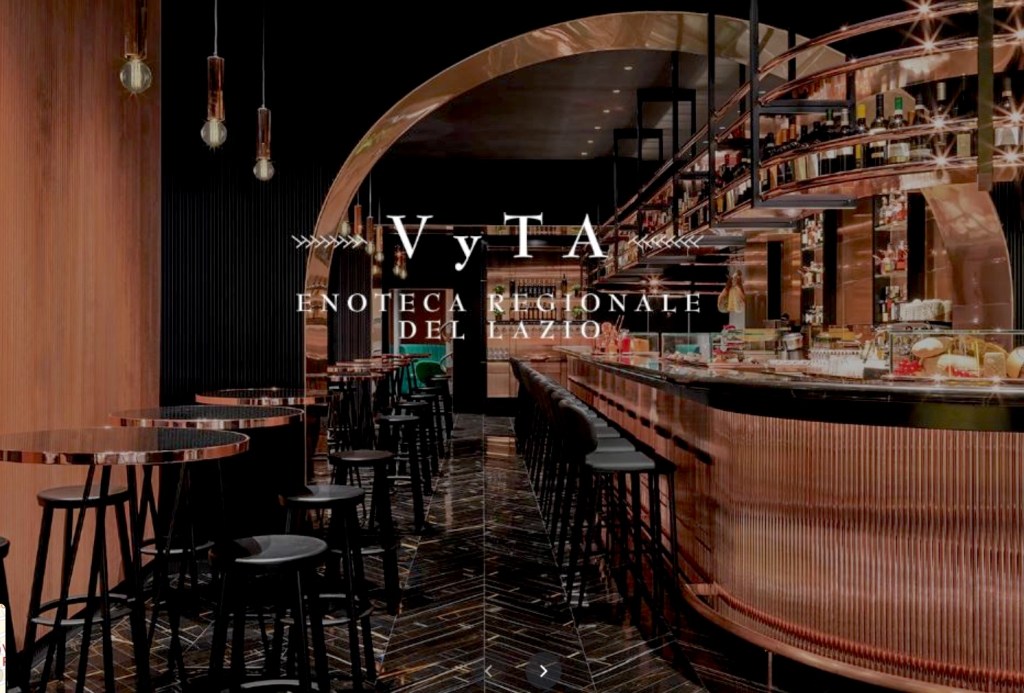
Enoteca Regionale Palatium

Located across the Tiber from the Vatican and south of Villa Borghese is Entoca Regionale Palatium. Highlighting regional quality is at the heart of this enoteca, located only steps from Piazza di Spagna. Because it’s a true regional enoteca it focuses on the wines and tastes of Lazio. All the best of local producers of both food and wine are showcased at Palatium, making it a must visit for every wine loving tourist spending time in Rome.

Enoteca Regionale Palatium via Frattina 94, Rome, Italy

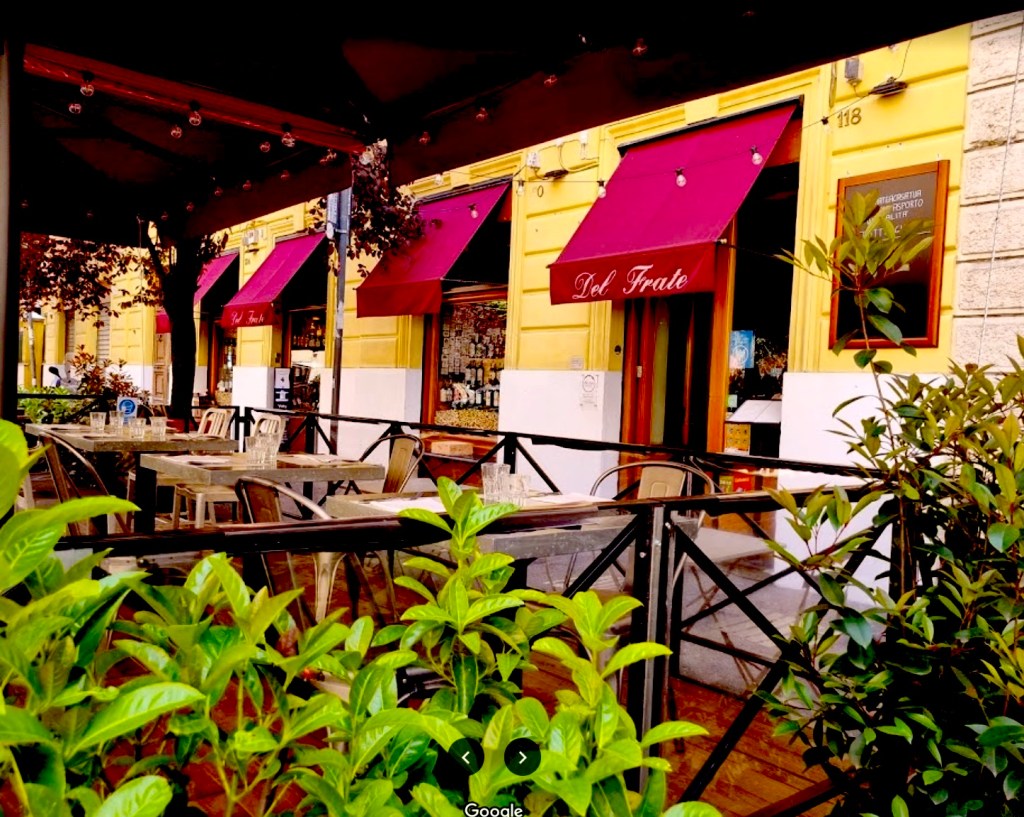
Enoteca del Frate

Located in one of Rome’s Prati neighborhoods north of the Vatican, Enoteca del Frate is an historical wine bar and enoteca which is a meeting point for local and foreign wine lovers. With continuous efforts to bring only the very best to Roman customers at discounted prices, and with offers ranging from wine to liquors, this enoteca, along with the nearby wine bar, will have something for every palate and every occasion. On the menu there are a series of appetizers to accompany the wine as well as other more elaborate dishes for those who are seeking a great meal.

Enoteca del Frate via degli Scipioni 118-122, Rome, Italy

Advice On Tipping • Contrary to Roman custom it is expected to leave a tip at wine bars in Rome. Not sure how this began but normally people in Rome are not in the habit of tipping and it usually is not customary. In recent years, in Rome, more and more service people are expecting foreigners to leave a tip. The custom has always been that you don’t need to tip in Italy as you’re probably already paying a supplement through the servizio (service charge) on your restaurant bill and/or a coperto (cover charge), and sometimes both. At this point I am not sure what Fodor is saying but I would appreciate any thoughts on this?

Bryce Canyon National Park

As summer approaches maybe it’s time to explore America’s incredible national parks again. A great place to start would be the national and state parks of Utah.

Bryce Canyon Amphitheater and the hoodoos

On any trip to the Parks of Utah one of the highlights has to be a visit to Bryce Canyon National Park. The park itself encompasses a flat, high plateau featuring incredible overlooks, miles of canyons with incredible geological features called hoodoos, a number of fantastic hiking trails, campsites and a historic lodge.

The man we owe for the creation Bryce Canyon National Park was U. S. Forest Service Supervisor J. W. Humphrey who was transferred to Panguitch, Utah in 1915. Upon visiting the eastern edge of the Paunsaugunt Plateau, at the point now known as Sunset Point he famously commented “You can perhaps imagine my surprise at the indescribable beauty that greeted us, and it was sundown before I could be dragged from the canyon view. You may be sure that I went back the next morning to see the canyon once more, and to plan in my mind how this attraction could be made accessible to the public.”

Rainbow Point

By 1919, tourists from Salt Lake City began visiting Bryce Canyon. The growing popularity caught the attention of some business leaders and Gilbert Underwood was hired by the Union Pacific Railroad to design a lodge near Sunset Point. The original main building was finished by May 1925. Additions were made and the final configuration completed by 1927. The standard and deluxe cabins near the lodge were constructed between 1925 and 1929.

The Lodge at Bryce Canyon is one of the park’s most iconic structures. The Lodge and its surrounding cabins are located a short walk from the park’s Bryce Amphitheater, and offer 114 rooms including lodge suites, motel rooms, and cabins. Reservations are a must. The dining room at Bryce Canyon Lodge is open for breakfast, lunch and dinner and there’s a nice gift shop in the Lodge.

The Lodge at Bryce Canyon

President Harding proclaimed Bryce Canyon a national monument on June 8, 1923 and on June 7, 1924, Congress passed a bill to establish Utah National Park, land was acquired and the name was restored to Bryce Canyon in 1928 when it officially became a national park.

One of the most spectacular features of the park is Bryce Canyon Amphitheater located just yards from the lodge. It comprises a section of canyon dropping from the plateau that’s covered in spires called hoodoos. These formations reveal a long geologic history of sedimentation and erosion in a colorful sequence of layers in the rocks. The area exposes the faulting, uplift and erosion and gives access to the discovery of fossils from plant and animal life in the region millions of years ago.

Traveling through the park you come to where the road ends near Rainbow Point. The views are spectacular and beautifully illustrate the geology where the terrain drops off from the parks high plateau.

Outside the Park

Trail into Bryce Canyon Amphitheater

If visiting Bryce Canyon during the Summer high season often there are serious restrictions to driving in. There is a park bus system with the main pickup stop just outside the park in Bryce Canyon City. The buses run a complete route throughout the National Park on a frequent schedule.

To find more lodging, dining, and recreation opportunities, Bryce Canyon City is only a short distance from the parks entrance. The small commercial areas focus is on visitors to the park and there is are gift shops and a couple of food options. A park shuttle stop is right in the middle of town.

For additional options in the area visit Garfield County Tourism’s website HERE.

International Cell Phone Service 2022

Keeping up with options for cellular international calling requires constant attention to services and available plan options. U.S. based cell service is usually a costly option when traveling outside of America and, from experience, we’ve found it is often not the most reliable option*. Before you leave on a trip, contact your carrier to find out what your options are and the potential costs, but you also need to apply a bit of skepticism to what they tell you.

One tip before you go. If you plan on using your current service, stop by a store and check to make sure you have the most current sim card installed. As cell service changes around the world often to remain widely compatible companies have to constantly upgrade their sims. Using your phone in the United States usually isn’t a problem but it can be overseas.

If you are going to be traveling internationally from the United States and are looking to make calls or use data there are five main categories of available service you need to be aware of and issues with each one:

1. The First is economy carriers which offer low monthly fees and often a number of data and messaging options. They include Straight Talk, Citizens, Cricket and others. These services generally provide no international roaming service.

2. Next are prepaid phone plans with many of these services being offered by major American carriers like Verizon along with additional economy carriers who also offer prepaid phones. Again most do not provide any international roaming.

3. The third option is to sign up for an international cellular company. Most of these are focused primarily on providing service for international roaming with little economy in the U.S. market. Using a GSM SIM card they are usually based in a foreign country and often provide their service on a foreign registered phone number. Common countries registering these services being England and Lithuania. Several offer the option of subscribing to an additional phone number based in your home country. These include Cellular Abroad also marketed as National Geographic, One Sim Card, Holiday Europe and more. A search for “international sim prepaid” will usually provide a dozen or more options.

4. The most convenient option is using one of the major U.S. based cellular companies that include, AT&T, T-Mobile, Sprint and Verizon. All of those companies provide international roaming options but you still need to know what each has as options and what potential issues there might be.

5. Pick up a cellular service when you reach your destination. Many foreign cellular companies offer short term service and all that’s necessary is to install their sim card in your phone. Many, like Vodafone maintain shops at international airports. They offer a Data SIM for Visitors in Europe designed for data services, with 10GB valid for 30 days from activation. Average cost in Europe is US$10 and it allows unlimited calls inside their regional networks.

Selecting An International Cellular Company

If your primary cell service is on of the discount companies or a prepaid phone and you’re going to travel internationally consider an international sim card service.

There are over a dozen services that operate out of different countries. All require you to set up an account and pre-load money to use the phone. Receiving calls can be expensive for people calling you as they are calling you on an international exchange. A few offer an extra cost U.S. based area code where you are charged the extra costs.

Pros

  • No long term contracts
  • Sign up and pay as you go
  • Access to 4G Data

Cons –

  • Can requires people to call you internationally
  • Limits on available carriers in each country
  • Some have multi-step calling requirements

Comparing two popular international calling services

One Sim Card Service – $30 Includes a $10 Call Credit

  • Data – $0.20/MB 4G
  • Direct Dial Calls – In FREE, Out 49¢
  • Text – In FREE, Out $0.25 each

World Travel SIM card – $50 Includes a $30 Call Credit

Data – $0.25/MB 4G
Direct Dial Calls – In FREE, Out 55¢
Text – In FREE, Out $0.25 each

Hybrid Calling Arrangements

There are a growing number of clever services that you can use if you need the ability to have long phone calls or use a lot of data.

Depending on where you are traveling and for how long, one option to consider using is a dual-SIM phone with and buying a local sim card. one of the American major cellular contracts and in addition install a prepaid service like One Sim Card which provides an app for VOIP when you have wifi service available.

Another option if you will frequently have good wifi or inexpensive data available is a VOIP phone service like MagicJack that also provides a VOIP app for your cell phone. This can provide unlimited international telephone calling service.

Getting Into The Details Of The Technology

Understanding CDMA, GSM and LTE

Thinking about phones and cellular services for your next international trip? You should have a passing knowledge of how the services evolved around the world in order to understand what choices are available.

GSM and CDMA are network technologies for cellphones. They were both developed in the nineties to take advantage of 2G network service. While most of the world selected GSM, the American FCC decided on a “dual-system” approach allowing either GSM or CDMA. Today the United States still uses that mix of different technologies while most of the rest of the world uses GSM. That’s why GSM is the preferred technology for international travel.

With the introduction of 3G, American carriers just improved the original GSM and CDMA technologies. Because of the reliance on CDMA by some American companies, the switch would have been complicated with massive expenditures.

Things improved with the introduction of 4G, a completely new cellular system for connectivity integrating LTE. Designed for data it worked better than previous technology and carriers began replacing everything else with the LTE system. LTE opened up VoIP (voice over internet) capability to replace traditional cellular voice calling. LTE has allowed many CDMA companies to operate with more cellphone equipment options and broaden their service. The remaining CDMA companies include Verizon, Sprint, US Cellular, Boost Mobile, C Spire, Ting and Virgin Mobile with AT&T and T-Mobile being the two major GSM carriers.

Early on, when the cellular networks rushed to make the switch, many phone manufacturers continued to use LTE only for data and continue to focus on GSM or CDMA for voice and texts. Today two major companies, Verizon and Sprint are now on LTE. Improving VoLTE (voice LTE) solved the voice over CDMA problem allowing phasing out 3G and greatly improving their customers use when traveling internationally.

Unfortunately, the four major carriers now provide LTE on different frequency bands and provide phones that are specific to their frequencies, making it difficult to switch. Around the world there are currently some 40 additional frequencies being used that need to be considered.

So now in selecting a service or even an unlocked phone you need to investigate compatibility with LTE networks. That’s because LTE is an umbrella term with many different frequencies. In the U.S., Sprint uses LTE (TD-LTE), a version of LTE with relatively low compatibility while T-Mobile, Verizon, and AT&T all have LTE bands of their own.

Fortunately many phone manufacturers are now making phones that support CDMA, GSM along with LTE on many bands. That’s why phones now list information on bands and frequencies. In the United States you will find carriers listing these bands and frequencies also:

Carrier 4G LTE Bands 4G LTE Frequencies

AT&T 2, 4, 12, 17 1900, 1700 abcdef, 700 bc

Verizon 2, 4, 13 1900, 1700 f, 700 c

T-Mobile 2, 4, 12 1900, 1700 def, 700 a

So if you are considering buying an unlocked phone pay attention to supported bands and frequencies. Also Switching GSM phones between different networks is easier than with CDMA phones, because all GSM phones use removable SIM cards.

Verizon and Sprint in the United States use a technology called CDMA (Code Division Multiple Access). Most other carriers and the world use what’s called GSM (Global System for Mobile Communication). There are phones on Verizon and Sprint that also support GSM, but those that don’t won’t work as world phones.

International Service Options From The U.S. Major Cellular Companies

Verizon

Your first option on Verizon is their TravelPass plan, which gives you the option to take your regular talk, text, and data with you on your trip (meaning, you use whatever amount of talk, text and data speeds you regularly use within the United States).

You will be charged $5 a day per line for days you use your service in Mexico and Canada and a rate of $10 per day for 130 additional countries. Most popular countries are included in this list, such as Argentina, Australia, Chile, France, the Netherlands, South Africa, the United Kingdom, and more.

Activating your TravelPass is required through Verizon Wireless and when you use your phone in an international location, your phone will automatically recognize where you are and will connect and your TravelPass kicks in for 24 hours. and it won’t renew or use another pass until 24 hours. Using your phone after that starts another 24 hour cycle.

T-Mobile

T-Mobile is a great option for international travel because their plans make things real simple.

The T-Mobile One plan for unlimited data lets you keep your unlimited data and texting when you travel to 210 locations and countries. However, they cap your data at 128 kbps throttled down to 2G or 3G speeds. They also charge for international phone calls, usually at 20¢ or 25¢ per minute. Often you can use a VOIP app to make calls on the data service.

T-Mobile also offers International Passes for faster data while you’re traveling abroad. Their 5 GB pass keeps you on a 4G network for 10 days also with unlimited calling at a cost of $35. They also have an option for 15 GB for 30 full days at $50.

AT&T

On both the Unlimited & More and the Unlimited & More Premium plans on AT&T, you will be able to travel to Mexico and Canada with all of your talk, data, and text already paid for. Their Mobile Share Plus plans allow you to use your talk, text, and data when you are in Mexico.

In 100+ other countries, AT&T offers an International Day Pass for $10 a day (based on 24 hours from start time), offering the unlimited talk, text, and data already in your regular plan.

There’s also the Passport plan that costs $60 for 30 days and offers 1 GB of data and unlimited texting. You can raise this to 3 GB of data for $120 for the month. At that point, you should never go any further if you value your budget, because they charge you $50 for every GB over the 3 GB limit. Phone calls are not included and you will be charged 35¢ per minute.

Sprint

You can add Sprint Global Roaming to your regular plan and it can remain on your account for free for as long as you want to keep this add-on. By enabling this feature, you can travel to 185 locations with coverage for text and data included. This is only on 2G speeds, though and it also doesn’t include voice calling which are charged at 20¢ a minute.

For faster speeds with the Global Roaming add-on, you can pay for a High-Speed Data Roaming Pass for 24 hours or a full week. The price will vary based on where you are traveling. In Canada and Mexico, a day pass will be $2 or a weekly pass will cost $10. Most other destinations will cost you $5 a day or $25 for a week.

You can also look at specific plans available in other countries like Sim2Roam in Australia a prepaid SIM Card with 28 Days Unlimited Calls, texts and 25GB of Data.

*Twice when traveling internationally we’ve run into serious issues using our providers international plans. Once while we were with Verizon we didn’t discover that the service wasn’t working at all until we got to England. On returning home Verizon refunded our money and blamed the problem on a sim that should have been upgraded. The second was with T-Mobile where our phone worked in Greece but not in Spain. They also blamed the problem on changes in Europe that needed us to get a newer sim card.
Cruising And Cellular Telephone Service

While on a cruise most people would like to be able to stay in touch with family and friends back home by telephone or texting. But before you take that cruise it is really important to check with you cellular phone service concerning cruise ship roaming costs. Being forewarned can save you a small fortune.

Using the ships in cabin telephones as a calling service isn’t any better with a $5.99 per minute charge being typical. Those charges are placed directly on you cruise account. In cases where there is a family or personnel emergency where you need to call the recommendation is to go discuss the situation with the ships Guest Services. In most cases they can provide calls free of charge.

While cellular telephone calls while on ship can be expensive there are a few communication work-arounds and alternatives.

  • Subscribe To A Cruise Package With Your Carrier
  • Use Wifi Calling For Voice Connecting
  • Set A Schedule Where You Place Calls While In Port
  • Consider Texting As Your Primary Communication

Cruise Cellular Packages

Generally cell phones while on a cruise can be very expensive. The major U.S. cell services range in cost between $1.79 to $5.99 a minute for regular telephone service.

In order to provide continuous cell service most cruise lines contract with a marine cellular service that operate for ships at sea. The dominate provider in marine cell service is Cellular At Sea. While cruising on this service charges are passed from Cellular At Sea through to your cell service to appear on your monthly bill. Because it is based on future billing for current service most prepaid cell phones simply won’t work onboard a ship.


CURRENT RATES FOR THE THREE MAJOR U.S. CARRIERS

Based on research in April 2022


T-MOBILE CRUISE TALK & TEXT


T-Mobile ONE and Simple Choice Plan Customers get these rates automatically.

  • Talk: $5.99/min
  • Text: Sending $0.50/txt, Receiving free
  • Data:No data

AT&T CRUISE TALK, TEXT & DATA

One-time charge for 30 days $100

  • Talk: unlimited
  • Text: unlimited
  • Data: 200MB overage $2.00/MB.

CRUISE TALK & TEXT

One-time charge for 30 days $50

  • Talk: 50 minutes, overage $2.00/min.
  • Text: unlimited

VERIZON TALK, TEXT & DATA

You can talk, message, and use data on more than 400 cruise ships. 

Cruise ship Pay as You Go pricing.

  • Voice Pricing. $1.79/min.
  • Text Messaging. $0.50/message sent $0.05/message received.
  • Pay as You Go Data. $0.002/KB or $2.05/MB.

Using Wifi For Calling

There are a number of apps and services that use VOIP (voice over internet protocol) that can provide for calls using the ships wifi. Most cruise ships offer Wi-Fi for a fee or as part of a cruise package. Cruise lines can charge a per-minute or a per-megabyte rate while onboard to access the web on your smartphone, tablet or laptop. The biggest issue in this approach is the wifi speed being able to support clear VOIP.

Some cruise lines will offer unlimited internet packages. These can be as low as $5 to $10 per day for casual internet surfing and email speed to $20 or more per day for “premium” packages with fast connectivity.

In many cases you will need to work out combinations of apps with your family to use wifi. Good choices include Skype, Messenger, Google Duo and WhatsApp. Another approach is a VOIP telephone service like MagicJack where you actually place calls to telephone numbers.


Place Calls When In Port

If you wait until you are in a port to place calls the service switches to the regional carriers in that ports country where costs are based on your cell services roaming charges. International roaming charges vary depending on your selected service so you’ll want to check with your carrier for those rates. If you’ve got T-Mobile, check to see if the country visited is included in the Simple Choice plan. If it is, making phone calls will only be $0.25/minute and data is free (VOIP is the option here as well). Calls from Mexico and Canada using T-Mobile’s Simple Choice plan are free. Verizon’s TravelPass and AT&T’s International Day Pass charge $5 to $10 per day for travelers to text, call and use data based on the plan they have at home but you must sign up for the international service. Without subscribing, international pay-per-use data rates for both carriers costs over $2.00/MB.

Relying On Text Messages

Receiving and sending text messages usually are pretty inexpensive while at sea. Typically incoming texts are free and outbound costs are 25¢ to 50¢ per text depending on your provider. Be cautious of MMS and ask your carrier for rates as MMS texting actually involves data charges.

Years ago most major carriers all had reasonably priced cruise ship plans through Cellular At Sea. Several years ago AT&T acquired Cellular At Sea and changed the rate structure making their network the only inexpensive user. That’s why only AT&T currently has cruise rate packages at reasonable prices.

A final caution about using cell phones on ship. When you’re in port, your cell signal will switch to a carrier in that country where your services international roaming rates apply. You need to be very aware that the service switches as you enter and leave port. If you are on a call as the ship sails out and it switches to the marine service – so will the rates in mid call.