
Considering A Mediterranean Cruise

Summer is cruising season in the Mediterranean and the major cruise lines are well established in the market and offer a wide  variety of itineraries. There are a number of similarities in most itineraries with the two main embarkation ports being Barcelona and the port for Rome, Civitavecchia. Venice, Italy is another popular embarkation port with some cruises to the eastern Mediterranean sailing out of Piraeus, the seaport of Athens, Greece. Itineraries vary in length with cruises of around seven days usually including four or five ports of call, those of nine to eleven days make six to eight stops and fourteen day itineraries calling on up to ten ports.

Cruises from Barcelona often stop at a series of ports east along the coast that usually include Villefranche-sur-Mer on the French Riviera, located near to Nice and Monte Carlo. Favorite Italian ports visited include Rome/Civitavecchia, Naples and Venice, with Venice often being an overnight visit. Additional popular ports include Livorno, for its proximity to Pisa and Florence, along with Genoa on the west coast and Ravenna on the east coast.

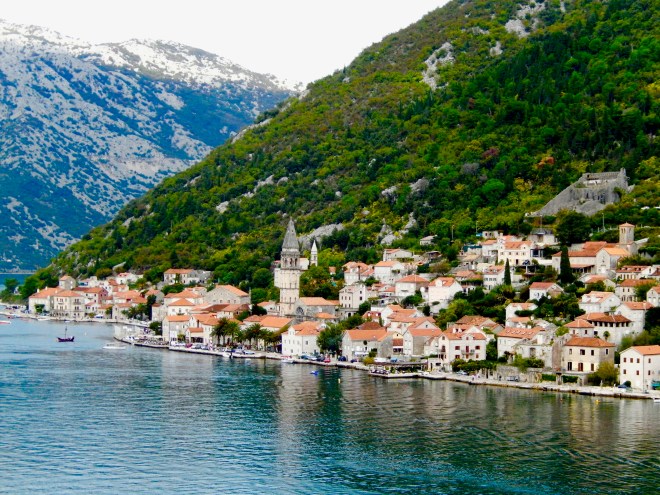
Most cruises out of Rome/Civitavecchia go south and cruise around the Italian boot passing through the Straights of Messina. Popular destinations on shorter cruises (6 to 8 days) include Naples, Venice, Dobrovnik, Kotor in Montinegro, the Greek island of Corfu and Malta. Longer cruises can add Messina, the Greek islands of Mykonos and Santorini, Ephesus, Turkey and Athens.

There are also Rome itineraries that sail west and often include Livorno, Villefranche, Provence France, with stops in the Spanish ports of Barcelona, Cartagena, Malaga and Palma de Mallorca and at times a visit to Gibraltar.
With the popularity of cruising growing there are more and more returning passengers. The cruise companies are always looking to add new ports as an enticement to get them to cruise again. For that reason there are always differences and surprises in searching itineraries so look for one that hits your “must see” destinations or new stops.

There are some important things you need to consider when planning how you are going to get the most out of your cruise port visits. For most ports of call visits have a serious time limit and if you go off on your own you cannot be late returning to your ship. The ship just won’t normally wait for you. If you take a cruise sponsored tour the ship is obligated to get you and your fellow passengers back on board before sailing. That doesn’t mean that you are locked into taking only sponsored tours but you need to plan and allocate extra time to get back to the ship.

When making your plans there are a few ports that many people put high up on their list to visit when they decide to cruise the Mediterranean. Here we offer a few highlights along with ideas on getting the most from those all-to-brief stops.

Livorno with trips to Pisa and Florence – You can easily take a train from Livorno Centrale to Florence Santa Maria Novella for €6 and €14 per person one way. You do have to get from the pier to the train station but most cruises offer a shuttle service at a reasonable price into town center. In Livorno you can also buy a combination round-trip ticket that includes the train tickets and a bus to the train station that can be purchased at many convenience shops. The trip takes about one and a half hours and trains run about every half hour. In Florence from Santa Maria Novella you can walk into the historic district in only a few blocks. You can get to Pisa in much the same way but the train trip is only twenty minutes with a moderate walk to the Cathedral and old city walls.

Civitavecchia / Rome – This is a city that everyone should make an effort to visit. From the buildings of the ancient Roman Empire to the Vatican there are days worth of sightseeing to be experienced. There is good information on seeing Rome in one day HERE.
You can find a good article on getting into Rome HERE. In Civitavecchia the train station is a moderate walk along the waterfront from the port and a train to S. Pietro station (Vatican City) takes about 40 minutes. Fares start at €5 per person one way on the commuter trains and up to €20 round trip using regional trains. There is a manned ticket booth at the Civitavecchia station along with automated vending machines. A round-trip bus booked through the ship will cost over €80 and take about two hours depending on traffic.

Barcelona -Barcelona is one of the two largest cruise ports in the Mediterranean and is used as an embarkation port as well as a popular port of call. The city is a modern and historic place with a number of iconic neighborhoods and attractions. If you are cruising out of Barcelona do not miss the opportunity to spend a couple of extra days visiting this vibrant city.
There are 3 cruise terminals at the World Trade Centre pier called North, South and East terminals and are much closer to the Columbus Monument on the waterfront at La Rambla.
The third terminal is Sant Bertrand, and it to is near the World Trade Center (refer to our cruise terminal map). Sant Bertrand is usually used for ferries to the Balearic Islands.

Transportation – The T3 PORTBUS (the “Blue Bus”) runs a circuit from all cruise port terminals to the monument of Christopher Columbus. The tickets for the T3 need to be purchased with cash on the bus itself. Single ticket: €3.00, with Return ticket: €4.00. Many of the cruise ships also provide a shuttle bus to their passengers for free or a small charge (usually about $5 to $8). Getting to the Gothic Quarter by
taxi from the port is normally less than 10 minutes with a fare of about €20.00. A Taxi to Barcelona airport from the cruise port should take about 25 minutes with a fare: of €30.00 – €35.00.

Barcelona is a city steeped in culture and history and many think it is the city itself that is the main attraction. From great food to an exciting night life, from the old Gothic quarter to the modern shopping districts this is truly a remarkable city. The Gothic Cathedral in the heart of the Gothic quarter is a must-see as is a walk up Las Ramblas. Make sure to save time to explore the winding side streets with their shops and restaurants. There are also a number of great museums in the city. The MACBA (museum of modern art) and the CCCB next door are worth an hour or two. The Picasso and the permanent Dalí exhibition in the Gothic Quarter are always worth a visit. The Caixa Forum is a museum which has different art exhibitions every month. It is just off Plaça Espanya, on Avenida Marques.
Venice – Cruise ships dock at the cities cruise port and most ships offer water shuttles into the area near Piazza San Marco. That’s a good option but you can also walk out of the port. With a good map or phone app you can navigate through the city and reach the Piazza in only about a mile and a half through a number of interesting neighborhoods.

Naples – This city is near to the ruins of the Roman city Pompeii and well worth the time , but Naples is also not far from the Amalfi coast. There are frequent Trains from Naples to the Amalfi Coast. To get from Naples to Salerno, you can take one of Trenitalia’s Alta Velocità (AV) trains from Napoli Centrale station. The trip is about 30 miles and there are also InterCity and Regionale trains serving this route, with over three dozen trains a day costing €5 each way. From the Positino station it is a good idea to know where you want to visit and take a taxi but this is still an easy day trip.

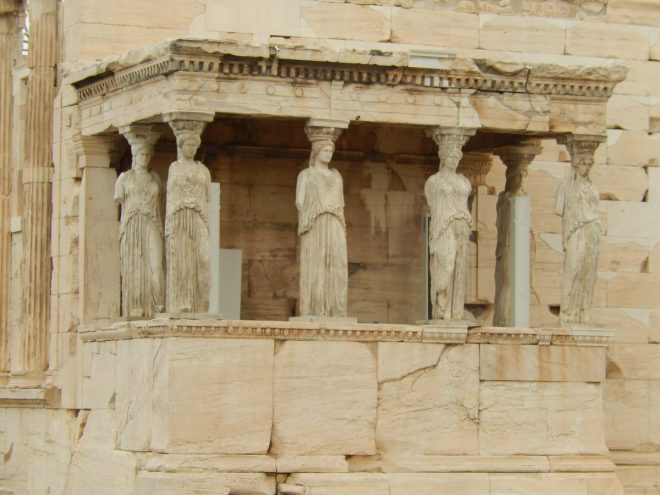
Piraeus and Athens – You can find a good piece on Piraeus HERE. The main attraction is the Acropolis in Athens and it’s well worth a day if this is your first visit. If you wold like to save a good amount over the cruise tours you can use the metro to travel from Piraeus to central Athens. A trip to Athens using the metro costs less than €1. Also a free shuttle bus usually operates in the port taking passengers from the ships to the metro station. Visiting the Acropolis has a general admission €10 and hours vary by season and day of the week. You should also expect a good uphill climb to reach the top but the is an elevator fro people with disabilities.

Villefranche-sur-Mer – You can find a good piece on Villefranche HERE. Less than a half mile around the waterfront is the train station where you can catch frequent trains to Monte Carlo, Nice or Cannes. They run about every twenty minutes and a trip to Monte Carlo takes only fifteen minutes and costs usually under €7.00. So before you sign up for that expensive tour consider some exploring on your own.
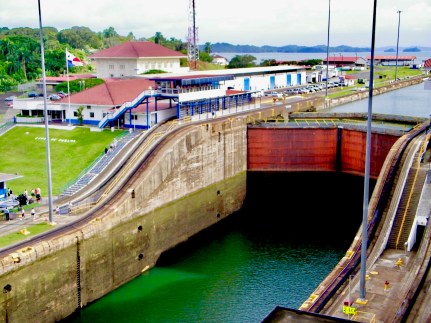
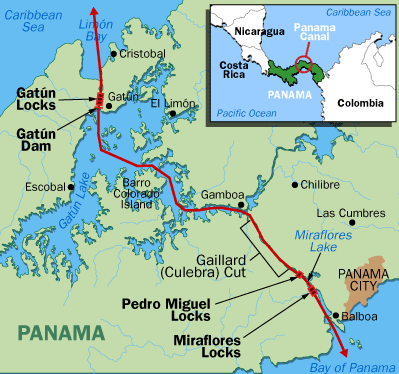
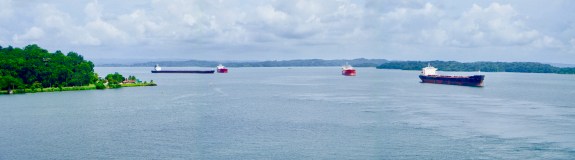
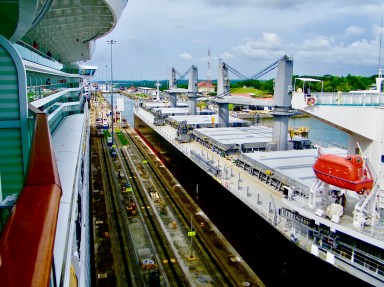


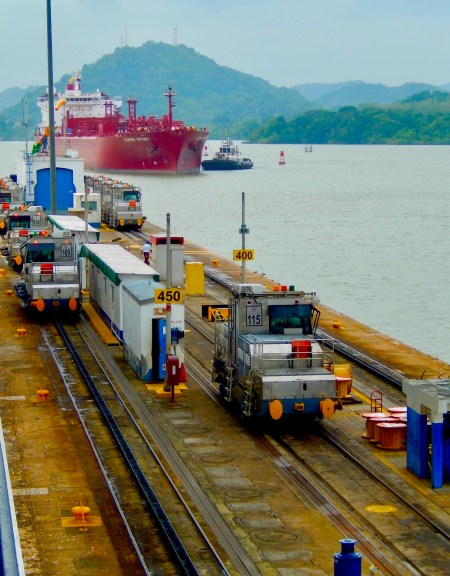
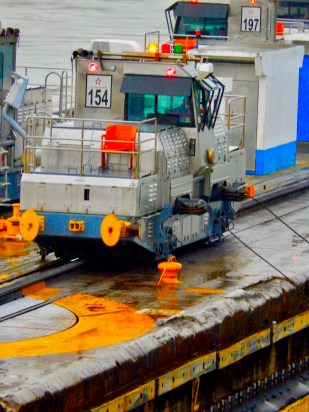
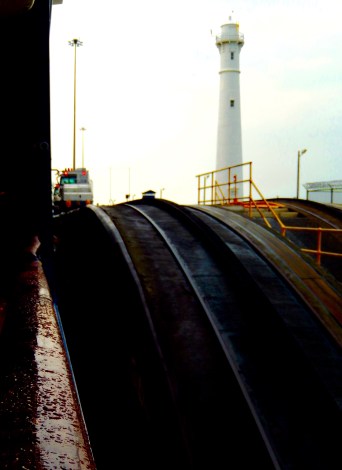 wares for sale with usually Kuna Indians from the San Blas Islands among the merchants. Many of the cruise ships require a quick paint touch-up at the exit dock to cover up numerous rubs and scrapes from the passage through the locks
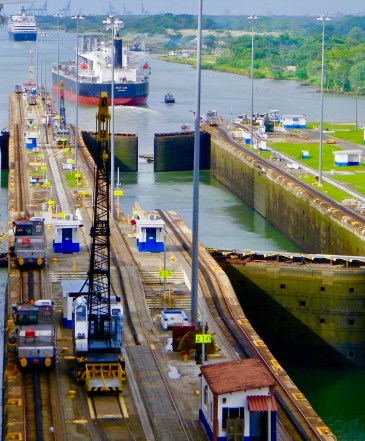 On September 7, 1977, President Jimmy Carter signed the Panama Canal Treaty and Neutrality Treaty promising to give control of the canal to the Panamanians in the year 2000. After Panama took control the Panama Canal Company started an expansion project. The expansion project started construction in 2007 and opened for commercial operation on 26 June 2016. The new locks allow transit of larger Post-Panamax and New Panamax ships, which have a greater cargo capacity than the original locks could accommodate. New Panamax ships will have a dimension of 1,200 ft (366 m) in length, 160.7 ft (49 m) in width and 49.9 ft (15.2 m) in depth. Unfortunately many of the cruise industries new mega-ships still cannot cruise the canal mainly because they are too tall to cruise under the bridge at the Pacific end of the canal.
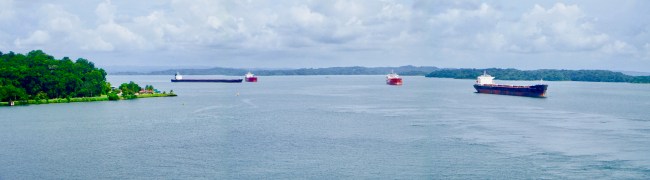 All-in-all this is a fascinating journey and one of the three or four best itineraries we’ve taken. The ports-of-call are an opportunity to visit a number of Central American countries and see some of this interesting region.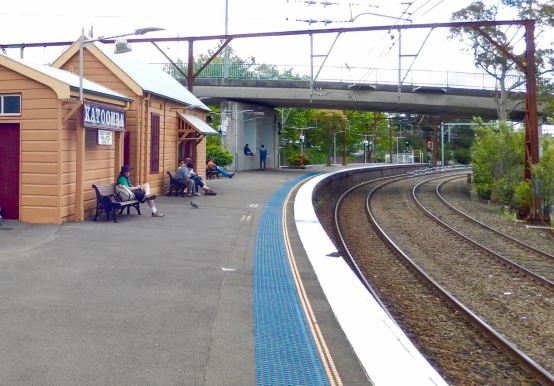
 hotel near Sydney’s Chinatown (the

 The town of Katoomba is the center of the Blue Mountains with a number of attractions nearby. Once in the Blue Mountains we booked the
 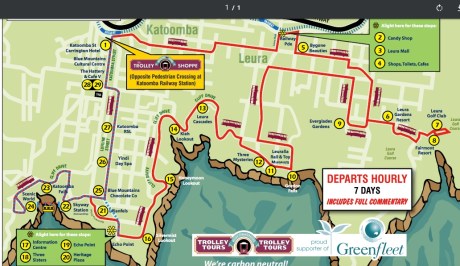 There are 29 stops which include Katoomba Falls, Echo Point, Three Sisters and Leura Cascades. There is a cable car ride (extra charge) and a complex at Scenic World with a café and a restaurant. There is also the


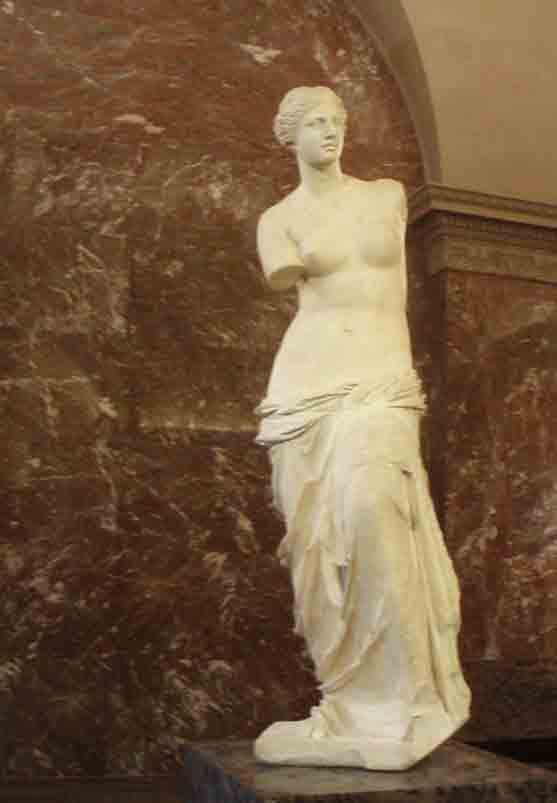
 Victory of Samothrace) and the Venus di Milo (an ancient Greek statue and one of the most famous works of ancient Greek sculpture). They were each in different galleries in the Louvre and Buchwald’s column claimed that nobody had yet entered the Louvre, looked at each piece and exited the museum in under four minutes, but the new record was near. It was a funny image offered up to American tourists visiting Paris but it had unintended consequences.


 middle of a Florida town. Not something you expect outside of Disney World. But on a recent drive through central Florida that is what we found in Ocala.
 park that includes an interesting museum. For the state of Florida this is almost ancient history. Early settlers, Seminole Wars, Andrew Jackson.
 Every state in America is noted for its tribes of American Indians that include Comanches, Blackfoot, Algonquin, Shaenee, Shoshone, Sioux and almost a hundred additional tribes. In Florida we recognize the Seminoles as our major Indian tribe, but who are they historically?
 Soon these new settlers were coming in conflict with the Seminoles and the government decided the situation needed a solution. In 1823 the Treaty of Moultrie Creek was signed between the United States and leaders of the Seminole Nation. That treaty had the Seminoles relocate to a large tract of land in what is now Central Florida. The treaty also prohibited white persons from entering or settling on those Seminole lands. The Ocala area was central to the Indian towns and the army built Fort King to assure that both sides kept the treaty.
 In a reversal of policy Congress passed The Indian Removal Act in 1830 at the urging of President Andrew Jackson who had fought the Seminoles in Florida and defeated the Creek Indians in 1814. This resulted in the forced negotiation of the controversial Treaty of Payne’s Landing requiring that the Seminoles be removed to new lands in what is now Oklahoma.

 Fort King was abandoned in May of 1836 in favor of Fort Drane built nearer the swamps where the Seminoles were hold up. Fort King was reoccupied in April of 1837. It served as a base for raids and in 1840 Captain Gabriel Rains of the 7th U.S. Infantry led 16 soldiers on a recon but were attacked by a Seminole war party. They managed to fight their way back to Fort King, with three men killed.














 The Intentional Travelers